

It was a slightly chilly afternoon —- Wednesday, December 15th, 2010 to be exact —- under fading sunlight when I got to shake the hand of the one and only Hansi Kursch. An hour or so earlier, my two goofball buddies and I had barreled in my car down the Houston freeways to a venue called Warehouse Live that skirted the eastern edge of downtown Houston, a nominally sketchy area at the best of times. I was gunning the accelerator, despite knowing full well that the show wouldn’t start until many, many hours later in the evening. My subconscious reason for this might have been the fact that none of us had tickets yet. Yeah I know, and if you’ve slapped your forehead and muttered “Idiots!” under your breath already, well, under normal circumstances I’d agree with you —- but there was a perfectly valid reason for this. See this particular date on Blind Guardian’s “Sacred Worlds And Songs Divine Tour” was supposed to be held in San Antonio, but the actual location of the show was being shuffled around last minute and I was sending frantic emails to both the promoters and band management in trying to find out what the real deal was. Turns out no one would know until two days before the scheduled date, when the band confirmed that the show was officially moved to Houston.
 We rejoiced! Not only because we wouldn’t have to make a furious post-work drive to San Antonio, but mostly because Houston finally won one. All the years of H-town being passed over, cancelled, or postponed by various metal tours in flux —- we finally had something swing OUR WAY! Not only that, but it was the biggest swing we could’ve possibly imagined, Blind Guardian was returning to Houston, they were in our city! This has greater impact if you know that Blind Guardian had tremendously bad luck with Houston in the past. The band had to cancel the Houston date on their 2002 North American trek in support of A Night At the Opera (and their first Stateside tour to boot), a show that was scheduled for the day after Thanksgiving (the irony!), all because the venue’s promoter goofed and couldn’t hold up their end of the bargain. I was gutted. My friends were gutted. That night of the cancelled show, we got provocatively drunk and briefly debated the merits of throwing lit trash cans through the venue’s front windows. Four years later we would finally get another opportunity to see them here in Houston on their tour for A Twist In the Myth, and the band actually came and played a pretty good show at a different crappy venue. However the entire band was dealing with a really nasty case of the flu and were understandably too exhausted to do anything in the way of encores or shaking a few hands after the show. It was bittersweet in that sense. We finally got to see them live, but it would be in Houston of all places when the band would feel like ancient death… of course…
Naturally in my mind I was expecting something to go wrong, and chief on that list of possible disasters was the notion, however remote, that we’d get to the venue late only to find a lengthy line and a sold out sign on the front of the box office window. I recklessly exited the freeway and drove over numerous potholes, ignoring the fact that I was also super hungry (and the grumblings from said goofball friends echoing similar statements) —- because the only thing I wanted to do at that moment was give some disinterested box office girl my twenty odd bucks in return for a little stub of paper with Blind Guardian printed on it. Venue in sight, with black night-liner tour bus parked at its side (phew!). Haphazardly park, exit, hustle-walk to the front of venue and its hopefully open box office window. The girl was as disinterested as possible, but did confirm that we were the first idiots buying tickets that day when I asked. I looked at the time on my phone —- 4:45 pm. Tickets in hand, I finally agreed to increasingly loud declarations that we head to the nearest Freebirds, one of those made-to-order big burrito places. We began to walk back towards my car, and it was just after that when one of the most surreal moments of my life occurred.
 I remember walking behind my friends, they got in the car first, but I was slowed down by rubbernecking at the tour bus itself, looking for signs of life within those heavily tinted front windows. There was one major sign of life, a short haired guy just outside the bus on the sidewalk taking what looked like a pair of shoes out of a bag. I didn’t think much of it initially, the guy looked like a roadie or a tour manager perhaps, and I got in my car and started to slowly pull backwards out of my parking spot and lurch forward towards the tour bus. An increasingly closer view prompted me to register what I was seeing by muttering the following aloud: “I think that’s Hansi…”. I was scoffed at on the notion that the man had short hair, but my fellow compatriots were not as plugged into the detailed minutiae of the band’s current profile as I was, I knew that Hansi had recently cut his hair. I made one of the best decisions of my life and awkwardly jutted the car into an awful, diagonally parked position —- half on the sidewalk mind you —- and clumsily got out of the car, hearing one of my two friends exclaim “Holy shit it is Hansi!”
The funniest thing about this burned in memory is just how particularly alarmed Hansi looked at that precise moment: He had stopped his particularly mundane activity, in this case, slapping his black boots in hand together to get what appeared to be a whole lot of mud off. He was partially bent over, looking directly at us with a look that was startled and wondering if he should jump back in the tour bus, arms frozen in mid-boot slap. It was the kind of look that immediately made me register the sudden, near-violent nature of our approach with a dawning realization that Hansi probably had a pretty good idea of just what part of town he was currently in. We could’ve been Houston thugs at that moment for all he knew. But it must’ve been our random mix of metal t-shirts, uncontrollable grins, and peacemaking hand waves that eased his disposition —- just a bunch of goofy fans (likely what he was thinking himself). I’ll confess that I can’t recall the particular words that first left my mouth, but that thankfully they weren’t “You’re Hansi!”. With handshakes all around, we welcomed him to Houston, and expressed just how insanely happy we were that the show wasn’t cancelled and that the band was actually here. He was gracious beyond belief. I remember him half-joking that “You guys might be the only people in the audience tonight.” The date’s city switch was sure to leave a lot of people scrambling, and I expressed to him my faith that Houston would rally.
 The whole exchange lasted a few minutes, and towards its end I had considered asking him for a picture, but realized that I’d left my phone in the car. We told him he’d see us in the crowd for sure and said goodbye, and I remember walking back to the car as if in slow motion. A wellspring of thoughts were bubbling in my mind: I had just met the man responsible for so much music that impacted me not only as a metal fan, but as a music lover in general. I had just shook hands with Hansi Kursch. I had a conversation with Hansi frickin’ Kursch. I wanted so badly to turn around and start babbling something, anything, about what his music had done for me —- but of course, that’s not how you play those situations. The man had just stepped out of his tour bus to clean his boots off, he was cool enough to unexpectedly talk with us for a couple minutes, and he was as genuinely nice and friendly as he always had come across in the audio interviews I had heard of him. He didn’t deserve to have to deal with some random, awkward moment of fan-gushing. Still, fragments of glorious Blind Guardian songs were flying through my mind, along with all those memories of particular moments I associated with them. Speaking of memories…
It was on an internet radio website called Hardradio where I first discovered Blind Guardian, through a random airing of the orchestral version of their classic ballad “Lord of the Rings” from the Forgotten Tales album. This was late 1998, in the dawn of the turn of the millennium pop-metal nostalgia revival that would resurrect many forgotten bands’ careers as surprisingly successful live performers, so the station was mostly playing music of that ilk. It had seemed that nine times out of ten I would randomly tune in to their internet feed and hear stuff like Jackyl, Warrant, or Kix. I was generally okay with it, because at that time I was an equal parts hard rock aficionado as I was a mainstream metal fan; all to happy to explore Tesla’s back catalog as I was Metal Church’s. European metal hadn’t really sunk in as something that I should’ve known about, in fact, I was (however ignorantly) certain of the notion that American and British bands were mostly the only ones worth knowing.
 Its likely that upon hearing “Lord of the Rings” initial acoustic pluckings I thought it was a dopey love ballad by one of those bands, but that was immediately cast aside when Hansi sang in his clarion voice, “There are signs on the ring / which make me feel so down…”. His voice was so unique, richly melodic yet still gruff, and with a slight timbre that I’d never heard before —- a completely original voice that was singing about something Tolkien related of all things! By the time the song was at its emotional high point with background vocal swells of “Slow down and I sail on the river / Slow down and I walk to the hill”, I was astonished, just completely overwhelmed by one of the most breathtaking songs I’d ever heard. I launched into an internet search to find out everything possible about the band, and need I remind you this was late nineties internet —- information was scarce, and MP3s were even scarcer. In my search however I eventually found my way to a few more of the band’s songs, and also discovered a hugely important radio show in my metal development called The Metal Meltdown with Dr. Metal —- a guy based in Cleveland who was one of the few American media people with his ear to the ground for European metal bands (and whose show I still listen to and rely on to this day).
Perhaps most pressingly I found out that the band had just inked an agreement with Century Media to issue their back catalog in the States. Physically obtaining their albums happened relatively slowly, I’d feast on one for months on end and eventually manage to get my hands on another. Once I started working as a music department staffer at a Borders Books and Music, obtaining albums became all too easy by tapping into the company’s distribution network and their unusually deep access to import companies. At one point I shelled out sixty bucks for an import mail order of Forgotten Tales, still the most expensive single disc album I’ve ever bought. The end result of this was the expansion and deepening of my metal fandom from merely on-the-radar bands fed to me through various rock and metal magazines to far more underground artists, most of whom had fanbases overseas but were complete unknowns in the States. Blind Guardian threw open the doors of European metal for me, and not just for power metal; it was through them that I discovered In Flames and the Gothenburg melo-death sound, the amazing power metal talent coming out of Finland at that time, as well as Norwegian black metal (and its history) —- just to name a few things.
 More fundamentally in regards to power metal, Blind Guardian’s music was infused with an emphasis on melodicism that I had only heard before in Iron Maiden, and in small doses elsewhere. My immersion into their albums made me realize something fundamental about myself as a metal and music fan —- that I valued melody as much as heaviness, abrasiveness, and shock value. When I was younger, rock and metal was attractive noise because of its inherently rebellious nature, its counter-culture spirit, and the feeling of inclusion it seemed to project. As I grew out of those teenaged years and shed most of its self-conscious trappings, I was left with a simple love for the music itself, and a craving for more of the elements within it that I particularly enjoyed. Andre Olbrich’s guitarwork was one of these elements, and the way he played was truly a style of his own making —- borrowing equally from Brian May, Yngwie, and Chris DeGarmo (of classic era Queensryche), he channeled his influences to create vivid, intense musical backdrops that reflected everything from speed metal, Queen-esque theatricality, and romantic medieval themes (which I didn’t even know I loved until I heard Blind Guardian).
In Hansi, I found a vocalist that I enjoyed as much as Bruce Dickinson on a purely technical level, but perhaps loved even more for the sheer bloody passion he could deliver through his voice. When I’d hear his verse line-extending screams in “Another Holy War”, I’d shake with adrenaline (to this day still). He transfixed me with his abilities as a truly original lyricist as well, presenting his songs through the voice of an well-traveled narrator in a way that did justice to his fan appointed title as a “bard”. I saw it in obvious gems like “A Past and Future Secret” and of course”The Bard’s Song”, but in more creative narrative framing such as the entirety of the Nightfall in Middle-Earth album. So transfixed was I by his dramatization of events and perspectives from Tolkien’s source material, that I actually bought a copy of The Silmarillion and forced myself to keep at its dense, biblical text until I finally began to enjoy it. I’ve now read it more times than the Lord of the Rings or The Hobbit combined, I sometimes even fall asleep with the unabridged audiobook playing on my headphones like a maniac. I’d like to think that Hansi would be proud, or worried.
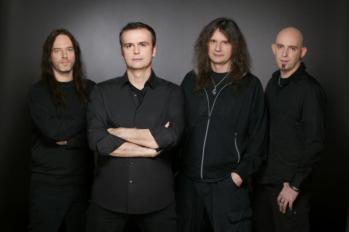 I don’t need to go on about why Blind Guardian is great. If you’ve read this far, you know damn well why. But I don’t think that I’ve associated more personal memories with one band than I have with the bards. I’d ride around with their discs as a near permanent in-car rotation in those lo-tech days before iPods, and amidst hour long plus commutes to and from school, work, home, and various excursions all over Houston I’d repeatedly soak in every second of their discography. I have fond memories of laughing deliriously while driving when my buddy Matt pointed out how angry Hansi sounded during the second verse of their cover of “Surfin’ USA” (he’s REALLY angry that everybody’s gone surfin’), and how every time that song would come on we’d mime his imaginary rage. On their cover of “Spread Your Wings”, we got a kick out of the way Hansi pronounced “honey”, imagining he was standing with the characters of Winnie the Pooh and motioning us over a cartoon hill (“Come on haaaanie!”). Every time I was down and needed a pick me up, I could listen to that song and it’d help a bit.
I remember my excitement on the release day of A Night At the Opera, at an actual record store where a copy was specifically held just for me… I couldn’t tear the plastic off fast enough. Speaking of which, I vividly recall just how stunned I felt upon first hearing the “And Then There Was Silence” single, sitting in my room with headphones on with the lyric sheet in front of me. I remember the time I was huddled around a fire during a teeth-chatteringly cold night while camping at the Texas Renaissance Festival as Imaginations played out of a portable mini-disc player, downing awful whiskey and loving it. I remember with fondness the New Years Eve spent on a friend’s apartment balcony, a bunch of us drunkenly swaying and singing along to “The Bard’s Song” at the top of our lungs (written warnings were issued the next day). I remember how cheerful it felt to first hear those gorgeous final vocal melodies in “War of the Thrones”, and how I listened to that song on repeat over and over while singing along to them every time.
 Mostly I just remember the band always being there, particularly during darker times when all I wanted was an escape. Here on the eve of a new Blind Guardian album release, I find it comforting to know that hasn’t changed at least. Its not lost on me that the last time Blind Guardian released an album way back in 2010, there were people, places, and situations that were in my life that simply aren’t there anymore. It happens less frequently to me these days, but when people question why you’re still an obsessed metal fan as an adult, all you really can to point to is your own personal relationship to the music you love. There are no cliques, no scenes, no one you’re trying to impress or piss-off —- the only thing that matters is whats going on internally when its just you by yourself in your car, listening to whatever you’re listening to.
Blind Guardian are one of the few metal bands that belong to a specific subgenre yet manage to transcend it and crossover to other metal fans. As Brad Sanders of Invisible Oranges so eloquently pointed out, “Their discography is like a completely crossed-out to-do list of things to put in your music if you don’t want the metal intelligentsia to take you seriously, and yet they’re the only power metal band I can put on with a carload of trve-kvlt warriors without having control of the stereo wrested from my hands.” Sanders attributes this to the band’s complete lack of cynicism —- and I’ll add a lack of irony and self-awareness to the list. Blind Guardian run on a love of pure imaginative storytelling, fantastical or otherwise, and pass this on to their listeners in the form of expressively earnest music. Its why they are loved in the manner they are, with devotion that most bands could never appreciate, let alone muster.
So I reached my car door and briefly looked back —- Hansi had begun to climb back into the bus, boots relatively less muddied. I wanted to sit there and let it soak in a for a minute, but after the initial round of expletive laden exclamations of triumph and joy, I was firmly ordered to hit the gas. Burritos waited somewhere in the distance, and we had to get back relatively soon to ensure a good spot in line. The stereo came on, playing Blind Guardian of course. We agreed that we had handled ourselves well, and no one did or said anything embarrassing —- it was about as much as we ever analyzed anything we’d ever said. Well then, let this serve as my ex post facto potentially embarrassing fan gushing treatise —- the stuff I wanted to say to Hansi at that moment but kept wisely bottled up instead. Delusional I’m not, I know he’s not going to read this, but its actually more for me than it is for anyone else. Traveler in time for life.
 Happy New Years everyone! Alright I’m a little late, but I wanted to let those year end lists marinate out there for a bit before issuing another update, as well as allowing myself a little break from any kind of “required” listening. How have I spent my intervening few weeks off listening wise? Oh you know, a little sweeping balladry from Sarah Brightman, revisiting classic Celtic-punk albums by The Pogues, reveling in Basil Poledouris’ epic score for Conan the Barbarian (the original 1982 classic, mind you), and metal-wise blanketing myself with loads of classic Blind Guardian as a side effect of my now unrestrained anticipation for their new album. Regarding the latter, its our favorite bards who instantly win the crown for the most anticipated album of 2015 —- I mean, who are we kidding here? The German legends may be skirting the edge of their regular four year studio release schedule (that ‘2015’ is going to throw off the 98-02-06-10 symmetry of their last four albums), but in these final weeks leading up to the release of Beyond the Red Mirror, I’m remembering everything I love about the band and all is forgiven. That being said, what are the runners up as my most anticipated metal releases/events?
 Angra – Secret Garden: One of the first cannon shots of 2015 is the debut of Fabio Lione in his role as Angra’s third official vocalist, being the successor to Edu Falaschi who left in 2012. Look, I wasn’t wild about the Edu era although it had its occasionally good to great moments, but I’m completely un-enthused about the very idea of the Lione era. I was never sold on Rhapsody (of Fire ™), in large part owing to how little I found to like about Lione’s thin, wafery delivery. I respected the heck out of the guy for helping out Kamelot on their Khan-less tour a few years back, despite having to acknowledge that his vocals were completely wrong for the band’s tone and mid-tempo stylings. So on paper Angra should be a better fit for him than his stint in Kamelot, but the pre-release single “Newborn Me” is completely underwhelming so far. It won’t be long before I drop a review of this one, Angra daring to challenge Blind Guardian with a January release (the very idea…).
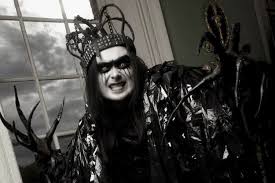 Cradle of Filth – Hammer Of The Witches (working title): In the past few years, the idea of a new Cradle album was met with a sad level of indifference from myself and as it seemed many others. Paul Allender’s role as guitarist was long past its expiration date, heard in recycled riffs and uninspired songwriting. Yet his departure in 2014 was surprising as it was enticing —- with all due respect to Allender, its now transparently obvious that he wanted to move on years before but the relatively steady nature of Cradle’s existence and operations kept him around for years and albums longer. The new guitarists, two guys named Ashok and Richard Shaw (there’s some dichotomy for you) are relatively unknown quantities, but Dani’s recent
  Dimmu Borgir – TBA: It will likely be just over five long years since the release of Dimmu’s last album, the unfortunately titled but otherwise decent Abrahadabra. I loved the eponymous “Dimmu Borgir” off that album, one of the band’s catchiest singles in years (it had a pretty decent music video too), but the majority of the album made me wonder how much there was possibly left to explore in their heavily symphonic black metal style. I’m not really sure what to expect from these guys now, but it really seems like a stylistic evolution ala Satyricon might be in order. Blut Aus Nord just dropped a new album of classic Norwegian second wave black metal that is bracing, fresh, and revitalized… proving in one fell swoop that there’s still life left in the old traditions. Maybe the way forward for Dimmu is to look back in order to progress their sound. More of the same from them would be disappointing in a way, especially after a five year gap.
 Enslaved – In Times: Due in early March, the next Enslaved album is right up there among my most anticipated of 2015, this despite the band’s frustrating lack of Texas tour dates on yet another “North American” tour. That aside, I’m eager to hear what direction these guys veer off into this time. Their last album RIITIIR (a 2012 year end
  Faith No More – TBA: If the band’s 2014 single “Motherfucker” was any indication, we’re in for a treat. I love the way that song didn’t sound like anything I had ever heard from the band in their 90s heyday, yet still sounded unmistakably like Faith No More in all their ugly, beautiful, and baffling glory. It also put to rest any remote moaning about the lack of Jim Martin’s involvement, as Jon Hudson is as creative and adaptable a guitarist as the band needs (surely his work on Album of the Year should’ve sold people on that). More promising is that the band are recording the new album entirely on their own without the involvement of a record label, and given what they got away with when on a major label, who knows what juxtapositions and bizarreness we’ll get from song-to-song. I’m just so happy to have the band back, their work felt incomplete upon their disbandment in 1998, and there are precious few bands that have the kind of personality that FNM had in spades. Maybe a Metal Pigeon Recommends feature is in order for these guys prior to the album release… something I’ll keep in mind.
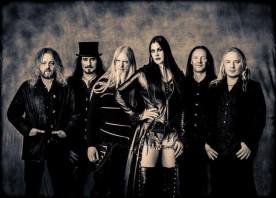 Nightwish – Endless Forms Most Beautiful: Second only to Blind Guardian as my most anticipated album of 2015, I have the highest of hopes for the debut of Floor Jansen as the third Nightwish vocalist. She is perhaps the most adaptable of them all, capable of classical operatics, as well as the wildly versatile pop-rock accessibility of Anette Olzon. Having seen Jansen with the band in concert myself, I thought her most valuable resource as a vocalist was her ability to project power in a way that both Olzon and Tarja were unable to. Simply put, she can belt it out when she wants to, an ability that immediately makes her the metalized equal to Marco Hietala’s soaring, accented tenor. Of course Tuomas Holopainen’s songwriting will be my primary focus of attention, and judging by his choice of song titles, cited inspirational reading, and guest narrator in Richard Dawkins —- we’re in for a thematic album at the very least (something entirely new for the band). Its hard to envision a Nightwish album better than 2011’s Imaginaerum, but here’s to Holopainen giving it his best shot.
 Queensryche – TBA: While Queensryche’s self-titled debut with new vocalist Todd LaTorre was a solid return to form, it had severe flaws. The most glaring of which was song length, most of the cuts on the album hovering in the three to four minute range that could’ve benefited from additional verses or expanded guitar solos. Now with all the legal battle drama behind them, this is Queensryche’s time to truly get back to their progressive metal roots —- especially with their debut at Wacken Open Air (finally!) only eight months away. This is a band that needs to be out there touring with actual modern metal artists, not 80s glam-rock bands, and hopefully their time at Wacken will yield fruit in that regard as well as serve as their re-introduction to the European metal audience as a whole. Oh and getting the album out before that show would be good too.
 Savatage at Wacken Open Air: Fifteen years after the last Savatage tour, the band is getting back together for a last hurrah on the biggest stage in the metal universe. Or is it really the last? Chris Caffery recently
 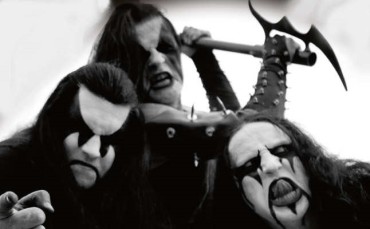 Will Immortal release their new album: I guess I should be asking, is Abbath going to win the rights to the Immortal name so he can release the album that he’s already recorded with other musicians?


 2. Ghost Brigade – IV – One With the Storm:
 3. Dawn of Destiny – F.E.A.R.:

 6. Primordial – Where Greater Men Have Fallen:
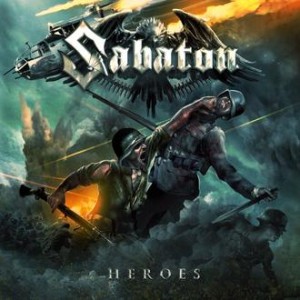 7. Sabaton – Heroes:
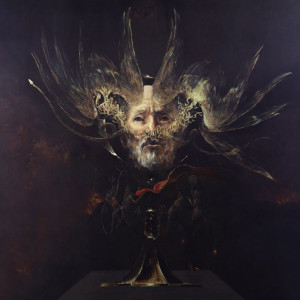 9. Behemoth – The Satanist:
 10. Noble Beast – Noble Beast:
 At The Gates – At War With Reality: I suppose back story isn’t really needed here, I mean you’re all smart, together, with-it metal fans that already know this is At The Gates first new music in nineteen years. I’ll admit that for the longest time after their initial reunion began in 2006 I never anticipated anything new in the way of a studio album from them. I saw them live in 2008 and they looked pretty comfortable doing the classics and I figured that would be it, Emperor-style reunion touring for us newer generation of metal fans that never saw them in their initial incarnation, healthy profits, and satisfaction all around. The At The Gates legacy didn’t have the same problem that Carcass did with theirs —- Slaughter of the Soul was a watershed classic, Swansong was anything but. It was understandable that Carcass would want to try their hand at crafting an album far more worthy of closing their discography upon, and the resulting Surgical Steel was so utterly fantastic, it should be considered the modern day reunion album benchmark (it is by me). So it comes as something of a gamble that At The Gates have chosen to follow up Slaughter of the Soul with At War With Reality, and I’ve seen plenty of other reviewers assert that the band’s greatest strength is in not caring what others make of their legacy at all. Okay, that’s fair —- but then again the band themselves would never have a hand in “defining” it to begin with, that’s our job as fans.
 While Heaven Wept – Suspended At Aphelion: First of all, While Heaven Wept’s newest album scores the award for best cover art of the year hands down, take a long gander at that sleeve in high res on Google Images… its just flat out jaw dropping. Secondly, I’ve been waiting for this album with a great amount of anticipation, having been sold on them a year or two ago with the song “Vessel” from their 2009 album Vast Oceans Lachrymose. I didn’t find its follow up album, Fear of Infinity nearly as compelling, but they’ve managed to win the benefit of the doubt in my mind. If you’re unfamiliar, this prog-meets-power-meets-doom metal band from Virginia of all places is keen on grand, epic scale music with lyrical themes (and artwork) to match. I expect that there might be a few metal fans out there who take umbrage with While Heaven Wept’s manner of tracklisting, sequencing, and envisioning of albums in general. There are usually not many actual tracks, two songs are often paired up and folded into one long song, there are short instrumentals including intro and outro tracks, and the overall album length is sometimes maddeningly short (forty minutes here, ten of which are instrumental). I’ll admit that its slightly frustrating for me as well, but the band clearly intends for their albums to be listened to from start to finish, and in truth they work better that way (this is prog-metal after all).
 Sanctuary – The Year The Sun Died: You’d be forgiven for glancing back at the album art when experiencing your initial few minutes of Sanctuary’s first new album in twenty-five years. It sounds an awful lot like a theoretical new Nevermore album than anything resembling the power metal infused thrash of the Sanctuary’s pair of late eighties albums. What makes it strange is that original guitarist Lenny Rutledge is back in the fold and handled most of the songwriting, and yet there is an overall Jeff Loomis vibe to the guitar work that is hard to ignore. I’ve considered the possibility that my brain is playing tricks on me, that Warrel Dane’s vocals being mixed far up front (similar to Nevermore), and the overall modern production of the album is subliminally suggesting a likeness that isn’t really there. I’m not going to harp on this though, but suffice to say, it was difficult at times to wrap my head around the reality that this is indeed a Sanctuary album.
 Tony Kakko was a vocal magician that night, and a performer unlike any I had ever witnessed. He leapt and bounded across the stage with relentless energy, and threw himself into the lyrics with physical movements that mirrored or reacted to the words he was singing. His voice was accordingly sonorous, full, soaring, and capable of an impressive dexterity in adapting harmony laden lines to a solo vocal approach. When he needed us to help out on the choruses he directed our voices himself, and classics as such “Full Moon” and “Replica” felt like celebrations of power metal’s proclivity in creating joyful euphoria. Newer songs from albums that I had been critical of on this blog such as “Losing My Insanity” and “Blood” actually sounded better live, brimming with a vitality that I now associate with their studio versions. Even the dreaded “X Marks the Spot” was actually fun because Kakko simply sold it so well, his skill as a front man keeping me rapt with attention as he seemed to act out the lyrics. I was caught off guard in realizing that the song actually has a rather good chorus that I had seemingly blocked out before (my feelings on the studio version’s horrible dialogue still stand). I was even stunned that Kakko had the guts to perform such a naked ballad such as “Love” from the recent Pariah’s Child, but he somehow managed to convince a room full of some pretty convincing looking metal fans that it was okay to sway back and forth to a delicate, gorgeous, emotionally soaked song. I lingered long after the show, fan babbled to the Xandria guys a bit, and found myself not wanting to leave. As it always seems, magical nights like that are rare, and over far too quickly.
 All these years later, its understandably difficult to remember just how strikingly different and fresh Ecliptica and its 2001 follow-up Silence sounded amidst that newly forming power metal resurgence. Sure the band were noticeably influenced by Stratovarius, but where their countrymen played it straight and safe with their take on European power metal, Sonata Arctica displayed a tendency to wildly lean in odd, unexpected directions —- both musically and lyrically. There was something quite charmingly naive and innocent about their approach, as if they were so enamored with their ability to create songs worthy of a record deal that they didn’t bother to pay attention towards sticking to standard genre rules. This was a very young band for starters (scarcely out of their teens), consisting of musicians all to eager to lean on speed and flashy solos, and they had the talent to pull it off, particularly long-departed guitarist Jani Liimatainen. Yet Sonata’s sound all started with the songwriting genius of Kakko himself, who throughout his career has displayed his knack for crafting indelible melodies with sharp hooks, and incredibly focused songwriting that flirted with a variety of tempos. He was a keyboardist, and his songs were built with that instrument serving as the framework for his songwriting, which also meant that melodies had to come first before riffs (often a hallmark of the most melodic of power metal bands). He’s of the same caliber of talent as his good friend Tuomas Holopainen of Nightwish; or Tobias Sammett of Edguy/Avantasia; or Hansi Kursch of Blind Guardian: All power metal songwriters who are masters of their craft to such an extent that they simultaneously define and defy the genre. In that regard, Kakko was both a trail blazer and someone who was practically impossible to copy.
 As it turns out, Kakko was a lyricist of the Joe Elliot mold, he being the famed lead singer of Def Leppard. When I was a budding rock fan in the early nineties, I read an interview with Elliot where he admitted that his lyrics were pure fiction, despite his narrative perspective almost always being in the first person with seemingly autobiographical overtones. I know its not a revolutionary concept, and that many other bands have utilized such a lyrical strategy to ratchet up the tension and passion in their music (Journey comes to mind immediately), but Elliot was the first famous musician that I had ever read such an admission from. Reading it then was a bit of a revelation for me, and made me pay attention to lyric writing in rock music with greater attention, to not be so gullible, and to think about things like narration and perspective and diction in a new light. It made me pay greater attention to Metallica’s Load for example, while many upon its release were writing it off as a sell-out move towards alternative rock, I found myself thinking that it featured James Hetfield’s most thoughtful and resonant lyric writing. So it was with great surprise that I found myself hoodwinked by Kakko, who in the very first interview I had ever read with him revealed that his lyrics were purely fictionalized. Doh! This has of course carried on throughout his career, as he recently pointed out in a late September interview on the
  With all that in consideration, I think its okay for any of us to ask why the band is re-recording Ecliptica at all. Well, the short answer is that the aptly dubbed Ecliptica Revisited was done at the request of the band’s longtime Japanese record label, a request the band agreed to as a gesture of goodwill towards a company that had stuck by them since the beginning. Kakko has even commented publicly that the contract they signed for the release stipulated that the re-recording had to be 94% identical to the original release, essentially meaning that they couldn’t re-work the songs into transformed versions or acoustic strip downs. For Kakko, this stipulation not only made it easier for the re-recording to be completed, but helped him to contextualize this release as a simple tribute to the original, as well as a more accurate representation of how these songs are performed live today. Typically within the metal community regardless of subgenre, a re-recording is frowned upon, not only for the often cloudy nature of the reason for it’s existence but more for the larger threat it presents to the legacy of the original. Most of the opinions I’ve seen regarding Ecliptica Revisited seem to align with that way of thinking, and I certainly understand some fans’ puzzlement and frustration (although I think its a waste of energy to get up in arms over a release that clearly will not be replacing the original recording).
 Fortunately the tempo downshift doesn’t hurt all the songs, in fact helping some songs to breathe easier and feel better paced. Cry heresy if you must but I actually find the vocal take on the re-recording of that eternal classic “My Land” far better than the original: Kakko’s enunciation and pacing is better, and the lyrics are more discernible as a result; I also love the alteration he made at 2:30 on the lyric “You can’t keep me away forever”, on the original that line only appears at the end and he doesn’t satisfyingly lean on the “forever” like he does here. I also really love what they’ve added to “Full Moon”, the intro is still as delicate and beautiful as it originally was, but the band gets heavier in the buildup to the galloping verses, giving the song a darker, stormier vibe. The chorus is as bright as ever though, and what I find so incredibly wonderful about Kakko’s vocal approach on it is that he seems to be reveling in its history as a fan favorite. I know its a subtle thing I’m trying to relay, but I hear it in the way he delivers that classic chorus with all its inherent poppiness in such a celebratory manner. Not surprisingly, its the balladry of “Letter to Dana” that benefits the most from the re-recording, with guitars multi-tracked in choice spots, better vocal phrasing, and a greater emphasis on making those lead guitars really capture the epic sweep in a Slash-esque way. Unfortunately, it is a bit of a misstep and a shame that they didn’t turn up the harpsichord effects at 4:25 —- that was such an epic moment in the original and although you can still faintly hear them underneath, they’re not nearly as goose bump inducing here. I also think “Destruction Preventer” comes off a little better here, as they sanded off all the rough edges (Kakko’s wildly high pitched yelps) and added layers of extra guitars and harmony vocals.
 Depending on your perspective of Amaranthe, you’re either really excited for Massive Addictive, or really, really agitated at the mere thought that this unlikely band of Swedes has gotten popular and successful enough to warrant a third album. They are certainly notorious for the sheer contentiousness that surrounds any discussion of who they are and what they do. When I
  All that considered, its amazing just how successfully Amaranthe works as a Frankenstein-esque project, stitching together disparate parts to create something that actually works (surely a monster to many). Morck and Berg combine their experiences in both power metal and melo-death to serve as their musical palette, and are malleable in their songwriting to sketch out smart, unobtrusive, accentuating uses for harsh vocals (courtesy of new screamer Henrik Englund), as well plenty of spotlight time for the completely un-metal Elize Ryd’s sugary, ABBA-Swede pop vocals. Ryd is obviously a necessary component in this whole equation, as its through her unremarkable but pleasant vocals that the band channels their poppiest sensibilities, allowing Berg to deliver his clean vocals as a melodic counterpoint or harmony double up. In typical Amaranthe fashion, Englund’s harsh vocals tend to be used as a counterpoint —- he’s only given one opportunity to handle lead vocals (on “An Ordinary Abnormality”), but of course he’s kept off the chorus. Ryd and Berg command the vocal spotlight of Amaranthe, and it has to be said that their voices tend to sound great together, his vocals are melodic and capable enough of soaring highs as hers, but he’s working in a slightly lower register so as to be complementary, not overpowering. I’ve always had mixed feelings on Ryd, finding her the least impressive vocalist of the three —- and I’ve long contended that she’s used metal as an easier springboard to fame and notoriety than she would have had through trying to make it as a pure pop singer. Its not a criticism, just an honest observation that I’m confident other discerning metal fans would agree with. Do an eye/ear test —- does she radiate metal in any way? Kudos to Morck and Berg for sculpting out a role for her and selling it convincingly (seriously, props).
 On Massive Addictive, the band don’t change up the formula they first dreamed up on their debut and expanded on The Nexus, seeking only to further refine the elements that worked and ditch the clunky stuff that didn’t (there’s nothing as awful as the bubblegum “Electroheart” on here). The album’s pop highlight is “Trinity”, the second single that smartly balances chunky-riffs and harsh vocals with a exquisitely sculpted chorus boasting a hook that absolutely will not leave your head. Its musical candy, and that’s what we’re here for right? To rot our ears with the musical equivalent of junk food, because try as I might I cannot understand what
  The album isn’t without missteps though, nothing gravely serious but there are a handful of tracks that either don’t work as pop songs or have annoying tendencies that overpower their enjoyable parts. I’m referring specifically to “Danger Zone”, where a boy-band grade chorus is sandwiched between some very boring harsh vocal led verses; as well as “Unreal”, a song that reminds me of the worst aspects of modern day In Flames with the album’s flattest chorus to boot. There’s also something bothersome about “Skyline”, where I guess my expectations were higher because the title reminded me of Bioshock Infinite (skylines… some of you get it) —- a strange reason to cite but also I’m simply bored by the song, unlike the game. Still, on a twelve track album, there are seven songs that deliver precisely what you’d want from Amaranthe , and four of those are actually pretty great. Not a bad ratio overall, and Massive Addictive is the sound of a band getting better at what they’re doing —- even if it may not be everyone’s cup of tea. I’ve written in the past about the value of Amaranthe as a gateway band for non-metal fans to enter our world, and with this album that gateway has only gotten bigger. If someone gets hooked in with a song like “Trinity”, only to find themselves checking out Kamelot via Ryd’s connections to that band, which causes them to love a masterpiece such as The Black Halo as much as I do —- that’s a win. Metal needs gateway bands to survive, and even though Amaranthe are pushing the boundaries of acceptability in our beloved genre, they surely deserve some grudging acknowledgement for filling that role.
 Solace of Requiem – Casting Ruin: This is a case where I halfway like a band’s sound and sonic approach in general, but find little in the way of compelling songwriting to keep me coming back. That’s a pretty harsh thing to state right off the bat in a review so I’ll add in these qualifiers: Solace of Requiem seem to simultaneously want to echo Dissection and Morbid Angel and Origin. Some will disagree with me here, but I find little in the way of meaningful intersections between those three bands or the styles they’ve come to represent. So sometimes Solace of Requiem hits me with something interesting in the way of blackened melo-deth, and then a section or so later they’re doing something that resembles technical death metal —- a genre I think I’ve simply gotten bored of. At any given point vocalist Jeff Sumrell might interrupt his rather good blackened grim vocals with outright boring death metal grunts, an alarming change up that isn’t musically justified. Its possible to stick to the former and keep it compelling, bands have been doing it for years, vocal changeups don’t impress anyone except the handful of guys at the local backyard death metal fest. If there was more in the way of musical motifs throughout the songwriting then I’d be able to accept such a glaring flaw, but the songs themselves are collages of riffs and percussion rather than songs with a story to tell.
 arkenhold – Castellum: If you’re in a black metal band from France, chances are you sound something similar to Alcest right? That being the dreamy shoegaze-laden, swirling, fuzzy flavor of black metal that put the country on the map (for good reason) and was later copied by an embarrassing amount of American black metallers (you know its true). Darkenhold are a rare French black metal band that apparently wants nothing to do with the Neige sound and choose to instead pursue a far more traditional strain in line with second wave Norwegian black metal. And judging from a few spins of their newest, Castellum, they’re actually managing to deliver a pretty convincing take on it —- this is a band that I would’ve easily pegged as Norwegian (on that note, still not sure what language the lyrics are in… but its not that pressing of an issue). They really go for a straight down the middle, early 90s approach that takes bits and pieces from Mayhem, Immortal, Burzum, and early Satyricon in equal parts. That may strike some as an exercise in redundancy but I’ve got to give it to these guys, their songs are packed with catchy riffs and a well considered balance between sheer aggression and atmospherics (mostly in the form of clean electric passages with some acoustic undertones… not a lot in the way of keyboards here).
 Protokult – No Beer In Heaven: Jeez… what can I say about Protokult? If the title of their debut album doesn’t give it away, this Toronto based, dual-gender vocal helmed folk metal band dabbles in a style that is geared towards those who find Alestorm and the dreadful Korpiklaani palatable. That’s the audience they’re going to get anyway with their choice of album title, despite that their sound actually leans closer towards a not yet fully realized blending of Arkona and Turisas. Its a debut album, so its easy to be forgiving of the sense that if things go right for Protokult, their third and fourth albums won’t sound anything like the musical crockpot that is No Beer In Heaven. Some of these songs are so unfocused that they’re actually jarringly atonal, such as “Heaven Cast Me Out”, where an effective keyboard melody is wasted by vocal lines that are aimless and lacking definable hooks. Co-vocalist Ekaterina Pyatkova is a distinctive, sharp, angular operatic soprano that reminds me of an early Tarja Turunen. On those early Nightwish songs off Angels Fall First that never quite gelled, Turunen’s vocals often spiraled off into an unstructured mess. It was on the subsequent Ocean Born when Tuomas Holopainen began to harness his songwriting abilities together with Turunen’s vocal capacity where he was first able to display both of their respectively brilliant abilities. The same needs to happen for Pyatkova, and hopefully from within the band a songwriter will emerge that can deliver the goods in that sense because she has tremendous raw talent.
 Voyager – V: I sat down with this album fully expecting to dislike everything about it, and my inborn prejudices towards modern progressive metal’s tendency to rely on djent and noise-related nonsense was pervading my mind before I actually hit play. Its always such a gratifying experience to be proved wrong in these situations. The manner in which Voyager’s V, (their fifth album now, hence the title, geddit?), is described by reviewers all around the internet and in blurbs that I received from their PR agency is exactly the sort of language that tends to describe bands that do everything but write interesting music (at least for me). Thankfully, the reality is that for all Voyager’s shininess, their Intel factory uber clean guitar chugging, and their keyboard built atmospherics —- this is a band that is smart and savvy enough to realize that its all a waste without sharp, melodically driven, hook-LADEN songwriting. They have that in spades, and I think what makes the songwriting work in terms of playing to their musical strengths is the fact that their singer Daniel Estrin has smooth, expressive, yet powerful range and capacity to use his vocal melodies to anchor most of these songs. The instrumentation is impressive for sure, if you can tolerate its anti-septic delivery and approach, but it all surrounds Estrin’s vocals as the central element of nearly all of these songs.
 Opeth – Pale Communion: The Opeth we knew is long gone, and I’m actually thinking that it might be okay. Hear me out on this for a second —- I was NOT a fan of Heritage, and I was also perhaps willfully ignorant of what that album was signaling. On paper it was a good idea, a prog-rock album with seventies influences by a prog-death metal band that had always exhibited that specific influence in their catalog, even produced a few masterpieces in doing so. After my initial few spins through it I remember tempering my reaction by reasoning with myself that it was going to be a one-off experiment in the Opeth canon, and so not to overreact. It was a muddied, ambling mess that lacked crisp songwriting and coherent melodicism; it was the sound of Mikael Akerfeldt over extending (or over thinking) his abilities. But it was alarming then to realize that on Heritage’s supporting tour, the band was largely shying away from past material that emphasized their death metal sound, and Akerfeldt’s public comments towards extreme metal in the media were raising the ire of some, and disheartening others. I sympathized with many of the disaffected and honestly internalized the band’s disinterest in metal as something akin to losing touch with a friend. I summed up my feelings on the whole thing in a little more detail earlier this year when
 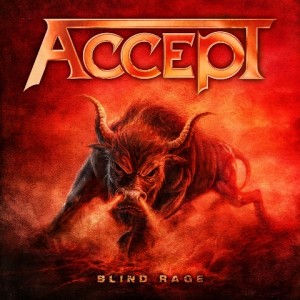 Accept – Blind Rage: Four years ago, Germany’s storied metal veterans Accept released a knockout of an album from seemingly out of nowhere; Blood of Nations was as unexpected as it was awesome. I still listen to that record whenever I need an Accept fix (and the fact that I reach for it over Balls to the Walls or Russian Roulette is surprising even to myself). Keep in mind that it was their first album in fourteen years; they were coming off a long period of relative inactivity consisting of two aborted reunions with original vocalist Udo Dirkschneider, and they were enlisting a rather unknown American replacement vocalist in Mark Tornillo. It all seemed like a recipe for mediocrity on paper, but somehow, Wolf Hoffman and company rediscovered their musical mojo. I saw them live on that tour here in Houston, and they were satisfying perfect that night even when down a guitarist (Herman Frank was injured during a fall on stage in San Antonio the night before). But I’ll admit, I thought they stumbled a bit on the 2012 follow-up Stalingrad —- granted there were a couple really strong songs, but the record felt rushed with ideas undeveloped and lacking cohesion (the band admitted as much in interviews later on).
 Vintersorg – Naturbål: While writing this review, Firefox tanked out on me, gobbling up what I wrote. Serves me right for running both Spotify and iTunes at the same time, I know… I need a new laptop. But I’m thinking that the crash actually did both you and I a favor, because I was really going on a bit with some unnecessary background info and essentially doing a whole lotta rambling. So I’ll spare you that nonsense and break it down like this: Vintersorg is a project that is really hard to love (or like even). You’ve gotta be committed, and you’ve gotta put in the time and the work, and I really mean work by the way —- this is complex, often obtuse avant garde folk/progressive black metal that is often maddeningly messy. A good Vintersorg song will reveal itself to you after many, many repeat listens after which your brain might begin to be able to process what you’re actually listening to (the not so good songs will just continue to exist as a spaghetti bowl of sound). I myself became a fan with his most accessible album, Comic Genesis, way back upon its release in 2000 when a friend of mine played it for me proclaiming it to be the next best thing to Blind Guardian. I was sold, and proceeded to buy up the existing Vintersorg catalog, as well as that of his pure folk-metal side project Otyg (oh, Vintersorg is a guy, real name Andreas Hedlund, I probably should’ve mentioned that at the top). But Vintersorg moved away from the accessibility of Cosmic Genesis’ to wildly avant garde songwriting approaches through his next few albums, and I toughed it out and found things to enjoy on them, but they certainly weren’t what I originally signed up for.
 Unisonic – Light of Dawn: Unisonic is one of those projects where expectations may need to be tempered and aligned to reality. Understandably there is the shadow of Keeper-era Helloween bearing down upon both Michael Kiske and Kai Hansen, but if you walked into the band’s 2012 debut expecting a mirror of those gloried albums then you had no one to blame but yourself for not paying attention. There’s a couple things to point out there in relation to the confused reception that debut received: Firstly, both Kiske and even Hansen had embraced aspects of AOR rock in their post-Helloween careers, Kiske more so of course, but Hansen himself was involved a great deal of power metal records with Iron Savior and Gamma Ray that were far, far more poppy than anything he did with Helloween. That the pair’s reunion was brought about while on tour for Avantasia (the king of AOR drenched metal thesedays) should speak volumes to that effect. Secondly, I think a lot of people were infatuated with idea of Hansen/Kiske being some magical songwriting pairing, when in reality Michael Weikath had a fair amount of input on that front back in the Helloween days. So the first Unisonic album was often a laid, back, drivin’ in the sun pop-rock record more than anything, and it when judged on its own merits it was a rather good, albeit spotty affair. Power metal, however, it was not.
  Anathema – Distant Satellites: Metal writers/reviewers/bloggers cover Anathema these days in part because of the band’s past metal heritage as part of the Peaceville three of English doom metal, but I believe the greater reason is that this band has been on a tear since 2010 in terms of releasing amazing new music that’s really worth talking about. If you haven’t gotten to enjoy their past two efforts you’re doing yourself a disservice (“Untouchable” Pts 1 & 2 together from 2012’s Weather Systems topped
  Hammerfall – (r)Evolution: First off, just for my own sanity’s sake, I’m going to refer to Hammerfall’s new album as Revolution, I don’t care if its incorrect, I hate purposeful grammatical cuteness like the kind being employed here. And I’ll just cut to the chase here, because you likely know who Hammerfall is and what they’re all about —- this is neither the best Hammerfall album, nor the worst, and that ultimately might be its achilles. There are going to be a lot of fans who will highly rate Revolution solely because it comes as the long awaited follow-up to 2011’s Infected, as experimental an album as a band like Hammerfall can make. That album’s release predated The Metal Pigeon blog, so I never wrote about it, but while I didn’t find it nearly as annoying as some did, it was admittedly not what I wanted to hear from them either. The band seemed to sense that from the majority of their fanbase as well and so after their brief hiatus decided to make a concerted effort to harken back to the Glory to the Brave/Legacy of Kings classic era, replete with the return of Andreas Marschall handling the cover art, which also sees the return of their mascot Hector the Knight.
 A little over a decade now, back in the middle of 2004, a relatively upstart British based power metal band released an album called Sonic Firestorm, an eight song masterpiece of flawlessly written and recorded power metal that I still believe merits inclusion in any list of the top ten power metal albums of all time. It was a breathless, invigorating, joyful, life-affirming listen, with all the best qualities of positive-leaning power metal rolled into enthralling songwriting. It was even rather groundbreaking at the time —- people may forget, but ex-Dragonforce drummer Dave Mackintosh employed a battery of blast beats in his percussive attack that was the perfect complement to those thousand miles an hour guitar riffs and solos. It won the band the right to re-brand themselves as extreme power metal, a concept that really shook up the power metal world.
 Alot has been made of the presence of Trivium’s vocalist/guitarist Matt Heafy on this album, but once you hear the results it all makes sense and chances are that like me you’ll really appreciate his contributions. They come in the form of gritty yet melodic backing vocals on gems like lead single “The Game”, where he appears alongside Hudson on the pre-chorus bridge with a rather excellent vocal take. Heafy is also present on my personal album highlight, the adrenaline pumping “No More”, where he is skillfully employed on another pre-chorus bridge, injecting some counter-balance in the form of an aggressive lower register to Hudson’s bright, upper range. The two vocalists employ the same point/counter-point technique on the thrashy “Defenders” to soaring effect.