


I’m finally back with the next installment of The Metal Pigeon Recommends, a recurring series that I launched late last year with ten song look at Falconer. I know… it’s been awhile, and I’m going to try to not have as long of a gap in between future installments. So in case you need a refresher on what this is all about and don’t feel like clicking that link, I’ll pull a quote from that inaugural installment that spells out my intended goal here:
This series will cut to the core of one of my primary sources of inspiration and motivation in writing this blog, that being the exhilarating feeling of getting someone else into music that I think is great. Its a simple concept. I’ll take one band, pick out ten cuts that I think will make a fan out of you, have YouTube clips ready for all — plus some commentary to go along with them.
I recently had drop in my lap a copy of the newest live album by the Scorpions, their 2013 MTV Unplugged CD/DVD combo recorded live in Athens at the Lycabettus Theatre. It was an interesting release, with atypical track listing, featuring re-workings of some of the band’s classics, deep album cuts, along with a few new songs. I’m not trying to sell you on it… its worth checking out on YouTube or Spotify, but some of the re-workings through “cajun” or bluesy-country filters weren’t entirely successful. Also there’s simply no way you can convincingly deliver “Rock You Like A Hurricane” in an acoustic setting, as the lyric “the bitch is hungry… so give her inches and feed her well” certainly demands a massive wail of amplification behind it (if only to sonically mask its oblique misogyny). It was however cool to hear Klaus Meine deliver some songwriting anecdotes behind hits like “Big City Nights” (it’s what came to their mind when seeing the Tokyo skyline for the first time), and “Passion Rules the Game” (about Las Vegas apparently), and the documentary included within got me waxing nostalgically about the legacy of a band that is often misunderstood and very overlooked.

I’m not naive enough to suggest that the Scorpion’s golden 70s/80s era is not recognized as classic by rock and metal fans/media around the world, because it clearly is — but what’s overlooked is just how incredibly deep and rich the band’s latter day studio output has been. And by latter day I’m not referring to the early nineties Crazy World album with its monumental hit “Wind of Change”, and the beautiful “Send Me an Angel” — nor am I including their 1993 Face the Heat album (for all its relative lack of success, it’s videos were on MTV a lot). For the purposes of this article, I’m focusing specifically on the Scorpions’ studio output from 1996 and onwards. These include ignored albums like 1996’s Pure Instinct and 2004’s Unbreakable, and much maligned efforts like 1999’s Eye II Eye. Mainstream music press coverage during the majority of this era had disappeared for the band in all but the most steadfast of markets (mostly in Europe and Asia), and even the rock/metal press tended to take only glancing listens at the band’s new music during this time. Its unfortunate because what most people thought of as irrelevant new albums by a band entering its dinosaur period were really interesting, albeit admittedly flawed albums by a veteran band aware of their strengths, yet keen on experimentation. There were also gems aplenty on all these releases, but if you’re wary of diving in blind, let me shed some light on this particular era of the Scorpions nearly fifty year career by spotlighting the following ten cuts, done so in the spirit of the wonderfully goofy title of their 1989 greatest hits album, The Best of Rockers ‘N’ Ballads:
“Wild Child” (from 1996’s Pure Instinct)
Behold the flat out greatest Scorpion’s “rocker” of the 90’s, and one of two tracks from 1996’s flawed Pure Instinct album that would fit right into a classic Scorpions playlist. The primary riff at work here is so perfect, so colossal in all its hard rock majesty, that I’d rank it up there in their top five riffs of all time — a bold claim I know! Maybe its that the riff is actually introduced via bagpipes to start the song, those celtic tones setting our expectations for something epic. Rudolf Schenker uses the riff as a bookend of sorts to introduce and finish verse/chorus fragments, in effect making the riff into a motif. He and lead guitarist Mathias Jabs use tense, sharp picking to complement Curt Cress’ huge, tribal drums in the verse — before splashing out in semi-restrained fashion for the chorus. Meine’s vocal delivery here is molded after classic Scorpions cuts, with short, angular verse phrasing followed by an arcing display of melodicism in the chorus. You’ve heard this pattern on all their greatest hits (the rockers I mean), and there are few better than the songwriting duo of Meine/Schenker at crafting these adrenaline pumping anthems.
The subject matter he’s singing about should be fairly obvious, with all his bawdy talk about complaining neighbors, burning beds, and Sunday mornings. Speaking of which, notice the specificity of the day of the week and time of day in relation to the lyric “God knows what life will bring / This Sunday morning… without a warning” — Meine’s no fool, the very suggestion that this salacious tale he’s telling us about occurred during church hours automatically makes it saucier. How much Catholic guilt has this song caused? How many future Catholics were conceived while this was playing? On a Sunday morning no less?! I don’t often comment on songs pontificating about this topic, for obvious reasons really, there’s only so much someone can analyze lyrics about libido and carnal hunger, but I’m a fan of word play and clever turns of phrase. That’s the difference between “Wild Child” and a lyrical clunker like “Rock You Like A Hurricane”, whose lyrics were penned in large part by ex-Scorpions drummer Herman Rarebell. No offense to Rarebell, but the lyrics on that song read like a really bad, nonsensical piece of erotic poetry. Meine (who’s written his share of bad lyrics) at least employs a small measure of artistry when he tries hard enough, no matter the subject matter, often to spectacular results as on the admitedly overplayed but still gorgeous “Wind of Change” (because “Let your balalaika sing / What my guitar wants to say” is still one of the greatest lines in rock history).
“Where the River Flows” (from 1996’s Pure Instinct)
It was the spacey, jangly, odd man out on an album full of rather typical Scorpions “rockers n’ ballads”, a not-quite-a-ballad but not a rocker either that was ushered along by some unusually vague and dreamy lyrics. It would be unfair to cast aspersions on what exactly the Scorpions were trying to accomplish with “Where the River Flows” — was this their attempt at generating an alternative rock friendly radio cut? Or was it instead an oddball deep album cut that some beleaguered record exec with few ideas on how to market an aging German hard rock band to an indifferent American market decided to release as a single? I’m betting on the latter, as this was actually the fifth and final single to be released fromPure Instinct, a shot in the dark at getting the album some airplay, and indeed, I have a very clear memory of staying up late one night listening to the radio on headphones (so the parents wouldn’t hear) when the Scorpions made a RockLine appearance in part to promote the release of this very single. Its worth noting that in 1995, a year prior to Pure Instinct’s release, the alternative rock band Collective Soul scored a number one modern rock single with their own song called, you betcha… “Where the River Flows”.
All that extraneous info aside, this was an unexpected highlight of an admittedly average album, its lilting, chiming refrain seemed to share something in common with a nineties streak of spiritual optimism found in bands like The Cranberries. Part of that is owed to the loose strumming of a jangly acoustic guitar alongside cleanly plucked electric tones, but I think there’s something within the songwriting and lyricism itself that is more of a culprit. Meine’s lyrics are at once an embrace of the mid-nineties social idealism prevalent during the time as well as a throwback to their 70’s Uli Jon Roth hippie-kissed Fly to the Rainbow era, particularly through the contrast of life as “bleeding” in suburban/urban environs when compared the idyllic pastoral of setting of a house down by a river. Its all a metaphor of course, for the urge to remove yourself from the dreary, mundane reality of everyday life to a place you romanticize in your memories of childhood. Its about finding a way to mentally bring yourself to that safe space, where “dreams are never ending” — a sentiment that is further reinforced by carefully juxtaposed minor key verses followed by major key refrains. And while the original album recording is good, I find that the version recorded for their aforementioned MTV Unplugged release is far superior. Harmonica, slide guitar, accordion, harmonized backing vocals and a complete acoustic guitar approach give the song a loose, alt-country feel that brings to mind a rustic Ryan Adams track. I love this particular version so much that I posted its video in lieu of the original studio version, but go ahead and give both a listen to compare.
“Eye to Eye” (from 1999’s Eye II Eye)
Ah yes, Eye II Eye, the band’s infamous attempt at creating a “pop” album. Torn apart in the rock and metal press upon it’s release and even regarded as a discography eyesore in retrospect by largely everyone, I will contend that despite its misguided and ill executed approach, this album had a couple of hidden gems worth taking note of. While awkward experiments like “To Be No. 1”, “Aleyah”, “Priscilla”, and the truly baffling “Freshly Squeezed” presented a forced, late-90’s funky electro-pop influence that seemed as foreign to our German rockers as a bowl of borscht, the album was stocked with ballads that were more in line with the band’s comfort zone. I have a soft spot for songs like “What U Give U Get Back” (despite its juvenile misspelling) where the band utilizes some veteran R&B singers like the talented James Ingram and Siedah Garrett to spectacular effect — particularly towards the end where their voices tend to take center stage in accenting runs over Meine’s lead vocal. I also like “Obsession”, despite its woeful electronic drums (why would you do that with James Kottak available?), and the simple piano ballad “A Moment in a Million Years”, which for all its lack of electronic production noise seems oddly out of place.
As mildly enjoyable as those few ballads are, they’re overshadowed by the album’s one truly great (okay, near-great) song, the title track “Eye to Eye”. Its a ballad that eschews traditional romantic subject matter, instead serving as an emotional tribute to the memory of Meine and Schenker’s fathers. Both of them had passed in the time leading up to the recording of Eye II Eye, and so amidst all the confusion and self-aware bidding for late 90’s marketability, the Scorpions managed to deliver one of their most personal songs to date. I’d love to hear the band do a live, even acoustic version of this tune someday (missed opportunity with the MTV Unplugged it seems), because the electronic drums and looping sound effects are a bit of a shame. They’re distracting noise to the realization that there is a genuinely well written composition at work here. The verses are subdued, sombre meditations on the transience of life and loss, and the most telling lyric is epic in its implied meaning, “When you came home the war was over / So many years before my time / I was so proud the day you told me / You haven’t hurt anyone”. Meine was born in Hannover, Germany in 1948 in the shadow of World War II; his father as you can probably gather, was a soldier during that conflict. Speaking to Cyril Helnwein (son of Austrian artist Gottfried Helnwein, who did the album art for Blackout), Meine and Schenker both reflected on growing up in post-war Germany:
Klaus Meine: “We were definitely aware of the past. In the 50s and 60s they had this German “hit music” in Germany and the music we were inspired by was English and American music. After the war there was a kind of depression in Germany and the sad past with the holocaust was something that were always aware of. We see ourselves as a sort of musical ambassador to Germany, showing people that Germans can also bring something positive into the world.”
Rudolf Schenker: “Due to Germany’s past we were plagued by a shadow of guilt and we grew up without patriotic pride. We were careful to present ourselves in a positive way when we were in other countries, and to musically turn around the German picture and show people that not only war but also good music can come out of Germany.”
I find it interesting that there’s a shade of German guilt that seeps through that lyric, whether or not Meine intended it that way. The Scorpions were never the most autobiographical of bands, choosing instead to follow a tack similar to that of Def Leppard, whose own Joe Elliot was open about the narrative content of his band’s songs being largely fictionalized. I’m hard pressed to think of another Scorpions song that was about the real feelings of its songwriter, not just the imaginary perspective of a faceless narrator.
“Maybe I Maybe You” (from 2004’s Unbreakable)
This gem of a ballad was somehow sandwiched into the middle of Unbreakable, which after the critical and commercial failure of Eye II Eye was the band’s over-correcting attempt to get back to their rockin’ roots. I say over-correcting because while there’s some decent stuff on the album in the way of “rockers”, so much of it seems forced and as equally contrived asEye II Eye’s worst “pop” moments were. Take the album opener “New Generation”, where not even a fairly decent riff could salvage the banal lyrics in the refrain (I’ll spare you). There was another decent ballad on the album called “She Said”, while not entirely inspired, it did have something pleasant in the way of melodies. But its “Maybe I, Maybe You” that gets my nod for being the standalone highlight of the album — and its inclusion was a bit of a head scratcher as its actual composition predates even the 1999 release of Eye II Eye. Speaking of composition, the music for the song was actually written by Anoushiravan Rohani, the celebrated Persian composer and pianist, who said that he specifically crafted the melodies with Meine’s vocals in mind. As a result, the song is a sparse piano ballad with echoing, gorgeous keys, and plenty of space for Meine’s meditative lyrics to float over the top.
As far as comeback albums go, Unbreakable was only successful in the band’s strongest territories in Europe, Greece, and various other overseas locations. But “Maybe I Maybe You” seemed to have a successful run of its own as an album cut that was never promoted as a single. If you do a search on YouTube for the song, you’ll find the usual plethora of fan made videos for it cut to collages of romantic or spiritual imagery (one of whom has garnered over 2 million views, amazing numbers for an album cut), but you’ll also find a surprising number of “covers” done on central European “American Idol” television programs. Yes programs — plural. I’m not kidding, this song is seemingly the ballad of choice for male crooners hoping to win X-Factor Ukraine, among other such competitions (I found one contestant actively seeking to emulate Klaus Meine’s look right down to the kangol hat!). There’s some oddities in the YouTube search as well, such as a music video for a cover done by a group calling themselves the Russian Army Choir (I’m suspicious since their uniforms in the video look like rentals from a costume shop). Its all a little perplexing to an outsider like myself, but its symptomatic of the band’s international success — it didn’t matter if Unbreakable bombed in America, clearly it did well in other places.
“The Game of Life” (from 2007’s Humanity: Hour I)
What if I told you that the Scorpions recorded a quasi-conceptual album about a dystopian/post-apocalyptic future after a war between machines and humanity — would you believe me? Well if you already knew about Humanity: Hour I’s origins then I suppose you would, but this must be some far out info for those of you were in the dark about this. Its a real thing, but don’t expect it to be a concept album in the vein of Operation: Mindcrime or Scenes From a Memory. I called it quasi-conceptual in large part because only the first song of the album, “Hour I”, sets the conceptual backdrop for the rest of the album, which are largely songs devoted to familiar Scorpions topics of romance, loss, and self-motivation/inspiration. What’s interesting is that the rest of these independent album tracks are colored in different ways by the futuristic/apocalyptic theme created by “Hour I”. Take “The Game of Life” for example, where lines that might’ve been considered over-dramatic in another context such as “In the game of life we live and die / Another breath begins / Another chance to win the fight”, now have an added gravity because you’re imagining the narrator and whomever he’s singing to running for their lives through a ruined urban wasteland.
I like that imaginative effect, and while its not always entirely successful (as “rockers” like 321″ which lyrically would fit on any Scorpions album), it does go a long way in giving the album a darker, more moody feel. This is also propelled along by Schenker and Jabs detuning their guitars for the majority of the heavier songs, and “The Game of Life” is no exception. This is an urgent, tension fueled gem of a song with an excellent chorus that is almost Bon Jovi-ian in its “us against the world” angst. The pop factor that makes it work so well is the elephant in the room, because while the Scorpions certainly know their way around writing catchy hooks, the songs on this album are co-written with professional songwriters Desmond Child (who headed up production on this album, and whose storyline served as it’s inspirational jumping off point), Marti Frederiksen, and oddly enough ex-Hooters lead vocalist Eric Bazilian. The presence of professional studio songwriters might put you off instinctively but hey… good songs are good songs no matter where they come from, credibility be damned (plus its not like the Scorpions’ didn’t co-write on them).
“Love Will Keep Us Alive” (from 2007’s Humanity: Hour I)
This is a lush ballad delivers one of the more striking pieces of lyrical imagery on the Humanity album — the idea of a romance set against the backdrop of utter devastation (sort of like Neo and Trinity in The Matrix… right guys? Guys?). Call me mushy but I really like stuff like that, and its a rare Scorpions ballad devoid of heavy guitars. The verses are delicate and soothing, with Meine’s pre-chorus bridges serving as a melodic highlight: “I can’t love you if you won’t let me… / If you need me, you know I’ll come running”. Yes its all terribly sappy and as sentimental as a Nicholas Sparks novel, but what sells it are the spectacular vocals by Meine and Jabs’ almost melancholic electric guitar work that floats over the top of ultra-clean acoustic strumming. The post-solo middle bridge at 2:50 onwards is the most sublime moment, as Meine’s vocals go higher up the scale only to have everything but the acoustic guitar drop off to give him a near a capella moment — awesome stuff, more of that please. There’s also something very spiritual in the chorus’s titular lyric of “Love will keep us alive”, a messianic note in its urgency and self-belief, and when its followed by “Even the darkest night / Will shine forever”, the sentiment shimmers with an indefatigable hopefulness.
“The Cross” (from 2007’s Humanity: Hour I)
Alright I know the list has been ballad heavy, but you knew that walking in right? Well here’s some much needed metallic, hard rockin’ relief in the form of one of the Scorpion’s heaviest (and best) songs of all time. The riffs here are straightforward but meaty, and brimming with a surprising amount of crushing aggression. The heaviest come as a mid-chorus/post-chorus bookend to Meine’s pissed off refrain “I’ll nail you to the cross / The cross I’m bearing” — whoa, Klaus… everything okay there? This is an unusually complex song for the Scorpions in terms of lyrical perspective, because quite frankly I don’t know what the hell is going on. If you try to dissect these lyrics, its simultaneously a song about a deceptive, possibility adulterous romantic partner; or its about the narrator’s relationship with organized religion — or from a “Why didn’t I take the blue pill?” perspective, its a dialogue between the human narrator and his sentient, robotic overlords! Scheiße! The structure of the lyrics is such that one explanation cannot fit for the entirety of the song, so its a bit of all three in the end.
To make things even more nutty and awesome, Billy Corgan drops in for an incredibly epic guest vocal. His lines are simple, “I believed in love / I believed in trust / I believed in you / You became my God”, but they’re echoed by backing female vocals put through vocal filters to make them sound downright angelic, which only serves to heighten the tension produced by Corgan’s solo passage. Okay, first things first — its awesome that Corgan somehow made it on a Scorpions album. As the story goes, he was in the same recording studio complex working on what would be the Zeitgeist album (his Smashing Pumpkins “comeback” album) when he heard that the band was in the same building and freaked out (he is a Scorpions fan, once even covered “The Zoo” live). The Scorpions subsequently learned that he was a fan and extended an invitation to lay down a guest vocal for “The Cross”. Schenker in particular was driven in getting Corgan on the album, being a Smashing Pumpkins fan himself, as he personally took Corgan out for a meal one night. Its really one of just a few times where a classic rock band has partnered up with someone from the alternative era, the subtle irony being that had this collaboration been suggested in say 1993 instead of 2007, the media would’ve had a field day. The end result was that it made an awesome song even better.
“Lorelei” (from 2010’s Sting in the Tail)
You keep your trap shut about the ballads, because this is — I’m going to say it, a contender for the best Scorpions’ ballad of all time. Its like this eternal Street Fighter-esque battle has raged for years between “Still Loving You” and “Wind of Change”, and finally “here comes a new challenger”! From the band’s supposedly final studio album — the rather great, classic-era-emulating Sting in the Tail, this decidedly European sounding power ballad mixes brushes of folk balladry with classic Scorpions motifs in a warm toned envelope of great melodies and Meine’s best singular vocal performance in a decade. I loved this song from the first moment I heard it and keep revisiting it over the years to such an extent that its confirmed its evergreen status by holding up to hundreds of repeat listens. This song is ultimately brilliant because of the summation of its parts but take particular note of just how masterful Meine’s vocal melody is — he could carry this song a capella. His lyrics depict the narrative voice of a sailor who encounters the river spirit Lorelei (the myth is actually tied to a real place) and suffers heartbreak and regret at succumbing to her enticements. A friend of mine who is by no means a Scorpions fan LOVES this song, in particular for Meine’s emotive wail on the lyric “What kind of fool was I?”. When this is played on road trips, massive hand gestures accompany our miming along to that lyric — I’m quite relieved that I can’t provide you with a visual representation.
“Turn Me On” (from 2010’s Sting in the Tail)
Ah its an old school rocker, in the vein of “Wild Child” but more accurately in the spirit of those classic cuts off Blackout, and Love at First Sting. The band made no secret of their desire to emulate their classic 80s period with Sting in the Tail, and it was a far, far better attempt than the undercooked Unbreakable, in large part due to the presence of light-hearted, fun rockers like “Turn Me On”. It doesn’t take much to absorb the subject matter at hand here, this is purely a song about rockin’, the art and act of; but the lyrical phrasing in the refrain during “If you wanna feel the sting / Coma coma coma come on! / Come on baby shake that thing!” turns an overused lyrical topic into a playful and visceral slice of rock n’ roll. There are a lot of good uptempo songs on this album, the lead off single “Raised on Rock” comes to mind immediately, but it had to explain its motivations, whereas “Turn Me On” harkens back to the mindless (I say that with the best of intentions) lyrical perspective of other adrenaline fueled rockers like “Blackout” (you look at those lyrics and tell me whats going on there). In a way “Turn Me On” is the one song off this album that could’ve easily fit into the tracklistings of those early 70s/80s classic albums; its primal and basic in the way those songs were in all their unspoilt glory. By the time the Scorpions released Savage Amusement in 1988, their English had improved to the point where their lyrics reflected a higher level of sophistication (to great results for sure, but they lost their lyrical naivete).
“The Best Is Yet to Come” (from 2010’s Sting in the Tail)
I love this song, and while I’m aware that some may find its lyrics cloying and perhaps dare to use that horrible c-word adjective, I contend that “The Best Is Yet To Come” might be the best of all the post-1993 Scorpions songs. It occupies potentially hallowed ground, as the last song on the tracklisting of the band’s final studio album (actually not the case – from Future Pigeon). This band started in 1965, released their first album in 1972 and continued on to span nearly five freaking decades now (a factoid too surreal for me to process); they broke down barriers behind the Iron Curtain, and wrote an anthem that defined one of the most important events in world history. And in 2010 they were finally closing the door on the studio album portion of their career, and this bittersweet, emotive gem was to be the swansong. Its unclear as of right now whether or not the Scorpions will create any more studio records, but whether they do or don’t, this song resonates as sort of a spiritual closure for Meine, Schenker, Jabs and company as well as Scorpions fans in general.
The lyrics are self-explanatory, but there are some rather beautiful sentiments expressed, such as in the bridge where Meine seems to speak to his fans and for them at the same time: “And how can I live without you / You’re such a part of me / And you’ve always been the one / Keeping me forever young”. The vocal melody drives the song, and its flat out flawless, and even playful at times such as during the refrain with its “Hey ah hey oh!” shouts. There’s another excellent moment when Meine sings, “How can we grow old / When the soundtrack to our lives is rock n’ roll?”, and you realize this is being sung by a guy who is sixty-two years old. I got to see the band live on their subsequent farewell tour at a stop in San Antonio. They were as energetic, fired up, and into it as I always imagined they’d be live. I remember them playing this song that night as well, and at that very moment, reflecting on how lucky I was to catch them before it was too late. I also thought about how it was a shame that for most people in the States, this band ended after “Wind of Change”, and the stark contrast between the perceptions of an indifferent popular culture, and the reality of a band’s actual day-to-day, year-to-year situation. The Scorpions never ended after 1993, they continued to release records, went on tour — granted, most of it was international, but they carried on. Bands don’t end just because people stop paying attention to them, nor do they stop being great.
 I got an email the other week asking me where my reviews for the newest Delain and Xandria albums were, and it was a good point, these albums were released in April and May respectively, so if this person’s belief was that I was simply late and lazy, well fair enough. So I replied back and told him that in all honesty, I never enjoyed Delain to any great extent and that I was simply unaware that Xandria had released a new album, but that I did enjoy their previous album. He replied back in regards to Xandria that I should get on it since I was a big Nightwish guy anyway, and as for the Delain album, okay so I’m not a fan of the band —- just review the album anyway. So with that riveting backstory in your mind, here are those reviews as well as a large batch of additional reviews for releases between April and now that I had either been listening to, or putting off listening to because I was too busy listening to the great music the year already yielded. Like someone finally paying his/her credit card down to zero, this is me squaring everything up (I say that while having three new releases staring me in the face, unlistened to).
 Delain – The Human Contradiction: First things first, kudos to said reader who persuaded me to give Delain’s newest album a shot, because this was a band that had failed to impress me at any point in their career previously. In fact, their last album featured a single/video that actually made me cringe, the pallid “We Are the Others”, a heart on sleeve “anthem” directed squarely at the hearts of this band’s core audience, namely, disaffected rock/metal adoring teenage girls (and I suppose some guys as well). How can I be so blasé about a band like Delain while I sing the praises of the biggest female fronted band of them all in Nightwish? Simple: Because the latter is a vehicle for the self-centric artistic motivations and confessions of one Tuomas Holopainen, who also happens to be a uniquely brilliant songwriter whose lyrical voice I’m fascinated by. As we all know by now, the female voice singing Holopainen’s songs is less important than the actual content/context of songs themselves (be honest, when you read the lyrics of “Ever Dream”, do you innately hear Tuomas or Tarja’s voice?).
 Nightmare – The Aftermath: I’ve always wanted to like France’s Nightmare. On paper I really should, since they’re supposedly right up my alley: They’re a hybrid trad/power metal band from a country that is fairly most associated with post-black metal ala Alcest; and their longtime vocalist Jo Amore is a fairly decent blend of Dio and Jorn Lande (himself a pretty good Dio stand-in). They also have the respectable career back story of coming back from a thirteen year absence in 1999 to give it another go after their record label in the mid-eighties flamed out and took the band’s enthusiasm with it. That fact alone has always had me rooting for them and giving each new release a few spins. So it was halfway through my fourth spin with this new album when I remembered why it took my American power metal fan’s guilt to muster enough patience to sit through a new Nightmare offering. I’m glad The Aftermath ended up in this reviews roundup, with an emphasis on these reviews being shorter, because I’d be stumped for what to really say in depth about this album. My biggest problem with Nightmare overall has always been their lack of good songwriting/songwriters —- not to suggest that there is “bad” songwriting on display here, this is passable metal that wouldn’t be a damp towel on the beer drinkin’ in the garage good times of your average pack of metal fans, but it doesn’t pass the most important test for me, namely the ability to enjoy the album by oneself in the car or on headphones. During my last play through, I actually reached a point where Amore’s vocals began to grate on me, and that was more a result of his having to sing over go nowhere riffs/melodies and aimless songs. Hooks in songwriting actually need to bell curve up, you know… resemble a friggin’ hook.
 Goatwhore – Constricting Rage Of The Merciless: This is the first Goatwhore album I’ve listened to since 2006’s A Haunting Curse, and I’m coming away pleasantly surprised. I was never personally big on Goatwhore, but I’ve enjoyed them in passing over the past decade plus because I grew up alongside friends and roommates who were VERY big on Goatwhore. My mind is going back in particular to one Bill Hendricks, who was big on all things NOLA metal related in general. He introduced myself and others to the feral pleasures of Goatwhore albums and live shows and it just became one of those touchstones that we randomly had in our metal educations. In the interest of full disclosure I’ve developed a bit of an inborn prejudice towards bands with purposefully schlock horror-ish names, I suppose because when you grow up it feels a lot more sillier to proudly proclaim that you listen to a band called Cannibal Corpse than it did in sixth grade. But I still appreciate a whole host of bands that fall under that “juvenile” tag (and let’s be honest, how mature did the name Megadeth ever seem really?).
 Septicflesh – Titan: Remember how just a few sentences ago, I was going on a bit about bands with juvenile sounding names that might defy expectations by releasing adventurous, experimental music contrary to what you were expecting (ala Rotting Christ)? It must really be a Greek thing then, because Septicflesh is another band that hails from the inadequately governed mean streets of Athens, and they too play an unorthodox take on traditional death metal. Whereas Rotting Christ utilize heavy injections of Greek folk music and black metal repetitive hypnotics in their music, Septicflesh swing in the other extreme direction by infusing experimental symphonic elements into the fabric of their songwriting. Think modern day Therion’s classical trajectory meeting Behemoth’s blackened death metal, and you’ll have a good idea of what to expect here. I’m surprised at just how wonderfully challenging Titan is as a sheer musical experience. Simultaneously and conversely punishing, exultant, and beautiful —- there’s a lot to absorb here. But before I start going off with superlatives galore, I’m told by those who know that many a Septicflesh fan has found this album to be a step below their previous album, 2011’s The Great Mass, which I have not listened to. So with that in mind its perhaps fair to leave in the possibility of a different comparative opinion depending on your perspective.
 Xandria – Sacrificum: This may sound strange, but I think one of the best things Germany’s Xandria has had going for them is that at any one point in time when I’ve listened to them, I’ve had no idea who their singer was. And they’ve had more than a few —- the new singer Dianne van Giersbergen is their fifth in the band’s now seventeen year history (for reals, on both accounts)! The side effect of a female fronted band having such a rotating cast of vocalists (particularly in the past couple years) is that the attention they receive is largely for the music itself rather than the appearance of the singer. If that sounds cynical, its because its a statement reflecting a great deal of reality —- after all, magazines don’t have those “Hottest Chicks In Metal” features for no reason right?
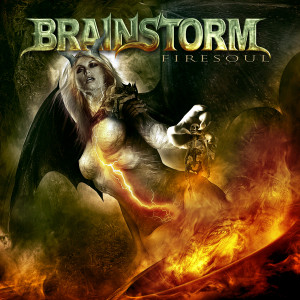 Brainstorm – Firesoul: My apologies to Andy B. Frank and the gang, it wasn’t that I willfully ignored you back in April, but your new album Firesoul had the misfortune of arriving directly in the midst of my receiving the new Edguy and Insomnium albums. Its not that I like those bands better… well, actually I do, but those were two releases that held the possibility of changing styles for both bands, for better or worse. I had to find out and so they immediately received my full attention, but in a way that’s complimentary towards you guys, because I’ve never had a reason to be concerned about what to expect on a new Brainstorm offering. You guys always deliver quality melodic power metal loaded with hooks and often impeccable choruses, and Andy sounds as ageless as ever. Consistency in producing good work is rare and admirable, and Brainstorm stand in the company of a select few in the power metal world in that regard. I love you guys.
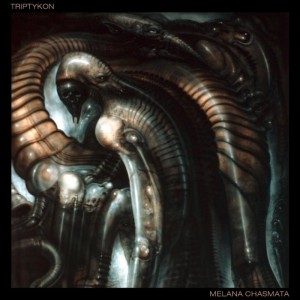 Triptykon – Melana Chasmata: Tom G. Warrior is back yet again with his second Triptykon album, and its also one of the most complex, densely written records of the year —- and that could be a great thing or a horrible thing depending on how well you can digest this stuff. In case you’re out of the loop, Triptykon was born in 2008 from the ashes of Celtic Frost, and in spirit and in sound it serves as a spiritual successor to that legendary band. Personally I’ve been a fan of Warrior’s work in general, even finding a few things to like about the infamous Cold Lake album (no, not “Dance Sleazy”), so my perception of this album might be vastly different to newcomers who should probably start off with one of the classic Celtic Frost releases. Of course a familiarity in the complexities of bands like Emperor would be a plus in being able to process the sheer unorthodoxy that is on display here. I really do like this album and feel that its one of the stronger records of 2014 overall, but it took me well over a dozen spins front to back to even remotely begin to feel that way. And I don’t mean a dozen cursory spins, I mean a dozen sit down with your headphones strapped on and close your eyes kinda spins. Its a tough nut to crack.
 I didn’t know what to make of the K.K. Downing announcement way back in 2011 declaring that he was hanging up his guitar and retiring from Judas Priest —- and apparently, music altogether. Maybe this makes me sound like a jerk, but I wasn’t really bothered one way or another, because unlike the recent albums of Iron Maiden, which have individually enthralled me in their own wonderful ways, Priest hadn’t really wowed me with any of their recent post-reunion work. Okay, I’ll admit that I really loved hearing some of the Angel of Retribution songs in concert when the band played Houston with Heaven and Hell back in 2008 (in particular the ballad off that album, “Angel”, really was something incredible live). But the follow-up in 2008, Nostradamus, was a head-scratcher of a conceptual album —- the sound of a band overreaching their abilities. Look, there was little chance of anyone ever mistaking Judas Priest for Andrew Lloyd Weber (or heck, Queensryche circa 1988), but save for a couple pretty good songs in “Prophecy”, “Persecution”, and the catchy title track I found that the rest of the album was a wash. I think that there were a couple problems with Priest’s comeback plan in general, the first being that they simply waited too long to make a reunion happen, whereas Maiden’s timing with the dawn of the millennium was nigh-perfect, and secondly the artistic output wasn’t coming fast enough. By the time Downing left the band, Priest had only done two studio albums with Halford —- hardly the amount needed to redevelop a writing partnership. ‘Priest classic’ was back for six years, and apparently only six.
 So Halford and Glenn Tipton had to pick up the pieces of this whole situation. Not only were Priest down a guitarist in a distinctively two guitarist band, but they also had lost a major songwriting partner in Downing. They recruited Richie Faulkner to fill in on guitar for the Epitaph world tour (remember all that noise about it being Judas Priest’s last world tour?), and during that trek they began to realize that they had stumbled onto a potential candidate to permanently replace Downing. The real test would be the writing process, of which they purposefully slowed down and refused to declare a release date to the press. Faulkner was not averse to writing ideas on the road, which was new to Halford and Tipton. The results of jamming on the road followed by spending the next two years carefully working together as a newly gelling writing team resulted in a lengthy delay to, well, July 2014. And its finally here, the first Judas Priest album in history to not feature K.K. Downing’s riffs and songwriting, and Priest’s first new album in six long years. And here’s the funny thing, I wasn’t anticipating this album at all, had marginal hopes for it at best, and had already developed a nitpicky pre-release criticism about the artwork looking too “on the nose” —- yet here I am, writing the following words that will tell you that this is the best Judas Priest album since Painkiller. I’ll put it another way, this might very well be a classic Judas Priest album. Unbelievable.
 The album opens with a track that proves as much, as Faulkner and Tipton are all over “Dragonaut”, an anthemic beast of a song that matches classic machine-precision Priest riffage with blazing tradeoff solos. The bottom end is beefed up as well —- the band simply sounds heavier than I remember, an attribute accentuated by carefully crafted songwriting on display here, where guitars are allowed to breath, Halford has plenty of space to work with, and the hooks land right in your gut. It’s followed by the pre-release title track single which I somehow managed to avoid listening to in the months preceding the album release, a likeable mid-tempo stomper that clears the palette for one of the best songs on the album, the truly inspired “Halls of Valhalla”. I love everything about this song, from the distant echo-ing intro to the aggressively complex stick work of Scott Travis, to Halford’s most satisfying lyric and vocal take since the Painkiller days. He sounds ageless here, unleashing classic Halford-ian panoramic screams you didn’t know a sixty-something had in him, while delivering deft vocal work on the verses segments, a grand metal orator. It would perhaps be a misappropriation to say that Priest were influenced by modern trad or power metal, but one can’t help hearing hints of Blind Guardian for example on a song like this (and not just because of the “Valhalla” reference). That perfect song is followed by the nearly as epic “Sword of Damocles” which features one of the most surprising misdirections in Priest history: A bluesy bend to the guitar passages makes you think we’re in for a road-warrior type anthem, but the chorus unfolds with an uplifting, surging melodic hook with a Manowar-ian lyric, “Truth will find its reward / If you live and die by the sword!”. Somewhere in Jersey, Joey DeMaio is shaking his fist in a jealous rage.
 If you’ve been needing something to be thankful for lately, here’s something: Stefan Weinerhall, guitarist/songwriter of power metal’s mighty Falconer is still writing and recording music. I only bring this up because it appears that this was in doubt for quite a long period of time following the release of the band’s last album, 2011’s Armod. For a short while, all we had to go on in terms of evidence that points to this was Weinerhall’s own cryptically worded message in the latest press release announcing their new album, in which he stated, “After an eight-month complete break from music on the verge of quitting it, I finally returned with a feeling of hunger, power and commitment to the songwriting.” But in a recent
 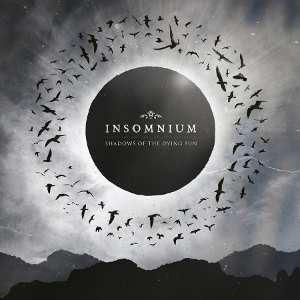 Finland’s melodic death metal brush artists Insomnium are perhaps my most beloved metal “discovery” within the past few years. I stumbled across them some time after the release of their 2011 album One For Sorrow, an elegiac, melancholy touched masterpiece. I think its easy for writers to throw that term around often, it happens quite a bit within metal reviewer circles —- but I really mean it in relation to that album. I was transfixed by every note within, and when I worked my way backwards through their discography, eagerly devouring the similarly styled Across the Dark (2009) and the noticeably more aggressive Above the Weeping World (2006), my appreciation for the band grew stronger and deeper. By October of 2012 I had my first opportunity to see the band live, who had an opening slot for Alestorm (the very idea) and Epica. I’ll never forget that show, I wrote earnestly about my experience that night in an admittedly unnoticed
 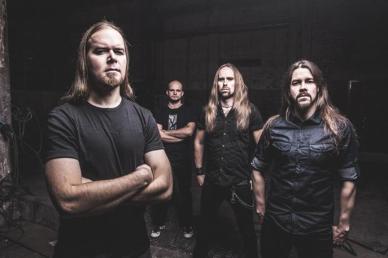 I tell you all that not only to rectify the lack of detail in that older Insomnium/Sentenced article, but to express to you just how deep my personal roots have grown with this band. I’m writing an album review on the surface, but I’m almost pained to write one for fear of deconstructing the album past the point of —- well, the way I want to enjoy it. In keeping with the way I handled my previous review, for Sabaton’s Heroes, I’ll just come right out and declare this: This is a great Insomnium record, filled with the kind of emotionally charged songwriting and artistry that we now expect from the band. But then haven’t I already expressed that I felt their past three albums were great? Yes I have, and if that nullifies any sense of relative objectivity for you then I’m sorry. And really, what else can I say? This is a band on a roll, with an unshakeable sense of identity and a musical nucleus of guitarist/vocalist Ville Friman and vocalist/bassist Niilo Sevanen that is perhaps the strongest in melodic death metal since the Stromblad-Gelotte pairing during the classic In Flames era.
 The next two tracks, “Revelation” and “Black Heart Rebellion” are as starkly contrasting as day and night; the former is a dreamy blend of acoustic guitars and slower, patient tempos with crescendoing clean electric melodic runs, Sevanen’s vocal performance at times softening to a near spoken word whisper. Its a startlingly spiritual lyric at work here too, a Sevanen penned hymn that seems to touch on the Cosmos-themed concepts of being aware of one’s own place in the universe, that “This is the gift of man / The key to see it all / The hidden wonders / Hope in despair”. Alternately in both music and lyrics, “Black Heart Rebellion” is perhaps the most punishing and brutal track on the album, with its black metal like flurry of near tremolo riffs, blastbeat percussive tempos, and Sevanen’s vicious growling about the parallels between “Morning star, angel of the dawn” and “Desolate is the path of self-believers”. Yet Friman still writes in moments of space for quiet melodic reflections, such as Vanhala’s hushed solo at 4:53 —- the kind of thing that is such a distinctive Insomnium signature, their musical calling card if you will. The lengthiest track on the album is the similarly black metal-touched “The River”, where I love the way the guitars anticipate the vocals by a fraction of a second at the 1:27 mark and the resulting effect crackles with excitement. Those stately verse sections unleash into a tremolo riff fueled chorus section with some surprising melodic change-ups.
 I have other favorites as well, “The Promethean Song” being chief among them, its chiming acoustics and slow tempo-ed bed of bass heavy guitars preceding a Sevanen/Friman vocal trade off where the latter opens up his pipes to higher ranges than we’ve seen from him before. He sounds good, really good actually, and he knows how to write vocal melodies that suit his tone (a rare skill in guitarist first songwriters). I adore the bridge section that occurs at the 4:00 minute mark with accented drumming, Sevanen’s harshly barked out vocals and perhaps the album’s best guitar solo. Then there’s the title track serving as the album closer, its a bass driven, rumbling beast of a song where heavy guitars suddenly swing up and crunch down to usher in a rather inspired Sevanen / Friman vocal duet on the refrain, “And I feel it in my heart / And I know it in my mind / That’s all there is, ever will be”. Its another song where Friman ruminates upon the stardust-y nature of our existence, a sentiment I entertain myself with on occasion and feel rather connected to. Incidentally, Friman makes his rent by working a day job as a scientific researcher, so if you’ve been wondering at the inclusion of science meets spirituality themes within the lyrics, that goes a long way towards explaining it. And of course there’s “Ephemeral”, which we heard late last year as a standalone single, and its dressed up here in a few more layers of guitars and production work, but still sounds just as vibrant, fresh, and ear wormingly catchy as it did originally. It features my favorite lyric on the album, “Dying doesn’t make this world dead to us / Breathing doesn’t keep the flame alive in us”, and its a rarity among Insomnium’s catalog —- a truly anthemic song.
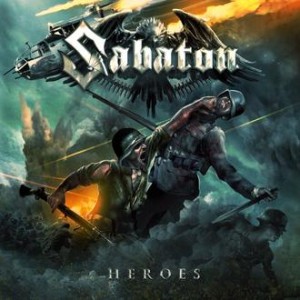 There’s so much to discuss in regards to Sabaton’s newest album, Heroes, a ten track paean to specific acts of heroism in wartime, and a strong contender to be the band’s best album to date. Let’s just get that out of the way first: Heroes is a great Sabaton record, not perfect… but really, really great. I usually avoid disclosing my overall consensus on an album until midway through a review, because after all, I’d like you all to keep reading throughout. Yet the story of this record is worth discussing in depth even though you know where my opinion stands. Its simultaneously a story of the self-driven perseverance of two friends and band mates and their vindication in the wake of what could have been crippling circumstances; as well as a collage of moments where humanity triumphed over the waste and destruction of warfare. Regarding the latter, this is a turning point for Sabaton, whose previous albums were largely made up of metallic anthems either depicting the intensity of war and its participants (for example, “Ghost Division”, “Into the Fire” or “Primo Victoria”), or paying homage to war heroes exclusively (“White Death”). There’s a bit of that on Heroes as well (certainly the cover art reinforces that), but surprisingly enough the album largely consists of songs honoring those moments when non-violence prevailed over all.
 It was an inconspicuous debut —- though an auspicious one. The tour plowed on, and when I caught the band almost a year later back in Houston, they were firing on all cylinders, the new guys even equaling Broden in their stage performances. I’ve seen them a few times since then, most recently the other week opening for Iced Earth, this time with another new drummer Hannes van Dahl as replacement for Bäck who had to leave for paternity reasons —- and my impressions were further reinforced. Having seen both eras of their lineups, I feel that the current incarnation is the definitive lineup, and that’s not to discredit former band members, but the new guys just seem to “get” what Broden and Sundstrom have in mind when it comes to their live performance. The real question however that lingered throughout was just how this massive lineup change would affect a new recording? In terms of songwriting, there didn’t seem a reason to be concerned since Broden has always served as Sabaton’s musical scribe, but he composes on keyboards and leaves the guitars to his bandmates —- how would the new guys mesh with what he gave them? Exceedingly well as it turns out, and I gather this not only from my takeaway from listening to the album itself, but from comments made by Broden and Sundstrom themselves, who in a
 As far as what makes it great, listen first to five absolutely excellent standout tracks in “Night Witches”, “No Bullets Fly”, “The Ballad of Bull”, “Resist and Bite”, and album closer “Hearts of Iron”. In typical Sabaton fashion, what makes these songs so great is not only their precision honed array of hooks and musical ear candy, but the interesting subject matter and Broden’s skilled ability at lyric writing. One of the most gripping back stories is found on “No Bullets Fly”, honoring an incident in which a crippled American B-17 was escorted back to friendly territory by a German ace fighter pilot named Franz Stigler who was one confirmed kill away from qualifying for the Knights Cross. He said that he maneuvered alongside the B-17 and could actually see through the damaged air frame and look directly at the faces of its injured pilot, Charles Brown and remaining crew. He made a choice that could’ve gotten him executed had his superiors found out —- he escorted the B-17 back to the North Sea, his presence preventing German anti-aircraft batteries from firing upon the American craft. Upon reaching the sea Stigler saluted the American crew and turned back. Forty-seven years later, the two pilots would finally meet and became good friends. As a kid I grew up wanting to be nothing more than a fighter pilot, and I loved reading about the history of aerial combat —- and I’m torn between being annoyed with myself for not hearing of this particular story earlier, but very gratified that I got to hear about it through Sabaton’s monstrously epic, adrenaline pounding celebration of human decency. It sounds like an odd juxtaposition because it is: Group shouted vocals yelling “Killing Machine!… B-17!” during the chorus envelope the humanitarian sentiments of “Honor in the sky!… Flying Home!… Said goodbye to the Cross he deserved!” Its quickly become one of my favorite Sabaton songs.
 I’d be remiss not to discuss in greater detail my love of the songs “The Ballad of Bull” and “Hearts of Iron”, two songs about non-violent humanitarian action in the middle of utter chaos. Again its refreshing to hear Sabaton’s scope increasing, their views on the concepts of heroism being greater than just focusing on combative actions. Broden’s lyrics are often startlingly direct, and they certainly are here, but I feel that it works better for the song —- what could he possibly couch in a metaphor? Some may be put off by the former’s piano drenched balladry, in fact a fellow metal critic/radio host friend of mine stated that he thought the piano on it was too “processional”, or too formal for his preferences. I can see where he’s coming from, but for me, that is precisely why I love it so much. I love that the heavy emphasis on naked piano seems to evoke a musical pastiche of the 1940s (or at least my impression of it), and its heavily pronounced major keys seem fitting to match such a near mythical tale of gallant individual heroism. Maybe its also that I simply love piano as an instrument, and amidst an album full of heavy, breakneck guitars, its arrival is a welcome contrast.
 Of course, that’s not to suggest that the band have entirely left tradition behind, as “Resist and Bite” is one of the band’s best songs to date and falls in line behind old classics like “40:1” and “Uprising” as us against them celebrations of sacrifice (though in this case it’s about the Belgian infantry resistance to the Nazis). I was driving along the spaghetti bowl of Houston freeways listening to the album this past weekend, and when this song came on I blew past the speed limit and barely saw a highway patrol car on the shoulder just in time —- a very close call! Its got that kind of adrenaline surging, pulse poundingly dramatic (and ultra-catchy) chorus that defines epic and makes you look like a maniac to other passing vehicles. The guitar solos in this track are worth mentioning —- on the entire album in fact, Englund and Rorland trade back and forth wildly melodic, furious soloing that is always complementary to the primary melody at work. Similar in old school theme is “Soldier of 3 Armies”, about Lauri Törni who as the title suggests fought for Finland during the Winter War, Germany in World War II against the Soviets, and the United States (in Vietnam as a Green Beret no less… and man, did this guy hate the Soviets or what?). Its a strong track that is a spiritual cousin to “White Death” from Coat of Arms.
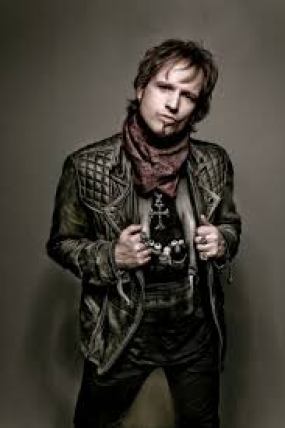
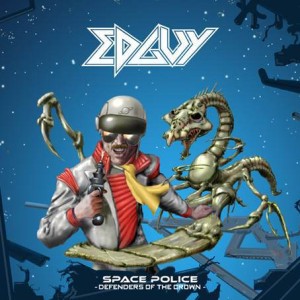 If you’ve kept up with the blog over the past few years, you’ll know that I’m a pretty big Tobias Sammet fan. Yet my unabashed fandom has not prevented me from listening with a critical ear to his songwriting in both Avantasia and Edguy, and in doing so I’ve begun to notice a certain track that his recent works have been taking. There was a noticeable decline with Edguy’s Age of the Joker and last year’s Avantasia offering, The Mystery of Time, and it could be argued that the seeds of this decline for Edguy in particular began with 2008’s Tinnitus Sanctus. That in itself I find rather revealing, because 2008 also ushered in the release of the first Avantasia album in the largely brilliant Scarecrow trilogy —- which suggests that it marked the start of an era in which Sammet began to reserve his best material for the Avantasia records, by default giving Edguy second priority. Sammet himself would balk at that very suggestion and has gone on record stating that the songwriting periods for both projects do not intersect. Hey I’m a fan of the guy, I’ll take him at his word, but I will argue that its fair to suggest that his main musical priority had shifted to Avantasia within the past six years. Its in the math guys: since 2008 —- four Avantasia albums to three for Edguy.
 These are permanent changes, and I suspect that Sammet realizes this, but I’m not sure that most of his fans have. If you’re one of the few that can accept the compartmentalizing of his songwriting career, then you’ll be able to accept Space Police for what it is —- namely, the strongest Edguy record of the past eight years. Sammet has successfully shaken off the dust of his past two recordings and delivers some pretty great songs, the most apparent of these being the title track itself. With its tension building, slow-burning verses and propulsive prog-pop chorus, Sammet has penned one of his best Edguy songs to date. Its subject matter is ironic in that its poking fun at fans, or critics (or in my case, one and the same) that tend to demand that the band stick to a particular set of stylistic rules or structures —- all while featuring some of the silliest voice effects on any Edguy song ever (remember the “sung” guitar solo from years ago… its back in a weird way). There’s also the standout single, “Love Tyger”, one of Sammet’s catchiest songs ever, with its “La-La-La-La-Love Tiiiger” refrain becoming perma-stuck in my head for the better part of two weeks now. I love the backing vocals on this tune, with its complementing mix of male and female vocals in what is by now becoming a Sammet trademark, they add a lushness to the sound that is supremely enjoyable. Another gem is the unconventional power ballad “Alone In Myself”, where Sammet trades the usual dramatic build up and Slash-esque guitar solos for an almost soul-influenced lead vocal backed up by some fantastic gospel tinged choir vocals during the refrain. I’m pretty big on Sammet’s ballads, I think he’s one of the best at penning them genre wide, and I love that he’s finding new ways to explore this particular avenue in his songwriting. What an astounding song.
 Filling out the rest of the record are some solid album cuts; “Defenders of the Crown”, the second half title track has a chorus that is slightly lacking, yet the rest of the song is packed with enough interesting musicality to make it worth many repeat listens. Same goes for “Shadow Eaters”, an uptempo mix of power and trad metal elements with a pummeling double bass furor throughout, its easily the heaviest track on the record (you know… if that’s the kind of thing you enjoy hearing about). The closing track “The Eternal Wayfarer” attempts to be the epic of the record, with its just under nine minutes in length, but it comes up short of meeting the criteria to be placed alongside past Edguy epic-length classics. Not for lack of trying however, because I should mention that the song is near spectacular from 5:03 to 7:00, where an extremely well written extended bridge features the kind of swirling lead vocal layering that we haven’t heard since the classic title track from Theater of Salvation, a blast of nostalgia that is tastefully done and just plain fun to hear! So there you have it, no real clunkers, and a handful of gems, I’d call that a pretty good outing for Sammet and a rebound for him in the quality department. I’ve noticed I haven’t mentioned any of the other band member’s performances, and that’s not meant to be a snub, as those guys do their job really well and sound great as always. This is a band that lives and dies on the songwriting skills of Sammet, and until they decide to get involved in that realm themselves, it will always be that way.
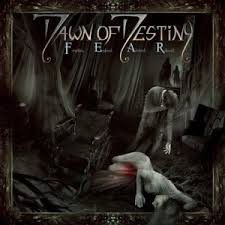 Dawn of Destiny – F.E.A.R.: Almost every year, there’s a band that appears on my radar from seemingly out of nowhere, stunning me with an album so good that I have to kick myself for not realizing that they’ve been in existence for more than a few years already. Its the “cream rises to the top” metaphor in action —- a good band producing excellent work will ultimately reach my ears due to word of mouth. Its how most of us get to know the bands we love in the first place amidst a flood of metal releases. Its impossible to listen to everything, and if you try to get in on the ground floor of every promising new band, you really do run the risk of burning yourself out (as well as preventing yourself from enjoying what you’ve already heard), particularly if you make a habit of writing about metal bands.
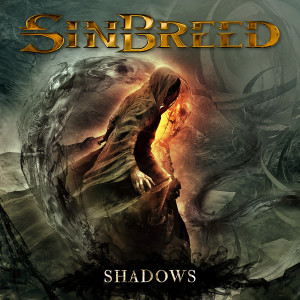 Sinbreed – Shadows: You’d be forgiven for never having heard of these guys before Marcus Siepen of Blind Guardian fame decided to join up with them. He wasn’t the first link to the mighty bards however, as Sinbreed has actually been an ongoing project of current Blind Guardian drummer Frederik Ehmke’s since 2005, together with vocalist Herbie Langhans, and guitarist Flo Laurin. They released an album back in 2010, and I’ll totally admit to missing that one (hey, Blind Guardian’s own At the Edge of Time cast a pretty large shadow over my listening time that year). What really got my attention, and that of many others was Siepen deciding to participate in this project —- after all, we’re talking about a guy who has been content to play only in one band for nearly thirty years with practically zero interest in doing anything else outside of that. Siepen is often forgotten when people pontificate about the supreme awesomeness that is Blind Guardian, as lead guitarist Andre Olbrich tends to take most of the glory (and to be honest, as a primary songwriter he probably should). However Siepen has been the Izzy to Olbrich’s Slash throughout Blind Guardian’s discography, at least playing-wise, being a razor sharp rhythm player who can deftly interplay with Olbrich’s twists, turns, and Brian May-isms.
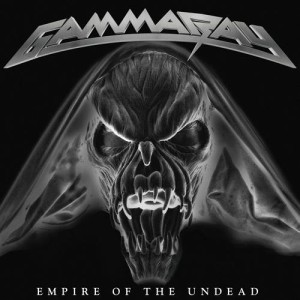 Gamma Ray – Empire of the Undead: Sometimes the problem writing reviews is that you stumble across an album where you really just don’t know what else you can state other than the obvious. I’ll shake my head and say, “No dummy, remember we’re assuming the reader hasn’t heard this album yet”, and force myself to continue. Now other than that you know I sometimes talk to myself while writing, you’ll perhaps empathize with me when you remember that Gamma Ray simply hasn’t changed much from album to album in the past decade. In fact, increases in production quality aside, Gamma Ray albums have been fairly linear affairs from one to the other, and that doesn’t mean that they haven’t been good —- but it does get hard to discuss in any remotely in-depth manner the particular intricacies of a new Gamma Ray offering.
 Eldritch – Tasting the Tears: Eldritch have long been Italy’s metal secret, a band not named Rhapsody or Lacuna Coil that sails under the radar whilst releasing quality prog/power metal albums in fairly rapid succession. They don’t get a lot of press, not even in their home country, the glory being left for their overhyped and overblown countrymen. I myself always forget that Eldritch are from Italy, not the UK or Stateside, mainly due to Terence Holler’s vocals sounding like a blend of James LaBrie and Sebastian Bach. I have to admit I missed their last album Gaia’s Legacy, so I’m not sure how this new one measures up in terms of progression, but it certainly sounds like the Eldritch I remember. Take the more metallic side of Dream Theater, tone down the progressive noodling, increase the emphasis on catchy vocal hooks with some fairly strong melodic twists and you’ll have a good idea of what to expect here.
 I wonder if every new Sonata Arctica release shouldn’t come with a warning sticker on the front. I’m not quite sure exactly what the wording of the message would be, but it’d have to get its point across succinctly since there would be an obvious character limit. Perhaps we can impose some self-made restrictions upon ourselves to keep it short and sweet —- a twitter style 140 character limit then? Yeah we’ll go with that. Perhaps by the time I arrive at the conclusion of this review we’ll have a message for that sticker that does the job. But why the need for a warning sticker at all…? Its because post-2007 Sonata Arctica have the misfortune of being saddled with the weight of rather grand expectations, and perhaps because as fans we see our expectations through the 20/20 vision of hindsight.
 And that’s a fairly accurate (if crude) way of analyzing each new Sonata Arctica album since 2007’s Unia, a line of demarcation for the band where they decided to branch out their sound and songwriting with some far flung experimentation. Its been a rocky ride ever since. Sure there have been gems on all these experimental era records, “Only the Broken Hearts (Make You Beautiful)” and “Alone in Heaven” from 2012’s Stones Grow Her Name come to mind immediately, but there’s a been a lot of “cutting room floor” playlist material as well. And if you take a look at the band’s discography, you’ll notice that with the release of Pariah’s Child, the band has evened up the number of albums in this post-2007 experimental era to those of their classic, golden era —- four a piece to be precise. Yep, I’m including this “return to form” album with the experimental era because Tony Kakko —- who has spent these past seven years experimenting —- can no longer relate to the natural boundary of tunnel vision he had during the band’s early years. He’s an internal songwriter at heart, and as a result suffers from a lack of external separation… simply put, its likely that he doesn’t see the experimenting we hear as being all that experimental. But to us outsiders, it seems for all the bluster about how Pariah’s Child would be a no-nonsense, classic Sonata Arctica power metal album, there sure is a lot of nonsense here.
 I’m sure the most baffling track on the album is “Half A Marathon Man”, which actually has a nice Deep Purple/Rainbow-ish approach for the majority of the song, but they’re undermined by Kakko’s pointed lyrical American-isms. That in itself isn’t a deal breaker, but the sheer rock n’roll throwback approach is jarring, especially in the context of this supposed return to their power metal glory (of which I’m sure it’s abundantly clear by now that Pariah’s Child is not). And I can’t neglect to mention the utter mess that is the purported epic of the album, “Larger Than Life”, where the first five and a half promising minutes are blown completely out of the water by hearing an operatic choir sing the lines “So don’t take life so seriously”. Look, I tolerate a lot with Sonata Arctica, but I have a hard time swallowing the juxtaposition of an epic sounding collection of professional voices singing such mundane phrases. It simply doesn’t work, and tellingly the song unravels immediately after that, a directionless blast of orchestration and guitars that get blander as they go on…. at one point you realize that nothing is actually happening in the song, its just elevator music over tepid riffing. This song desperately needs a melodic motif that it can go back to or utilize in increments throughout —- instead it just comes off as a collection of leftover ideas that were cobbled together against an orchestral arrangement in the hopes that it would mesh together well. It didn’t, and instead can be officially considered the worst Sonata Arctica “epic” to date.
 I’ve learned through these past few years doing The Metal Pigeon that the hardest reviews to write are the ones for releases that I don’t feel strongly about one way or another. Case in point is the amount of days I’ve been putting off publishing this review for the newest Within Temptation album, Hydra, simply because I’ve felt unsatisfied about my own written response (I’ve re-written this thing about three times now, and this fourth and final time is me just being blunt and hopefully not coming across as a jerk). Full disclosure before I begin: I generally enjoy what Within Temptation does —- which is polished, semi-symphonic metallic pop-rock crowned with the ear pleasing vocals of Sharon Den Adel. There have been some missteps along the way (the insipid “What’ve You Done Now?” duet with Keith Caputo comes to mind), but generally speaking Within Temptation have done rather well in their chosen style. I’ve never really considered them a metal band, but they get thrown into our world due to the semi-doom stylings of their debut album and simply by association (at least for me… I first heard of them through Den Adel’s guest spot on the first Avantasia album). But that’s okay, because over the past decade plus they’ve delivered a handful of albums with catchy, well crafted songs that ring with conviction.
 And then there’s the much ballyhooed Tarja Turunen (billed these days simply as “Tarja”) collaboration, “Paradise (What About Us)”, a song that is disappointing on a few levels. First I suppose I should remark on just how well Tarja’s English pronunciations sound these days, to the untrained ear her traded off verses with Den Adel would be nearly indistinguishable. That’s also part of the problem —- their verses are patterned so similarly that there really isn’t an apparent juxtaposition of voices on the song (unless you count Tarja’s operatic accents during the middle bridge section —- which I don’t). Songwriting wise, there’s some solid rhythmic variations going on in the verse sections that you wish were expanded upon. It’s the chorus that fails me, not only because its repeated countless times in favor of… you know, actual songwriting variations, but its simply weak, unable to pull sufficiently from the wellspring of drama that has fueled so many Within Temptation choruses past. To me personally, its yet another sad piece of proof that Tarja’s vocals will never have the benefit of the kind of songwriting platforms Tuomas Holopainen crafted for her in Nightwish —- she simply does not sound good anywhere else.
 Thankfully its not all bad. The album opener “Let It Burn” is a decent song, reminiscent of the same surging energy that ran throughout The Unforgiving, with tension building verses that explode in a exuberant refrain. The highlight of the album however is “Silver Moonlight”, the one track that sees the band refreshingly reconnecting with their metallic roots. There are actual metal riffs at work here! Some pretty good ones at that, making a change from what has become the band’s typical reliance on big dumb power chords. Here Sharon Den Adel flexes her soaring vocals to greater heights, and guitarist Robert Westerholt makes his co-vocalist return with some impressively doomy death vocals. Ironic that this ends up being the best track on an album full of guest vocalists. There’s also “Covered By Roses”, where the Gothic imagery of the title is matched by the content of the lyrics, full of references to castles, falling stars, wine, sadness, beauty —- it winds up sounding like an outtake from The Silent Force (that’s a good thing). Is that an actual fluid guitar solo I hear at the end there? I knew these guys still had some real musicality hiding under all these layers of production gloss! On an album this dire, I’ll take every encouraging sign I can get. I could’ve done without the awkward, half-baked “Dog Days”, a song that might’ve benefited from a producer who would’ve called the terrible lyrics into question. Oh well… I’m getting tired of listening to this record honestly, so moving on.
 I know the intention behind The Q-Music Sessions was to celebrate a radio station’s anniversary (huh?!) and to see if the band could quickly adapt a song to their style —- however, the entire affair struck me at the time as the most dubious exercise in crass commercialism. What’s even more surprising was the lack of anyone calling them out on it. I have no problem with a band wanting to get bigger, to sell more records, to gain more fans, and to generally secure their livelihood. I do feel however, that what Within Temptation have done by agreeing to the concept of their stunt with this radio station is inherently disingenuous. They’re not releasing a covers record of songs culled from their influences growing up, they’re simply covering pop radio hits. Was it really such a challenge to deliver such half-baked covers? When they released all these finished covers as an album, the YouTube uploads quickly followed —- you can’t say the band isn’t shrewd. How many of those covered artists’ fans have checked out these YouTube-d covers by this odd Dutch rock band? How many of those fans will in turn check out Hydra due to simple fandom flattery? How far does something like this go you may ask? Den Adel even recently