
In continuing the theme of 2014 being the year of power metal, the past couple months have given us a handful of new releases by established artists from the genre to delve into. Among these are two bands back with their first new albums in over half a decade. Sweden’s Persuader were last heard from on 2006’s admittedly lackluster When Eden Burns, the first slight misstep within their largely fantastic discography. The German quintet of Silent Force haven’t released a record since 2007, and are also sporting three new band members while moving forward without longtime vocalist D.C. Cooper. If you haven’t been keeping up, he’s been back with Royal Hunt since 2011, and they’ve just released only their fourth album with him on vocals, despite his first joining the band way back in 1995(!). And then there’s Germany’s Primal Fear, who might just be one of the most hardworking bands in genre, ushering in one album/tour cycle after another with no stop in regularity. They return with their tenth album in sixteen years, a breathless pace for any band to keep (and that’s not counting compilations or live albums). Lets get into it:
 Persuader – The Fiction Maze:
I’m glad I took my time with this album, because perhaps my initial exuberance at the mere fact that I was finally listening to a new Persuader record would have colored my initial impressions had I reviewed it right away. Speaking of taking one’s time, eight years is an eternally long time between albums in the metal world, and kind of a shame in Persuader’s case because despite my limited enjoyment of When Eden Burns, I had no doubt that they’d right the ship and get back to delivering modern day classics in just a year or two. Clearly that didn’t happen… so why such a long wait for this new album?
It’s ironically Blind Guardian’s fault (Persuader vocalist Jens Carlsson is a dead ringer for Hansi Kursch), as former Guardian sticksman Thomen Stauch persuaded (hah!) Carlsson and guitarist Emil Norberg to join him in the bizarre power metal Frankenstein that was Savage Circus. Stauch left Blind Guardian due to being unhappy with the band’s current symphonic-heavy direction, and he yearned for a return to their early nineties era musical style. Alongside Iron Savior’s Piet Sielck, the Persuader guys stuck around long after Stauch himself went on a hiatus for personal reasons, and a great deal of time passed in which they managed to release a few records to mild acclaim. I think the best way to consider all this is to state that the very obvious sentiment that where many were clamoring and hoping for new Persuader all these years, few have done the same for Savage Circus. Hindsight then.
So does the band rebound with The Fiction Maze? In large part yes, this is a far superior album to When Eden Burns, yet it fails to match the visceral intensity of their past classics The Hunter and Evolution Purgatory. The album opens with its best track, the absolutely storming “One Lifetime”, where a thunderous introduction with aggressive melo-death riffing and tension building verses usher in the band’s most devastating chorus to date. This is classic Persuader, playing to their strengths and showcasing their natural talents as hook first songwriters. Not quite as stunning, yet still great are the lead off single “Son of Sodom”, “Deep in the Dark”, and “Sent to the Grave”; the latter of which boasts 2014’s most compulsively earwormy chorus (Carlsson’s vocal phrasing here is inspired).
But there’s some weaker stuff here as well, including a couple of clunkers in “War” (which is a shame as it follows “One Lifetime”), “Worlds Collide”, and most notably the insipidly titled “InSect”. Their interspersed placement among the tracklisting is distracting and disrupts the flow of the album into a continuously up and down experience. I see myself loading up the best tracks on the iPod and avoiding further listens to the album as a whole —- maybe next time we’ll get a start to finish classic. Hopefully it won’t take eight years.
 Silent Force – Rising From Ashes:
I know that I’ve used a lot of screen space lately on discussing subgenres, styles, and just what characterizes metal. You’ll forgive me however if I delve right into a puzzling question that arises upon my umpteenth listen of Silent Force’s Rising From Ashes: Why is it that nearly every power metal/trad metal band that winds up on AFM records eventually ends up transitioning to a more hard rock style? If you know your power metal history, you’ll realize that this actually started with Edguy leaving AFM back in 2001 after Mandrake was released, their next album was 2004’s very much hard rock injected Hellfire Club —- their first for their new label Nuclear Blast. Maybe that’s where it started, but its become something of an unspoken phenomenon, but I’m not wrong in my observations. I can only idly speculate at what the source behind this influence is —- the label bosses perhaps?
This doesn’t mean that the results are automatically doomed to failure. More often than not, the natural extension for a power metal band looking to loosen up their traditionally tightly wound sound is to add more wild, unrestrained hard rock influences into the mix. The concerning thing is that its become a major trend over the past half a decade, and there are so few power metal bands going the opposite direction when seeking new inspiration (for example, mixing in more technicality, or getting heavier by adding in extreme metal elements… Falconer is a good example of the latter). Anyway, Rising From Ashes is worlds apart from their last album with D.C. Cooper, 2007’s Walk the Earth, as new vocalist Michael Bormann boasts a bluesy, Coverdale-ish rasp that is a striking contrast to Cooper’s smooth tenor. As far as hard rock vocalists go, he’s top tier and sounds practically ageless (he’s bounced around various projects since 1993). Founding guitarist Alexander Beyrodt apparently decided that it was enough of a contrast that he had to scale back the band’s more traditional power metal leanings in favor of lean, muscled up hard rock riffs, a simplified approach to songwriting and a shift from fantasy inspired lyrical themes to a more hard rock friendly range of topics about relationships and heartbreak.
It actually works surprisingly well on spectacular tracks like “Circle of Trust”, “Anytime Anywhere”, and the very Whitesnake-ian “Turn Me Loose”. The former is the best track on the record, featuring an explosive chorus complete with gang shouted vocals (although the workable lyrics tend to veer close to self-help/counseling territory). All three boast refrains that will get stuck in your head —- but unlike past Silent Force records, the entire song seems built around them in a simple verse-chorus-verse-chorus format, and seemingly long gone are the prog-metal elements of records past. That means a tremendous lack of lengthy, flashy Beyrodt solos, no delicate piano or acoustic guitar intros, no sudden shifts in tempo or structure, and no more of the adventurous elements that made albums like Walk the Earth or Worlds Apart so compelling.
It honestly just sounds like a totally different band at times (or much like Beyrodt’s side project in Voodoo Circle, which makes the whole thing even more puzzling). The rest of the tracks on this album reinforce that loss, and while they’re all generally decent enough, they pass over you without much of an impact. The magic of those earlier releases seems to be gone, and I’m going to go ahead and suggest their choice of vocalist contributed to that. Bormann is an undeniable talent, and he could sound great singing your shopping list, but they really needed to get someone who could’ve continued in the same milieu as Cooper. Sometimes heading in the opposite direction with a replacement vocalist works out, but not if that direction pulls the band along with it as well.
 Royal Hunt – A Life to Die For:
Good news for those hoping that the Hunt would maintain the momentum built back up with 2011’s Show Me How to Live, their long hoped for reunion album with D.C. Cooper. Their newest is as good, if not better and as a nice little bonus provides us with the best production to ever grace an album in their overwhelming discography. If you’ve gotten used to hearing Cooper’s far more metallic attack in Silent Force over the years, his approach in Royal Hunt might throw you. He showcases a far more theatrical, almost Freddy Mercury-ian flamboyance in his vocals on all his work in this band (and to my ears at least, it sounds like he picked up right where he left off on the 1998 masterpiece Paradox). Keyboard and composer André Andersen doesn’t shake up the formula all that much, so you know what you’re getting on an essential level: progressive, complex songwriting with an emphasis on strong hooks, prominent keyboard melody lines, and of course stellar upfront vocals.
This time Andersen added some actual string players to fatten up the orchestral elements normally handled by his keys alone. The results are noticeable, especially on standout tracks like “One Minute Left to Live” where they play off Andersen’s keys in dramatic fashion. That track is also a strong example of how its entirely possible to make melodic prog-metal both technically complex and accessibly catchy, possibly something born of a European tradition since its an aspect lost on American bands like Dream Theater. The same goes for “Sign of Yesterday”, a melodramatic quasi-power ballad where stately strings usher Cooper’s vocals in waltz like rhythms before revealing an almost circular, sweeping chorus. On “Running Out of Tears”, Cooper is joined by harmonized counterpoint female vocals, a delicate touch that adds depth to an already strong refrain. As I’m listening to the album again while writing this review, I can’t help but just appreciate how great it is having Cooper back with Andersen. The latter’s songwriting style always seemed to lend itself to an ultra smooth voice and while the John West / Mark Boals eras had their good moments, they simply don’t hold a candle to Cooper.
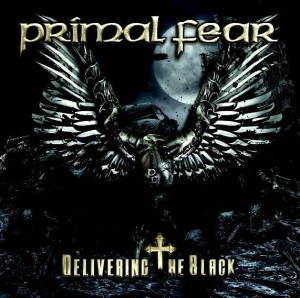 Primal Fear – Delivering the Black: Its getting harder and harder to review new Primal Fear albums. I’ve always enjoyed their Judas Priest-influenced (worship?) take on power metal, they make consistently solid albums (never truly great), and there’s not much to complain about. And that’s kind of the problem… (here it comes)… they have a tendency to largely play it safe to a fault sometimes. Don’t expect Delivering the Black to signal a drastic change of that tendency, and I suppose its fair to state that the band is entirely comfortable with that. I did however think 2012’s Unbreakable was the most inspired record they had delivered in the past ten years —- the reasons being hard to define except to surmise that they were firing on all cylinders songwriting wise. It was the first time I could remember being able to play through a Primal Fear album without skipping around.
As a follow-up Delivering is a touch underwhelming in comparison, but it does have its fair share of carry over excellence from its predecessor. As on Unbreakable with the undeniably awesome “Where Angels Die”, the longer songs here seem to fare better, namely, “One Night in December”, and the lead single “When Death Comes Knocking”. Kudos to the band for adding to the latter some unexpected musical flair in the form of middle eastern instrumentation midway through, it actually works for some bizarre reason. The former track is the traditional epic of the album, and they’ve been on a such a roll with them lately I almost encourage the band to seek out crafting a smaller tracklisted album full of these Sad Wings of Destiny influenced lengthier cuts. Its songwriting is complex and multifaceted, while sonically there are just enough subtle orchestral swells to make your hair stand on end at times. Guitarist Magnus Karlsson seems to have really found his place within the songwriting ranks of the band in the past couple albums, he’s likely one of the major reasons for their turnaround lately. A tip of the hat as well to Alex Beyrodt (yes the very same Beyrodt of Silent Force), who has been helping the band on second guitarist duties (I guess he’s officially in the band now?).
There’s of course a ballad on offer here too, “Born with a Broken Heart”, and if you enjoy power metal ballads then you should appreciate Primal Fear’s career long track record of tackling these. There’s just something about Ralf Scheepers’ leathery vocals softening for gorgeous, delicate orchestral melodies that supersedes any reservations about the admittedly trite lyrics (you don’t listen to Primal Fear for in depth lyricism). The rest of the album is largely good despite a few fillers here and there, but that’s to be expected, though I wasn’t wild about the closer “Inseminoid” —- whatever that title is supposed to mean. It could’ve been left as a b-side for Japan which would have made the ballad the closer. Oh well, nitpicking is futile. I suppose the fact that I wouldn’t mind hearing a good handful of these songs live when I see the band in May is a good sign for my overall appraisal.
 I just realized something —- this will be only the third time I’ve written solely about Iced Earth in the history of this blog, the first being Dystopia‘s inclusion on the Best of 2011 list, and the second being a 2012 gig report that turned
  The first four songs on the tracklisting are particularly apparent examples, the highlight among them being the adrenaline pumping “Democide”, as thrash metal-y as Iced Earth have sounded in years. Block’s solo lead vocals seem heftier and far more menacing here than on Dystopia, and again it reminds me of how he sounded when I saw him live. Its ironic then that Blind Guardian vocalist Hansi Kursch turns up in a guest spot on “Among the Living Dead”, where he doesn’t really add his trademark wall of sound vocal layering approach to the mix, instead merely offering up his own solo vocal counterpoints to Block’s. Honestly it took me a few listens to even spot Kursch’s usually instantly recognizable voice, and even after many, many listens I wonder if his talents are going under utilized here. But these thoughts are put aside by the time “The End?” kicks in, where Schaffer and lead guitarist Troy Seele deliver a lushly melodic array of guitar work to introduce some contrast to Block’s brutal take on clean vocals —- here he even delivers a near black metal styled scream midway through.
 Now to discuss the obvious album highlight, which may irk some as its a cover, but the band’s take on “Highwayman” is nothing short of spectacular. This is of course the Jimmy Webb penned namesake track of the eighties super group of Willie Nelson, Kris Kristofferson, Waylon Jennings, and Johnny Cash The song was fitting both lyrically and structurally for those singers, four country stars long pegged as outsiders in their own genre, four verses for each of them. Iced Earth invite some friends to flesh out their version of the classic, with Schaffer himself handling the first verse on lead vocals, followed by Symphony X’s Russell Allen, then Block, and finally rounded out by the distinctive country-punk twang of Volbeat’s Michael Poulsen. It really works, Schaffer has occasionally done some lead vocals on Iced Earth tracks here and there, so he has the chops to do it and sounds commanding here. Allen is of course a long ranged vocal dynamo, who even adds some of his trademark vocal run extensions despite only singing a few lines. Block’s verse might by my favorite, about the dam builder “Across the river, deep and wide / Where steel and water did collide”, his delivery touched with a hint of outlaw country and rock n’ roll abandon. Poulsen is admittedly an acquired taste, but I don’t mind a little Volbeat here and there and in small doses such as the concluding verse here he is a refreshing change up. They all do a great job.
 If you haven’t heard of Germany’s Atlantean Kodex before, that’s understandable because they are only recently receiving the kind of critical acclaim that is turning quite a few heads thanks to their amazing new record The White Goddess. I myself only listened to them after 2013 had passed, thanks to seeing their high placement on Adrien Begrand’s Best of 2013 list. Atlantean Kodex play power metal, or as some prefer to call it to avoid negative stigmas, traditional or epic metal. The caveat is that all this new found attention is coming from far more than just relatively underground power metal sites/blogs —- as the band have been turning the heads of writers at a few big platform publications such as
  What makes The White Goddess great isn’t exactly groundbreaking on a conceptual level —- its simply quality songwriting, excellent musicianship, and a vocalist that sells it all with soaring conviction. The same qualities could be attributed to many other fine releases by other bands within the genre. Where Atlantean Kodex strive to differentiate themselves is by adding shades of melancholic doom to their take on power metal, which makes everything sound heavier, with a tendency to lean on slower, steady tempos, often with ample use of space and silence. Evidence of the latter can be found on the slow and brooding eleven minute long “Heresiarch”, where isolated bass lines sometimes are the sole instrument rumbling along during the verses. The clear album standout here is “Sol Invictus” (another ten minute plus track), the album’s clarion call that boasts a punishing heaviness not only from sledgehammer riffs, but from the brutal attack of the rhythm section —- drummer Mario Weiss is one of the most talented and unheralded drummers in metal today, his percussion is at once relentless, assaulting, and artful. The chorus here puts the spotlight on vocalist Markus Becker who commands your attention with a performance that is Imaginations-era Hansi Kursch esque. I’ll spare you a track by track dissection here, the entire album is jawdroppingly amazing, but my personal favorite has to be “Twelve Stars and an Azure Gown”, a semi-ballad that wrenches out emotion from every note. At times throughout the song, metal fury is pierced by moments of haunting, doomy, ethereal beauty. I mentioned Bathory as an influence earlier, and its extremely difficult to pinpoint one particular moment where Quorthon’s work really comes through, because its simply everywhere, ingrained in the fabric of Atlantean Kodex’s sound and approach to songwriting. You hear it alongside the Manowar-ish influences and it sounds completely natural.
 And finally, in the thrilling(!) conclusion, I present The Metal Pigeon’s Best Albums of 2013, the second and final part of my overall best of the year feature (
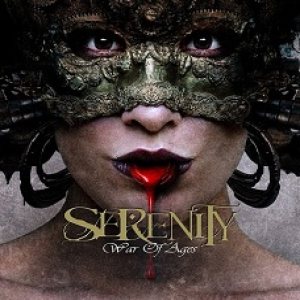 1. Serenity – War of Ages:
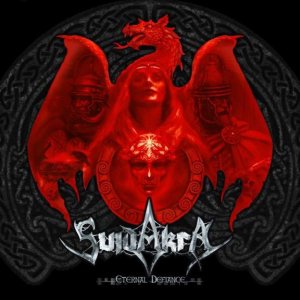 2. Suidakra – Eternal Defiance:
 3. Satyricon – Satyricon:
 4. Carcass – Surgical Steel:
  5. Falkenbach – Asa:
 6. Orphaned Land – All Is One:
  7. Rotting Christ – Kata Ton Daimona Eaytoy:
 8. In Solitude – Sister:
 9. October Falls – The Plague of a Coming Age:
  10. Tribulation – The Formulas of Death:
 Falkenbach flew in under my radar in the sense that I really had no idea they would even have a new album out this year. This is after all a band that is basically one guy, doesn’t play live, and has practically zilch when it comes to an online/social media presence. Their newest offering, Asa, is by an incredibly large margin their best record yet, as Vratyas Vakyas pushes his project’s sound into the welcome reaches of a clearer, professional production. This isn’t to say that past Falkenbach records sounded horrible, but they were coated with a wash of muddled atmospherics and distant drum sounds that often compromised the power of what were undeniably good songs. Here, Vakyas’ vocals are pushed to the front of the mix, his blackened grim vocals now possessing even more bite and rancor than before, and his gorgeous, plaintitive clean vocals are now full, lush, and emotionally affecting. Such is the case on the lead off single “Eweroun”, where delicate acoustic pluckings contrast elegantly against a patient bed of hypnotic, warm riffing —- all while Vakyas calming multitracked vocals take center stage. Its an inspired song, with a definite feel of rootsy authenticity that I find lacking in most modern folk metal. On the other side of the spectrum are fierce black metal tracks that hit with a heaviness and aggression previously not heard on Falkenbach records, such as “I Nattens Stilta” which still manages to surprise with a few prog elements thrown in as well. This is shaping up to be the most welcome yet unexpected comeback record of the year.
 As I wrote in my previous article, In Solitude really wowed me with their performance in Austin opening for Watain. Now when I listen to their newest album, Sister, I wish I took the time to learn those songs in advance of the concert because I’m hearing great moments that I remembered from their set that night, and good shows are made great by knowing the songs yourself ahead of time. My previous reservations about In Solitude’s prior releases were that while they sounded good and there was generally a decent amount of songs worth going back for, the band was essentially aping Mercyful Fate. Generally speaking, this isn’t something worth crucifying a good band for, not when there are already loads of dopey revisionist thrash bands out there making fools of themselves in puffy eighties styled sneakers. But it was a factor in preventing me from getting into the band completely, and I found myself hoping they’d transition into an original sound or at least a new take on their influences in the future. The good news is that they wasted no time in doing so, and the great news is that they’re unearthing a truly original sound in the process by embracing their post-punk influences and toning back the metal classicism a great deal.
 The other band that night, the doomy Tribulation, have a new record out called The Formulas of Death, which is plenty riff heavy yet shares In Solitude’s new found penchant for airy infusions of dark psychedelic swirls. I’m still a bit undecided on this one, but a good sign is that I’m intrigued enough to keep coming back to it. They alternate between a doom laden crushing blend of death and black metal without succumbing to genre tropes, or even displaying any obvious influences, and when they hit it hard its gripping stuff. Check out a track like “When the Sky is Black with Devils”, which musically comes across as a mix of Dissection meets latter day Darkthrone. Like In Solitude, Tribulation choose to employ riffs in a far more restrained fashion, featuring long sustains and riffs that aren’t super tight. At times their musical attack brings to mind a blackened version of those early classic Maiden tradeoffs between Murray and Smith —- loose and almost hard rock-ish while simultaneously precise and focused. I love the aggressive moments found on tracks like “Spectres” and “Suspira de Profundis”, but admittedly I find the soft, spacey moments that permeate throughout to be an occasional strain on my patience. When I have the album on in the background and am focused on something else primarily, I find myself enjoying the record as a whole and even admiring those moments of quiet, but when I begin to really focus on what I’m listening to, I find them lacking in musicality —- quiet noodling should still have purpose, direction, and melody. Maybe that’s just going to be my hangup, but it comes and goes, and that further confuses my overall take on this album.
 I get the feeling that Tribulation will wind up on many reviewers/bloggers best of 2013 lists, some are already short listing it as the album of the year. There usually are one or two albums that end up being a consensus pick of critics genre wide, and far be it for me to suggest that most of these folks don’t truly enjoy the album. Good albums are deservedly recognized as such, but in the past few years in particular I’ve found that the consensus pick of each year has fallen flat for me. And I think that’s where I differ in my end of year analysis and list creation from other sites, blogs, and critics. If a record doesn’t net an emotional or at least a compulsive response from me, then I find it hard to say that its the best album of the year, regardless of how innovative or genre-bending it is. I got a lot of flack a few years ago for publicly questioning NPR’s best metal records of 2011 list, in particular from fans of Cormorant, whose album Dwellings took the top spot on that list. It also appeared on just about every other critical list of metal records for that year, particularly from major mainstream media outlets. Don’t get me wrong, I think that it was an album worth checking out, it was certainly an interesting listen —- but that’s all I got out of it. The responses of that fan base to my list were scathing as expected, and that was fair enough, but my list was an honest one for the time. Of course as I admitted earlier, you’ll rarely get it right in retrospect, but as long as its honest in the moment, how wrong could it be?
 One major disappointment worth noting that I never commented on before is what in the wild hell happened to Blabbermouth? Website redesigns are totally understandable and even welcome when done right but that site was for better or worse the center of my and most other heavy music fans’ online experience. Its been my homepage for years and was always part of the daily new scouring routine. The old design’s iconic news feed scrolling section is now replaced by a far more inconvenient “highlights” feature, mostly featuring Kerry King’s unwelcome face. There are fewer articles on each page of the site, making navigating a chore, and forget about trying to remember how far back you’ve gone because there’s no easy way to judge unless your memory is spot on (mine isn’t). I’m starting to utilize Twitter and Facebook more and more for metal news on essentials like releases and tour dates, but those aren’t perfect systems for those. I find myself actively looking less and less at Blabbermouth even for entertainment value, which was of course one of it’s most dutiful roles, a sort of TMZ for the metal world. Maybe I’m in the minority, but I enjoyed being a spectator to the comment feeds as well, where stupidity and snark would collide in a misguided, often hilarious display of the worst of our fan-doms. With the comments sections now tied into Facebook, anonymity on the site is non-existent, and while some commenters have no problem presenting themselves as oafs and buffoons, the majority of people commenting on individual articles are turning Blabbermouth into a mild version of NPR.org (where complete sentences and paragraph length discussions do a poor job of masking one of the more abhorrent comment sections anywhere online… the ones brimming with irony and smug self satisfaction). Bring back the privacy curtains and trolling idiots I say, god knows we need something to laugh at in this genre.
 The incentive by the way are out of proportion ticket prices. The Manowar shows are 75 dollars for advance tickets or 100 bucks on the day of the show at the box office. Maybe the size of the venues being scheduled (a lot of small theaters like House of Blues) can justify these prices but the reality is that the band is simply taking advantage of scarcity. Manowar regularly schedules full length European tours that see them play in venues such as hockey arenas, soccer stadiums, and at the very least, big big halls (clear em!). They rarely play their own home country and make it point to utilize that scarcity to their economic advantage. Look, I understand economics and supply and demand, the reality is that they’re charging 75 bucks a pop because some people will pay 75 bucks a pop. Do I think they’ll sell out all 1000 tickets for the Houston House of Blues at those prices? Certainly not. I honestly think they’ll be lucky to get 200-300 people in there but there’s more to this issue than just money.
 The show was at a seemingly obscure hole in the wall called Red 7 on 7th street, yeah next to that famed street of one number below, but the venue was deceptively sized. Inside was a small stage facing a bar, but a side door led to a spacious outdoor courtyard complete with shady trees overhead and a covered stage. Watain’s backdrop’s were already on this stage behind multiple drum sets, and a pungent aroma of cloves, possibly sage, and incense was pervasive throughout the air. The show would apparently be happening outside, a small commercial office just on the other side of the fence, one of its window blinds drawn open to reveal a still lit computer monitor. This was unusual, and also totally Austin. I’ll admit my experience with the city is severely limited, most of my out of town show excursions aimed at San Antonio. Here in Houston, metal shows are almost exclusively at smoky, dark, indoor clubs in remote corners of the city.
 Its raining on and off throughout the early parts of the evening, just light drizzle basically by the time local openers HOD take the stage. I’ve seen them a few times before in various venues, they’re a frequently gigging San Antonio based metal band whose sound is difficult to categorize except to say its mean and ugly. This is the best I’ve heard them yet. In past shows they’ve come across as a whirlwind blur of noise on stage but Red 7 seems to come equipped with a rarity in venues this size —- a really good sound guy. All of the instruments are discernible, the vocals are clear and up front in the mix, and the drums aren’t too overpowering, it all bodes well for the rest of the night. I didn’t know a thing about Tribulation, who take the stage soon after and begin to play a surprisingly atmospheric mix of doom and death metal. I love the instrumentation, they have a vivid sense of melodicism and use of space in moodier sections. They were entertaining on stage as well, a quality that to a relatively jaded metal head like myself is an achievement to note. I promised myself to check out their records once home.
 Remember when I told you it was drizzling? Good, keep that in mind. Changeover times are short, the venue staff really do seem to have a handle on all these things that we Houstonians usually accept with delays. Live music capital indeed. Watain’s stage set is grisly: A folded out two sectioned backdrop of stretched out animal skin panels with actual animal bones set in each panel column to spell out in runic lettering W-A-T-A-I-N. There is a small altar set off to the side just adjacent to the center mic position, upon it a chalice, an open book, and some kinds of incense or leaves (hard to distinguish in the dark). Inverted crosses stick in between the monitors at the front of the stage, and incense burners produce enormous quantities of perfumed smoke, and the entire scene is bathed in eerie, muted, red light. There won’t be any stage lighting change ups during their set, nor any roaming vocalist spotlights, this is all the lighting Watain wants. All the band’s have had extra help in that regard as the overcast clouds have brought much in the way of actual thunder and lightning throughout the evening. It was mood setting during the opening bands, with many in the audience nodding and smiling while looking up appreciatively at the night sky. Halloween, Watain, freaking lightning in the sky? Its as if the Earth approved of our shenanigans for a time. And then it didn’t.
 Watain takes the stage to tremendous applause and a huge crowd surge forward, with some unwitting idiot deciding to start the pit (on slippery cement no less) on the left side of the crowd instead of the center (you know, as everyone else on the planet knows to do). I’m casually thrown back ten feet along with a dozen other people from my third row center position as another pit forms middle center. Somewhere between fending off circle pitters to my right with my forearm and helping a tiny female fan next to me get up after being bowled over, I see Watain appear as shadows in the smoke, Danielsson already launching into his weathering vocal attack. I won’t pretend to be entirely knowledgeable about the Watain back catalog, really just the past few records, but I knew they opened with “De Profundis”, one of the best cuts off The Wild Hunt. Then, a few songs into a set, as we’re all headbanging and warily watching our peripheral vision for incoming mosh pitters, the clouds are uncorked and a light, frothy drizzle becomes a torrid, cold downpour. It is vomiting rain, and we are stunned and soaked. The band plays on, covered by a huge sheet metal roof, and some of the first rows of fans pressed against the stage are sheltered as well, oblivious to the storm. The rest of us have a collective moment of either, “yep, going inside now”, or “oh well, hey’re we’re already wet —- and Watain’s playing!”. I stick with the latter camp, my shirt getting heavier and heavier with soaking rain each second, my only concern my cell phone now precariously pressed in my side pocket. I see Danielsson hold up his chalice and say something about ritual blood, oh man…. he throws it, everywhere. It reeks of, ahem… putrefaction.
 More than halfway through Watain’s set, just after their rendition of “Reaping Death”, I finally have to call time on the satanic shower. Most of the rear half of the audience have gone inside, those closest to the open doorway watching from their dry vantage point. I’m more than drenched, its like I just walked into a shower with all my clothes on and decided to stay there for half an hour plus. I duck inside, past a mass of drip drying faces that I see through a wet blur. I feel a few hands clap me on the shoulder as I sludge past them, what I take as a “good effort, good hustle” type of thing. My friend —- he’s up at the front under the meager extension of the stage covering, raging like a maniac, while just barely escaping the water wall inches from his back. I try to watch from the doorway, but eventually just sit near the wall and listen to the rest of the set. Watain are excellent, and I wonder what they must make of the scene before them. This show was packed with people, there must’ve been close to six hundred in attendance at the peak just before the rainy onslaught. The few left out there look to number around forty.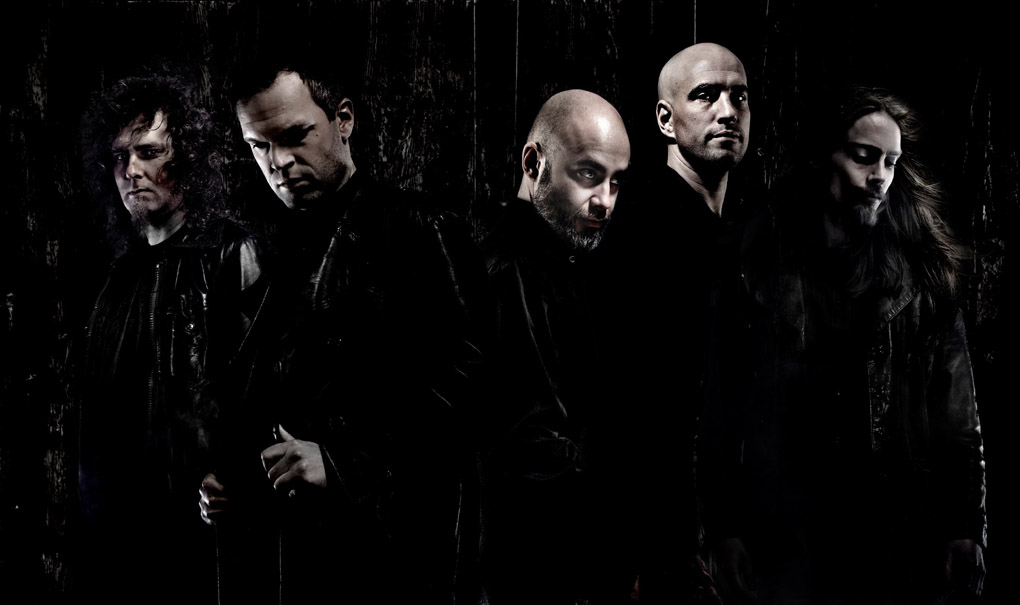

 Sunday, September 22nd, marked the official Autumnal equinox, and even though the temperatures here in Houston will still reach the 90s this week, there were signs in the air that the seasons had truly changed. It was in the sounds of an NFL Sunday escaping from the television, the outdoor smells of burning wood and grilling meats, the sights of a grey, overcast sky, and of course, the feel of much cooler breezes. In case you haven’t noticed, I’m pretty big on this time of the year, and of course I tend to gravitate to listening to those bands that tend to provide a suitable Fall soundtrack. One of these bands is Insomnium, whom I began to get into heavily
 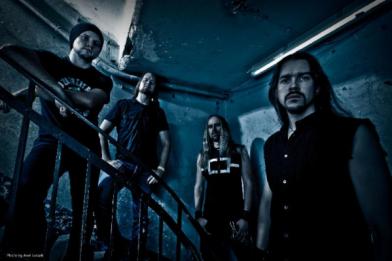 This single release is actually an EP to be precise, a collection of four tracks, the aforementioned “Ephemeral” and three acoustic based instrumental tracks. The title track kicks us off; a just under four minute slice of tempered Insomnium styled melo-death and its our first taste of the band’s slightly different take on their sound. Noticeably there is a lack of the band’s usual penchant for a slower, lengthy musical intro —- before we know it we’re launching headlong into a twice repeating up tempo verse section that accelerates into a nicely worked bridge, before exploding with a gush of ultra melodic guitars in the chorus. Whats striking here is the interesting tempo progression, a rhythmically uptempo verse to be sure, followed by an even faster bridge, and finally the guitars take the lead in the chorus to push the song to the speed limit. As usual for a band of their songwriting talent, Insomnium’s keen ear at layer separation between instruments is the key attribute at work here —- notice that the vocals continue from section to section at their own pace, never feeling the need to match the rhythm section or guitar leads. This song is catchy as hell. Probably more than any other melo-death band, Insomnium seems to have a never ending supply of ear worms that they liberally sprinkle all throughout their songwriting.
 There are three other cuts on this EP, as mentioned before, they are short atmospheric, acoustic instrumentals that actually served as the soundtrack to their One For Sorrow documentary. And before you yawn, let me assure you that they work within the context of this release. I suppose the obvious thing would be to say they were soothing, and at times they were, but “The Swarm” kicks off with a Jester Race sounding acoustic strum that is almost waltz-like in its tempo, bringing to mind the best era of that famed Gothenburg sound. They’re all good pieces, and nice to have in addition to the main attraction, but I think it would have been far more interesting had they re-recorded a few tracks from their back catalog in an acoustic format, perhaps with clean vocals over them? Ah can’t win them all. Regarding the documentary, I loved every minute of it, and its starkness in tone matched the band’s musical qualities, right down to the directorial decisions —- its worth checking out on YouTube. That coupled with the new single has me more anticipatory than ever, could a new album possibly arrive before year’s end? If not at least Autumn is finally here.
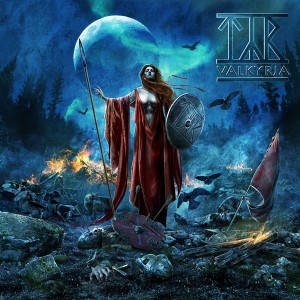 Some of you may already know that I’ve been pretty big on Týr, they are a rarity in metal —- a band with a sound that is truly all their own. I once overheard a conversation on the floor of a Nightwish/Kamelot show where someone was trying to describe Týr to his friend by comparing them to other bands. If I recall correctly, he name dropped Korpiklanni somewhere in the conversation. No… just, no. There are your bog standard, numerous, often copycat folk and “Viking” metal bands, and then there are artists like Týr who elevate the entire subgenre to a level of literary and musical excellence. Even their cover art is goddamned jaw dropping (look at that picture over there and tell me you don’t want a framed poster of that on your wall). In a way the artwork is a microcosm for the band’s sound; punishing yet harmonious, epic yet understated in the most elegant way.
 My favorite of these surprises came in the form of Týr’s first collaboration with a well known metal vocalist, namely Leaves Eyes’ own Liv Kristine, who shines on the stormy power (and I mean POWER) ballad “The Lay of our Love”. This will make the best songs of the year list without a doubt, its one of those rare songs that made me stop what I was doing while listening and really pay attention, and when it was over, I replayed it again and again. Týr hit me right in my metal guilty pleasure wheel house here, a delicate ballad with an acoustic intro, set to tempo by distantly thundering bass lines with a guitar solo might rank among the most memorable the band has ever composed. Kristine’s vocals are well renowned for her ability to match ethereal tone with sheer vocal heft and power, and when she begins to soar in the chorus alongside Joensen’s rough hewn voice, the theme of the album comes alive. They made a great choice selecting Kristine to handle the guest spot, and it makes me wish I could enjoy her main band more.