
 Few bands in metal have inspired the unrestrained devotion and adoration of it’s fanbase the way Nightwish have. Such a fiery bond is subject to various temperaments, as the band themselves found out through the course of two vocalist changes. That they are widely (if erroneously) recognized as the first female vocal led power/symphonic metal band only serves as fuel for this burning intensity. Their success in the late 90’s and early 00’s spawned countless imitators, other newly formed bands that wanted to put their own spin on what really did feel like a fresh style of metal, with inspired females keen to try their hand at singing over heavy guitars and sweeping orchestras. Ushered along by a signing craze from metal labels all over, female fronted metal bands went from a mere handful to a plethora in the blink of an eye. But few, if any of them have ever managed to attain the near mythic status and storied history of the mother of them all.
Nightwish fans today fall into two basic camps, those that are aficionados of a particular era or vocalist past, and those who see the band as something greater than its constituent parts, including vocalists. This latter group is far more inclined to acknowledge the very apparent reality that Nightwish largely exists as a vehicle for the songwriting of its keyboardist, songwriter, founder, and guiding force Tuomas Holopainen. I myself fall into this latter camp, for despite being introduced to the band during the Tarja Turunen era shortly after the release of Wishmaster, I found myself becoming a bigger fan of the band after her departure. It didn’t take me long to realize after listening to their 2007 first post-Tarja Turunen release Dark Passion Play that I had always been more of a fan of Holopainen. Their 2011 follow-up Imaginaerum hit the nail on the head for me, a thirteen-track treatise of perfection that backed up my argument that Holopainen’s songwriting was able to blossom and flourish without Turunen’s limiting (albeit powerful) vocal style.
Nightwish and their fans share a relationship that is at once devotional and divisive, and also detached and myopic. The band’s most personal works (such as the entirety of the Century Child album) are the kinds of rare records that forge molten emotional bonds with fans. Holopainen’s autobiographical lyrics inspired this devotion, and with it came the kind of rabid fandom that became a hyper protective community, for better and worse. The band learned firsthand of the latter during the media and fan firestorm that resulted from their 2005 open letter dismissal of original vocalist Tarja Turunen. In an attempt to get ahead of the inevitable media war-of-words and fallout between the two parties, the band erred in underestimating just how exposed its own fans’ nerve endings were. Holopainen was himself skittish around the media and private by nature, and as the band leader he found the fallout particularly torturous. For many fans even nearly ten years later, that damage has yet to be undone —- click on any YouTube clip of the band’s Turunen era and scroll down to the comments section for the most surface of glimpses.
Since that cataclysmic event Nightwish have conducted most of their inner workings with an eye towards privacy and security. Unmoved by the pleas of fans lamenting the loss of Turunen, the band circled the wagons around their organization and approached future decisions with a touch of tunnel vision. The band wouldn’t shut their fans out completely, offering up some behind the scenes looks in the form of photo galleries, social media updates, video blogs —- but their content was carefully controlled. It was a gamble, but the commercial success of the Anette Olzon era justified Nightwish’s new approach in the face of a semi-divided fanbase that consisted of very vocal fans sympathetic to Turunen. And in demonstrating their commitment to not repeating the errors of the past, Nightwish handled the October 2012 falling out with Olzon with single press statement that offered no details. The timing of their announcement in declaring fill-in vocalist Floor Jansen as an official permanent member was also interesting to note —- occurring long after the Imaginaerum tour was over, in between album cycles where the requests and expectations for media availability would be relatively low.
 For Nightwish fans, the announcement of Jansen brought along expectations that the band would make use of her operatic vocal capability on the new studio album, as she had demonstrated on several older songs on the tour. I myself took note of the general tone and tenor of the reactions on the band’s Facebook page around that time, and most of them were from fans salivating at the thought of a Wishmaster or Century Child sequel. Its likely that many long sundered fans of the band’s Turunen era were eyeballing Jansen as the closest possible thing to their dream reunion. As a bigger fan of the pop-vocal infused Olzon era, I too wondered how the band was going to balance their expanded musicality with the undeniable fan craving for hearing something soprano-oriented being belted out by Jansen. As heard in the Showtime, Storytime concert video, Jansen was able to bounce from one style to another in varying moments, though she typically stuck to her rock-inflected delivery. A retrospective viewing of that concert makes me realize that it was far more foretelling of what the new album would bring than anyone realized.
Nightwish have responded to their fans’ expectations in rather typical fashion, by ignoring them altogether of course. Holopainen’s vision for Endless Forms Most Beautiful takes precedence over everything, its songs forming a loosely-stitched thematic album about spirituality through science and reason, inspired largely by the writings of biologists Richard Dawkins and Charles Darwin. It’s songs didn’t require operatic vocals —- quite the contrary in fact, Jansen’s vocals on the album are far closer to the pop stylings of the Olzon era. This has confused some and upset many, the hope that Jansen would bring the band back to its classicist roots taking another massive blow. Certainly not everyone felt this way, but it does seem that Nightwish will yet again have to bear the brunt of their most vocal critics, their own diaspora of fans. That unfortunate truth about fans is that they can be rather myopic as well in their own regard.
So I’ll argue here that those fans affronted by the vocal decisions on Endless Forms are focusing on a singular aspect of the album to their own detriment. The very thing they are decrying is the mechanism that allows these songs to form yet another first-rate Nightwish album, and might I add —- an album that musically reaches back to touchstones of the past such as Oceanborn and Once. It might be that its coming off the heels of the wildly eccentric, diverse Imaginaerum album, but there is a musical unity present throughout the new album that reinforces its thematic concept and somehow bleeds the feel of old school Nightwish. Take the album opener “Shudder Before the Beautiful” where a sprinting orchestral arrangement slightly outpaces guitars, drums, and vocals —- a spectacular effect that ushers along what actually plays like a duel between Holopainen’s furious keyboard wizardry and Emppu Vuorinen’s wild guitar solos. Talk about old school, that’s the kind of Finnish power metal trademarks that you’re hard pressed to find anyone doing these days.
 Perhaps its the largely uptempo feel of the album that’s responsible for the old-school resonance that I’m feeling. The band hasn’t done away with Dark Passion Play/Imaginaerum era live orchestras and cinematic arrangements, they’re still present and rather glorious in most moments, but they’re utilized this time more for amping up the energy of rollickingly speedy tracks like “Yours Is An Empty Hope”, “Weak Fantasy”, and the title track. This is a triumvirate of songs that underscore Holopainen’s gift as a songwriter, not in that he expertly juxtaposes soaring melodic ear candy over a frenetic rhythms but that he can do it in such diverse ways with varying degrees of heaviness and aggression. The vicious, snarling “Weak Fantasy” might be the best song on the album, with its tension building usage of solo string sections and a furious pummeling courtesy of pinch-hitting Wintersun drummer Kai Hahto. I get enthralled after the post-folk breakdown at 3:37 where the orchestra descends with a sweeping crescendo alongside Marco Hietala’s always wonderfully passionate vocals —- few others can pull off such riveting drama through the tenor of their voice alone.
Its Jansen who shines on the other two tracks, providing them vocals that veer between ethereal lightness and leather-lunged rock n’ roll grit. On “Yours Is An Empty Hope”, Jensen doesn’t play the beauty to Hietala’s beast, instead her Doro Pesch-esque vocals work with his to amp up the aggression of the song tenfold. I get a bit of a “Slaying the Dreamer”/”Master Passion Greed” vibe here, particularly the latter in regards to the stop-start nature of the doomy, violent orchestral booms. Shifting in tone, she plays the cheerful, charming narrator in “Endless Forms Most Beautiful”, her effortlessly bouncy vocals a stark contrast to a seriously aggressive rhythm section. Vuorinen and Hietala even share a rather nasty guitar/bass solo section here, unleashing a rumbling monster truck of a dual-riff that comes as a total surprise. Vuorinen gets some criticism in guitarist corners for playing what is largely the same riff-pattern in the same guitar tone throughout the entirety of the band’s catalog. I don’t personally feel the criticism is entirely warranted, because being the sole guitarist, he is largely responsible for the band’s metallic elements —- that being said he is far more reigned in on this album than on Imaginaerum, where he had room to experiment.
A rapidly rising favorite of mine is “Alpenglow”, a song that boasts the album’s most snappy, ear-wormy chorus, along with a twisted vocal segment from Jansen that really, really reminds me of Olzon’s vocal theatrics on “Scaretale” off Imaginaerum. Multi-instrumentalist Troy Donockley is present throughout the album, chiming in with uilleann pipes, bodhran, low whistles, and bouzouki —- but his standout track is “My Walden” where he dominates the soundscape with a flurry of Celtic-tinged melodies. The first two minutes of the song are fairly standard in approach, but its the latter half of the song where the band indulges in a folky-jam session that I almost wish encompassed the entire track. I suspect it would’ve made the song standout more as a result and also given Donockley a platform for longer running melodies and motifs. Much to my surprise he isn’t on every track here, at least not blatantly so, as was my fear when discussing the Élan single a few weeks ago. Even more surprising is my feeling that he’s being underutilized somehow… that might be one to chew on, I could change my mind on it. I’m all for his presence on Nightwish albums, but I’ve yet to suss out what his contributions are within on a more fundamental level as a permanent member.
 The aforementioned “Élan” is effectively the same version as on the single, and within the context of the album it actually sounds better, though I’m less convinced of its effectiveness as the lead off single (“Alpenglow” would’ve been a better choice, a more daring yet similarly catchy cut). The thematic-bending “Edema Ruh” (something from a fantasy series I’ve never read) is an okay song with a relatively generic chorus (by Holopainen standards), but its slightly redeemed by some interesting guitar work by Vuorinen. And I’m torn about the sole ballad on offer, “Our Decades In the Sun”, because during the moments when its working it is as gorgeous and beautiful as anything the band has ever done. The problem might be that the song is too delicate for its own good, its sections often left without connecting musical glue, and the silky string arrangements unable to muster enough momentum to bind everything together. Its actually Vuorinen’s stormy guitar interjection at 2:07 that provides the song with its only dose of electrical current, a brilliant moment that ought to make you shiver. I enjoy listening to it overall, but its not in the ballpark of the band’s best ballads, and its a shame because it had the qualities to perhaps be their best.
And here comes the axe… look, I’m as enthusiastic as can be about the theme of the album, having read books by Dawkins myself and generally sharing the same perspective as Holopainen on science and reason and the grandeur they have shown us. That being said, the grand epic of the album, a twenty-four minute behemoth titled “The Greatest Show on Earth” absolutely falls flat for me. I don’t mind that Dawkins is a narrative voice here, because the words he’s speaking are poetic and beautiful, but perhaps he would’ve been more effective at the end of the track, serving as the non-musical coda for the album. Instead his speaking parts and the musical sections of the song are chopped up into relatively non-conforming parts that simply come across as choppy and cluttered in their sequencing. As for the musical sections themselves, there’s only one that truly shines, from the 12:00 to 13:47 minute mark where Jansen and Hietala trade off vocals in a staccato rhythm fueled speed run. The other sections seem to lack any sort of definition, let alone micro-hooks, which are essential for longer set pieces like this —- you need those ear candy moments to keep your attention and to make you want to come back. And I could entirely do away with “The Eyes of Sharbat Gula”, which is more mood piece than instrumental (it does little to match up to the power of the original photograph its in reference to).
And now back to that non-operatic vocals thing —- simply listen to this album and you’ll understand that there was no room for it. That won’t appease anyone disappointed with the album as a result however, because the argument could always be “Well Tuomas should make an effort to write songs in that style”. But that’s the thing, he can’t —- if he tried and he wasn’t completely into it they would come off sounding half-baked and uninspired. The reason we’re all Nightwish fans is because of his songwriting, and his songs have always been for better or worse authentic portraits of his interests, feelings, or passions at that time. On Imaginaerum, the wide-open fantasy/imagination concept of the album influenced his songwriting towards a diverse array of styles and sounds. It might even be accurate to frame that album as more directed by the music rather than the lyrics. On Endless Forms, its the other way around because the lyrics are far more important to the crux of the thematic core, perhaps a reason why Holopainen endeavored to have them sung as clearly as possible. Maybe the next album will be thematic in a way that lends itself to soprano-styled vocals… its possible, but it shouldn’t define your enjoyment of a modern day Nightwish album. If the vocal style is that important to you, then you’re expecting the wrong things from the wrong band.
 Its been a little under five years since the Scorpions released Sting In The Tail, the album that they decided halfway through its production would be their last. And in some respects it was, as far as being a truly fresh, organic batch of songs purposefully written for its release. It was a fine album as well, perhaps their strongest overall in twenty years, featuring a handful of gems that for me at least were comparable to their 80s/early 90s classics (check
  The good stuff first then, which is found as early as the album’s lead off single “We Built This House”, which is not a PBS program but instead a paean to the durability of the band’s fifty year career. I say this based on my viewing of the promotional EPK the band made where they spoke a little about each song on the album —- despite the lyrics clearly referring to a significant other known as “baby”. How they reconcile both perspectives is beyond me… maybe the verses are meant for the ladies (or the lads, whatever) and the chorus is just about the Scorpions themselves? I’m being pedantic, the Scorpions have earned the right to bend metaphors however they’d like, and the most important things here are the melody and the hooks. Its built on the classic Scorpions pattern of quiet/loud dynamics, a hushed verse that explodes into an arena ready chorus, but it does seem to be one of the few entirely new songs, its music penned by the band’s longtime Swedish producers (and MTV Unplugged musicians) Mikael Andersson and Martin Hansen. The other haus-titled song, “House of Cards”, is actually built on the back of a resurrected melody, its acoustic balladry reminiscent of the band’s early 90s Crazy World / Face the Heat era.
 There’s a handful of other good songs; “Rollin’ Home, a laid back rocker with a Def Leppard-ish stomp; the ridiculously titled “Hard Rockin’ the Place”, built on a riff from the Blackout era; a handful of decent ballads in “Gypsy Life”, “Eye of the Storm” (being the newest of the ressurected song ideas, from the Humanity Hour 1 era in 2007); a Meine solo-penned lonely sounding number in “Who We Are”; and the panoramic “When the Truth is a Lie” —- again, all above average in quality, but nothing you’d hate yourself for missing. Where things get murky is with the vanilla alternative rock styled guitar rock of “The World We Used to Know”, a song that sounds like it came from the Eye II Eye sessions; as well as the blandness of the album opener “Going Out With a Bang” where chest thumping bravado fails to move me like the more emotional reflections on calling it quits found on Sting In the Tail. Its also unfortunate that “Dancing With the Moonlight” doesn’t seem to live up to its title, especially when you consider songs by the same title by other artists (Thin Lizzy comes to mind immediately). It has a cool backstory about the turbulence laden flight endured by the Scorpions, Alice Cooper and others that happened to also double as Meine’s birthday celebration. The song is somewhat paint by numbers however, with boring verses and a chorus that never seems to take off (heyo!).
 Sometimes in the mid-December barrage of lists for the best albums of the year, the best songs released this year get ignored and forgotten. Of course its likely that a handful of said songs played a key role in their respective album winding up on a “best albums” list, but what about the really great songs on the not-so-great albums? As with the past few years, I’ve committed to giving songs in both of those categories a chance to get another look via an end of the year retrospective. What makes a song one of my best of the year? It could be anything from simply masterful songwriting, great lyricism, or even a courageous attempt at a stylistic shift or experiment (of course, it still has to be a great song). To force myself to make honest choices, I limit the list to ten, and the order of the list has as much to do with play counts as it does the more intangible qualities I listed above. Now to quote Monty Python to myself: “Get on with it!”
 Here’s whats frustrating: The year is winding down, the release calendar is dropping off in favor of 2015, yet I’m still catching up on a slew of albums that dropped in October and November (and earlier than that). “Catching Up” has been a recurring theme for this blog in 2014, and its due in large part because so many important and major new albums came out during this year —- the kind that demanded at least a few weeks worth of my attention at a time. As a result a lot of albums by bands I wasn’t nearly as familiar with were pushed aside to the “Get Around to It” playlist on my iTunes and I’m just NOW getting around to them! Even more frustrating is the fact that a select few of these late albums are simply so great that they’re vying in contention for late consideration onto a best of 2014 list that was largely sorted in my mind —- and in part in rough drafts. First world problem? Absolutely, and I’m grateful to have it. Here then is my final rapid fire attempt at hopefully sweeping up (and thus finally “catching up”) everything on my 2014 plate. I say this knowing that in 2015 I’ll stumble onto something I missed this year and will be slapping my forehead about it, the way it always goes.
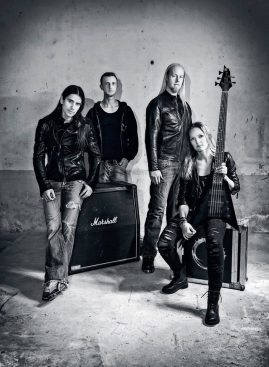 Triosphere – The Heart Of The Matter: You’ll be forgiven for not having heard of this Norwegian female fronted prog/power metal band, as this new album is only their third since their inception in 2004 and four years removed from its predecessor at that. Okay so while they’re not exactly prolific, I’ll forgive them because The Heart of the Matter might just be one of the best female fronted metal albums I’ve ever heard. If you’re trying to imagine their sound, you might be getting it wrong, because Triosphere have a difference maker in vocalist/bassist Ida Haukland, whose vocals come across as a distinctive blend of Ann Wilson, Doro Pesch, and just a touch of Coverdale-esque theatricality. I’ll be honest, when I first jumped into this album blindly it took me a few songs to realize that I was listening to a female vocalist —- ridiculous I know, but Haukland’s vocals are largely deep, raspy, aggressive and downright leathery that I just figured it was a dude singing (a side effect of associating female metal vocals as being typically light, ethereal and very feminine in tone, not a comment on Haukland herself). What I did realize right away however was that this mystery vocalist was impressing me with such a tremendous display of talent. There’s so much to digest here, but I’ve made multiple passes through the album and have yet to skip a track. The songwriting here is tremendous —- hook driven for sure, but textured and intelligently layered, and the riffs are as wild as often as they show restraint. Its a late drop in the 2014 release calendar (December 2nd), and might get lost in the shuffle with every blog and website trying to write up their year end lists, but they really shouldn’t be passing this album up.
 Primordial – Where Greater Men Have Fallen: There’s something utterly hypnotic about Primordial’s music, particularly when the band is at their best. If my few spins of Where Greater Men Have Fallen are any indication, then the band has come really closing to matching their career high watershed on 2007’s To The Nameless Dead. While their 2012 effort Redemption At The Puritan’s Hand was good, it didn’t captivate me like its predecessor nor like this new album —- in large part I think due to the band’s return to a grittier, heavier, and far more aggressive stance. There’s something bracing about the riffs here, and they slam right into you on the title track that kicks off the album, one of the most punishing songs the band has penned in a long time. As if sensing that they had allowed their natural inclination towards epic, expansive cinematic arrangements take over too much of their sound on the last album, Primordial have reversed direction here ala Enslaved’s Axioma Ethica Odini album. A song like “Born to Night”, with its incredible sledgehammer riffage is so much more effective because of the vivid juxtaposition of that heaviness coming directly after the delicate, eastern-motif tinged open chord patterns that make up its minutes long intro. As ever, vocalist A. A. Nemtheanga comes across as a love him or leave him proposition, his wild, unrestrained vocals are as characteristically bold as ever and he does nothing to make them easier to digest. He’s such a unique voice within metal though, a rare thing amidst a landscape made of copycats. If it helps you, imagine his vocals coming from someone with arms outstretched overlooking some Irish cliffside.
 Serious Black – As Daylight Breaks: One of the more out of nowhere band formations and subsequent album releases of 2014, Serious Black is a cobbled together melodic/power metal supergroup of sorts (although I am loathe to use that terminology). It features ex-Blind Guardian drummer Thomen Stauch who finally rebounds after the ill-fated Savage Circus project and teams him up with Masterplan’s Roland Grapow (also ex member of some band called Helloween), alongside ex-Bloodbound (heyo!)/ex-Tad Morse vocalist Urban Breed. Speaking of the latter, Breed seems to be the wildcard amongst the lineup (which features a few more guys in addition to the ones I mentioned) seeing as how he’s in seemingly handfuls of bands/projects at the moment, but surprisingly enough his vocals really work well as a sandpaper grit layer on top of what is some very smooth, slick melodic power metal. The biggest surprise here is just how good some of these songs are, I’m talking serious hooks and big, shimmering melodies. For a supergroup/sideproject? I’m not kidding, take a listen to “Sealing My Fate” which has one of the most elegant melodies I’ve heard this year, played on both piano and guitar to great effect. I’m also fond of the driving, urgent “Older and Wiser” —- Breed’s vocal layering on the ultra-catchy chorus is a wonderful moment. All told As Daylight Breaks is an often catchy, nearly always bright and upbeat melodic power metal album with AOR flourishes that I’ll find myself coming back to. Supergroups aren’t always crap I guess.
 Evergrey “King of Errors” Video: I mentioned Evergrey in the above blurb on Vanishing Point’s new album, and if you took anything away from that, its that I’m not particularly wild on Evergrey. I don’t dislike them, but all my attempts at enjoying their stuff have failed save for two (now, three) songs: “Recreation Day”, “Wrong”, and now this newest single from their recently released Hymns For the Broken. That was an album I avoided reviewing for the same reasons I avoid writing about Epica —- to repeatedly discuss how you can’t enjoy a bands’ work is tiring for both myself and you the reader. I will however break that tendency to offer a compliment to both Evergrey and the director of the “King of Errors” music video, the often frequently criticized (on this blog that is) Patric Ullaeus. Simply put, Evergrey delivers a really good song and Ullaeus a really superb music video, the kind no one really makes anymore in an age of digital post-production, photoshop, CGI, and the dreaded green screen.
 At The Gates – At War With Reality: I suppose back story isn’t really needed here, I mean you’re all smart, together, with-it metal fans that already know this is At The Gates first new music in nineteen years. I’ll admit that for the longest time after their initial reunion began in 2006 I never anticipated anything new in the way of a studio album from them. I saw them live in 2008 and they looked pretty comfortable doing the classics and I figured that would be it, Emperor-style reunion touring for us newer generation of metal fans that never saw them in their initial incarnation, healthy profits, and satisfaction all around. The At The Gates legacy didn’t have the same problem that Carcass did with theirs —- Slaughter of the Soul was a watershed classic, Swansong was anything but. It was understandable that Carcass would want to try their hand at crafting an album far more worthy of closing their discography upon, and the resulting Surgical Steel was so utterly fantastic, it should be considered the modern day reunion album benchmark (it is by me). So it comes as something of a gamble that At The Gates have chosen to follow up Slaughter of the Soul with At War With Reality, and I’ve seen plenty of other reviewers assert that the band’s greatest strength is in not caring what others make of their legacy at all. Okay, that’s fair —- but then again the band themselves would never have a hand in “defining” it to begin with, that’s our job as fans.
 Ghost Brigade – IV: One With The Storm: The last time we heard from Finland’s Ghost Brigade was way back in 2011 with their rather good Until Fear No Longer Defines Us, a top ten album on
  While Heaven Wept – Suspended At Aphelion: First of all, While Heaven Wept’s newest album scores the award for best cover art of the year hands down, take a long gander at that sleeve in high res on Google Images… its just flat out jaw dropping. Secondly, I’ve been waiting for this album with a great amount of anticipation, having been sold on them a year or two ago with the song “Vessel” from their 2009 album Vast Oceans Lachrymose. I didn’t find its follow up album, Fear of Infinity nearly as compelling, but they’ve managed to win the benefit of the doubt in my mind. If you’re unfamiliar, this prog-meets-power-meets-doom metal band from Virginia of all places is keen on grand, epic scale music with lyrical themes (and artwork) to match. I expect that there might be a few metal fans out there who take umbrage with While Heaven Wept’s manner of tracklisting, sequencing, and envisioning of albums in general. There are usually not many actual tracks, two songs are often paired up and folded into one long song, there are short instrumentals including intro and outro tracks, and the overall album length is sometimes maddeningly short (forty minutes here, ten of which are instrumental). I’ll admit that its slightly frustrating for me as well, but the band clearly intends for their albums to be listened to from start to finish, and in truth they work better that way (this is prog-metal after all).
 Sanctuary – The Year The Sun Died: You’d be forgiven for glancing back at the album art when experiencing your initial few minutes of Sanctuary’s first new album in twenty-five years. It sounds an awful lot like a theoretical new Nevermore album than anything resembling the power metal infused thrash of the Sanctuary’s pair of late eighties albums. What makes it strange is that original guitarist Lenny Rutledge is back in the fold and handled most of the songwriting, and yet there is an overall Jeff Loomis vibe to the guitar work that is hard to ignore. I’ve considered the possibility that my brain is playing tricks on me, that Warrel Dane’s vocals being mixed far up front (similar to Nevermore), and the overall modern production of the album is subliminally suggesting a likeness that isn’t really there. I’m not going to harp on this though, but suffice to say, it was difficult at times to wrap my head around the reality that this is indeed a Sanctuary album.
 Blut Aus Nord – Memoria Vetusta III – Saturnian Poetry: I’m a self-professed newbie when it comes to Blut Aus Nord’s vast and intimidatingly titled back catalog, but I’ve been intrigued enough by the writings of fellow reviewers whose opinions I trust to give the band repeated chances. Their recent handful of releases were a trilogy of albums and series of EPs under the overarching title of 777, and they were united musically through a rather bleak, unforgiving, and frankly unlikeable blend of industrial elements with densely layered avant-garde black metal. The hype meter on the band (actually, just the project of one reclusive Frenchman known as Vindsval) was through the roof during the years spanning those releases, and I felt like I was missing out on something that seemingly everyone was raving about. As I’ve come to discover today, a few years removed from that period, there were quite a few others who felt the same way I did. But in reading what they wrote, it seemed that I should’ve been checking out far older Blut Aus Nord albums in the Memoria Vetusta series of albums as they fell more in line with a style of black metal more inclusive of epic melodies and expansive soundscapes. My cup of tea in other words.
 Tony Kakko was a vocal magician that night, and a performer unlike any I had ever witnessed. He leapt and bounded across the stage with relentless energy, and threw himself into the lyrics with physical movements that mirrored or reacted to the words he was singing. His voice was accordingly sonorous, full, soaring, and capable of an impressive dexterity in adapting harmony laden lines to a solo vocal approach. When he needed us to help out on the choruses he directed our voices himself, and classics as such “Full Moon” and “Replica” felt like celebrations of power metal’s proclivity in creating joyful euphoria. Newer songs from albums that I had been critical of on this blog such as “Losing My Insanity” and “Blood” actually sounded better live, brimming with a vitality that I now associate with their studio versions. Even the dreaded “X Marks the Spot” was actually fun because Kakko simply sold it so well, his skill as a front man keeping me rapt with attention as he seemed to act out the lyrics. I was caught off guard in realizing that the song actually has a rather good chorus that I had seemingly blocked out before (my feelings on the studio version’s horrible dialogue still stand). I was even stunned that Kakko had the guts to perform such a naked ballad such as “Love” from the recent Pariah’s Child, but he somehow managed to convince a room full of some pretty convincing looking metal fans that it was okay to sway back and forth to a delicate, gorgeous, emotionally soaked song. I lingered long after the show, fan babbled to the Xandria guys a bit, and found myself not wanting to leave. As it always seems, magical nights like that are rare, and over far too quickly.
 All these years later, its understandably difficult to remember just how strikingly different and fresh Ecliptica and its 2001 follow-up Silence sounded amidst that newly forming power metal resurgence. Sure the band were noticeably influenced by Stratovarius, but where their countrymen played it straight and safe with their take on European power metal, Sonata Arctica displayed a tendency to wildly lean in odd, unexpected directions —- both musically and lyrically. There was something quite charmingly naive and innocent about their approach, as if they were so enamored with their ability to create songs worthy of a record deal that they didn’t bother to pay attention towards sticking to standard genre rules. This was a very young band for starters (scarcely out of their teens), consisting of musicians all to eager to lean on speed and flashy solos, and they had the talent to pull it off, particularly long-departed guitarist Jani Liimatainen. Yet Sonata’s sound all started with the songwriting genius of Kakko himself, who throughout his career has displayed his knack for crafting indelible melodies with sharp hooks, and incredibly focused songwriting that flirted with a variety of tempos. He was a keyboardist, and his songs were built with that instrument serving as the framework for his songwriting, which also meant that melodies had to come first before riffs (often a hallmark of the most melodic of power metal bands). He’s of the same caliber of talent as his good friend Tuomas Holopainen of Nightwish; or Tobias Sammett of Edguy/Avantasia; or Hansi Kursch of Blind Guardian: All power metal songwriters who are masters of their craft to such an extent that they simultaneously define and defy the genre. In that regard, Kakko was both a trail blazer and someone who was practically impossible to copy.
 As it turns out, Kakko was a lyricist of the Joe Elliot mold, he being the famed lead singer of Def Leppard. When I was a budding rock fan in the early nineties, I read an interview with Elliot where he admitted that his lyrics were pure fiction, despite his narrative perspective almost always being in the first person with seemingly autobiographical overtones. I know its not a revolutionary concept, and that many other bands have utilized such a lyrical strategy to ratchet up the tension and passion in their music (Journey comes to mind immediately), but Elliot was the first famous musician that I had ever read such an admission from. Reading it then was a bit of a revelation for me, and made me pay attention to lyric writing in rock music with greater attention, to not be so gullible, and to think about things like narration and perspective and diction in a new light. It made me pay greater attention to Metallica’s Load for example, while many upon its release were writing it off as a sell-out move towards alternative rock, I found myself thinking that it featured James Hetfield’s most thoughtful and resonant lyric writing. So it was with great surprise that I found myself hoodwinked by Kakko, who in the very first interview I had ever read with him revealed that his lyrics were purely fictionalized. Doh! This has of course carried on throughout his career, as he recently pointed out in a late September interview on the
  With all that in consideration, I think its okay for any of us to ask why the band is re-recording Ecliptica at all. Well, the short answer is that the aptly dubbed Ecliptica Revisited was done at the request of the band’s longtime Japanese record label, a request the band agreed to as a gesture of goodwill towards a company that had stuck by them since the beginning. Kakko has even commented publicly that the contract they signed for the release stipulated that the re-recording had to be 94% identical to the original release, essentially meaning that they couldn’t re-work the songs into transformed versions or acoustic strip downs. For Kakko, this stipulation not only made it easier for the re-recording to be completed, but helped him to contextualize this release as a simple tribute to the original, as well as a more accurate representation of how these songs are performed live today. Typically within the metal community regardless of subgenre, a re-recording is frowned upon, not only for the often cloudy nature of the reason for it’s existence but more for the larger threat it presents to the legacy of the original. Most of the opinions I’ve seen regarding Ecliptica Revisited seem to align with that way of thinking, and I certainly understand some fans’ puzzlement and frustration (although I think its a waste of energy to get up in arms over a release that clearly will not be replacing the original recording).
 Fortunately the tempo downshift doesn’t hurt all the songs, in fact helping some songs to breathe easier and feel better paced. Cry heresy if you must but I actually find the vocal take on the re-recording of that eternal classic “My Land” far better than the original: Kakko’s enunciation and pacing is better, and the lyrics are more discernible as a result; I also love the alteration he made at 2:30 on the lyric “You can’t keep me away forever”, on the original that line only appears at the end and he doesn’t satisfyingly lean on the “forever” like he does here. I also really love what they’ve added to “Full Moon”, the intro is still as delicate and beautiful as it originally was, but the band gets heavier in the buildup to the galloping verses, giving the song a darker, stormier vibe. The chorus is as bright as ever though, and what I find so incredibly wonderful about Kakko’s vocal approach on it is that he seems to be reveling in its history as a fan favorite. I know its a subtle thing I’m trying to relay, but I hear it in the way he delivers that classic chorus with all its inherent poppiness in such a celebratory manner. Not surprisingly, its the balladry of “Letter to Dana” that benefits the most from the re-recording, with guitars multi-tracked in choice spots, better vocal phrasing, and a greater emphasis on making those lead guitars really capture the epic sweep in a Slash-esque way. Unfortunately, it is a bit of a misstep and a shame that they didn’t turn up the harpsichord effects at 4:25 —- that was such an epic moment in the original and although you can still faintly hear them underneath, they’re not nearly as goose bump inducing here. I also think “Destruction Preventer” comes off a little better here, as they sanded off all the rough edges (Kakko’s wildly high pitched yelps) and added layers of extra guitars and harmony vocals.
 Depending on your perspective of Amaranthe, you’re either really excited for Massive Addictive, or really, really agitated at the mere thought that this unlikely band of Swedes has gotten popular and successful enough to warrant a third album. They are certainly notorious for the sheer contentiousness that surrounds any discussion of who they are and what they do. When I
  All that considered, its amazing just how successfully Amaranthe works as a Frankenstein-esque project, stitching together disparate parts to create something that actually works (surely a monster to many). Morck and Berg combine their experiences in both power metal and melo-death to serve as their musical palette, and are malleable in their songwriting to sketch out smart, unobtrusive, accentuating uses for harsh vocals (courtesy of new screamer Henrik Englund), as well plenty of spotlight time for the completely un-metal Elize Ryd’s sugary, ABBA-Swede pop vocals. Ryd is obviously a necessary component in this whole equation, as its through her unremarkable but pleasant vocals that the band channels their poppiest sensibilities, allowing Berg to deliver his clean vocals as a melodic counterpoint or harmony double up. In typical Amaranthe fashion, Englund’s harsh vocals tend to be used as a counterpoint —- he’s only given one opportunity to handle lead vocals (on “An Ordinary Abnormality”), but of course he’s kept off the chorus. Ryd and Berg command the vocal spotlight of Amaranthe, and it has to be said that their voices tend to sound great together, his vocals are melodic and capable enough of soaring highs as hers, but he’s working in a slightly lower register so as to be complementary, not overpowering. I’ve always had mixed feelings on Ryd, finding her the least impressive vocalist of the three —- and I’ve long contended that she’s used metal as an easier springboard to fame and notoriety than she would have had through trying to make it as a pure pop singer. Its not a criticism, just an honest observation that I’m confident other discerning metal fans would agree with. Do an eye/ear test —- does she radiate metal in any way? Kudos to Morck and Berg for sculpting out a role for her and selling it convincingly (seriously, props).
 On Massive Addictive, the band don’t change up the formula they first dreamed up on their debut and expanded on The Nexus, seeking only to further refine the elements that worked and ditch the clunky stuff that didn’t (there’s nothing as awful as the bubblegum “Electroheart” on here). The album’s pop highlight is “Trinity”, the second single that smartly balances chunky-riffs and harsh vocals with a exquisitely sculpted chorus boasting a hook that absolutely will not leave your head. Its musical candy, and that’s what we’re here for right? To rot our ears with the musical equivalent of junk food, because try as I might I cannot understand what
  The album isn’t without missteps though, nothing gravely serious but there are a handful of tracks that either don’t work as pop songs or have annoying tendencies that overpower their enjoyable parts. I’m referring specifically to “Danger Zone”, where a boy-band grade chorus is sandwiched between some very boring harsh vocal led verses; as well as “Unreal”, a song that reminds me of the worst aspects of modern day In Flames with the album’s flattest chorus to boot. There’s also something bothersome about “Skyline”, where I guess my expectations were higher because the title reminded me of Bioshock Infinite (skylines… some of you get it) —- a strange reason to cite but also I’m simply bored by the song, unlike the game. Still, on a twelve track album, there are seven songs that deliver precisely what you’d want from Amaranthe , and four of those are actually pretty great. Not a bad ratio overall, and Massive Addictive is the sound of a band getting better at what they’re doing —- even if it may not be everyone’s cup of tea. I’ve written in the past about the value of Amaranthe as a gateway band for non-metal fans to enter our world, and with this album that gateway has only gotten bigger. If someone gets hooked in with a song like “Trinity”, only to find themselves checking out Kamelot via Ryd’s connections to that band, which causes them to love a masterpiece such as The Black Halo as much as I do —- that’s a win. Metal needs gateway bands to survive, and even though Amaranthe are pushing the boundaries of acceptability in our beloved genre, they surely deserve some grudging acknowledgement for filling that role.
 I don’t like to pretend that any of you follow my every move in the world of metal blogging, social media, and related activities. So I’ll safely assume that most of you are unaware that I’ve been co-hosting a metal podcast for a few months now. Its called the MSRcast (named after the long defunct zine Mainstream Resistance) and I join its founder and host Cary G to discuss and debate current events and releases in metal, as well as anything else that’s running through our minds at that moment. MSRcast is going onto its ninth year of existence which might very well make it one of the longest running metal related podcasts out there. In the handful of times I’ve appeared on its episodes throughout this year, first as a guest and finally as an official co-host, the show has undergone a shift in format away from being loaded with music in favor of more discussion and debate. It was a natural progression I think, in that we were trying to keep episode lengths reasonable for podcasts (meaning in the hour and a half-ish range) and we had to make a choice between trimming the amount of songs we played or keeping our chatter to a minimum. Seeing as how the latter would never happen (never!), we decided to cut the amount of songs by half, and to play them one at a time within the flow of our discussions instead of in multi-song blocks.
 Solace of Requiem – Casting Ruin: This is a case where I halfway like a band’s sound and sonic approach in general, but find little in the way of compelling songwriting to keep me coming back. That’s a pretty harsh thing to state right off the bat in a review so I’ll add in these qualifiers: Solace of Requiem seem to simultaneously want to echo Dissection and Morbid Angel and Origin. Some will disagree with me here, but I find little in the way of meaningful intersections between those three bands or the styles they’ve come to represent. So sometimes Solace of Requiem hits me with something interesting in the way of blackened melo-deth, and then a section or so later they’re doing something that resembles technical death metal —- a genre I think I’ve simply gotten bored of. At any given point vocalist Jeff Sumrell might interrupt his rather good blackened grim vocals with outright boring death metal grunts, an alarming change up that isn’t musically justified. Its possible to stick to the former and keep it compelling, bands have been doing it for years, vocal changeups don’t impress anyone except the handful of guys at the local backyard death metal fest. If there was more in the way of musical motifs throughout the songwriting then I’d be able to accept such a glaring flaw, but the songs themselves are collages of riffs and percussion rather than songs with a story to tell.
 Noble Beast – s/t: Without exaggeration, this debut album from St. Paul, Minnesota quartet Noble Beast is the best album I’ve ever gotten to review for The Pigeon Post, and daringly enough, might just be one of the best overall albums of 2014 —- no joke, its that good, shockingly so. First off, thanks to reader Eric, who emailed me about Noble Beast a long, long time ago where it was lost amid a clutter of piled up emails. Shamefully I read his midsummer follow-up email asking if I had checked them out yet and as of early September I still had not. Better late than never right? There’s so much to discuss here, how about for starters the fact that Noble Beast are in their very existence a rarity, that as an American power metal band. Unlike fellow countrymen Pharaoh whose take on power metal is very much informed by the grit and grime of American thrash, Noble Beast are clearly influenced by a distinctly European strain of power metal. Upon listening to this album, I’m hearing generous helpings of Blind Guardian, Iron Savior, and even a flavoring of Falconer. Even more startling is just how mature and developed they sound on this debut —- it sounds like the work of a band a few albums deep in their career. It makes sense when you do a little digging and see that a couple of these songs were around since 2010, when the band released their first and only demo. The time in between was spent wisely —- on honing their songwriting craft and creating a musical identity that is separable from their influences, yet willing to embrace them.
 arkenhold – Castellum: If you’re in a black metal band from France, chances are you sound something similar to Alcest right? That being the dreamy shoegaze-laden, swirling, fuzzy flavor of black metal that put the country on the map (for good reason) and was later copied by an embarrassing amount of American black metallers (you know its true). Darkenhold are a rare French black metal band that apparently wants nothing to do with the Neige sound and choose to instead pursue a far more traditional strain in line with second wave Norwegian black metal. And judging from a few spins of their newest, Castellum, they’re actually managing to deliver a pretty convincing take on it —- this is a band that I would’ve easily pegged as Norwegian (on that note, still not sure what language the lyrics are in… but its not that pressing of an issue). They really go for a straight down the middle, early 90s approach that takes bits and pieces from Mayhem, Immortal, Burzum, and early Satyricon in equal parts. That may strike some as an exercise in redundancy but I’ve got to give it to these guys, their songs are packed with catchy riffs and a well considered balance between sheer aggression and atmospherics (mostly in the form of clean electric passages with some acoustic undertones… not a lot in the way of keyboards here).
 Protokult – No Beer In Heaven: Jeez… what can I say about Protokult? If the title of their debut album doesn’t give it away, this Toronto based, dual-gender vocal helmed folk metal band dabbles in a style that is geared towards those who find Alestorm and the dreadful Korpiklaani palatable. That’s the audience they’re going to get anyway with their choice of album title, despite that their sound actually leans closer towards a not yet fully realized blending of Arkona and Turisas. Its a debut album, so its easy to be forgiving of the sense that if things go right for Protokult, their third and fourth albums won’t sound anything like the musical crockpot that is No Beer In Heaven. Some of these songs are so unfocused that they’re actually jarringly atonal, such as “Heaven Cast Me Out”, where an effective keyboard melody is wasted by vocal lines that are aimless and lacking definable hooks. Co-vocalist Ekaterina Pyatkova is a distinctive, sharp, angular operatic soprano that reminds me of an early Tarja Turunen. On those early Nightwish songs off Angels Fall First that never quite gelled, Turunen’s vocals often spiraled off into an unstructured mess. It was on the subsequent Ocean Born when Tuomas Holopainen began to harness his songwriting abilities together with Turunen’s vocal capacity where he was first able to display both of their respectively brilliant abilities. The same needs to happen for Pyatkova, and hopefully from within the band a songwriter will emerge that can deliver the goods in that sense because she has tremendous raw talent.
 Voyager – V: I sat down with this album fully expecting to dislike everything about it, and my inborn prejudices towards modern progressive metal’s tendency to rely on djent and noise-related nonsense was pervading my mind before I actually hit play. Its always such a gratifying experience to be proved wrong in these situations. The manner in which Voyager’s V, (their fifth album now, hence the title, geddit?), is described by reviewers all around the internet and in blurbs that I received from their PR agency is exactly the sort of language that tends to describe bands that do everything but write interesting music (at least for me). Thankfully, the reality is that for all Voyager’s shininess, their Intel factory uber clean guitar chugging, and their keyboard built atmospherics —- this is a band that is smart and savvy enough to realize that its all a waste without sharp, melodically driven, hook-LADEN songwriting. They have that in spades, and I think what makes the songwriting work in terms of playing to their musical strengths is the fact that their singer Daniel Estrin has smooth, expressive, yet powerful range and capacity to use his vocal melodies to anchor most of these songs. The instrumentation is impressive for sure, if you can tolerate its anti-septic delivery and approach, but it all surrounds Estrin’s vocals as the central element of nearly all of these songs.
 Opeth – Pale Communion: The Opeth we knew is long gone, and I’m actually thinking that it might be okay. Hear me out on this for a second —- I was NOT a fan of Heritage, and I was also perhaps willfully ignorant of what that album was signaling. On paper it was a good idea, a prog-rock album with seventies influences by a prog-death metal band that had always exhibited that specific influence in their catalog, even produced a few masterpieces in doing so. After my initial few spins through it I remember tempering my reaction by reasoning with myself that it was going to be a one-off experiment in the Opeth canon, and so not to overreact. It was a muddied, ambling mess that lacked crisp songwriting and coherent melodicism; it was the sound of Mikael Akerfeldt over extending (or over thinking) his abilities. But it was alarming then to realize that on Heritage’s supporting tour, the band was largely shying away from past material that emphasized their death metal sound, and Akerfeldt’s public comments towards extreme metal in the media were raising the ire of some, and disheartening others. I sympathized with many of the disaffected and honestly internalized the band’s disinterest in metal as something akin to losing touch with a friend. I summed up my feelings on the whole thing in a little more detail earlier this year when
 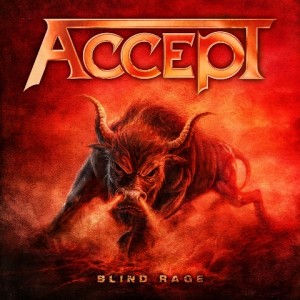 Accept – Blind Rage: Four years ago, Germany’s storied metal veterans Accept released a knockout of an album from seemingly out of nowhere; Blood of Nations was as unexpected as it was awesome. I still listen to that record whenever I need an Accept fix (and the fact that I reach for it over Balls to the Walls or Russian Roulette is surprising even to myself). Keep in mind that it was their first album in fourteen years; they were coming off a long period of relative inactivity consisting of two aborted reunions with original vocalist Udo Dirkschneider, and they were enlisting a rather unknown American replacement vocalist in Mark Tornillo. It all seemed like a recipe for mediocrity on paper, but somehow, Wolf Hoffman and company rediscovered their musical mojo. I saw them live on that tour here in Houston, and they were satisfying perfect that night even when down a guitarist (Herman Frank was injured during a fall on stage in San Antonio the night before). But I’ll admit, I thought they stumbled a bit on the 2012 follow-up Stalingrad —- granted there were a couple really strong songs, but the record felt rushed with ideas undeveloped and lacking cohesion (the band admitted as much in interviews later on).
 Vintersorg – Naturbål: While writing this review, Firefox tanked out on me, gobbling up what I wrote. Serves me right for running both Spotify and iTunes at the same time, I know… I need a new laptop. But I’m thinking that the crash actually did both you and I a favor, because I was really going on a bit with some unnecessary background info and essentially doing a whole lotta rambling. So I’ll spare you that nonsense and break it down like this: Vintersorg is a project that is really hard to love (or like even). You’ve gotta be committed, and you’ve gotta put in the time and the work, and I really mean work by the way —- this is complex, often obtuse avant garde folk/progressive black metal that is often maddeningly messy. A good Vintersorg song will reveal itself to you after many, many repeat listens after which your brain might begin to be able to process what you’re actually listening to (the not so good songs will just continue to exist as a spaghetti bowl of sound). I myself became a fan with his most accessible album, Comic Genesis, way back upon its release in 2000 when a friend of mine played it for me proclaiming it to be the next best thing to Blind Guardian. I was sold, and proceeded to buy up the existing Vintersorg catalog, as well as that of his pure folk-metal side project Otyg (oh, Vintersorg is a guy, real name Andreas Hedlund, I probably should’ve mentioned that at the top). But Vintersorg moved away from the accessibility of Cosmic Genesis’ to wildly avant garde songwriting approaches through his next few albums, and I toughed it out and found things to enjoy on them, but they certainly weren’t what I originally signed up for.
 Unisonic – Light of Dawn: Unisonic is one of those projects where expectations may need to be tempered and aligned to reality. Understandably there is the shadow of Keeper-era Helloween bearing down upon both Michael Kiske and Kai Hansen, but if you walked into the band’s 2012 debut expecting a mirror of those gloried albums then you had no one to blame but yourself for not paying attention. There’s a couple things to point out there in relation to the confused reception that debut received: Firstly, both Kiske and even Hansen had embraced aspects of AOR rock in their post-Helloween careers, Kiske more so of course, but Hansen himself was involved a great deal of power metal records with Iron Savior and Gamma Ray that were far, far more poppy than anything he did with Helloween. That the pair’s reunion was brought about while on tour for Avantasia (the king of AOR drenched metal thesedays) should speak volumes to that effect. Secondly, I think a lot of people were infatuated with idea of Hansen/Kiske being some magical songwriting pairing, when in reality Michael Weikath had a fair amount of input on that front back in the Helloween days. So the first Unisonic album was often a laid, back, drivin’ in the sun pop-rock record more than anything, and it when judged on its own merits it was a rather good, albeit spotty affair. Power metal, however, it was not.
  Anathema – Distant Satellites: Metal writers/reviewers/bloggers cover Anathema these days in part because of the band’s past metal heritage as part of the Peaceville three of English doom metal, but I believe the greater reason is that this band has been on a tear since 2010 in terms of releasing amazing new music that’s really worth talking about. If you haven’t gotten to enjoy their past two efforts you’re doing yourself a disservice (“Untouchable” Pts 1 & 2 together from 2012’s Weather Systems topped
  Hammerfall – (r)Evolution: First off, just for my own sanity’s sake, I’m going to refer to Hammerfall’s new album as Revolution, I don’t care if its incorrect, I hate purposeful grammatical cuteness like the kind being employed here. And I’ll just cut to the chase here, because you likely know who Hammerfall is and what they’re all about —- this is neither the best Hammerfall album, nor the worst, and that ultimately might be its achilles. There are going to be a lot of fans who will highly rate Revolution solely because it comes as the long awaited follow-up to 2011’s Infected, as experimental an album as a band like Hammerfall can make. That album’s release predated The Metal Pigeon blog, so I never wrote about it, but while I didn’t find it nearly as annoying as some did, it was admittedly not what I wanted to hear from them either. The band seemed to sense that from the majority of their fanbase as well and so after their brief hiatus decided to make a concerted effort to harken back to the Glory to the Brave/Legacy of Kings classic era, replete with the return of Andreas Marschall handling the cover art, which also sees the return of their mascot Hector the Knight.