
To those of you who are wondering what the hell “The Pigeon Post” is supposed to be, I’ll refer you to my introduction in its premiere edition many months back. For readers who prefer to preserve their retinas, its basically a recurring feature in which I can do a batch of shorter reviews (by my standards anyway) of promotional/advance release copies I get sent to me by various PR firms and record companies. I get into my ethics of why I’m doing it this way for now in that introduction, but suffice it to say, my main priority in writing about the things I write about on this blog is that they come from a genuine place of honesty and integrity —- whether its bands I’ve listened to for ages or as is the case here, artists I’m unfamiliar with. Basically what I’m saying is that I have no stake in the career trajectory of these artists or their associated business representatives, my opinion is being solicited, and for better or worse, I’m giving it. Time to open the mail!
 Civil War – The Killer Angels (Despotz Records):
Sometime shortly after the recordings for Sabaton’s last album Carolus Rex were complete, the band went through a little restructuring. Actually, it was a fairly major change: gone were guitarists Oskar Montelius, Rikard Sunden, drummer Daniel Mullback, and keyboardist Daniel Myhr. Sabaton as Joakim Brodén and Pär Sundström continued on with new members and impressively they’ve seemed to keep the machine rolling with nary a hitch. What then of their cast off former bandmates? The tentatively phrased reasons for their departure was their lack of ability to commit to the demands that being in a heavy touring band would require. I don’t know if that’s the real reason or not, but its curious that these guys have gone ahead and started their own band, and seem hell bent on touring just as much as they did in their previous outfit. Joining them on this crusade is vocalist Nils Patrik Johansson, of Wuthering Heights/Astral Doors/Lion’s Share fame, a singer whose vocals contrast wildly with Brodén’s booming baritone. Johansson is essentially a higher register Dio with a touch of Michael Kiske, and while those are awesome names I’m dropping, the mix of their vocals looks better on paper than in practice.
Basically, these guys seek to pick up where they left off with Sabaton: military history themed, keyboard laden, melody infused power metal that is heavy on glory and all that jazz. Fair enough, go with what you know but it does suggest that the Sabaton split was perhaps more acrimonious than both parties let on through interviews. Oh and here’s the problem with their game plan —- Sabaton’s Brodén is one of the finest songwriters around in modern metal, both in terms of his ability to craft truly sublime melodies, as well as gripping, poetic lyrics. I’m not sure who’s handling the songwriting duties for Civil War, but after listening through the songs on The Killer Angels debut multiple times, I have yet to remember a single chorus. That’s a problem in this style of metal, you really have to deliver the goods there. I’m listening to it as I write this and musically these guys are experienced pros, everything sounds tight and there are nice melodies here and there, but you can only spot them in the moment. Nothings sticking! The other major issue is their choice of vocalist. I can understand wanting to do a 180 away from Brodén’s distinctive lower registers, but Johansson is a poor choice. Maybe its just my previous experiences with him coloring my opinion as well (I’ve only mildly enjoyed him in Wuthering Heights), but I’m getting nothing out of his work here —- he’s technically proficient, but there’s nothing there emotionally.
Maybe I’m comparing these guys to Sabaton and I suppose that’s unfair, but its also natural. I don’t think this is a bad record in the sense that its unlistenable. I could see myself returning to this a year from now and giving it another shot, and maybe with a second release they’ll find their footing and put out something really good. I’m aggravated here because reading over this review I feel like I should be more specific and detailed —- but that’s the problem, it all just glazed over me, again and again. That being said, these guys get a pass from me, because their work in Sabaton contributed to so many records I really love, and I got to see them live and meet them as well. I look forward to what they do next.
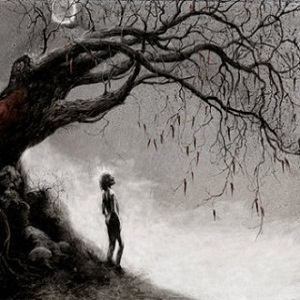 October Falls – The Plague of a Coming Age (Debemur Morti):
Really really late on this record, I think it came out in Spring. It sat in my inbox for awhile before I noticed that a lot of my usual metal website haunts were dishing out glowing reviews. This is October Falls’ fourth album, they’re from Finland yet sound like they should be from Sweden. I’ve seen Opeth thrown around a lot as a reference point for their sound, and while I’m not quite sure that’s a wholly accurate depiction, they do remind me at times of mid-period Katatonia. Anyway I’ve been enjoying the hell out of this album, its on regular rotation whenever I’m sitting here with the headphones on —- the kind of album that you set to play start to finish because its consistently good throughout. That could be seen as a weakness as well, for all its strengths as a seamless continuum of blackened (bleak-ened?) melodeath, there are no real standout tracks that jump up and slap you with their greatness. Oh there’s individual moments, such as the fantastic guitar melody at work towards the end of “Snakes Of The Old World”, and the awesome early Ulver-isms of “Boiling Heart Of The North” where we get our first real moment of quiet and space. Here guest vocalist Tomi Joutsen of Amorphis chimes in sounding rather un-Amorphis-like for an ear pleasing, echo-drenched clean vocal that still maintains the depressive tone set by the rest of the material. And I’m going to paraphrase Angry Metal Guy who described the sound of this album as a wet kind of heavy, like you’re listening to it from a distance through a cloud of fog. Guitars aren’t up front with heavy riffs, bass is more of a texture, and drums are slightly muted. There’s an ambient murkiness that suffuses the entire production, and I know that sounds dreadful, but trust me it works well.
Its interesting to note that many reviewers are touting this as October Falls most accessible release. They all point to the monolithic approach these guys took on earlier records, where for example a track listing could number three to four songs —- of ten minute plus lengths. The structure of this new record is far more conventional, nine tracks, the longest hitting the seven minute mark. Yet I wonder if people really listen to a record like this by skipping around various tracks. This is one of those albums that I can’t imagine driving to… and thus can’t imagine enjoying in spaced out chunks as on the random play of an iPod. Its far too hypnotic and enclosed in its own specific world of sound to be digested in that manner, and so it makes me think that all this talk of the album being accessible is a side-effect of what amounts to a cosmetic decision. In any case I don’t think I’m jumping the gun here to say that this will end up on my top ten albums of the year list somewhere, its really that damn good. Finland’s on a roll lately.
 Pellek – Ocean of Opportunity (self-released/independent):
This is an interesting one. Pellek is the performer/stage name of the Norwegian vocalist Per Fredrik Åsly. It is also the name of his band (think Van Halen or more accurately, Dio), a vehicle for smoothly crooned melodic power metal ala Sonata Arctica and Seventh Wonder with their heavy emphasis on layered vocals. The striking detail of Pellek’s bio is that a few years ago he was a contestant on the Norwegian version of The X-Factor. I’ve not seen any footage of his time on that show, where he was apparently branded as the rock guy but ended up displaying a musical reach that extended to classic and contemporary metal. He became a recurring fixture on Scandinavian television after The X-Factor, often appearing alongside Swede Tommy Johansson (vocalist/guitarist of ReinXeed and Swedish Karaoke competition star in his own right). The two collaborated on parts of a compilation put together by Johansson called Swedish Hitz Goes Metal, which as you guessed it set cuts by the likes of ABBA, Roxette, and others to rock/power metal stylings. Keep in mind that there’s no official, easily digestible English bio for this guy, this is pretty much me doing my limited amount of Google research and to be honest its still all a bit confusing. I have no real indication of just how popular Pellek is in his native country, but I do know that his prolific array of YouTube uploads of himself covering rock and metal songs do garner some tens of thousands of views.
So anyway, this is Pellek the band’s sophomore album, I have not heard their first so I walked into this completely unaware —- and was pleasantly surprised. If my earlier description of Pellek’s sound piqued your interest, you’ll find a decent amount of stuff to enjoy here. There’s nothing mind bendingly awesome going on, but there’s a level of songwriting craftsmanship being achieved here that is mildly compelling. I’m referring in particular to cuts like the glorious “Northern Wayfarer”, a well executed syth line propelled rocker that supplements a catchy as hell chorus with percussive riffing, and an excellent acoustic dropped midsection that greatly enhances the epic aura of the song. The “Sea Of Okhotsk” has a striking verse and chorus that are purely dependent on the vocal melody, the underlying instrumentation working to conjure up an Oriental styled soundscape. Things do get a little too flowery for me on “Gods Pocket”, a tune so cheerful it makes Power Quest sound like a dark cloud… heavier riffing on the second verse here can’t disguise what essentially sounds like a children’s song set to rock guitars. There’s of course a ballad on offer here, the kind that can only be enjoyed by those of us who love our fair share of power metal ballads.
Pellek is clearly the star here, his vocals seem to take center stage on every song, but that’s not to marginalize the efforts of his backing band, who provide consistent, quality power metal musicianship all across the board (yet lack the creative signatures of say Sonata Arctica, or Nightwish.As for the rest… I dunno, there’s something just innocuously enjoyable about this whole affair. There are moments when I’m reminded of sounds of J-Pop and classic video game music, not in a blatant Dragonforce-d way, but more in the subtle textures that were recurring motifs in the work of the aforementioned Power Quest. Its an interesting feature that spices up what would otherwise be a fairly standard collection of Euro power metal. I’m surprised someone with Pellek’s past exposure and publicity remains unsigned, perhaps that’s by design but its a rarity in this genre. A nice surprise overall.
 Gyre – Second Circle (Monolithic Records):
First of all, these guys have managed to manipulate the lettering of their chosen band name to look like the face of Cthulhu, which is awesome looking (and a fine marketing tie in!). Anyway, Gyre play a slightly technical, progressive blend of deathcore, which could mean absolutely nothing to you without a certain amount of experience in understanding what the connotations are to having “core” tagged on the end there. If I had to guess I would say the band must really hate that label now, but when I was doing research on these guys I’d see it thrown around everywhere. There seems to be an earnest attempt to transcend the limitations of that style and it comes in the small corners of these songs, the moments of time which are not filled with djent riffing.
Its like the band is interested in the textural depth of bands like Deftones, or even Opeth, yet can’t seem to allow themselves enough space within their interlocked framework of riffs to fully explore that potential of their sound. I could spend a paragraph worth of space going into the minutiae of what this sounds like but this is a particular style of music that I have always had a hard time writing about without boring myself, much less you, so I’ll just refer you here so you can take a listen. The strange thing is that there’s something to these songs that I find rather enjoyable. I try not to put a lot of weight on my first impressions, but I was surprised by how much I enjoyed these songs as a headphones listening experience. The production values here are very, very good —- a trait that only enhances the “progressive” tag that Gyre seem to court. Lyrically there are some heady themes being addressed here, and the few lyrics I’ve seen are thoughtful and well done. Its a shame then that no one will give them much thought because the vocal approach here is far more conducive as an instrument, lacking the breadth to give words and phrases enough enunciation to register beyond mere sound.
As enjoyable an aural experience it was, I have a hard time rating this EP so highly when it comes to appreciating it on the values of songwriting itself. I suspect this is what forms my overall apathy towards this particular subgenre of metal. Yes these are songs with structures but there’s such an inane amount of riffs for riffs sake that I lose sight of what the song is supposed to be. When you listen to a Death song, you understand what it is you’re listening to even though it written with extreme metal language. Riffs have a musical definition, and tempo changes have purpose or direction. When you listen to Emperor, yes its a wall of sound, but these are layers upon layers of cohesive music, and if you listen repeatedly your mind will finally process them all individually and at once to beautiful effect. Years later you’ll find yourself telling your buddy how you think In the Nightside Eclipse is rather catchy at times. No matter how many times I listen to the four cuts on Gyre’s Second Circle, the riffs were always the same violent collision of riffs, nothing more, nothing less. But maybe that’s the way its supposed to be, aural chaos for aural chaos’ sake and its my problem that I can’t find the value in that. I would blame it on getting older, except that I’ve always felt that way towards core and djent oriented styles. Still, fantastic logo.
 ViolentorY – Theory of Life (self-released/independent):
Hailing from Bulgaria, the awfully named ViolentorY play a less keyboard drenched Children of Bodom-ish take on melo-death with power metal leanings. Think latter period CoB mixed with the wild vocal theatrics of classic Sinergy (except with a dude singer) and Tarot. This is their debut album, having premiered with an EP a year ago and even though I’ve pretty much summed up their sound in one sentence, its enjoyable stuff overall. Sometimes being an obvious product of your influences works well if you know what bits to pick and choose. Take vocalist Dimitar Belchev, who comes off as a mix of Alexi Laiho and Marco Hietala. As weird as that sounds it really works, and is a suitable complement to a musical approach that is heavy on symphonic melody.
I have a particular fondness for the oddly titled “Power Source”, a rock-steady slow builder of keyboard atmospherics and heavy riffs that culminate in the album’s best chorus where Belchev pours his guts out and almost gets all Jon Oliva on us. Its a killer moment that I’ll be coming back to this album for. They get close to the same level of awesomeness with “Master of Dreams”, an uptempo, King Diamond-ish slice of great tension building verses and soaring refrains. There is budding pop songwriting talent within the band (I’ll be honest I have no idea who’s doing the songwriting here) that will hopefully continue to get better and better. Its not all good though, as they misstep with “Over You”, which does seem to be exactly what its Europe-ish title suggests, a love lorn power ballad in which they try to channel Dio’s adamant statement to “Walk Away!” from the evil woman (Look out! Tonight!) except without the verve and panache of the master himself. And there is a bit of filler in the second half of the album that’s unfortunate, as everything starts off so well.
Its a shame about that band name… you’d think things like that wouldn’t matter but let’s face it, it is rather silly. I hope people don’t let it put them off if they come across it. And Theory of Life sounds like an album title by an American post-grunge band, and song titles like “XperiMental”, and “Psychical Decay” made me groan but now I’m just being a jerk. Hey its late and I’ve been writing for a long time! Seriously I like what ViolentorY is doing and while this album is far from perfect, its a promising debut. These guys are unsigned, but you can hear this album on YouTube I believe, go check out “Power Source” for sure.

 Sunday, September 22nd, marked the official Autumnal equinox, and even though the temperatures here in Houston will still reach the 90s this week, there were signs in the air that the seasons had truly changed. It was in the sounds of an NFL Sunday escaping from the television, the outdoor smells of burning wood and grilling meats, the sights of a grey, overcast sky, and of course, the feel of much cooler breezes. In case you haven’t noticed, I’m pretty big on this time of the year, and of course I tend to gravitate to listening to those bands that tend to provide a suitable Fall soundtrack. One of these bands is Insomnium, whom I began to get into heavily last year around this same time after years of seeing their name pop-up repeatedly. This surging interest perfectly coincided with the chance to see them live in November supporting their One For Sorrow album, and I still remember the anticipation of the drive to the venue, the electricity of one of the most intense performances I’ve ever seen, and the shaking exuberance of the drive back home in the chilly late night air.
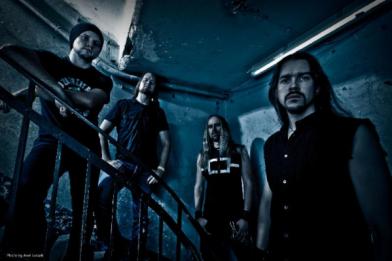 This single release is actually an EP to be precise, a collection of four tracks, the aforementioned “Ephemeral” and three acoustic based instrumental tracks. The title track kicks us off; a just under four minute slice of tempered Insomnium styled melo-death and its our first taste of the band’s slightly different take on their sound. Noticeably there is a lack of the band’s usual penchant for a slower, lengthy musical intro —- before we know it we’re launching headlong into a twice repeating up tempo verse section that accelerates into a nicely worked bridge, before exploding with a gush of ultra melodic guitars in the chorus. Whats striking here is the interesting tempo progression, a rhythmically uptempo verse to be sure, followed by an even faster bridge, and finally the guitars take the lead in the chorus to push the song to the speed limit. As usual for a band of their songwriting talent, Insomnium’s keen ear at layer separation between instruments is the key attribute at work here —- notice that the vocals continue from section to section at their own pace, never feeling the need to match the rhythm section or guitar leads. This song is catchy as hell. Probably more than any other melo-death band, Insomnium seems to have a never ending supply of ear worms that they liberally sprinkle all throughout their songwriting.
 There are three other cuts on this EP, as mentioned before, they are short atmospheric, acoustic instrumentals that actually served as the soundtrack to their One For Sorrow documentary. And before you yawn, let me assure you that they work within the context of this release. I suppose the obvious thing would be to say they were soothing, and at times they were, but “The Swarm” kicks off with a Jester Race sounding acoustic strum that is almost waltz-like in its tempo, bringing to mind the best era of that famed Gothenburg sound. They’re all good pieces, and nice to have in addition to the main attraction, but I think it would have been far more interesting had they re-recorded a few tracks from their back catalog in an acoustic format, perhaps with clean vocals over them? Ah can’t win them all. Regarding the documentary, I loved every minute of it, and its starkness in tone matched the band’s musical qualities, right down to the directorial decisions —- its worth checking out on YouTube. That coupled with the new single has me more anticipatory than ever, could a new album possibly arrive before year’s end? If not at least Autumn is finally here.
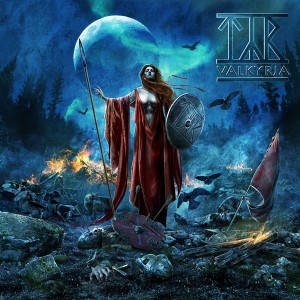 Some of you may already know that I’ve been pretty big on Týr, they are a rarity in metal —- a band with a sound that is truly all their own. I once overheard a conversation on the floor of a Nightwish/Kamelot show where someone was trying to describe Týr to his friend by comparing them to other bands. If I recall correctly, he name dropped Korpiklanni somewhere in the conversation. No… just, no. There are your bog standard, numerous, often copycat folk and “Viking” metal bands, and then there are artists like Týr who elevate the entire subgenre to a level of literary and musical excellence. Even their cover art is goddamned jaw dropping (look at that picture over there and tell me you don’t want a framed poster of that on your wall). In a way the artwork is a microcosm for the band’s sound; punishing yet harmonious, epic yet understated in the most elegant way.
 My favorite of these surprises came in the form of Týr’s first collaboration with a well known metal vocalist, namely Leaves Eyes’ own Liv Kristine, who shines on the stormy power (and I mean POWER) ballad “The Lay of our Love”. This will make the best songs of the year list without a doubt, its one of those rare songs that made me stop what I was doing while listening and really pay attention, and when it was over, I replayed it again and again. Týr hit me right in my metal guilty pleasure wheel house here, a delicate ballad with an acoustic intro, set to tempo by distantly thundering bass lines with a guitar solo might rank among the most memorable the band has ever composed. Kristine’s vocals are well renowned for her ability to match ethereal tone with sheer vocal heft and power, and when she begins to soar in the chorus alongside Joensen’s rough hewn voice, the theme of the album comes alive. They made a great choice selecting Kristine to handle the guest spot, and it makes me wish I could enjoy her main band more.
 Well its finally here. Years after I first saw Carcass in 2007 at a dingy downtown Houston club playing the headlining slot of a godawful Texas Death Metal Fest and wondered if they were going to attempt to follow up… erm, Swansong, they have returned with a new album at last. And the thing is, my anticipation for it all those years ago when I relished the opportunity to hear “No Love Lost” live has gradually diminished over the years —- I think in part because I wondered what was taking them so long, and that maybe their return was really just about unleashing the classics night after night and making a living off it. Hey, that’s fair enough, they’d have all right to do so if its all they were content with. But noise was made by both Bill Steer and Jeff Walker that they were interested in the idea of doing a new record. So for years we’d read this stuff, doled out in Blabbermouth-sized bites with hopes raised that it could be soon, only to have soon pass by with nothing to show for it. I think that if many of us are totally honest, we all probably stopped caring after awhile.
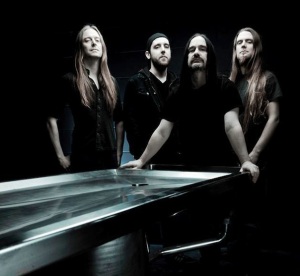 Highlights abound, the much praised “Captive Bolt Pistol” turns in one of Steers more memorable series of solos —- strings of tornadic like fret patterns over a bed of thrash riffing that recalls Megadeth’s Rust In Peace era. Speaking of which, I get a Deth like vibe on the album closer “Mount of Execution”, which starts off with a memorable slow melodic bend before it launches into a midtempo-ed gallop for the majority of the track, Walker spitting out Mustaine laden vocals that actually do approximate melodic singing at various points. It sorta feels like 1992. “A Congealed Clot of Blood” storms along until the end of the song where we’re treated to a classic tri-tone laden symphony of guitars, capped off by an amazing middle solo… its a rare moment of quiet in an album that is 95% blistering attack. I love “The Master Butcher’s Apron” which is about exactly what the title suggests —- this might feature the best riff on the album, a slow, almost Metallica “Sad But True” echo to the tempo and rhythm guitar pattern (anyone else hearing that?). Wilding’s fills are incredibly complex, the kind of satisfying metal drumming that seems to be all too rare. My favorite moment on the record comes at the end of the best song on offer here, “316 L Grade Surgical Steel”, a perfect Carcass song in every way: Tremendously catchy main riff, Walker’s strategically paced vocals with lyrics turned dark and reflective —- the awesome ending section is worth pointing out alone, Walker barks against stop-start fire of riffs and percussion: “Don’t tell me that you want / Don’t tell me that you need / Don’t tell me that you love / Don’t tell me that you care / Don’t fool yourself”.
 Its highly unlikely that any of us would have been able to predict that the quietly touted new sound of Satyricon would sound exactly like what we’re hearing on their newly released eighth album. When the band announced a lengthy hiatus after completing the touring cycle for 2008’s “The Age of Nero”, they walked away saying that a comeback would have to include a revamp of their sound, which was essentially a silent way of saying that they had taken their straight ahead, black n’ roll style of the past decade as far as it could go. Upon reading that statement I found myself wondering, well, where could they take their sound? Its either go back to their roots by bringing back the symphonic elements of the Nemesis Divina era and perhaps mix it with slight touches of black n’ roll, or go off into some totally random avant-garde offshoot ala Ihsahn and perhaps “treat” us to bewildering saxophone laden weirdness. The thing with black metal is that when you really boil it down to its component parts to attempt to merge it with other non-black metal elements, there’s not a lot left out there that hasn’t been done. And maybe I’m just reading into something that was never there, but I felt that when Satyricon made that pre-hiatus declaration, they were speaking in reference to black metal as a whole, and not just the sound of Satyricon.
 And when I describe the album with a term like that, I suppose I had better really explain what I mean. This is proving to be the most difficult album I’ve ever had to write a review for, because I believe I understand what Satyricon are trying to attempt to capture here, but I’m finding it difficult to spell it out in words. I’ll give it a shot here: If you can look at older Satyricon as symphonic driven black metal, and recent Satyricon as a raw, unadorned, black n’ roll reaction against that, then new Satyricon exists not in between those polarities, but outside of it —- looking in. Their musical shift from their earlier sound to their recent sound was a process of addition by subtraction. Their new sound then, is born not from further addition or subtraction of black metal musical elements, but by simply rewriting the equation with new elements altogether, some black metal, and some just plain musical. The most distinct element is a noticeable sense of softness that comes not only from an organic, warm analog production, but from the liberal manipulations of space in relation to instrumentation.
 Let’s get the obvious stuff out of the way here first. Yes this is one of the most anticipated black metal records coming out in 2013, a big three if you will alongside records by Darkthrone and Satyricon. Yes their last album was considered by many to be brilliant, and yes if you didn’t find anything to like about previous Watain offerings, you should avoid this like Taco Bell. Watain are what they are, either you’ll find something to like about them or you won’t, because this isn’t a band that strives towards innovation or makes a point of reinventing the black metal wheel. And yet I hate saying that, first because its a little unfair, and secondly because there will be differences in a band’s sound from album to album, simply because the most minute details can produce that change (guitar tone, mixing engineer, freaking recording studio). The question to ask I suppose with a band’s new album is what are these differences, and do they matter overall enough to change someone’s mind one way or another?
 Most reviews of this album will no doubt spend a few sentences analyzing Watain’s attempt at a ballad on this record, “They Rode On”, what the surprisingly succinct reviewer at Pitchfork aptly described as the band’s stab at a tune akin to Bob Seger’s “Turn the Page”. I can see that, and look I love when metal bands try their hands at ballads. It interests me on a fundamental music level… I think that ballads are far more interesting when done by an artist who normally concentrates the vast majority of their musical output on rockin’, being loud and abrasive, and you know, heavy. Some bands can pull them off and others just don’t have the songwriting chops for it (and I’m really forgiving when it comes to ballads too). But in black metal it seems that the stylistic limitations of the genre would prevent a band from ever getting close to anything approximating balladry — perhaps the closest example we’ve seen has been Cradle of Filth’s “Nymphetamine”, but they’re not black metal as we understand it anymore, and they had to employ female vocals… so, yeah, cheating a bit. The adventurous stretch in black metal has seemingly been to attempt to get more melodic through symphonic elements as well as the introduction of clean vocals (albeit still within the context of a black metal style song).
 I loved Mabool. Orphaned Land’s 2004 comeback album was a seminal moment in my journey not just as a metal aficionado, but as a music lover in general. I was even fortunate enough to catch the album just shortly after its initial release, instead of years after the fact as would become a prevailing trend for me later on. It was to say the least, an incredibly timely release: An Israeli metal band delivering a conceptual album about the reunification of the three Abrahamic faiths smack dab in the middle of the Second Intifada, the wars in Iraq and Afghanistan, and a mere year away from Ariel Sharon’s earth shattering declaration to pull out of Gaza. You could either call that incredibly ballsy, or brazenly foolish.
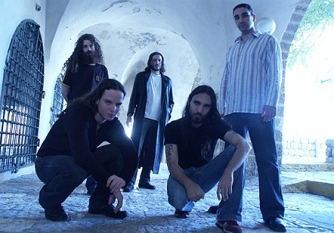 In time, after many hundreds of repeat spins, Mabool also left me with a void in my music collection: I had discovered a new found hunger and soon to be great appreciation for cultural music of the Middle East. I asked the band for recommendations through their forums, and was supplied a short list by Yossi Saharon, the Orphaned Land guitarist. I found that this newly acquired musical interest would only increase in momentum — I began seeking out, sampling, and buying international/cultural music regardless of where on the globe it was sourced from. My job in the music department of a Borders Books only aided my drive to find more and more. The store would be sent promo CDs from various record companies for in store play, and when the promo shelf had to be emptied at the end of the month (by employees getting to select stuff they wanted to take home… a definite perk), the dregs that no one else wanted were always a vast array of modern and traditional international music: French pop, Brazilian jazz, Gregorian Chant, Greek/Mediterranean folk, fifty different subgenres of music from Africa, in short, everything you could possibly imagine. I found a treasure trove of great stuff that I loved, and eventually this experimentation and growth lead to me appreciating stuff like the hip hop of Jurassic 5, or even the alt-country of Uncle Tupelo, Wilco, and Neko Case. It certainly wasn’t the first time I’d explored non rock/metal music, but Mabool tapped open a geyser of interest and curiosity in exploring new sounds that thankfully hasn’t stopped.
 I thought the album had a pair of good tracks, but the rest had failed to move me in any way. I know it sounds a little dramatic now, but I felt disheartened that after the impact of Mabool and the (I hate to use this word) “journey” it took me on, the band who delivered that eternal classic was somehow unable to impact me any further. When I looked at reviews all over, the general reception was overwhelmingly positive and glowing… so how was I left out in the cold this time around? I had burned myself out on Mabool through excessive overplaying, yet I couldn’t find enthusiasm for their new stuff. When the band played close to me on a subsequent North American tour supporting Katatonia, I missed the date and didn’t feel bad about it. Wow I’d think, my opinion had really soured on these guys. It really was a little depressing… and so I chalked it all up to an unfortunate loss, and moved on.
 Of course, the album is laden with all the traditional Arabic/Israeli (oh hell lets just call it “Oriental”, Edward Said enthusiasts be damned) that we’ve come to expect from Orphaned Land. There’s oud, saz, bouzouki, chumbush, apparently even a xylophone at some point, and of course the aforementioned tremendous strings and choirs. The band splashed out for this record, amassing a talent pool of over forty musicians “including 25 choir singers and eight classical violin, viola and cello players from Turkey”. Its a smart play, one that lines the sound of this album with an open fullness, a sense of spatial relationships between instruments that their older records, yes even Mabool, were unable to attain through having to rely solely on keyboards. As for the scarcity of death metal vocals I mentioned above, I don’t find myself missing them, or believing that these songs would be better served with them. Farhi has always had a fine, well accented clean delivery as a pure singer, and when he does decide to lay the death vocal wood, on “Fail”, its a powerfully shuddering standout moment. I’d be remiss if I didn’t remark upon his fantastic clean vocals on that particular song, as well as on the haunting, emotional “Brother” — which contains perhaps the band’s finest lyric.
 Its probably getting a bit predictable by now, that is, the overwhelmingly positive reaction to Queensryche’s new self titled/post-Geoff Tate release. That there are so many interested parties taking a look at this album is perhaps indicative of how high in profile the band’s name has risen thanks to the online spillover of a courtroom/behind the scenes drama that has played out this past year for all to see. In terms of the PR war, there was a clear winner between the competing Queensryche’s long before a shred of new music was even heard from either party: Tate decided that his career would be best served by resembling a slow-crashing, flaming husk of a zeppelin. His version of the band is an internet laughing stock (run a search on blabbermouth for hilarious proof), and his consistently sub-par live performances in the name of Operation:Mindcrime’s 25th anniversary are filmed by concertgoers and uploaded to YouTube as documented proof of his deteriorating vocal ability, his sub-amateur band, and
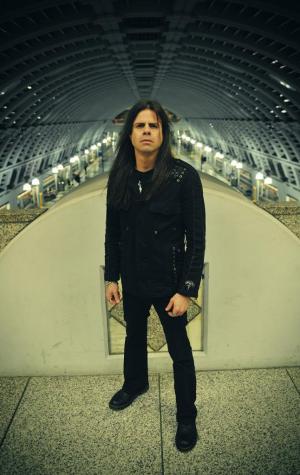 You might notice I haven’t mentioned anything about the performance of new vocalist, ex-Crimson Glory singer Todd LaTorre. And that’s because any question of his abilities should have been put to rest long before this album’s release… I refer of course to the numerous recordings available of his concert performances doing high justice to the band’s back catalog. When you hear recordings of him singing “I Don’t Believe In Love” the way its hasn’t been sung in years, your worries about his performance on a new album go out the window. Before I even had the opportunity to listen to this album, I witnessed the band playing live here in Houston on June 8th on a humid Saturday night. The band was on excellent form, but Todd LaTorre was simply on fire, the damp air and warm weather making an outdoor stage the perfect setting for me to witness the single greatest live vocal performance I have ever heard. It was possible that the versions of classics from the Warning and Rage For Order albums that I heard that night were actually better than the original recordings. For periodic moments during the show, I was in utter disbelief at how fantastic he actually was — it was like watching Lebron in Game 7. At one point a guy next to me shook me by the shoulder excitedly and shouted “Can you believe this guy?!” I responded back, alarmed, “Crazy eh!”
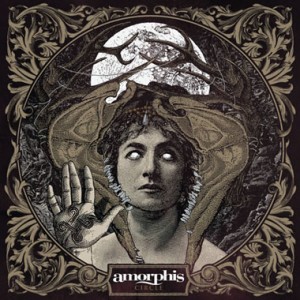 The stuff that’s really been connecting with me lately is in fact wintery dark, morose, bleak, and of course melancholic — and I’ve just decided to be okay with that. Better to write about stuff that’s resonating with me for whatever reason than force feed everyone some half-hearted take on the NEW ANVIL RECORD! So, first off, the new Amorphis album, Circle, is really striking a chord with me in a big way, and the I’ll be honest, I was one of those people who thought Amorphis got better when current vocalist Tomi Joutsen joined the band on 2003’s Eclipse. Okay, I loved Tales From A Thousand Lakes and Elegy, but then began the band’s strange, murky, experimental era, and I simply couldn’t zero in on any of those records. When Joutsen debuted on the “House of Sleep” single, I felt the band got some fire back. Coupled with the fact that there was also stronger emphasis on more rock based songwriting, Joustsen’s ability to deliver incredible melodic and emotional vocals resulted in a far more comfortable fit than Pasi Koskinen’s vocals ever could.
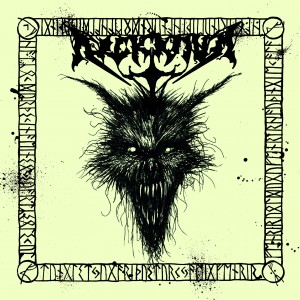 Amorphis took me by surprise, not in that I don’t expect good work from them, but in that I’ve been listening to the album nonstop in a way that I haven’t since I heard Elegy. But if that was a surprise then I’d have to say my enthusiasm for the latest Arckanum offering, Fenris Kindir, is coming as a total shock. This is without a doubt, the best black metal out in 2013 (I know, I know… Darkthrone, but is The Underground Resistance really black metal?), as well as the most immersive listening experience of the year. For those who don’t know, Arckanum has been essentially a one man solo project of Johan Lahger, and he’s made a lengthy go it in releasing albums since the mid nineties. I’ll confess, I’ve been unmoved by this project for the most part, despite being exposed to the past few years of releases… and as is the usual way these things go, I have no explanation for why those previous albums didn’t affect me yet the new one does — but there you go. There’s nothing accessible or commercial about this recording, its pure blistering black metal done in a nod to an old school style, with very little in the way of vibrant melodies.
 Finally, something that was bound to happen… the first discussion of a non-metal-related album of music on The Metal Pigeon. Stick with me on this, because if you haven’t treated yourself to the sheer beauty and wonder that is composer Austin Wintory’s epic soundtrack for the PS3 downloadable gaming oddity called Journey, then you’re missing out on something really great. I actually don’t own a PS3, but thanks to YouTube I’ve been able to see the game played, and what I saw was a rather inspired and inventive take on merging gaming into pure visual/interactive art. It was IGN’s Game of the Year for 2012, a huge accomplishment for a small, independent developer overtaking such major heavyweights as Halo 4 for example. Well, I won’t launch into gaming talk here, but suffice it to say the very idea of Journey has a built in metal spirit — to me anyway. You wander alone at first, in this beautiful, desolate, epic landscape, always trying to get to this incredibly huge mountain that looms in the distance, and as you go through your “journey”, other players meet you in your world (or their world) and you can potentially aid one another onwards in your quest. Its an elegant visual metaphor for life, solitude, togetherness, and entropy.