
This was an exciting year to be a metal fan, particularly if like me you made it a habit to check out as many new releases from established and up and coming artists as you possibly could. Its not an exaggeration for me to say that I listened to more new metal albums in 2014 than any other year —- easily surpassing even last year’s nutty total. It was an especially prolific year for power metal, with nearly every major band within the subgenre releasing new albums or singles. As far back as February I was speculating on 2014 possibly being a resurgent year for power metal —- so was it? Well, yes and no. There were some disappointments from a few veteran bands, but these were made up for with pleasant surprises from relatively new artists. And of course there were still quite a few extreme metal artists who offered up a handful of great records.
Consider the following ten albums on this list a very agonized over distillation of what I thought were the absolute best of the year. Most year end metal lists go up to twenty five or even fifty entries —- I limit myself to ten to force myself to be critical, selective, and honest with myself about what I enjoyed the most. A shorter list also helps to give weight to the ordering of entries, and you can be sure that the top spot means a great deal. I definitely look at album play counts when narrowing down my nominees as they provide an honest statistic about my listening habits, but I also consider other far more intangible factors as well (such as… you know, artistry and stuff). This is part two of my 2014 Best Of feature, so be sure to check out Part One: The Songs if you missed it. Enough of my incessant prattling! On with the list!

The Metal Pigeon’s Best Albums of 2014:

1. Triosphere – The Heart of the Matter:
Its not an uncommon occurrence to discover a great band that I haven’t heard before; its one of the frequent perks of writing a metal blog. It is however extremely rare for that discovery to come in the form of an album that is absolutely flawless and perfect in all aspects. Norway’s Triosphere were a late entry in the 2014 album release calendar, November and December for Europe and the States respectively, a major misstep for AFM Records that has already ensured that it slipped under the radar of many metal writers. I consider myself lucky that I am not among them, because here’s what I learned: This is the best metal album of the year, regardless of subgenre, regardless of your preference for accessibility or extremity, and regardless of any preconceptions you might have about a female fronted metal band.
Yes Triosphere is indeed a female fronted metal band —- a progressive power metal one, led by bassist/vocalist Ida Haukland. But they don’t sound like many other female fronted metal bands, as Haukland’s voice can best be compared to a blending of Ann Wilson and Doro Pesch, with hints of Coverdale’s inflection and Dio’s theatricality. She’s a stylistic rarity in an era when female vocals in metal usually mean light, airy, delicate, and that oft-used adjective, ethereal. Haukland is also unique among male and female vocalists in being a sonically powerful vocalist with both high and low range, all while capably demonstrating a mastery of melody. It would be an oversimplification to say that her tone is only raspy or leathery, because its also smooth, distinct, and enunciative. To say she is the undisputed star of this album would perhaps detract from the clockwork-like, precision machinery of the band as a whole, but certainly without her The Heart of the Matter would not be the special album it is.
Equally as key in the Triosphere lineup is guitarist Marius Silver Bergensen who is the band’s primary songwriter in cooperation with Haukland; he composes the music, she writes the lyrics and creates the vocal melodies. Together they weave a dark, stormy, and feverish take on progressive power metal that is both technically brilliant and emotionally resonant. Bergensen seems to be a smart guy in that his songwriting works around Haukland’s natural talent at creating fully formed vocal melody driven hooks. He’s a tremendous guitarist, and shows it off alongside fellow guitarist Tor Ole Byberg in brief flashes of technicality during riffs and in wild, unrestrained, hard rock inspired soloing. Triosphere weave technicality into the fabric of their guitar melodies throughout, but they know when to turn it up and tone it down, a result of marrying their approach with Kamelot-like simplicity where the melody has to remain preserved. Drummer Ørjan Aare Jørgensen lays down a tremendous performance, spicing up a thrash metal fueled percussive attack with proggy, jazzy fills and accents. There’s virtuosity teeming throughout these songs, but its used as an accent rather than the main attraction, the band subtly hinting that they could do more, if they wanted.
Ultimately its the start to finish array of great songs that steal the show here, and there’s a handful of absolute gems: “Steal Away the Light” is as excellent a pure heavy metal song as you will ever hear, with its Roxette-meets-Dio soaring, triple-segmented chorus built around Haukland’s incredible range. There’s the epic, tension fueled “The Sphere”, where her vocals practically scream heartbreak as she sings “Can you feel me like I feel you / A heartbeat where the sound of my soul shines through”. When I listen to that chorus, I realize that its Haukland’s perfect choices in enunciation that really drive home the powerful emotional response that line manages to conjure, and she does that all over the album and puts on a masterful display of how to make the most of every single line. I’d be remiss if I didn’t mention my favorite song, “Breathless”, where the band really turns up the Roxette vibe with a fun, punchy, poppy chorus built around clever alliteration. Haukland sings “I know you think / You know the name / Of this game we are playing” with half-second pauses in between each line, giving the chorus a rock n’ roll stutter strut that you don’t normally hear in prog-metal. Its the kind of thing you hear the first time and smile over.
Much of Haukland’s lyrics deal with past and current relationships, or at least the conceptual idea of one where heartbreak is a central theme. It may not sound like very “metal” subject matter, but its refreshing in a strange way, perhaps because such a focused concentration suggests that its inspired by real personal experiences. You can perceive her attention to detail in regards to penning lyrics that while direct and straightforward, are full of depth and purpose. With a few more releases we could see Haukland blossom as a lyricist, possibly reaching Roy Khan levels of diction and imagery (she already has quite a bit in common with her fellow Norwegian). I called this album perfect, and take my word for it, there are no fillers to be found —- and there’s a raw, kinetic energy that flows throughout the album from the very start, every subsequent song picking up where the other left off. Triosphere don’t get bonus points for their uniqueness as a non-operatic female fronted metal band; they made it to number one on my list simply because they created an album that I couldn’t find anything wrong with, an album with nothing to complain about and everything to get excited by. The Heart of the Matter is a beautiful, aggressive, elegantly chaotic masterpiece.
 2. Ghost Brigade – IV – One With the Storm:
Yet another in the waltzin’-into-class-late crew, Finland’s Ghost Brigade slipped this one in relatively late in the 2014 release calendar (must be a Scandinavian thing?). If you recall from a couple years ago, this pack of downtrodden Finns made my 2011 Best Albums list with Until Fear No Longer Defines Us, the album that introduced me to their take on Sentenced/Katatonia inspired melancholic metallic rock. Three years later, they’re finally back with its successor and have managed to land a higher placing on this list with an album that’s more metal and less rock. Its slightly amusing that the further Ghost Brigade have shifted away from what made me enjoy them in the first place has somehow resulted in a better, sharper, more compelling album. Its never the best metric to compare one album to another, but I can honestly say I love One With The Storm far more than I ever did its predecessor.
Not everything has changed, there are still many moments where Manne Ikonen demonstrates his melodic voice with his heavily accented clean singing, but they’re now equaled in play time with his raw, harsh, tortured screaming. He has to fight for space too, because the clearer, crisper production the band has chosen to employ here pushes the instrumentation right up against his vocals, and together they clash back and forth as on the album opener “Wretched Blues”. Its a huge reversal from their previous albums, where everything sat underneath Ikonen’s vocals in a hazy fuzz —- no more. Guitars pour aggression and beautiful, melancholic melodies all over these songs, and they take center stage, often times their musical patterns and figures serving as a song’s refrain such as on the brutal melo-death of “Stones and Pillars”. Some of those guitar figures are heart rending in their ability to touch your emotional nerves, as on the acoustic finger plucked intro to “Elama On Tulta”, where its abruptly followed by a wave of heavy melodicism that wouldn’t sound out of place on Sentenced’s The Cold White Light.
I included the brilliant “Departures” on Part One of this year’s Best Of feature, it being the album’s most accessible slice of metallic rock, but there’s a wealth of melodic vocal treasures to be found elsewhere. A particular favorite comes in the track “The Knife”, where steady mid-paced slabs of gargantuan riffs with suitably throat worn harsh vocals are contrasted with a wide open, cinematic chorus where Ikonen laments in his melodic best “Another year / Another wasted season”. As you can probably tell, much of Ghost Brigade’s lyrical approach deals with your typical Finnish appropriate topics of loneliness, isolation, and general feel-baddery (screw you spell check!), and they just do it oh so well. Take the introspective “Disembodied Voices”, where over a bed of moody, hushed atmospherics and cleanly plucked electric guitar figures Ikonen croons “They said time heals / In a year or so you’ll be alright / Time doesn’t heal / It only makes you forget”. In the hands of a lesser band and vocalist (and I can think of many American radio “rock” bands that could fit the bill) those lyrics would sound contrived and false, but Ghost Brigade understand what kind of soundtrack they need, and Ikonen understands that their delivery needs to be understated, passive even.
My high play count of One With The Storm may have spiraled out of control with its release coming square in these darkening autumnal months, but I have no doubt I’d feel this strongly about its cohesive artistic triumph were it released way back in spring or summer. I think the band has finally stumbled onto a formula they ought to consider sticking to for another release or two. Evening out the guitars with the vocals in the mix has really gone a long way towards giving their sound a surge of power, and its forced Ikonen to balance out his melodic singing voice with his equally riveting (if not superior) melo-death harsh vocals. Ultimately though, it always comes back to the songwriting and Ghost Brigade delivered a handful of gems here, an accomplishment that is even more impressive considering the vast array of diverse tempos and song structures they chose to employ. They outdid themselves, surprised the hell out of me, and somehow managed to release the best metal album out of Finland in 2014.
 3. Dawn of Destiny – F.E.A.R.:
Until Triosphere came along, Dawn of Destiny laid claim to being the biggest out-of-nowhere surprise of the year. I had never heard of the band before (and apparently, neither did anyone else), but it was the appearance of Jon Oliva as a guest vocalist on the stellar “No Hope For the Healing” that caused my buddy Doctor Metal of The Metal Meltdown Show to play the band on his show one Friday afternoon. It wasn’t just the presence of the Mountain King that grabbed my attention, it was the absolutely fantastic songwriting on display as well. I was convinced and took a chance on the album, and after one pass through I had the kind of smug, self-satisfied, doofus grin that I’m sure we all tend to get after suggesting an unknown restaurant that turns out to be great and having your friends begrudgingly give you the nod of approval. If I wrote my original review of the album with that same grin on my face, I apologize.
Its not a stretch to say that this was my frontrunner to take the top spot on this list for most of the year before some tougher competition came along. That’s because like Triosphere, Dawn of Destiny are a rarity in the world of female fronted metal bands, as their vocalist Jeanette Scherff is neither operatic or light and ethereal, instead her vocals come from a mid-ranged rock style reminiscent of Ann Wilson or Pat Benatar. No need to scroll up to check whether you’re remembering seeing Ann Wilson’s name before, as I used her to describe Triosphere’s Ida Haukland. Both Haukland and Scherff are tremendously gifted vocalists and modern trailblazers of a sort as a budding handful of female singers bucking the metal establishment, but Scherff leans in a smoother, more refined direction (there’s no Doro influences with her). As great as she is, its bassist/co-vocalist/songwriter Jens Faber who is the true star of the album, as his songs are deliciously hooky, ornately arranged slices of dramatic power metal. On F.E.A.R. (if you’re dying to know, its an acronym for “Forgotten, Enslaved, Admired, Released”), Faber has compiled a selection of near perfect power metal songs where everything revolves around major key builds and truly memorable choruses.
Where to start? How about the stormy, tense drama of “End This Nightmare” where Scherff shares lead vocals with Faber, a distinctive and powerful singer in his own right. The chorus here is Meatloaf-meets-metal, the kind of joyously over-the-top chorus that is so skillfully written and deftly performed that it threatens to go off the rails but never does. Then there’s the one two punch of “Finally” and “Prayers”, the best back to back tracklisted tandem you’ll hear all year. The former is an aggressively uptempo vocal duet where both singers deliver unbelievably challenging vocal lines with near perfect enunciative choices and imaginative melodies, while “Prayers” is its 80’s inspired pure-pop cousin —- built on Scherff’s almost staccato delivery of the verse vocal lines. The chorus is a blast, a carefree merging of her vocals with Faber’s in a singalong that ascends like a spiral staircase. And there are so many moments like that, where Faber’s songwriting throws caution to the wind and interweaves vocal lines in unexpectedly delightful fashion, or allows the rather reigned-in, straightforward power metal guitars of Veith Offenbächer to explode in jawdroppingly gorgeous solos.
Should I mention that its a concept album? I’m not so sure its needed as a selling point, because although I’ve followed along with the lyrics and can honestly say that its a cohesive, well-told story —- I don’t think its necessary at all when it comes to simply enjoying F.E.A.R. as a musical experience. I began listening to this album back in March and have kept going back to it throughout the year. Granted there was a slight hiccup, the first minute twelve of the opening track features some rather awful spoken word dialogue that was actually gnawing at my conscience every time I considered placing the album atop this list (its that bad, and here’s to no more terrible spoken word on metal albums in 2015!). I was saved from having to deliberate that choice thanks to Triosphere and Ghost Brigade, but one lousy mistake aside, Dawn of Destiny were serious contenders for the throne.

4. Blut Aus Nord – Memoria Vetusta III – Saturnian Poetry:
Dense, layered, and nostalgic might be suitable adjectives for Blut Aus Nord’s return to second wave black metal after some time in the desert doing weird, not so great experiments with industrial music. Some quick history: Blut Aus Nord is the musical project of a notoriously reclusive Frenchman under the moniker of Vindsval, who was apparently just 15 when he released the project’s debut Ultima Thulée in 1995. Its sequel released a year later was titled Memoria Vetusta I: Fathers of the Icy Age, and together they were viewed upon as left-field classics emulating the black metal pouring out of Norway at that time. When Vindsval returned in 2001, he did so with a style that owed more to noise and industrial music, and continued in this vein even throughout Memoria Vetutsa II in 2009 and beyond. His unorthodox style won him a lot of praise in this lengthy era, particularly from big-platform publications —- but if you were one of those few that preferred his take on classic 90s black metal, you were out of luck.
So its not an overstatement to say that Memoria Vetutsa III: Saturnian Poetry is the most unexpected album by a veteran artist in 2014, being Vindsval’s return to pure, classicist second wave black metal with zero (ZERO!) industrial elements. The x-factor is that this album is recorded in the pristine, crisp, un-muddied production style that he’s become accustomed to working with in the preceding 777 trilogy, and its like being hit over the head with a frying pan in making you realize that hey, classicist second wave black metal actually sounds better without awful, muted production! This means that Vindsval’s waves of windswept tremolo riffs aren’t buried in the mix, instead they’re the main attraction, and they’re so excellent, so perfectly sculpted that you begin to remember why you loved this style in the first place. And I believe for the first time, Vindsval brings aboard a real drummer in Gionata Potenti (aka Thorns) whose unyielding, punishing attack gives the entire album the feel of a real band at work. The result is a complete about face from the cold, distant icy feel of the industrial era, instead presenting a earthy warmth, like you’re sitting around a mountainside campfire with each listen. This album single-handedly has reignited my interest in black metal as a whole, and made me dust off an Emperor classic or two.

5. Judas Priest – Redeemer of Souls:
Its slightly disturbing that so many metal writers are overlooking that with Redeemer of Souls, Judas Priest have created their best work since 1990’s Painkiller. I want to believe that whats stopping many from realizing this is the pallor cast over by 2008’s tepid Nostradumus, but that would imply that they simply hadn’t bothered to listen to the new album (and that would be poor form for metal writers anywhere, this is Judas Priest we’re talking about). Or is it that in an era where extremity in metal is prized more than traditionalism and given more artistic merit, new music by Priest is considered antiquated or sin of sins, un-hip? I’m not sure what everyone else’s problem is, and granted, I’ve seen Redeemer of Souls pop up on a few other year end lists by websites or publications that aren’t so expressly concerned with demographics and credibility. Kudos to them for realizing what most of the metal world immediately picked up on.
Priest don’t earn their spot on this list simply by virtue of Redeemer being better than its four predecessors, they’re here because of new guitarist Ritchie Faulkner, who stepped out of K.K. Downing’s shadow as more than just a replacement guitarist when he co-wrote this entire album alongside Glenn Tipton and Rob Halford. He turned out to be a veritable fountain of youth, ushering the band back to the very spiritual essence of what made them legends. Priest albums aren’t exercises in intellectual aggrandizing, they’re inherently simple, straight forward affairs built on having a plethora of tight riffs, hummable melodies, and hooky choruses galore. Faulkner brought all these things to the table and in doing so seemed to emphasize that the band didn’t have to out-do itself, or compete with others. The result is an album that is brimming with good to great to masterful songwriting, there are no duds or mediocre tracks on offer here. And its not just the band’s British Steel / Screaming For Vengeance era that is invoked, as there is a distinct Sad Wings of Destiny / Sin After Sin vibe to songs like “Secrets of the Dead” and the echoing balladry of “Beginning of the End”. The production could’ve been a little more compressed, less cleanly modern, and more eighties-sounding —- the opposite of what Blut Aus Nord did in other words. Its the only blemish on an otherwise astounding album.
 6. Primordial – Where Greater Men Have Fallen:
I can completely understand the notion that Ireland’s Primordial is a difficult band to get into, most likely due to the unusual, eerie, scream-sung vocal style of Alan Averill (aka A. A. Nemtheanga). He used to be my stumbling block as well, I liked what the band was doing musically but couldn’t get around him. A long time ago I wrote on this blog that I suspected it was due to my wanting Primordial to be more of a Riverdance-meets-black metal type of affair —- a silly concept in retrospect but a purely reactionary one. For a band tagged “Irish black metal”, Primordial sure weren’t like what I imagined that label to sound like. So here’s my advice to newcomers, step one: Forget any subgenre labels, and lets just call Primordial a metal band from Ireland (one of very few, and a stellar one at that). Step two is harder, but worth the effort: Think of Averill’s vocals as the metal version of Dave King’s from the Irish-American punk band Flogging Molly sung by a hooded necromancer standing atop some moss strewn Irish cliff side overlooking a fog-shrouded valley. Hey, we’re metal fans, we’re supposed to be a receptive and imaginative audience, so get to work.
Your efforts will be rewarded with Where Greater Men Have Fallen, which equals the band’s 2007 seminal classic To The Nameless Dead in songwriting brilliance, and leap frogs it in terms of being their most punishing and aggressive music to date. That matters, because the band was in need of a little diversity in their sonic approach, and it arrives right out of the gate with the title track and its rumbling, earthquaking drums, searingly tremolo-ish riffs, and overall brisk pace. Similarly on “Seed of the Tyrants”, the band goes full on black metal with an intro blast of Averill’s loud proclaimation of “Traitors!”, followed by blistering, full-on blastbeats and tremolo riffs that sound like they were straight out of a Watain record. I’m quite fond of the awesomely titled “Wield Lightning to Split the Sun”, where you hear more of the band’s oft buried folk metal influences come to the surface with an acoustic guitars and drums intro. The most accessible song if you’re looking for a YouTube suggestion is “Ghost of the Charnel House”, which boasts a hook built around clever guitar phrasing, fittingly so… this isn’t a band where vocal melodies are pronounced or relied upon. Most of the time the instrumentation does its own thing and Averill floats over the top, Sluagh-like you might say.
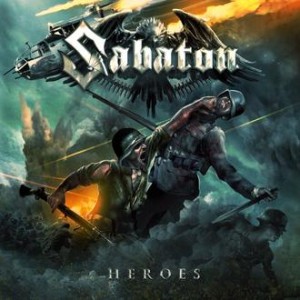 7. Sabaton – Heroes:
Some would say this is a homer pick, particularly a pair of goofball friends of mine who enjoy trolling my Sabaton fandom with unrestrained glee (its okay, they go to the band’s shows just the same). But Sabaton are deserving candidates to wind up here, this time not just because Joakim Broden continues to make a case for being the most skillful songwriter in power metal today; but because with Heroes the band did something daringly bold. Here was a case of a band that’s made its legion of fans on triumphant anthems depicting war, battles, destruction, and the might of armies and kings. One of the criticisms they’ve faced in the past is that in writing solely about those topics, they pander to an audience and use patriotism as an advertising agent. I think its a bogus critique, because its proponents are suggesting that Broden has to qualify his lyrics with politically neutral counterpoints, as if somehow his audience will misappropriate a song like “Ghost Division” (his audience hasn’t, but the critics have). Sabaton had the concept for Heroes floating around for awhile apparently, but their timing was well chosen —- they simply had to deliver something different, and it came in the form of their first album largely dedicated to examples of non-violent heroism, where humanity triumphed over warfare.
You’ll see examples of this littered throughout the album: a German fighter pilot escorting a crippled American bomber to safety (“No Bullets Fly”); an Australian medic carrying twelve injured American soldiers down a mountain to safety under withering fire (“The Ballad of Bull”); a Polish hero who willingly became a prisoner of Auschwitz in order to gather evidence of war crimes, and escaped to deliver his report (“Inmate 4859”) —- to name a handful. The thematic success doesn’t detract from the fact that Broden still delivered the goods in the songwriting department. There are your supremely catchy, traditionally structured future Sabaton classics such as “Resist and Bite” and “Soldier of 3 Armies”; and there’s some rather gutsy experimentation in the form of 1940s musical pastiche. The new guitarists Chris Rörland and Thobbe Englund were an unproven, unknown quantity in terms of how well they’d be able to create guitar parts to complement Broden’s keyboard written structures, but their work here is an unmitigated success. Riffs are intense and tightly constructed, their melodies shimmer, and their soloing is vivid and flavorful. I keep wondering Sabaton will ever stumble as I’m sure their critics hope they will, but Heroes works as an argument to suggest they won’t.

8. Grand Magus – Triumph and Power:
This was a recurring listen throughout the year when I wanted something straightforwardly catchy, but more minor key and aggressive than your average power metal release. Sweden’s Grand Magus are not power metal, nor are they folk/viking metal despite their name and imagery —- they’re just metal. Long having abandoned their doomy roots, the band loosely exist in a trad metal palette these days and add in measured amounts of rock n’ roll rattle and shake. Vocalist Janne Christoffersson grabs your attention by virtue of the songs being constructed around his vocal melodies, and with the fact that the quality of his voice is more hard rock baritone than say, air raid siren Bruce Dickinson. The band is also a three piece, so its fairly no-frills, just the meat and potatoes of solid riffs, hummable vocal melodies, and rock-steady percussion.
Album highlight “Steel Versus Steel” is a good gauge of the kind of magic Grand Magus conjure up with a purposeful emphasis on simplicity, the mid-tempo pace set by seemingly swingin’ drums. The chorus is magic, as Christoffersson belts out “And in the end it’s steel versus steel / The final lock and the final key”, the guitars echoing the strutting vocal melody with staccato riffing. It narrowly missed appearing on my Best Songs of 2014 list (too many to list this year). The band gets more adventurous on the title track, where slowly sung verses dramatically build up to a gusher of a chorus, punctuated by a “Hail! Victory!”, its an incredibly fun moment. It gets heavier too, with the punishing “Dominator” which should ring strangely familiar to fans of Glen Cook’s The Black Company series (though I doubt that was on purpose). And I really, really love “The Hammer Will Bite”, not just for its strangely sorrowful sounding intro, but for its monstrously wild and glory-claw inducing chorus where Christoffersson sounds like a Swedish James Hetfield: “The hammer will bite – no other choice than surrender /
Bow to the might – a fiery death from above… Yeaaah!”. One of the few albums I covered this year that can instantly appeal to power and extreme metal fans alike.
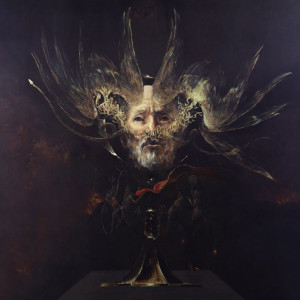 9. Behemoth – The Satanist:
There’s already so much written about this album, and its ended up on so many year end lists that it might seem superfluous to see it yet again, but if you’re one of the few that slept on The Satanist one you really need to get on it. Its not overhyped, and its praise is not exaggerated; but its propensity to thrill you is perhaps entirely dependent on your tolerance for extreme metal. I use that term instead of labeling Behemoth’s sound with more specificity because now more than ever, this is a band that doesn’t fit in anywhere. On The Satanist, the band mixes their take on death metal with a little black metal in the form of a bleaker vocal approach, blast beats, and some quasi-tremolo riffing; finished with a touch of hard rock simplicity to produce a concoction that is brutal, violent, and feverish in its unyielding intensity.
That said, the band has evolved past the need for sheer brutality for brutality’s sake. In its place are atmospheric soundscapes and warm instrumentation, a combination that culminates in this being the most human sounding Behemoth album to date. Its a relief for me, because the tech-y coldness on their past albums was a stumbling block for me in trying to enjoy them —- and not only that, but Nergal simply delivers better songs here. One of his best is the title track, with its blackened, stop-start Metallica-esque riffs and oddly tuneful refrain. Of course there’s the music video famous “Blow Your Trumpets Gabriel”, its guitar patterns reminding me of latter day Enslaved and providing the album’s most hummable riff. My favorite is still “O Father O Satan O Sun!”, whose primary riff and guitar melody are quite indebted to Judas Priest in the best possible way. The multi-tracking of Nergal’s vocals here are an inventive way to make them sound far more otherworldly and terrifying than you’d anticipate, a technique not often seen in extreme metal. I think everyone who’s wanted to hear this album has heard it by now, but power/prog metal fans should let their guard down and give it a few listens, its as ornate and fully arranged as a Blind Guardian album, just using a different palette.
 10. Noble Beast – Noble Beast:
There are a handful of nominees that didn’t make the final cut of this list, the last few I was really deliberating over included Dragonforce’s Maximum Overload and Darkenhold’s Castellum —- both deserving in their own spectacular ways. But I just couldn’t ignore Noble Beast, a relatively unknown American band that came out of nowhere with a near perfect album of polished, thunder-heavy power metal with songwriting so developed and accomplished it ranks in my mind as one of the best debut albums in recent memory. Vocalist Rob Jalonen sounds like a symbiosis of Falconer’s Mathias Blad with his smooth baritone and the sandpaper-roughness of Iron Savior’s Piet Sielck —- with a splash of Hansi Kursch added to account for those throat-ripping screams. And if the European-ness of those names is any hint, then I’ll confirm that yes, Noble Beast owe more to their European heroes than they do to other American power metal bands whose lineage lies in thrash metal (your Pharaohs, your Iced Earths, etc).
It takes a supreme grinch to deny the sheer metal joy of the album opener “Iron Clad Angels”, with its arcing, soaring chorus built on Jalonen’s muscular vocal and some truly frenetic guitar work. The martial stomp of “The Dragon Reborn” with its extenuating choir vocal lines and ultra-melodic guitar twists seem like a lost Blind Guardian track, but there’s more than just reminders of other bands flowing throughout these songs. On “Nothing To Repent”, the band marries thrash metal aggression and riffs with some startlingly prog-rock song structures, a combination that works despite its disparity. There’s the arena-rock thunder and lightning of “Peeling Back the Veil”, with a stellar chorus and great Mathias Jabs/Rudolf Schenker styled guitar work and Maiden-esque twin soloing. And I love the inventiveness of throwing in some acoustic strumming in the verses of “We Burn”, creating some playful folky looseness in a song built on slamming riffage. Jalonen does double duty on guitar alongside a fellow named Matt Hodsdon, and together they dip and weave around each other like a power metal Slash and Izzy —- their interplay might be the most underrated aspect of the album. More people need to hear this album, and hopefully there will be a second one.

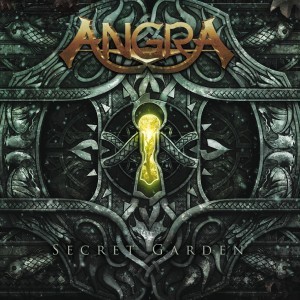 Angra – Secret Garden: I was having a hard time determining where I stand with Angra… my history with the band really started with the Edu Falaschi Rebirth era and went backwards to explore their classic Andre Matos past. This was back in 2001 or so, and I was even more a fan of Rebirth’s subsequent followup, the near-perfect Temple of Shadows. But the next two albums pretty much lost me, and my interest in the band waned throughout the years. When I read that Edu went and jumped ship in 2012 I figured the scene was set for a potential Matos reunion, but it never materialized for various reasons, and that furthered my disillusionment. I was never a big fan of Fabio Leone or Rhapsody, disliking his particular vibrato and their songwriting approach, so I wasn’t enthusiastic about him joining the band. I quietly hoped that it would be similar to the Kamelot situation, Leone pinch hitting for a tour or two and the band getting a completely different permanent vocalist. Leone won the job however, Angra’s remaining original members Rafael Bittencourt and Kiko Loureiro apparently deeming him close enough to Matos to get the job done.
 Orden Ogan – Ravenhead: Germany’s Orden Ogan is one of the more promising “new” bands in power metal, making a tremendous splash with 2012’s To The End album. I describe them as “new”, despite their first album being released over a decade ago in 2004… because in power metal, any band that arrived post-2000 is considered new in my book. That and they didn’t really reach my radar until their last album, a fantastic slice of classic 90s Blind Guardian, Rage, and a touch of Immortal-esque guitarwork. Those three bands are Orden’s musical touchstones as I hear them, vocalist/guitarist Sebastian Levermann sounding like a dead ringer for Rage’s Peavy Wagner, while the guitars sound like Andre Olbrich and Marcus Siepen decided to have a jam with Abbath. The riffing is sharp, precise, but on the right side of thrash-meets-technicality, and the songwriting is engineered to provide maximum hook impact during the choruses. One wonders why Thomen Stauch didn’t simply join these guys when he left Blind Guardian all those years ago, because they’re doing exactly what you’d figure he wanted his previous band to continue doing. Okay, so Orden Ogan won’t win any awards for originality, but they make up for that in their superior execution of a style that is damn difficult to get right.
 There are so many things to discuss in regards to a new Blind Guardian album that I had trouble deciding where to begin. I settled on getting the obvious stuff out of the way first, namely, that four years (five on paper) has yet again separated their newest effort from its predecessor, in this case 2010’s highly acclaimed At the Edge Of Time. Four years in the rock and metal world is twice as long as the average 2-3 year gap between most artists’ releases, but the extended length of time for Blind Guardian is reasonably well accounted for: Multiple leg world tours take up a year and a half or more, and the writing, recording/production of one of their albums requires a longer gestation period than your typical meat n’ potatoes metal band. They’re not quite the obsessive perfectionists ala Axl Rose or Wintersun’s Jari Maenpaa, nor do they have the lackadaisical attitude of Tool, whom seem to regard new albums as a chore (and whose results have yet to justify the excessive time taken); no Blind Guardian are actually working productively in some form or fashion in the period between album releases, and fans have grudgingly gotten accustomed to these lengthy wait times ever since 1998.
 I mention all that because chances are that when you first hear Beyond the Red Mirror, the band’s tenth studio album in their now twenty-five year plus career, you’re liable to ask yourself just what am I listening to now? What you’re listening to is the most asymmetrically complex album that Blind Guardian have ever written, with songwriting that makes the tunes on At the Edge of Time seem poppy in comparison. Upon your first few listens, you’ll find it difficult to discern melodies, patterns, or anything resembling a prototypical hook throughout a large chunk of the album. I certainly did, but this being a new Blind Guardian album, you’ve gotta give it the extra time and attention it deserves and treat yourself to many repeat spins in order to let the experience sink in, wash over you, or whatever metaphor you subscribe to. Its another in a long line of surprises that have come with each of their past five releases, and the band offers no apologies, this is the music they came up with and you can take it or leave it.
 Another one that took me a touch longer to get into was the song “At the Edge of Time” (I’ve read an interview where Hansi speaks on why they titled a song after their last album, but its a bit difficult to summarize in a sentence, suffice to say there IS a reason). The song starts out with an intro that features one of the album’s singular shining moments, at the :57 second mark, Hansi beautifully dreams out the lyrics “Who’ll grant me wings to fly? / And will I have another try?”. Its a simple lyric on the surface, but its unanswerable question is evocative in the very essence of what its asking —- and Hansi’s phrasing and emotive delivery just bowls me over every time I hear it. Moments like that are what I wish I could instantly summon whenever someone asks me why Blind Guardian is so great (if I haven’t slapped them across the head by then). Perhaps the song I still have trouble with is “Sacred Mind”, particularly in the chorus where I get the feeling Hansi might’ve over sung just a touch. Its not a bad song by any means, but there’s a monotone-ness to the chorus melody that prevents the song from reaching a higher emotional place.
 Saving the best for last, there’s my two favorite songs on the album, “The Throne” and “Prophecies”. The former is a seven minute masterpiece; a perfect storm of great riffs, battle horns, Hollywood symphonics, and angelic choral sections. It also boasts the album’s most ear wormy chorus amidst all that bombast, a simple couplet that is simultaneously catchy and pulse pounding, “We must serve the fire / We must confess we are liars!”. Its on a level of excellence as that of “Wheel of Time” or “Sacred Worlds” from At the Edge of Time, one of those all too perfect gems where the verses are as compelling as the mighty refrain. “Prophecies” is a perfectly crafted case study in mid-tempo understatement, where the line between verse and chorus is blurred as a result of Hansi’s almost effortless lead vocal —- his narrative voice here is the song’s greatest strength, the backup vocalists only chiming in to punctuate specific lines in the refrain. Its worth noting that “Prophecies” was initially my least favorite song after my first few listens of the album, probably due to my thinking that its lack of any kind of build up suggested a directionless nature. Your favorites will likely change in similarly tumultuous fashion.
 We rejoiced! Not only because we wouldn’t have to make a furious post-work drive to San Antonio, but mostly because Houston finally won one. All the years of H-town being passed over, cancelled, or postponed by various metal tours in flux —- we finally had something swing OUR WAY! Not only that, but it was the biggest swing we could’ve possibly imagined, Blind Guardian was returning to Houston, they were in our city! This has greater impact if you know that Blind Guardian had tremendously bad luck with Houston in the past. The band had to cancel the Houston date on their 2002 North American trek in support of A Night At the Opera (and their first Stateside tour to boot), a show that was scheduled for the day after Thanksgiving (the irony!), all because the venue’s promoter goofed and couldn’t hold up their end of the bargain. I was gutted. My friends were gutted. That night of the cancelled show, we got provocatively drunk and briefly debated the merits of throwing lit trash cans through the venue’s front windows. Four years later we would finally get another opportunity to see them here in Houston on their tour for A Twist In the Myth, and the band actually came and played a pretty good show at a different crappy venue. However the entire band was dealing with a really nasty case of the flu and were understandably too exhausted to do anything in the way of encores or shaking a few hands after the show. It was bittersweet in that sense. We finally got to see them live, but it would be in Houston of all places when the band would feel like ancient death… of course…
 I remember walking behind my friends, they got in the car first, but I was slowed down by rubbernecking at the tour bus itself, looking for signs of life within those heavily tinted front windows. There was one major sign of life, a short haired guy just outside the bus on the sidewalk taking what looked like a pair of shoes out of a bag. I didn’t think much of it initially, the guy looked like a roadie or a tour manager perhaps, and I got in my car and started to slowly pull backwards out of my parking spot and lurch forward towards the tour bus. An increasingly closer view prompted me to register what I was seeing by muttering the following aloud: “I think that’s Hansi…”. I was scoffed at on the notion that the man had short hair, but my fellow compatriots were not as plugged into the detailed minutiae of the band’s current profile as I was, I knew that Hansi had recently cut his hair. I made one of the best decisions of my life and awkwardly jutted the car into an awful, diagonally parked position —- half on the sidewalk mind you —- and clumsily got out of the car, hearing one of my two friends exclaim “Holy shit it is Hansi!”
 The whole exchange lasted a few minutes, and towards its end I had considered asking him for a picture, but realized that I’d left my phone in the car. We told him he’d see us in the crowd for sure and said goodbye, and I remember walking back to the car as if in slow motion. A wellspring of thoughts were bubbling in my mind: I had just met the man responsible for so much music that impacted me not only as a metal fan, but as a music lover in general. I had just shook hands with Hansi Kursch. I had a conversation with Hansi frickin’ Kursch. I wanted so badly to turn around and start babbling something, anything, about what his music had done for me —- but of course, that’s not how you play those situations. The man had just stepped out of his tour bus to clean his boots off, he was cool enough to unexpectedly talk with us for a couple minutes, and he was as genuinely nice and friendly as he always had come across in the audio interviews I had heard of him. He didn’t deserve to have to deal with some random, awkward moment of fan-gushing. Still, fragments of glorious Blind Guardian songs were flying through my mind, along with all those memories of particular moments I associated with them. Speaking of memories…
 Its likely that upon hearing “Lord of the Rings” initial acoustic pluckings I thought it was a dopey love ballad by one of those bands, but that was immediately cast aside when Hansi sang in his clarion voice, “There are signs on the ring / which make me feel so down…”. His voice was so unique, richly melodic yet still gruff, and with a slight timbre that I’d never heard before —- a completely original voice that was singing about something Tolkien related of all things! By the time the song was at its emotional high point with background vocal swells of “Slow down and I sail on the river / Slow down and I walk to the hill”, I was astonished, just completely overwhelmed by one of the most breathtaking songs I’d ever heard. I launched into an internet search to find out everything possible about the band, and need I remind you this was late nineties internet —- information was scarce, and MP3s were even scarcer. In my search however I eventually found my way to a few more of the band’s songs, and also discovered a hugely important radio show in my metal development called The Metal Meltdown with Dr. Metal —- a guy based in Cleveland who was one of the few American media people with his ear to the ground for European metal bands (and whose show I still listen to and rely on to this day).
 More fundamentally in regards to power metal, Blind Guardian’s music was infused with an emphasis on melodicism that I had only heard before in Iron Maiden, and in small doses elsewhere. My immersion into their albums made me realize something fundamental about myself as a metal and music fan —- that I valued melody as much as heaviness, abrasiveness, and shock value. When I was younger, rock and metal was attractive noise because of its inherently rebellious nature, its counter-culture spirit, and the feeling of inclusion it seemed to project. As I grew out of those teenaged years and shed most of its self-conscious trappings, I was left with a simple love for the music itself, and a craving for more of the elements within it that I particularly enjoyed. Andre Olbrich’s guitarwork was one of these elements, and the way he played was truly a style of his own making —- borrowing equally from Brian May, Yngwie, and Chris DeGarmo (of classic era Queensryche), he channeled his influences to create vivid, intense musical backdrops that reflected everything from speed metal, Queen-esque theatricality, and romantic medieval themes (which I didn’t even know I loved until I heard Blind Guardian).
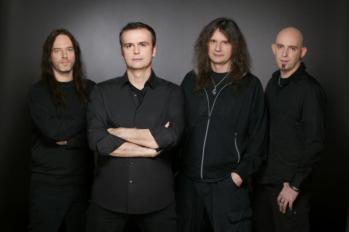 I don’t need to go on about why Blind Guardian is great. If you’ve read this far, you know damn well why. But I don’t think that I’ve associated more personal memories with one band than I have with the bards. I’d ride around with their discs as a near permanent in-car rotation in those lo-tech days before iPods, and amidst hour long plus commutes to and from school, work, home, and various excursions all over Houston I’d repeatedly soak in every second of their discography. I have fond memories of laughing deliriously while driving when my buddy Matt pointed out how angry Hansi sounded during the second verse of their cover of “Surfin’ USA” (he’s REALLY angry that everybody’s gone surfin’), and how every time that song would come on we’d mime his imaginary rage. On their cover of “Spread Your Wings”, we got a kick out of the way Hansi pronounced “honey”, imagining he was standing with the characters of Winnie the Pooh and motioning us over a cartoon hill (“Come on haaaanie!”). Every time I was down and needed a pick me up, I could listen to that song and it’d help a bit.
 Mostly I just remember the band always being there, particularly during darker times when all I wanted was an escape. Here on the eve of a new Blind Guardian album release, I find it comforting to know that hasn’t changed at least. Its not lost on me that the last time Blind Guardian released an album way back in 2010, there were people, places, and situations that were in my life that simply aren’t there anymore. It happens less frequently to me these days, but when people question why you’re still an obsessed metal fan as an adult, all you really can to point to is your own personal relationship to the music you love. There are no cliques, no scenes, no one you’re trying to impress or piss-off —- the only thing that matters is whats going on internally when its just you by yourself in your car, listening to whatever you’re listening to.
 Happy New Years everyone! Alright I’m a little late, but I wanted to let those year end lists marinate out there for a bit before issuing another update, as well as allowing myself a little break from any kind of “required” listening. How have I spent my intervening few weeks off listening wise? Oh you know, a little sweeping balladry from Sarah Brightman, revisiting classic Celtic-punk albums by The Pogues, reveling in Basil Poledouris’ epic score for Conan the Barbarian (the original 1982 classic, mind you), and metal-wise blanketing myself with loads of classic Blind Guardian as a side effect of my now unrestrained anticipation for their new album. Regarding the latter, its our favorite bards who instantly win the crown for the most anticipated album of 2015 —- I mean, who are we kidding here? The German legends may be skirting the edge of their regular four year studio release schedule (that ‘2015’ is going to throw off the 98-02-06-10 symmetry of their last four albums), but in these final weeks leading up to the release of Beyond the Red Mirror, I’m remembering everything I love about the band and all is forgiven. That being said, what are the runners up as my most anticipated metal releases/events?
 Angra – Secret Garden: One of the first cannon shots of 2015 is the debut of Fabio Lione in his role as Angra’s third official vocalist, being the successor to Edu Falaschi who left in 2012. Look, I wasn’t wild about the Edu era although it had its occasionally good to great moments, but I’m completely un-enthused about the very idea of the Lione era. I was never sold on Rhapsody (of Fire ™), in large part owing to how little I found to like about Lione’s thin, wafery delivery. I respected the heck out of the guy for helping out Kamelot on their Khan-less tour a few years back, despite having to acknowledge that his vocals were completely wrong for the band’s tone and mid-tempo stylings. So on paper Angra should be a better fit for him than his stint in Kamelot, but the pre-release single “Newborn Me” is completely underwhelming so far. It won’t be long before I drop a review of this one, Angra daring to challenge Blind Guardian with a January release (the very idea…).
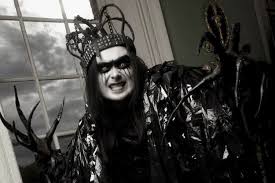 Cradle of Filth – Hammer Of The Witches (working title): In the past few years, the idea of a new Cradle album was met with a sad level of indifference from myself and as it seemed many others. Paul Allender’s role as guitarist was long past its expiration date, heard in recycled riffs and uninspired songwriting. Yet his departure in 2014 was surprising as it was enticing —- with all due respect to Allender, its now transparently obvious that he wanted to move on years before but the relatively steady nature of Cradle’s existence and operations kept him around for years and albums longer. The new guitarists, two guys named Ashok and Richard Shaw (there’s some dichotomy for you) are relatively unknown quantities, but Dani’s recent
  Dimmu Borgir – TBA: It will likely be just over five long years since the release of Dimmu’s last album, the unfortunately titled but otherwise decent Abrahadabra. I loved the eponymous “Dimmu Borgir” off that album, one of the band’s catchiest singles in years (it had a pretty decent music video too), but the majority of the album made me wonder how much there was possibly left to explore in their heavily symphonic black metal style. I’m not really sure what to expect from these guys now, but it really seems like a stylistic evolution ala Satyricon might be in order. Blut Aus Nord just dropped a new album of classic Norwegian second wave black metal that is bracing, fresh, and revitalized… proving in one fell swoop that there’s still life left in the old traditions. Maybe the way forward for Dimmu is to look back in order to progress their sound. More of the same from them would be disappointing in a way, especially after a five year gap.
 Enslaved – In Times: Due in early March, the next Enslaved album is right up there among my most anticipated of 2015, this despite the band’s frustrating lack of Texas tour dates on yet another “North American” tour. That aside, I’m eager to hear what direction these guys veer off into this time. Their last album RIITIIR (a 2012 year end
  Faith No More – TBA: If the band’s 2014 single “Motherfucker” was any indication, we’re in for a treat. I love the way that song didn’t sound like anything I had ever heard from the band in their 90s heyday, yet still sounded unmistakably like Faith No More in all their ugly, beautiful, and baffling glory. It also put to rest any remote moaning about the lack of Jim Martin’s involvement, as Jon Hudson is as creative and adaptable a guitarist as the band needs (surely his work on Album of the Year should’ve sold people on that). More promising is that the band are recording the new album entirely on their own without the involvement of a record label, and given what they got away with when on a major label, who knows what juxtapositions and bizarreness we’ll get from song-to-song. I’m just so happy to have the band back, their work felt incomplete upon their disbandment in 1998, and there are precious few bands that have the kind of personality that FNM had in spades. Maybe a Metal Pigeon Recommends feature is in order for these guys prior to the album release… something I’ll keep in mind.
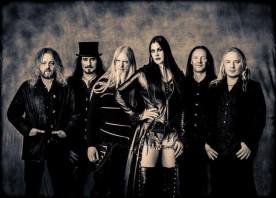 Nightwish – Endless Forms Most Beautiful: Second only to Blind Guardian as my most anticipated album of 2015, I have the highest of hopes for the debut of Floor Jansen as the third Nightwish vocalist. She is perhaps the most adaptable of them all, capable of classical operatics, as well as the wildly versatile pop-rock accessibility of Anette Olzon. Having seen Jansen with the band in concert myself, I thought her most valuable resource as a vocalist was her ability to project power in a way that both Olzon and Tarja were unable to. Simply put, she can belt it out when she wants to, an ability that immediately makes her the metalized equal to Marco Hietala’s soaring, accented tenor. Of course Tuomas Holopainen’s songwriting will be my primary focus of attention, and judging by his choice of song titles, cited inspirational reading, and guest narrator in Richard Dawkins —- we’re in for a thematic album at the very least (something entirely new for the band). Its hard to envision a Nightwish album better than 2011’s Imaginaerum, but here’s to Holopainen giving it his best shot.
 Queensryche – TBA: While Queensryche’s self-titled debut with new vocalist Todd LaTorre was a solid return to form, it had severe flaws. The most glaring of which was song length, most of the cuts on the album hovering in the three to four minute range that could’ve benefited from additional verses or expanded guitar solos. Now with all the legal battle drama behind them, this is Queensryche’s time to truly get back to their progressive metal roots —- especially with their debut at Wacken Open Air (finally!) only eight months away. This is a band that needs to be out there touring with actual modern metal artists, not 80s glam-rock bands, and hopefully their time at Wacken will yield fruit in that regard as well as serve as their re-introduction to the European metal audience as a whole. Oh and getting the album out before that show would be good too.
 Savatage at Wacken Open Air: Fifteen years after the last Savatage tour, the band is getting back together for a last hurrah on the biggest stage in the metal universe. Or is it really the last? Chris Caffery recently
 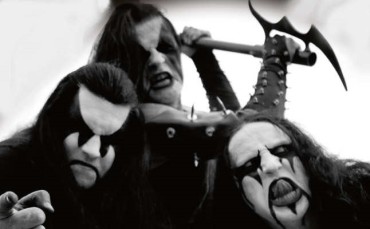 Will Immortal release their new album: I guess I should be asking, is Abbath going to win the rights to the Immortal name so he can release the album that he’s already recorded with other musicians?
  Here’s whats frustrating: The year is winding down, the release calendar is dropping off in favor of 2015, yet I’m still catching up on a slew of albums that dropped in October and November (and earlier than that). “Catching Up” has been a recurring theme for this blog in 2014, and its due in large part because so many important and major new albums came out during this year —- the kind that demanded at least a few weeks worth of my attention at a time. As a result a lot of albums by bands I wasn’t nearly as familiar with were pushed aside to the “Get Around to It” playlist on my iTunes and I’m just NOW getting around to them! Even more frustrating is the fact that a select few of these late albums are simply so great that they’re vying in contention for late consideration onto a best of 2014 list that was largely sorted in my mind —- and in part in rough drafts. First world problem? Absolutely, and I’m grateful to have it. Here then is my final rapid fire attempt at hopefully sweeping up (and thus finally “catching up”) everything on my 2014 plate. I say this knowing that in 2015 I’ll stumble onto something I missed this year and will be slapping my forehead about it, the way it always goes.
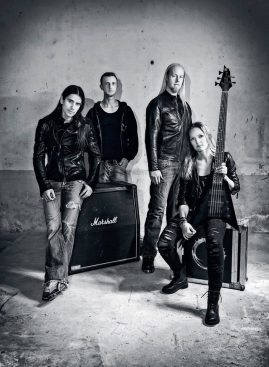 Triosphere – The Heart Of The Matter: You’ll be forgiven for not having heard of this Norwegian female fronted prog/power metal band, as this new album is only their third since their inception in 2004 and four years removed from its predecessor at that. Okay so while they’re not exactly prolific, I’ll forgive them because The Heart of the Matter might just be one of the best female fronted metal albums I’ve ever heard. If you’re trying to imagine their sound, you might be getting it wrong, because Triosphere have a difference maker in vocalist/bassist Ida Haukland, whose vocals come across as a distinctive blend of Ann Wilson, Doro Pesch, and just a touch of Coverdale-esque theatricality. I’ll be honest, when I first jumped into this album blindly it took me a few songs to realize that I was listening to a female vocalist —- ridiculous I know, but Haukland’s vocals are largely deep, raspy, aggressive and downright leathery that I just figured it was a dude singing (a side effect of associating female metal vocals as being typically light, ethereal and very feminine in tone, not a comment on Haukland herself). What I did realize right away however was that this mystery vocalist was impressing me with such a tremendous display of talent. There’s so much to digest here, but I’ve made multiple passes through the album and have yet to skip a track. The songwriting here is tremendous —- hook driven for sure, but textured and intelligently layered, and the riffs are as wild as often as they show restraint. Its a late drop in the 2014 release calendar (December 2nd), and might get lost in the shuffle with every blog and website trying to write up their year end lists, but they really shouldn’t be passing this album up.
 Primordial – Where Greater Men Have Fallen: There’s something utterly hypnotic about Primordial’s music, particularly when the band is at their best. If my few spins of Where Greater Men Have Fallen are any indication, then the band has come really closing to matching their career high watershed on 2007’s To The Nameless Dead. While their 2012 effort Redemption At The Puritan’s Hand was good, it didn’t captivate me like its predecessor nor like this new album —- in large part I think due to the band’s return to a grittier, heavier, and far more aggressive stance. There’s something bracing about the riffs here, and they slam right into you on the title track that kicks off the album, one of the most punishing songs the band has penned in a long time. As if sensing that they had allowed their natural inclination towards epic, expansive cinematic arrangements take over too much of their sound on the last album, Primordial have reversed direction here ala Enslaved’s Axioma Ethica Odini album. A song like “Born to Night”, with its incredible sledgehammer riffage is so much more effective because of the vivid juxtaposition of that heaviness coming directly after the delicate, eastern-motif tinged open chord patterns that make up its minutes long intro. As ever, vocalist A. A. Nemtheanga comes across as a love him or leave him proposition, his wild, unrestrained vocals are as characteristically bold as ever and he does nothing to make them easier to digest. He’s such a unique voice within metal though, a rare thing amidst a landscape made of copycats. If it helps you, imagine his vocals coming from someone with arms outstretched overlooking some Irish cliffside.
 Serious Black – As Daylight Breaks: One of the more out of nowhere band formations and subsequent album releases of 2014, Serious Black is a cobbled together melodic/power metal supergroup of sorts (although I am loathe to use that terminology). It features ex-Blind Guardian drummer Thomen Stauch who finally rebounds after the ill-fated Savage Circus project and teams him up with Masterplan’s Roland Grapow (also ex member of some band called Helloween), alongside ex-Bloodbound (heyo!)/ex-Tad Morse vocalist Urban Breed. Speaking of the latter, Breed seems to be the wildcard amongst the lineup (which features a few more guys in addition to the ones I mentioned) seeing as how he’s in seemingly handfuls of bands/projects at the moment, but surprisingly enough his vocals really work well as a sandpaper grit layer on top of what is some very smooth, slick melodic power metal. The biggest surprise here is just how good some of these songs are, I’m talking serious hooks and big, shimmering melodies. For a supergroup/sideproject? I’m not kidding, take a listen to “Sealing My Fate” which has one of the most elegant melodies I’ve heard this year, played on both piano and guitar to great effect. I’m also fond of the driving, urgent “Older and Wiser” —- Breed’s vocal layering on the ultra-catchy chorus is a wonderful moment. All told As Daylight Breaks is an often catchy, nearly always bright and upbeat melodic power metal album with AOR flourishes that I’ll find myself coming back to. Supergroups aren’t always crap I guess.
 Evergrey “King of Errors” Video: I mentioned Evergrey in the above blurb on Vanishing Point’s new album, and if you took anything away from that, its that I’m not particularly wild on Evergrey. I don’t dislike them, but all my attempts at enjoying their stuff have failed save for two (now, three) songs: “Recreation Day”, “Wrong”, and now this newest single from their recently released Hymns For the Broken. That was an album I avoided reviewing for the same reasons I avoid writing about Epica —- to repeatedly discuss how you can’t enjoy a bands’ work is tiring for both myself and you the reader. I will however break that tendency to offer a compliment to both Evergrey and the director of the “King of Errors” music video, the often frequently criticized (on this blog that is) Patric Ullaeus. Simply put, Evergrey delivers a really good song and Ullaeus a really superb music video, the kind no one really makes anymore in an age of digital post-production, photoshop, CGI, and the dreaded green screen.
 At The Gates – At War With Reality: I suppose back story isn’t really needed here, I mean you’re all smart, together, with-it metal fans that already know this is At The Gates first new music in nineteen years. I’ll admit that for the longest time after their initial reunion began in 2006 I never anticipated anything new in the way of a studio album from them. I saw them live in 2008 and they looked pretty comfortable doing the classics and I figured that would be it, Emperor-style reunion touring for us newer generation of metal fans that never saw them in their initial incarnation, healthy profits, and satisfaction all around. The At The Gates legacy didn’t have the same problem that Carcass did with theirs —- Slaughter of the Soul was a watershed classic, Swansong was anything but. It was understandable that Carcass would want to try their hand at crafting an album far more worthy of closing their discography upon, and the resulting Surgical Steel was so utterly fantastic, it should be considered the modern day reunion album benchmark (it is by me). So it comes as something of a gamble that At The Gates have chosen to follow up Slaughter of the Soul with At War With Reality, and I’ve seen plenty of other reviewers assert that the band’s greatest strength is in not caring what others make of their legacy at all. Okay, that’s fair —- but then again the band themselves would never have a hand in “defining” it to begin with, that’s our job as fans.
 While Heaven Wept – Suspended At Aphelion: First of all, While Heaven Wept’s newest album scores the award for best cover art of the year hands down, take a long gander at that sleeve in high res on Google Images… its just flat out jaw dropping. Secondly, I’ve been waiting for this album with a great amount of anticipation, having been sold on them a year or two ago with the song “Vessel” from their 2009 album Vast Oceans Lachrymose. I didn’t find its follow up album, Fear of Infinity nearly as compelling, but they’ve managed to win the benefit of the doubt in my mind. If you’re unfamiliar, this prog-meets-power-meets-doom metal band from Virginia of all places is keen on grand, epic scale music with lyrical themes (and artwork) to match. I expect that there might be a few metal fans out there who take umbrage with While Heaven Wept’s manner of tracklisting, sequencing, and envisioning of albums in general. There are usually not many actual tracks, two songs are often paired up and folded into one long song, there are short instrumentals including intro and outro tracks, and the overall album length is sometimes maddeningly short (forty minutes here, ten of which are instrumental). I’ll admit that its slightly frustrating for me as well, but the band clearly intends for their albums to be listened to from start to finish, and in truth they work better that way (this is prog-metal after all).
 Sanctuary – The Year The Sun Died: You’d be forgiven for glancing back at the album art when experiencing your initial few minutes of Sanctuary’s first new album in twenty-five years. It sounds an awful lot like a theoretical new Nevermore album than anything resembling the power metal infused thrash of the Sanctuary’s pair of late eighties albums. What makes it strange is that original guitarist Lenny Rutledge is back in the fold and handled most of the songwriting, and yet there is an overall Jeff Loomis vibe to the guitar work that is hard to ignore. I’ve considered the possibility that my brain is playing tricks on me, that Warrel Dane’s vocals being mixed far up front (similar to Nevermore), and the overall modern production of the album is subliminally suggesting a likeness that isn’t really there. I’m not going to harp on this though, but suffice to say, it was difficult at times to wrap my head around the reality that this is indeed a Sanctuary album.
 Tony Kakko was a vocal magician that night, and a performer unlike any I had ever witnessed. He leapt and bounded across the stage with relentless energy, and threw himself into the lyrics with physical movements that mirrored or reacted to the words he was singing. His voice was accordingly sonorous, full, soaring, and capable of an impressive dexterity in adapting harmony laden lines to a solo vocal approach. When he needed us to help out on the choruses he directed our voices himself, and classics as such “Full Moon” and “Replica” felt like celebrations of power metal’s proclivity in creating joyful euphoria. Newer songs from albums that I had been critical of on this blog such as “Losing My Insanity” and “Blood” actually sounded better live, brimming with a vitality that I now associate with their studio versions. Even the dreaded “X Marks the Spot” was actually fun because Kakko simply sold it so well, his skill as a front man keeping me rapt with attention as he seemed to act out the lyrics. I was caught off guard in realizing that the song actually has a rather good chorus that I had seemingly blocked out before (my feelings on the studio version’s horrible dialogue still stand). I was even stunned that Kakko had the guts to perform such a naked ballad such as “Love” from the recent Pariah’s Child, but he somehow managed to convince a room full of some pretty convincing looking metal fans that it was okay to sway back and forth to a delicate, gorgeous, emotionally soaked song. I lingered long after the show, fan babbled to the Xandria guys a bit, and found myself not wanting to leave. As it always seems, magical nights like that are rare, and over far too quickly.
 All these years later, its understandably difficult to remember just how strikingly different and fresh Ecliptica and its 2001 follow-up Silence sounded amidst that newly forming power metal resurgence. Sure the band were noticeably influenced by Stratovarius, but where their countrymen played it straight and safe with their take on European power metal, Sonata Arctica displayed a tendency to wildly lean in odd, unexpected directions —- both musically and lyrically. There was something quite charmingly naive and innocent about their approach, as if they were so enamored with their ability to create songs worthy of a record deal that they didn’t bother to pay attention towards sticking to standard genre rules. This was a very young band for starters (scarcely out of their teens), consisting of musicians all to eager to lean on speed and flashy solos, and they had the talent to pull it off, particularly long-departed guitarist Jani Liimatainen. Yet Sonata’s sound all started with the songwriting genius of Kakko himself, who throughout his career has displayed his knack for crafting indelible melodies with sharp hooks, and incredibly focused songwriting that flirted with a variety of tempos. He was a keyboardist, and his songs were built with that instrument serving as the framework for his songwriting, which also meant that melodies had to come first before riffs (often a hallmark of the most melodic of power metal bands). He’s of the same caliber of talent as his good friend Tuomas Holopainen of Nightwish; or Tobias Sammett of Edguy/Avantasia; or Hansi Kursch of Blind Guardian: All power metal songwriters who are masters of their craft to such an extent that they simultaneously define and defy the genre. In that regard, Kakko was both a trail blazer and someone who was practically impossible to copy.
 As it turns out, Kakko was a lyricist of the Joe Elliot mold, he being the famed lead singer of Def Leppard. When I was a budding rock fan in the early nineties, I read an interview with Elliot where he admitted that his lyrics were pure fiction, despite his narrative perspective almost always being in the first person with seemingly autobiographical overtones. I know its not a revolutionary concept, and that many other bands have utilized such a lyrical strategy to ratchet up the tension and passion in their music (Journey comes to mind immediately), but Elliot was the first famous musician that I had ever read such an admission from. Reading it then was a bit of a revelation for me, and made me pay attention to lyric writing in rock music with greater attention, to not be so gullible, and to think about things like narration and perspective and diction in a new light. It made me pay greater attention to Metallica’s Load for example, while many upon its release were writing it off as a sell-out move towards alternative rock, I found myself thinking that it featured James Hetfield’s most thoughtful and resonant lyric writing. So it was with great surprise that I found myself hoodwinked by Kakko, who in the very first interview I had ever read with him revealed that his lyrics were purely fictionalized. Doh! This has of course carried on throughout his career, as he recently pointed out in a late September interview on the
  With all that in consideration, I think its okay for any of us to ask why the band is re-recording Ecliptica at all. Well, the short answer is that the aptly dubbed Ecliptica Revisited was done at the request of the band’s longtime Japanese record label, a request the band agreed to as a gesture of goodwill towards a company that had stuck by them since the beginning. Kakko has even commented publicly that the contract they signed for the release stipulated that the re-recording had to be 94% identical to the original release, essentially meaning that they couldn’t re-work the songs into transformed versions or acoustic strip downs. For Kakko, this stipulation not only made it easier for the re-recording to be completed, but helped him to contextualize this release as a simple tribute to the original, as well as a more accurate representation of how these songs are performed live today. Typically within the metal community regardless of subgenre, a re-recording is frowned upon, not only for the often cloudy nature of the reason for it’s existence but more for the larger threat it presents to the legacy of the original. Most of the opinions I’ve seen regarding Ecliptica Revisited seem to align with that way of thinking, and I certainly understand some fans’ puzzlement and frustration (although I think its a waste of energy to get up in arms over a release that clearly will not be replacing the original recording).
 Fortunately the tempo downshift doesn’t hurt all the songs, in fact helping some songs to breathe easier and feel better paced. Cry heresy if you must but I actually find the vocal take on the re-recording of that eternal classic “My Land” far better than the original: Kakko’s enunciation and pacing is better, and the lyrics are more discernible as a result; I also love the alteration he made at 2:30 on the lyric “You can’t keep me away forever”, on the original that line only appears at the end and he doesn’t satisfyingly lean on the “forever” like he does here. I also really love what they’ve added to “Full Moon”, the intro is still as delicate and beautiful as it originally was, but the band gets heavier in the buildup to the galloping verses, giving the song a darker, stormier vibe. The chorus is as bright as ever though, and what I find so incredibly wonderful about Kakko’s vocal approach on it is that he seems to be reveling in its history as a fan favorite. I know its a subtle thing I’m trying to relay, but I hear it in the way he delivers that classic chorus with all its inherent poppiness in such a celebratory manner. Not surprisingly, its the balladry of “Letter to Dana” that benefits the most from the re-recording, with guitars multi-tracked in choice spots, better vocal phrasing, and a greater emphasis on making those lead guitars really capture the epic sweep in a Slash-esque way. Unfortunately, it is a bit of a misstep and a shame that they didn’t turn up the harpsichord effects at 4:25 —- that was such an epic moment in the original and although you can still faintly hear them underneath, they’re not nearly as goose bump inducing here. I also think “Destruction Preventer” comes off a little better here, as they sanded off all the rough edges (Kakko’s wildly high pitched yelps) and added layers of extra guitars and harmony vocals.
 Depending on your perspective of Amaranthe, you’re either really excited for Massive Addictive, or really, really agitated at the mere thought that this unlikely band of Swedes has gotten popular and successful enough to warrant a third album. They are certainly notorious for the sheer contentiousness that surrounds any discussion of who they are and what they do. When I
  All that considered, its amazing just how successfully Amaranthe works as a Frankenstein-esque project, stitching together disparate parts to create something that actually works (surely a monster to many). Morck and Berg combine their experiences in both power metal and melo-death to serve as their musical palette, and are malleable in their songwriting to sketch out smart, unobtrusive, accentuating uses for harsh vocals (courtesy of new screamer Henrik Englund), as well plenty of spotlight time for the completely un-metal Elize Ryd’s sugary, ABBA-Swede pop vocals. Ryd is obviously a necessary component in this whole equation, as its through her unremarkable but pleasant vocals that the band channels their poppiest sensibilities, allowing Berg to deliver his clean vocals as a melodic counterpoint or harmony double up. In typical Amaranthe fashion, Englund’s harsh vocals tend to be used as a counterpoint —- he’s only given one opportunity to handle lead vocals (on “An Ordinary Abnormality”), but of course he’s kept off the chorus. Ryd and Berg command the vocal spotlight of Amaranthe, and it has to be said that their voices tend to sound great together, his vocals are melodic and capable enough of soaring highs as hers, but he’s working in a slightly lower register so as to be complementary, not overpowering. I’ve always had mixed feelings on Ryd, finding her the least impressive vocalist of the three —- and I’ve long contended that she’s used metal as an easier springboard to fame and notoriety than she would have had through trying to make it as a pure pop singer. Its not a criticism, just an honest observation that I’m confident other discerning metal fans would agree with. Do an eye/ear test —- does she radiate metal in any way? Kudos to Morck and Berg for sculpting out a role for her and selling it convincingly (seriously, props).
 On Massive Addictive, the band don’t change up the formula they first dreamed up on their debut and expanded on The Nexus, seeking only to further refine the elements that worked and ditch the clunky stuff that didn’t (there’s nothing as awful as the bubblegum “Electroheart” on here). The album’s pop highlight is “Trinity”, the second single that smartly balances chunky-riffs and harsh vocals with a exquisitely sculpted chorus boasting a hook that absolutely will not leave your head. Its musical candy, and that’s what we’re here for right? To rot our ears with the musical equivalent of junk food, because try as I might I cannot understand what
  The album isn’t without missteps though, nothing gravely serious but there are a handful of tracks that either don’t work as pop songs or have annoying tendencies that overpower their enjoyable parts. I’m referring specifically to “Danger Zone”, where a boy-band grade chorus is sandwiched between some very boring harsh vocal led verses; as well as “Unreal”, a song that reminds me of the worst aspects of modern day In Flames with the album’s flattest chorus to boot. There’s also something bothersome about “Skyline”, where I guess my expectations were higher because the title reminded me of Bioshock Infinite (skylines… some of you get it) —- a strange reason to cite but also I’m simply bored by the song, unlike the game. Still, on a twelve track album, there are seven songs that deliver precisely what you’d want from Amaranthe , and four of those are actually pretty great. Not a bad ratio overall, and Massive Addictive is the sound of a band getting better at what they’re doing —- even if it may not be everyone’s cup of tea. I’ve written in the past about the value of Amaranthe as a gateway band for non-metal fans to enter our world, and with this album that gateway has only gotten bigger. If someone gets hooked in with a song like “Trinity”, only to find themselves checking out Kamelot via Ryd’s connections to that band, which causes them to love a masterpiece such as The Black Halo as much as I do —- that’s a win. Metal needs gateway bands to survive, and even though Amaranthe are pushing the boundaries of acceptability in our beloved genre, they surely deserve some grudging acknowledgement for filling that role.