I realize its been few and far between in terms of updates to the blog over the past two months, and while I’ve never promised an end to these occasional bouts of silence —- I always try to keep a valid reason for their occurrence. As ever that reason tends to lay somewhere in between being overwhelmed by so many new albums coming out in a short span of time, and my inescapable longing to either linger on a particularly captivating recent release, or to simply revisit older classics. Its been a bit of all three for me as of late, as I kept stumbling onto one intriguing new album after another only to set each one aside after my attention was directed elsewhere, not a good thing when you’re trying to write reviews for them. Also I haven’t been able to quit Steven Wilson’s Hand. Cannot. Erase., an album that I feel will stick with me far longer than I ever anticipated, and it led me to go through his catalog all over again, from Porcupine Tree to Blackfield.
Long story short, I got distracted along the way (the Nightwish release further delayed matters) and a lot of reviews that should have been out many weeks ago had to be delayed until I could go back and re-listen to them yet again. Quality over quantity is probably the worst way to go for a blog in this SEO-driven, microsecond attention span era of online communication, but hopefully somewhere along the way I’ll stumble onto a metal writer’s version of some Garrison Keillor meets Andy Rooney persona to justify it all (hmm… actually not sure about that). The reviews below aren’t all of the new albums I got to check out in the past few months, just the ones I really felt were worth talking about (for better or worse, mostly better). Also I should mention that I checked and as of this publication date all of these albums are available on Spotify, so if you want you can listen along with each review or better yet try before you buy.
 Subterranean Masquerade – The Great Bazaar:
You’ll be forgiven for not knowing who these guys are, given that this January release is only their second full length album since the band’s inception in 1997 (there were also two EPs somewhere in there). Its a full ten years since their 2005 debut Suspended Animation Dreams, an album I’ve not listened to yet but might have to take a peek at if its anywhere near as satisfying as The Great Bazaar. This is prog-metal, in that particular vein where things get a little eccentric and weird. Thankfully it seems that their primary songwriter and guitarist Tomer Pink understands that most fundamental thing that can often elude an ambitious bunch of prog musicians —- no one will care if the songs are garbage.
I haven’t heard of Tomer Pink before admittedly, nor most of the other musicians that make up the band’s ranks except for one Paul Kuhr, yes that Kuhr, of November’s Doom. He’s here providing his particularly heavy vocals as a sharp contrast to clean vocalist Kjetil Nordhus (ex-Green Carnation, Tristania), and both guys do a tremendous job of injecting passion into nearly everything they touch. There’s not much to say in regards to the backgrounds of the other guys, save for one of them being the current drummer for Orphaned Land (percussion, he played on the All Is One album). It is worth mentioning that largely everyone save the two vocalists seems to hail from Israel, making this somewhat of an oriental metal band, in theory and in essence. It doesn’t take long for that distinctive, culturally inspired sound to pop up on the album opener “Early Morning Mantra”, in the form of traditional sounding percussion and Arabic motifs in the keyboard generated strings.
So by now you’re probably thinking, “Okay, so they’re like a mashup of Orphaned Land and Myrath”, to which I’ll respond, “Whoa, hold the phone there Radar”. It doesn’t take long for “Early Morning Mantra” to unveil its strange, surreal layering of sounds, and once you get to the 5:27 mark the sounds of a full blown ska section will utterly baffle your sense of comprehension. Not so smug now are we? Listen, in all seriousness, I’m not kidding you about just how head-spinningly eccentric/eclectic this album winds up being! That aforementioned “ska section” actually works like a charm, a moment of pure musical joy that etches a smile on your face just for the sheer cheek of it all. And you never know when an electric violin-type sound will pop up, flanked by Kuhr’s jagged vocals, followed by some delicate piano, or acoustic guitar figures, or what sounds like a soulful woodwind instrument (you’ll know it when you hear it, its like hearing a saxophone made of birch)!
The victory here is that all these cra-cra sounds are all woven together to shape definable and often moving songs. My absolute favorite is the oriental string melody led “Blanket of Longing”, a contender to make the best songs of the year list. Coming off like a mash up of Myrath, Evergrey, and Steven Wilson (told you I had his music on the brain), its a song that is built on a brilliantly layered cushion of separate yet complementary melodic structures. In the chorus however the vocal melody takes over and Nordhus soars effortlessly above it all, taking the listener with him via an emotional carpet ride of a lyric: “Often I go back to that picture of my little boy / And I just can’t cry anymore”. On the very ethnic-folk infused “Specter”, I’m surprised by random moments of sparse acoustic strumming over keyboard melodies that remind me of prog-rock Kansas or Styx. I can’t even begin to describe the fusion of sounds and styles in the album closer and epic “Father and Son”, except perhaps to compare it to what I imagine would be the sounds of… you know… an actual bazaar. Clever word play in the title then.
The Takeaway: One of the most surprising, out of nowhere salvos fired in the first half of 2015. You might not enjoy it if you don’t like the sounds of bands like Orphaned Land, Melechesh, or even Myrath —- but seriously who doesn’t? Highly, highly recommended.
 Kiske/Somerville – City of Heroes:
This is the second album in this duet-centric collaboration between vocalists Michael Kiske and Amanda Somerville, their first being issued in the now distant 2010. You all know Kiske of course, and likely have an opinion on him and his rather distinctive vocal style which is about as love it or leave it as it gets in power metal. Somerville on the other hand some of you might not be as familiar with, although chances are that you’ve already heard her somewhere along the way. She’s a fixture in the European melodic/power metal scenes as an excellent backing vocalist, occasional lead vocal drop in, and vocal coach. Her lengthy list of appearances includes luminaries such as Avantasia, Kamelot, and Epica to name a few, alongside a handful of her own solo projects/collaborations. As an aficionado of backing vocals on power metal albums, I’m happy to see her name on the credits of an album —- and I became quite the fan in general through viewing her rather excellent behind the scenes tour diaries that have become a fixture for nearly all of her tours (the Avantasia diaries are particularly intriguing).
What you get here is a relatively uncomplicated album full of the type of hooky, pop-infused take on melodic power metal that lands in the comfort zone of both vocalists. To call it an artistic collaboration would be generous however, because neither Kiske nor Somerville write the music or lyrics (Somerville lands a credit on a song she co-wrote with her husband Sander Gommans, longtime guitarist for After Forever). This project falls in line with other Frontiers Records operations, namely that one of the labels contracted professional musician/songwriters on staff cooks up a batch of songs appropriate for the project, which in this case are Primal Fear’s Magnus Karlsson and Mat Sinner. Take a closer look at many Frontiers releases and you’ll notice the same formula at work —- it presents an interesting internal debate for anyone attempting to review these albums. Should the lyric content weigh as heavily as it would in an album written by the performers themselves? Are we going to place a greater emphasis on how well the vocals turned out as a opposed to the actual guitar melodies?
The answer is of course far less complicated than the questions themselves. This is a album with no other purpose other than enjoyment itself, and that might come across as disingenuous to some, and perfectly fine for others. I think something to consider is that given Kiske’s history of distancing himself from metal in order to explore his artistic side, his willingness to sing lines like “I stole my daddy’s car only to be cool / I slammed the brakes and acted like a fool” speaks volumes about his personal connection to anything on here. Lets just get the negative stuff out of the way first by saying that the lyrics all across the album are either passable to well below average. Its a shame too because at times their clunky-ness can detract from an otherwise enjoyable vocal melody, and while it doesn’t occur all the time, it happens often enough to stop a couple songs dead in their tracks. The previously quoted “Rising Up” is one of them, but its joined by the strange ballad “Ocean of Tears” (nothing egregious, they’re just generic lyrics), and the title track “City of Heroes” (pretty baffling, it comes across as something that could’ve been written in hopes of making the Justice League soundtrack).
The good news is that the melodies and vocal hooks are strong enough to ignore all the iffy stuff and actually work in tandem to create a rather satisfying album. Satisfying in the way that a maple donut might be on a Saturday morning, when you feel justified by having eaten oatmeal all week. You’ll notice a pattern amidst all the catchiness, that Kiske tends to handle the bulk of the verses solo while Somerville gets the choruses (they do try to mix it up now and then, but this is largely the formula). Kiske is actually present on the choruses alongside Somerville, but he’s buried far below her in the mix, something that didn’t set well with my MSRcast cohost Cary. I can see where he’s coming from, but I suspect its also due to just how powerful her vocals are compared to his, her voice laden with a deep richness that Kiske’s lacks. Consider this something to put on Spotify for light, breezy summertime listening, preferably when BBQ-ing or “acting like a fool”.
The Takeaway: One of the better Frontiers Records songwriter-for-hire penned albums with two very accomplished vocalists. Given the label its on you should know what to expect, loads of sugary melodies and hooky hooks. I do enjoy the Roxette vibe on “After the Night Is Over”.
 Thurisaz – The Pulse of Mourning:
I wasn’t familiar with Belguim’s Thurisaz heading into this, although they’ve been around since 2000 with a handful of albums released in the interim. From what I can tell having read a few reviews of their older work, The Pulse of Mourning appears to be a turning point for the band in finding their own sound. That isn’t to say that you can’t hear their influences, because some of them are pretty up front —- Opeth for one, but also hints of Enslaved, Katatonia, and perhaps even some Dan Swano projects. Thurisaz deliver a modern take on progressive symphonic-kissed black metal. I’m not sure if they’re brothers or not, but both Peter and Mattias Theuwen handle vocals and guitar together (though I’m not sure which one handles either the grim or clean vocals, perhaps they both do everything?!) and they form the nucleus of a band whose lineup has remained unchanged save for a succession of rotating bassists.
The MVP of the album just might be keyboardist Kobe Cannière, as his work is present on every song on the album including the instrumental based ambient pieces that serve as segues. He has a light touch, creating subtle orchestral swells and solo piano melodies that dress up the band’s kinetic riffing with beautiful ornamentation. For an example of this look no further than the awesome “Rays of Light”, where there are times when its the keyboard driving the song forward with a gorgeous melody over sustained riffing, an unusual twist for a two guitar band. The clean vocal passages on that song are one of the highlights of the album, a sort of mix of modern day Enslaved’s Herbrand Larsen with touches of old school Mikael Akerfeldt. Cannière’s work is also a major core of the overall mood of the album, which is imbedded in the handful of those aforementioned instrumental tracks. My description of them as ambient was not meant to imply they were electronic sounding in anyway, in fact they’re incredibly analog in their palettes —- lonely hushed piano sonatas, cellos set to ethereal female voices —- its all interesting stuff, though one wonders if there are too many of them.
I’ve been going back and forth on how I feel about the way the album is sequenced, in that perhaps the band’s placement of said instrumental tracks actually short circuits the mood they’re trying to achieve. An epic song like “In All Remembrance”, with its Insomnium-esque melodic guitar riffs and sparkling keyboard work should immediately follow the beautiful slow burn of “One Final Step”. They’re separated by a minute and change long instrumental that really might’ve worked better as an album outro. These might be minor quibbles, but the band clearly feels that their instrumental songs are important (there wouldn’t be as many of them otherwise), and in that light they aren’t working the way they should, as pretty as they all are. I’ll gladly exchange a pair of them for another great actual song, and I suppose in this regard Thurisaz runs into a problem that is usually reserved for power metal bands, where an eye towards album cohesion does more harm than good. Still, this is an album worthy of your attention.
The Takeaway: I suspect this might be a lot of people’s first time hearing music by Thurisaz, and I think everyone will be surprised at just how developed and mature they sound. I guess a few albums of working out the kinks in relative obscurity is good for making a first impression at least. Not only was I impressed, but my MSRcast co-host Cary was impressed as well, enough that we’ve featured the band on our latest episode.
 Jorn Lande & Trond Holter – Dracula: Swing of Death:
Silently I’ve been enjoying this album for months now, never really intending upon writing an actual review for it until I began to realize that it would be a tad disingenuous not to give Jorn and his musical collaborator Trond Holter their due credit for taking up a nice slice of my attention this year. And why should I hide that I’ve been listening to an opera forged out of pompous hard-rock meets symphonic power metal with a touch of rock n’ roll pastiche? Sans the latter element, weren’t the last four Avantasia albums pretty much built on that musical template? Yes to all four, and I enjoyed the heck out of most of those records. First things first, I realize that this album as a conceptual whole is pretty damn silly —- I get it! But I have to confess that I have no real justifiable reasoning as to why Jorn taking on Dracula is silly while Blind Guardian taking on anything they’ve done is badassed —- I’m not even going to attempt to argue that those two are comparable (even though *cough* theyreallyare *cough*). If any of you are familiar with the Angry Metal Guy blog, you knew that this album had to be one spectacular listen, for better or worse, when Steel Druhm (one of the more tolerant Jorn supporters I’ve ever seen) admitted that parts of this thing made him cringe.
If you read Druhm’s review, you’ll notice that he was confident that the album was on the right track two songs in, praising “Walking on Water” for its sturdy Jorn-friendly muscular rock and relatively serious take on the conceptual matter (and for good reason, its a terrific song). Where Druhm fell off however was on the next song, the wildly jaunty Broadway-esque “Swing of Death”, describing it as “poppy hair metal tinged with regret” (a line I can see myself quoting in the future). So here’s the thing: Where Druhm saw this sudden turn towards musical theater stylings as the album’s biggest failing, I see it as its saving grace, a tongue-in-cheek approach towards presenting a happily ludicrous concept. Songs like “Swing of Death”, the female vocal duet in “River of Tears”, and the grand balladry of “Save Me” remind me of Green Day’s American Idiot —- an album that I loved instantly upon its release for its arms wide embrace of rock n’ roll pastiches. Whereas Green Day infused elements of 50s and 60s rock and rockabilly on that album to spectacular effect, Holter relies on a Jorn friendly influence of classic Jim Steinman songwriting (ala Meatloaf’s Bat Out of Hell). And quite frankly, I love it.
I love the choice of Lena Fløitmoen as Jorn’s female duet partner, as her beautifully melodic yet frail vocals prove a delicious sonic contrast to Jorn’s rich, roaring David Coverdale. Some of the album’s best singular moments are when Fløitmoen sings solo, her voice reminding me at times of one time Meatloaf duet partner Marion Raven. And of course there’s Holter’s music, an accomplished nuts and bolts mix of ear candied melodies, a dash of heavy riffing, furious guitar solo-ing a plenty, and some interesting surprises such as a balalaika sounding instrument on “Masquerade Ball”. His songwriting is on point as his hooks manage to hook you, and he never allows anything to get particularly cloying —- granted the lyrics could be better on a couple songs (or most of the album), but there’s nothing that stood out to me as being egregious. Put it this way, these lyrics are no more ridiculous than a lot of power metal records, and in that spirit its actually a fun listen. I’m not a Broadway guy by any means, but I can feel that theatricality bleeding into these songs, and at the very least I can appreciate the epic bombast that they are often striving for. I love straightfoward power metal, but sometimes I wish other bands could allow themselves to be playful like this (well not exactly like this, but you know what I mean).
The Takeaway: Screw it, I’m not going to be embarrassed about saying that I completely enjoy this. It hasn’t received the same amount of spins that Blind Guardian, Nightwish, or Enslaved have this year, but I have been going back to consistently since January and that’s saying something. Its a lighthearted, fun romp through a metal meets rock n’ roll pastiche sonic landscape. And dammit, Jorn’s voice is just so satisfying to listen to!
 Monox – Perception Changes:
This is the debut album by a band from Croatia that offers a slightly eccentric take on prog-death. I say eccentric because this is indeed technical music at times, with complex riffing and poly rhythmic bass and percussion patterns. But its also music that at times is surprisingly melodic for the cloth its cut from, and the band’s vocalist, Tonko Vukonić, chooses instead a growling style that has more in common with Grutle Kjellson than Chris Barnes. Vukonić is an interesting topic in his own right, one of those rare figures in metal that has the potential to be a very convincing frontman. I say this because my first exposure to Monox was via their shockingly great music video for the song “Perfect Sky”.
Amid all the time-lapsed shots of gorgeous cityscape scenery and cloudy skies with sun rays poking through is Vukonić’s attention grabbing presence. Whether in performance mode in a blackened set with his fellow bandmates or overlooking a panoramic (Croatian?) urban vista in a super wide, near silhouette shot, Vukonić is the center of our attention and a wholly compelling performer. I obviously haven’t seen the band live so who knows if this video performance translates to the actual stage but you’d have to think that it does. And his vocal approach actually reminds me of Alan Averill of Primordial, a sort of unrestrained, out of control style that defies your typical metal singing approach (the difference between the two being screaming vs singing obviously). Well call me a new fan, because there’s just something really perfect about his delivery for these strange, proggy songs that while still punishing and laden with aggression are about as unorthodox as death metal gets.
We spoke about Monox and “Perfect Sky” on the latest episode of the MSRcast, and my co-host Cary commented on how he was surprised that this band was up my alley. To be honest so was I, and I wondered if it was just good timing in listening to it right on the heels of a bunch of power metal, but the more I spin this album I feel like I can identify the attributes that are causing it to pique my interest. The thing about modern death metal that bores me is the wall of sound approach where the sonics seem almost flattened, all of the instrumentation layered right against each other —- a trait owing more to unimaginative songwriting rather than actual audio engineering. What songs like “Shimmering Lights” and “Have I Conspired Again Against I” is that their sledgehammer heaviness is full and rounded —- the percussion is reactive, playing against dirty guitar riffs and moving in lockstep with a bass sound that’s not only audible, but the integral glue to the whole of these parts. More importantly, there’s actual texture to the songs, provided by the breathable space between the instrumentation.
I’ve seen some descriptions thrown around online that these guys are melodic death metal, and while I can understand why that tag is added, I don’t think its entirely accurate. Melo-death as a subgenre is defined by songwriting written around melody and the ushering of that melody as a motif throughout the song. Monox use melody as one would use cinnamon or turmeric in cooking up a curry (for a lunchtime example), its a spice and used sparingly. Make no mistake, these are riff based songs, but you’ll be hard pressed to find more than just a handful of examples where even repeating riffs are used as a motif. I described Monox as prog-death metal not only because of their unorthodox time signature changes, but because the band’s injection of melody is almost always unexpected and in strange places —- they don’t solely use it to make their choruses pop, they use it lyrically, as a way to alter the mood of the song itself.
The Takeaway: Color me surprised and impressed, and its audacious to say that a band on its debut effort might’ve released one of the best albums of the year, but this is close.
 Melechesh – Enki:
Ah Melechesh, my other favorite band from the Middle East, my humblest of apologies for shelving your newest album Enki for a few weeks because of other things in the hopper. As has been demonstrated time and time again, this is a band that has a hard time disappointing me, I don’t even think they’d know how to try. Its because with the slight exception of Absu (and its ex-Melechesh drummer/vocalist Proscriptor) there is no other band on the planet that delivers precisely their brand of blistering intensity, hypnotic swirling dervish riffs, and exotic sounding, Eastern-tinged melodies. Even their cover art is spectacular, the kind of vibrant, colorful, artful design that perfectly represents their sound. They are one of the rare bands operating in metal that have yet to release a mediocre album, and in that respect, its actually harder to write a review for them. What helps this time is that Enki is not only their first album in five years, their largest gap of time in between new releases, but its their best work since the 2003 masterpiece Sphynx.
This success as ever revolves around the unbelievable guitar tandem of Ashmedi and Moloch, as much a Murray/Smith tandem of extreme metal as there ever has been. Their riffs are serpentine, snaking around each other in indecipherable patterns, and they’re percussive as well, with a staccato-like rhythm to their picking that is one of those intangible qualities that practically screams that this is metal as hell. And there’s all the other sounds they conjure up, such as eastern-motif open chord structures that slowly unwind and float up into the ether like incense smoke. They create those with typical six stringers, but also with a host of diverse instruments spanning the sitar, bouzouki, and saz. All of these sounds are definable within the context of the songs, but they’re also more than just window dressing, often acting as primary vehicles for the delivery of a melody that simply demands its particular distinctive sound.
What makes Enki standout for me far more than 2010s The Epigenesis and 2006s Emissaries is the degree to which the band has slightly expanded the boundaries of their sound. And lets not gloss over that, because its a hard thing for an extreme metal band to do: Go too far and you risk diluting your musical identity (like a myriad of possible bands). Melechesh avoid that by not making changes to their sound, their palette is as identifiably colorful as ever, but instead in their songwriting. There’s stuff here I’ve never heard before from the band such as the almost tribal-esque flavor in the Max Calavera guested track “Lost Tribes”, where a Pantera-syled riff works underneath Calavera’s broad brutal vocal that runs alongside Ashmedi’s fierce snarl. Dare I suggest that the song almost comes across as Chaos A.D. era Sepultura —- an accessible way to utilize the talents of a vocalist like Calavera.
There’s a sense of reckless adventurism to songs like “Metatron and Man”, where a Megadeth-like approach makes it a far more directly thrash-y song than you’d expect. On “Doorways to Irkala” you’ll get a full eight minute long treatment of acoustic Eastern instrumentation, a gutsy move that actually pays off as a segue into the bizarrely power metal-esque epic “The Outsiders”. Speaking of power metal-esque, how about the tremendous “The Palm the Eye and Lapis Lazuli”, where one of the band’s catchiest guitar figures to date acts as a repeater throughout, making this one of the most melodic Melechesh songs ever. I love the post-chorus bridge at the 2:30 mark where we’re treated to almost Myrath-like guitarwork —- where has that been all this time?! All that being said, Melechesh are firing on all cylinders even when sticking to their standard operating procedure, especially on songs like “The Pendulum Speaks” and “Tempest Temper Entill Enraged”. With the exception of the latter, they’ve really slowed down their overall tempo across the board, allowing for their songwriting to develop unchained from the often times limiting regulations of speed metal.
The Takeaway: The album that Melechesh needed to make at this point in their career, a mini-rejuvenation of sorts. Its unlikely that they’ll ever replace Sphynx in my overall ordering of their discography but Enki is solidly behind it —- its simply the best album they’ve released in well over a decade.

 Hey everyone, sorry for the considerable delay and the Chumbawamba reference. Week-plus long gaps between updates aren’t unusual for this blog but a month-plus gap certainly is. It wasn’t intentional, just the unfortunate side effect of my old laptop finally giving into whatever was ailing it —- a busted internal fan for a start —- and as a result absolutely refusing to multi-task without the system simply grinding to an irritating halt. The reality is that its near impossible for me to write pieces for this blog without a multi-tabbed Firefox and iTunes running simultaneously, and after seven years of the laptop being a slow but trusty workhorse, I realized it was time to put it to pasture. But I’m back with a brand new laptop packing a considerably heftier amount of power (Intel i5 + running my OS off my shiny new internal SSD drive!) and am ready to get back into writing mode!


 Few bands in metal have inspired the unrestrained devotion and adoration of it’s fanbase the way Nightwish have. Such a fiery bond is subject to various temperaments, as the band themselves found out through the course of two vocalist changes. That they are widely (if erroneously) recognized as the first female vocal led power/symphonic metal band only serves as fuel for this burning intensity. Their success in the late 90’s and early 00’s spawned countless imitators, other newly formed bands that wanted to put their own spin on what really did feel like a fresh style of metal, with inspired females keen to try their hand at singing over heavy guitars and sweeping orchestras. Ushered along by a signing craze from metal labels all over, female fronted metal bands went from a mere handful to a plethora in the blink of an eye. But few, if any of them have ever managed to attain the near mythic status and storied history of the mother of them all.
 For Nightwish fans, the announcement of Jansen brought along expectations that the band would make use of her operatic vocal capability on the new studio album, as she had demonstrated on several older songs on the tour. I myself took note of the general tone and tenor of the reactions on the band’s Facebook page around that time, and most of them were from fans salivating at the thought of a Wishmaster or Century Child sequel. Its likely that many long sundered fans of the band’s Turunen era were eyeballing Jansen as the closest possible thing to their dream reunion. As a bigger fan of the pop-vocal infused Olzon era, I too wondered how the band was going to balance their expanded musicality with the undeniable fan craving for hearing something soprano-oriented being belted out by Jansen. As heard in the Showtime, Storytime concert video, Jansen was able to bounce from one style to another in varying moments, though she typically stuck to her rock-inflected delivery. A retrospective viewing of that concert makes me realize that it was far more foretelling of what the new album would bring than anyone realized.
 Perhaps its the largely uptempo feel of the album that’s responsible for the old-school resonance that I’m feeling. The band hasn’t done away with Dark Passion Play/Imaginaerum era live orchestras and cinematic arrangements, they’re still present and rather glorious in most moments, but they’re utilized this time more for amping up the energy of rollickingly speedy tracks like “Yours Is An Empty Hope”, “Weak Fantasy”, and the title track. This is a triumvirate of songs that underscore Holopainen’s gift as a songwriter, not in that he expertly juxtaposes soaring melodic ear candy over a frenetic rhythms but that he can do it in such diverse ways with varying degrees of heaviness and aggression. The vicious, snarling “Weak Fantasy” might be the best song on the album, with its tension building usage of solo string sections and a furious pummeling courtesy of pinch-hitting Wintersun drummer Kai Hahto. I get enthralled after the post-folk breakdown at 3:37 where the orchestra descends with a sweeping crescendo alongside Marco Hietala’s always wonderfully passionate vocals —- few others can pull off such riveting drama through the tenor of their voice alone.
 The aforementioned “Élan” is effectively the same version as on the single, and within the context of the album it actually sounds better, though I’m less convinced of its effectiveness as the lead off single (“Alpenglow” would’ve been a better choice, a more daring yet similarly catchy cut). The thematic-bending “Edema Ruh” (something from a fantasy series I’ve never read) is an okay song with a relatively generic chorus (by Holopainen standards), but its slightly redeemed by some interesting guitar work by Vuorinen. And I’m torn about the sole ballad on offer, “Our Decades In the Sun”, because during the moments when its working it is as gorgeous and beautiful as anything the band has ever done. The problem might be that the song is too delicate for its own good, its sections often left without connecting musical glue, and the silky string arrangements unable to muster enough momentum to bind everything together. Its actually Vuorinen’s stormy guitar interjection at 2:07 that provides the song with its only dose of electrical current, a brilliant moment that ought to make you shiver. I enjoy listening to it overall, but its not in the ballpark of the band’s best ballads, and its a shame because it had the qualities to perhaps be their best.
 So I’ve finally gotten to listen Enslaved’s new album enough times to confidently offer up an opinion, but the first thought that comes to mind is that they have sneakily become metal’s most hard to predict band. I can never anticipate what they’re going to try next, and am always more than a little surprised when I finally get to hear what that is. The thing is, if you laid out their discography on a timeline, there’s a reasonable amount of linearity: the early 90s second wave Norwegian black metal roots, the switch to English language lyrics on 2001’s Monumension, the introduction of progressive elements on Below the Lights and Isa and the full blown era of prog-rock infusions ala Pink Floyd/King Crimson with 2009’s Vertebrae and onwards. Its in this latter era where the band have decided to throw out curveballs left and right, such as their reversion back to almost completely brutal, punishing black metal on Axioma Ethica Odini, a move that made some of us think that they had stretched the boundaries of their sound far enough and were making a move back towards their roots. But then RIITIIR happened, a big collossal “What the Hell?!” full of some rather Alice in Chains inspired hard rock melody, opulent Slash-esque guitar solos and more Herbrand Larsen than you’ve ever bargained for. It was a good, at times great album, and it set in concrete the idea that the band would remain vastly unpredictable from now on.
 Its fair to say that In Times outright success is due in large part to the aforementioned Herbrand Larsen widening his range and scope as the band’s clean co-vocalist. In the past, Larsen’s moments tended to work like Dimmu Borgir-ian spot fills; those moments of cinematic, heavens opening up juxtaposition sandwiched in between brutal vocal sections. He had a particularly distinctive delivery in these moments, one that he repeated over and over and over again. There was a samey-ness to his singing, a monotone uniformity throughout the run of his vocal lines that almost came across as an instrument rather than actual singing, a role normally reserved for extreme metal vocals. He did attempt to change slightly, as seen on RIITIIR’s more accessible moments, incorporating in a little more in the way of variations in delivery, but it was still largely Larsen working in a comfort zone. Here however, he takes his quantum leap, a complete re-working of his role as co-vocalist and in the sculpting of his vocal melodies.
 As always, the musicianship is just utterly impressive, drummer Cato Bekkevold a force of nature unto himself, his fills and accent choices entrancing in their own right. I love his cymbal work towards the end of “Building With Fire”, or his militant snare drumming in “Nauthir Bleeding”, and his overall creative vision towards his role within Enslaved’s sound. He never smothers anything in double bass when its not needed, and keeps blast beats in reserve as something to be used sparingly only. But its guitarists Ivar Bjornson and Arve Isdal who really capture my attention. Isdal (“Ice Dale”) is an interesting guitarist within extreme metal, a guy more influenced by non-metal avant-pop players like U2’s Edge and Floyd’s David Gilmour, even alternative rock players like John Frusciante and Trey Spruance. Those seem like silly names to throw around as influences for a Norwegian guy in a band called Enslaved, but when you listen to his largely open chord permutations, you can hear that they ring true. Bjornson brings the proverbial sledge hammer in the form of muscular, cleanly written riffs, and here he sculpts them like a master smith at work. Check out the devastating high note progression in “Building With Fire” at the 1:53 minute mark, its one of my favorite moments on the album and I can’t get enough of how those open chord sequences flow directly into teeth gnashing outro riffs.
 I think I’ve come to a dawning realization about my relationship as a fan and listener towards Steven Wilson’s work: Very succinctly told, I greatly prefer either his pure pop and/or metal-influenced styles, the and/or added in because often times they’re one and the same (or they’re pushed right up against each other). Its in Wilson’s more “prog” sounding moments where I tend to lose focus as a listener, or perhaps more accurately, patience. Its why I felt left out of the loop with his past two solo releases, 2013’s The Raven That Refused to Sing and even more so on its 2011 predecessor Grace For Drowning. The former was a sweepingly dark, 70s progressive rock inspired album that in homage to its influencing era, had a myriad of wandering instrumental explorations that sometimes worked and sometimes didn’t (cue “The Holy Drinker”). I generally
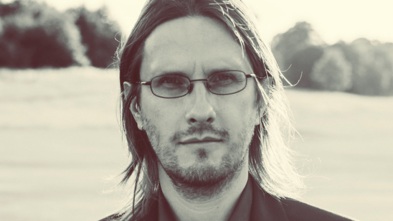 So Hand. Cannot. Erase. is a reminder to me of that old adage about expectations. Actually I don’t really know a particular phrase or saying that could apply here, but its enough to say that I didn’t expect to love this album as much as I do. In the few weeks that I’ve known it, its become one of my favorite Steven Wilson related albums of all time, second perhaps only to Fear of a Blank Planet. Its worth me taking a moment here to briefly comment on its thematic/conceptual subject matter, because it makes the album resonate that much more. Wilson had at some point viewed a 2011 documentary called Dreams of a Life, which was the story of the life of one Joyce Carol Vincent; an attractive, intelligent, outgoing young woman who died in her London flat, and her body went undiscovered for three years. She had friends, she had family, yet for reasons unknown even to them, no one missed her or bothered to check up on her. I actually went out of my way to view the documentary a few days ago and its one of the most surreal films I’ve ever seen, the sort of thing that lingers in your mind.
 I live on the southwestern border of Houston and its outlying suburbs, right in the midst of highways, urban expansion, too many parking lots and gas stations, the lot of it. I hardly know my neighbors, and almost never speak to any of them besides the occasional hello when passing by. In some slight way, I feel that I can relate to Wilson’s own autobiographical views that he instilled into his character. Its what makes a song like “Happy Returns” echo so resolutely within me, despite its rather detailed lyrical perspective being solely H.’s own words. It could be one of Wilson’s greatest singular accomplishments, a song as delicately beautiful and shatteringly epic as In Absentia’s “Collapse the Light into Earth”. And despite all its obvious melancholia, its essentially a pop song, built on simple chord patterns and a McCartney-esque “doo-doo-doo-do” refrain. Its emotional gut punch comes in the lyric “The years just pass like trains / I wave but they don’t slow down”, as vivid a portrait of helplessness against the transience of life as I’ve ever heard.
 That honor went to the very ambient, drone-like “Perfect Life”, which I love for the simple reason that its female spoken word guided first half reminded me of the British pop band Saint Etienne. They have a discography full of assorted moments with neutral voiced Sarah Cracknell waxing poetic about all manner of things. Its an important moment in the song because its our first introduction to H.’s words herself, as she describes the memory of the six months she spent with her adoptive foster-sister. As Wilson explained in the aforementioned Faceculture interview, the imagery of some of H.’s memories comes directly from Wilson’s own childhood, such as “Sometimes we would head down to Blackbirds moor / to watch the barges on Grand Union in the twilight”. Its one of those universal truths I’ve read from great fiction writers, that to make something feel universal, or relatable to everyone, the author is best served by simply focusing on making his character more specific, with more intimate details, possibly even autobiographical details from the author’s own life. It sounds contrary in theory, but it works. By the way, the video for this song is stunningly good (psst, its linked at the bottom).
 Its been a little under five years since the Scorpions released Sting In The Tail, the album that they decided halfway through its production would be their last. And in some respects it was, as far as being a truly fresh, organic batch of songs purposefully written for its release. It was a fine album as well, perhaps their strongest overall in twenty years, featuring a handful of gems that for me at least were comparable to their 80s/early 90s classics (check
  The good stuff first then, which is found as early as the album’s lead off single “We Built This House”, which is not a PBS program but instead a paean to the durability of the band’s fifty year career. I say this based on my viewing of the promotional EPK the band made where they spoke a little about each song on the album —- despite the lyrics clearly referring to a significant other known as “baby”. How they reconcile both perspectives is beyond me… maybe the verses are meant for the ladies (or the lads, whatever) and the chorus is just about the Scorpions themselves? I’m being pedantic, the Scorpions have earned the right to bend metaphors however they’d like, and the most important things here are the melody and the hooks. Its built on the classic Scorpions pattern of quiet/loud dynamics, a hushed verse that explodes into an arena ready chorus, but it does seem to be one of the few entirely new songs, its music penned by the band’s longtime Swedish producers (and MTV Unplugged musicians) Mikael Andersson and Martin Hansen. The other haus-titled song, “House of Cards”, is actually built on the back of a resurrected melody, its acoustic balladry reminiscent of the band’s early 90s Crazy World / Face the Heat era.
 There’s a handful of other good songs; “Rollin’ Home, a laid back rocker with a Def Leppard-ish stomp; the ridiculously titled “Hard Rockin’ the Place”, built on a riff from the Blackout era; a handful of decent ballads in “Gypsy Life”, “Eye of the Storm” (being the newest of the ressurected song ideas, from the Humanity Hour 1 era in 2007); a Meine solo-penned lonely sounding number in “Who We Are”; and the panoramic “When the Truth is a Lie” —- again, all above average in quality, but nothing you’d hate yourself for missing. Where things get murky is with the vanilla alternative rock styled guitar rock of “The World We Used to Know”, a song that sounds like it came from the Eye II Eye sessions; as well as the blandness of the album opener “Going Out With a Bang” where chest thumping bravado fails to move me like the more emotional reflections on calling it quits found on Sting In the Tail. Its also unfortunate that “Dancing With the Moonlight” doesn’t seem to live up to its title, especially when you consider songs by the same title by other artists (Thin Lizzy comes to mind immediately). It has a cool backstory about the turbulence laden flight endured by the Scorpions, Alice Cooper and others that happened to also double as Meine’s birthday celebration. The song is somewhat paint by numbers however, with boring verses and a chorus that never seems to take off (heyo!).
 Ensiferum – One Man Army: First a mild rant: There was a time around the late 90s and early to mid 2000s when folk metal wasn’t an overcrowded subgenre, when the balance between folk and metal was handled deftly by a small cadre of accomplished bands, and when their lyrical subject matter had depth and richness. I’m thinking of those heady times when folk metal meant Skyclad, Amorphis, Subway to Sally, Otyg/Vintersorg, Falkenbach, among a few others. It was a subgenre that was creating vital, shimmering music that was stretching the boundaries of what metal could sound like —- it was fresh and exciting, the sound of things you didn’t know you always wanted to hear. Ensiferum’s first two albums were part of this wonderful era, being near-perfect marriages of thrashy guitars, power metal songwriting, and folky instrumentation.
 Marilyn Manson – The Pale Emperor: A week or so ago when recording
  Napalm Death – Apex Predator – Easy Meat: I guess I never had planned on ever writing about Napalm Death on this blog, not because I don’t enjoy them —- I do, but because I figured that there wasn’t much to elaborate on. Napalm Death will always sound like Napalm Death to me. I grew up listening to them, first being introduced to their grindcore/metal blend via dubbed cassette tapes by various heavy music loving friends back in middle school. They were one of those bridge bands to extreme metal, alongside Morbid Angel and Death and Carcass. More than those bands, Napalm Death delivered the kind of sheer caterwauling noise that a young budding metal fan gravitated towards because it simply sounded like something that was made for you and all the reasons you enjoyed having your parents lament your taste in music. I enjoyed playing them in my battered, sticker covered boom box in my bedroom, imagining that even with my door closed, it still sounded like hell on the other side. Maybe its fair to say that I never developed much of an emotional attachment to their music, but I don’t think it was ever designed that way.
 Marduk – Frontschwein:
 Nightwish – Elan (EP):
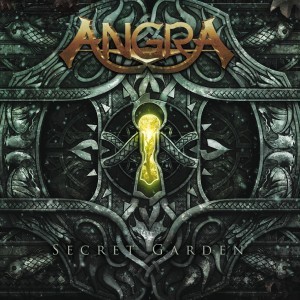 Angra – Secret Garden: I was having a hard time determining where I stand with Angra… my history with the band really started with the Edu Falaschi Rebirth era and went backwards to explore their classic Andre Matos past. This was back in 2001 or so, and I was even more a fan of Rebirth’s subsequent followup, the near-perfect Temple of Shadows. But the next two albums pretty much lost me, and my interest in the band waned throughout the years. When I read that Edu went and jumped ship in 2012 I figured the scene was set for a potential Matos reunion, but it never materialized for various reasons, and that furthered my disillusionment. I was never a big fan of Fabio Leone or Rhapsody, disliking his particular vibrato and their songwriting approach, so I wasn’t enthusiastic about him joining the band. I quietly hoped that it would be similar to the Kamelot situation, Leone pinch hitting for a tour or two and the band getting a completely different permanent vocalist. Leone won the job however, Angra’s remaining original members Rafael Bittencourt and Kiko Loureiro apparently deeming him close enough to Matos to get the job done.
 Orden Ogan – Ravenhead: Germany’s Orden Ogan is one of the more promising “new” bands in power metal, making a tremendous splash with 2012’s To The End album. I describe them as “new”, despite their first album being released over a decade ago in 2004… because in power metal, any band that arrived post-2000 is considered new in my book. That and they didn’t really reach my radar until their last album, a fantastic slice of classic 90s Blind Guardian, Rage, and a touch of Immortal-esque guitarwork. Those three bands are Orden’s musical touchstones as I hear them, vocalist/guitarist Sebastian Levermann sounding like a dead ringer for Rage’s Peavy Wagner, while the guitars sound like Andre Olbrich and Marcus Siepen decided to have a jam with Abbath. The riffing is sharp, precise, but on the right side of thrash-meets-technicality, and the songwriting is engineered to provide maximum hook impact during the choruses. One wonders why Thomen Stauch didn’t simply join these guys when he left Blind Guardian all those years ago, because they’re doing exactly what you’d figure he wanted his previous band to continue doing. Okay, so Orden Ogan won’t win any awards for originality, but they make up for that in their superior execution of a style that is damn difficult to get right.
 There are so many things to discuss in regards to a new Blind Guardian album that I had trouble deciding where to begin. I settled on getting the obvious stuff out of the way first, namely, that four years (five on paper) has yet again separated their newest effort from its predecessor, in this case 2010’s highly acclaimed At the Edge Of Time. Four years in the rock and metal world is twice as long as the average 2-3 year gap between most artists’ releases, but the extended length of time for Blind Guardian is reasonably well accounted for: Multiple leg world tours take up a year and a half or more, and the writing, recording/production of one of their albums requires a longer gestation period than your typical meat n’ potatoes metal band. They’re not quite the obsessive perfectionists ala Axl Rose or Wintersun’s Jari Maenpaa, nor do they have the lackadaisical attitude of Tool, whom seem to regard new albums as a chore (and whose results have yet to justify the excessive time taken); no Blind Guardian are actually working productively in some form or fashion in the period between album releases, and fans have grudgingly gotten accustomed to these lengthy wait times ever since 1998.
 I mention all that because chances are that when you first hear Beyond the Red Mirror, the band’s tenth studio album in their now twenty-five year plus career, you’re liable to ask yourself just what am I listening to now? What you’re listening to is the most asymmetrically complex album that Blind Guardian have ever written, with songwriting that makes the tunes on At the Edge of Time seem poppy in comparison. Upon your first few listens, you’ll find it difficult to discern melodies, patterns, or anything resembling a prototypical hook throughout a large chunk of the album. I certainly did, but this being a new Blind Guardian album, you’ve gotta give it the extra time and attention it deserves and treat yourself to many repeat spins in order to let the experience sink in, wash over you, or whatever metaphor you subscribe to. Its another in a long line of surprises that have come with each of their past five releases, and the band offers no apologies, this is the music they came up with and you can take it or leave it.
 Another one that took me a touch longer to get into was the song “At the Edge of Time” (I’ve read an interview where Hansi speaks on why they titled a song after their last album, but its a bit difficult to summarize in a sentence, suffice to say there IS a reason). The song starts out with an intro that features one of the album’s singular shining moments, at the :57 second mark, Hansi beautifully dreams out the lyrics “Who’ll grant me wings to fly? / And will I have another try?”. Its a simple lyric on the surface, but its unanswerable question is evocative in the very essence of what its asking —- and Hansi’s phrasing and emotive delivery just bowls me over every time I hear it. Moments like that are what I wish I could instantly summon whenever someone asks me why Blind Guardian is so great (if I haven’t slapped them across the head by then). Perhaps the song I still have trouble with is “Sacred Mind”, particularly in the chorus where I get the feeling Hansi might’ve over sung just a touch. Its not a bad song by any means, but there’s a monotone-ness to the chorus melody that prevents the song from reaching a higher emotional place.
 Saving the best for last, there’s my two favorite songs on the album, “The Throne” and “Prophecies”. The former is a seven minute masterpiece; a perfect storm of great riffs, battle horns, Hollywood symphonics, and angelic choral sections. It also boasts the album’s most ear wormy chorus amidst all that bombast, a simple couplet that is simultaneously catchy and pulse pounding, “We must serve the fire / We must confess we are liars!”. Its on a level of excellence as that of “Wheel of Time” or “Sacred Worlds” from At the Edge of Time, one of those all too perfect gems where the verses are as compelling as the mighty refrain. “Prophecies” is a perfectly crafted case study in mid-tempo understatement, where the line between verse and chorus is blurred as a result of Hansi’s almost effortless lead vocal —- his narrative voice here is the song’s greatest strength, the backup vocalists only chiming in to punctuate specific lines in the refrain. Its worth noting that “Prophecies” was initially my least favorite song after my first few listens of the album, probably due to my thinking that its lack of any kind of build up suggested a directionless nature. Your favorites will likely change in similarly tumultuous fashion.