
 You might not know this, but I’m a massive Therion fan, as in they’re one of my top five favorite metal bands of all time kinda massive. Sadly, in the seven years this blog has been going, I’ve gotten to write about them just a handful of times. Now that’s partially my own fault for not getting around to doing that retrospective I’d planned for them years back, but its mostly because the band’s last studio release was way back in 2012 with their classic French pop covers art project Les Fleurs du Mal, and their last studio album of original material two years prior to that with Sitra Ahra. Previously, their longest gap between releases was three years, but to their credit we did get a warning —- founder/guitarist Christofer Johnsson telling us way back in September of 2012 that “there won’t be any new regular album… not until we have finished the rock (metal) opera, performed it live as much as we can, taken a break and then put together a regular album again. That will take a couple of years, for sure. So we are closing an era and opening a new period that will be quite different”. It was a fairly surprising statement that at the time stunned and dismayed many Therion fans, myself included, because I think we all wondered why this opera project had to come at the expense of new Therion music. But it was out of our control, and so began the long wait, and good god what a wait its been. I didn’t think he meant six years! Maybe he didn’t either.
I gave Wintersun’s Jari Maenpaa a fair amount of criticism for his continued delays regarding Time II, and even referenced Therion’s Christofer Johnsson as an example within the symphonic metal world of someone to replicate in terms of logistics and finances. I bring this up here because I can feel that a few of you might remember that and all too rightfully want to throw that back in my face right now. I still think my example of Johnsson’s operating methods in terms of recording complicated material was absolutely spot on in relation to Wintersun’s Time II dilemma, but it raises the question: Does Johnsson deserve to be equally criticized for the significant amount of time he’s taken to release a project that is sharply dividing opinions within the fan base and greater metal community in general? I think it can be argued that yes, taking six years (eight if we account for original material) to release something that isn’t a new album in the traditional sense is far too long, and though no one disputes Johnsson’s right to do that, we don’t have to like it! Here I’ll point out that I’ve been hearing about Blind Guardian’s yet to be released “orchestral project” since late 2001, when I first heard Hansi mention it in an interview promoting the then newly released “And Then There Was Silence” single. Yes, that project has been cooking in the background for nearly two decades(!), its genesis taking root in the writing sessions for 1998’s Nightfall In Middle Earth. It hasn’t had a vice grip around the band’s activities however —- they’ve moved along at their new album every four-five years standard clip, even delivering a straight up masterpiece with 2010’s At The Edge of Time. I’ve seen the band live four times here in Houston in that intervening time as well, they’ve been regularly touring the world with each release. And whenever they’re asked, they tell us the same thing: Work on their orchestral project continues, it’ll be released when its done.
 It might be unfair to bring up the Blind Guardian example, because everyone works differently, and maybe Johnsson is the kind of artist who wants to only focus on one thing with maximum intensity for a lengthy period of time. I get that, and respect it. I just wonder if he ever considered the other route, of making this a long burning project that he’d work on in the off-times from normal Therion albums and tours, even if it did take twenty plus years? The discussion is moot of course, because here we are with Beloved Antichrist in its finished, recorded form, but there are plans to stage this somewhere and ambitions to see it take on a life of its own as an opera entity separate from Therion. We’re realistically looking at another three to four years before a new Therion album could potentially come to fruition… that’ll make it ten plus years since Sitra Ahra, a heck of a timescale for any rock/metal band not named Guns N’ Roses. The reactions that I’ve seen to Beloved Antichrist have been as polarizing as you’d expect, and on the US Power Metal Connection Facebook group they were particularly blunt and forthright with their nearly overwhelming disapproval. I was even provided with some insight by a classically trained soprano as to why in her opinion Therion’s opera was terrible even by opera standards, never mind the metal ones. I should add that all the opinions on this group were stated pretty respectfully… you can only imagine the stuff written elsewhere.
One of the recurrent themes among all those on that Facebook group who discussed Beloved Antichrist unfavorably was what can only be best described as ‘bewilderment meets impatience’. The criticism I saw frequently repeated was that the rhythm guitars came across as plodding, repetitive, and used more as a percussive/tempo device than an inspired riff delivery system. I understood that criticism because I too focused on the guitars during my initial first few listens through the entirety of the opera, honestly for awhile there it felt like all I was hearing was simplistic rhythm guitar and a load of operatic vocals in pieces of music that felt untethered to anything —- be it a melody or a motif. Everything sounded rather amorphous, that is a big mess of sound that was hard to get a hold of, to find something that hooked you. What was exacerbating that impression was the daunting length of this project itself, spanning three discs and clocking in at just over three hours of music, it was certainly understandable that many people took a single pass through it (or maybe even skipped around), and decided that once was enough. Metal fans do have a tendency to be patient and follow the principle that it often takes multiple listens for something complex to reveal itself, but I think the three hour running time was a hurdle that was too lengthy for many to attempt.
 The thing is that Beloved Antichrist is really an opera —- I know that might be stating the obvious but it needs to be reiterated again: It is an OPERA. Full stop. What we’re listening to here is the soundtrack to an opera that has yet to be staged, not a “metal opera” in the way we’ve come to know them via Avantasia or Ayreon, which have always struck me as more theatrically inclined concept albums closer to musical theater than anything resembling opera. Okay so if we view it in this light, where does that leave you and me as metal fans? I don’t know about you, but my experience with opera is limited to watching a few of them on PBS during those late night insomnia years, and I actually did enjoy them (they were subtitled) and didn’t click off after a few minutes. The one thing I remember absolutely not digging were the parts where dialogue was being sung, seemingly without regard to crafting a melody, an aspect I can now recognize as the “recitative”. But that’s really it, I know precious little about the history, structure, and appreciation of opera. I know what arias are, mostly because I have an unabashed love of Sarah Brightman’s solo albums, which tended to feature the inclusion of a few arias from various operas in addition to her original material. I’ve been a fan of hers dating back twenty years now, when I first saw her on PBS (yes, again) singing “Time To Say Goodbye” with Andrea Bocelli. She was my gateway into classical music alongside film soundtracks, and through her I started listening to Maria Callas, Anna Netrebko, and José Cura. Its not much of a classical education, but its a start.
A few Thursdays ago, I sat down to listen to this behemoth of a recording with that thought process in mind: “I’m listening to the soundtrack of a play that hasn’t been staged yet”. It wasn’t me trying to learn Finnish in one day, it was just a simple, subtle shift in mindset to prepare myself for how I would try to process what I was hearing. It worked. Suddenly the simplistic rhythm guitars weren’t grabbing my attention first and foremost, but everything else was. I heard the melodies circulating through the string sections, the dramatic punctuation of the horn sections and pounding timpani, and I was paying attention to a story being told through the vocalists. Within that I found some beautiful music —- a stellar example coming in early on the third track “Through Dust, Through Rain”, where an instrument I can’t quite define accompanies a gorgeous soprano vocal, backed by an ebb and flow of quiet strings. There’s a moment here where a lonely piano figure breaks through fleetingly, like a ray of sun through the overcast and its so lonely sounding, so effective at stirring up feelings of melancholy and heartbreak. These micro moments are why I’m a Therion fan, because somehow Johnsson has an endless supply of them, even if they have no metallic context whatsoever. Its an early highlight, and although its not technically an aria (being a dialogue between two characters rather than one), its something that I could see sung out of context in a classical program by someone like Sarah Brightman no less (is my fanboy showing?).
 These moments of musical bliss are scattered everywhere, as on the opening strings during “Signs Are Here”, serene yet suggestive of some tumult down the road. Then there’s the choral vocal hook in “Never Again”, with just enough of a catchy, solidly Therion-ized guitar riff anchoring things underneath to provide it with a gritty earthiness. There’s a wild display of sturm und drang on “The Crowning of Splendour”, pitting its male operatic vocal leads against a spiraling build up of guitars and a thunderous orchestral arrangement. Another male lead vocal moment worth hearing again is on “Our Destiny”, which is structured far more closely to a verse/chorus format than any other piece of music here. Its very Therion-esque too, from its charismatic vocal melody to the distinctive melodic signatures present in its expressive guitar passages (even a brief glimpse of a guitar solo here!). It has a martial drum segue into “Anthem”, where Thomas Vikstrom as Seth (the Antichrist) leads us with a solo vocal over somber strings, and this sequence soon runs headlong into an explosive metal passage that invokes memories of an old Therion classic in “Wine of Aluqah”, down to the percussive tempos and the wild guitar patterns. The love dialogue in “Jewels From Afar” between Helena and Seth is set to bright major chords loosely strummed on chiming acoustic guitars, a welcome break from riff based rhythmic structures that results in some pretty melodies.
If you’re looking for another Therion-ized to the max slice of music, revisit “The Arrival of Apollonius” with its very Secret of the Runes style mid-tempo rhythm guitar structures and epic choral vocals. There’s some remarkable detail here: An affecting solemn horn intro and nimble female operatic vocals during the 2:08 – 2:23 stretch to name a pair. Regarding the latter, the staccato guitars actually work pretty well in this passage, they have purpose and a even deliver a nice tail-off at the end of the riff sequence. Those looking for riffs will find a solid one in “Night Reborn” as well as “Temple of New Jerusalem”, the latter of which got the focus track treatment with a lyric video. Its simple yet hooky riff pattern segues into an actual bridge and chorus sequence, joining “Our Destiny” as the most traditional song on offer. The chorus was a little lacking to me overall, but the unexpectedly joyful guitar outburst at the 3:30 mark is worth coming back for. But guitars don’t always steal the show: I love the usage of piano on “Dagger of God”, the keys expressive and elegant; and the conjoined bombastic orchestral effort on “The Lions Roar” is impactful, those thundering timpanis and french horns working in concert to effect grandeur and majesty. And its the choir vocals that make “Bringing the Gospel” so compelling, and I appreciate that the rhythm guitar goes in unpredictable directions here, altering its staccato patterns with accelerating riffing. And I wish that the intro sequence of “Laudate Dominum” could repeat throughout its entire five minute running time, those sweeping strings follow an absolutely beautiful melody, sprightly and refreshing amidst so much darkness throughout the rest of the opera.
 But I’m over here going on about all these other instruments, and you’re probably wondering “Where’s the metal at Pigeon?”. Well check out “Behold Antichrist” for an awesome circular riff and the Therion-ized lead guitar overlays and solos that definitely push this more towards the metal end of the opera metal spectrum, particular at the 2:04 mark with an amazing Christian Vidal solo. I get Gothic Kabbalah flashbacks when listening to “Cursed By The Fallen”, not only from its female soloists but its juxtaposing beefy trad metal riffs alongside woodwind led musical bridges. The heaviest metallic moment comes in “Astral Sophia”, with its doomy, darkened riffing and foreboding male choral vocals, the song taking on quiet/loud dynamics throughout quite effectively. And then there’s “Shoot Them Down!”, which is described by Johnsson as being the music for a street revolution scene, and he purposefully invoked what he describes as “Motörhead-goes-opera”. Its a solid, 80s influenced throwback riff that anchors the song in a set tempo and is able to sustain interest on its own without vocal help. Speaking of riffs, “Rise to War” has an excellent one hidden behind its operatic intro, striking at the 1:33 minute mark like something off an Accept album. There’s metal aplenty to be found here, but its rarely concentrated in one spot as you can see, hence the push and pull of a true metal opera.
Not everything works as a standalone musical piece, and although most of these pieces of music are dialogues between one or more characters, you really can play spot the recitative. Scenes such as “Pledging Loyalty”, “What Is Wrong?”, and in particular “Morning Has Broken” are tough listens. Regarding the latter, its vocal melody is so drawn out and tortured, the vocalists almost sound like they’re singing out of tune. To his credit, Johnsson has found a way to incorporate dialogue in a way that is largely interesting and engaging on a musical level, with short melodies that support chunks of dialogue or wrap around them. But every now and then you’ll stumble upon something where he just couldn’t pull it off well enough, and while it may be perfectly functional in the context of a stage performance, these pieces of music stick out in the context of this soundtrack. The inverse is also true in singling out scenes where the music is absolutely sublime, even daring to challenge some of the greatest work Therion has ever recorded. I’m thinking specifically of the epic vocal duet on “Seeds of Time” and the opera highlight of highlights “To Shine Forever”, both towards the end of the tracklisting. The former is an elegiac, melancholic performance from Vikstrom and Chiara Malvestiti as Johanna in what has to be the opera’s final act aria. I simply love “To Shine Forever” however, with its heartbreaking blend of chiming minor key acoustic guitars, sweeping brushstroke strings, and by far the most affecting choral vocal melody on Beloved Antichrist.
 Okay, enough dissection… I knew that was going to take a long time (46 tracks!) but the truth is that my own evidence of enjoying this work won’t really matter a ton to most of you. There’s a couple things I understand now about Beloved Antichrist, and the first is that it simply won’t be for some people and that doesn’t make those people wrong in the slightest. If you heard this expecting a metal opera more in line with what Avantasia has been terming operas with their many albums, I understand being under or overwhelmed by this thing. If you were wanting a new Therion album in the vein that we’re all accustomed to and you walked away from this after one listen thinking its an utter abomination, you’re justified in that opinion. Heck one of the hallmarks of classic Therion is being able to enjoy the instrumental aspect of the band on an equal level to the vocal arrangements, and this opera is mostly a vocal affair due to its very nature. Is it what I wanted out of a six/eight year absence of new Therion music? No not really, but its what we got, and as a die-hard fan who’s gotten so much out of their previous work on a personal level, the least I could do here was give it more than a couple tries. It paid off for me to a degree, but its understandable that it won’t for everyone.
I’ll point out one final thing though —- remember when the Lord of the Rings soundtracks were released a few months before each of the three movies eventually debuted in the Decembers of 2001-2003? I’d eagerly buy them on their release dates and pour through them, and they’d get me excited for the movies and I would think “Yeah, these sound good”. But they didn’t really mean as much to me then as they did after I had seen their corresponding films and had a chance to attach pieces of music to those epic scenes that melted mine and many other geeks’ hearts. The Stranger Things soundtrack would just be a weird mix of classic 80s songs and bizarre electronic music if we listened to it without watching the show and being charmed stupid. And without Top Gun’s electric volleyball and Tom Cruise hi-fiving Anthony Edwards montage, Kenny Loggins “Playing With The Boys” would be… well, still a terrible song… okay so it doesn’t work for everything. But you get the gist. Context helps, particularly with soundtracks! If you hated Beloved Antichrist upon first listen, maybe check out its stage production (hopefully that happens) if you’re in Europe somewhere, or for an easier method, come back to this in a few months when in the mood for something classical.
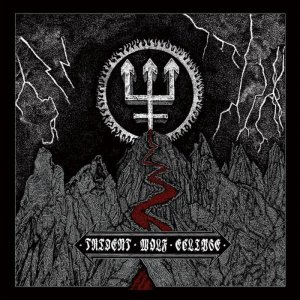 Watain – Trident Wolf Eclipse:
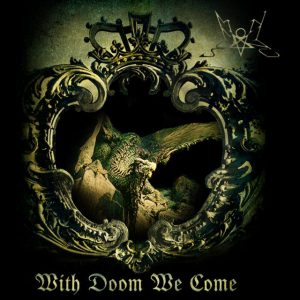 Summoning – With Doom We Come:
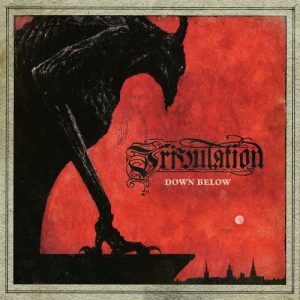 Tribulation – Down Below:
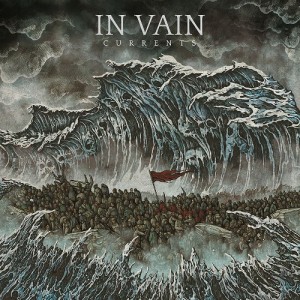 In Vain – Currents:
 Leaves Eyes – Sign of the Dragonhead:
 Like other bands I absolutely love, I find the task of reviewing the new Orphaned Land album a daunting proposition, because there’s so much of my own emotional response I have to consider and somehow weigh before writing something that makes a lick of sense. Its been this way with new music from Maiden, Blind Guardian, Insomnium, etc… and will likely be this way for the upcoming Therion album as well. Its been five years since the band’s last album, the masterful, career-defining
  I’m taking it as a given that everyone knows what Orphaned Land generally sounds like, its metal merged with Middle-Eastern instrumentation, melodies, and patterns. That’s a simplistic explanation but generally sums it up —- the thing is, a lot of bands can employ those sounds as window dressing and have (not naming any names here!). But Orphaned Land were the first to really do this in not only an authentic way, but in an interconnected way, meaning that it was enmeshed within their songwriting approach and integral to their sonic identity. It was called Oriental Metal by both the band and the metal community around the world, and one of the unique facets of this style of metal as others have gone down its path is that its entirely malleable to different subgenres. So we have the founders in Orphaned Land who for their first four albums merged traditional sounds with progressive death metal; but bands like Melechesh and Odious merged it with black metal; Aeternam are merging it with Gothenburg melodic death metal, and the likes of Myrath and Amaseffer merged with it clean vocal progressive metal with some power metal influences. I bring all this up because Orphaned Land’s sound has changed quite a bit over its past two albums, and its becoming clear to me with Unsung Prophets and Dead Messiahs that the choice of metal subgenre, or harsh or clean vocals doesn’t really matter —- the core of this style of metal is the traditional/ethnic Middle Eastern sound itself.
 I had wondered if there would be an instrumental drop off after Yossi left the band, he was such a talent on a multi-instrumentalist scale, but thankfully the band has diversified their supporting musicians cast and still employs all the sounds you’d expect them too. I’m not good at picking individual tones out to identify each instrument correctly, but surely all of them are present on “All Knowing Eye”, a four minute journey into a lush Steven Wilson-esque soundscape, hypnotic melodies, and once again Kobi knocking it out of the park with a memorable vocal hook. He’s captivating again on the old traditional Hebrew vocal sung “Yedidi”, and its always interesting just how seamlessly the band’s amplified interpretations of these old religious/cultural songs fit in with their original material. The song that surprisingly might be the gem of the album is the nine minute plus epic “Chains Fall to Gravity”, a breathtakingly beautiful piece of music in construction and execution. Its not just the heart-wrenching violin melodies that grab you here, but the surging, hair-raising choral vocal bridge build up: “Go forth and be all you can be…”. The strange thing about this song is just how admittedly disjointed it really is if you break it down to its constituent parts. I’m not sure why it works so well, but its one of the most captivating things Orphaned Land has ever recorded, this album’s “The Beloved’s Cry” or “Brother”.
 What a year, its feels like its both taken forever to get through and yet passed in the blink of an eye. I was a bit concerned halfway through around the early summer when I realized that it was a little light on noteworthy releases. My worries were premature however, as 2017 was backloaded in a staggering way, causing myself to pick up the pace in the late summer and early fall just to keep up. The process of putting together my year end lists this time was a bit strange, because I felt that my nominees pool for the albums list was a little shorter than I’d expected, while the songs list was way more stacked than it normally is. I keep written nominee lists for songs and albums going throughout the year, both so I can throw my choices in whenever I’m feeling like I’ve come across a contender, and (primarily) so I don’t have to trawl through my own blog come December to see if I’ve missed anything. As usual, I relied on iTunes stats for play counts to keep myself honest, but this year instinct really led the way. The following songs on this list just stood out clearly among the other nominees and they are absolutely worth a few minutes of your time. Thanks for reading and keep an eye out for the best albums list coming soon, before year’s end is the goal!
 Cyhra – Letters to Myself:
 Enslaved – E:
 Amberian Dawn – Darkness of Eternity:
 Aetherian – The Untamed Wilderness:
 Blut Aus Nord – Deus Salutis Meæ:
 Elvenking – Secrets of the Magic Grimoire:
 Ensiferum – Two Paths:
 Bell Witch – Mirror Reaper: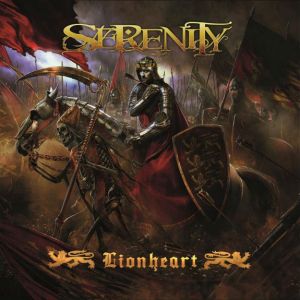
 All this wouldn’t really be much of an issue of course if the songs were on point, and some are nearly there, but for the most part this album sees Neuhauser missing his usual mark of excellence for the first time since I’ve become a fan. I’ve gone through this record well over a dozen times now over the course of a few weeks and its just not clicking with me. Many of the songs lack the sharpness, the well defined arcing hooks that he’s so adept at penning, with the exception of a few cuts. Opening song “United” comes across as the inspirational, horns bellowing call its supposed to be, its lyrics speaking of coming together to take up the holy crusade —- the sort of stuff power metal is meant to be the soundtrack for. Similarly on “Lionheart”, where “Jersualem unites us against Saladin”, Neuhauser delivers an impassioned vocal in the verse segments in particular, a slight phrasing twist in his delivery that reminds me of why I love him so much as a singer. Choir vocals backup the refrain here, bringing to mind a Blind Guardian influence that is noticeable all throughout the rest of this album. We get triumphant, punctuating horns in the chorus of “Hero”, a lyrical clunker but possessing enough strength in its vocal melodies to make you ignore the Enrique Iglesias reminders it will conjure in your mind. This change in style and tone is appropriate for the subject matter, and on first listen I wasn’t too surprised to find the album’s first four cuts storming out of the gates in this mode. But it never lets up, the entire approach across the board sounds more epic and grand than we’re used to from Serenity, its all glory and light here. By the time I got to the fifth cut “Rising High”, I started to wonder where was this album’s “Wings of Madness”, or “Far From Home”, those doses of melancholy that I’ve come to expect.
 The first real difference in tone and even in song structure comes in the closing pair of tracks, “My Fantasy”, and “The Final Crusade”. The latter is a strange bird, featuring some harsh vocals that I suspect we all figured were coming at some point (every power metal band seems to do a little dip in them at some point), and while they don’t ruin what is a largely a good song, they fail to add anything to it. The strength of this track is the Broadway vibe of the chorus, bringing to mind hints of the last album, Neuhauser’s vocals soaring against the backdrop of a swooning symphony. He’s joined towards the end by Sleeping Romance vocalist Federica Lanna, her vocals a sweet, subdued tonic to his soaring theatrical delivery, though he does bury her sonically in the mix when their voices are supposed to be conjoining. The other song, “My Fantasy” might be the highlight of the album, a song that reminds me of the Death and Legacy era in its multi-faceted approach. A heavy riff progression sandwiches a wide open power ballad chorus where Neuhauser dreams up as glorious a hook as he’s ever conjured, his vocal progression bringing to mind the very best of Tony Kakko and Klaus Meine in his tone and vocal melody direction. Its also the only moment on the album where you could forget about the Richard I concept for a few minutes, because even though its written from the perspective of Richard while he’s imprisoned, its lyrics are vague enough to be malleable to anyone and anything. Neuhauser is such a gifted songwriter, he’s bound to deliver a gem per album at least, even when the rest of the affair is a surprising misstep. I’ll take it, and while I won’t recommend Lionheart as a must own, I’ll be happy to wait an extra year or so for a far greater Serenity album next time around.
 Even though I foolhardily consider myself to be a power metal expert (I’m often surpassed by the collective knowledge of the US Power Metal Connection Facebook group and the Power Metal Subreddit), sometimes I just get things wrong. When it comes to the UK’s Power Quest, my sin was not giving the band the attention they deserved after being introduced to them. I first heard about Power Quest in late 2004 in the wake of the Dragonforce furor that got everyone looking at the UK as the epicenter of power metal’s latest shockwave. The band’s second album Neverworld had just been made available for import from Sentinel Steel’s ever reliable mail order, and I grabbed it based on the recommendation of a trusted group of forum members on UltimateMetal.com (remember forums?). It was in retrospect the band’s only pure power metal album in the classicist Helloween mold. At the time Power Quest were heralded by some as superior to Dragonforce, and by others as the “Valley of the Damned” squad’s little brothers. The comparisons were natural, both bands shared members at one point in Steve Williams and Sam Totman, mainly because the UK power metal community was small and tightly-knit (still strange to think about given the country’s pedigree with Sabbath, Priest, and Maiden). It was so small that its leading lights both had to import vocalists —- the Force’s ZP Theart was from South Africa, and the Quest’s Alessio Garavello was from Italy. Together both bands made waves worldwide, denied any notion of a rivalry, and although a flood of British power metal bands failed to materialize in their wake, they both blazed their own distinctive trails.
 When Steve announced in January 2013 that the band was coming to an end due to
  There’s some stuff here that doesn’t quite hit the sweet spot that we’re used to getting from Steve’s songwriting, two songs being “Starlight City” and “Kings and Glory”. They’re not bad tunes, but “Starlight City” doesn’t have a chorus that lives up to its promising intro verse and cascading bridge, and not even some surprising gang vocal “whoooaaahs” can lift up a refrain that seems a bit flat. Their positions in the tracklisting at two and three handicap the album a bit coming out of the gate, leaving the “Face the Raven” and “No More Heroes” to attempt to recapture the energy generated by the opener “Lords of Tomorrow”. They’re largely successful in that attempt, because “No More Heroes” has the kind of vocal melody ear candy that defined the band’s mid-period artistic success, a song you’ll come back to just to hear how Ashley bends his voice on the line “…I pray with all my heart / we find a brighter day yeah…”. Its followed up by “Revolution Fighters”, which has a level of grit in its verses that lend it enough power to carry the song over a chorus that doesn’t quite arc into a hook the way it needs to. On “Pray For the Day”, there’s enough of that awkward Power Quest charm to worm its way through to make me kinda love the track despite its flaws, I just wish that chorus hit with a little more heft.
 The background concept is also intriguing, giving reason to explore the lyrics —- Bruun kept a journal about her experiences with sleep paralysis and nightmares recently and a lot of these songs explore the feelings those stirred in her. I’ve experienced sleep paralysis myself, its wasn’t pleasant to say the least (absolutely terrifying when I didn’t even realize what it was at first), so my interest in Mareridt (Danish for “nightmare”) has only deepened on a lyrical level. I think I went into this expecting to like it, but not love it, that perhaps Bruun would make the mistake of trying what Deafheaven did, to get purposefully aggressive in order to win over some of the metal set. That she did the opposite is not only shrewd, but refreshing. She has nothing to prove to anyone, and a lot of the criticism towards her has been transparently misogynistic. I don’t like to use that term blithely, but it seems to me that most of the agitation surrounding her has been largely misguided as a result of the media coverage she gets. Its not her fault that the NY Post’s article about this album has the stupidly ignorant sub
  Cradle of Filth – Cryptoriana: The Seductiveness of Decay:
 Eluveitie – Evocation II – Pantheon:
 It would be so easy to come at this project with an ample amount of cynicism and derision… expected even. A label/producer concocted “band” (the quotation marks for that piercing barb!) with four strikingly gorgeous female vocalists from the Euro/power metal scene, coming at you like the corset wearing version of
  The music itself is well executed, with just enough of a balance between heavy, crunching metallic rock riffs (think Within Temptation) and computer/keyboard generated symphonic elements, but that’s to be expected given the caliber of the pros behind the scenes. And these are covers in the most strict, traditional sense —- there’s no changing up the melodies, no musical deconstructions, no slowing down tempos, its really just these songs as you’ve heard them in their original states but painted with symphonic metal colored paint. Some might find that annoying, but these songs relied primarily on the vocal melody in their original state, and unless you have a skilled composer reworking entire song structures (ala Sonata Arctica’s Tony Kakko or Therion’s Christofer Johnnson, both accomplished at reworking cover versions), then its best that Exit Eden played it this way. I guess the real question here is do all the song choices lend themselves to this approach? The answer is unsurprisingly no, because there’s a few that fall flat, one being Adele’s “Skyfall” which for some reason features a guest drop-in by Simone Simons of Epica. I’m not sure why, but “Skyfall” loses some of its sly charm in Exit Eden’s version, though I’ll venture that its because their more straight ahead approach diminishes the dreamy, 2am blurred vision feel of the original. You could practically see Adele in a smoky-hazed bar, hunched over the mic in the corner, crooning away —- Exit Eden’s feels practically clinical in comparison. And I thought the bizarre song selection of Visage’s “Fade to Black”, which is just… well for lack of a better term, bizarre! Never was fond of the original myself, and I hoped this version would change my mind but sadly it has not.
 The most daring experiment here (besides that Visage cover) is the opening cut, a challenging take on Depeche Mode’s dark, storming “Question of Time”. Now, I love Depeche Mode, and completely love that metal bands feel the same way and have responded throughout the years with some really