Throw Open the Gates! Watain, Summoning, Tribulation, and More!

I had a vague notion that this year would be front loaded (and maybe back loaded too) with a ton of new noteworthy releases, but this January really has been like none other in recent memory. Most of my time was preoccupied with Orphaned Land’s Unsung Prophets and Dead Messiahs, but the rest was spent trying to catch up on everything else. This is the first part of a series of smaller reviews covering these albums, with hopefully another post covering the rest of them coming soon. In between I have to tackle the mighty triple disc behemoth from Therion so… yeah, that’ll take awhile. There’s a lot of metal to cover and the next few months don’t look like it’ll slow down so I’ll try my best to keep up!


Watain – Trident Wolf Eclipse:

I had to check to make sure I was getting the date of the last Watain album right —- its really been five years since The Wild Hunt, an album that while largely good, was a bit of a letdown coming after 2010’s viciously earthshaking Lawless Darkness. That’s an album that is seen by many black metal aficionados as something of a recent masterpiece, so it could be argued that The Wild Hunt was never going to live up to the expectations it created (how many bands knock out one masterpiece after another —- seriously though, promotional hype aside?). My problem with it as I recall was that its experimentation fell flat, particularly in their attempts to slow down the tempos more and at one point even try their hand at a road ballad (“They Rode On”). I think it was good of them to try those things, however meandering and at times just boring they ended up. What we and they should be certain of by now is that the Watain sound works better when its this fierce, uptempo ball of fury just barreling forward at full speed with a stop/start tempo change here and there to set things up.


The band returns to this formula for Trident Wolf Eclipse, an album that seems deliberately focused on achieving the spirit of Lawless Darkness, and they almost succeed. What’s holding it back is the thing that made this a really tough album to get into at first, and that’s the strange decision to have this kinda murky, muddy production quality through the whole affair. I had a hard time pinning down this problem at first, but a friend who’s a huge Watain fan pointed it out (“The production sucks!”), and sure enough when you compare this album to their previous outings, there’s a real problem here. It prevents everything from sounding as potent and slicing as it should, and this is a band where you should really feel the riffs on a visceral level. And then there’s just the overall problem that there’s nothing here that stands out, apart from the excellent “Towards the Sanctuary” and opener “Nuclear Alchemy”, two songs that do feel like they were left off Lawless Darkness. Everything else is okay, a fairly consistent barrage of speed and aggression with the occasional slightly slower passage, but there’s little that commands my attention. I’ve gone through this album a fair few times now, and I’m still having trouble deciphering whether its the production that’s keeping things from being too exciting, or that the songwriting just isn’t up to snuff. If its the former, that’s unfortunate but maybe it’ll grow on me in the future —- if its the latter, then we’re still seeing something of a hangover from 2013.


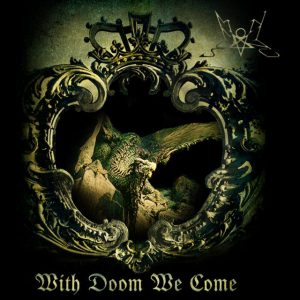
Summoning – With Doom We Come:

I’ve been listening to Summoning for a long, long time —-  my first exposure to them was in 2001 when a Tolkien loving friend bought Let Mortal Heroes Sing Your Fame on a whim after inspecting the tracklisting and seeing a bevy of Lord of the Rings references in its song titles (as oddly coincidental as it is that he would stumble upon that album in person, its even stranger that a Summoning album was in a store in Houston, Texas to begin with). The context of this introduction is worth mentioning I feel, because around that time he and I had both undertaken a re-reading of all of Tolkien’s works in preparation for that year’s December release of The Fellowship of the Ring (although, that re-reading had been going on for some time, thanks to Blind Guardian stoking those fires a few years prior). He immersed himself in Summoning’s music and I followed suit, both of us getting copies of their previous album Stronghold and for me at least, having it be background to many a chapter read (and the de facto soundtrack to the hours drained playing Shadowbane aka the greatest MMORPG of all tid).


They were powerful, majestic experiences, and fully formed examples of minimalism in black metal long before the advent of blackgaze or post-black metal. The band was at its best on ‘Mortal Heroes, where they found the perfect balance of  golden epic pomp to counteract their ever bleak nature, particularly on “A Distant Flame Before the Sun”, a bleak re-working of the Tolkien/Bilbo Baggins song “I Sit Beside The Fire And Think”. They get close to those moments on With Doom We Come, even though this album largely follows the more subdued and darker tone of 2013’s Old Mornings Dawn. I’m thinking of songs like “Night Fell Behind”, where mournful horns pop up throughout to counteract the sombre singular-note keyboard melody that ambles along at its dreamy pace. Similarly on “Carcharoth”, an interesting mix of keyboard generated orchestral elements are used in juxtaposition to an isolated fragmentary melody to create a mysterious soundscape. Its hard to pull this stuff off convincingly, and Summoning have made a career of doing it. But a few solid moments aside, I wasn’t as enamored with this album as I’d hoped for, large parts of it seem to pass by without me taking much notice (a danger in ambient based music). Seen in retrospect with my lack of enthusiasm for Old Mornings Dawn, and we’re hitting a 14 year drought of something truly excellent from Protector and Silenius. Maybe its time for them to shake things up, to try something bold to re-imagine the Summoning sound.


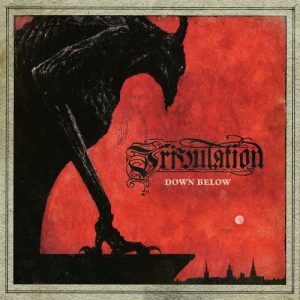
Tribulation – Down Below:

I guess I failed to review Tribulation’s 2015 album The Children of the Night, which is weird to realize now considering I listened to it when it came out (new Nightwish and Kamelot albums came out around the same time, so maybe that explains why it slipped through the cracks). Anyway, what that album showed was the sound of this Swedish death metal outfit embracing a blend of goth rock, traditional metal, and psychedelia elements in their already progressive sound. It was a strikingly more song driven album compared to its predecessor, meaning that melodies were front and center to everything as opposed to the riff driven approach of their first two albums. Take that template, and further strip away most of the old death metal tendencies besides vocalist Johannes Andersson’s raw throated vocal approach and you’ll have a good picture of what to expect on Down Below. I’ve seen a lot of comparisons to Ghost being thrown around in regards to this, but that’s a bit of a stretch… Ghost is exuberantly melodic, working with major key melodies like they’re some kind of silky shirted power metal band from Finlandia. I get the spirit of the comparison, buts its waaaaay off.


Now I’ll grant you that Tribulation have upped their production quality, this is as clean and dare I suggest polished as they’ve ever sounded, but their application of melody is still subdued and restrained, used to sketch out the fragments of a song’s skeleton rather than lay things on thick with multi-tracked harmonies and piles of sound. On the album highlight “Nightbound”, its the clean melodic motif on lead guitar that keeps repeating in the background that serves as the actual hook, and its pristine quality allows the rhythm guitar upfront to play a little more relaxed, looser, and grittier. Andersson’s hoarse yet always intelligible vocals careen wildly across, working in tandem with the rhythm guitar in a way that’s half rock n’ roll strut and half goth-metal Nick Cave just going off the rails and ignoring song structure altogether. This is an approach that’s repeated in varying degrees through the album —- there always being something in the way of a simple yet artful melodic figure played with precision to create a sense of structure, and the rest of the band delivering a shimmying, swaying, at times ragged performance around it. On another personal favorite, “The World”, Tribulation unleash a Sentenced-esque sense of musicality, heavy on dark dramatics and major-minor chord shifts to create a sense of the grand and epic. There’s something really charming about this album, about its intentional imperfections and its just right mix of salty and sweet melodic approach that has me coming back again and again.


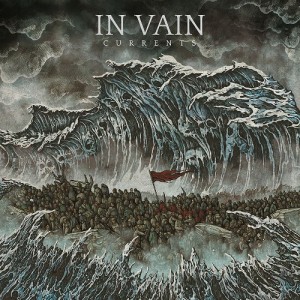
In Vain – Currents:

Norway’s In Vain were on my radar sometime after their 2013 release Ænigma, an album that I never wrote about due to discovering it a year past its release date, but one I ended up listening to quite a bit over the past few years whenever I was in the mood for something proggy yet still hooky and impactful (you’d figure Enslaved would be the go to there but I’ve burnt out quite a few of their albums and others are just too heavy on the prog to satisfy this urge). I just did a guest hosting appearance on an episode of MSRcast’s sister podcast Metal Geeks where I’m fairly certain we referred to these guys as a Finnish band —- a glaring mistake in retrospect because of course they’re from Norway… its written in their musical DNA! Rather than crafting darkly sweetened melo-death with painterly, sweeping guitars ala Insomnium, Omnium Gatherum and their brethren, In Vain display that Norwegian sensibility of progressive death metal heard in fore bearers Enslaved and Borknagar. It means that these songs are at times driven by both riff progressions, and alternately their guitar and/or vocal melodies, sometimes all at once. To add to these bands’ similarities, at times, clean vocalist/keyboardist Sindre Nedlund sounds like a mix of ICS Vortex, Herbrand Larsen, and his brother Lazare (whose Solefald project features In Vain as its backing band). I don’t think as an American metal fan, I’ll ever be able to truly understand just how small and insular the worlds of Norwegian, Finnish, and Swedish metal really are. It just doesn’t work that way here in the States.


On Currents, In Vain certainly place a greater emphasis on clean vocals, but they’ve managed to prevent that from scaling back their heaviness factor, resulting in an album that’s strikingly aggressive and hooky. On “En Forgangen Tid (Times of Yore, Pt II)”, they place a gorgeous Norwegian lyric clean vocal melody over a bed of long sustained guitar figures that remind me of Opeth circa Blackwater Park, the tempo paced at a giant’s march with its doom-laden rhythmic approach. In Vain work well with these types of contrasts, and not all of them are vocal centric: There’s an excellent guitar motif throughout “As The Black Horde Storms”, a song that approaches quasi black metal territory with its near tremolo riffed passages and grim vocals (its possible that this is a guest vocal spot but I can’t confirm it). There is one major confirmed guest vocal drop in however, that being Trivium’s Matt Heafy on “Soul Adventurer”, this guy really making the rounds as of late. I like Heafy generally however, and thought he was quite good on Dragonforce’s last outing and of course he helped make Ihsahn’s “Mass Darkness” into a Metal Pigeon Song of the Year listee. I think he must have a couple different shades to his vocal approach because he’s hitting a lower register than I’m used to here (I’m not all too familiar with the spectrum of his work in Trivium). The result is pretty good, nothing I’m freaking out about —- its like hearing an Americanized version of Vintersorg, and to say its unusual is a fair appraisal I think. Time will tell if I wind up listening to this as much as its predecessor, but its made a strong impression overall.


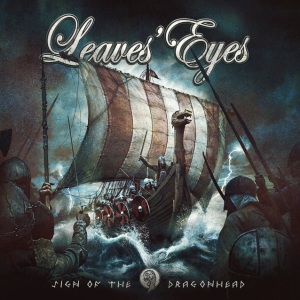
Leaves Eyes – Sign of the Dragonhead:

Its been over two years since the last time we had new music from Leaves Eyes —- in that time Liv Kristine and Alexander Krull had a very acrimonious and public divorce/fall-out, and the band went on the road with newly recruited Finnish vocalist Elina Siirala. I’m pretty sure I’m remembering this right, but I saw the band two times with her at the helm between then and now, the band opening a few North American tours for others as a way to not only introduce Siirala to their fans, but also perhaps test out the waters before committing to a recording. I know that I at least mentioned it on the MSRcast, if not in writing here on the blog, but I walked away from those shows rather unimpressed with Siirala within the greater context of the band. I had seen Leaves Eyes with Liv way back in 2007 opening for Kamelot, and she was magnificent that night, her delicate, graceful, downright elegant stage performance winning me over. I still wasn’t too wild on their albums (the Vinland Saga the exception) but I could at least say that they were able to translate to the stage what they were trying to accomplish live. Maybe things will change on future tours, but Siirala seemed out of place onstage, or perhaps it was that she was so strikingly different from Liv and I had a hard time accepting that.


As a vocalist however, Siirala has a strong, rich, almost Tarja-esque vocal ability, and she can siren it out live. And that’s the most striking thing about Sign of the Dragonhead, that she delivers the most forceful, pronounced, and strident lead vocal performance heard on any Leaves Eyes album period. Case in point is the opening title track, a slice of strut and stomp symphonic metal that’s about as meat and potatoes as this genre gets, but it boasts a pretty strong hook. Her voice is noticeably without accent, a rarity for a Finnish singer, but apparently she lives in London and you have to wonder if that’s been a factor in changing her voice to something that is very Euro-neutral. On the gentle, folk-instrument accompanied ballad “Fairer Than The Sun”, she delivers a command performance, controlled and precise, and what it might lack in distinct character, it makes up for in sheer strength. Another highlight is the weirdly different “Riders On the Wind”, where I’m hearing a folky-rockin’ vibe unlike anything I’ve heard from the band before. I had to double check to make sure it wasn’t an old Jethro Tull cover or something like that, and I wish the band would try to spread their wings a bit more like this and get adventurous. It works here, and “Riders” and the folk-laden “Winter Nights” are stark contrasts to nearly everything else on offer, which is largely more of the same. There’s nothing wrong per say with cuts like “Across the Sea” and “Jomsborg”, but it just feels like we’ve heard their kind before. A promising start with a new vocalist, but hopefully just a stepping stone to something greater.


Songs of Bravery: Orphaned Land’s Unsung Prophets and Dead Messiahs

Like other bands I absolutely love, I find the task of reviewing the new Orphaned Land album a daunting proposition, because there’s so much of my own emotional response I have to consider and somehow weigh before writing something that makes a lick of sense. Its been this way with new music from Maiden, Blind Guardian, Insomnium, etc… and will likely be this way for the upcoming Therion album as well. Its been five years since the band’s last album, the masterful, career-defining All Is One; an album that captured my heart so fully that it dragged me back to my fanboy state that existed with this band well over a decade ago. To quickly recap my personal history with this band (I go into much greater detail in that All Is One review): I was introduced to them and hooked in with 2004’s Mabool, quickly bought up their back catalog, consequentially explored other Middle Eastern/Arabic music (metal and non-metal) because I loved the sounds of it and needed more, and spent over half a decade waiting for a new Orphaned Land album. When that follow up arrived in 2010’s The Never Ending Way of ORwarriOR, I could not get into it and felt greatly disappointed —- whether in myself or towards the band I still can’t really say. Three years later, All Is One was our relationship therapy, an album that was so magnificent in all its aspects that it renewed my enthusiasm for the band tenfold. It made me go back and reconsider ORwarriOR, which I found a new appreciation for even though its still below its predecessor and successor in my overall affection.


It was going to be hard for Orphaned Land to follow-up All Is One, it was a watershed release for more than just its musical content too —- being founding guitarist Yossi Sassi’s last album with the band whose sound he had a massive role in pioneering. I thought that was a massive blow to the band’s artistic fortunes for the future, the only potential salvation being that All Is One was also the introduction of guitar wizard Chen Balbus into the lineup. Together he and Yossi traded flashes of brilliance back and forth across that album through inspired songwriting and emotionally expressive playing. When Yossi announced his departure, it was only natural that Chen would move up to fill that creative void and claim a greater share of the songwriting responsibility alongside vocalist Kobi Farhi. In essence, Chen is Yossi’s “replacement”, and newcomer Idan Amsalem is Chen’s replacement, the newer new kid in the band. Fans are always leery of big lineup shifts like these, particularly of integral members like Yossi, but Chen’s continued presence in the lineup gave me a little bit of confidence that they’d be able to make this transition. And make it they have, because after intensively listening to Unsung Prophets and Dead Messiahs on countless repeat spins, the discussion really should be about whether it is leapfrogging All Is One to claim the title of the band’s best album to date.


I’m taking it as a given that everyone knows what Orphaned Land generally sounds like, its metal merged with Middle-Eastern instrumentation, melodies, and patterns. That’s a simplistic explanation but generally sums it up —- the thing is, a lot of bands can employ those sounds as window dressing and have (not naming any names here!). But Orphaned Land were the first to really do this in not only an authentic way, but in an interconnected way, meaning that it was enmeshed within their songwriting approach and integral to their sonic identity. It was called Oriental Metal by both the band and the metal community around the world, and one of the unique facets of this style of metal as others have gone down its path is that its entirely malleable to different subgenres. So we have the founders in Orphaned Land who for their first four albums merged traditional sounds with progressive death metal; but bands like Melechesh and Odious merged it with black metal; Aeternam are merging it with Gothenburg melodic death metal, and the likes of Myrath and Amaseffer merged with it clean vocal progressive metal with some power metal influences. I bring all this up because Orphaned Land’s sound has changed quite a bit over its past two albums, and its becoming clear to me with Unsung Prophets and Dead Messiahs that the choice of metal subgenre, or harsh or clean vocals doesn’t really matter —- the core of this style of metal is the traditional/ethnic Middle Eastern sound itself.


This new album is Orphaned Land’s grandest, deepest, and richest embrace of that sound, so widely and deeply does it cover and infuse every single song from front to back. You couldn’t honestly say that about an album like Mabool, or especially The Neverending Way of ORwarriOR —- go back and listen to those records, there are large swathes of those songs where what you’re predominantly hearing are slamming prog-metal riff passages and Kobi’s scream-growled death vocals. Sure the Middle-Eastern elements are there, but they sometimes recede to the background or they ebb and flow in and out of places in songs. I remember thinking that my one wish for the Mabool album was that the band could’ve thrown in more songs along the lines of “Norra El Norra”, those perfect, symbiotic fusions of cultural folk influences and metal. I longed for another “Sapari” on ORwarriOR, and though I’ve come to enjoy that album over time, there are still large chunks of it where I feel its lacking that special element that makes Orphaned Land (and Oriental Metal) so unique. The band headed in the right direction with All Is One, an album where they increased the melody by relying more on Arabic strings to drive most of the songwriting, pairing it with a power metal inspired turn towards choir vocal backed choruses. But here on Unsung Prophets, Kobi and company have finally dived headfirst into the pool of Middle Eastern sounds —- it infuses every song in intertwined melodic patterns and motifs.


The first visible ripples of that headfirst dive appear in the opening seconds of the album, where a sonorous female voice wordlessly expresses some undefinable emotion, ushered in by graceful violins. Those strings coalesce with a dramatic flourish and we’re off, their Arabic melodies leading the way on “The Cave”, leaving gaps for Balbus and Amsalem’s guitars and bouzouki. Back again are Kobi’s scream/growled melo-death vocals, and not just on this track but all over this album (they were relegated to a single song, “Fail”, on All Is One), and I find their reintroduction to the band’s sound refreshing. It has the effect to keep us off-balance with sudden bursts of heaviness and aggression in the songwriting to accompany him. A chief criticism of All Is One was its static tempo all throughout —- and while I don’t agree that it was a detriment to the songwriting quality on that album, I can understand why others might have. So the pinball bouncing around of tempos, melodic shifts and unpredictable rhythmic patterns on Unsung Prophets must be an absolute delight for anyone who felt that way. I guess another way of looking at it is that All Is One was imbued with a strong prog-power influence in its major key melodicism and reliance on vocal melodies, and here they’ve reintroduced some of the melo-death back into the formula while still carrying over the power metal esque love of dense orchestral arrangements.


Proof of that melo-death resurgence is heard in “We Do Not Resist”, arguably the heaviest song they’ve done in years, one that starts off with door kicking-in riffs with perhaps the fiercest growling vocals I’ve ever heard Kobi deliver. Once again however, that strong choral vocal influence from the last album stirs again for the chorus with a largely female backing cast singing the refrain. Its instrumental final half minute sets the stage for one of the prettiest songs on the album, “In Propaganda”, where traditional sounds lead the way in favor of electric guitars —- bouzouki melodies and crying violins usher us in, and we find Kobi showcasing the delicate, upper register of his voice that is really lovely. The mid song uptempo rhythmic shift is also traditionally inspired, something about it has an echo of Greek folk music, like the kind of excitable moments you’d hear at some kind of celebration. That’s an underused term for this band’s music, that it sounds celebratory, even if the lyrics are counter indicative of that sentiment. I’m speaking from experience a bit —- I’ve been to many a Muslim and Hindu wedding, or Diwali celebration, even the odd party at those kinds of households, and sometimes Orphaned Land’s music reminds me of standing outside with all the other guys, drinking a beer or chai (or both!) and hearing traditional music drift out from somewhere inside.


I had wondered if there would be an instrumental drop off after Yossi left the band, he was such a talent on a multi-instrumentalist scale, but thankfully the band has diversified their supporting musicians cast and still employs all the sounds you’d expect them too. I’m not good at picking individual tones out to identify each instrument correctly, but surely all of them are present on “All Knowing Eye”, a four minute journey into a lush Steven Wilson-esque soundscape, hypnotic melodies, and once again Kobi knocking it out of the park with a memorable vocal hook. He’s captivating again on the old traditional Hebrew vocal sung “Yedidi”, and its always interesting just how seamlessly the band’s amplified interpretations of these old religious/cultural songs fit in with their original material. The song that surprisingly might be the gem of the album is the nine minute plus epic “Chains Fall to Gravity”, a breathtakingly beautiful piece of music in construction and execution. Its not just the heart-wrenching violin melodies that grab you here, but the surging, hair-raising choral vocal bridge build up: “Go forth and be all you can be…”. The strange thing about this song is just how admittedly disjointed it really is if you break it down to its constituent parts. I’m not sure why it works so well, but its one of the most captivating things Orphaned Land has ever recorded, this album’s “The Beloved’s Cry” or “Brother”.


A close second favorite is the lead-off single “Like Orpheus”, which features the one and only Hansi Kursch on guest vocals. First, what a treat to have both these singers on the same song, but this track has really grown on me from my initial listen to it where I came away uncertain of what to think. Its hook is deceptively buried, revealing itself through its gossamer thread violin melodies that weave around Hansi’s distinctive tones in the chorus. It took a little courage for the band to trust such a crucial fragment of a song to a guest vocalist, but you’ve got to credit them for seeming to know that Hansi would be a great fit. If you haven’t seen the music video for this one, check it out below —- not only is it shrewd of the band to remove themselves from it entirely, but its message of unity through music is a hard one to pull off without feeling canned or corny. Great actors, a simple concept and focused yet simple cinematography go a long way (so many metal bands and video directors could learn from its example methinks). Moving on, I could see some people getting impatient with the lack of metal on “Poets of Prophetic Messianism”, but if you consider it in context within the tracklisting, it works well as a change of pace semi-instrumental. Particularly so when its followed by the up-tempo, groove-riffed “Left Behind”, a candidate for a single release with its ear-wormy hook and awesome acoustic rhythmic shuffle. I love the choice to deliver half the verse with the choral vocals, its one of those little details that keeps this album sounding fresh and exciting even on my umpteenth playthrough.


[youtube https://www.youtube.com/watch?v=hurWzo01FpM&w=560&h=315]


If you got to “My Brothers Keeper” and all of a sudden began to suspect that Unsung Prophets had some kind of conceptual streak running through it, you weren’t alone. Its not just that Kobi’s almost spoken word vocals here immediately draw attention to it (and to his credit, he pulls them off convincingly where so many others would sound terrible), but in examining lyrics like “I have to go back / To save these shades, souls with faded hearts, brothers of my pain” I immediately began to think about a larger picture at work here. Indeed this is a conceptual album, as Kobi has discussed at great length in the various interviews surrounding its release, one that’s inspired by Plato’s Allegory of the Cave, something those of you who’ve read The Republic might remember. I won’t go into its conceptual details here, but you can gather just by looking at the tracklisting that these songs follow the journey of the freed person in that allegory (Kobi provides a pretty good overview of the concept if you’re interested). Normally I’ve tended to avoid looking too deeply into the band’s overarching concepts, preferring to enjoy individual songs on a musical and lyrical level as my own personal interpretation I suppose. But I think this is the most intriguing, in depth, and frighteningly relevant concept Kobi has ever worked with, and it clearly brought out the best in him on a lyrical level.


The album finishes strong, with “Take My Hand” and “Only the Dead Have Seen then End of War”, the latter serving as a visceral reminder of just how good bassist Uri Zelcha and percussionist Matan Shmuely are at being an inspired, vibrantly unconventional rhythm section. The closing cut “The Manifest – Epilogue” isn’t technically part of the concept but is somewhat thematically linked, being a tribute to the assassinated revolutionary Chilean singer Victor Jara (if you were at any point a U2 fan like myself, you’ll remember his name being dropped in “One Tree Hill”). What a strikingly beautiful way to end an album that is really battling it out with All Is One as my favorite of all their records. For all that I loved about that album’s exuberant simplicity and joyous outpouring of melody, I love that Orphaned Land have delivered an album that really speaks to the darker mood of the world right now. But with this band, there’s always hope, and so at the 3:05 mark, where the choir vocalists get one final moment in the sun, their voices surge to sing in Spanish a sentiment that I honestly think Orphaned Land have earned unto themselves —- “Songs of bravery, will always be new songs, forever.”


The Metal Pigeon’s Best of 2017 // Part One: The Songs


What a year, its feels like its both taken forever to get through and yet passed in the blink of an eye. I was a bit concerned halfway through around the early summer when I realized that it was a little light on noteworthy releases. My worries were premature however, as 2017 was backloaded in a staggering way, causing myself to pick up the pace in the late summer and early fall just to keep up. The process of putting together my year end lists this time was a bit strange, because I felt that my nominees pool for the albums list was a little shorter than I’d expected, while the songs list was way more stacked than it normally is. I keep written nominee lists for songs and albums going throughout the year, both so I can throw my choices in whenever I’m feeling like I’ve come across a contender, and (primarily) so I don’t have to trawl through my own blog come December to see if I’ve missed anything. As usual, I relied on iTunes stats for play counts to keep myself honest, but this year instinct really led the way. The following songs on this list just stood out clearly among the other nominees and they are absolutely worth a few minutes of your time. Thanks for reading and keep an eye out for the best albums list coming soon, before year’s end is the goal!


The Metal Pigeon Best Songs of 2017:


1.   “To Your Brethren In The Dark” – Satyricon (from the album Deep Calleth Upon Deep):


[youtube https://www.youtube.com/watch?v=IGCp3xcrybI&w=560&h=315]


Not only is “To Your Brethren In The Dark” the emotional core of Satyricon’s controversial masterpiece Deep Calleth Upon Deep, its one of the defining songs of their career. Its almost slow-dance like tempo is hypnotic, its spiraling ascending and descending melodic phrasing eerie and suggestive, working to strengthen the captivating allure of this dirge. If the loose theme around Deep Calleth was about the spirituality found in appreciating art while set against the transience of life, this song could apply directly about our own most cherished art form (weighty stuff I know, but consider Satyr’s recent medical scares as its source material and that heaviness is appropriate). The phrase within the lyrics, “… pass the torch to your brethren in the dark…” is so relevant to everyone who loves metal, from the bands and labels to the writers at blogs and magazines to fans buying albums, going to shows, recommending stuff to other fans. There is no governing structure that supports metal music as a subculture or records its history for us, those tasks simply fall to us and its our responsibility to make sure that this music gets passed onto younger generations growing up today. I know this is a very metal blogger take on a song that is far more expansive in its lyrical reach, but its what I took from it. That’s also a testament to its power, as Satyr himself ascribed to it, “A song for the dark towers of the past and those who will rise in the future.”


2.   “Apex” – Unleash The Archers (from the album Apex):


[youtube https://www.youtube.com/watch?v=NTWbVUUkWm4&w=560&h=315]


No song was more liable to get me a speeding ticket than the title track to Unleash The Archers awesome Apex, an album that not only represents the very best of what power metal has to offer, but has certainly opened up the genre to those who would normally scoff at it. This cut is a perfect example why, eight minutes that feel like three of a Maiden-gallop led charger that builds to the year’s most epic, satisfying chorus. This band is economical in the best sense, riffs are purposeful, built for conducting the crackling energy that underlies Brittney Hayes impassioned vocal melodies. Even the moody intro is a delight, with faintly chiming acoustic strumming underneath a lazily gorgeous open chord sequence, a moment of respite from the dramatic build up that follows and the rocket launch that happens immediately after. There’s real craft here, songwriting with an understanding of the trad/power metal bedrock that makes this kind of music spectacular, coupled with the wisdom of how to avoid the cliches and tropes that so often make it an easy target. In a recent tweet, Adrien Begrand (of Decibel fame) observed that the tastemaker best metal of 2017 lists were sorely lacking in metal that was actually, you know, fun —- I agree, and if said lists were missing out on Unleash the Archers, you can go ahead and ignore them now.


3.   “The Forest That Weeps (Summer)” – Wintersun (from the album The Forest Seasons):


[youtube https://www.youtube.com/watch?v=ffQ2B5qegRg&w=560&h=315]


For all that I’ve written (controversially) about Wintersun that has aroused the ire of not only the band’s fans but Jari Mäenpää himself, I was eagerly anticipating The Forest Seasons, not to tear it down mind you, but because I genuinely think the guy is supremely talented. I loved the idea behind the concept, a metal re-imagining of Vivaldi’s Four Seasons, it was inventive and fun and made you wonder why no one (Malmsteen perhaps?) hadn’t tried it before. I’m not sure how well it succeeded in the minds of Wintersun fans as an album, I’ve seen a spectrum of opinions ranging every which way but for me I found that the autumn and winter cuts were lacking (ironic given the band’s name). The spring and summer movements however were fresh reminders of just why there’s so much hubbub surrounding this band in the first place. For my part, Mäenpää has never written something as starkly beautiful as the epic folk metal with a power metal engine of “The Forest That Weeps (Summer)”. There’s a spirituality heard in the dim orchestral keyboard arrangement that mournfully croons in the air above the noteworthy riff sequence going on in the verse sections. His clean vocal melody in the refrain is not only surprisingly hooky in a Vintersorg-ish way, but soulful even, the kind of thing old school folk metal was built on really. The moment that will send crowds of people headbanging in venues all over Europe is the coiled snake springing to strike in the full on riff assault that occurs at 7:19.


4.   “Unbearable Sorrow” – Sorcerer (from the album The Crowning of the Fire King):


[youtube https://www.youtube.com/watch?v=8r_JlWf_Biw&w=560&h=315]


Sorcerer is one of those bands who quietly slipped under a lot of radars this year, and their late October opus The Crowning of the Fire King will get unjustly ignored, but hopefully not by you once you hear “Unbearable Sorrow”. This was one of those bands I didn’t actually write a review on but we did cover on the MSRcast, which was my introduction to them and the moment when I realized that this was where ex-Therion guitarist Kristian Niemann had wandered off to after he had left that band. Sorcerer actually began back in the late 80s, released a few demos, and split up in 1995 before ever doing a full length. Finally in 2010 its founding members bassist Johnny Hagel and vocalist Anders Engberg reunited and grabbed some of their Swedish pals to round out the lineup. Engberg is a sublime talent, and for you Therion diehards out there, he might look familiar if you remember the male vocalist onstage from the Wacken 2001 footage off the Celebrators of Becoming DVD box set (he was also on the 2001 live album Live In Midgard). This Therion connection is of course magnified with Niemann’s role as the lead guitarist here, as his distinctive neo-classical, richly melodic style is painted all across this album to stunning results. He was my favorite of the many guitarists that have graced Therion’s lineup, just wonderfully inventive in his writing and possessing a fluidity in his playing that I’ve rarely heard mirrored by anyone else. On “Unbearable Sorrow”, his guitarwork is mystical, other-worldly, darkly beautiful and damn near spiritual in its expressions, and he’s almost topped by Engberg’s powerful, melancholic vocal performance.


5.   “The Same Asylum As Before” – Steven Wilson (from the album To The Bone):


[youtube https://www.youtube.com/watch?v=MoGV9V_dHCk&w=560&h=315]


While Steven Wilson’s newest album didn’t wow me as much as 2014’s absolute masterpiece Hand. Cannot. Erase., it did bear a handful of gems, the shiniest among them this slice of Lightbulb Sun era prog-rock. Wilson’s distinctive songwriting style makes it difficult not to look for comparisons to his previous work, despite this song being set amidst an album heavily influenced by 80s ‘intelligent pop’ icons Peter Gabriel, Kate Bush, and Tears For Fears. For all the art-pop ambition of To The Bone, what I mostly got out of it was Wilson returning to the lighter moods and tones of that classic turn of the millennium Porcupine Tree era. I hear it in this song’s chorus, a dichotomy of bummed out lyrics sung by a resigned narrator against a splash of bright, warmly laid back acoustic guitar. The escalating guitar pattern that slices through this lazy summer day is crackling and electric, an unexpected piece of ear candy that has kept me coming back to this song even if I haven’t been tempted to revisit the entire album yet. Also worth commending here is Wilson’s vocal performance, because his delivery in the chorus is sublime, hitting the boyish tenor he’s been avoiding on the past few albums but has achieved so often earlier in his discography. Forlorn Porcupine Tree fans who’ve long fallen off the Wilson wagon should really be giving this track (and the album at that) a spin, because its the closest he’s come to his old band’s sound in almost a decade.


6.   “Black Flag” – Iced Earth (from the album Incorruptible):


[youtube https://www.youtube.com/watch?v=1effGoCTAnU&w=560&h=315]


Iced Earth rebounded with this year’s Incorruptible, after the subtle disappointment that was 2014’s Plagues of Babylon, and the album yielded a pair of absolute classics in “Black Flag” and “Raven Wing”. One could make an argument for either being the best on the album, but I know that the former was simply one of my most listened to songs of the year just based off iTunes play count stats alone. The band recently released an actual music video for this too, just a week or two ago, six months after the album saw the light of the day. If you’ve seen it in all its Master and Commander glory, you’ll get why it took them six months to get it out to the public —- and look, I’m hard on conceptual music vids by metal bands, frequently citing that the budget never covers the ambition. That truth applies this time as well, which is why I linked to the song itself above (though in fairness, the “Black Flag” video is far from the worst I’ve seen this year, one could even call it relatively decent). But I’m getting distracted, because my larger point is that this song’s evocative, scene setting lyrics need no video at all, particularly when Stu Block sings “We live out our last days / With barrels of rum, black powder / And the clash of the blades”. How does that not put a music video of your own in your mind’s eye (or at least memories of playing Assassin’s Creed IV)?


7.   “A World Divided” – Pyramaze (from the album Contingent):


[youtube https://www.youtube.com/watch?v=CKERGAAWS9E&w=560&h=315]


Two years ago, I referred to then new Pyramaze vocalist Terje Haroy as one of the most promising new vocal talents in metal, and he certainly lived up to that hype on this year’s Contingent. It wasn’t a perfect album, in fact it was severely lopsided in that its first five cuts were home runs while the latter half of the album seemed lost and directionless. Amidst those first five songs however was the absolute gem “A World Divided”, a deceptively heavy song that lulls you in with a delicate, calming piano melody over much of its first minute, perhaps fooling you into thinking a power ballad was in the works. The great thing about guitarist Jacob Hansen’s production (yes that Jacob Hansen, he joined up after working as their producer/engineer on their last album and is pulling double duty) is that he keeps the keyboards high in the mix above the groove based riffs, and they’re an integral part of the musical fabric here. I know its a small thing, but there’s something delightful about how keyboardist Jonah Weingarten delivers a slowed down shadowing melody underneath underneath Haroy’s soaring vocal melody during the chorus. It speaks to the intelligence of the songwriting and the care put into crafting the soundscape that’s both hard hitting yet also fragile, delicate even. Oh and kudos to the band for actually delivering a high concept music video that was artfully done, and the band even looked great in it (which almost never happens)!


8.   “Lvgvs” – Eluveitie (from the album Evocation II – Pantheon):


[youtube https://www.youtube.com/watch?v=jMKykGYsmFY&w=560&h=315]


I loved this song and many, many others off Eluveitie’s first post Anna Murphy and company album, so much so that Evocation II – Pantheon is in the nominee pool for the upcoming albums of the year list. In a year where folk metal experienced something of a quiet artistic renaissance, Eluveitie released an album full of acoustic, European folk inspired music that was imbued with the very spiritual essence of what we loved about rootsy folk metal. It blew away its 2009 predecessor, but more importantly, it gave Eluveitie a bit of breathing room to stand apart from the more modern rock direction its former bandmates took with Cellar Darling. Their secret weapon in pulling this off turned out to be new vocalist Fabienne Erni, her voice light and breezy, providing a new tone in the band’s soundscape. On “Lvgvs”, her vocals are full of genuine warmth, almost reminiscent of Candice Night (of Blackmore’s Night fame), and her performance is surrounded by a stunning array of rustic instrumentation. This is technically not an original song, apparently being a traditional folk tune, but I’m not going to let that prevent me from putting it deservedly on this list —- Eluveitie make it their own here. This was on my playlist for the Texas Renaissance Festival, and it was the song I played when I woke up to the first really chilly winds of November sweeping through. Like the stick of frankincense I was burning that morning, “Lvgvs” was autumn’s musical incense.


9.   “Journey To Forever” – Ayreon (from the album The Source):


[youtube https://www.youtube.com/watch?v=PWNAjX8IKD8&w=560&h=315]


If you tune into the upcoming MSRcast’s yearly recap episodes (we usually run a two-parter), you’re likely to hear loads about Ayreon’s The Source, the latest album from a band that is among my co-host Cary’s favorites. This album was really my first headlong plunge into Arjen Lucassen’s career defining project and while I certainly didn’t hate it, I didn’t share his extreme love for it for various reasons I outlined in my original review. One thing he and I will agree upon however is that “Journey to Forever” is one of the year’s best songs, bar none. Its got a pair of my all-time favorite vocalists in Blind Guardian’s Hansi Kursch and Edguy/Avantasia’s Tobias Sammet (joined by Michael Eriksen of Circus Maximus) —- and as impressive as that cast is, it wouldn’t be nearly as special if Lucassen hadn’t penned an incredible song. The chorus is spectacularly joyous, and it opens the song in acapella mode, followed by the beautiful plucking of a mandolin playing a variation on the chorus melody. After the guitars have kicked in, a gorgeous violin decides to swoon alongside everyone else, and at some point a hammond organ gets in on the fun too. Its the best three minutes on the album, in fact, its rather short length being the only serious criticism I can levy at it. If you heard the track and were reminded of his delightful work in The Gentle Storm project he did with Anneke van Giersbergen, you weren’t alone. More of this stuff please Arjen.


10.   “Queen Of Hearts Reborn” – Xandria (from the album Theater of Dimensions):


[youtube https://www.youtube.com/watch?v=D-NpB1JeMSI&w=560&h=315]


One of the year’s grave disappointments was seeing the way Xandria split with vocalist Dianne van Giersbergen, a break-up that went public when she detailed the circumstances on a social media post. It didn’t paint the band in the best light, and to add to the condemnation were two ex-Xandria vocalists in Manuela Kraller and Lisa Middelhauve weighing in with similar testimony as to how the band treated its frontwomen. I got to see the band live with van Giersbergen a few years back while opening for the Sonata Arctica / Delain North American tour, and she was spectacular, easily one of the best live vocalists I had ever seen. I walked away from that show more impressed with her performance than anything else that night, and instantly decided to give Xandria another shot and began delving into their discography. Their 2017 release Theater of Dimensions is one of the best traditional symphonic metal albums in years, a throwback to a sound pioneered by Nightwish on classics like Wishmaster and Century Child. Its not quite revolutionary stuff then, but I enjoyed the hell out of it earlier this year, and “Queen of Hearts Reborn” was its supreme highlight, a powerful, towering showcase of dramatics and theatricality. I’ll admit, I soured on listening to the band after reading about the way they treated their vocalists, and I’m looking forward to what van Giersbergen will do with her original band Ex Libris. I wish I could’ve written instead about how Xandria’s future was bright, how this was their defining album —- and while artistically it might be, I pity whomever else they convince to work with them going forward.


The Autumn Reviews Cluster: Enslaved, Cyhra, Amberian Dawn and More!

To my perception anyway, this has been a backloaded year, with most of the releases that would have caught my attention arriving within the past few months and here in November. This was a relief at first back in the early months of spring when I realized I’d have a lot of extracurricular writing time on my hands and began an ill-fated monthly journal (now several months behind, I’ve kinda decided to can it as a partial success/failure). But now due in part to a frenzied flurry of new music coming out and already having been behind from the chaos that was my life in late August/September, I’m in a constant state of catching up. This reviews cluster addresses a slew of albums that came out in various points during the past three to four months. I wanted to write more about Cyhra, because that’s an interesting project just for the personalities involved, so its a little longer, but generally I forced myself to keep these as short as is possible for me. Straight and to the point takes on the new music itself, not a lot of room for contextualizing (which you know I can’t help doing when unrestrained).


Cyhra – Letters to Myself:

I know people might scoff at me describing this as possibly the most intriguing release of 2017, but seriously think about it: We were given an announcement sometime ago, that ex-In Flames guitarist Jesper Stromblad and ex-Amaranthe clean vocalist Joacim Lundberg were teaming up (alongside ex-In Flames bassist Peter Ivers, and power metal veteran drummer Alex Landenburg). What on earth would that sound like? Stromblad’s last recorded output was with neo-thrash/death outfit Dimension Zero, with whom he released some decent metal, though nothing to write home about. Certainly nothing that resembled the imaginative, ultra melodic richness of his career defining work in In Flames. Lundberg’s last recorded work was with the increasingly poppier pop/electro/metal hybrid Amaranthe, whom he left shortly after finishing work on last year’s Maximalism, citing that in the process of the band’s ever changing sound, his role was (ironically?) being minimized. In describing why he left, he dropped a hint about what sound he envisioned that his previous band strayed away from, ” I wanted the band to sound like… a mix between those Soilwork-like guitars and melodic Bon Jovi-type vocals combined with a female voice”. Now if you cut out the last bit about the female voice, there’s a fairly blunt description of what Cyhra could possibly end up sounding like.


Turns out that was exactly what Cyhra sounds like, and though my MSRcast cohost Cary vehemently disagrees, I actually think it works better than expected. I enjoy this album on the same wavelength that allowed me to get into Amaranthe, the songs largely being built around the vocal melodies where it turns out Lundberg has genuine songwriting talent (it was always hard to decipher individual songwriting contributions within Amaranthe, to separate Olof Morck and Lundgren in that respect). But what puts it over the top is that I’m getting to hear Stromblad’s signature melodic guitarwork again, that very distinctive style that he pioneered in In Flames that became a hallmark of the band’s sound and something I’d forever associate with Gothenburg melodic death metal. Given that its been sometime since he’s done music in this vein, its closer in approach to his last few records with In Flames than say those earlier classics of The Jester Race / Whoracle eras, but still, its refreshing to hear him playing in this vein again. If we’re all being honest, those are the types of records we’d love to see him return to making, where his guitar melodies dictated the direction of the songwriting and everything (vocals included) were arranged around them. But Lundgren is who he is, and there likely won’t be death metal growls coming from him, well, ever —- but that’s okay, because even though I’m in the minority here, I’ve always liked his voice.


The opener “Karma” was a solid choice for a preview track, giving a fairly representative overview of the band’s sound: Simple songwriting structures dressed up with Stromblad’s complex guitar attack, a chunky rhythm attack underneath and an ample dose of keyboard generated electronic effects for ambiance. Whats surprising is just how well his style meshes with a “Bon Jovi” type vocalist like Lundberg, because you’d figure that the sheer melodic expression projected from his guitarwork would crowd out the vocals rather than complement or support them. Its a weird thing to think about at first, because you’re probably thinking about all the very excellent guitarists in rock and metal history who’ve been aligned with a melodic singer without a problem —- and you’re right. What I’m emphasizing is that the melo-death/Stromblad-ian guitar approach is usually something you’d instinctively pair up against a harsh vocal, the better to contrast with (as we’ve seen on a load of excellent records past and present). So take “Heartrage”, my favorite cut on the album, where Lundberg’s emotion rippled vocal melody carries the heavy lifting of the song. Here Stromblad works around the edges, conjuring up beautiful patterns that punctuate and bookend verse fragements, while in the chorus he restrains himself enough to allow Lundberg to soar, only crashing in for the outro to send things accelerating again. Its a satisfying song, with a chorus as excellent as Lundberg ever penned in Amaranthe —- and with the foreknowledge that a lot of these songs are directly about or influenced by Stromblad’s battles with his personal demons, perhaps possessing more emotional gravity as a result.


This is largely a bouncing, kinetic listening experience, one that doesn’t slow down in tempo until the second half with a few slower, quasi-ballad songs that aren’t bad, but clearly aren’t what this band is best suited for. That they run together for three songs in a row is a sequencing problem, but one that is made somewhat tolerable by the fact that they each boast a fairly successful chorus. But the last track, “Dead to Me”, features some cringe worthy narration (this stuff usually never works) that overshadows what is a very well written hook that comes slowly at first, working its way to a heavier crescendo towards the end. They could’ve cut one of those songs and left it for future development on the next release, but its not enough to sink the album, because the first nine songs are the heart of this record. Normally I’d argue that a band should diversify the tracklisting a bit, slip in a slower song to break up the monotony, but there’s enough diversity in tempo and aggression in Cyhra’s uptempo songs to do that naturally. And I wonder now, thinking on Cary’s intensely negative reaction to this album (“its too poppy!”) if one’s individual tolerance level for pop is a determining factor in whether or not you’ll like it. Lundberg’s Bon Jovi-ian vocals are a major component of the band’s sound, and all the Stromblad melo-death guitars can’t mask that aspect. I’m considering myself lucky then to enjoy both, because this is a solid debut, something I honestly didn’t know that I’d be saying. Oh, and glad to you have back Jesper.


Enslaved – E:

The only thing I’ve learned for sure about Enslaved and the act of writing about their music is that everyone’s opinions about said music are wildly different. There seems to be no actual consensus about anything regarding their discography for example, a long list of fourteen studio albums and a handful of EPs and splits that have as many musical twists and turns as most bands have lineup changes. One of my favorite metal reviewers for example, Angry Metal Guy, had a lower opinion of the band’s 2010 Axioma Ethica Odini than myself and several of my metal loving friends did, one of whom loves that album so much it might make his top five desert island albums list. We also share the opinion than 2009’s Vertebrae was the weakest moment in their discography, an opinion that is generally not held among a host of prominent metal publications and blogs. It just gets more suffuse beyond that —- no one really has a consensus on what’s the band’s classic, definitive album (I would say 2004’s Isa along with the aforementioned Axioma), and seemingly everyone has a vastly different view on 2012’s heavily rock-infused RIITIIR (I rather enjoyed it myself). There’s a review on the band’s Metal Archive’s page for Below the Lights where a reviewer describes that album as Enslaved’s Dark Side of the Moon —- and don’t get me wrong, I like ‘Lights as well, but as you can see, there’s a spectrum of opinions here, reflected in that very same websites reviewer percentage ranking of the band’s discography: There’s no clear-cut high ranking album that towers above all the rest, most of them are high 80s and low 90s, which speaks volumes about the band’s consistency, if little about anything resembling certainty.


Why am I telling you all this? Well, for the self-defeating purpose of telling you that my review of E doesn’t really matter, not in the way that it usually might for those of you who have in the past discovered a new band through something I’ve written here on the blog. We’re talking about a band who’s new album is arriving with a major lineup change in its ranks (the departure of longtime keyboardist/clean vocalist Herbrand Larsen who is being replaced in those same roles by Hakon Vinje), though you wouldn’t know it unless you looked because the new guy sounds so much like his predecessor. The overall sonic palette and lengthy, progressive songwriting approach that characterizes so much of the band’s sound over the past couple albums is present as well. And while there’s nothing here that’s as rock-inflected as some of the cuts on RIITIIR or the chorus of “One Thousand Years of Rain” off 2015’s In Times, you generally feel like E is a close sibling to those albums. As expected, we’re treated to one absolute snore-fest of a tune in “Hiindsiight”, complete with repetitive clean vocal segments that last minutes too long, overwhelming keyboard drenched ambient sound effects and that godawful dreaded saxophone (can we have a year without that instrument on any metal record, just for the sake of good taste?). Then there’s bits I really enjoy: The fierce, slamming riffs that fuel “Sacred Horse” are very Axioma (again, all of us lean hard on our favorite aspects of this band); and “The River’s Mouth” is a pretty concise and hooky song all things Enslaved considered. Its kinda shocking that the best thing on the album however very well might be their cover of Röyksopp’s Icelandic trip-hop hit “What Else Is There?”, which they transform into a moody, Depeche Mode-ian clean vocal jam that is really excellent.


Largely though, I find myself losing attention through various moments on E, and while that has happened on the past two releases as well, it is occurring on this album at an alarming rate. That aforementioned friend who loved Axioma so much he’d plaster it to a volleyball he painted and called Wilson? His opinion of the new album and the band’s recent direction has turned dour: “They’re just getting boring”. And I think he’s right —- because sometimes its just that freaking simple. I used to think it was my fault or failing when I had trouble processing a complex, lengthy, multi-facted work of progressive metal such as this. But wait a second, I love other albums that fit that description: Opeth’s Blackwater Park and Still Life for starters, Porcupine Tree’s Fear of a Blank Planet, Therion’s Les Fleurs Du Mal, Alcest’s Kodama… the list go could on and on, you get the idea. I’m going on month two of constantly going back and giving this album another shot, another sit down listening experience when its late at night and I’m in the mood for some serious headphone music time. Its not catching on this time around and not exciting the pulse points that I know this band is capable of hitting with sledgehammer. I’m undoubtedly sure that E will end up on a few best of lists at the end of the year, but I can’t honestly say its one of the best albums of 2017 (it might be quite the opposite).


Amberian Dawn – Darkness of Eternity:

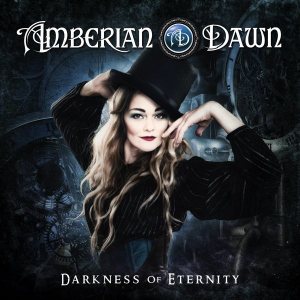
I’ve written gushingly about Amberian Dawn and their surprise 2015 year end list making release Innuendo, which was and remains a breath of fresh air within the ranks of metal bands with female vocalists at the helm. That album, like Triosphere’s The Heart of the Matter a year before, was an exciting, inventive non-operatic/classical affair that melded power metal with other outside influences from the world of pop and rock. In Amberian Dawn’s case, if you don’t remember, that predominant influence is the mighty ABBA, those masters of pop in its purest, most elegant, crystalline form. I was new to the band at that point, and Innuendo was my point of entry into their discography and apparently it was also the biggest injection of that ABBA sound in their work to date. Having gone back through their older albums with previous vocalist Heidi Parviainen, I discovered a more conventional symphonic power metal approach with dashes of ABBA spice thrown in here and there, a mix that resulted in some good stuff, if not great albums. Call me biased, but I’m all for keyboardist/songwriter Tuomas Seppala and vocalist (and ABBA cover band dabbler) Capri Virkkunen happily indulging their love for the finest of all Swedish pop. So its a pleasure to discover that they’ve not only continued in that direction on Darkness of Eternity, but might have increased the dosage so to speak.


I think Virkkunen’s vocal quality and approach is the secret to making this actually work, because she has that slight Scandinavian accent that bends the pronunciation of certain words all while singing with a clarity in her enunciation that reminds me exactly of Frida and Agnetha. That’s not to say nothing about Seppala’s knack for penning a catchy tune, because he has the gift, and is a studious disciple of the Benny/Bjorn school of songwriting (and the key to that in my opinion was understanding the techniques, range, and capability of the vocalists they were writing for). If you doubt me, consider these words in the press release from the man himself, speaking about the song “Maybe”:

“I was happy to produce this song as a tribute to ABBA‘s Benny Andersson. Most of the keyboards on this song was recorded at his studio in Stockholm and with his legendary keyboard ‘Great White Elephant,’ a Yamaha GX-1 which is often heard on ABBA songs in late ’70’s and early ’80s.”

That song is perhaps the most emblematic slice of archetypal ABBA-ian pop on Darkness of Eternity, a 70’s disco-groove inspired rhythmic shuffle built with moody keyboards, fat bass and tight metallic riffing. Virkkunen skates over the top with a rich minor/major key vocal that’s sung at a slightly slower tempo, creating that magical effect where melancholy rises to the top in that juxtaposition of happy and sad. Its the same effect that ABBA used for tunes such as “Knowing Me Knowing You”, or “When All Is Said And Done”, and its one that sounds simple on the surface but I’ve come to suspect is a talent reserved for only the best songwriters in any respective style. There’s another dance-tempo built gem on here, the 70s keyboard heavy “Sky Is Falling”, with bittersweet vocal melodies leading the way. And the lyric snob in me is impressed, because while its not earth shaking stuff, these lyrics are written without the typical misconstrued phrasing that tends to accompany most stuff from Scandinavia. The phrasing is both utilitarian and clever, as in the set up for the refrain, “Drip drop the tears are falling… Drip drop the sky is falling”, which has a built in major to minor transition in its phonetics alone. I love, absolutely LOVE well done pop in this mode, and sure, its a little light on the metallurgy, but that’s not why I’m listening to this band.


If you’re wondering then, why YOU should be listening to this band, well, like I mentioned earlier —- this is refreshingly different female fronted metal. I know that folks on my Twitter feed tend to scoff at that tag, but its just a catch all word choice to describe a grouping of bands that tends to sound one way or another. If gothic-metal isn’t your thing or you feel that no one does it better than Nightwish and just aren’t interested in hearing a copycat, this is the perfect band for you to explore. When they do lean a little harder here, as on “Dragonflies”, they morph into something resembling a heavier, meant for Broadway stages type of song, with the power metal elements working to support a soaring vocal run. On “Abyss”, you get a rather awesome melding of both a wild power metal explosion with some tightly crafted sublime pop songwriting, the heavy riff passages surrounding a gorgeously ascending refrain laden with semi-maudlin emotion. The vibrato that Virkkunen flashes in that chorus is pure ear candy for anyone who appreciates wonderful singing, she’s one of metal’s truly underappreciated talents right now. I’d also point out just how satisfyingly deft and tightly written is the pomp-epic storm of “Luna My Darling”, something that borrows as much from Wishmaster-era Nightwish as it does Sonata Arctica. But if you’re like me, you’ll be pulled in with cuts like “Breathe Again” and “Ghostwoman”, songs marinated in that sweet honey ABBA glaze. This album is my late year happy place, just an absolute blast to listen to.


Aetherian – The Untamed Wilderness:

Just when I was thinking that this year was offering little in the way of great music from new bands, this late November release drops in my lap thanks to a track being previewed on Spotify’s New Metal Tracks playlist (that’s new, not nu). First of all, I can’t oversell just how useful a tool that playlist has been for myself and my MSRcast cohort Cary G. Its constantly updated with the latest singles well ahead of the album releases, it spotlights that weeks new releases, and is a well rounded mix of every sub genre because really it doesn’t care if you’re power metal, death metal or grind —- if you’re new, you’re in. I highly suggest everyone check it out as one of those solid free resources to keep tabs on if you’re not subscribing to magazines or are frustrated by certain bloggers who don’t write/update fast enough for your liking (*cough*). Aetherian’s track on the playlist was “Black Sails”, which perked my ears up due to its beautifully arranged acoustic/electric, almost Falkenbach-ian intro that led into a mix of Insomnium styled melo-death over some ultra-bleak and doomy vocals. Its a rich, varied and colorful track, full of elegant melodies but also some uptempo, speedy Gothenburg rhythmic patterns that prevent things from ever getting boring. It was a breath of fresh air in that moment, coming right after Machine Head’s newest slice of utterly abominable meathead metal (the last thing I thought was okay by them was The Blackening, and even that’s a bit overrated in retrospect, we were all a little too eager for thrash metal to return in 2007…).


These guys are from Greece, and The Untamed Wilderness is their first album, although they’ve been releasing media attention getting singles (and an EP) since 2013. I like the strategy, and hope more newer bands are going that route —- start small, keep the focus narrow by aiming for a single first, another and another and then finally try for the EP. I haven’t gone back and listened to any of their pre-album releases, but what their full length debut illustrates is a band that really thought hard about what they wanted to sound like and what they wanted to say. This album sounds simultaneously classic and new, both firmly rooted in tried and true metal traditions (the delicate intros/outros that remind me of classic Metallica, spotlight grabbing guitar solos, an emphasis on memorable melodies), all while being unafraid of trying to cross-pollinate styles at will. Case in point is “The Rain”, where we get some epic guitar melodies that one would normally associate with traditional metal, followed by the band launching into a borderline metalcore/largely melodeath breakdown. I know you’re groaning at seeing that term thrown in here, but give the track a listen and you’ll see its not what your brain is conjuring up this very second. Vocalist Panos Leakos has a deeper register than most melo-death screamers, coming across like a blend of Swallow the Sun’s Mikko Kotamäki and Omnium Gatherum’s Jukka Pelkonen. There’s enough grit there to make it not overpower the melo-death underneath with overwhelmingly doomy vocals, but enough doom in his vocals to give everything a bleak as hell coating. Give this album a shot, we’re going to be talking about it on the next MSRcast for sure.


Blut Aus Nord – Deus Salutis Meæ:

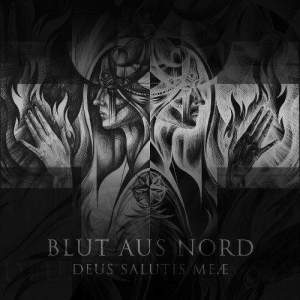
I’m really going to be in the minority here, but I’m just not able to crack the new Blut Aus Nord, which is a complete roundabout dive back into their industrial work of a few years ago that also blew right past me. It wasn’t for lack of trying, I really did give all those highly praised 777 era albums a shot, willing myself to like them and see what all the hype was about, but it just never happened. I’m one of those curmudgeonly types that only enjoys it when the band delivers something in that second wave of black metal milieu, as they did for 2014’s brilliant Memoria Vetusta III: Saturnian Poetry. The problem on Deus is that it sounds like one seriously monotone wash of noise, dark hellish noise for sure but unlike even the heaviest black metal, there’s nary a riff to grab onto. This is the perfect soundtrack to some kind of industrial, HR Giger influenced hellscape horror house. That’s not exactly the kind of listening experience that I’m after as a metal fan and the immense density of the production here —- slabs and slabs of noise colliding with each other, an almost drone-like repetitiveness to the rhythmic structures at work, not to mention just how annoying the drum machine programming comes across, assaulting ones ears with tinny blasts. The most listenable sequence here is “Chorea Macchabeorum”, which at least has a riff boasting a microhook in its curving rhythm, resembling a NIN track more than anything metal. I don’t know what else to say, and was almost going to skip writing about this album except I thought it’d be strange to have so highly spoken about their last release while being mum on the new one. I’m not saying its bad, but its clearly not for me —- I only hope there’s a Memoria Vetusta IV at some point.


Elvenking – Secrets of the Magic Grimoire:

So I was introduced to Elvenking way back in the early aughts by a Blind Guardian loving friend of mine on a record store trip where he took a chance on their sophomore effort Wyrd just based on the cover art reminding him of Finntroll (ah the days of blind music purchasing!). It was not what he expected of course, but being able to appreciate power metal, he dug it and so did I. Over the years I’ve kept a moderate interest in Elvenking, waiting for them to finally deliver that career defining album that gelled all the best elements of their sound. They fascinate me in that they’re an Italian band that somehow manages to sound like they’re from Italy yet maybe from Germany and the States as well. Their blend of triumphant power metal with occasional folk music injections sometimes hits all the right sweet spots, but other times comes across as cluttered, unfocused, and uninteresting. I’ve always personally felt their folk moments sounded forced, and they sounded better when leaning harder on the traditional power metal approach. Part of the reason for that is just how much I like Damna (Davide Moras) as a vocalist, his vocals an oddity in the power metal world for their rough hewn Bon Jovi like quality. Hell, there have been times where he sounds more apt to be the vocalist in a pop-punk band —- and that’s not a knock, he’d be great at it.


So the band has returned to their more traditional sound over the past few albums, and Secrets of the Magic Grimoire is no exception (with that title it better not be). In fact they’re hitting that sweet spot that I was referring to earlier straight off the bat here on the opener “Invoking the Woodland Spirit”, a charging, pounding anthem built on a tasty riff sequence and ascending vocal melody. Damna has a way of injecting addictive melodic bends in his vocals that owe more to rock than metal but still seem perfectly at home within the greater context of a song this epic (“Hounded, darkened and laid underneath…”). Its a glorious track, and so is the follow up “Draugen’s Maelstrom” where the verses are just as fist-pumping as that excellent chorus. I particularly love Damna’s shrewd tempo shift accenting on the bridge (“Through the pouring rain / The icy spurts”), a clever trick that gives those lines just a little extra juice in the energy department. But for every pair of rockin’ rollin’ jams like those two, you get a dud like “The One We Shall Follow”, with its plodding tempo, predictable sound /w group chorus vocal that sounds like so many other bands. I know people gave Elvenking a hard time for their poppier explorations over the years, but I really think the band’s strength is that middle ground between these strange pop-punk sounding influences and epic power metal. It gives them an identity that no one in the genre has, for better or worse (no one sounds like them when they’re merging both influences anyway). This is one of the band’s better efforts in recent memory, and cuts like “Summon the Dawn Light” that remind me simultaneously of Coheed & Cambria and Freedom Call are when the band is at their best. But they have trouble staying in that zone, and like the rest of their catalog, Secrets is an uneven listen.


Ensiferum – Two Paths:

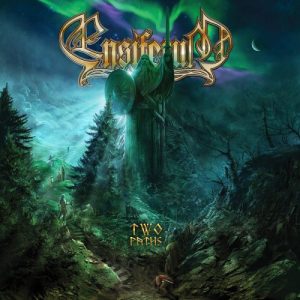
I’m a jerk for pointing it out, but the title of the new Ensiferum album is just ripe for fitting in all sorts of insults and snarky Twitter burns. But you know, its also kinda emblematic of what’s really going on in folk metal in 2017,  a year in which we’ve seen a small handful of releases from the genre’s older standard bearers attempt to steer the genre back towards its gritty, dark, blackened roots. What they’re steering away from is sadly the kind of thing Ensiferum still find themselves stuck in, like some sticky tar they’re struggling to walk through for miles and miles. Its the goof-ication of a once solitary and spiritual subgenre of metal, the mid-2000s turn towards songs about ale, drunkenness, trolls, and whatever schlocky gimmicky stuff that’s been overplayed and overdone for about a solid decade plus now. I know I’ve gone on about this before so I’ll spare you all now, but there really has been solid statements of intent this year from folk metal artists such as Vintersorg, King of Asgard, and Wolfheart. We can even add Myrkur to that list, of new folk infused metal that reminds me of the way the genre used to be before it got all cartoonish and something to laugh about. Ensiferum’s first couple albums were part of that original legacy, and its been concerning to see them descend into the tropes that the genre’s more widely known bands have been barfing up.


I wasn’t wild about 2015’s One Man Army and only lukewarm on 2012’s Unsung Heroes, and I’m disappointed to see that trend continuing. Going back to my reviews of those albums now, I see that I chalked up my feelings on them with the belief that the band just needed to write better songs, which is an obvious take that could apply to any mediocre album. I wonder if Ensiferum’s problems are far deeper however, that maybe its a personnel problem in Petri Lindroos ultimately not being the most exciting vocalist the band could’ve picked as a replacement for Jari Maenpaa (for all Jari’s many difficulties, he had one of the best melo-death screamer voices in recent memory). Lindroos has the tendency to sound tame in comparison, his screaming vocals never really threatening or deviating from the monotone delivery he’s been using since his time in Norther. That might not bother some people, but I find it grating over the period of a couple songs, and its something that I’ve only just put my finger on this time around. I commend the band for trying to spice things up here with Lindroos and fellow band mate Netta Skog taking on clean vocals on “I Will Never Kneel” and “Don’t You Say”, but they fall flat musically. The latter sounds more like something off a Flogging Molly album and while that’s not a bad thing in itself, its just bewildering in the context of an Ensiferum release. The former features Skog on lead vocals and she’s got a fine voice, but there’s nothing emotionally gripping about what she’s singing, nothing that makes you feel that rush the way say Eluveitie did on “Call of the Mountains”.


Bassist and lyric writer (post Maenpaa) Sami Hinkka has contributed to the music writing more than ever on this album, being credited in writing five songs, a pair of them by himself (“God Is Dead”, “I Will Never Kneel”). I can only guess as to why longtime music writer/guitarist Markus Toivonen decided to mix things up this time around, but I wonder if there was a feeling in the band that things were getting stale and they had to inject something new. Skog also is credited on a few tracks, and unsurprisingly Lindroos is still not a major part of the songwriting team. Hey, some people just aren’t skilled in that particular facet of things and that’s okay, but that’s also why I wonder if the Lindroos/Ensiferum thing is running whatever course it seemed to have (at least on those fairly decent post Maenpaa albums). There are bands where the guitarist can write all the songs and the lyrics, and have a convincing frontman go out and sell them, we see it all the time in power metal and just regular rock n’ roll. Folk metal is a different breed however, its music that works best when its coming at you as a cohesive artistic expression. Lindroos was a fun vocalist in Norther, an admittedly generic melo-death band with a few fun songs and one excellent Europe cover, but I never really get the feeling he’s been a folk metal guy. When we go back and listen to those first two Maenpaa lyric penned albums we can hear the seeds of stuff he’d later explore in Wintersun, that guy really puts a ton of conviction into his art and recorded performance (regardless of however well he succeeds on a artistic or technical level). I hope I’m not sounding mean-spirited towards Lindroos, whom I hold no rancor towards —- I’m interested to hear someone else’s thoughts on this.


Bell Witch – Mirror Reaper:

This was one of those albums that you see the cover art for and just have to check out —- if the image on the left isn’t big enough for you, check out the full length spread here. It certainly gives a visual to the album title, allowing no one any room to wonder at what a mirror reaper would look like (Dark Souls concept art anyone?). While I had no doubt it would be atop everyone’s best album art of 2017 lists, I saw the band described as funeral doom and lamented for a minute before going ahead and giving the album a shot on Spotify, fully expecting to be bored or at the least, severely disinterested. Funeral doom is a tough genre to get into, I even had problems with the third disc of Swallow the Sun’s Songs From the North and I rather enjoyed the first two discs of that one. So a little background first: This is Bell Witch’s third full length (their debut came out in 2012), they’ve been a two piece band since their inception with only drums and bass (yes, bass) as the primary instruments. Dylan Desmond is the bassist and co-lead vocalist, and he somehow manages to get sounds out of a bass that would trick anyone’s brain into thinking they’re hearing a guitar. The band’s drummer on their first two albums was Adrian Guerra, who sadly passed away in May of 2016. He’s replaced by Jesse Shreibman here, and together he and Desmond produce a spectrum of sound that runs the gamut from soft, hushed atmospherics to withering, claustrophobia inducing waves of noise.


Whats surprising about Mirror Reaper is just how well it really works while being presented as a single song clocking in at 83 minutes, and yes you’re reading that right. I’ve enjoyed my time listening to the album, never feeling impatient with it like I figured I would have. Its a hypnotic, lulling, and subsequently jarring listening experience, something perfect for a chilly autumn day or a quiet night with the headphones on. The scope of this is huge, difficult to put into words except to say that it does sound like the soundtrack to grief, or at least a window into someone else trying to process grief. It wasn’t necessary to understand the backstory of Guerra’s passing to hear that element in the music —- this is a very sad, brutally melancholic listen in the most understated way possible. I marvel at what Desmond is able to convey through a bass, all while playing in seemingly slow motion, his notes ringing long and laboriously, only coming in just as its predecessor is about to fade entirely. Both he and Shreibman play in a manner that can only be described as economical, somehow crafting sounds out of two instruments that can fill your entire room with reverberating sound that is at times as bleak as you’d expect but also surprisingly beautiful and aching. This is not an easy listen just by virtue of its length, but its a seductive one, and a journey that pulls you in and keeps you listening. I’m more surprised at my own reaction to this, coming from a genre that I usually just ignore. This is nothing I’d want to see played live, but at home, on my own with the lights turned out and the headphones on, its a mesmerizing experience.

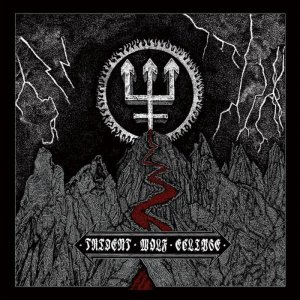
 

Serenity Join the Crusades: The Lionheart Review

Would it be accurate to call this a surprise release? I heard rumors of Serenity working on a new album this year, but the idea that it would be released before the year was out seemed a little far fetched. Their previous album, Codex Atlanticus, was just released in January of 2016, and I suppose that does fall a few months shy of a two year mark, but simply put releases don’t tend to come this quickly —- record companies don’t like it. The short turnaround got me wondering if the band had even toured to support that album, I couldn’t remember… but sure enough they did a European tour of their own directly after its release. It seems to have been only a month or so, which might explain why they were able to get back to work on new material, perhaps feeling like they needed to ride the wave of creativity they were feeling after the critical success of that album (and it was a success to me anyway, remember “The Perfect Woman” landing on my top ten songs list). Then there’s also the added dimension of Lionheart being a concept/thematic album about… well Richard the Lionheart of course. Don’t these things usually need a little more time to work out? A longer bake time if you will. You’d probably be able to brush that aside considering that Serenity’s vocalist/songwriter Georg Neuhauser’s day job is that of a history professor, so presumably, all the research on such a topic had already been loaded into his brain long ago and this was a natural outsourcing of his passion. But as Angry Metal Guy smartly points out, Serenity’s take on Richard I comes off a bit slanted, biased, or even more dishearteningly, naive:


Googling Richard I for three minutes will show that he, like all regents and generals, was a complicated man who did complicated things for complicated reasons. But such a nuanced picture of the character is notable in its absence. Missing, for example, is a song about the massacre at Ayyadieh, where Richard I lion-heartedly executed 2,700 people—some accounts saying it was closer to 3,000, including women and children—because Saladin would not pay a ransom. Instead, Lionheart relies heavily on messages of unity and a lionization (see what I did there?) of Richard I. While “Massacre at Ayyadieh (I Executed 2,700 People Because Saladin Would Not Pay Me a Ransom)” makes a less inspiring song than “United” or “Stand and Fight,” it also makes a crucial point: who would write an uncritical concept album about The Crusades in 2017?

– Angry Metal Guy


As I’m sure I’ve pointed out before, I try to make a point of not reading other reviews of an album before penning my own, but I was late to this album, and during a bored, scrolling through my phone moment, I let my guard down and read his review. Angry Metal Guy doesn’t write as often as I’d like him to these days but that’s a stellar review (one I highly encourage you to read), and considering his site was one of the biggest influences on me starting my own blog, I make an exception for him without guilt. His larger point that Neuhauser’s lyrics seemed to rely on power metal’s proclivity towards positivity is what’s worth examining here. If you take a glance through the lyrics throughout this album, you’ll see a largely sympathetic take on Richard I, one that doesn’t offer a corresponding opposite view of his decisions and actions. I’m not saying Neuhauser should have written the soundtrack to Kingdom of Heaven here, but AMG delivers a valid criticism, and the overt romanticism that drenches every song on Lionheart actually works against it, makes it less likely to draw us in, particularly in the fraught, politically, racially charged climate of 2017. I’d immediately point out that I don’t detect anything malicious or nefarious in Neuhauser’s lyrics, and that’s reinforced in part because the formula he’s using on Lionheart is a damn near replica of the one he used for DaVinci on Codex Atlanticus. It worked there, because DaVinci is an interesting, engaging, well respected figure that largely avoids being seen in any particularly negative light today —- as a conceptual subject, he’s far better suited to power metal’s proclivity towards joyful euphoria.


All this wouldn’t really be much of an issue of course if the songs were on point, and some are nearly there, but for the most part this album sees Neuhauser missing his usual mark of excellence for the first time since I’ve become a fan. I’ve gone through this record well over a dozen times now over the course of a few weeks and its just not clicking with me. Many of the songs lack the sharpness, the well defined arcing hooks that he’s so adept at penning, with the exception of a few cuts. Opening song “United” comes across as the inspirational, horns bellowing call its supposed to be, its lyrics speaking of coming together to take up the holy crusade —- the sort of stuff power metal is meant to be the soundtrack for. Similarly on “Lionheart”, where “Jersualem unites us against Saladin”, Neuhauser delivers an impassioned vocal in the verse segments in particular, a slight phrasing twist in his delivery that reminds me of why I love him so much as a singer. Choir vocals backup the refrain here, bringing to mind a Blind Guardian influence that is noticeable all throughout the rest of this album. We get triumphant, punctuating horns in the chorus of “Hero”, a lyrical clunker but possessing enough strength in its vocal melodies to make you ignore the Enrique Iglesias reminders it will conjure in your mind.  This change in style and tone is appropriate for the subject matter, and on first listen I wasn’t too surprised to find the album’s first four cuts storming out of the gates in this mode. But it never lets up, the entire approach across the board sounds more epic and grand than we’re used to from Serenity, its all glory and light here. By the time I got to the fifth cut “Rising High”, I started to wonder where was this album’s “Wings of Madness”, or “Far From Home”, those doses of melancholy that I’ve come to expect.


For the bulk of their back catalog, like their spiritual cousins in Kamelot, Serenity were consistently working with light and shade, a splash of darkness to their sound to balance out their major key heavy songwriting. Even on Codex Atlanticus they had those more dark, introspective moments —- “Reasons” and “The Order” come to mind, and that was an album I thought was an abrupt about face from the darker tones of War of Ages to a brighter, cheerier sonic palette. Neuhauser pulled that off successfully because he had a couple musical factors changing; namely that Thomas Buchberger was no longer in the band, his thick guitar riffs dominating the bulk of the band’s earlier work, and as a result Neuhauser built up the songs around his vocal melodies, giving the album a noticeable Broadway vibe. So back to Lionheart, where songs like “Eternal Victory” midway through the album sport a few nice moments in the way of hooks and the odd nice riff or solo, a sameness begins to set in with all of these songs essentially mirroring one another. Another glorious paean to Richard I and his inevitable victory, got it. I didn’t actually realize that the sameness throughout the album was what might be dragging it down until I read Angry Metal Guy’s review, but his analysis of the lyrics really do sum it up: These songs all have the same theme of glory and victory, yadda yadda yadda, and that results in stylistic sameness throughout the album, and that ultimately results in a relatively unremarkable listening experience.


The first real difference in tone and even in song structure comes in the closing pair of tracks, “My Fantasy”, and “The Final Crusade”. The latter is a strange bird, featuring some harsh vocals that I suspect we all figured were coming at some point (every power metal band seems to do a little dip in them at some point), and while they don’t ruin what is a largely a good song, they fail to add anything to it. The strength of this track is the Broadway vibe of the chorus, bringing to mind hints of the last album, Neuhauser’s vocals soaring against the backdrop of a swooning symphony. He’s joined towards the end by Sleeping Romance vocalist Federica Lanna, her vocals a sweet, subdued tonic to his soaring theatrical delivery, though he does bury her sonically in the mix when their voices are supposed to be conjoining. The other song, “My Fantasy” might be the highlight of the album, a song that reminds me of the Death and Legacy era in its multi-faceted approach. A heavy riff progression sandwiches a wide open power ballad chorus where Neuhauser dreams up as glorious a hook as he’s ever conjured, his vocal progression bringing to mind the very best of Tony Kakko and Klaus Meine in his tone and vocal melody direction. Its also the only moment on the album where you could forget about the Richard I concept for a few minutes, because even though its written from the perspective of Richard while he’s imprisoned, its lyrics are vague enough to be malleable to anyone and anything. Neuhauser is such a gifted songwriter, he’s bound to deliver a gem per album at least, even when the rest of the affair is a surprising misstep. I’ll take it, and while I won’t recommend Lionheart as a must own, I’ll be happy to wait an extra year or so for a far greater Serenity album next time around.


Rising Anew: The Unlikely Return of Power Quest

Even though I foolhardily consider myself to be a power metal expert (I’m often surpassed by the collective knowledge of the US Power Metal Connection Facebook group and the Power Metal Subreddit), sometimes I just get things wrong. When it comes to the UK’s Power Quest, my sin was not giving the band the attention they deserved after being introduced to them. I first heard about Power Quest in late 2004 in the wake of the Dragonforce furor that got everyone looking at the UK as the epicenter of power metal’s latest shockwave. The band’s second album Neverworld had just been made available for import from Sentinel Steel’s ever reliable mail order, and I grabbed it based on the recommendation of a trusted group of forum members on UltimateMetal.com (remember forums?). It was in retrospect the band’s only pure power metal album in the classicist Helloween mold. At the time Power Quest were heralded by some as superior to Dragonforce, and by others as the “Valley of the Damned” squad’s little brothers. The comparisons were natural, both bands shared members at one point in Steve Williams and Sam Totman, mainly because the UK power metal community was small and tightly-knit (still strange to think about given the country’s pedigree with Sabbath, Priest, and Maiden). It was so small that its leading lights both had to import vocalists —- the Force’s ZP Theart was from South Africa, and the Quest’s Alessio Garavello was from Italy. Together both bands made waves worldwide, denied any notion of a rivalry, and although a flood of British power metal bands failed to materialize in their wake, they both blazed their own distinctive trails.


I loved Neverworld, but when they released its follow-up Magic Never Dies a year later, its change in sound and approach threw me for a loop. I drifted away from following the band as other musical shiny metal objects attracted my attention. It wouldn’t be until many years later when I’d reignite my interest in Power Quest and go back to see what all I’d missed. It was right about early 2011 actually after hearing Dr. Metal play a cut from their upcoming Blood Alliance album with new vocalist Chity Somapala on his Metal Meltdown show. I dug the new song and went back out of curiosity to give Magic Never Dies another shot: It slapped me in the face for my absence with the sheer shock of just how awesome it was. That album and its 2008 follow-up Master of Illusion were bright, crisp, energetic, and dare I suggest even cheerful mash-ups of power metal with 80s guitar rock ala Van Halen circa 1984. Although power metal as a genre had taken a turn towards mixing in hard rock influences for awhile by then (to the delight of some and the agitation of others), what Power Quest had been doing was almost the diametrical opposite to the darker, aggressive, and often more symphonic direction that bands like Avantasia and Kamelot were going in. As much as I loved those bands, it was refreshing to hear someone in power metal doing something entirely unique on their own in another direction.


Even in comparison to their fellow countrymen in Dragonforce who were in a race with themselves to get faster and more over the top with frenzied, extended guitar passages; the ‘Quest was more interested in pursuing songs led by vocal harmonies, with Steve Williams trademark throwback keyboard sound paving the way underneath. Alessio was a high register vocalist, capable of helium heights only scaled previously by singers like Michael Kiske and early Tobias Sammet. And Power Quest may have had the most underrated lineup of guitarists in the genre, unheralded talents like Andrea Martongelli (now of Arthemis fame), and of course, the awesome Andy Midgley. Francesco Tresca on drums and longtime bassist Steve Scott were a rockin’, groove ready, occasionally jazzy rhythm section that always kept the band’s sound loose and lithe, never mired in sludge, even during the band’s slower songs. Eventually all those guys left to pursue other music, including Alessio, to be replaced by an entirely new lineup for Blood Alliance, and although the music got even more AOR influenced, the same spirit established by the old guard lived on in that record. Steve was the link of course, being the main songwriter and the force behind the Force, and even though Chity’s vocals couldn’t have been more different from Alessio’s, a song like “Better Days” sounded like the epitome of Power Quest. I remember first playing that song for my black metal loving buddies while helping one of them paint inside his house, they laughingly were aghast at its overt cheerfulness and 80s vibe, but a few months later they were jamming it by themselves.


When Steve announced in January 2013 that the band was coming to an end due to serious financial troubles, an increasingly demanding day job, and a perceived indifference from the market, I and many others were disappointed to say the least. That disappointment grew even deeper as I kept listening to their albums in the following years, feeling like the band ended long before their time and that a couple more albums were lost as a result. Steve was ever present on Facebook, heard all our longing comments over this time span, how we missed the band, hoped he would write new music again. He had a stint in Eden’s Curse, a rare UK based power metal band whom he did an album with (2013’s Symphony of Sin) although barely got to contribute to its writing process. And that’s what fans like myself missed the most, because the man has a definite vision of the kind of music he wants to make and its combination of influences result in a very unique blend. So fast forward to March of 2016, when Steve announced via social media and a gleeful YouTube video that he was bringing the band back. I know I was giddy, and I was happy to see that most of the Blood Alliance lineup was back in the fold: Rich Smith on drums, Paul Finnie on bass, Gavin Owen on guitars alongside his twin brother Dan. The newcomer was Dendera vocalist Ashley Edison, who was apparently Steve’s first choice for the position, his vocals finding a landing spot between Alessio’s silky tenor and Chity’s gritty, soulful croon. A pre-order funded EP was in the works, and an album to follow.


Things hit a bump in March of this year however when the Owen brothers left for unknown reasons, causing the band to have to postpone their Portsmouth show —- but here’s where things got interesting, and kinda fun. So Power Quest have fully embraced social media in their rebirth, and when they hit the studio this summer in between festival dates they began to unleash a flurry of Facebook Lives. These broadcasts had been delivered here and there since the band reformed, but come summer of 2017 they were popping up on my phone’s notifications seemingly every other day —- usually close to midnight GMT as the band’s post-recording session way to blow off steam over a beer and keep fans engaged in the process. The enthusiasm was contagious, and we got introduced to the new guys through these videos as well, guitarists Andrew Kopczyk and Glyn Williams, both of whom revealed themselves to be longtime fans of the band. Because this isn’t a band that would necessarily draw in tons of viewers for these broadcasts, those of us who were there got to ask all sorts of questions, comment on whatever, and generally be a part of a rather cool fan experience —- the sort that galvanizes longtime casual fans into diehard fans. So it’d be safe to say I was already engaged in a preexisting disposition towards this album heading into hearing it for the first time. I think its worth mentioning right now before I actually get into any analysis just so you can weigh that against anything I write about it (though I do think mine is a reasonable, non-hyperbolic perspective).


So its been six years since the last Power Quest album, and that was with a one-off singer as well, which really keeps expectations for Sixth Dimension a bit up in the air. I honestly didn’t know what we’d get, but that we got a fairly steady-handed, finding their footing, straight down the middle take on the Power Quest sound isn’t surprising in the least. Nor is it a bad thing, this is the kind of record they probably were right to deliver, something that finds itself firmly between all of their previous albums’ approaches. There’s a classicist moment like the Neverworld invoking “Lords of Tomorrow”, which also boasts an “Edge of Time” mid-tempo hard rock riff sandwiched in between as a kind of breakdown. The EP title track “Face the Raven” is newly recorded here, and sounds a little fiercer in its attack, the guitars slightly heavier —- its grown on me as a single, Steve’s keyboard melody working as a well-timed motif to complement the chorus. The AOR vibe is strong with “Coming Home”, and maybe its due to the recency to the Blood Alliance era, but it can’t be more than coincidental that this winds up being the best song on the album. Ashley’s vocals here are confident, sure, and full of the bright energy that a chorus this fully arcing demands. Even the guitar solo sequence here is excellent, full of complex layering and melodies that run counterpoint to the primary song melody as a sort of centerpiece. This song has Master of Illusion type DNA, and I was hoping for a couple more like it but I’ll definitely take the one —- it is however the difference between a solid album and something better.


There’s some stuff here that doesn’t quite hit the sweet spot that we’re used to getting from Steve’s songwriting, two songs being “Starlight City” and “Kings and Glory”. They’re not bad tunes, but “Starlight City” doesn’t have a chorus that lives up to its promising intro verse and cascading bridge, and not even some surprising gang vocal “whoooaaahs” can lift up a refrain that seems a bit flat. Their positions in the tracklisting at two and three handicap the album a bit coming out of the gate, leaving the “Face the Raven” and “No More Heroes” to attempt to recapture the energy generated by the opener “Lords of Tomorrow”. They’re largely successful in that attempt, because “No More Heroes” has the kind of vocal melody ear candy that defined the band’s mid-period artistic success, a song you’ll come back to just to hear how Ashley bends his voice on the line “…I pray with all my heart / we find a brighter day yeah…”. Its followed up by “Revolution Fighters”, which has a level of grit in its verses that lend it enough power to carry the song over a chorus that doesn’t quite arc into a hook the way it needs to. On “Pray For the Day”, there’s enough of that awkward Power Quest charm to worm its way through to make me kinda love the track despite its flaws, I just wish that chorus hit with a little more heft.


Where things really do come together once again is on the title track for the album, serving as the closer and falling in line as one of the band’s best epic-length cuts in their discography. Its a moody, dark, tension filled slice of prog-metal that is patient in its buildup, with sublime melodic twists in the lead vocals during the verses. The chorus is a declarative eruption of yearning from Ashley, delivering his best vocal of the entire album over lyrics that would feel at home on a Tony Kakko penned tune. There’s a surprise Anette Olzon guest vocal drop in during the instrumental passage midway through, coming in so sweet and sudden that it seems to surprise Power Quest themselves, so sharp and swift is the change in tempo and melody. She sounds great, and its a perfect pairing, sounding all the more distinctive which is surprising given her time out of the spotlight —- there’s a unique accent to her vocal that Nightwish seemed to keep largely in check but its charming all its own. Steve wrote the song with an outside co-writer (Richard West from Threshold) which is unusual for him but it might account for its freshness, because there’s really nothing in the back catalog quite like it. Kudos to the band for also breaking a streak of really rough album closer epics from a string of releases that I’ve reviewed over the past three years here, someone finally did it right again.


What can I say in conclusion, except that I’m so grateful to have this band back, they mean more to me now than when they went away. Power Quest get tagged as flower metal by some, a pejorative for hyper positive power metal heavy on the major key, though I suspect the band themselves would wear it as a badge of honor. This is metal folks, it doesn’t sound like Darkthrone, it certainly doesn’t sound like Kreator or Morbid Angel, but its metal —- accept it. I have taken to comparing metal to ice cream, you might not like every flavor equally, but hey, its still ice cream right? There’s a flavor for everyone and Power Quest are the most fruit filled, whip cream plopped with a cherry on top flavor there is. Even amidst a genre of some often shiny, happy music, Power Quest are at another level, with only Freedom Call as their closest contemporary. Their willingness to stand apart even in power metal, against all the tides that have pushed against them is worthy of absolute respect even from those with no love for the style. Its funny that a band with more hooks than they know what to do with is inherently more noncommercial than extreme metal like Behemoth or Cradle of Filth as a direct consequence. That must have seemed unfair at moments for Steve Williams, who might have felt himself born a decade or so too late to have unleashed his sound in the mid to late 80s. His is a British mentality though, the “carry on” spirit built on stubbornness and pride and dignity that we recognize in bands like Iron Maiden. Ashley Edison said in a recent interview that at some point long after he had ended the band in 2013 and had since cleared his debts, Steve had wondered aloud to himself why he wasn’t doing the band anymore. He realized he needed it. And really, we needed him.


October Rust: Myrkur’s Mareridt

So much has been written about Myrkur in regards to her black metal credibility that its almost tiresome now. I had only vaguely been aware of the controversy she inspired two years ago when she released her Relapse Records debut M. It was an album I’d picked up after being drawn to its cover art on a display rack of new releases at a local record store (Cactus Music for you H-Towners), not even realizing for half a second that it was by the lady who’d been shaking the black metal beehive online. I largely enjoyed it, finding it a strange collection of music that veered between classic black metal era Ulver and a darker strain of Enya. It wasn’t as its promotional hype claimed “the future of black metal” or whatever the quote was from that Terrorizer cover, but it was an interesting and often inspired listen. Fast forward to now, and Amalie Bruun is releasing her sophomore album under the Myrkur banner, and she’s actually leaned a great deal into the direction I hoped she would. I wrote in my review for M that I found myself growing to enjoy the more ethereal side of her work more, the clean vocal directed haunting soundtrack to some fog drenched Norwegian forest. It wasn’t that she couldn’t deliver convincing grim vocals, she certainly can, but I think that raw second wave Norwegian black metal aspect of her sound was her weakest link because its influences were so obvious to all of us well versed in that genre. Most of it was stuff taken from the Nattens Madrigal playbook and didn’t really bring anything new to the table.


On Mareridt, Bruun largely eschews black metal fury in favor of this new approach, and often sticks to clean vocals even over beds of tremolo riff laden, double-kick pounding, furious black metal such as on “Gladiatrix” which creates a rare listening experience only mirrored by those power metal unicorns in Falconer. Similarly on “Maneblot”, the track begins with a pure black metal approach only to later find Bruun switching to clean vocals over the same bed of frenzied tempos and abrasive walls of noise. Partway through, there’s an abrupt shift to rustic violins screeching a tortured folk melody in a cavern of silence only to be slowly crushed in by the black metal seeping in through the cracks —- like water engulfing the creaking hold of a ship. Those kinds of change-ups and attention to sonic details are what make Mareridt’s black metal aspects way more interesting than M’s ever were. She’s found her footing here, understanding that pure blanket second wave black metal shouldn’t be her end goal, that it should be used as an element of a greater sonic palette. On “Ulvinde”, one of the album’s stranger tracks, she couches blasts of her black metal vocals directly against an almost Tori Amos-esque plaintative vocal, one that’s almost sedate in its abrupt juxtaposition. On this and many other tracks, she’s found a way to blend black metal elements like tremolo-riffing, double-kick (even blastbeats at times) with decidedly non black metal tempos, song structures, and melodies. Sure, its walking down the path that artists like Alcest paved; to create something new by merging black metal with an outside genre (in their case, shoegaze). What Bruun is doing here sounds more like a marriage between black metal and the strong, defined folk of Loreenna McKennitt (and that’s awesome, in case you’re wondering who the latter is).


Not everything is a mish mash of black metal with something else however, as she reserves many of the album’s fifteen tracks for dips into pure Scandinavian folk music. Even here she’s improved by broadening her palette, no longer solely relying on the delicately ethereal, but exploring grittier, earthier variations on traditional folk melodies that often weave beautifully dark webs. The rumbling “Kaetteren” is one of these, setting the scene of musicians around a quietly flickering fire in the Scandinavian hillsides. While that track is the album’s lone instrumental, other folk laden songs revolve around Bruun employing far more hushed and delicate vocals than we’ve heard from her prior. On “Himlen Blev Sort”, she croons as sweetly and lightly as Sharon Den Adel, and the acoustic guitars trip lazily along in a semi-waltz rhythm, almost lullabye like in their intention (and perfect for an album closer). My favorite song is the truly spectacular “Death of Days”, a Dead Can Dance styled meditation with a swirling melody that’s utterly hypnotic. There’s a lot to process over these fifteen tracks, and I’m glad that Bruun decided to keep things short and sharp (just like Eluveitie with their recent eighteen track Evocation II), with no tracks hitting the five minute mark.


The background concept is also intriguing, giving reason to explore the lyrics —- Bruun kept a journal about her experiences with sleep paralysis and nightmares recently and a lot of these songs explore the feelings those stirred in her. I’ve experienced sleep paralysis myself, its wasn’t pleasant to say the least (absolutely terrifying when I didn’t even realize what it was at first), so my interest in Mareridt (Danish for “nightmare”) has only deepened on a lyrical level. I think I went into this expecting to like it, but not love it, that perhaps Bruun would make the mistake of trying what Deafheaven did, to get purposefully aggressive in order to win over some of the metal set. That she did the opposite is not only shrewd, but refreshing. She has nothing to prove to anyone, and a lot of the criticism towards her has been transparently misogynistic. I don’t like to use that term blithely, but it seems to me that most of the agitation surrounding her has been largely misguided as a result of the media coverage she gets. Its not her fault that the NY Post’s article about this album has the stupidly ignorant sub headline “This singer is making black metal into art”. Mainstream media likes to appropriate the appealing parts of our genre and promote them as their own grand discoveries. Bruun’s integrity however is unstained in my view, she’s in tune with the same artistic spirit that I find in a relatively more obscure band such as Swallow the Sun. My advice if you’ve been avoiding this is to ignore all the noise and check this album out, Bruun really is doing something new and fresh, a difficult thing to do in black metal, and its worth listening to.

Metal Spice Lattes: New Music from Cradle of Filth, Eluveitie and Cellar Darling!

October! My exclamation is defined both by my surprise at just how fast the year zips by now, and also just how aggravatingly long September felt like (to me anyway). We’ve just released a new MSRcast covering some of the music from August and September, and you should check out my recent July + August diary update for a handful of small reviews on various summer releases. I was going to deliver another reviews cluster with a bunch of new albums at once, but ended up writing longer reviews for most of them so I’m going to be releasing them a few at a time from here on in. Yeah, I’m not good at keeping myself to a word limit.


Cradle of Filth – Cryptoriana: The Seductiveness of Decay:

Two years ago, we were treated to Cradle of Filth’s rebirth, their first album with their two new guitarists Richard Shaw and Martin “Ashok” Šmerda, and new keyboardist/backing vocalist Lindsay Schoolcraft. I went into that album not knowing what to expect with the departure of longtime guitarist Paul Allender, who I had felt had overstayed his creative energy for the band by a handful of albums. Surely it would be a little different at the very least, but what we got was a full blown refreshing of the Cradle sound, a return to an authentic true twin guitar attack with heavy, downright thrashy guitars delivering chunky riffs and injecting some real brutality back into the band’s previously thinning sound. It was hands down the most interesting Cradle of Filth album since Nymphetamine, and one I played (and still play) often which I can’t say for most of the band’s releases over the past decade. Now we’re on to album number two with the same lineup, the band’s twelfth overall, and its only further vindictation that Dani’s instincts were right on the money in recruiting his three newest members. Not only is Cryptoriana an improvement over the already quite excellent Hammer of the Witches, but I’m calling this the absolute best Cradle album since Midian —- no ‘well that’s just my opinion’ here, I’m freakin’ calling it!


With an album and world tour under their belt, Shaw and Ashok’s guitar work is even more resembling something of a real tandem —- Cradle’s own Murray/Smith pairing if you will. Even at their mid-late nineties best, Allender and his longest serving axe partner Gian Pyres never were able to achieve the sort of creative partnership to play off each other the way that great metal guitar duos do. It may be premature to some for me to say that right now, only two albums in, but seriously check out their riff sequences on “You Will Know The Lion By His Claw”, in which they amplify a Maiden-esque influence upon the entire affair that is pure musical ear candy. They’re unafraid to get unconventional and creative, as we hear in the spitfire solos they shoot out without warning, but in keeping with their seeming determination to remake Cradle as a brutally heavy band once again, everything is subservient to their crushing rhythm guitars. That song is an album highlight, not only for its awesome guitar work, but as a display of just how shrewd Linsday Schoolcraft is in her musical role on the keys —- she doesn’t pile on layers of sound, instead dreams up a nightmarish quasi-orchestral accompaniment that never demands to take center stage. Schoolcraft however is a talented vocalist in her own right, and she gets to showcase her beautiful voice on “Achingly Beautiful”, delivering one of Cradle’s all-time catchiest hooks in the refrain.


The first time playing this album, I was laying down with it on blast at night, frequently smiling while hearing some awesome little riff pop up that gave me flashes of Judas Priest, Behemoth, or hell even Megadeth. Take the slamming, full throttle “The Night at Catafalque Manor”, where there are simply too many grin inducing guitar moments to fully list here, just a riff explosion that match Dani’s intensity step for step. While we’re on the subject, the new blood in the band has done wonders for the overall songwriting —- these guys and gal just have it down on how to write music for Dani and steer him into a more guttural overall approach, spiked with a reigned in mid-range shrieking style. The sheer aggression of the music has forced Dani to up his game and employ a diversity in his vocals that we’ve not heard ever before. He sounds revitalized, energized and far more focused than I’ve ever heard him, his new songwriting partners forcing him out of comfort zones. Its almost like in the past he’d become one dimensional because there seemed to be a formula for just how his vocals would have to work in relation to Allender’s guitar work. Quite the opposite these days on albums like Hammer and Cryptoriana, and as ridiculous as it might be to read this, Dani Filth has just dropped one of the best overall metal vocal performances in 2017. People are still sleeping on Cradle’s artistic resurrection, and that’s a grogginess that hopefully will be shaken off by the time the band tours anywhere and everywhere for this. LL Cool J once said “don’t call it a comeback”, but I’ll be damned if this isn’t the very definition of one.


Eluveitie – Evocation II – Pantheon:

                                 &                                  

Cellar Darling – This Is The Sound:

One of the most intriguing behind the scenes story lines in 2016 was the split between Elveitie’s key members Anna Murphy and Chrigel Glanzmann. Murphy and guitarist Ivo Henzi’s decision to leave the band simultaneously seemed to be tied to Eluveitie’s firing of drummer Merlin Sutter. I honestly can’t remember the details but that’s kind of the point, everything was hazy in the public fallout from the big split, and to this day, no one really knows why it happened in the first place. Whatever it was, it definitely was personal and the band’s statement included the eyebrow raising statement “thus we felt that we have become something we shouldn’t have”, which caused Murphy to essentially go WTF?! in her own counter statement. Look, it was all very interesting for a couple days to dorks like me who are deeply interested in the behind the scenes stories of rock and metal bands of all sizes. But fast forward a year later and this summer provided something of an answer perhaps to that vague quote above: Both Eluveitie and its former members new project Cellar Darling were releasing albums within mere months of each other. It was a folk off!


So the monkey wrench here in trying to directly compare the two bands’ new albums is the very obvious fact that Eluveitie’s isn’t meant to be a metal album at all. This is of course because Evocation II is a direct sequel to their 2009 acoustic release Evocation: The Arcane Dominion, and in keeping with the original’s theme, it is all acoustic and sung in Gaulish with nary a trace of metal anywhere. Cellar Darling’s debut album on the other hand is a full on metallic rock infused affair —- it would be skewed and pointless in even remotely comparing the two, right? Absolutely… except that the stark differences between the two albums help to illuminate some of the issues that might have been at the root of their 2016 split on personal and creative differences. I think that a lot of us in the States don’t fully appreciate just how big Eluveitie has gotten in Europe. Sure they do well here Stateside, able to draw nice crowds for club tours and capable of headlining their own touring packages, but in Europe they’ve ascended to just under mid-major festival headliner status. The reason for all this has a lot to do with a cut like “Inis Mona” off the Slania album, a single which ignited the band’s career back in 2008 (caught them on the Houston Paganfest stop that year with Tyr/Ensiferum/Turisas, what a bill!), but it has just as much if not more to do with their 2014 hit “The Call of the Mountains”. We’re talking about bonafide hits measured in the only way that really matters these days, with YouTube views —- 26 million and 18.6 million respectively (that “The Call of the Mountains” is trailing in view count here is undercut by it being posted three years ago, versus nine years ago for the former).


The difference between these two songs is striking —- Glanzmann screams on “Inis Mona”, while Murphy delivers soulful, passionate melodic lead vocals on “Call of the Mountains”, and while both songs have genuinely awesome hooks, its easy to see just how much the band’s sound had changed in that time span of six years. I know a lot of people gave 2014’s Origins a pretty critical eye, but I really did enjoy that album because it seemed stronger overall than 2012’s Helvetios, and because I kinda appreciated the band’s more streamlined melodic approach on some of its tracks. Not coincidentally, those particular tracks happened to be cuts where Murphy or Henzi were co-writers alongside Glanzmann. The album was a huge hit, like hitting #6 in the German Media Control charts, #1 in their native Switzerland, and #1 on the U.S. Heatseekers charts (#106 on the Billboard 200) kinda huge. It also dented the UK Indie and Rock charts pretty significantly, and if you were paying attention to the crowds they were drawing on their tour supporting the album, you could see they had graduated to another level. The video for “The Call of the Mountains” also gave Murphy star billing, rather deservedly I’d argue since her lead vocal was the primary catalyst for the song’s tangible artistic success. She became in my mind and I’m sure many others, the face of the band alongside (or perhaps moreso than) Glanzmann. Now I know what you’re thinking, and I’m not insinuating that jealousy is at the root of their split, but I think it probably exacerbated already existing creative tensions that saw the band leaning more poppy in their sound than anyone ever pegged them becoming.


At some point between then and 2016, discussions about what to do musically must have come up and in one camp you had Sutter/ Henzi/ Murphy leaning towards continuing down the road that sparkling hit song had paved. Even if Glanzmann’s recent comments in interviews that Evocation II was planned as the next release prior to the split-up are to be believed (and we have no reason to doubt him), that very intention might have been the nail in the coffin for both parties agreeing on the band’s future direction. And certainly, Evocation II is almost the diametrical opposite of the “Call of the Mountains” approach, hearkening back to a more traditional folk music base, an album completely devoid of anything resembling rock (or metal). The addition of new lead vocalist Fabienne Erni makes this sequel sound quite different from the first Evocation, her singing far more breezy and brighter in tone. The music responds in kind, “Epona” being a vivid example of something I would pay money to hear at the Texas Rennaisance Festival as I’m walking around —- that’s not an insult by the way, I love stuff like this (this album is definitely on the playlist for the drive up there). Whereas its predecessor was dark, rumbling, full of stormier moods and melodies (better attuned to Murphy’s relatively deeper range), Evocation II keeps thing buoyant, lively and head-noddingly rhythmic. Even instrumentals such as “Nantosvelta” get in on this action and are anything but filler, tracks I don’t skip over in play-throughs and find myself replaying in my head later in the day. I particularly love “Lvgvs”, Erni’s vocals here are especially lovely, her voice capable of delivering genuine warmth —- she’s practically sunlight here, and in concert with the gorgeous melody and backing instrumentation at work. I know its a cover of an old folk song, but its one of the best things the band has ever recorded.


As surprising as it is to admit to myself and you, I can’t find a single negative thing to say about Evocation II. I even loved the sly remake of “Inis Mona” in “Ogmios”, reworking the song in a way that’s refreshing and comforting at once. I love that its eighteen tracks but that only two cuts go over the four minute mark, these are focused, tightly written pieces of music, vocals or no. We had our first real fall day here awhile ago, and I celebrated the chill in the air by playing this album, opening the windows, lighting a few sticks of this awesome incense I bought at last year’s RenFest and it was pretty perfect. There’s something this band has over its fellow folk metal brethren, and that is the real instrumentation at work —- real bagpipes, violin, harp, bodhrán, hurdy gurdy, its all tangible on the recording, giving this music a gritty earthiness that keyboard reliant bands lack. As ridiculous as it might be that one band has this many members (nine at last count), at least there’s a valid reason for so much personnel (because frankly its a little stupid that Slipknot has a drummer AND two percussionists, and do they use that DJ for anything?… nevermind).  Maybe an acoustic album was the soft landing that Eluveitie needed after so dramatic a lineup shift, particularly concerning a major voice and image of the band. And give them credit for so gracefully giving Erni the spotlight in the trio of videos they’ve released in support of this album, when so easily they could’ve shifted the attention to themselves —- the songs they picked are not only the catchiest, but vocal showcases for their new frontwoman. Hats off, seriously, I’m genuinely impressed at how well they’ve pulled this off… now the question is, can they carry this over successfully onto a metal based album?


The other side of this break-up story is told through the debut album of Cellar Darling, which was the name of Anna Murphy’s solo project while she was a member of Eluveitie, so I suppose it makes sense that she’d just carry on under that moniker this time as a band (as awkward a name as it is). She along with Henzi and Sutter tackle the challenging task of continuing where “The Call of the Mountains” left off, that is, imagining a merging of metallic rock with folk elements and trying to negotiation a balance between the two. The title of the album, This Is The Sound, is almost an explanation as much as it is a declaration —- a way of saying, this is where we saw Eluveitie heading, the sound we wanted to explore (and why we’re not in the band anymore). Its certainly one of the most interesting albums of the year for genuinely trying to merge the tangible essence of folk-metal as we know it to a more streamlined, rock music path. There are no melo-death riffs on display here, Henzi operating from a headspace more attuned to groove and rhythmic support, interlocked with Sutter’s deft, creative percussion. Together they remind me of modern rock ala Tool, A Perfect Circle, and occasionally (surprisingly) Rage Against the Machine. Murphy is frequently the melodic catalyst, be it through her charismatic vocals or her hurdy-gurdy, she’s our musical narrator. It is in that sense a showcase for her in the way that a solo project would be, and I wondered after my first pass through the album whether Sutter and Henzi were getting relegated to backing musicians status instead of equal contributors.


It took a few more listens, but gradually I was able to pick out the moments where its really their contributions that make everything tick, such as on “Fire, Wind & Earth” where Henzi delivers an intro blast that Tom Morello would approve of. On “Hullabulloo”, they dish out a fierce tandem attack, Sutter spicing up the space between riffs with creative fills and accents, one of the few songs where it could be argued that they’re really the ones driving the energy forward. Murphy however clearly is the star, the center of our attention through most of the songs and rightfully so —- she’s developed into an excellent vocalist over the years and you can hear tinges of Sinead O’Connor and Dolores O’Riordan in her tendency to wordlessly harmonize. Listen to “Black Moon” for an example of this, being one of the more balanced cuts in weighing folk harmonies against a modern rock song structure. Its not the best song on the album however, that honor goes to “Under the Oak Tree…”, which although lacking a strong motif is interesting in its ever-changing aspect of becoming increasingly folk-drenched as it goes on.  But just as often the album falls flat, such as on “Six Days”, where Murphy reminds me a little too much of Cristina Scabbia, which isn’t a bad thing by itself, but that its my least favored song on the album isn’t a coincidence. The same could be said for “Challenge”, which sports a terrific hurdy-gurdy led motif, but I just can’t get into Murphy’s vocal approach on the moments where she dips down low in her delivery (“…this is the sound…”). That reaction I have to that moment kind of sums up my aversion to modern rock in general, and I can only handle so much of that sound without feeling like I’ve heard it all before.


Cellar Darling is an interesting idea but they’re lacking in execution, which when we’re talking about albums basically means they don’t have enough strong songs to support that idea. I’d love for them to consider leaning a little harder in the folk direction and minimizing the modern rock elements a tad. Stick to what you’re stronger at I suppose, and although Henzi certainly has the modern rock guitar approach down, that sound means very little if its not supported with hooks galore. I’m not sure if things have changed for teenagers growing up now, but generally the way it works is that you start listening to rock radio, those more accessible bands with their easy riffs that only serve as ladders to the explosive chorus. You grow bored of that after awhile (or you settle for it and don’t) and want to hear something more exciting, whether its a conscious decision or not, and somehow you stumble upon metal. Metal is where the verses can be just as exciting as the chorus, if not more so —- where the musicianship during a verse can be as thrilling as the glorious vocals that careen outwards in the refrain. Its why folk metal happens. Its why hurdy-gurdys don’t sound out of place next to slicing riffs and staggered tempos. Cellar Darling might sound exciting to someone only well versed in melodic rock, but they’re lacking something when it comes to enticing this metalhead to linger too long. I’m looking for improvement the next time around, and perhaps learning a lesson in my wishing for more music like “The Call of the Mountains” —- that song was special, and by definition, they can’t all be.

Exit Eden: Symphonic Metal’s Double-Take Inducing Pop Experiment

This is a review that was written in early August that I thought I had lost permanently in a freak browser freezing accident, but apparently was saved through means I can’t really understand. Exit Eden is the four-piece vocal group that tackled a handful of pop/non-metal cover songs in the vein of symphonic metal —- the reaction towards it was mixed, as expected, but I’ve been surprised to see that over the past few weeks a more positive embrace of this album is taking hold. This is the unedited (except for grammar, hopefully) version of that original review, and my feelings on the album haven’t changed since, so I figured I’d repost this one. A fall reviews cluster is to follow this with a slew of reviews on albums that have dropped in the past few weeks/months.


It would be so easy to come at this project with an ample amount of cynicism and derision… expected even. A label/producer concocted “band” (the quotation marks for that piercing barb!) with four strikingly gorgeous female vocalists from the Euro/power metal scene, coming at you like the corset wearing version of Il Divo (or worse, The Tenors, who by the way have no business covering a song that can only be truly sung in its full glory by either Freddie himself or my lady Sarah Brightman!). That its a covers album is yet another reason you’d be forgiven for indulging in a little eye-rolling. Check out that tracklisting, okay “Total Eclipse of the Heart”, that’s a Steinman classic that could’ve been a Meatloaf song so its an easy shoe-in for the symphonic metal treatment —- but Rhianna’s “Unfaithful”, her paean to bad girls feeling guilty? C’mon, that’s just pandering for clicks and algorithm placement on YouTube and Spotify right? A take on Lady Gaga’s alliterative dance pop “Paparazzi”, seems like an unlikely candidate for a project like this and perhaps thrown in only for eyebrow raising right? Look, you’d be forgiven for thinking all of these things —- and when we listened to some of this stuff whilst recording our MSRcast with Blues Funeral’s Maurice Eggenschwiler, both he and my cohost Cary scoffed at this entire affair. I didn’t blame them.


But here’s the thing, despite all that, I kinda am having the best time when I listen to this album. Its ridiculous and absurd to a large degree, but its fun too, satisfyingly joyous for its musicality. I love symphonic metal because a long time ago I heard bands like Nightwish and Therion and realized that the sound of sweeping strings over a bed of thundering metal guitars was something I’d always wanted to hear. But I was scarcely provided the opportunity to until I directed my attention towards metal bands across the Atlantic way back in the late 90s. Its no coincidence that Exit Eden was dreamed up by a European production team, specifically the in-house studio producers at Elephant Studios in Flensburg, Germany. It figures, German producers just seem to have a knack for this kind of thing: Sarah Brightman’s longtime musical collaborator/producer is the German born Frank Peterson, who cut his teeth working with Michael Cretu (of Enigma fame). Oh then there’s Mr. Sascha Paeth himself, the man behind countless power metal productions at his Gate Studios in Ehmen, Germany —- and if you don’t know his work, I’ll just direct you here. Yeah, he’s involved in Exit Eden as well, as one of the guitarists at work in the band laying down the metal aspect of the soundscape here, and no doubt, helping on the symphonic end as well.


Paeth is also responsible for bringing on board Amanda Somerville as the first vocalist selected for the project, a wise choice because she possesses such a strong, powerful voice that can carry the majority of the load on any song she’s on. She was apparently instrumental in recruiting French vocalist Clementine Delauney (Visions of Atlantis, ex-Serenity) into the fold, a singer who I championed a few years ago in my review of Serenity’s War of Ages. She was spectacular on that album, the variety of songwriting giving her the opportunity to showcase a spectrum of vocal approaches, from delicate and breathy to otherworldly in a Sinead O’ Connor/Bjork vein. I was disappointed when she left that band, but both she and they rebounded fairly well. Her work on Visions of Atlantis 2016 EP Old Routes New Waters was promising, particularly for it’s hushed ballad “Winternight“, though it remains to be seen if that band will fully display her capabilities the way Serenity did. The other two vocalists filling out Exit Eden’s lineup are Brazil’s Marina La Torraca and German-American Anna Brunner, who apparently is Elephant Studios secretary who happened to lay down guide vocals on the demos for the project. La Torraca is best known for being Avantasia’s live backup vocalist during some shows in 2016, although she’s likely soon to be associated with Phantom Elite, Sander Gommans’ new project post-After Forever who are on the verge of releasing their debut album.


The music itself is well executed, with just enough of a balance between heavy, crunching metallic rock riffs (think Within Temptation) and computer/keyboard generated symphonic elements, but that’s to be expected given the caliber of the pros behind the scenes. And these are covers in the most strict, traditional sense —- there’s no changing up the melodies, no musical deconstructions, no slowing down tempos, its really just these songs as you’ve heard them in their original states but painted with symphonic metal colored paint. Some might find that annoying, but these songs relied primarily on the vocal melody in their original state, and unless you have a skilled composer reworking entire song structures (ala Sonata Arctica’s Tony Kakko or Therion’s Christofer Johnnson, both accomplished at reworking cover versions), then its best that Exit Eden played it this way. I guess the real question here is do all the song choices lend themselves to this approach? The answer is unsurprisingly no, because there’s a few that fall flat, one being Adele’s “Skyfall” which for some reason features a guest drop-in by Simone Simons of Epica. I’m not sure why, but “Skyfall” loses some of its sly charm in Exit Eden’s version, though I’ll venture that its because their more straight ahead approach diminishes the dreamy, 2am blurred vision feel of the original. You could practically see Adele in a smoky-hazed bar, hunched over the mic in the corner, crooning away —- Exit Eden’s feels practically clinical in comparison. And I thought the bizarre song selection of Visage’s “Fade to Black”, which is just… well for lack of a better term, bizarre! Never was fond of the original myself, and I hoped this version would change my mind but sadly it has not.


Where things actually work are on the big, bright, arcing pop songs with soaring choruses: Katy Perry’s “Firework”, Rhianna’s “Unfaithful”, and yes even the Backstreet Boys faux-soul balladry of “Incomplete”. Regarding the latter, Exit Eden’s version towers over the original, which was always hampered by the sub par, often nasally voices of the individual Backstreet Boys singers themselves. Here the chorus is beefed up by a kick of guitars and see-sawing strings to give it extra heft, and the vocalists (I believe Delauney alongside Somerville backing up) deliver a rather passionate performance —- its a delight to hear, a good song finally given a proper recording. The Rhianna cover was also surprisingly successful, complete with an organic violin sound in the verses which was a shrewd choice because if you’ve heard the original, they were going to be the problematic area for any symphonic metal transition. I will say that the tone of the vocals during the bridge/chorus don’t really match what the lyrics in this tune are going on about —- for the most part, I’m nitpicking however and its entirely possible to ignore those aspects and just enjoy everything on a purely musical level. There’s a good showcase in one of the verses here of Anna Brunner’s more rough-hewn vocal ability, as she demonstrates a more Doro-influenced vocal that she uses in spots throughout the album. Its on Katy Perry’s “Firework” where everything, and I mean everything really come together for one harmonious outpouring. But its easy to see why, the original was such a perfect pop song, and the producers here have wisely avoided doing anything except adding a little more guitar and some nicely played symphonic beds.


Two other cuts worth getting starry-eyed over are the aforementioned expected take on “Total Eclipse of the Heart” with Amanda Somerville and Masterplan/At Vance vocalist Rick Altzi going back and forth on dueling vocals; and an unexpectedly majestic take on Bryan Adams eternal classic “Heaven”. About a decade ago I remember hearing a Euro-dance version of “Heaven” that I actually thought was fairly good despite the tackiness of the genre it was attached to, and hearing Exit Eden’s version just makes me think that its one of those songs that sound good when anyone does it. There’s a nicely stutter-stepped rush of guitars and orchestration when the chorus hits and it just lends a bucketful of gravitas to what’s already an impactful chorus. But its the verses I love —- and for the life of me I wish I could identify with absolute accuracy who’s singing in the second verse sequence, because she’s accenting all the right moments just perfectly. I really love this version, its as bright, hopeful and romantic as the original, but there’s a wash of melancholy that’s coming through the lead vocals that give the track a different kind of vibe that Adams’ vocals didn’t give it. It may be sacrilegious to say it, but I might prefer this rendition more? I’ll say it —- I do. Going back to “Total Eclipse of the Heart”, Altzi gives his lines the right amount of that classic hard rock sandpaper feel and he’s a solid choice for the duet, not flashy, not showing off, just getting the job done convincingly. This is Somerville’s moment however, her best performance on the album and proof positive that she’s consistently one of the best vocalists in power metal today (regardless of gender).


The most daring experiment here (besides that Visage cover) is the opening cut, a challenging take on Depeche Mode’s dark, storming “Question of Time”. Now, I love Depeche Mode, and completely love that metal bands feel the same way and have responded throughout the years with some really excellent covers. Not sure how the guys in that band feel about it, but they’ve quietly influenced so many metal bands over the years. I’m ultimately undecided on whether or not I can enjoy this one, because while there’s nothing wrong with it as a cover, it just makes me want to hear the original (something that may simply speak to just how awesome Depeche Mode is). Its rivaled in its bold experimentation factor by “Paparazzi”, the iconic Lady Gaga hit, which definitely is interesting for its vocal choices. Instead of playing along with Gaga’s patented alliterative vocal rhythms, Exit Eden stretch them out, like a roller pin over a mound of dough. It results in a chorus that sounds very much like Tarja era Nightwish, with heavy vibrato undercurrents in the vocal approaches. Its also the heaviest track on the album by far, with extra thick guitars and little micro solos flying around in unexpected moments. Again, I’m not sure just how I feel about it, because while I enjoy the musicality, I wonder if it doesn’t lose its meaning in transition. I think a successful cover can do one of two things: Either bring the original meaning of the song with it, or give the song an entirely new context via a different approach (think about Therion’s gorgeous cover of Accept’s “Seawinds” vs their radically different reworking of ABBA’s “Summernight City” —- the former kept the bittersweet yearning of the original while the latter turned a shiny, happy, upbeat dance cut into something truly sinister).


Minor quibbles and philosophizing aside, bet you didn’t think a review on a project like this would end up being so lengthy. Truth is, neither did I, and that’s what makes Exit Eden and “Rhapsodies In Black” stand out. We’ve seen some pointless releases come out recently… Masterplan’s cover album of Helloween classics is one of them, Krokus’ entirely pointless Big Rocks was another. Covers albums generally fall in the pointless category, and it takes either a special band to make them convincing (Metallica’s Garage Inc for example, which was half compilation/half new) or a unique, fresh take to make them worthwhile (Therion’s Les Fleurs Du Mal, their reworking of classic French pop covers and 2012’s Album of the Year!). Sometimes even a unique take isn’t enough if the execution isn’t there, as the tepid Maiden uniteD [sic] acoustic albums (albums!) have proven. But Exit Eden have managed to side step this with a release that is quirky, playful, and really quite fun. The band and their production team succeeded in this attempt where Within Temptation faltered on their The Q-Music Sessions —- you gotta pick the right songs and fully lean into the idea of a symphonic metal translation. This is worth your time for a Spotify play-through, you just might find yourself smiling despite your misgivings.


Satyricon’s Spiritual Delving: The ‘Deep Calleth Upon Deep’ Review

The last time we really heard from the Satyricon camp in a big way, it was some bleak news that had nothing to do with black metal, black n’ roll, or however you might describe their post 2002 musical output. Frontman and guitarist Satyr (Sigurd Wongraven) announced on Instagram on October 5th, 2015 that upon being rushed to the hospital after feeling extremely ill, doctors found a brain tumor that while Satyr described as “most likely” benign, still managed to rattle myself and I’m sure many others who read the statement. I remember we discussed it on the MSRcast around then, and then everyone just kinda held their breath to see what would happen. I began following Satyr’s Instagram feed because of that post, and was encouraged to see his upbeat, positive nature in regards to his new found condition and how he seemed to just be forging ahead with life in general. He has one of the most intriguing Instagram feeds of any metal musician out there, particularly in the black metal realm where the majority of the big names are fairly reclusive when it comes to social media (understandably). Satyr’s feed is startlingly candid, featuring photos of his family life, his kids, a lot of his work in relation to his wine making (hosting wine tasting dinners in super fancy Norwegian restaurants… seriously), artistic pictures of some incredible looking meals, and generally devoid of most of the grim and brutal things you’d normally associate with the guy who penned Nemesis Divina. He replies to comments frequently, and has been open with his current medical status, which is thankfully fine, though he says he’ll have to be on alert for any signs of that changing.


What he took away from that intensely frightening personal experience was a sense of urgency, about life in general but also about his art. It was reflected in his statement in the press release for the album,

“Approaching this release, what I always kept in mind is that either this is the beginning of something new or it’s gonna be my last record. If this is going to be the last, then it needs to be something special. If there are more records, then I’d better make sure that this is so different from the last one that it feels like a new beginning. I think it’s really, really dark, very spiritual and filled with confidence and energy.”

– Satyr

I don’t usually quote from press releases in my album reviews, but this one is pertinent to fully understanding where Satyr is coming from as a songwriter on Deep Calleth Upon Deep. And of course before delving into this album, we should talk about where we all stand as fans or critics of the two major divisions of Satyricon’s career. Personally I love it all, but I came in at the end of their classic black metal era, that run from Dark Medieval Times through The Shadowthrone and their masterpiece Nemesis Divina. Their modern era, which arguably started with 1999’s Rebel Extravaganza (some would say 2002’s Volcano) has its share of detractors, particularly when singles like “Fuel For Hatred” and “K.I.N.G.” moved into a far more simplified musical direction, with shorter and more to the point songwriting built around catchy riffs and hooky choruses. But the band’s success increased throughout this latter era, and they released some of their best work as well —- to my ears anyway. I do understand some folks longing for a band like Satyricon to release something in their classic style again, with their Norwegian-ness and inherent second wave pedigree. But I’d argue that Satyricon have forged a sonic identity unique to themselves in their pursuit of a simpler, more direct songwriting approach. Its not new anymore, they’ve been in this milieu for just under two decades now, and they’ve released a handful of albums in its vein, but its unmistakably Satyricon’s.


On their previous album, the self-titled Satyricon in 2013, I wrote that the band was attempting to try something new and fresh, to shake off the black n’ roll tag they had been shackled with, describing its sound as “…the sound of black metal’s moods, tones, and temperament, but purposefully stripped of its surface aggression.” It was an intriguing shake up of their sound, one that was regarded with dismay by quite a large part of their audience, even the ones that had gotten on board during the Now, Diabolical and The Age of Nero eras. What I hope for those of you who were thrown off by that last album’s strange sonic deconstruction of the band’s black metal sound is that you’ve had enough time to digest it properly and appreciate some of its more abstract aspects. I emphasize this because even though four long years separate it and Deep Calleth Upon Deep, and even though this album is truly the beginning of something new for the band, they’ve continued that album’s exploration of a more muted sound (slightly less this time), as well as carrying over a penchant for atmospherics that they gained from that experience. In many ways Deep Calleth is a kaleidoscope of an album, its various turns featuring glimpses of the full spectrum of their career, from classicist black metal grandeur to grim, punchy black n’ roll, set to a backdrop of haunting atmospheric touches that often transcend mere keyboard studio trickery. Now I know what you’re thinking… Pigeon, you’re telling me this is the start of a new, fresh Satyricon yet you’re telling me they’re continuing the sound of their last album, which I loathed? Yes, and that’s seemingly a contradiction, but this is a band talented enough to make it work.


I’m going to go out on a limb here, and say this is the best Satyricon album start to finish since Nemesis Divina. its just absolutely captivated me and held me in thrall since I first started listening to it weeks ago. To say its shocked me is an understatement, because although I always expect to enjoy most of a new Satyricon album (being a fan of the band), what I’m hearing on this album is the sound of a songwriter delivering his most inspired, most meaningful material —- perhaps ever. These songs are filled with imagery recalling nature, particularly in its wild, untamed, and primitive state, and the effect is spellbinding. There’s a spirituality to Deep Calleth Upon Deep that has eluded previous Satyricon albums. This comes through in the lyrics straightaway, as on the album opener “Midnight Serpent”, where Satyr barks in that inimitable grimness, “From soul to soul—I speak to you / God of no gods—I’m slave of none / I pledge to fight—your cause is mine”. The song lays out the underlying theme of the album, which Satyr remarked in that same press release I quoted before that the album was thematically about the essence of appreciating art itself. The very title of the album is in reference to this, that the creator digs deep within to create, and if the listener wants to truly appreciate that art, they have to dig deep within themselves as well. That may sound sanctimonious to some, but to me its the very root of what it takes to be a metal fan. And Satyr is writing with an eye towards his mortality as well, which adds gravitas and urgency to his spoken word lyric later in the song, “Face of morbidity / spotted through the keyhole / Unlocked by the persecuted / who wants nothing but the sunlit meadows”. When he barks a few bars later, “Let another song reverberate”, you know he means it like nothing else.


Its the first salvo in a barrage of excellent, inspired songs, the next being the uptempo “Blood Cracks Open The Ground”, where we get to hear our first example of how the sound from their previous album has carried over yet not dominated on these new songs. The band employs space between instruments, wide and airy as production technique to work as a counterbalance to the song’s heavy riffing and rumbling, thunderous percussion. I know that this particular approach to production and mixing must aggravate those who are used to Satyricon’s dense, crushing wall of sound that adorned albums like Now, Diabolical but I do feel it has a purpose. The guitars here are highly melodic, full of twisting, spiraling patterns that are center stage, not running into slabs of brutal rhythm guitars and having to fight for space in the mix. The result is an unorthodox way to perceive black metal, as not a furious assault on your ears, but a focused, concentrated effort —- and you’ll know what I mean at the 3:20 mark, where Satyr hones in over a particularly ominous chord progression with “Ravens flee / Pitch black”, the combination of the two resulting in a truly unsettling but addictive moment. The production (more precisely, the mixing) on this song and indeed throughout the album is best characterized as warm, open, and spacious. Instruments are given room to breath individually, even down to the basslines, and I think that’s on purpose. Nothing is able to hide under blankets of riffs in Satyricon’s new sonic world.


Those aforementioned sonic attributes are central to the triumph of “To Your Brethren In The Dark”, a slow-dance tempo meditation built on open chord sequences that ascend and descend like that skeleton you always knew was walking up and down your staircase at night when you were a kid (oh is that just me??). This is normally the kind of song that should irritate me, a slow moving dirge when I really want the album to be kicking off into high gear around track number three, but I’ve loved this upon first listen. I can’t explain why, but there’s something immensely satisfying about its construction —- the lead guitar motif that first appears at 1:26 is so beautifully wrought and evocative in itself that I want to grab hold of it like a corgi puppy. The patient rhythmic structure at work here is a coordinated effort between those open chord figures and Satyr’s most reigned in, yet still tension-filled vocal performance. His lyrics here are spectacular, perhaps his best ever amidst a career full of praise-worthy work, this time writing them with an eye towards poetic structure and rhythmic meter and the symmetry of it all. My favorite stanza is in the middle, “October sky, October leafs / and the silence, of nightfall / pass the torch to your brethren in the dark”, that last line serving as the song’s echoing refrain, a beautiful image that can sit at the center of the album’s thematic core. What an incredible song.


I’ll refrain from going on at length about every single song because I know I’ll be writing about this album again, but the rest of the record is just as spectacular. The early lead single was the title track, and it hits even harder within context of the album, being one of the most slyly hooky songs of the year. The background vocals by tenor Hakon Kornstad add an extra dimension to the soundscape here, as well as on “The Ghost of Rome” —- his contributions sounding more like the grief stricken wailing of some old-world woman at a funeral pyre. And I have a specific fondness for some of the riffs in specific passages of “Burial Rite”, particularly around the 3:27 mark when things get monstrously heavy after a section that was almost loose enough to be called jazz, a wild juxtaposition. Songs like “Dissonant” and “Black Wings and Withering Gloom” are fierce and fiery enough to prevent this album from leaning towards the slower end of the spectrum. Its a far more aggressive affair overall than Satyricon, despite continuing for the most part in that album’s sonic palette production/mix wise. That might be a stumbling block for some, but its worth trying to push past. It sounds borderline trite to say this, but Satyr’s brush with mortality has seemingly given him a focus that we’ve never heard from him. These songs have a clarity about them lyrically and musically, with a sense of vitality that is palpable. In a year where black metal has been unusually quiet, Deep Calleth Upon Deep is a cannon shot from the Norwegian wilderness that its old veterans still have the mastery of this dark art.


Scroll to top