
Well I’m not sure how it is where you are, but down in Houston summer is off to its usual vulgar start of high temps and higher humidity. Its understood around here that one should go outdoors during the day for unavoidable reasons only, spending most of the time inside an air conditioned structure until sundown (the parking lots of our local public parks are unbelievably packed at 8pm). Its a wise methodology, because having lived here most of my life I’ve come to learn that the heat during these summer months will get you very, very angry —- its just pervasive and oppressive. Not to mention that with football offseason at its most uninteresting and NBA free agency over, there’s little reason to listen to sports radio. The end result of all these brutal truths is that the amount of metal I listen to during these months increases dramatically, and when its not the summertime flavor of melodic/power metal or hard rock, its typically something fierce and aggressive (the better to match my heat-induced high blood pressure).
During years when summertime new releases are lean, I’ll usually find myself going back to old favorites and classic albums of yore. But the summer of 2015 is packed with new albums aplenty, with releases from up and comers like Perzonal War and Witchbound, and a slew of them from established veterans such as Helloween, Paradise Lost, Virgin Steele, Luca Turilli’s Rhapsody, and Pyramaze. Its been an overwhelming month and a half of repeated listening but I’ve managed to get a handle on this big first batch of new music. Simply because there’s so much to get through here, I’m going to try to keep these reviews as quick takes of 400(ish) words each, though that’s how all the review cluster articles were supposed to go and if you’ll recall the last two they certainly didn’t adhere to those guidelines. We’ll see how these fare in comparison —- onwards to catch up on May and June!
 Helloween – My God Given Right: My initial indifference to this fifteenth studio album by power metal veterans Helloween was well documented on a recent episode of the MSRcast podcast. At the time I said that what brought the album down for me was its lightened tone, its greater emphasis on being hokey-jokey. Actually I shouldn’t have been surprised that Helloween was due to deliver something this light and fluffy at some point, their past few releases have subtly and not so subtly hinted at it. A few weeks later I’m still largely of that opinion, but some of these songs have grown on me in a manner.
The obvious standout is the album’s second single “Lost In America”, a Maiden-esque guitar fueled anthem that only a German rock band could write about what essentially was a flight cancellation. Deris’ lyrical treatment is akin to Edguy’s Tobias Sammet and his infamous Helloween-like rocker “Lavatory Love Machine” —- complete with a lyric attributed to the airline pilot: “There’s a cloud / There’s a star / We should plunder the sky bar / We are lost / Lost in America”. My friend listened to the song once and came up with the perfect music video treatment for it, a Benny Hill styled edit of the band running around an airport while chased by security, affronted gaudy tourists as extras of course. Crazy German humor aside, its actually one of the strongest hooks I’ve heard this year, undeniable in its power to demand repeat spins just for the sheer fun of it.
There are a handful of other good cuts: “The Swing Of A Fallen World” takes us back to some of that stormy Dark Ride era moodiness; “Battle’s Won” has some terrific riffing on it’s verses but I find the chorus somewhat lacking in comparison; “My God-Given Right” is a pretty fierce straight-ahead rocker with some nice melodic guitar touches on the chorus; and I really enjoyed “Free World”, one of the many bonus tracks on the international edition which pushed the overall track listing here to sixteen new songs. Someone might hear that and think its great news, more music for less money —- and I’ll caution them to go back and consider the last Freedom Call release Beyond, where sixteen tracks were about 5 or 6 too many and diluted what could have been a truly great album. Helloween run into the same problem here, and according to a Deris quote from the album’s Wikipedia page the band had worked up 34 songs and had producer Charlie Bauerfeind and his team present the band with a whittled down tracklisting. I’m generally a fan of Bauerfeind, except I’ll be the first person to say that he’s not the go-to-guy when it comes to lessening excess and trimming the fat. They should’ve gotten a second opinion.
The Takeaway: The strange thing about My God Given Right is that when you have it on in the background while you’re doing something else, I dunno, the dishes or laundry for example, it actually comes off rather well —- light, unoffensive, catchy in some good spots. Its when you sit down and concentrate on it that you realize just how weak some of its constituent parts are. Spotify this first if you haven’t bought it yet.
 Paradise Lost – The Plague Within: It seems that Nick Holmes recent stint recording the latest Bloodbath album was a pretty big influence on just how shockingly heavy this new Paradise Lost album turned out. Holmes was a curious choice for Bloodbath given that his performances on the past few Paradise Lost albums were more in the vein of a starker Amorphis / Sentenced approach. That resulting Bloodbath album, Grand Morbid Funeral, cast Holmes in the sonic vein of a crusty, smoky necromancer —- practically barking out his lyrics in the most bleak, death metal furor you forgot he was capable of. It was a good album, but he stole the show, injecting Bloodbath with a different flavor, one that was as brutal as Mikael Akerfeldt’s monolithic roar but distinct in its own right.
He tempers that approach only slightly here, allowing his vocals a dose of clarity in the way of enunciation, sort of like a really grim, death-metal touched James Hetfield. I know I’m mixing adjectives normally reserved for either black metal or death metal exclusively, but that’s part of Holmes gift as a vocalist, that he takes particulate elements from all kinds of extreme metal vocal styles and combines them through his own voice. The songwriting suits his favored approach (and according to interviews with Paradise Lost guitarist Greg Mackintosh the decision to get heavier was made after 2012’s Tragic Idol, an album that slightly hinted at a darkening of their sound). I could go on about individual songs here, but the truth is that there aren’t any weak ones —- this is without question one of the strongest, most cohesive albums of the year. But if you’re looking for YouTube-worthy glances, I’d recommend my personal favorites “No Hope In Sight” with its gorgeously melodic thru-lines, or “Cry Out” with its Metallica meets death metal fusion of straight ahead metal run through a grisly filter.
The Takeaway: One of the bigger surprises of the year, not that anyone was thinking that Paradise Lost would release a dud… but surely no one expected the bucket of water dose of heaviness that is The Plague Within. Fans of their Amorphis-ish past few albums might be taken back a bit by just how punishing it is, and if you’re not a fan of extreme metal vocals, Holmes approach could be a deal breaker. But its still Paradise Lost, the songwriting is inspired and Mackintosh rips off riffs that we haven’t heard from these guys since before Host. Just get it.
 Pyramaze – Disciples of the Sun: Hey remember Pyramaze? That Danish prog-power band that Matt Barlow briefly joined to record an album with in 2007 before leaving for his second and apparently final stint with Iced Earth? That sole Barlow helmed album, titled Immortal, was to be their last for seven long years. In the interim, their line-up disintegrated: Founding guitarist Michael Kammeyer and longtime bassist Niels Kvist left the band, citing familial responsibilities, and Barlow’s replacement vocalist Urban Breed came and went, rejoining Swedish power metallers Bloodbound. Still standing were longtime keyboardist (and sole American in the lineup) Jonah Weingarten and drummer Morten Gade Sørensen, and with help from their longtime producer Jacob Hansen sitting in on guitar duties they’ve managed to rebuild a functional band line up with the addition of newbie Norwegian vocalist Terje Haroy.
Its absolutely commendable that the veterans in the band managed to rally and keep the flame burning to release this long delayed / awaited new album —- I’d talk more about that, except that its the new guy Haroy who utterly steals the show here. He’s simply one of the best new vocal talents in metal, regardless of genre, with a voice that takes equal parts from Chris Cornell and Tom Englund (Evergrey). That’s a gross oversimplification though, because Haroy delivers one of the year’s best overall vocal performances on Disciples of the Sun, his voice is just… massive, capable of soaring, tenor built choruses yet still possessing a thundering, booming heaviness. He’s a recent addition too, apparently only joining the ranks within the past year or so, and his seamless adaptability to the material on this album is a testament to just how well the songwriters in the band have spent the intervening years.
The songwriting borders on great, often surpassing it and as in the case of the title track —- transcending it. The chorus on “Disciples of the Sun” is so monumentally epic, so full of vigor and life that its immediately made my rough list for Songs of the Year candidates. Its not alone, being followed immediately by the uptempo, Symphony X-ish “Back For More”, where Weingarten and Hansen dual wield an ear-wormy melody to perfection, but allowing Haroy space to mimic it with his vocal take. Sometimes Haroy’s vocal melodies dominate certain songs, such as on “Genetic Process”, where the instrumentation surrounds him like an orchestra around a soprano. Its a great song, moody and heavy albeit with a sun bright chorus that places a ton of trust in a rookie singer. The wait was long but fruitful, and for many of you I’m sure Pyramaze will be coming across as essentially a new band —- what a debut then.
The Takeaway: Another of 2015’s astounding surprises, Pyramaze come out of nowhere to unleash an album that’s worth your time and money. With a new vocalist and new songwriting team to boot, its hard to compare it to their other works (unfair really), but this is for anyone who enjoys Evergrey, Symphony X, or even Kamelot.
 Virgin Steele – Nocturnes of Hellfire & Damnation: On a recent episode of the MSRcast, I blurted out blindly that I had heard promising rumblings about the new Virgin Steele. Where did I glean said rumblings? Oh the usual assortment of forums I lurk at, coupled with the general sense of heaviness and epic pomp that pervaded the pre-release lyric video for “Lucifer’s Hammer”. Boy was I ever wrong. My first clue should’ve been my wary reticence at hearing David DeFeis’ vocal choices on said lyric video… I’ll just be honest about this, I have no idea what’s going on behind the scenes with Virgin Steele, no idea why vocalizations like this would meet with approval. You can’t blame me for my lack of knowledge —- this is a band with limited web presence who haven’t released a new album since 2010’s dreadful The Black Light Bacchanalia, their last good effort to my ears anyway dating all the way back to The House of Atreus Act I/II around 99-00′. My only conclusion is that DeFeis has simply taken over production duties for Virgin Steele in the past decade and as a result he is the band’s songwriting and de facto editor.
Here’s something I’ve learned having to do my own editing for this blog over these past few years… no matter how diligent a job I think I’ve done correcting grammatical or punctuation errors, I’ll always miss a few here and there. I’ll go back and read old articles I’ve written just for reference or just the hell of it and find myself coming across sentences that make no sense (and my OCD about it will result in ninja edits). With DeFeis serving as the band’s producer, and the power structure in the band obviously starting and ending with him, who’s there to politely suggest that DeFeis recent fascination with the falsetto is getting over the top? Who’s there to tell him that no one wants to hear a respected metal vocalist make noises similar to actual alley cats? Oh you think I’m joking do you? Go and YouTube “Queen of the Damned” and enjoy those first twenty seconds. Is there a redeemable song on the album?… Perhaps a riff or two here or there, and “Demolition Queen” is officially the leading contender for worst song of 2015, so that might be worth listening to. I guess it depends if you’re the kind of person who likes watching extreme sports blooper vids. Hey, sometimes you can’t turn away.
The Takeaway: No. Just no. (If you’re mildly curious the entire album is up on YouTube and Spotify, don’t say I didn’t warn you.)
 Witchbound – Tarot’s Legacy: Don’t let the admittedly crude cover art put you off, and no this isn’t a Cradle of Filth clone despite how much the cover model seems to resemble Dani Filth circa 1997 (no I’m not trying to be meanspirited —- the model’s name is Vanessa Vergissmeinnicht and she’s quite lovely). Witchbound is an intriguing project for a few reasons, the first of which will interest hardcore power metal fans who enjoy the genre’s history: Witchbound is a new project created by both the ex-Stormwitch bassist and guitarist Ronny Gleisberg and Stefan Kauffman, respectively. Both were original members of that band’s early 80’s lineup alongside recently deceased Stormwitch founder Lee Tarot. Their monikers might be a tad unrecognizable, because for whatever reason during the Stormwitch era they went under Americanized versions of their names (for marketing reasons perhaps?).
Tarot’s untimely passing was the galvanizing force behind the creation of Witchbound, his old friends and bandmates rallying together in an effort to complete Tarot’s final musical works. Things like this have been done before for other deceased musicians, and they’re always well meaning, while almost always garnering some kind of press and media attention. In this case, there’s very little of that —- a fact that makes Witchbound’s efforts all the more poignant. Unless you’re a metal historian, chances are that Stormwitch isn’t a name that’s familiar to you: They never really blew up in any way in during their heyday, their exposure to American audiences was limited to import mail order catalogs (I don’t even think they had an American distribution deal), and they were never able to crack their home country of Germany like their peers in Grave Digger, Accept, Helloween, and later Blind Guardian. So what Witchbound has finished is an album called Tarot’s Legacy, its songs either written entirely or co-written by Tarot himself, as a grand gesture to a career cut short.
The other intriguing thing about this album is that its really, really great, perhaps Tarot’s finest work as a songwriter. With the help of the gruff yet richly melodic vocals of Thorsten Lichtner, the band powers through fifty minutes of music that boasts not only muscular aggression in terms of heaviness, but also a rich instrumental diversity with the infusion of acoustic passages and eastern sounding motifs (which work towards complementing the loosely metaphysical lyrical theme going on here). Think a less proggy version of Brainstorm’s take on power metal and you’re nearly there, with a dose of Suidakra’s musicality here and there as a spice. Songs like “Mauritania” and “Mandrake’s Fire” are propulsive, adrenaline-fueling uptempo gems, and the ballads here are unbelievable, Lichtner doing a wonderful job on “Trail of Stars” and the gorgeous, shimmering “Sands of Time” —- the latter is a shoe-in for the Songs of the Year list. These are inspired performances, the sound of friends trying to honor their friend’s legacy the best way they can.
The Takeaway: It may be out of nowhere, and difficult to believe if you judge books (or albums) by their covers, but Tarot’s Legacy is one of the strongest albums of the year, certainly one of the best power metal albums of 2015. I’ve seen so few people talking about this release so this is my meager attempt at picking up the slack —- check this album out.
 Perzonal War – The Last Sunset: This one is for those of you pining for a new Metallica fix (and unlikely to get one soon). The unfortunately named Perzonal War is a thrash / trad-metal band from Germany who believe it or not have released six full lengths prior to 2015’s The Last Sunset, the first I’m hearing from them. There are a lot of metal bands out there, and its amazing how many of them go unnoticed by those of us who consider ourselves up on the genre —- again proving my “cream rises to the top theory” (tweet me if you want an explanation at your own risk!). With the aid of a better PR firm, a promo copy of this album landed in the MSRcast email account, and into my skeptical hands (hey, intentional misspellings are hard for me to overlook). Its a bit of a triumph then that this is a surprisingly fun mix of modern day thrash and blatant Metallica aping, down to vocalist/guitarist Mathias Zimmer’s slightly German-tinged but otherwise spot on James Hetfield impression.
I suppose that could be taken as a slight, but I mean it in a good way… certainly Perzonal War won’t win praise for originality, but they execute what they want to do rather well and Zimmer’s flexible vocal talent is a big reason for that. My favorite Zimmer / Hetfield moment is by far “Speed of Time”, a song that could’ve been at home on The Black Album or even Load / ReLoad, down to the rather minimalist use of melodic guitar variations to usher in the chorus. But then Zimmer surprises with a voice entirely his own on “What Would You Say?”, a relatively spacier song with metronomic guitar repetition in the verses and a refrain that reminds me of Tyr or Grand Magus. Sometimes when I’m listening to this album I get the notion in my head that it could’ve been the Metallica album to follow the Load era if someone had introduced Hetfield and Kirk Hammet to a few melodic death metal bands in timely fashion. Maybe its that the guitar work often owes more to Gothenburg or Tampa even rather than the SF Bay Area —- just a feeling though.
The Takeaway: No frills, solid musicianship (sometimes even near spectacular), Hetfield-ian vocals, and a rather muscular take on thrash… that’s The Last Sunset in a nutshell. The German Metallica then? Sorry Mille.
 Luca Turilli’s Rhapsody – Prometheus Symphonia Ignis Divinus: I’m a frequent lurker of the US Power Metal Connection Facebook group, a surprisingly active group of a couple thousand metal fans, most of them indeed based in the United States, who talk pretty much nothing but power metal and all its associated topics. One of those topics recently was the release of this album specifically, and not a debate about whether or not it was good, but generally more along the lines of just how great is it? Full disclosure here is that I’ve never been a Rhapsody fan, even before the 2006 name change. It wasn’t for lack of trying either, they were such a big name in the power metal scene there was no way I could attempt to ignore them, but time and time again each new album failed to hook me. I wasn’t entirely sure what the 2011 splitting into two camps meant for either version of Rhapsody in the musical sense, was one going to become a touch more straightforward in their musical approach while the other spiraled out of control?
If I had to put money on who would go the latter route, it would’ve been on Luca Turilli’s Rhapsody. Turilli always struck me as the musical heart of Rhapsody and since his incarnation is typically viewed as the more legitimate of the two versions (Nuclear Blast put their eggs in his basket, a telling move), I figured he would be the one to carry on into further cinematic-inspired realms. I was right and wrong, Turilli has done exactly that but so has Alex Staropoli and Fabio Lione with their Rhapsody of Fire. The flight attendant asked Jerry. “More anything?” He cried out, “More everything!” Seinfeld references aside, Turilli is winning the war of one upmanship, as his Prometheus album is the most operatically and cinematically drenched offering to date (to me at least, and if I’m naively wrong on that, correct me Rhapsody fans). Its all very impressive sounding, quite immaculately recorded and there’s a ton going on musically, more than mere descriptive sentences can capture. Stay far away if you absolutely hate opera, although I’ve found that its the few songs sung in Italian that tend to be the most interesting such as the suitably theater-esque “Notturno”, a ballad that sounds like its meant to be an aria. If Turilli really set out to craft an actual stage opera and left the metal elements behind I think he could do well at it… he’s got a knack for the stuff on the same level that Christofer Johnsson from Therion does.
But here’s a good example of why I tend to get tripped up on anything Rhapsody related: There’s a song on the album called “One Ring to Rule Them All”, and a quick glance at the lyrics will tell you that its directly about Tolkien’s Lord of the Rings. Now, I consider myself a Tolkien aficionado, the kind of aficionado that has read The Silmarillion more times than I care to admit in public. I’ve heard Tolkien set to metal in the form of Blind Guardian’s many masterpieces, and what that band’s Tolkien-related work does so well is carve out a vivid, original soundtrack to set his stories against. Turilli’s Tolkien-related song here sounds no different than any of the other songs on the album, there’s nothing to set it apart —- I can’t tell the difference between it and the title track about, y’know, Prometheus. If you can’t make Tolkien interesting to me then I just have to wonder if I’ll ever find something to truly enjoy on your albums. Maybe more of the purely Italian operatic stuff, because at least that’s something that seems to come from an inspired place, and that’s ultimately what I need to detect to be interested in a band… honest inspiration.
The Takeaway: I hope Rhapsody fans can understand my disconnect here, the truth is I don’t honestly know whether or not this is a good album or not. What I do know is that its not for me, anyone else got a fan’s inside take on it?


 Subterranean Masquerade – The Great Bazaar:
 Kiske/Somerville – City of Heroes:
  Thurisaz – The Pulse of Mourning:
 Jorn Lande & Trond Holter – Dracula: Swing of Death:
 Monox – Perception Changes:
 Melechesh – Enki:
 Few bands in metal have inspired the unrestrained devotion and adoration of it’s fanbase the way Nightwish have. Such a fiery bond is subject to various temperaments, as the band themselves found out through the course of two vocalist changes. That they are widely (if erroneously) recognized as the first female vocal led power/symphonic metal band only serves as fuel for this burning intensity. Their success in the late 90’s and early 00’s spawned countless imitators, other newly formed bands that wanted to put their own spin on what really did feel like a fresh style of metal, with inspired females keen to try their hand at singing over heavy guitars and sweeping orchestras. Ushered along by a signing craze from metal labels all over, female fronted metal bands went from a mere handful to a plethora in the blink of an eye. But few, if any of them have ever managed to attain the near mythic status and storied history of the mother of them all.
 For Nightwish fans, the announcement of Jansen brought along expectations that the band would make use of her operatic vocal capability on the new studio album, as she had demonstrated on several older songs on the tour. I myself took note of the general tone and tenor of the reactions on the band’s Facebook page around that time, and most of them were from fans salivating at the thought of a Wishmaster or Century Child sequel. Its likely that many long sundered fans of the band’s Turunen era were eyeballing Jansen as the closest possible thing to their dream reunion. As a bigger fan of the pop-vocal infused Olzon era, I too wondered how the band was going to balance their expanded musicality with the undeniable fan craving for hearing something soprano-oriented being belted out by Jansen. As heard in the Showtime, Storytime concert video, Jansen was able to bounce from one style to another in varying moments, though she typically stuck to her rock-inflected delivery. A retrospective viewing of that concert makes me realize that it was far more foretelling of what the new album would bring than anyone realized.
 Perhaps its the largely uptempo feel of the album that’s responsible for the old-school resonance that I’m feeling. The band hasn’t done away with Dark Passion Play/Imaginaerum era live orchestras and cinematic arrangements, they’re still present and rather glorious in most moments, but they’re utilized this time more for amping up the energy of rollickingly speedy tracks like “Yours Is An Empty Hope”, “Weak Fantasy”, and the title track. This is a triumvirate of songs that underscore Holopainen’s gift as a songwriter, not in that he expertly juxtaposes soaring melodic ear candy over a frenetic rhythms but that he can do it in such diverse ways with varying degrees of heaviness and aggression. The vicious, snarling “Weak Fantasy” might be the best song on the album, with its tension building usage of solo string sections and a furious pummeling courtesy of pinch-hitting Wintersun drummer Kai Hahto. I get enthralled after the post-folk breakdown at 3:37 where the orchestra descends with a sweeping crescendo alongside Marco Hietala’s always wonderfully passionate vocals —- few others can pull off such riveting drama through the tenor of their voice alone.
 The aforementioned “Élan” is effectively the same version as on the single, and within the context of the album it actually sounds better, though I’m less convinced of its effectiveness as the lead off single (“Alpenglow” would’ve been a better choice, a more daring yet similarly catchy cut). The thematic-bending “Edema Ruh” (something from a fantasy series I’ve never read) is an okay song with a relatively generic chorus (by Holopainen standards), but its slightly redeemed by some interesting guitar work by Vuorinen. And I’m torn about the sole ballad on offer, “Our Decades In the Sun”, because during the moments when its working it is as gorgeous and beautiful as anything the band has ever done. The problem might be that the song is too delicate for its own good, its sections often left without connecting musical glue, and the silky string arrangements unable to muster enough momentum to bind everything together. Its actually Vuorinen’s stormy guitar interjection at 2:07 that provides the song with its only dose of electrical current, a brilliant moment that ought to make you shiver. I enjoy listening to it overall, but its not in the ballpark of the band’s best ballads, and its a shame because it had the qualities to perhaps be their best.
 So I’ve finally gotten to listen Enslaved’s new album enough times to confidently offer up an opinion, but the first thought that comes to mind is that they have sneakily become metal’s most hard to predict band. I can never anticipate what they’re going to try next, and am always more than a little surprised when I finally get to hear what that is. The thing is, if you laid out their discography on a timeline, there’s a reasonable amount of linearity: the early 90s second wave Norwegian black metal roots, the switch to English language lyrics on 2001’s Monumension, the introduction of progressive elements on Below the Lights and Isa and the full blown era of prog-rock infusions ala Pink Floyd/King Crimson with 2009’s Vertebrae and onwards. Its in this latter era where the band have decided to throw out curveballs left and right, such as their reversion back to almost completely brutal, punishing black metal on Axioma Ethica Odini, a move that made some of us think that they had stretched the boundaries of their sound far enough and were making a move back towards their roots. But then RIITIIR happened, a big collossal “What the Hell?!” full of some rather Alice in Chains inspired hard rock melody, opulent Slash-esque guitar solos and more Herbrand Larsen than you’ve ever bargained for. It was a good, at times great album, and it set in concrete the idea that the band would remain vastly unpredictable from now on.
 Its fair to say that In Times outright success is due in large part to the aforementioned Herbrand Larsen widening his range and scope as the band’s clean co-vocalist. In the past, Larsen’s moments tended to work like Dimmu Borgir-ian spot fills; those moments of cinematic, heavens opening up juxtaposition sandwiched in between brutal vocal sections. He had a particularly distinctive delivery in these moments, one that he repeated over and over and over again. There was a samey-ness to his singing, a monotone uniformity throughout the run of his vocal lines that almost came across as an instrument rather than actual singing, a role normally reserved for extreme metal vocals. He did attempt to change slightly, as seen on RIITIIR’s more accessible moments, incorporating in a little more in the way of variations in delivery, but it was still largely Larsen working in a comfort zone. Here however, he takes his quantum leap, a complete re-working of his role as co-vocalist and in the sculpting of his vocal melodies.
 As always, the musicianship is just utterly impressive, drummer Cato Bekkevold a force of nature unto himself, his fills and accent choices entrancing in their own right. I love his cymbal work towards the end of “Building With Fire”, or his militant snare drumming in “Nauthir Bleeding”, and his overall creative vision towards his role within Enslaved’s sound. He never smothers anything in double bass when its not needed, and keeps blast beats in reserve as something to be used sparingly only. But its guitarists Ivar Bjornson and Arve Isdal who really capture my attention. Isdal (“Ice Dale”) is an interesting guitarist within extreme metal, a guy more influenced by non-metal avant-pop players like U2’s Edge and Floyd’s David Gilmour, even alternative rock players like John Frusciante and Trey Spruance. Those seem like silly names to throw around as influences for a Norwegian guy in a band called Enslaved, but when you listen to his largely open chord permutations, you can hear that they ring true. Bjornson brings the proverbial sledge hammer in the form of muscular, cleanly written riffs, and here he sculpts them like a master smith at work. Check out the devastating high note progression in “Building With Fire” at the 1:53 minute mark, its one of my favorite moments on the album and I can’t get enough of how those open chord sequences flow directly into teeth gnashing outro riffs.
 I think I’ve come to a dawning realization about my relationship as a fan and listener towards Steven Wilson’s work: Very succinctly told, I greatly prefer either his pure pop and/or metal-influenced styles, the and/or added in because often times they’re one and the same (or they’re pushed right up against each other). Its in Wilson’s more “prog” sounding moments where I tend to lose focus as a listener, or perhaps more accurately, patience. Its why I felt left out of the loop with his past two solo releases, 2013’s The Raven That Refused to Sing and even more so on its 2011 predecessor Grace For Drowning. The former was a sweepingly dark, 70s progressive rock inspired album that in homage to its influencing era, had a myriad of wandering instrumental explorations that sometimes worked and sometimes didn’t (cue “The Holy Drinker”). I generally
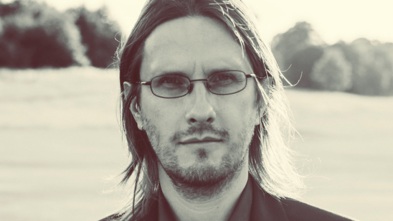 So Hand. Cannot. Erase. is a reminder to me of that old adage about expectations. Actually I don’t really know a particular phrase or saying that could apply here, but its enough to say that I didn’t expect to love this album as much as I do. In the few weeks that I’ve known it, its become one of my favorite Steven Wilson related albums of all time, second perhaps only to Fear of a Blank Planet. Its worth me taking a moment here to briefly comment on its thematic/conceptual subject matter, because it makes the album resonate that much more. Wilson had at some point viewed a 2011 documentary called Dreams of a Life, which was the story of the life of one Joyce Carol Vincent; an attractive, intelligent, outgoing young woman who died in her London flat, and her body went undiscovered for three years. She had friends, she had family, yet for reasons unknown even to them, no one missed her or bothered to check up on her. I actually went out of my way to view the documentary a few days ago and its one of the most surreal films I’ve ever seen, the sort of thing that lingers in your mind.
 I live on the southwestern border of Houston and its outlying suburbs, right in the midst of highways, urban expansion, too many parking lots and gas stations, the lot of it. I hardly know my neighbors, and almost never speak to any of them besides the occasional hello when passing by. In some slight way, I feel that I can relate to Wilson’s own autobiographical views that he instilled into his character. Its what makes a song like “Happy Returns” echo so resolutely within me, despite its rather detailed lyrical perspective being solely H.’s own words. It could be one of Wilson’s greatest singular accomplishments, a song as delicately beautiful and shatteringly epic as In Absentia’s “Collapse the Light into Earth”. And despite all its obvious melancholia, its essentially a pop song, built on simple chord patterns and a McCartney-esque “doo-doo-doo-do” refrain. Its emotional gut punch comes in the lyric “The years just pass like trains / I wave but they don’t slow down”, as vivid a portrait of helplessness against the transience of life as I’ve ever heard.
 That honor went to the very ambient, drone-like “Perfect Life”, which I love for the simple reason that its female spoken word guided first half reminded me of the British pop band Saint Etienne. They have a discography full of assorted moments with neutral voiced Sarah Cracknell waxing poetic about all manner of things. Its an important moment in the song because its our first introduction to H.’s words herself, as she describes the memory of the six months she spent with her adoptive foster-sister. As Wilson explained in the aforementioned Faceculture interview, the imagery of some of H.’s memories comes directly from Wilson’s own childhood, such as “Sometimes we would head down to Blackbirds moor / to watch the barges on Grand Union in the twilight”. Its one of those universal truths I’ve read from great fiction writers, that to make something feel universal, or relatable to everyone, the author is best served by simply focusing on making his character more specific, with more intimate details, possibly even autobiographical details from the author’s own life. It sounds contrary in theory, but it works. By the way, the video for this song is stunningly good (psst, its linked at the bottom).
 Its been a little under five years since the Scorpions released Sting In The Tail, the album that they decided halfway through its production would be their last. And in some respects it was, as far as being a truly fresh, organic batch of songs purposefully written for its release. It was a fine album as well, perhaps their strongest overall in twenty years, featuring a handful of gems that for me at least were comparable to their 80s/early 90s classics (check
  The good stuff first then, which is found as early as the album’s lead off single “We Built This House”, which is not a PBS program but instead a paean to the durability of the band’s fifty year career. I say this based on my viewing of the promotional EPK the band made where they spoke a little about each song on the album —- despite the lyrics clearly referring to a significant other known as “baby”. How they reconcile both perspectives is beyond me… maybe the verses are meant for the ladies (or the lads, whatever) and the chorus is just about the Scorpions themselves? I’m being pedantic, the Scorpions have earned the right to bend metaphors however they’d like, and the most important things here are the melody and the hooks. Its built on the classic Scorpions pattern of quiet/loud dynamics, a hushed verse that explodes into an arena ready chorus, but it does seem to be one of the few entirely new songs, its music penned by the band’s longtime Swedish producers (and MTV Unplugged musicians) Mikael Andersson and Martin Hansen. The other haus-titled song, “House of Cards”, is actually built on the back of a resurrected melody, its acoustic balladry reminiscent of the band’s early 90s Crazy World / Face the Heat era.
 There’s a handful of other good songs; “Rollin’ Home, a laid back rocker with a Def Leppard-ish stomp; the ridiculously titled “Hard Rockin’ the Place”, built on a riff from the Blackout era; a handful of decent ballads in “Gypsy Life”, “Eye of the Storm” (being the newest of the ressurected song ideas, from the Humanity Hour 1 era in 2007); a Meine solo-penned lonely sounding number in “Who We Are”; and the panoramic “When the Truth is a Lie” —- again, all above average in quality, but nothing you’d hate yourself for missing. Where things get murky is with the vanilla alternative rock styled guitar rock of “The World We Used to Know”, a song that sounds like it came from the Eye II Eye sessions; as well as the blandness of the album opener “Going Out With a Bang” where chest thumping bravado fails to move me like the more emotional reflections on calling it quits found on Sting In the Tail. Its also unfortunate that “Dancing With the Moonlight” doesn’t seem to live up to its title, especially when you consider songs by the same title by other artists (Thin Lizzy comes to mind immediately). It has a cool backstory about the turbulence laden flight endured by the Scorpions, Alice Cooper and others that happened to also double as Meine’s birthday celebration. The song is somewhat paint by numbers however, with boring verses and a chorus that never seems to take off (heyo!).
 Ensiferum – One Man Army: First a mild rant: There was a time around the late 90s and early to mid 2000s when folk metal wasn’t an overcrowded subgenre, when the balance between folk and metal was handled deftly by a small cadre of accomplished bands, and when their lyrical subject matter had depth and richness. I’m thinking of those heady times when folk metal meant Skyclad, Amorphis, Subway to Sally, Otyg/Vintersorg, Falkenbach, among a few others. It was a subgenre that was creating vital, shimmering music that was stretching the boundaries of what metal could sound like —- it was fresh and exciting, the sound of things you didn’t know you always wanted to hear. Ensiferum’s first two albums were part of this wonderful era, being near-perfect marriages of thrashy guitars, power metal songwriting, and folky instrumentation.
 Marilyn Manson – The Pale Emperor: A week or so ago when recording
  Napalm Death – Apex Predator – Easy Meat: I guess I never had planned on ever writing about Napalm Death on this blog, not because I don’t enjoy them —- I do, but because I figured that there wasn’t much to elaborate on. Napalm Death will always sound like Napalm Death to me. I grew up listening to them, first being introduced to their grindcore/metal blend via dubbed cassette tapes by various heavy music loving friends back in middle school. They were one of those bridge bands to extreme metal, alongside Morbid Angel and Death and Carcass. More than those bands, Napalm Death delivered the kind of sheer caterwauling noise that a young budding metal fan gravitated towards because it simply sounded like something that was made for you and all the reasons you enjoyed having your parents lament your taste in music. I enjoyed playing them in my battered, sticker covered boom box in my bedroom, imagining that even with my door closed, it still sounded like hell on the other side. Maybe its fair to say that I never developed much of an emotional attachment to their music, but I don’t think it was ever designed that way.
 Marduk – Frontschwein:
 Nightwish – Elan (EP):