
Here we are again, with a sequel to February’s Throw Open the Gates! review blitz, this time with more albums from these first two months and change of 2018. It has certainly proved to be the busiest opening release salvo of any year in recent memory, and things don’t seem to be slowing down in the next few months. There’s a few things that I didn’t review here that we’ve covered on our last two recent episode of the MSRcast, so you might also want to check those out if you are on the hunt for new music. A lot of these releases have been amazing, but not all —- I’ve got your back though, just think of me as your new release concierge. A lengthier look at the new Judas Priest album is next on the agenda, and I’m sure there’s going to be yet another of these multi-review clusters coming out relatively soon too. Headphones ready…
 Lione / Conti – Lione / Conti:
Weirdly, Fabio Lione is at the vocal helm of two albums released within the span of a month, well okay one and a half albums. Just before the release of Angra’s OMNI (reviewed below), he and Luca Turilli’s Rhapsody/Trick or Treat vocalist Alessandro Conti released their Frontiers Records (of course!) debut duets album. If that phrase conjures up images of Lady Gaga and Tony Bennett dancing cheek to cheek, or Sinatra and Bono cozying up at a bar drinking shots of something, then you’re actually not far off the mark —- these guys are indeed trading off vocal runs in true duet fashion. Frontiers does a lot of these types of projects, thinking of course of the Allen/Lande pairing, but also the recent Timo Tolkki star studded solo project, as well as the Kiske/Somerville stuff. This time the “staff writer” is Italian guitarist Simone Mularoni (of Italian prog-metallers DMG), who counterbalances the Italian penchant for high gloss factor power metal with an ample dose of AOR styled hard rock. Now I get the draw —- this is basically two generations of Rhapsody vocalists coming together for a vocalists duel (whatever that might mean), and on paper its bound to attract the ears of many a power metal fan. And to their credit, Frontiers Records does often deliver good records behind these so transparently obvious they’re ridiculous ideas, in fact, I still love those Magnus Karlsson’s Free Fall albums.
The tricky bit with this Lione/Conti extravaganza rests on how you answer this one question, and maybe its just me but… don’t these guys sound exactly alike? Luca Turilli didn’t just randomly pick Conti off a list of available vocalists to front his new version of Rhapsody, he did it because he could continue writing in the same mode he had been during his time in the original incarnation of Rhapsody of Fire. It was honestly only when watching the music video for “Ascension” when I was finally able to tell who was singing what, and even then I couldn’t discern any reasonable variations in their voices to help me throughout the rest of the album. I’m not sure if this is even a stumbling block when it comes to enjoying this album or not, because even though I’m really only hearing one voice to my ears, I’m rather liking Mularoni’s meat and potatoes approach. It mirrors the last Rhapsody of Fire album Into The Legend, with its stripped down songwriting that seemed to maximize hooks and memorable melodies at the expense of grandeur and ambition. Songs like “Destruction Show” work because of awesome guitar hooks to keep everything focused and concise, and “You’re Falling” has a nice Queensryche vibe to its vocal melody arrangement. Its a solid listening experience in full if you’re in the mood for straight ahead AOR tinged Italian power metal, but as they really could’ve used either Lione or Conti for the project alone, the duets aspect of this fails hard.
 Angra – ØMNI:
So I’ve given this new Angra album a decent amount of playtime, enough I think for it to fully reveal itself, and I gotta say I’m a little ambivalent overall. In retrospect, Secret Garden was a far more interesting album than we gave it credit for, and its varied collection of vocals might have played a part in that. Not only did Fabio Lione have his debut turn there, but Rafael Bittencourt also added his excellent, rough-edged voice to several songs as well, that’s not to mention the guest turns by Simone Simons and the amazing Doro Pesch. It wasn’t perfect, but it was surprising and kept you guessing. ØMNI is a far more straightforward affair, with Lione getting most of the vocal time although Bittencourt does pop up and there are a few guests, including Alissa White-Gluz on “Black Widow’s Web”, a song that absolutely didn’t need growling vocals but, well, here we are. I enjoyed “Insania” for its beautiful guitarwork and stirring melody, despite shaking my head at just how silly the term “Insania” is (isn’t that what Geoff Tate’s wine was called?). Someone once told me that it was the Latin version of “Insane” and it took me an incredible amount of patience to simply grunt and nod. Moving on, “The Bottom of My Soul” is such an excellent tune, and not coincidentally Bittencourt’s on lead vocals —- is it wrong to suggest that maybe the band sounds better when he’s singing? I’m sure that’s fighting the spirit of their legacy and the impressive work of the Andre Matos and to a lesser degree, the Edu Falaschi years, but damn he sounds great.
Lione’s best work comes on “Always More”, a lovely ballad with some unusual guitar tones at work in absolutely gorgeous, simple melodies, combining with an ascending vocal melody that makes use of his effortless ability to hit higher registers. Regarding the departure of Kiko Loureiro, its hard to gauge —- I’m going on the assumption that Bittencourt penned most of the music here, but the now Megadeth guitarist does pop up in a guest spot on the single “War Horns”. I can only say that there’s enough shred factor here to satisfy the most ardent prog-power guitar fanboy out there, and at times Angra even sounds more like Dream Theater considering the tonality of Lione. The last two tracks on the album invoke the title, being the concluding companion pieces to what apparently is a concept album (about a science fiction future in 2046), but they fall flat, being neither heavy or melodic or heady enough to inspire any particular emotion. A rough ending for the album overall, and not a way to get people invested into the album’s concept. Maybe this will grow on me over the coming months, there’s some stuff worth coming back for, but I just find myself wanting to listen to Secret Garden again.
 Tengger Cavalry – Cian Bi:
A few years ago I was introduced to Tengger Cavalry’s particular take on folk metal with their mixing of Mongolian throat singing and nomadic Asian traditional instrumentation. I was immediately intrigued and checked out a few albums on YouTube, and while I enjoyed what I heard, it was a difficult proposition to simply work into casual listening. Tengger Cavalry is one of those rare breeds of folk metal bands that don’t give you an easy entry way into their sound, there are no instantly accessible tailored singles that can draw a bigger crowd, no “Trollhammaren”. They’ve been unapologetic about their sound, and its also worth noting that the metal aspect of their folk metal seems largely devoid of allegiance to one particular metal style, being just straightforward heavy riffs, plain and simple. Their newest album, Cian Bi, is simultaneously their weirdest yet most straightforward album to date —- its also, shockingly, their last. Just the other week, band founder Nature (yes) Ganganbaigal issued a rough statement throwing the blame on ex-Century Media president and current M Theory Audio owner Marco Barbieri. I’m not well informed enough to make any judgements either way but that’s a bummer, and you have to wonder if Nature is dissolving Tengger Cavalry in name only to terminate any existing business agreements, and will regroup under a different name doing the same type of music.
One can only hope, because I’ve been enjoying this new album far more than just the passing casual listens I had with their back catalog. I don’t know if its their best work overall, but there’s something deeply appealing about this bizarre mish mash of elements. Of particular note is just how hard hitting some of the riffs gluing everything together can be, case in point are cuts like “The Old War”, and the pummeling “One Tribe, Beyond Any Nation”. The latter is my personal favorite, featuring a gorgeous melody played on a morin khuur (horsehead fiddle), an incredibly appealing instrument that I’m glad I now know the name of —- all blockaded by some seriously brutal, Rammstein-esque riffage. Besides the traditional instrumentation, Nature’s uncanny vocal ability is also a huge draw for me, as in “Ride Into Grave and Glory” where he switches between the throat singing and his clean rock/metal vocals. It might be an acquired taste for some, but even his “normal” vocals have character, a rustic quality that brings to mind grassy steppes and gritty, grimy back alleys in dense cities all at once. This is a listening experience best beheld start to finish, with the album as the soundtrack to your thoughts or random mindless activity. There’s a spiritual aspect to this blend of folk metal that’s hard to define and even harder to shake.
 Visions of Atlantis – The Deep & The Dark:
Austria’s Visions of Atlantis have been off most radars since 2013, when they underwent a major lineup shift, not their first one but certainly their most dramatic. The most important change was the addition of ex-Serenity vocalist Clementine Delauney and The Dragonslayer (Siegfried Samer of the uber fun Dragony) on co-lead vocals. At the band’s core has always been drummer/founder Thomas Caser, and with the addition of new guitarist and bassist Christian Douscha and Herbert Glos respectively, we’re on to Visions of Atlantis Mach 7583234419! Well, close enough anyway. We did get a taste of what the Delauney/Samer pairing could sound like with the 2016 Old Routes New Waters EP, a re-recording of several older songs including the ballad “Winternight”, whose recording and video ended up being a thoughtful memorial to the sadly departed original vocalist Nicole Bogner, but The Deep & The Dark is clearly the debut that Caser and company have been striding towards all these years. Given his predilection towards the band’s concept being about seafaring and adventure, and with a fantastically dramatic vocalist like Samer at the forefront, I was expecting an album rich in dramatics, heavy on theatricality, and songwriting that pushed the band’s sound forward.
We get that, in brief flashes here and there, but unfortunately, the album suffers from the band’s chief structural flaw within its various lineups, that being the lack of a consistent songwriter. Throughout this band’s history, its songwriting has been generated by a mix of band members, the biggest slice of this coming from ex-keyboardist Martin Harb, but Caser himself isn’t this band’s Tuomas Holopainen. But Caser clearly is the driving force behind maintaining the vision of what this sound should be, at least in theory, that being Nightwish inspired dual male/female vocalist driven symphonic metal. The problem is that whomever is part of the songwriting team for the band at any particular time writes towards that mode, and the results sound like either too many cooks in the kitchen, or various emulations of musical approaches that have been done before. In other words, its symphonic metal by the numbers, and this is a genre where bands really need distinctive musical voices to emerge within their lineups to push their music hard in a particular direction or angle. You might be able to compensate for a lack of this if you’ve got really strong hooks by the armful, but that’s a tall order. Samer’s Dragony is a great example of the latter, their 2015 album Shadowplay doesn’t break new ground, but damn is it a fun listen, full of fist-raising choruses and glorious over the top nonsense.
You might think that given these comments I didn’t enjoy The Deep & The Dark at all, but that’s not entirely true. The title track that kicks off the album is a fine emulation of Nightwish, sounding strikingly similar to that band’s Anette Olzon era. And “Return to Lemuria” features a charming bit of Sonata Arctica esque keyboard sugar icing on a verse/chorus that hits heavy on one’s nostalgia factor, sounding like a cut that could’ve been suitable for The Neverending Story soundtrack. Delauney is on fine form on those cuts, her voice the right amount of ethereal and breathy and even with some deft melodic phrasing on certain lyrics to make them extra effective. But a juxtaposition of vocals in “Ritual Night” between her and Samer just doesn’t generate the kind of excitement it should, and I don’t know if its so much their fault as opposed to the song simply lacking anything in the way of hard hitting drama. The “Book of Nature” is yet another example of this homogenized quality to the overall songwriting hampering the vocalists ability to conjure up pulse racing excitement, which is kind of the point of symphonic power metal in the first place! This is a band in desperate need of a sharper songwriter, someone who can channel and mold the talents that they have at the vocal helm. Serenity’s Georg Neuhauser and Thomas Buchberger made Delauney sound positively enchanting on War of Ages, and its disappointing to not hear the same thing here. A frustrating under use of talent, and given the band’s history, I don’t see it changing.
 Visigoth – Conqueror’s Oath:
Utah’s Visigoth burst onto the scene in 2015 with their strong debut The Revenant King, whose stellar “Dungeon Master” we played on the MSRcast around that time. I remember listening to the rest of the album thinking that if they had a few more songs in the spirit of that spectacular cut, they’d really have a fun album. As it was, that song and a Manilla Road cover (“Necropolis”) were the most direct things on the album, the rest of the band’s punchy, vibrant USPM being folded into epic song lengths with extended instrumental passages and grand, broad-sword inspired prog. Don’t get me wrong, I really enjoyed the album, but I didn’t love it as much as I wanted to. Fortunately, Visigoth have leaned into their strengths on The Conqueror’s Oath and stripped their sound down to its meat and bones trad metal roots, meaning more Manilla Road, early Manowar and Virgin Steele. This is such a fun record, eight quick cutting daggers of thunderous, unabashedly melodic, anthemic glory —- one of the most satisfying listens to come out of USPM in ages. Its not just that they’re capable of smile inducing glory paeans in “Steel and Silver”, but of inspired musical shifts like the gentle dip into Jethro Tull-esque flute accompanied balladry at the 3:40 mark of “Warrior Queen”. Vocalist (and flutist!) Jake Rogers the Tony Kakko x-factor, a knack for hooky lyrical phrasing, and the admirable talent to drape a memorable vocal melody over nearly everything he sings. Tonally he reminds me of a cross between the plantative Chris Black (High Spirits / Dawnbringer) and Janne Christoffersson from Grand Magus, with a little Eric Adams penchant for bellowing theatrics to power things out.
Manowar and Grand Magus are two perfectly suited reference points for what Visigoth have accomplished on this album, where thundering displays of power are at the forefront but the songwriting approach still leaves some room for tasteful musicality. On “Traitor’s Gate”, they utilize a twangy acoustic build up to ratchet up the mystery and tension before unleashing a thundering assault and some lyrics that are begging to be bellowed out loud in unison at a show (“Die like the dog you are!”). I love the middle bridge where Rogers unleashes a wry bit of clever vocal phrasing (“By spite and thunder /
Torn asunder…”), possibly out Manowar-ing Joey DeMaio with its fist in the air magnetism. My personal favorite has to be “Blades in the Night”, where I really feel that Visigoth is reaching into the same well of early 80s inspirations that fuel most of High Spirit’s Scorpions-esque hard rock. The chorus is the star here of course, deceptively simple but so effective, it was ringing in my head all day after first hearing it. Rogers gets to stretch out here as well, delivering a fantastic performance that’s inspired and even beautiful in its lyrical qualities, reminding me a little of the great Mathias Blad in spots. This would almost be a perfect album, but I’ll agree with damn near every review I’ve seen where “Salt City” is singled out —- its not a terrible cut, and I get why they wanted it in here (hometown tribute and all) but its placement throws off the pacing of the album and I’d rather have had another slice of the same pie the rest of the seven tracks made up. A minor blemish though, one that’s easily forgivable considering the sheer quality of this album. Visigoth have arrived, bar the gates!
 You might not know this, but I’m a massive Therion fan, as in they’re one of my top five favorite metal bands of all time kinda massive. Sadly, in the seven years this blog has been going, I’ve gotten to write about them just a handful of times. Now that’s partially my own fault for not getting around to doing that retrospective I’d planned for them years back, but its mostly because the band’s last studio release was way back in 2012 with their classic French pop covers art project Les Fleurs du Mal, and their last studio album of original material two years prior to that with Sitra Ahra. Previously, their longest gap between releases was three years, but to their credit we did get a
  It might be unfair to bring up the Blind Guardian example, because everyone works differently, and maybe Johnsson is the kind of artist who wants to only focus on one thing with maximum intensity for a lengthy period of time. I get that, and respect it. I just wonder if he ever considered the other route, of making this a long burning project that he’d work on in the off-times from normal Therion albums and tours, even if it did take twenty plus years? The discussion is moot of course, because here we are with Beloved Antichrist in its finished, recorded form, but there are plans to stage this somewhere and ambitions to see it take on a life of its own as an opera entity separate from Therion. We’re realistically looking at another three to four years before a new Therion album could potentially come to fruition… that’ll make it ten plus years since Sitra Ahra, a heck of a timescale for any rock/metal band not named Guns N’ Roses. The reactions that I’ve seen to Beloved Antichrist have been as polarizing as you’d expect, and on the US Power Metal Connection Facebook group they were particularly blunt and forthright with their nearly overwhelming disapproval. I was even provided with some insight by a classically trained soprano as to why in her opinion Therion’s opera was terrible even by opera standards, never mind the metal ones. I should add that all the opinions on this group were stated pretty respectfully… you can only imagine the stuff written elsewhere.
 The thing is that Beloved Antichrist is really an opera —- I know that might be stating the obvious but it needs to be reiterated again: It is an OPERA. Full stop. What we’re listening to here is the soundtrack to an opera that has yet to be staged, not a “metal opera” in the way we’ve come to know them via Avantasia or Ayreon, which have always struck me as more theatrically inclined concept albums closer to musical theater than anything resembling opera. Okay so if we view it in this light, where does that leave you and me as metal fans? I don’t know about you, but my experience with opera is limited to watching a few of them on PBS during those late night insomnia years, and I actually did enjoy them (they were subtitled) and didn’t click off after a few minutes. The one thing I remember absolutely not digging were the parts where dialogue was being sung, seemingly without regard to crafting a melody, an aspect I can now recognize as the “recitative”. But that’s really it, I know precious little about the history, structure, and appreciation of opera. I know what arias are, mostly because I have an unabashed love of Sarah Brightman’s solo albums, which tended to feature the inclusion of a few arias from various operas in addition to her original material. I’ve been a fan of hers dating back twenty years now, when I first saw her on PBS (yes, again) singing “Time To Say Goodbye” with Andrea Bocelli. She was my gateway into classical music alongside film soundtracks, and through her I started listening to Maria Callas, Anna Netrebko, and José Cura. Its not much of a classical education, but its a start.
 These moments of musical bliss are scattered everywhere, as on the opening strings during “Signs Are Here”, serene yet suggestive of some tumult down the road. Then there’s the choral vocal hook in “Never Again”, with just enough of a catchy, solidly Therion-ized guitar riff anchoring things underneath to provide it with a gritty earthiness. There’s a wild display of sturm und drang on “The Crowning of Splendour”, pitting its male operatic vocal leads against a spiraling build up of guitars and a thunderous orchestral arrangement. Another male lead vocal moment worth hearing again is on “Our Destiny”, which is structured far more closely to a verse/chorus format than any other piece of music here. Its very Therion-esque too, from its charismatic vocal melody to the distinctive melodic signatures present in its expressive guitar passages (even a brief glimpse of a guitar solo here!). It has a martial drum segue into “Anthem”, where Thomas Vikstrom as Seth (the Antichrist) leads us with a solo vocal over somber strings, and this sequence soon runs headlong into an explosive metal passage that invokes memories of an old Therion classic in “Wine of Aluqah”, down to the percussive tempos and the wild guitar patterns. The love dialogue in “Jewels From Afar” between Helena and Seth is set to bright major chords loosely strummed on chiming acoustic guitars, a welcome break from riff based rhythmic structures that results in some pretty melodies.
 But I’m over here going on about all these other instruments, and you’re probably wondering “Where’s the metal at Pigeon?”. Well check out “Behold Antichrist” for an awesome circular riff and the Therion-ized lead guitar overlays and solos that definitely push this more towards the metal end of the opera metal spectrum, particular at the 2:04 mark with an amazing Christian Vidal solo. I get Gothic Kabbalah flashbacks when listening to “Cursed By The Fallen”, not only from its female soloists but its juxtaposing beefy trad metal riffs alongside woodwind led musical bridges. The heaviest metallic moment comes in “Astral Sophia”, with its doomy, darkened riffing and foreboding male choral vocals, the song taking on quiet/loud dynamics throughout quite effectively. And then there’s “Shoot Them Down!”, which is described by Johnsson as being the music for a street revolution scene, and he purposefully invoked what he describes as “Motörhead-goes-opera”. Its a solid, 80s influenced throwback riff that anchors the song in a set tempo and is able to sustain interest on its own without vocal help. Speaking of riffs, “Rise to War” has an excellent one hidden behind its operatic intro, striking at the 1:33 minute mark like something off an Accept album. There’s metal aplenty to be found here, but its rarely concentrated in one spot as you can see, hence the push and pull of a true metal opera.
 Okay, enough dissection… I knew that was going to take a long time (46 tracks!) but the truth is that my own evidence of enjoying this work won’t really matter a ton to most of you. There’s a couple things I understand now about Beloved Antichrist, and the first is that it simply won’t be for some people and that doesn’t make those people wrong in the slightest. If you heard this expecting a metal opera more in line with what Avantasia has been terming operas with their many albums, I understand being under or overwhelmed by this thing. If you were wanting a new Therion album in the vein that we’re all accustomed to and you walked away from this after one listen thinking its an utter abomination, you’re justified in that opinion. Heck one of the hallmarks of classic Therion is being able to enjoy the instrumental aspect of the band on an equal level to the vocal arrangements, and this opera is mostly a vocal affair due to its very nature. Is it what I wanted out of a six/eight year absence of new Therion music? No not really, but its what we got, and as a die-hard fan who’s gotten so much out of their previous work on a personal level, the least I could do here was give it more than a couple tries. It paid off for me to a degree, but its understandable that it won’t for everyone.
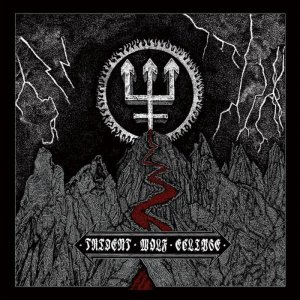 Watain – Trident Wolf Eclipse:
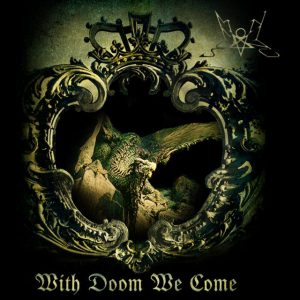 Summoning – With Doom We Come:
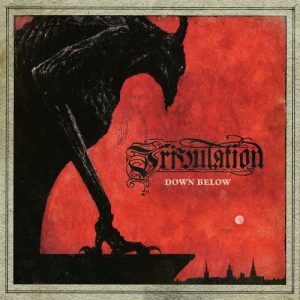 Tribulation – Down Below:
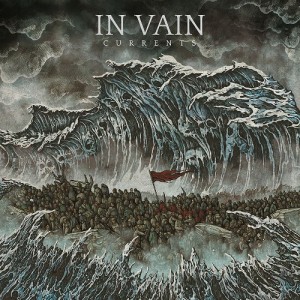 In Vain – Currents:
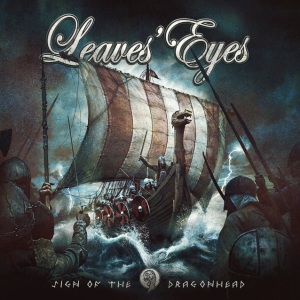 Leaves Eyes – Sign of the Dragonhead:
 Like other bands I absolutely love, I find the task of reviewing the new Orphaned Land album a daunting proposition, because there’s so much of my own emotional response I have to consider and somehow weigh before writing something that makes a lick of sense. Its been this way with new music from Maiden, Blind Guardian, Insomnium, etc… and will likely be this way for the upcoming Therion album as well. Its been five years since the band’s last album, the masterful, career-defining
  I’m taking it as a given that everyone knows what Orphaned Land generally sounds like, its metal merged with Middle-Eastern instrumentation, melodies, and patterns. That’s a simplistic explanation but generally sums it up —- the thing is, a lot of bands can employ those sounds as window dressing and have (not naming any names here!). But Orphaned Land were the first to really do this in not only an authentic way, but in an interconnected way, meaning that it was enmeshed within their songwriting approach and integral to their sonic identity. It was called Oriental Metal by both the band and the metal community around the world, and one of the unique facets of this style of metal as others have gone down its path is that its entirely malleable to different subgenres. So we have the founders in Orphaned Land who for their first four albums merged traditional sounds with progressive death metal; but bands like Melechesh and Odious merged it with black metal; Aeternam are merging it with Gothenburg melodic death metal, and the likes of Myrath and Amaseffer merged with it clean vocal progressive metal with some power metal influences. I bring all this up because Orphaned Land’s sound has changed quite a bit over its past two albums, and its becoming clear to me with Unsung Prophets and Dead Messiahs that the choice of metal subgenre, or harsh or clean vocals doesn’t really matter —- the core of this style of metal is the traditional/ethnic Middle Eastern sound itself.
 I had wondered if there would be an instrumental drop off after Yossi left the band, he was such a talent on a multi-instrumentalist scale, but thankfully the band has diversified their supporting musicians cast and still employs all the sounds you’d expect them too. I’m not good at picking individual tones out to identify each instrument correctly, but surely all of them are present on “All Knowing Eye”, a four minute journey into a lush Steven Wilson-esque soundscape, hypnotic melodies, and once again Kobi knocking it out of the park with a memorable vocal hook. He’s captivating again on the old traditional Hebrew vocal sung “Yedidi”, and its always interesting just how seamlessly the band’s amplified interpretations of these old religious/cultural songs fit in with their original material. The song that surprisingly might be the gem of the album is the nine minute plus epic “Chains Fall to Gravity”, a breathtakingly beautiful piece of music in construction and execution. Its not just the heart-wrenching violin melodies that grab you here, but the surging, hair-raising choral vocal bridge build up: “Go forth and be all you can be…”. The strange thing about this song is just how admittedly disjointed it really is if you break it down to its constituent parts. I’m not sure why it works so well, but its one of the most captivating things Orphaned Land has ever recorded, this album’s “The Beloved’s Cry” or “Brother”.
 Before we plunge directly headlong into discussing 2018 music, I’ve been having a blast listening to all the recommendations from other year end 2017 lists from writers/sites I’ve respected over the years. Some of the albums on these lists have just bounced right off me, but many have piqued my interest, so below are a couple things I’ve stumbled upon late that maybe you hadn’t heard yet either. Its my blog companion piece to the two MSRcasts we’ve recently recorded focusing on a slew of releases we missed. On the horizon are reviews for albums I’m already listening to in addition to these latecomers from last year, namely the new Watain, Summoning, and the upcoming Orphaned Land album. If the jam packed release schedule for this first quarter means anything, its hopefully going to be a good year!

 1. Unleash the Archers – Apex:
 2. Satyricon – Deep Calleth Upon Deep:
 3. Sorcerer – Crowning of the Fire King:
 4. Cradle of Filth – Cryptoriana: The Seductiveness of Decay:
 5. Myrkur – Mareridt:
 6. Vintersorg – Till fjälls, del II:
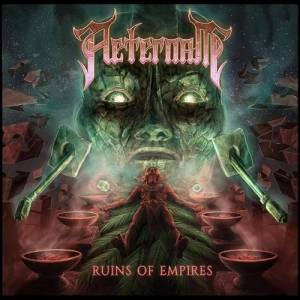 7. Aeternam – Ruins of Empires:
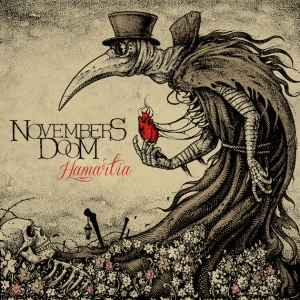 8. November’s Doom – Hamartia:
 9. Evocation – The Shadow Archetype:
 10. Bell Witch – Mirror Reaper:
 Cyhra – Letters to Myself:
 Enslaved – E:
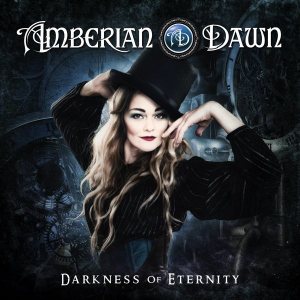 Amberian Dawn – Darkness of Eternity:
 Aetherian – The Untamed Wilderness:
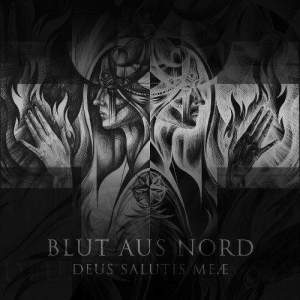 Blut Aus Nord – Deus Salutis Meæ:
 Elvenking – Secrets of the Magic Grimoire:
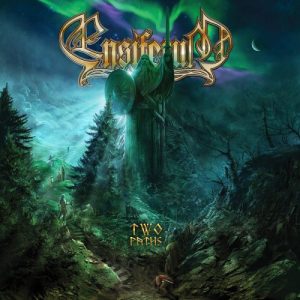 Ensiferum – Two Paths:
 Bell Witch – Mirror Reaper: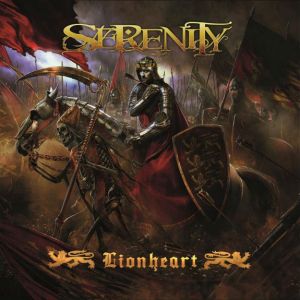
 All this wouldn’t really be much of an issue of course if the songs were on point, and some are nearly there, but for the most part this album sees Neuhauser missing his usual mark of excellence for the first time since I’ve become a fan. I’ve gone through this record well over a dozen times now over the course of a few weeks and its just not clicking with me. Many of the songs lack the sharpness, the well defined arcing hooks that he’s so adept at penning, with the exception of a few cuts. Opening song “United” comes across as the inspirational, horns bellowing call its supposed to be, its lyrics speaking of coming together to take up the holy crusade —- the sort of stuff power metal is meant to be the soundtrack for. Similarly on “Lionheart”, where “Jersualem unites us against Saladin”, Neuhauser delivers an impassioned vocal in the verse segments in particular, a slight phrasing twist in his delivery that reminds me of why I love him so much as a singer. Choir vocals backup the refrain here, bringing to mind a Blind Guardian influence that is noticeable all throughout the rest of this album. We get triumphant, punctuating horns in the chorus of “Hero”, a lyrical clunker but possessing enough strength in its vocal melodies to make you ignore the Enrique Iglesias reminders it will conjure in your mind. This change in style and tone is appropriate for the subject matter, and on first listen I wasn’t too surprised to find the album’s first four cuts storming out of the gates in this mode. But it never lets up, the entire approach across the board sounds more epic and grand than we’re used to from Serenity, its all glory and light here. By the time I got to the fifth cut “Rising High”, I started to wonder where was this album’s “Wings of Madness”, or “Far From Home”, those doses of melancholy that I’ve come to expect.
 The first real difference in tone and even in song structure comes in the closing pair of tracks, “My Fantasy”, and “The Final Crusade”. The latter is a strange bird, featuring some harsh vocals that I suspect we all figured were coming at some point (every power metal band seems to do a little dip in them at some point), and while they don’t ruin what is a largely a good song, they fail to add anything to it. The strength of this track is the Broadway vibe of the chorus, bringing to mind hints of the last album, Neuhauser’s vocals soaring against the backdrop of a swooning symphony. He’s joined towards the end by Sleeping Romance vocalist Federica Lanna, her vocals a sweet, subdued tonic to his soaring theatrical delivery, though he does bury her sonically in the mix when their voices are supposed to be conjoining. The other song, “My Fantasy” might be the highlight of the album, a song that reminds me of the Death and Legacy era in its multi-faceted approach. A heavy riff progression sandwiches a wide open power ballad chorus where Neuhauser dreams up as glorious a hook as he’s ever conjured, his vocal progression bringing to mind the very best of Tony Kakko and Klaus Meine in his tone and vocal melody direction. Its also the only moment on the album where you could forget about the Richard I concept for a few minutes, because even though its written from the perspective of Richard while he’s imprisoned, its lyrics are vague enough to be malleable to anyone and anything. Neuhauser is such a gifted songwriter, he’s bound to deliver a gem per album at least, even when the rest of the affair is a surprising misstep. I’ll take it, and while I won’t recommend Lionheart as a must own, I’ll be happy to wait an extra year or so for a far greater Serenity album next time around.
 Even though I foolhardily consider myself to be a power metal expert (I’m often surpassed by the collective knowledge of the US Power Metal Connection Facebook group and the Power Metal Subreddit), sometimes I just get things wrong. When it comes to the UK’s Power Quest, my sin was not giving the band the attention they deserved after being introduced to them. I first heard about Power Quest in late 2004 in the wake of the Dragonforce furor that got everyone looking at the UK as the epicenter of power metal’s latest shockwave. The band’s second album Neverworld had just been made available for import from Sentinel Steel’s ever reliable mail order, and I grabbed it based on the recommendation of a trusted group of forum members on UltimateMetal.com (remember forums?). It was in retrospect the band’s only pure power metal album in the classicist Helloween mold. At the time Power Quest were heralded by some as superior to Dragonforce, and by others as the “Valley of the Damned” squad’s little brothers. The comparisons were natural, both bands shared members at one point in Steve Williams and Sam Totman, mainly because the UK power metal community was small and tightly-knit (still strange to think about given the country’s pedigree with Sabbath, Priest, and Maiden). It was so small that its leading lights both had to import vocalists —- the Force’s ZP Theart was from South Africa, and the Quest’s Alessio Garavello was from Italy. Together both bands made waves worldwide, denied any notion of a rivalry, and although a flood of British power metal bands failed to materialize in their wake, they both blazed their own distinctive trails.
 When Steve announced in January 2013 that the band was coming to an end due to
  There’s some stuff here that doesn’t quite hit the sweet spot that we’re used to getting from Steve’s songwriting, two songs being “Starlight City” and “Kings and Glory”. They’re not bad tunes, but “Starlight City” doesn’t have a chorus that lives up to its promising intro verse and cascading bridge, and not even some surprising gang vocal “whoooaaahs” can lift up a refrain that seems a bit flat. Their positions in the tracklisting at two and three handicap the album a bit coming out of the gate, leaving the “Face the Raven” and “No More Heroes” to attempt to recapture the energy generated by the opener “Lords of Tomorrow”. They’re largely successful in that attempt, because “No More Heroes” has the kind of vocal melody ear candy that defined the band’s mid-period artistic success, a song you’ll come back to just to hear how Ashley bends his voice on the line “…I pray with all my heart / we find a brighter day yeah…”. Its followed up by “Revolution Fighters”, which has a level of grit in its verses that lend it enough power to carry the song over a chorus that doesn’t quite arc into a hook the way it needs to. On “Pray For the Day”, there’s enough of that awkward Power Quest charm to worm its way through to make me kinda love the track despite its flaws, I just wish that chorus hit with a little more heft.