The Last Reviews of Summer: Cauldron / Omnium Gatherum / Powerwolf / Beyond The Black

More reviews from the dog days of summer, although the season is waning rapidly and good riddance I say, it was a pretty good time for metal releases. I was glad for the slow down that seemed to occur in August, it let me get around to listening to older albums and also to work on non-reviews features that I hope to have out soon for the fun of it. One of the older albums that I dug into listening to was Beast In Black’s 2017’s debut Berserker, and I’d be lying if I wasn’t a little miffed that no one sent me a message asking me why I hadn’t bothered reviewing one of the more outlandish, Euro-swagger filled power metal albums of that year. Its such a fun album, and their Greek vocalist Yannis Papadopoulos is a dynamo, one of the more promising talents in a burgeoning field of new, exciting singers coming up within power metal as a whole. I know that Beast In Black is an offshoot of Battle Beast, but their debut is yet another piece of ammo for my theory that power metal is enjoying a quiet renaissance as of the past two-three years. Anyway, here’s a handful of reviews to round out the summer months, and hopefully I’ll have some non-reviews stuff coming up ahead to give myself and you a break from the treadmill.
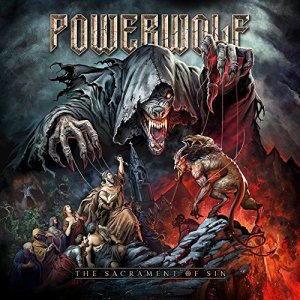


Powerwolf – The Sacrament of Sin:

There’s a few ways you can attempt to analyze a new Powerwolf album, and although I’ve only done that once before (for 2015’s Blessed and Possessed) I feel like the best way is to simply compare it to its immediate predecessor. This is because there is no lock on what is the band’s all time best album, even among their sizable fan base. In this Powerwolf share the same dilemma that Sabaton had over time, that the fan favorite songs were spread rather randomly across the entirety of their discography. In the well over half a dozen Sabaton shows I’ve seen, fans went just as nuts for “Ghost Division”, “40:1”, and “Cliffs of Galipoli” as they did for the encore “Primo Victoria”. Now in Sabaton’s case, there has been a recent consensus building/realization that their 2008 album The Art of War has risen in the esteem of the greater metal community at large as one of the best front to back power metal albums of the last decade, as well as one of the most impactful (something that I’d agree with even though I think Carolus Rex and Heroes are more interesting and rich albums). Its natural to compare both these bands, they started out in the same year with their debuts (2005) and have taken a similar career trek to headline status in the European festival scene with a poppy sensibility to their keyboard driven songwriting, a baritone-ish vocalist, and a distinct “shtick” to their image and subject matter. But where Sabaton have at times attempted to innovate, albeit slowly and subtly, Powerwolf might be on the verge of repeating themselves into a Manowar-ish corner.


I will say that I’ve enjoyed this particular album a great deal more than Blessed and Possessed, and though that wasn’t a difficult hurdle to clear, its encouraging to see the songwriting bounce back. The obvious single here is “Demons Are A Girl’s Best Friend”, and at least in its verses they try some new things here and there, but in the chorus its strikingly close to “We Are The Wild” off the last album, which itself was a watered down version of “Sacred and Wild” off 2013’s Preachers Of The Night. Its a strong song, though not exactly compelling stuff beyond the candy coated vocal hook, and honestly it was on the border for me with its lyrics, skirting the edge of good taste in keeping with the lycanthropic theme. If you’re going to commit to this concept, as you could honestly say they have been for years, then don’t muck it up by getting cute in your imagery (then again this is the band that once penned “Resurrection By Erection” so maybe I shouldn’t be so surprised or annoyed). I actually enjoyed “Incense & Iron” more, with Attila’s commanding vocal during the verses going in an unexpectedly epic, Blind Guardian-ish place. The chorus may be standard swashbuckling power metal fare, but the Celtic sounds, the martial stomp and swing of the rhythmic approach combine to craft a stirring anthem. I also thought “Where The Wild Wolves Have Gone” was an interesting ballad from a band that isn’t really suited to attempting them, with its Orden Ogan channeling in style and even Attila’s vocals sounding similar to Sebastian Levermann’s.


I get why Powerwolf are so beloved over in Europe, but it shouldn’t be a mystery why so many of us stateside power metal fans are a little more detached from the band. Unlike Sabaton who’ve made it their mission to establish a fan base in the States through years and years of relentless touring here both as support and headliners, Powerwolf hasn’t even bothered with us (and according to Glenn Harveston, promoter of ProgPower, they won’t even entertain offers to come over). I get it, why go through the massive expense of even trying when you’re kings in your home turf and are scoring number one albums in Germany? It does however result in some distance in just how much I can find myself invested in the band, because while I personally find Sabaton very interesting as someone who enjoys history, even I can admit that their music is very pop-laden for metal. Powerwolf is just as pop, but the werewolf thing doesn’t do anything for me at all in terms of deepening my interest beyond a surface level of is this catchy or not? Without the benefit of seeing them live, I haven’t had the chance to form a personal connection with the band in lieu of being unable to forge any kind of connection to them as artists. I’ve never seen Therion either, but I love their music so deeply that it can override that absence. Powerwolf doesn’t have the kind of music that can really inspire that level of devotion, and sadly this absence of both the live experience and passion for their music will keep them a distant memory in the minds of most American fans.
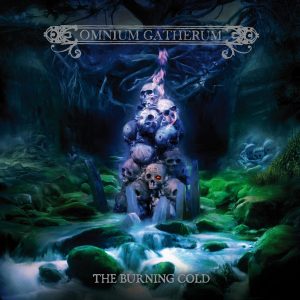


Omnium Gatherum – The Burning Cold:

I think I’ve learned to be a little wary of album previews in general, whether its those atrocious 3 minute spliced together montages of every song on an album to “whet” fans appetites, or even just the actual lyric/music video released ahead of the album’s street date. This is because even if its a full song from the album, its not enough to get an impression about the album’s quality one way or another. Its often counterproductive actually, an easy way to overreact to enthusiasm or get dismissive because of a negative opinion on one song. Recently with the Immortal album, I somewhat duped myself into believing that Demonaz and company had simply gone back to their early era roots, which although partially true was nowhere near a complete rendering of what that album really was. It took almost a solid month of listening to it for me to suss out a far more nuanced take, and I suspect that had I simply never heard the pre-release single of “Northern Chaos Gods” ahead of the album in full, I might not have come to that premature, judgment clouding take. With Omnium Gatherum, I saw the music video for “Gods Go First” way back in early July, and for whatever reason came away feeling rather “meh” about what I heard. That honestly dampened my enthusiasm for this album and although I still managed to keep my curiosity piqued come release day just for sheer reviewing purposes, it was hard to shake the bad taste I still had. I get that not everyone will have this problem, but I might be making a decision to stay away from most of these kind of early previews in the near future (case in point is the new Wolfheart track, haven’t listened to it yet).


Fortunately in this case, my early negative impression wasn’t nearly strong enough to work against the very obvious excellence that is Omnium’s eighth album in The Burning Cold. This is a continuation of the crackling artistry heard on 2016’s Grey Heavens, an album that I credited with the band finally finding the right way to manage the density of their musical elements. Vocalist Jukka Pelkonen started to time his vocal passages more effectively to complement the dual lead guitar melodies, to work around them and fill in gaps of sound rather than try to compete with them directly. Keyboardist Aapo Koivisto began to be a more foundational force within the structure of the songs, and as founding guitarist Markus Vanhala is usually the primary songwriter, its a credit to him in knowing that this strategy worked last time and to keep it going. A microcosm of this is heard on “Refining Fire”, where all of those elements come together to ensure that one of the more aggressive moments on the album is also its smartest songwriting wise. I particularly love the spacing around Pelkonen’s vocals during the chorus and the mid-song bridge where an awesome dual lead solo dances over Koivisto’s dreamy, lush soundscapes. Speaking of soundscapes, they’re just getting better and better, take a listen to the mid-song dip in “The Fearless Entity” for proof, with its own divergent melody and sense of melancholy and ache.


My previous disliking of “Gods Go First” has largely subsided, its a solid enough track, but it should have never been the single in the first place, that honor should’ve gone to “The Frontline”, as majestic a song Omnium Gatherum have ever written. Its up there with “The Unknowing” from Beyond and “New World Shadows” from well, New World Shadows. This is a gorgeous, thrilling song, built on a Gothenburg inspired sense of swinging melodic motifs ala Whoracle era In Flames, complete with a beautiful acoustic guitar framework keeping things rustic and enchanting underneath. The rhythm guitar attack here is measured and percussive even, aware of itself enough to keep out of the way of the lovely lead melodies, just smart, focused songwriting on display. The emotional outpouring occurs at the 3:22 mark, where Koivisto’s keyboards and the lead guitar join together to cry out a melody that’s simultaneously exulting and heartbreaking. This is why we listen to melodic death metal, because we want shimmering moments of major key goodness here to counterbalance the aggression and intensity —- they both work to make each other more potent. I’ll take stuff like this every day over non-stop blast beats and a never ending tremolo riff. I know I know, everything has its place, but straight up brutality has never produced a song that provokes the kind of emotional response that this song has. I didn’t think it was likely that Omnium would top Grey Heavens, but they’ve eclipsed it, and that’s something to cheer about.


Cauldron – New Gods:

I first caught onto Cauldron when their vocalist/bassist Jason Decay did a guest spot on BangerTV’s Lock Horns Power Metal episode. He wasn’t exactly the right guy for the gig, it should’ve gone to Martin Popoff (who later hosted the Essential Power Metal albums Lock Horns ep and delivered) but I figured anyone willing to stand up and talk about power metal on camera earned the few minutes in checking out his band. I became an immediate fan of their 2016 album In Ruin, a wild, semi lo-fi blast of old school, early 80’s hard rock meets early NWOBHM influenced metal. Sure they were one of the legion of bands that were doing deliberately retro sounding music, and that stuff could have a tendency to get a little too blatantly worshipful at times (Municipal Waste and the like), but like Sweden’s Enforcer and Chicago’s High Spirits, Cauldron found a way to express something vibrant and endearing (if not exactly new) in their music. There was an immaturity running through that album that was a boon, not a drawback, and through it a connection to the bands of that distant era they were pulling their influences from. I hate to get cliched, but this was metal that sounded great in a buddies garage from the stereo in the corner, while beers got drunk and bands and albums got argued over.


So when Cauldron leans into that aspect of their personality and sound on their newest, New Gods, I’m all in and enjoying every second of the trio’s still meat and potatoes sound. But this is also the band’s fifth album, and if its vague, amorphous artwork wasn’t a clue, the relatively scaled back accessibility factor is a signal that these guys are interested in maturing their approach a bit (actually if artwork is a guide, then they’ve been eyeing this path on their previous two albums as well, devoid of the Spinal Tap-ian ladies that adorned their first two). The most instantaneous stuff here is excellent, the best of the bunch being “Letting Go”, a slow burning juxtaposition of intense, biting mid-tempo riffage and Decay’s best vocal performance to date. His laid back tone has always reminded me of Chris Black but with a little more heft and roundness, and here he unleashes a memorable major key vocal hook, bright and full of energy. And then there’s “Together As None”, the most unorthodox song in Cauldron’s history to date, coming across as a slice of Dokken meets Def Leppard meets Weezer into some weird timeless pop-metal amalgam. I know its gotten its fair share of flack, but I love it and wish the band would extend further in this direction in the future (or in other strange, unexpected directions).


While those two songs were instantaneous and still hold up after countless listens, it took multiple efforts to crack into some of the other stuff here, and I’m not sure if that’s a good or bad thing. I actively disliked “Save the Truth – Syracuse” at first, but came around to it over time, and perhaps its because its such a slow burner (I’m that guy who took forever to love “Holiday” by the Scorpions, it was too slow and repetitive for the longest time, but one day it just smacked me in the face). Its still just a solid, not great song however, with a refrain that is subtly pleasant and reminds me of 80’s hard rock’s penchant for taking itself deathly seriously (that’s a good thing here). I haven’t really made heads or tails of the lyrics here, but it all fits the tone and general vibe of the music, and that’s kind of what I want from Cauldron —- the title of the song suggests a possible storyline or backstory here, but I’m a little hesitant to commit that much mental energy to this band (its not implausible for the future, but c’mon, I’m not listening to Operation: Mindcrime here). Similarly, “Never Be Found” took its time growing on me, but I can’t understand why, its one of the best cuts on the album, a confident rocker with the tastiest (yes!) dual harmony guitar solo I’ve heard this band pull off. But its listless cuts like “Prisoner of the Past”, “Drown”, and the pointless instrumental “Isolation” that throw this album off balance and prevent it from being as fun as In Ruin. Its still a worthwhile listen with some awesome moments, but Cauldron took a step back here, and that’s concerning.


Beyond the Black – Heart of the Hurricane:

Beyond the Black is the brainchild of vocalist Jennifer Haben, who made her debut (to most of us not in Germany) on Kamelot’s newest album in April on “In Twilight Hours”, a song I deemed the best on the album and a contender for the Song of the Year list. Her vocals on that track in a spiraling duet with Tommy Karevik played a big role in its success, particularly during its dramatic peak towards the end where she delivered an impressive display of range and emotive resonance. It was enough to make me pay attention to news regarding her own band to give them a fair shot, and its interesting enough to point out that Beyond the Black is kind of a growing big deal in Germany already, their previous albums charting quite high there (both this new album and its predecessor were top five on the national chart). They are a German born band with German band members, and its also worth noting that barring Haben the lineup is entirely new for Heart of the Hurricane. I’m not exactly up to date on why the entire band parted ways with Haben after their 2016 album Lost In Forever, but its impressive that Haben was able to cobble together a new lineup in such a short amount of time in the interim. Just as impressive is that this is genuinely a really excellent slice of symphonic pop-metal in the vein of Within Temptation and to a certain extent, the sugary sweetness of Amaranthe sans the electro-beat influences. Let that be your warning, if you enjoy most things about those two bands, feel free to proceed —- everyone else, don’t say I didn’t warn you.


The ironic thing is that I’m writing this right as Within Temptation have released their new single with Jacoby Shaddix (yeah that guy) “The Reckoning”, and its as dicey as you’d expect, a transparent attempt at edginess for edginess sake. The band’s roots were in symphonic metal (gothic metal at first for you nitpickers), but as Therion’s own Christofer Johnson has pointed out in recent interviews, there is nothing so unfashionable these days as symphonic metal. With the genre’s bigger names and veterans having moved away from the sound, its left a vacuum for its fans wanting someone to deliver the kind of stuff that they loved on albums like Century Child and The Silent Force. I’d be willing to bet that they’d really love the bulk of the fifteen (!) tracks on Heart of the Hurricane, because Haben and company make no attempt to deviate from the symphonic metal playbook, even excelling at moments due to their dedication to its tropes and cliches. Take album highlight “Song For the Godless”, with its unabashed Eluvietie invoking Celtic/folky motifs, or “Fairytale of Doom” with its almost children’s sing-songy melody that Haben unexpectedly sings right along to. When you’d expect things to get too clever by half and do something different in order to not sound overly cheerful or happy… nope, its full steam straight ahead without a second thought. Call it refreshingly oblivious.


Its also worth pointing out that Haben is the perfect vocalist to serve as the vehicle for this stylistic approach, her vocals reminiscent enough of Sharon Den Adel’s nationality neutral delivery to soak up pop hooks and dish out radio-rock appeal. Even the beauty and the beast tropes seem to work just on the pure strength of the songwriting and her skill at delivering compelling melodies, as on “My God Is Dead” where the vocals of I’m assuming the guitarist Chris Hermsdörfer work as a foil, Haben manages to keep us entranced enough to avoid thinking about just how close to hammy his presence made things for a second. So with all this genuine praise about what I’m listening to as the carrot, here’s the sharp, pointy stick: This is not a genuine band in the traditional sense, and is almost certainly a studio project in practice if not in conception as well. I had wondered just how it was possible for Haben to lose her entire band and somehow get a new lineup together within a year and collectively work on new material in such a short time span —- was she the songwriter and just dictated to everyone else? Certainly possible. But no such luck, as a little digging has unearthed a trio of German producers as the songwriters at work here (with Miro Rodenberg working on the album as mastering engineer to boot). I’m not against this in principle, Frontiers Records has developed a cottage industry around these types of releases, but the “band” has certainly loses a little appeal to me as a result. Even Amaranthe is writing their own stuff, for better or worse. Make of this knowledge what you will symphonic metal fans.


The Summer Reviews Catch Up Continued

These are some quick takes on a handful of albums that I didn’t get to include in the Mid-Year Reviews Cluster, mostly because they were too late in the release schedule or I didn’t have enough time to listen to them completely. I’ve been a little all over the place recently listening wise, digesting some late July releases (Powerwolf for example) still while trying to stay on top of the sudden rush of new music in August. There’s some big names coming out with new music soon, including Doro and Omnium Gatherum, and I still can’t quit listening to a couple things from earlier in the year that are making deep indentations in my best albums list nominee pool (oh yeah I’ve started working on those pieces early this year so hopefully I’ll have them out on time for once… he says now…). I’m also trying to nail down a Metal Pigeon recommends, but that’s in flux and might not see the light of day until September if I’m being honest. As much as I want to break away from the non-stop cycle of reviews, it gets hard when there’s this much noteworthy new stuff coming out continually.


I also went to a few shows lately, Uada in mid-July (I talked about the show on the last MSRcast episode) and this past Saturday a buddy and I checked out a tribute night at my favorite venue, Seventh Son (Maiden) + Savage Amusement (Scorpions), and Sacred Star (Dio + Yngwie). Seventh Son and Sacred Star were tons of fun, utterly convincing in their sonic impersonations. They are both San Antonio based outfits, with guitarist Jyro Alejo pulling double duty in both (he’s playing the Yngwie part in Sacred Star, convincingly I might add, puffy shirt and crushed velvet jacket to boot). His talent is nothing short of shredder level guitar hero, and he seemed to be the musical anchor for both bands. But the vocalists were great too, Star’s Jessica Espinoza does an amazing Dio, her voice rich and full of Dio-ian texture and heft, while Seventh Son’s Mauricio Adan did a dead on Bruce Dickinson. He not only could pull off the screams, but got the tenor and tone of the Air Raid Siren down to perfection. They stormed out of the gate with “Moonchild” and won the crowd over immediately, and when I realized I was finally hearing a note perfect live airing of “Stranger In A Strange Land”, I closed my eyes for a second and could’ve sworn I was hearing Maiden live on Somewhere on Tour in ’86. I feel lucky that both these bands are regionally based, and hope they can tour nationally sometime so everyone can experience what I saw. It made me remember how awesome it is to be a metal fan.


Immortal – Northern Chaos Gods:

I had originally planned on doing a longer review for this first, post-Abbath Immortal album, but as the weeks have passed in the interest of giving myself more listening time, I’ve realized that there’s actually just a few important things to touch on in regards to Northern Chaos Gods, and so I’ll keep things brief. The first and most obvious concern heading into this was just how would the band handle the Immortal guitar sound, something that really took shape on At the Heart of Winter, precisely the album when Abbath moved into the guitarist role and the sonics of the band infinitely improved. And sure this was largely due to Peter Tägtgren’s involvment in the production for the first time, but also due to Abbath’s own characteristic thrashier guitar approach and his tendency to add in melodic color to his riff barrages. Some of those first four Immortal albums are downright unlistenable, mostly due to the awful production robbing those songs of their would-be viscerality, but also because some of the riffing is just staid, boring and samey. What Abbath seemed to inherently know and employ was the use of tempo changes, spacing and an old-fashioned heavy metal sense of what was rockin’ to make that album and the ones that came later chock full of the blisteringly memorable riffs and songs we love today. This is to say nothing of his iconic vocal style. What would Immortal even sound like without both of those qualities?


Credit where credit’s due, Demonaz and Horgh made the right stylistic choice in approaching this album, to lean heavily towards an old school Immortal sound. Those first two songs are a clear indication of this, both “Northern Chaos Gods” and “Into Battle Ride” being ultra dense, squeezed together slabs of unrelenting glacial black metal fury. Wisely, they chose to stick with Tägtgren for the sonics, thus the production serving as the bridge between the throwback, pure second wave songwriting approach and their more melodic, modern era. When I first heard the record, all I could take away was that it was Demonaz bringing back the old Immortal sound but preferring to stick with a modern production job —- but that’s kind of oversimplifying whats happening here. He actually took more influence from Abbath than he might care to admit, because the latter’s songwriting DNA is deeply embedded within the fabric of these songs. Listen to cuts like “Where Mountains Rise”, with its mid-tempo gradual build, hypnotic almost pulsing rhythm and a call back to something like “Years of Silent Sorrow” from At the Heart of Winter. We hear the Abbath-ian influence elsewhere too, on “Gates to Blashyrkh”, with its warmly quiet, clean noted interludes. Its a standout track, epic and full of grand, heavy metal theatricality that made albums like Sons of Northern Darkness so gleeful as listening experiences.


While not a perfect album (two cuts in the middle, “Grim and Dark” and “Called To Ice” are decent if unremarkable songs that dull the blade a bit), Northern Chaos Gods is an intense, fiery record, far more convincing than 2009’s strangely uninspired miss All Shall Fall. Credit to Demonaz for delivering a focused vocal performance that meets the challenge this material presents, he’s more ice-demon in tone and frozen breathy rasp than Abbath’s bizarre, frog-ish bark, but it works with the tone of the material —- a far cry from his questionable performance on the Demonaz March of the Norse record. He dominates on “Mighty Ravendark”, as addictive a tune as you could imagine Immortal could write, his vocal lines perfectly paced, with dramatic buildup and a hook that is catchy with nary an atom of pop to be found. All these weeks later after first hearing the album, I think I’m honestly just stunned that Demonaz (and Horgh, who is as solid as ever) had this in them. Not that its a competition to the bands, but they’ve clearly released the better album between both parties, Abbath’s own release a few years ago being the direct follow-up to All Shall Fall that he took with him when he left the band. I hope this fires up Abbath as much as it did myself and apparently many others, because that could only mean great things for all of us.


Necrophobic – Mark of the Necrogram:

One of those out of nowhere surprises for me, we played a track called “Tsar Bombs” from this on the last MSRcast, and when I saw the band name on our show notes, I had to really think back to when was the last time I had listened to them. I had to be in the very early aughts, back when I was running down every band to come out of Scandinavia just out of pure obsession with those countries. Necrophobic are a Swedish band hailing from Stockholm, but they’ve got a lot of Norwegian black metal running through their sound if you ask me, a blending that reminds me of a Enthrone Darkness era Dimmu and all eras Dissection. Even though I have a vague recollection of listening to them before, I’m essentially coming into this viewing Necrophobic as a new band to me given the passage of time. Its also worth pointing out that this their first album since the original vocalist Anders Strokirk has rejoined the band, he originally appeared on their 1993 debut The Nocturnal Silence. It gives this release a bit of the same uncertainty factor that Immortal’s Northern Chaos Gods came with, returning old members, new vocalists, etc.


All that detail gets a bit tedious though, particularly since my overall impression is that this is the most convincing blend of black and death metal that I’ve heard in awhile —- the songwriting is unabashedly melodic in its incorporation of Gothenberg-ian riff sequences, yet delivering Watain-level raw brutality in its blackened attack to balance things out. I love the Iron Maiden worship in extended guitar passages scattered throughout, something that might irritate purists but then again when you’re listening to a merging of two genres you might expect that all bets are off when it comes to cross pollination and experimentation. There are bands who provide brutality for brutality’s sake but Necrophobic seem far more interested in my preferred approach, that bands use every tool available to paint epic pictures, to create grand atmospheres. Strokirk emerges as an excellent vocalist for that approach too, his rasp is clean enough to be discernible lyrically, and it works to great effect on a song like “Requiem For A Dying Sun” where the vocal narration is the musical centerpiece everything else swirls around. He takes on that role with relish, coming across as more of a necromancer (heyo!) turned bard singing about his days running across the mountains of Skyrim (Krosis, is that you?!). In a year that’s not exactly brimming with black or death metal that’s demanded my attention, the Mark of the Necrogram is a rarity. Stick that in your Whiterun house and smoke it.


Kalmah – Palo:

This is a really late review for an album that I’ve been returning to ever since we played a cut from it on the MSRcast episode 207, and that occasion itself came a couple months late from Palo’s actual release in March. That’s a rough microcosm for how I’ve paid attention to Kalmah over the past decade, with the band making a big splash in the early aughts with their wild take on Finnish keyboard-laden melo-death with exuberant albums such as They Will ReturnSwampsong, and The Black Waltz. If my memory is accurate, I kind of fell off the band after those albums, particularly around the time of 2008’s For The Revolution, and for whatever reason I never really found myself going back to see if they’d bounced back. Until now that is, and bounce back is a relative term for myself and for this review in general because I’m hearing Palo with no frame of reference to what they’ve been doing. It should be observed however that this is the bands first album in five years, their longest layover between releases ever. The one observation I can make about those intervening years is that when Children of Bodom was out in the wilderness of infusing industrial sounds into their take on Finnish melo-death (and just releasing subpar quality material in general), the one comment I’d often see casually tossed out was “at least we still have Kalmah”.


And we still do, and then some I’d argue, because Palo sounds to me like the band I remember enjoying so much in those halcyon early aughts. There’s the largely keyboard driven, blazing fast assault of hyper riffing and frantic fretboard flourishes all built around that sweet, sugary Finnish brand of melody. Songs like “The World of Rage” and “Into the Black Marsh” feel familiar for those trademarks, and there’s even a blackened touch to the vocals in the latter that seem new to me (though perhaps they’ve been working that in over the past few albums I’ve missed). What I really love however is the one thing I’ve seen people get really critical towards this album for, that being the inclusion of some poppier elements that sprout up on “Take Me Away” and to a lesser extent “The Evil Kin”. The former is my absolute favorite tune off the record, precisely because its channeling that strain of Finnish melancholy via goth rock tones ala Sentenced, Charon, and yes even HIM. It comes through in those aching keyboard notes to start off the song, a melody that blossoms through a clean-toned guitar passage later on. I adore stuff like this, and while the tempo is slowed down a bit to let the melodies breath and flow, I didn’t find it altogether so poppy that it would somehow be considered offensive. Metal fans have their quirks though (though sometimes I think they’re just insecurities). A bit surprised to say this in a year with an Amorphis release, but this is my favorite Finnish metal album of 2018 so far.


Elvenstorm – The Conjuring:

Thanks to a cursory mention by one of the peeps on the /r/PowerMetal subreddit, I learned about this new album from France’s Elvenstorm the day it came out. If the initial idea of French power metal conjures up flowery melodies and even flowerier vocals you might be forgiven if your only experience was with Heavenly and Fairyland (who all things considered, aren’t nearly as “flowery” as a few other non-French bands I can think of). I suspect there’s some cultural stereotyping we’re attributing to the idea of French music being flowery, but then again Yé-yé, Chanson, and the dreamy shoegaze of Alcest probably doesn’t help matters. No matter, because Elvenstorm have been loudly working in relative obscurity for the past decade to undo these preconceived notions and The Conjuring seems to be an apotheosis for them, and hopefully their breakthrough moment. This album surprised the hell out of me for that reason alone, its sheer aggression and viciousness, conveyed in a dirty guitar sound, thrashy riffs playing at often speed metal tempos. But trust me, its still power metal, the melodies abound and for all its bullet belt attitude, the band wields its progressive influences ala Blind Guardian in spades.


The band’s motor is guitarist Michael Hellström, who has an ear for keeping the songwriting grounded in rough, heavy riffs and explosive, ripping tempo shifts yet isn’t afraid to usher in major keys in his lead parts over the top or alongside. Think Helloween’s Walls of Jericho on the kind of steroids Sweet Dee was taking in Always Sunny when she was prepping to fight in the boxing ring. The band’s x factor however is vocalist Laura Ferreux, whose vocals might be a make or break proposition for some. Her tone is distinct, kept in the upper registers (she ranges from high to glass shatteringly high) with a noticeable French speaker influence to her English lyric delivery, much in the same vein that Klaus Meine has a certain German approach to his pronunciation. I find her vocals work perfectly with the frenetic nature of these songs, and there’s something awesome about that much full throttle power and attitude coming from the body of a petite Frenchwoman. She’s spectacular on gems like “Bloodlust”, “Into the Night”, and “Devil Within”, all three songs hitting you with the force of a hurricane, Ferreux’s vocals sounding like they’re coming from somewhere amidst the tempest. On the proggy end of things, “Chaos From Beyond” has quickly become one of my favorite songs over the past month, its smartly constructed echoing chorus worthy of a best songs list nomination methinks —- then again, The Conjuring has already made the nominee pool for the best albums list so… decisions decisions…


Dee Snider – For The Love Of Metal:

I remember listening to the episode of the Jasta Show podcast when this idea was initially broached. It was almost an off the cuff comment by Jamey Jasta, a spur of the moment idea borne of his gushing that he always thought Dee had a classic metal voice, and wouldn’t it be great if he did a full on metal album to showcase that voice ala what Halford did with his namesake project. Dee seemed to congenially agree to everything, that he was up for whatever, as long as he didn’t have to write the songs (he stopped songwriting after the short lived Widowmaker project in the mid-90s). Jasta was pumped, and a couple months later he let slip that he and the Bellmore brothers (Toxic Holocaust) were actually working on songs for it. I don’t remember if I thought at the time that it was a good idea or not, it just seemed like an amusing thing to contemplate —- the singer from one of the most recognizable metalcore bands working on an album with someone like Dee Snider, a guy who I honestly never really thought of as a classic metal vocalist in any capacity. He was always just the mouthpiece for Twisted Sister and an interesting personality in the hard rock world. Key words being hard rock, I just never thought of him as a metal guy. We’ve all got a little revisionist historian in us as metal fans, a way of reordering the events of the past in our beloved genre according to our own preferences, regardless of whether we’re trying to be as objective as possible or not. Its what makes shows like Lock Horns from BangerTV so crucial, that a community should be involved to come up with a consensus on what is what in regards to genres and classic albums, not just one or two voices in print mags or popular sites.


Jasta’s opinion that Dee is a classic metal vocalist isn’t a ridiculous notion, but its an arguable position, one that really needed to be backed up by this album, because myself and many others didn’t really feel that way going in. So how do we evaluate this record? The songwriting is clearly cut from the Hatebreed-ian / modern metal cloth, which isn’t a bad thing by any means, because as a more mainstream approach to that sound these songs are pretty solid. There’s hooks a plenty, the riffs are meaty and convincing, if simple to a fault, and there’s enough variation with tempo changes and well thought out bridges and segues to keep things interesting. Dee’s vocals are recorded in pristine fashion, through the sort of modern recording approach that most bands are using these days, certainly a league apart from the raw, punky feel of those early Twisted Sister albums. It can be a little clinical, a little too antiseptic at times however, for all its sonic perfection. I think the best track here is “Tomorrow’s No Concern”, where despite the clunky lyrics the vocal hook and riff work off each other well enough to get lodged into your head. I also really liked the different things they tried in the duet with the much over-booked Alyssa White-Gluz (yet another guest appearance? Must we?), there was a nice Spanish style acoustic strummed intro, and the guitar solo was quite pretty and made for a refreshing change of pace for an album that was largely very samey throughout.


You’ve all heard this record by now, I’m not gonna waste time describing it any further. My takeaway is this: It was an interesting record to behold, to consider as a novel and unexpected project. For all its relative strength as a solid metal record, its biggest drawback might be just how seriously it takes itself. We all smile to the “We’re Not Gonna Take It” video and sing along to it at metal festival karaokes, at ball games, or whenever it inevitably comes on during a commercial these days. I don’t hear that Dee Snider at all on this record, that light hearted, flippant purveyor of defiance and all things rock n’ roll. Maybe Jasta should’ve recruited a songwriter from that era to help with the writing, or someone contemporary who operates in the same spirit (Justin Hawkins from The Darkness perhaps?). I feel no urge to revisit this album at any point in the near future, but I’ve never stopped coming back to Jorn Lande’s utterly ridiculous and magnificent Dracula: Swing of Death from 2015. That album was fun, knew it was camp as hell and Jorn leaned into it hard and turned in some fine theatrical and full on Jorn-metal performances on some terrific songs. He’s all thunder and epic majesty on the Avantasia project though, largely because Tobias Sammet knows how to utilize his voice and writes songs towards that goal. Sammet’s also the guy who got Geoff Tate’s best performance of the last twenty years on the Ghostlights album, leaning hard into the man’s strengths and driving it home with a song that amplifies them. I applaud the ambition of Jasta’s Dee Snider project, but the execution was a little misdirected, and once the hype train passes, I think most people will feel the same way.

The Mid-Year Reviews Cluster Catch Up

So I spent most of the past month mistakenly thinking that this summer was a little light on quality new music, and to a certain extent that’s right in terms of May and June. Fortunately for me I’ve taken advantage of the lull to do some digging on stuff I might have missed in the past six months in general. I discovered these through a variety of different sources, but mostly from my friends at /r/powermetal and its corresponding Dischord chat as well as the USPM Connection Facebook group, all of whom helped me out with a ton of suggestions for albums I’ve missed (for better and worse). I’ve picked out a handful of the most interesting ones, so I guess these are somewhat reviews but kinda also just straight up recommendations that I think are worth your time. I’ve also reviewed the new Khemmis and Kobra and the Lotus, two bands that I had previously heard of but have never written about or investigated too much until now. The nature of how I came to hear most of these bands is a microcosm of the very essence of this blog’s founding mission, namely being a conduit for word of mouth recommendations, from others to me, and hopefully myself to you.


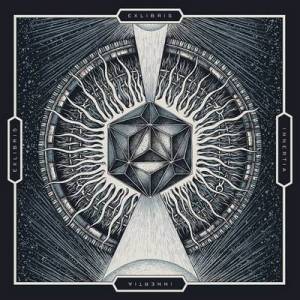
Exlibris – Innertia:

Before we begin, a little clarification is necessary because there are two active metal bands based only a few hundred kilometers apart in Europe sharing the same name. Well, almost. So there’s Ex Libris, the Dutch symphonic metal band helmed by ex-Xandria vocalist Dianne van Giersbergen that’s active once more and in the process of crowdfunding a new album. Then there’s Exlibris, and the modern power metal band from Poland, and that’s who we’re talking about here with their new album Innertia. Poland has had a small yet noticeable impact on the power metal scene, the most notable band being Crystal Viper. There’s some much smaller profile Polish bands such as Gutter Sirens and Night Mistress, the latter of whom incidentally shared a vocalist in Krzysztof Sokołowski with Exlibris for a couple years and a few albums. He was a fairly proficient vocalist, but Exlibris have finally decided to take a big step apart and forward by recruiting a singer of their own in Finland’s own Riku Turunen, who turns out to be a remarkable talent. This is my introduction to him, but damn what an introduction. He’s got a nice blend of influences in his vocals, a blast of Mandrake-era Tobias Sammett’s raw power with a dash of Timo Kotipelto’s penchant for endearing phrasing of specific words and phrases. I really love his work all over this album, and he’s arriving at a time when a lot of us are looking around at the power metal landscape and wondering where the next powerhouse vocalists are —- as it turns out, there’s a load of them all over the globe, they’re just not getting the recognition they should.


As impressive as Turunen is, I don’t want to minimize what the band has accomplished with Innertia, because this is one of the most dazzling modern power metal albums I’ve heard in awhile. Its riffs are thick, meaty and Tad Morose level heavy at moments, but the songwriting is quick on its feet, throwing changes and abrupt shifts this way and that which keep things from getting plodding or staid. There’s a few songs here that evoke tinges of Theocracy’s blistering yet melodic rhythmic attack, the album leading “Harmony of Spheres” comes to mind with its airplane takeoff acceleration and lush vocal lift on the bridge. The mid-song shift to a regal symphonic metal breakdown (as close as it gets to such a strange concept anyway) is a nice diversion, something to lock in our attention as the song hits its final minutes. These guys do a lot of that, little musical ideas tossed in here and there that work to maximize the overall impact rather than simply standout on their own. I mentioned the backing/layered vocals a second ago, and I love that they’re confident enough to write with them as a major component of the songwriting at times, as on “Gravity” whose refrain is classic call and response hard rock theatrics —- the strident lead vocals up close and personal while the backing vocals handle the progression of the vocal melody driving things forward. While guitarist Daniel Lechmański and keyboardist Piotr Sikora help Turunen out on backing vox on most tracks, guest vocalist Ann Charlotte Wikström is heard on many spots throughout with assists on lead vocal lines as on album highlight “Shoot For the Sun”. Its a spectacular song and it really shines towards the end when she weaves around Turunen in a twisting, enjoining vocal dance to finish the track —- a gorgeously sublime moment.


The Sammett comparisons surface again in a positive way for much of “Incarnate”, and honestly it makes the Edguy/Avantasia fanboy inside nine kinds of giddy. I really love Sikora’s keyboard work, he’s really working a Jens Johansson approach here, not only for the flashy solos but in how he utilizes his keys largely as an orchestral instrument to help amplify Turunen’s vocal lines. His interplay with Lechmański’s guitarwork throughout the album is intriguing to behold on its own apart from the vocals, and when all three elements join up on the same melody as on the chorus for “Amorphous” the results are triumphant, fist in the air stuff. Great bands make choruses like these seem easy, but if you listen to enough mediocre, not-quite-there power/trad metal you’ll realize they’re enormously difficult. It takes vision to write something that has such a well-defined melodic arc, and I’d put Exlibris’ work on this album up there with the best of new Terje Haroy/Jacob Hansen era Pyramaze. I love that they’re not afraid of challenging themselves with complexity during their refrains either, as on “Origin of Decay” whose chorus is its own countermelody to the verse, a bold decision that works well, I enjoyed it so much that even the spoken word effects in the middle didn’t bother me (and they usually do). A day after I first heard this album I recorded a recent MSRcast where I prematurely spoke of Innertia as a casual summertime jam type of affair —- but subsequent listens have made a right fool out of me. I simply can’t say enough good things about this record right now, it came out of nowhere and just floored me. At this point I’m not just talking about Innertia being potentially the best power metal record of 2018, I’m talking about it being in the running for the best album of the year list period.


Kobra and the Lotus – Prevail II:

Another chapter in my ever expanding legacy of coming around to bands late, Kobra and the Lotus finally grabbed my attention with 2017’s Prevail. I heard that album when it came out last summer with a few cursory listens and came away surprised that I was enjoying parts of it, but it got lost in the shuffle of releases around the time and I never reviewed it. But there’s something happening here on its sequel that signals that perhaps the band is coming into their own creatively. Kobra Paige has always been an impressive vocalist, but for me this is the first time I’m hearing her vocals in a context that makes the most of their Doro-esque strength and vigor, her performance in this album at times even recalling the tensile flexibility of Triosphere’s Ida Haukland. The band shares credit in this too, giving her ample room to steer the melodic ship with her vocals, the often delightfully catchy riffs from Jasio Kulakowski working around her via accents and countermelodies. Its the sound of a band that has searched for and discovered its strengths over the course of a few albums and is now leaning into them hard.


The most vivid example of that realization is heard on “Let Me Love You”, as fine a single as we’ve heard all year and the kind of metal summertime jam where the lyrical matter doesn’t matter so much as the groove, the riff, and the killer hook does. I say lyrical matter doesn’t matter only because I don’t mind rock or metal bands singing about topics like love and romance, they’ve been doing it since Zeppelin and The Who. Yet a good many of the comments on YouTube for this song are from insecure boys opining that its subject matter is lame (or that dreaded dairy related adjective). Guys, its no more so than any other lyrical subject matter in metal, its 2018 and its past time to get over it. In fact, for the Metal Pigeon’s 2014 album of the year in Triosphere’s The Heart of the Matter, a heavy emphasis on the subject of bad relationships was the emotional core that informed much of that album’s gorgeously manipulated rage and fury. Paige doesn’t quite achieve that same level of excellence all across Prevail II, but on this song she absolutely delivers in an angst-ridden paean to forlorn longing. She does the same on the Ville Valo meets Ann Wilson vibe of “Heartache” with a wonderful vocal on the chorus there, one written with exceptional care to squeeze every emotional drop from so few syllables.


On the heavier end, she’s gotten better at channeling mainline influences such as Halford and even a little Dickinson as her performances on “Human Empire” and “You’re Insane” can attest. Album opener “Losing My Humanity” is another highlight, being an example of one of my favorite trad metal songwriting techniques in a punishingly fast verse riff being followed by a slower tempo in the arena rock informed bridge and chorus. Its classic metal 101 but so challenging to pull off in a way that sounds effortless like it does here. A note about the production here, because I know that Jacob Hansen has his trademark sonic style that some find too polished and perfect (and its very apparent all over this album), but I think it really works for a band in this vein where the focus is on elevating Paige’s performances in a vocal melody driven context. Kobra and the Lotus have an intriguing future ahead of them, one that could end in either extreme because while I suspect their sound is accessible enough for anyone looking for well crafted melodic metal, its also a little too trad for alternative rock playlists and maybe even Active Rock and Sirius FM/Octane. They made a dent with “Light Me Up” last year, but a small one at that and its unfortunate that they’re not getting better results with the singles off Pt II. Its still early in the release cycle, so maybe a well chosen tour or two could change things, and I hope so because this album deserves more ears.


Thaurorod – Coast of Gold:

You ever have those moments where you’re at the grocery store, with your responsible list of low carb, sugar free groceries in your cart and you’re stocked up on organic chicken, avocados, bags of salad, some eggs (okay okay enough of the shopping list) and you pass by the cereal aisle and instead of  walking past like you’re supposed to you wander in and Assassin’s Creed past your better judgement to grab that box of Cinnamon Toast Crunch? Yep, that’s me with the new (well, a February release) Thaurorod album, a blast of Euro-styled power metal cut from the late nineties glory era cloth. This is such a blatantly traditionalist power metal affair that it even goes for the jugular with the comic book-ish cover art featuring the band members drawn as enterprising seafarers (I guess?). Thankfully they steer clear of Alestorm territory, in fact this is actually a Finnish band but they sound closer to Freedom Call in sound and spirit rather than Sonata Arctica. What was interesting to learn upon closer inspection is that its kind of a side project of Joonas Pykälä-aho and Emil Pohjalainen from Amberian Dawn (drummer and guitarist respectively). Neither to my knowledge contribute to Amberian’s writing process so I take it they get their kicks here with a project that’s been going since 2005. This was one of the recommendations from the community at /r/PowerMetal, it came up when folks were discussing what they thought the best albums of the first half of the year were. I can easily understand why this was an oft-cited favorite, much like my Cinnamon Toast Crunch comparison, its the power metal equivalent to kiddish comfort food (the band name being a Tolkien reference is also a good way to get me to listen).


You’ll get my drift when you hear the album opener, suitably named “Power”, because this song is as the lyrics confirm, about “Power we need / Power we breathe / Power to break through the gates / To our dreams”. Oh and don’t misinterpret the tone of that sentence, because I’m not being snarky in anyway, I’m fully buying in here, even when the band makes the near fatal mistake of having built-in “hey! hey!” chant sections midway through the song (seriously, Thaurorod gets a pass because this song is so much fun, but note to bands, don’t do this!). Its power metal 101 to use “power” and “forever” liberally in lyrics, and these guys pack them both in a skyrocketing chorus. Pure power metal fun aside, there’s some depth and complexity to what they’re accomplishing on “24601”, a song that makes clever use of its title in a satisfyingly rhythmic way. What really sells it is the rough yet smooth vocals of Bosnian singer Andi Kravljača (if he sounds familiar its because he was on the first Seventh Wonder album pre-Tommy Karevik and did a stint with Silent Call for a few years), and he entirely makes up for the fact that they lifted the keyboard intro from Toto’s “Hold the Line”. I experienced a rush of joy listening to this record, and appreciate that the band just went for it full throttle, often in speed but always in displaying their clear cut love for all things classic power metal. Its not reinventing the wheel for sure, but its a pretty good wheel.


The Night Flight Orchestra – Sometimes The World Ain’t Enough:

The lovable Swedes are back yet again with a new album a little over a single year after the release of 2017’s Amber Galactic. It wasn’t but a few months ago that I was writing about them for the first time, not expecting that we’d get new music so quickly, but that facet alone is another detail in what makes The Night Flight Orchestra so convincing and compelling. Back in the late 70s and early 80s, rock bands would usually be releasing new music at a pretty swift clip, even the Scorpions only took two years between Animal Magnetism and Blackout, and that includes the delays from Klaus Meine almost losing his voice before the recording sessions. Iron Maiden of course knocked out three albums in yearly succession between 82-84, all while touring like madmen in between each release and somehow finding time to write and record new music rapidly, rest and vacations were considered part of the recording session experience (I suppose that’s why they’d decamp to the Bahamas but nevermind). The point is that back in that era to take three years or longer to do an album was seen as far too long to be away from your fans, it was just an aspect of rock culture that slowly ebbed away as the 90s came out and it was seen as okay to tour longer or use the EP or live album as a way to buy time. I’m not sure whether the band is doing it on purpose or not, but there’s something charming about Night Flight adhering to this ethos and work ethic, this being their fourth album in six years since the band’s inception —- pretty good for a “side project”.


That they’ve managed to get better and sound more confident with each passing release is also something to celebrate, and Sometimes the World Ain’t Enough expands upon the greater role of synths and keyboard driven melodies that we heard on Amber Galactic. Lead single/video track “Turn to Miami” is emblematic of this approach, with its suggestive, slinky synth lines and lyrics that declare “while the night is young / this is where we start”. Björn Strid is as usual accompanied by gorgeous backing vocals, provided here by the “Airline Annas” (Anna Brygård and Anna-Mia Bonde), a detail that might get overlooked in the artistic success of these songs. Its not to say that Strid isn’t a powerful and appealing clean vocalist in his own right, but the Airline Annas’ harmonies and independent vocal accompaniments layer on that extra sugar icing that buoy these songs from street level High Spirits throwback grit into something that is truly transcendent and of the spirit of that era. The hardest hitting song on the record is the title track, not only for its confident hard rock stridency, but because that chorus just impacts with precision, the Anna’s once again sealing its potency with well timed supporting harmonies.


And there’s something to “Lovers In the Rain”, a heavy synth drenched semi power ballad, the kind that had it come out in the early 80s would have irritated a few fans at first but slowly would win them over in private away from their buddies in the car. When it comes to “Barcelona”, we’re treated to a Journey-esque ode to one particular city that also serves as a metaphorical focal point for the narrator. Its the weakest song on the record but still manages to rock with early 80s conviction, and that says something about the overall quality of the album. The work this band has put into mining this particular vein of rock history has made them into one of the style’s strongest songwriting collectives. Case in point is just how interesting they manage to make the nine-minute plus “The Last of the Independent Romantics”, a running time that had me skeptical before I heard it. Here they marry the sounds of 80s rich royalty rock with the ambition of a 70s prog rock piece and keep it loaded with enough solid riffs and melodic shifts to keep us intrigued. This is a fun listen and if you haven’t gotten on board yet, this is the album to get first (and work your way backwards in order), Night Flight have transcended any jokey beginnings and have simply turned into a great band making a kind of music a lot of us miss.


Uada – Cult of a Dying Sun:

Portland’s Uada are an intriguing band, not for the hoods they wear in promo photos and apparently onstage as well (we’ll see, I’m catching them live in a few days time), but for their attempt at straddling the bridge connecting second wave black metal to its more melodically inclined modern evolution. This is their sophomore album, their debut Devoid of Light arriving in 2016 and in listening to the two back to back, you can see that they’ve made a significant leap in songwriting complexity in just this short span of time. The thing that I feel most critics of modern black metal miss is just how effective a crisp, clear production job can be to the overall impact of music as complex as this. Not everything should sound like a shrieking incoherent mess, and while that early second wave production style lent itself to what those artists were trying to accomplish (“Give me the wvurst microphone you have…”), a lot of us became fans of the modern style first and then went back to do our history homework with the more difficult to listen to stuff.


I have no idea what the members of Uada would cite as influences, and this being a short review I felt no need to research it, but I hear shades of Dissection (particularly in the wielding of melodic motifs throughout), a little Dimmu Borgir and even a bit of Inquisition. I’ve seen some criticism posted up about how these guys are aping Polish black metal band Mgla’s sound, and that’s some pretty accusatory stuff considering most metal bands are drawing influence from other metal bands. I took a listen to the last Mgla album to see what the fuss was about, and okay there’s some resemblance but honestly I prefer Uada for their deeper dive into unabashed melody. Take their melodic treatment of the tremolo buzzsaw cutting across most of “Snakes and Vultures”, its so earwormy in its own right that it works as the hook here, usurping the actual vocal refrain. And I love the almost melo-death approach on guitars in “Mirrors”, kind of a merging of two genres with its black metal song structure. This isn’t a perfect album, it starts off really strong for the first three tracks and then dips a bit in the middle (“The Wanderer” should have been left on the cutting room floor) only to perk up at the end, but its one of the few black metal records that’s intrigued me this year. Looking forward to seeing them, hoping for an entertaining show (remember, a good show needs anticipation or surprise!) and will be expecting even better things from these guys in the future.


Khemmis – Desolation:

I had paid attention the last time Khemmis were making waves, about two years ago when they were in the spotlight for their sophomore release Hunted. I gave that album a shot and for some reason it just didn’t connect with me, and honestly their newest Desolation really took more than a handful of forced attempts at cracking its code before it finally started to grow on me. I’m not sure what my block is on this band (we briefly talked about this on the last MSRcast), but Desolation is the most accessible album for me from this band mainly because its the least doomy of all their work. I know its a bit ridiculous to come from having Bell Witch’s Mirror Reaper on my best albums list last year, to now saying that Khemmis is giving me problems but that’s just the way my brain is working at the moment I guess. It was Adrian Begrand’s repeated Twitter statements on how “If you like traditional, escapist heavy metal, this is the one for you” that got me to stick with it, and kudos to him because I think I’m about 75-80% there. The stuff I’m responding positively to is the band’s increased trad metal infusion, particularly in the uptick in tempos all across these songs. There were flashes of that happening on their previous two albums, but here its the main feature, and it makes a huge difference in aligning their sound closer to bands like Grand Magus and Tyr, whom I both adore.


As usual Khemmis keeps the albums concise and tight (only six tracks here, ranging from four to nine minutes), its a practice that I sometimes think other bands should adopt, getting back to a more mid-80s/vinyl level of quality control, but I’m digressing. The album that I’m enjoying kicks off after the opening doom-laden track “Bloodletting” on the subsequent”Isolation” which really reminds me of Candlemass crossed with Iron Maiden. There’s a dueling guitar solo segment partway through that’s just fantastic, full of vigor and vibrant melodicism. It also contains vocalist Phil Pendergast’s best, most emotive work —- at times displaying shades of Tyr’s Heri Joensen and even Dio’s penchant for theatricality and rhythmic timing. You’ll hear more of that on “Flesh to Nothing”, particularly in the build up during the verses, and I get a real Hetfield vibe on “The Seer” that works to enhance its bite. Of course harsh vocalist Ben Hutcherson is the counterpoint here, and his raspy sheet metal scream is on point tonally and provides a nice change-up from time to time. If I’m being honest I wouldn’t mind Khemmis going full clean vocals in the future, but that’s just my power/trad metal loving side coming out. I’m still digesting this album fully, but the good news is that its something I’m willingly coming back to and its riffs are thundering in my head long after I’ve finished listening.


Frozen Crown – The Fallen King:

This was a nice surprise, another touted recommendation from the peeps at /r/PowerMetal, Frozen Crown are a power metal band from Italy that sound like they could be from the States or Canada. Its not that they don’t have the ability to show a little flashiness ala Rhapsody and co., as principal songwriter Federico Mondelli and his fellow guitarist Talia Bellazecca have enough bottled up technical virtuosity to trade spitfire solos and flex creatively with complex melodic patterns. But rather than layer it on thick, they have an innate USPM sense of keeping things scaled down, stripped back to the essentials —- so we get shreddy riffs but also vocal melody driven songwriting built on the strength of the relatively unknown Giada Etro’s emotive, throaty singing as well as Mondelli’s own solid clean-harsh range. What’s smart about their pairing is that they avoid beauty and the beast tropes by rarely trading off verses… this is largely Etro’s domain, the songs are almost all written to support her ability to soar into higher registers, but Mondelli provides a nice change of pace in select situations and also sparks a nice harmonic duet in the ballad “Chasing Lights”. That song in particular is used as a cleverly disguised segue into the sharp, aggressive epic “Queen of Blades”, one of the occasions where both vocalists do trade off a bit yet the overall vibe I get is more Unleash the Archers, not Nightwish.


Speaking of Archers, Etro has a touch of Brittney Hayes’ timbre to her vocals, but also a little of Kobra Paige’s smoothness, that ability to make emotive sweeps with little changes. I hear both “Across the Sea”, as Nightwish-esque as things get here (muted keyboard adorned verses, transitional bridge/chorus that pops), and I love the choice Etro makes with the sped up phrasing at the :59 to 1:04 mark (“I’m feeling frozen, I can’t hear my heart beating”), something I’d imagine that the master of that technique in Mr. Tony Kakko would be proud of. Sometimes as on the closing track “Netherstorm” I get the feeling that the band is attempting to find a place where melo-death and power metal can merge (that intersection of Wintersun and Skyfire), and they have a moment towards the end where the riffs have that Gothenberg density and are complemented by a gorgeously fluid lead melody over the top. Its not quite the integration they seek, but I think they’ll get there with future albums. Oh yeah, this is a debut by the way, it actually came out in February, but being that their label support is relatively small (Scarlet Records in Italy) its telling that they’re making lasting impressions in the online power metal community —- enough for a handful of people to remember it all these months later when pressed for recommendations. Its too early to call it, but there’s something happening within power metal that might be described as a nascent revitalization. I’m looking around at the artistic triumphs coming from the genre in the last few years as well as young rising bands like this and its starting to feel as exciting as 1998 again. To quote Fox Mulder, I want to believe.


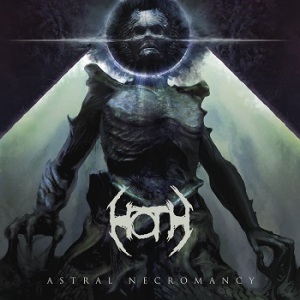
Hoth – Astral Necromancy:

Oh get ready, this is a strange but good one, and I mean really strange and really good. This has become one of my favorites for 2018 overall, something I’ve been unable to stop listening to in the slightest (cool cover art too for bonus points). If the name wasn’t a tip off, Hoth are steeped in Star Wars mythology, particularly in their first two albums (this one seems to blend in some other lyrical topics, mainly, erm…. necromancy), and while its surprising that no band has really taken and run with that theme in earnest, its more surprising as to how Hoth have decided to go about it. Their interpretation of a long time ago in a galaxy far, far away is a soundscape of heavily major key infused black metal, and I’m not talking about symphonic arrangements ala Dimmu and others, but as in its core tremolo based guitar skeleton. We’ve talked about black metal set to major keys before, most notably in Deafheaven’s Sunbather, and it was a unique listening experience for sure, but I think that Hoth somehow make it even more interesting because they’re keeping with the darkness and not resorting to pastoral tones and colors. Make no mistake, the galaxy that Hoth want you to envision is bleak, unforgiving, icy cold (heh), and wickedly punishing.


On opener “Vengeance” they take a traditional black metal approach through the verses, but punctuate the bridge with some almost bark/shouted rhythmic vocal lines only to follow it up with a wildly noodley solo. Its a preview of things to come in that you’ll never really be able to predict where they’re going to take things musically —- unpredictability is their greatest strength. Take its jaw dropping follow-up “The Living Dreams of a Dead God” (that title is some Glen Cook level cosmic darkness!) where they switch up the attack with an almost trad/power metal rhythmic riff structure, one that reminds me of how Therion often surprises new listeners with their heavy 80s metal guitar approach instead of something more blackened or death metal-ish. I would call this a prog influenced track for its rising dramatic crescendo during the refrain but it might give you the wrong idea, this is very much a brutal and fierce piece of music. Elsewhere I was enthralled by their turn to pure power metal influences such as on “Ascension”, an appropriate title given the sudden sweeping nature of the guitar melodies herein, featuring a lead melody as gorgeous as anything conjured up by Opeth or Sorceror. It wouldn’t come as a surprise then for me to tell you that the guys on the /r/PowerMetal dischord recommended this one to me as well, and I find that harsh vocal based recommendations from power metal communities really hit me in my sweet spot (that ‘melodeath-ian nexus’ of everything I love about metal).


Scandinavian Summer: The Return of At The Gates and Amorphis

The two biggest releases in the month of May, I was of course wanting to give them an ample amount of listening time before writing anything and the busy nature of the month (including concerts and one out of town trip!) lent towards the drawn out time frame from their release date till now. I’m glad I waited because I was a little high on one and not so much on the other and its been interesting to see how an extra week or so has leveled off both of those opinions with different insights that came to me later on. With as high profile as these have been I feel like I took my eye off the rest of the release radar for this month and possibly June, so if anyone has any tips on what I should be paying attention to right now please drop me a recommendation in the comments!


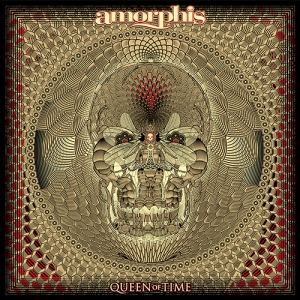
Amorphis – Queen of Time:

I was surprised when Amorphis announced that a new album would be landing in our laps this summer, but quickly realized that its release date would fall just under three years since the September 2015 release of Under The Red Cloud, an album that was so magnificently brilliant it took hold of my album of the year spot. I think that album had so dominated my listening time for a good half a year after first hearing it that it made it feel like it was just released last year-ish. I put the album and indeed the band on a long break after seeing them live later in April 2017, something that needs doing after so intense a period of listening to an album you’re obsessing over along with the band’s entire back catalog as a side effect of that enthusiasm. I learned that lesson way back in the early aughts with Opeth and Blackwater Park, particularly considering how soon Deliverance and Damnation and even Ghost Reveries followed —- I couldn’t so much as look at an Opeth album cover for a good long while (a few years actually). That being said I feel like I had a healthy level of anticipation for this one, optimistic that it would be a good album (remember my Amorphis as the New England Patriots of Finnish metal comparison?… no? Dammit.), but a little skeptical that they’d be able to go the distance towards a masterpiece like they did last time around. I was right on the last part, Queen of Time is certainly nowhere near the level of inspired artistry we heard on Red Cloud, and it can rightly be described as a good, even very good album, but somehow something isn’t clicking with me here and I’m having a hard time figuring out what.


One thing is clear after all these many listens, that Amorphis is clearly running with open arms towards the highly melodic side of their sound that they expanded on Red Cloud. That means ample melodies, some bordering on what can perhaps be described as sugary or at the least a little sweet, a load of Tomi Joutsen’s clean vocals, and the bulk of the songs being set in a mid-tempo groove. On “Daughter of Hate” they even balance a ferocious melo-death attack with a laid back jazzy section replete with backbeat on the percussion and that recent mistress heard operating around various parts of Scandinavia, the saxophone. I alternate between being okay with it and other times being largely annoyed by its presence, and this is coming from someone who doesn’t mind the odd bit of sax (I grew up liking INXS for starters and then there’s its star role in Queensryche’s Promised Land to consider). More than that though, I couldn’t get into the almost twee sounding melody propelling “Message In The Amber”, unfortunate because its brutal middle section is entirely worth sitting through the rest of the song for. The placement of various sections within the song seem disjointed as well, lacking anything in the way of needed transitions or cues. This songwriting dysmorphia is also evidenced on “Grain of Sand”, where we hear some good ideas but nothing ever gels or coalesces into a greater whole. There’s something just generally frustrating about how songs like “Wrong Direction” and “The Golden Elk” turned out, because you get the feeling that they could have been excellent had they just locked in on a few things. I love the Arabic strings towards the end of the latter, but they came in far too late and probably should’ve been used more throughout the song, as they are now they strike me as an afterthought.


But more often than not, Amorphis flash that brilliance we’ve all fallen in love with, be it on the synth dressed “The Bee” with its lurching, punching Jousten growled verses that stomps and beats its chest emphatically. It’s status as the best song on the album might be challenged by “Heart of the Giant”, an energetic song with a surprising rhythmically structured chorus that seems to swoop in from out of nowhere. Similarly, “Pyres On the Coast” drives a rumbling buildup to a swiftly moving orchestral motif that arrives without warning but is compulsively re-listenable. And I’m of course a fan of the duet here featuring one Anneke van Giersbergen on “Amongst Stars”, although it does by virtue of her vocal tone skirt near that saccharine territory I was talking about before. She’s just such a great foil to Joutsen though that it hardly matters, particularly when the chorus she’s belting out is as lovely as this. The folky whistles on this song I believe might come from Eluveitie’s Chrigel Glanzmann which is a cool little detail, and the addition of them makes it sound like a lost track to van Giersbergen’s collaboration with Arjen in The Gentle Storm. This was a Santeri Kallio penned tune, a perfect example of his preferred songwriting approach with largely uptempo songs built around his bright, harmonious keyboard melodies. He and founding guitarist Esa Holopainen once again split the songwriting duties fairly evenly, with Holopainen’s contributions coming in on the heavier end (a distinction that really was magnified on Red Cloud). I could attempt to draw some kind of conclusion that it seems like my tastes fell more in line with Kallio’s songs on this album, but it was the other way around last time so I’m not sure if there’s anything to really learn from that.


What has become clear to me however is that I just don’t find this album as addictive as I was hoping for, to take that full on plunge back into Amorphis’ world once again. It reminds me so much of their 2013 Circle album in that light, where a few songs really stood out and I’d listen to them repeatedly, but the album itself was a trying experience. I think Queen of Time is a stronger album than that one, but only because they’re really running with this whole extreme melodicism thing which is right up my power metal street. I’m not getting down on the band as a result of this however, nor on myself; it was always going to be a tall order to follow up Red Cloud, and I knew that going in. And besides, who can tell what album is going to trigger that kind of intense reaction in any of us? For all I know someone may experience this album as their Amorphis masterpiece and think Red Cloud was a misstep (they’re wrong of course…). Going back to that Patriots analogy for a second, that team made it back to the Super Bowl yet again this past February and seemed likely to cruise to another championship, only to lose to the Eagles and their upstart second string quarterback Nick Foles. So close yet so far and all that. Its hard to win a title, just look at how challenging its been for Lebron James who’s only won 3 out of the how many trips to the NBA Finals? If there’s any band that can deliver another masterpiece at some point in the future its Amorphis, whose discography is void of anything I’d call bad or terrible. Each new album has at least yielded a small handful of classics to throw onto the old playlist, and that’s something to be grateful for as a fan (as a Rockets fan, trust me you gotta find small victories). I’ll be seeing the band live in October, and you better believe I’ll be all in at that show.


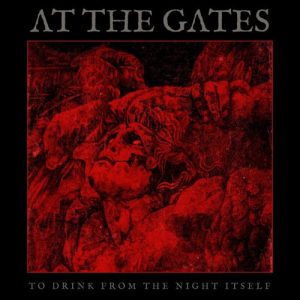
At The Gates – To Drink From The Night Itself:
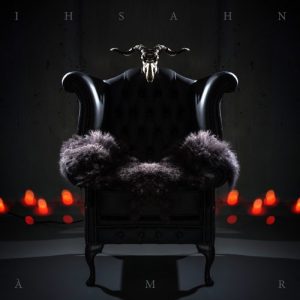
This might seem stupidly arbitrary, but I had a good feeling about this newest At The Gates album when I saw the title. Look at it, it practically screams early-90s At The Gates pretension, cue The Red In The Sky Is Ours and With Fear I Kiss The Burning Darkness. When I was first getting introduced to melo-death, those album titles were thrown my way like life preservers by magazines, the scant metal websites around back then and the few metalheads I knew who were already in the know about such things. Those titles were mystical to me, just like Emperor’s Anthems to the Welkin At Dusk, or Darkthrone’s A Blaze In the Northern Sky. I love a lengthy, vague, somewhat mystical album title. Maybe this was me just grabbing for something to be excited about, because I was already on shaky ground confidence wise considering how non-existent my relationship to their 2014 comeback album At War With Reality has been since I first reviewed it. To put it bluntly, I don’t think I listened to it again after finishing writing that review, I just never felt the urge to go back to it. For the purposes of putting this new album in context, I did go back and give it a once over, and my feelings largely remained the same as what I put down in my original review —- there were some decent songs, a few really awesome riffs, and a whole lotta paint by numbers At The Gates… it was the sound of a band trying to sound like what it thought it was supposed to sound like to everyone else. It wouldn’t have been half as glaring had Carcass not had their own glorious return just a year prior with Surgical Steel, a record that was as confident, thoroughly of the moment, and also as forward looking as a comeback album could possibly be. It was such a phenomenal record that five years on Carcass have yet to follow it up, and though I’m sure that At The Gates were proud of At War With Reality, I’m glad they’re not letting it be the last word on a storied career.


On To Drink From The Night Itself, At The Gates once again return to the spirit of a band trying to explore the internal limits of their sound. This is an audience challenging album, often times working at tempos that aren’t the breakneck pace of most of At War With Reality or Slaughter of the Soul, some of the most intriguing songs finding other ways than solely speed to project intensity. Take “A Stare Bound In Stone”, an early album highlight where circular riff sequences create a sense of hypnosis, new guitarist Jonas Stålhammar and band vet Martin Larsson playing in mechanical lockstep. The abrupt mid-song lone guitar led drop-out begins a passage of waves and waves of tremolo infused riffing that crash down. My personal favorite is “Palace of Lepers”, particularly for its euphoric, syrupy sweet classic melo-death riff payoff around the three minute mark, and that they let it carry on through the fade out is a nice detail. I could see how a song like “Daggers of Black Haze” might strike some as too slow or meandering seeming, but I think the melody they’re coaxing in that primary riff motif is interesting in its own right, and again with the beautiful mid-song transition (this time at the 2:33 mark), a little classic Gothenburg Scandinavian folk in that acoustic sounding sequence. There’s a real sense of the band attempting to morph or shape the limits of the At The Gates stylistic boundaries, as on “The Colours of the Beast” which is unlike anything we’ve heard them attempt, a staggeringly powerful lumbering riff based monster that rattles the interior cabin of your car if you’re like me listening to it a near full blast.


Of course there’s the lone exception to all this new freshness, that being the title track turned music video, and I’ll say right up front that its a fun, adrenaline rocketing tune, the kind of thing that At The Gates is identified with. The only complaint might be that its a little too close to “Blinded By Fear”, as in really frigging close (that riff is just one or two minor adjustments from being a carbon copy —- guitarists help me out here!). The jarring dichotomy between it and the rest of the songs is precisely why the album speaks to the band’s growth here. The former is a slice of past glories more in keeping with At War With Reality, and everything else is a bit of a strange journey into unknown places with only the slightest of head nods to the ancient past of their first two albums. When I listen to “Labyrinth of Tombs” and its interweaving guitar motifs or “Seas of Starvation” with its rumbling bass riffing and epic, elegiac guitar fragments, I hear a side of the band that I’d never expected (the string section blast at the end of “The Mirror Black” being another whoa moment). I will say that there are some production issues going on here that crop up more in some songs than others, particularly with how muffled the drum sound seems to get whenever everything else is pouring on top of it. Tomas Lindberg, as fine of form in gravelly voice as he ever is also gets a little cramped in the mix, with guitars taking a bite out of his fierceness in some critical spots. I am surprised at just how little I noticed Anders Björler’s absence, with the new guy fitting in remarkably well, not surprising I guess given Anders comments on why he decided to leave in the first place. For the rest of the band, they’ve found their footing after a long reunion process, and it finally feels like they’re really, really back.


Mass Darkness: New Music From Dimmu Borgir and Ihsahn!

Dimmu Borgir – Eonian:

So I could go the expected route and start off this review of the new Dimmu Borgir album Eonian by leveling a flurry of criticism at them for taking eight years to release something new. I did it with Therion recently, and in cases like theirs and of course the much discussed Wintersun the criticism can be warranted from a fan’s point of view. But other times its worth pausing to consider just how helpful a long hiatus can be for an artist’s career, not just for the obvious financial reasons of artificially building up interest for lucrative festival appearances and tour offers, but in allowing the creative process to reset and take stock. I know for me there was a feeling that the band had wandered off into the wilderness for their past two releases (something I actually felt started on 2003’s Death Cult Armageddon, despite its many fun moments). Their fascination with heavily orchestrated productions kinda spiraled out of control, and although I think the song “Dimmu Borgir” from 2010’s Abrahadabra was a triumph of dark majesty, the rest of the album was one heck of an overcooked chicken dinner. Eight years has given the band a new perspective on just how they should apply orchestral elements to their sound (judiciously is the answer) and has allowed them to rediscover some of the charm of the signature sonic elements of their classic Enthrone Darkness Triumphant album.


While Eonian isn’t quite a return to old school Dimmu Borgir, it hearkens to that spirit in their more streamlined musical approach, particularly in bringing back that old “Mourning Palace” keyboard approach —- you know what I’m talking about, the church organ gone evil. I hear it in the opening strains of the awesome “Interdimensional Summit”, as lean and pointed a single as they’ve ever released, boasting an earworm of a choral vocal hook amidst a bed of sharp, jumpy rhythmic shifts. Galder’s solo here is as gorgeous and memorable as something off a Therion album, and maybe its just my memory getting the better of me, but I can’t recall him doing something quite like it before. Another standout is “Aetheric”, a microcosm of the band’s better merging of symphonic bombast with streamlined leanness. Keyboards pair with lead guitars to create a spellbinding, otherworldly melody while waves of orchestra burst in to raise the tension and give us a little adrenaline kick. There’s a very Satyricon-esque riff at work throughout most of this tune as well, an unexpected though welcome surprise, one that I think actually works well with Dimmu’s overall approach (is dabbling in black n’ roll a potential way for them to lean next time?). The gloriously epic passage here is the 2:25-4:30 stretch, a lengthy but note perfect masterclass in the potential for symphonic metal’s emotional power. From just these two tracks alone, we’re getting work that could be placed alongside the handful of other truly great moments they’ve managed in a lengthy career. And before you think that’s a lot of hyperbole over two songs, the rest of the album holds up just as well, including the much discussed experimental nature of “Council of Wolves and Snakes”, although being a track that took me a few listens to really unlock and understand, I’ve been addicted to its slower, dreamscape invoking passage from the 2:45 mark onwards.


What’s striking about this album overall is just how much of a pure joy its been to listen to, something I can only best describe as being a fun listening experience. Its a playful record, both aware of when its invoking old Dimmu in pointed moments and slyly sliding in something unexpected when you aren’t ready for it. They bring back that aforementioned black n’ roll riff to “Lightbringer”, but segue it into a clever mystical keyboard vs tremolo riff sequence, and Shagrath narrates with vocals that haven’t aged a day, full of fierce bite and crisp enunciation. I also think “I Am Sovereign” is one of the more inventive moments on the album, veering from an urgent, regal march built around dizzying orchestral fragments that swirl like fevered dervishes that descend into a primitive thick riffed stop/start punctuation mark. I particularly enjoyed the lyrics on this one, a sort of reverse meditative musing on knowledge and understanding, very cosmic in the way its stated yet using personal language, a tricky thing to do. The band saves their biggest orchestral blast for “Alpha Aeon Omega”, a battering ram of a track, full of rapid, punishing percussion under gushing waves of symphonic swirl and color. Silenoz has notably stated that this time around the symphonic parts were more symphonic, and the black metal parts sounded more black metal, and I think he’s right —- essentially he’s suggesting there’s more definition between the two. That was a lesson hard learned I think from their past few albums where perhaps even the band themselves started to lose track of what kind of song structures they had hidden underneath those walls of noise. What Eonian succeeds in doing is simplifying the merger of these two worlds of sound, getting back to basics in essence (you shouldn’t go into this album expecting the band to reinvent the wheel, they’re doing enough by reinventing themselves).


I’m a little surprised that many others aren’t seeing it this way, the album is getting mixed reviews across the board, but then again a band this well known is never going to please everyone, and its been so long since we’ve had new Dimmu Borgir that I suspect most writers/reviewers/ fans don’t even know what they want from a new album by them. That’s the other side of the coin in staying away from new music for so long, that an audience can become disconnected with the band’s overall artistic milieu. Most folks simply aren’t going back and listening to the band’s catalog in preparation for hearing the new album, or revisiting the last album to see where they left off —- and I’m not suggesting that anyone should have (or even that I did… I did not by the way). But it does leave one with only their memories and vague, fleeting impressions of what Dimmu should sound like in their mind’s ear, so I’ve taken the criticism of this album with a huge grain of pink Himalayan salt. One review complained that the album sounded like it had been written over eight years, and that every song seemed so different than the rest that time was the only way that diversity could be explained (is that a criticism even?). Others simply stated that the band was up to their usual tricks of overblown symphonic bombast, opinions that can be immediately discarded since we know that’s just objectively not true. Some even criticized the album for sounding too happy (because apparently major keys in metal equal happiness —- didn’t know that, thanks guys!). Ignore all of the reviews panning this album, give it more time if it hasn’t gelled with you yet, its definitely loaded with some ‘immediate’ moments but its largely built on finesse and detail. Its the most fun I’ve had listening to a Dimmu album since Enthrone Darkness Triumphant and I don’t even blanch at discussing them side by side.


Ihsahn – Àmr:

If relatively more straightforward, traditionally structured black metal like Dimmu’s is like a dark, bitter beer, then Ihsahn’s more nuanced, progressive approach to the style is more like wine. That’s a terrible, awful comparison, trite and unhelpful overall, but maybe its worth throwing out here now for the few of you who are uninitiated to the solo career of the Emperor brain trust. Knowing personally a few craft beer connoisseurs and a wine expert who could likely give the sommelier test a go, I don’t want to tick anyone off, but wine is generally viewed as something more sophisticated. And having that mindset going into an album like Àmr will help you ready yourself to the odd nature of Ihsahn’s electronic bleeps and blops, his erratic time signatures, and his deconstruction of prototypical song structures. I’ve had an up and down time with his solo works, but I really enjoyed 2016’s relatively linear Arktis., particularly its excellent year end list making single “Mass Darkness”. This new album seems to continue in that spirit, much to my relief, although this time the heaviness and riffs take a backseat to clean vocal melodies, something that really is unexpected given Ihsahn’s publicly stated anxieties about his skill as a pure singer. He’s pushing himself vocally on this album like he’s never done before, his voice at times reminding me of early years Mikael Akerfeldt. Of course his black metal vocals are also present, sounding as distinctive in their ash coated blackened rasp as ever, the opening track “Lend Me The Eyes Of Millennia” being a fairly representative calling card for his overall solo style. Its a furious song, menacing in tone and surreal due to its separation of time signatures via different instruments where dirge strings, tremolo riff passages, and Ihsahn’s bleak vocals are each operating at their own tempos.


Yet the heart of Àmr comes out on “Arcana Imperii” where we get treated to Ihsahn’s most convincingly well sung clean vocal to date, arriving in the chorus complete with syrupy harmonies and little embellishments on repeated phrases. Yes I know thats the kind of thing singers do all the time, which is all the more reason why its so striking when its friggin Ihsahn doing it. The music in these sequences is largely devoid of riffing, Ihsahn opting for an openness and spacing between notes, the ambient keyboard work filling in textural gaps. There’s a noticeable Leprous influence on “Sámr”, in its deliberate rhythmic shuffle but also in the airplane takeoff clean vocal he unleashes for the refrain, sounding as lithe and elegant as his brother-in-law Einar. I get a jazzy feel from this cut, something that reminds me of “Evidence” from Faith No More’s King For A Day record (well, if only in shades musically speaking), and its one of those subtle cuts that soon becomes an earworm that lingers long after the album finishes playing. It was on “One Less Enemy” where I started to take notice of drummer Tobias Ørnes Andersen’s amazing work here, and really all over the album; he plays with a progressive ear towards jazzy fills and slightly off-beat patterns, even his decisions on cymbal timing are intriguing. What a bizarre track that one is as well, built largely on a keyboard sound motif that I could only describe as something that could come from a theremin.


We get an excellent groove based riff on “In Rites Of Passage”, the album’s other overly black metal laden cut, this time with Ihsahn directly layering clean vocals atop his grim ones. I thought the very UK electronica instrumental tinges midway through were interesting bits of texture simply because they don’t seem all that out of place on an album that is constantly shifting, pulsing, and undulating in ways that metal albums typically don’t. And “Marble Soul” is an example of how despite Ihsahn having made a career out of steering clear of A-B-A-B pop songwriting structures, he is now all these albums later willing to appropriate that structure on a whim to serve a musical idea. This is a catchy track, still unsettling in its abrasive black metal parts, but that’s one smooth, sing-songy chorus (it would find its way to me in the grocery store of all places while I was roaming the aisles listening to a podcast). This is a head space album, one of those records you just put on and absorb without casting judgement as you listen —- its supposed to fill a room the way the best ambient electronic music can, and indeed it shares similarities in palette to that stuff. The details start to surface over time, but for them to appear you have to kind of mentally surrender in a way that we don’t ever do for typical metal records. I keep thinking back to that Bell Witch album from late last year, how it might have unlocked a part of my music listening brain that was previously blocked at times. Maybe a couple years ago I would have had a hard time with this album, impatient for something to happen (right away!). Now I feel almost at peace with the abstract nature of this stuff… that in itself is a trippy feeling.


The Spring 2018 Reviews Cluster

We’ve had a few really solid months in terms of quality metal output, and I’ve been somewhat on top of most things this year which is a change from my usual flailing around. I’ve likely missed something somewhere but given the amount of time already spent listening to music, I don’t think I could cram anymore in. Here’s a few of the things I thought were noteworthy and worth talking briefly about, the ones that didn’t make it in this time might see the light of day next go round. If you really think I’m missing something that needs to be heard by all means let me know in the comments below, I need all the help I can get!


Judicator – The Last Emperor:

Tucson’s Judicator are the latest in a volley of trad/power metal shots fired from the States, and with The Last Emperor they might actually win enough critical acclaim to become a fixture on the scene. Theirs is a decidedly European leaning take on the style, heavily influenced by classic mid-period era Blind Guardian. This shouldn’t come as a surprise once you hear this record, but its worth mentioning that their founding members met at a Blind Guardian show in 2012, and having first hand experience myself at just how magical those shows are in particular, I wonder why more power metal bands haven’t blossomed in their wake. Anyway, at the heart of Judicator are vocalist John Yelland and guitarist Tony Cordisco, both working as primary songwriters together, Cordisco working up the music and Yelland crafting his own vocal melody ideas. Their new album is actually my introduction to the band, arriving typically late to the party (this is album number four for them, three if you consider the first to be what it really is, a demo), I was introduced to them via the accumulated murmurings at the US Power Metal Connection Facebook group and the /r/powermetal subreddit. Everyone seemed to be eagerly anticipating its March 30th release above anything else, so like a kid elbowing his way through a throng watching the news on TV at a storefront window, I had to see what everyone was going on about. Two tracks in and I was immediately sold and bought the album from their Bandcamp a day before its official release.


It shouldn’t take long to sell you on it either, the opening title track being a near perfect microcosm of hearing their obvious influences shining through yet also detecting their own personality coming through. Midway through, they abruptly skip away from a very Blind Guardian-esque, layered vocal laden mid-tempo passage to a sudden gear shift into speed metal with group shouted backing vocals, a combination that reminds me of a metalcore approach (albeit without sounding ‘core). I imagine its impossible to write a review about these guys and not mention the influence of the ‘Bards, and while other bands have shown that influence before (Persuader anyone?), the really impressive thing about Judicator is just how that influence manifests itself —- the folky vocal passage towards the end of “Take Up Your Cross”. Yelland isn’t so much a dead ringer for Hansi in tone as he is in approach, something heard in his choice in diction, phrasing, and of course the innate sense of when to layer a vocal with heaps of harmonies. You get to directly hear that contrast on “Spiritual Treason” where Hansi himself shows up for a guest vocal spot, as ringing an endorsement of Judicator as you could envision. Its a fantastic track, epic in scope and feel, and while the two singers complement each other really well, the star here might be the songwriting itself, crisp, bracing and energetically bouncing along (its been awhile  since we’ve heard Hansi in something this lean and mean).


Nine Circles published a nice interview with Yelland and Cordisco, one worth checking out if only for the glimpse into the tons of behind the scenes work that American power metal bands have to go through. The insight into this album however yielded a few surprising details, the first being that this is the band’s first album without harsh vocals and ballads both. There are softer dips into folky acoustic territory scattered throughout The Last Emperor, and they sounded so excellent that I wondered why these guys weren’t trying their hand at a longer piece composed in that vein —- I’ll have to dig into their discography to find that then. Its not a knock against this album though, because I get what they were trying to do in maintaining a certain level of energy throughout (somewhat similar to what Visigoth recently accomplished on Conqueror’s Oath). Reading Cordisco’s description of how he approached the songwriting here only reinforces what I felt when hearing the album for the first time, that there’s a real methodical level of thought that went into the songwriting here, even down to tiny details like sudden riff progression changes and the design of hooks (vocal and musical both). This was a real surprise, a knockout album from a band that wasn’t even on my radar until recently. It gives me hope for the future of power metal which seems to be flourishing into a new renaissance recently with the likes of Visigoth, Triosphere, and Unleash the Archers.


Barren Earth – A Complex of Cages:

I’ve had a soft spot for Finland’s Barren Earth ever since being introduced to the project with their 2012 album The Devil’s Resolve (a Metal Pigeon Top Ten that year!), it being an intriguing mix of melancholic melo-death with very 70s prog-rock elements. At the time, Opeth had just undergone their neo-prog transition with the Heritage album and I wasn’t feeling it, so I was all to eager to fly the flag for Barren Earth pulling off the sound I wanted Opeth to be doing. But that’s an oversimplification of what they do, even if the comparison is completely justifiable, and as we heard on 2015’s On Lonely Towers they were forging a unique identity of their own. And that’s important because one of the things that always gets everyone’s attention about the band’s lineup is its supergroup of Finnish metal aura (two parts Moonsorrow, former ex and now current Amorphis, and the Finnish guitarist for Kreator). Since I missed out on reviewing On Lonely Towers, its worth pointing out here that it was their first without Swallow the Sun vocalist Mikko Kotamäki at the helm, and to his credit he was a big part of what made me love their previous album so much. His replacement is Clouds vocalist Jón Aldará, a vocalist whose clean vocals are a little more rich with emotive phrasing, not a bad thing by any means but one of the things I loved about Kotamäki’s cleans is his somewhat emotionally detached, distant approach. It lent an air of mystery to his performances with Barren Earth, whereas Aldará (damn these guys’ accented names!) puts almost the equal and opposite emphasis into emoting, something that tends to diminish its own power if done too often.


As far as melo-death vox go however, Aldará is on par with his predecessor, his tone having the right texture (somewhat blackened, nice crunch… what a weird way to describe the human voice). On “Further Down” you get a good balance of both his styles, and its a catchy track too, with a chorus boasting a memorable vocal hook and a nicely written major key guitar sequence that sets everything up. It was the major standout after my first couple listens to the album, and unfortunately, that’s kind of the problem with A Complex of Cages in the grand scheme of things. After a few weeks listening through it, giving it space, coming back to see if anything else would unlock, I’m realizing that its one of those albums that just isn’t sticking. Its a solid album when I’m actively listening to it, but apart from that one track I’m finding it difficult to have anything else stay with me long after I’m done. Now sometimes that’s fine, as was the case with Bell Witch’s Mirror Reaper, but those are outliers, and I remember how much The Devil’s Resolve would linger long after listening to it. Oddly enough the only other track that came close to having some kind of return value was the ten minute epic, “Solitude Pith” for its fantastic ending passage at the 7:40 minute mark. These are the reviews I hate to write the most, because the album’s not bad by any means, and its got interesting moments scattered throughout, but ultimately I feel like I’ve given it a fair amount of time and its failed to make a lasting impression. I’m going to revisit it in a few months and see how it goes.


Light The Torch – Revival:

I don’t normally listen to bands like these, but lately I’ve become a supporter of Howard Jones just as a human being, his appearances on the Jasta Podcast being so endearing that I’ve found myself rooting for him. His is an interesting story, not just for his time in Killswitch Engage’s rise to fame but in his battling depression, the brutal physical effects of diabetes type II, as well as crippling social anxiety. His current band has been known as the Devil You Know, but legal problems with their former drummer prompted a name change as an easy out, and so we have Revival, the first album in this mach 2.0 version of the band. The style here is more modern hard rock than metalcore, but sees a meshing of various elements largely due to Jones’ expressive and distinct clean vocals. Curiosity made me start listening to this album, and I started using it as a palette cleanser after so much more involved and complicated music I’ve been constantly listening to (Nightwish comp aside, the rest of the albums in this post are proof of that). Its definitely a simpler brand of heavy music at its fundamental core, focusing on anthemic choruses and vocal melody centered songwriting.


The riffs are fairly standard, not a lot of texture to them and sometimes that’s a keen reminder as to why I don’t normally bother too much with this genre of music as a whole, an example being “The God I Deserve”, with its turgid, bland slabs of distortion not really saying much besides filling in the vocal gaps. But lets not get ahead of ourselves here with too much musically focused analysis, because I doubt the people who really love stuff like this are fawning over the guitarists in particular. The attraction here is Jones himself, and on the opener and video track “Die Alone” which boasts about as positive sounding and anthemic (any good synonyms to replace that adjective with?) a slice of groove metal can be, they lean on their greatest strength. Its an addictive hook, and Jones has something inherently likable about his clean vocal approach, capable of being booming and rich at the same time, never losing an ounce of power. His growls are fine, and they add shades of color and complexity that’s badly needed in the face of the straightforward attack of the band, but if he did more of this kind of harmonized type clean singing in Killswitch, I might’ve been more of a fan. He showcases this again on “The Safety of Disbelief”, a strong bit of songwriting with some rather well executed self-reflecting lyrics. The themes here are a more personal slant on what Hatebreed does, a lot of purging of inner turmoil and self doubt, and it works. Not my usual cup of tea but it was a nice change of pace.


Nightwish – Decades:

I’m not sure if the more apt critique of Nightwish’s new career spanning retrospective is its utterly bizarre tracklisting, or once again my pointing out just how inane it is for a band to spend money making these compilations in the first place. Granted, the costs of such a project are lower than that of a studio album for the most part —- we’re talking primarily the costs of design packaging here, and presumably Nightwish had already made the arrangements long ago to be allowed to re-release parts of their Spinefarm past back catalog on a newer label arrangement. Whatever the business arrangements, Nightwish made the shrewd decision to promote the hell out of the fact that this was a band curated release, with the tracklisting picked out by Tuomas Holopainen himself and the liner notes as detailed and fan pleasing as you could imagine. So pleased and confident were they that they gave away copies to every single ticket buyer of their recent US tour, a nice little tie-in with the tour bearing the same name. I did scan their social media a bit to see fan responses to the free surprise gift vary from giddy to pleasantly surprised to “This is nice but I don’t own a disc player…”. Well then, the very fundamental issue indeed.


I’ll wonder aloud and ask you to join me, “Couldn’t this have been accomplished by simply having the band curate their own Spotify playlist, perhaps with some audio commentary tracks thrown in as a nice bonus? Oh wait, they did that —- Spotify has done a series called “Metal Talks” in which artists do that very thing for their newest release and Nightwish recorded one with Tuomas and Troy Donockley, and I found their commentary incredibly fascinating, Tuomas in particular going into details that few interviews manage to drag out of him. If you consider that Decades release on Spotify itself is in fact a glorified playlist, then its mission accomplished without the need for a physical release of any kind, but Decades was released on CD and vinyl. I don’t have a problem with that, I just hope it was worth it and that they won’t take a bath on it financially. I’ve written about my own internal first world struggle with my physical music collection, and the in past few months we’ve seen new reports about how Best Buy and Target might remove CDs from their stores by the summer (and articles reporting that vinyl and cd sales are beating digital downloads for the first time in years). I guess I admire the spirit behind a physical release like this, but am torn on the question of its necessity (though clearly others would disagree still), a debate largely informed by my own ongoing conflicted feelings regarding physical media.


Anyway, lets talk songs, because for die-hard fans I can easily imagine Decades being a flawed tracklisting, and its not well chosen for newcomers as well. I know Tuomas calls “The Greatest Show on Earth” his best work ever, that 24 minute long monolith that closed out their last album and is his Richard Dawkins narrated dream come true. To me and many others, it was the first one of his epics that didn’t seem quite gelled together, suffering from severe bloat in many passages and not enough in the way of strong motifs to keep me coming back (the spoken word was a chore as well). I’d actually argue that “Song of Myself” or or especially “Meadows of Heaven” were more apt choices as far as modern epics go, both hitting a particular core facet of Nightwish mythology in a more compact, memorable way. The tracklisting is in reverse chronological order, and as we travel through the recent albums, I wonder about the “Amaranthe” inclusion (surely one of the weaker songs of Dark Passion Play), and the lack of “The Crow, the Owl and the Dove” (some of Tuomas’ finest lyrics). The other chief glaring omission is “Everdream”, one of the band’s most beloved and iconic Tarja era gems, a song as central to Nightwish fans as “Nemo” or “Ghost Love Score” (both rightfully represented here). Only two songs from Century Child seems a bit strange, and I guess everyone could nitpick on what older songs should have made the cut but the ones they picked seem fine to me. Its just an unsatisfying overview in general however. I honestly wouldn’t recommend it to anyone in lieu of just directing them to a single studio album alone. It worked for the rest of us, it’ll work for them.


Primordial – Exile Amongst The Ruins:

I’ve had a meandering relationship with this band, really liking them upon my first introduction with the ever more incredible The Gathering Wilderness, their classic 2005 Celtic folk metal masterpiece. That enthusiasm ebbed and flowed over the years with their subsequent albums until 2014’s Where Greater Men Have Fallen, an album that saw them up the aggression level just enough to shake up their sound. A friend of mine who also likes them recently observed that he would forget about Primordial for years until the next album came around, where he’d pay attention to it, until he’d likely forget about it once again. It didn’t mean he didn’t enjoy those albums, but that for some undefinable reason, Primordial couldn’t stick with him the way other bands did. I think I’m in the same boat, because even though ‘Greater Men’ was a Metal Pigeon Top Ten Album in 2014, I haven’t really gone back and given it a proper listen through until now when prepping for this review. I’m coming into Exile Amongst The Ruins with that in the back of my mind, maybe even allowing it to amplify my expectations for an album in an unfair way by raising the bar too high. If the last album was a top ten list maker yet not something I’ve revisited out of pure enjoyment, then this one has to be something truly special right?


Well yes and no, because I certainly know that I’ll be adding a few gems from this one to my iPod (lately I’ve cobbled together my own ‘best of’ Primordial playlist in hopes of keeping the flame burning so to speak). The first one being “To Hell or the Hangman” which is a tightly wound ball of energy on a vibrating string of a guitar figure, propelled forward like a bullet train. Alan Averill’s ever wild, unrestrained vocals here are delivered like he’s standing on a rocky Irish cliff side, arms wide open while singing into gale force winds. Its the very definition of a kinetic song, and a vivid portrait of Primordial at their best, especially in the way it evokes that Celtic spirit without actually resorting to cultural cliches (ie a lot of bagpipes, fiddles, and over the top Celtic melodies). Then there’s “Stolen Years”, where a deceptively laid back succession of floating, lazy guitar chords create a hazy atmosphere, broken through by an overlaid guitar figure a few notes higher. At the 2:45 mark the build up unfurls into a slow motion crashing wave, all the emotional weight behind the guitar melodies only furthered by Averill’s incredibly moving vocal. There are other good moments scattered throughout, but there’s also a lot of times where you’re waiting for something to happen, to materialize into a memorable passage (this band doesn’t really do hooks) or instrumental sequence and it just never gets there. They don’t entirely derail what is a relatively good album, loose and lively in a way they haven’t been in years, but it also results in a feeling that everything is a little too unfocused.


Oceans of Slumber – The Banished Heart:

This is about a month late, but I thought since they’re fellow Houstonians and perhaps the biggest metal export from our city to date I’d give The Banished Heart an extended period of listening time. I’m glad I did because the first thing I heard from the album was the album opener and first single/video “The Decay of Disregard” and it just wasn’t working for me for whatever reason. To be honest, it still is one of the weaker tracks here and certainly a puzzling choice for the album opener, the slow, sludgy parts in the middle a little too meandering for my tastes. On the flip side, their choice for the title track as the second video release was spot on, despite its nine minute plus running time. This is Oceans of Slumber at their best, Cammie Gilbert pushing her vocals to their utmost emotional wrangling effectiveness, the usage of delicate, sad, and downright haunting piano courtesy of drummer Dobber Beverly in the middle passage reinforces the gravity of Gilbert’s heartbroken lyrics. At the 5:10 mark, he plays a figure that is pure Blackwater Park era Opeth in spirit, a beautiful melody awash in nostalgia and regret, and I find that I’m realizing he’s as much a talent on piano as he is with his always interesting percussion patterns. The song opens ups after that with the introduction of synth driven strings and an inspired bit of heavenly choral vocal effects helping to propel what is Gilbert’s watershed vocal performance. This was the first Oceans of Slumber tune I really could say I loved, even considering everything from Winter, and they even nailed the video for it, its visual aesthetic nicely understated, Texan in setting (those endless fields!), and darkly dramatic when it had to be.


On the heavier end of the spectrum, there’s a highlight in “A Path to Broken Stars” with its triplet infused riffs and intense sense of urgency. Gilbert has gotten better at learning how to develop her vocal patterns to mesh better with the heavier aspect of the bands’ sound, something that Winter needed. Here she doesn’t try to match the riffs rhythmically, being content to sing in a higher register at an entirely slower tempo, an old symphonic metal trick but it works for a reason. This is also a different shade of her vocal ability, something that could be classified as a little more ethereal, and it really works for her. What you don’t get so much throughout the album are her more bluesy inflected vocal stylings, but I think the songwriting helped to dictate the direction on that, and perhaps she and the band have simply grown into a new sound. Not everything is perfect here, there’s some songs that could use a little trimming, some where they don’t make enough use of a particularly impactful riff (thinking specifically of “Fleeting Vigilance”, and I wasn’t particularly taken with the closing cover tune “The Wayfaring Stranger”. I’ve heard countless versions of it before, its a pretty common folk song (Cash did it), but the digital effects and the telephone vocals here seems like distractions from what could’ve been a really fine recording. Oh well, the band’s gelled more and gotten better and they’re on the right track, that’s a good path to be on.


Panopticon – The Scars of Man on the Once Nameless Wilderness I and II:

Quietly in the middle of March, a new double album was released by Panopticon, better described as a project rather than a band given its solitary member, one Austin Lunn. Sort of like a Kentuckian equivalent to Vintersorg, I’ve been an admirer of his albums for awhile now, particularly 2015’s Autumn Eternal and the groundbreaking 2012 release Kentucky. If you’re not familiar, in a nutshell Lunn fuses Appalachia folk/bluegrass with blistering, second wave inspired Norwegian black metal. Now in truth, sometimes these aren’t pure fusions as they are juxtaposing individual tracks featuring each alongside the other, but its been interesting to see him continually strive throughout his discography to actually musical infuse his black metal strains with overtones of American folk. He might have finally nailed it though, because in the week I’ve been listening to this album, I’ve never been as captivated, intrigued, and flat out entranced by Panopticon as I am here. This album blindsided the heck out of me too, not even realizing it was released until I saw an update by the folks at No Clean Singing mentioning how Lunn wasn’t making it available ahead of time for reviewing purposes (the reason being that Autumn Eternal was leaked beforehand in a severely degraded quality and that rightfully pissed him off —- no problem with me by the way though, I rarely if ever get reviews up before an album has been released).


The consequence of such an odd album release approach is that this one is flying under a few radars, but I expect that will change as the mid-year best of lists some places publish get posted, in addition to old fashioned word of mouth. The instrumental folk intro of “Watch the Lights Fade” is a perfect mood setter, but in the blistering fury of “En Hvit Ravns Død” we get our first glimpse of how he’s integrating the two worlds of his soundscapes. The middle interlude of sad, discordant country violins and the sounds of forest creatures create a rustic ambiance throughout, and on “Blåtimen” and “Sheep in Wolves Clothing” Lunn uses overlaid lead guitar to create folky countermelodies set against the piles of tremolo riffs burning underneath. What he really excels at is using understated, minor key American folk as the tapestry for all the connective bits where the black metal is held at bay, and stepping back from this album in particular I’ve started to realize that it represents the very heart of his sound. The black metal ebbs and flows, and on disc two here it goes away completely. Its not meant to be the center of attention anymore like it once was, and I get the feeling that this is the kind of album that Lunn has been striving towards all this time. The rustic folk/alt-country of the second disc is gonna be an acquired taste for some, but I really enjoy it personally; it reminds me of Uncle Tupelo both in its lyrical perspective of down and out rural America but also in its lo-fi production wash. This is an album you owe it to yourselves to experience personally, too much for a simple review like this to convey. A magnum opus.


Kamelot Meets Frasier: The Shadow Theory

Kamelot The Shadow TheoryOne of the year’s biggest releases, at least in the prog/power metal world, The Shadow Theory is Kamelot’s third album in the Tommy Karevik era, and their twelfth overall. It was on their third album Siége Perilous where they first introduced the much loved Roy Khan as their vocalist, but it wasn’t until its follow-up (The aptly named The Fourth Legacy) where Khan’s inclusion as a co-songwriter finally created the Kamelot magic we all love. The Khan/Thomas Youngblood songwriting duo wouldn’t suffer the expected sophomore slump either, delivering in succession albums that ranged from excellent (Karma, Ghost Opera) to downright masterful (Epica, The Black Halo). Similarly, Karevik’s first album with the band mirrored Khan’s nearly non-existent songwriting presence on Siége Perilous, as Silverthorn was an awkward, clunky affair that really could’ve used more of the new guy’s input. But just like Khan’s true unveiling on The Fourth Legacy, Karevik’s ground floor role in crafting the songs for his sophomore effort in Haven resulted in the band’s strongest album in a decade. I mention this emergent symmetry not only to point out just how much time I have on my hands to think about such things, but also to sketch out just where my expectation level was for The Shadow Theory.


Now I know what some of you are thinking, that this symmetry only works if you consider Haven on par with The Fourth Legacy, and truth be told Haven suffered from a few noticeable flaws, despite its largely excellent collection of songs. I wrote about this at length in my original review for that album, but the gist of it was that the band sounded inspired and reinvigorated when their songwriting leaned into Karevik’s ability to sing in higher registers. The songs that ended up being duds were the few that seemed to lack  major key melodies and power metal lift, and seemed to lean more towards an approach that I referred to as “faux-heaviness”. I’m thinking specifically of cuts like “Liar Liar (Wasteland Monarchy)” and the dreadful, industrial tinged “Revolution” (my nominee for most disappointing Kamelot song of all time). But fears that maybe the album hadn’t aged well were dispelled when I was playing it in the weeks leading up to the release of The Shadow Theory, if anything, these recent spins have reinforced my belief that its one of the band’s strongest albums. Two weak songs aren’t enough to dislodge that status, but I might have been naive in thinking that they were simply vestiges of the downtuned, minor-key driven later Roy Khan era that Youngblood and keyboardist Oliver Palotai had gotten used to writing in.


Kamelot 2018What I’m realizing after the umpteenth listen through this new album is that Karevik’s mighty vocal power and ability to sing sustained vocals in a higher register weren’t quite enough to completely shake those darker tendencies from Kamelot’s songwriting approach. Not only does The Shadow Theory not hit the same major key heights as Haven, but it doesn’t hit the same sustained emotional heights either as a result. My theory last time around was based around the possibility that Youngblood and Palotai were in the process of breaking out of songwriting tendencies that were built up over time that naturally resulted in darker albums —- their way of adjusting to Khan’s increasing preference (and controversial speculation here, his declining range) for a lower to middle register vocal approach. But I think I may have overlooked something else entirely that smacked me in the face when I went back recently to read/watch a bunch of interviews with Youngblood. He said in response to several questions over those interviews that the band moved away from their more mythological/fantastical lyrical imagery because they found it limiting over time. In interviews for the new album, he was keen to discuss the Carl Jung based conceptual angle behind The Shadow Theory, relating it to the state of the world at present and how we relate to it (ie social media, etc). In one interview he even defended the band’s name, acknowledging the Arthurian mythology influence, but effectively brushing past it by suggesting the band had moved on topically (and that basically its just a brand name).


While those comments might hurt the heart of many an old school Kamelot devotee, I can see where he’s coming from. Its fair that the band would want to gradually evolve away from those types of lyrics, imagery, and concepts. I’d argue their first foray into really dark territory occurred as long ago as 2005 on the second half of their Faustian concept with The Black Halo, a darker, less playful affair than Epica, but perhaps more intense and haunting as a result. But even on those records, they framed the darkness in a literary landscape that put its characters in a relatively fantastical and mythic setting and time period. Even Silverthorn was set in the 19th century amidst the intrigue of a wealthy family (if the “Sacrimony” video was anything to go by), its gorgeous ballad “Song For Jolee” referring to a “…princess captured in a wooden frame”. The lyrics on some of the best songs on Haven also invoked this kind of old world, fantasy-steeped imagery, “Fallen Star” pleading to “the kings and the queens of the dawn”;  “End of Innocence” sees Karevik invoke Prince Charming with “A kiss on the lips / Turned the toad to a prince”. There’s more examples, but my point is that this kind of romantic, melodramatic, renaissance tinged imagery has continued despite the change in album art from royal purple hand drawn covers to more modern, metallic gray sci-fi inspired artwork; its a fundamental part of the band’s DNA, a part of their genetic code that pushes them towards rich melodicism, soaring choruses, and a sense of high drama.


Kamelot 2018Thematically and to a certain degree lyrically, The Shadow Theory sees the band attempting to try something entirely new by framing the album in a very modern, nearly science-fiction setting. In some sense its their music catching up to the visual style we’ve seen in some of their recent music videos, and its certainly reflected heavily in the dystopian drenched video for the first single “Phantom Divine (Shadow Empire)”. Its a wise choice for a single as its one of the album’s best cuts, a spiritual cousin to previous storming album openers in “March of Mephisto”/”The Great Pandemonium”, and like those songs it uses strong imagery rooted in the band’s DNA to offset its larger, more abstract lyrical matter: “…In ambrosial grace / No applause for the old pantomime…”. Its a small thing to fixate on perhaps, given just how bracing this song is from a purely symphonic power metal perspective, but its also the introduction to The Shadow Theory’s far more modern lyrical concerns. The Jungian Shadow is a complex and in depth topic, worthy of being used as the basis for a thematic album (important to note that this is not a traditional concept album), but Kamelot very much use our modern day, real life problems of social media anxiety, technologically induced disassociation, negative group think, and media manipulation as the vehicle for exploring these ideas.


When they are able to strike a balance between this modern setting and the old world Kamelot DNA, they strike gold, as on “Ravenlight”, a song where Karevik sounds as close to Khan as he possibly can (perhaps a byproduct of said DNA…?). His lyrics during the verses are pure classic Kamelot, “Silent tears / In a sea of sorrow / If only God would talk to me / And promise me tomorrow”, and reinforced by beautiful imagery in the refrain, “In Ravenlight, you came to me / From silence rose, a symphony / of coming winters white”. Its a dark song, but it reminds me of the balance they were able to strike on the best moments on Poetry For The Poisoned, matching that darkness with decadent caramel drizzles of bright melody. We hear more of this on “Vespertine (My Crimson Bride)”, an epic symphonic ushered romp that sounds refreshingly like something from the Karma era, propelled by dueling vocal and string melodies that careen gracefully through the air. Karevik’s lyrics here are gorgeous, painting the portrait of a sunlit memory breaking through the oppressive hazy darkness, “Come day, come night, my crimson bride / Is dancing on the fields of gold”. I love this song, its regal and resplendent and reminds me of all the reasons I originally fell under this band’s spell.


Beyond the Black's Jennifer HabenPerhaps nowhere does the sunlight breakthrough more than on the glorious duet sung ballad “In Twilight Hours”, one that should be in serious consideration for our hypothetical top five Kamelot ballads discussion. Karevik delivers an impassioned vocal, and he’s matched in kind by Beyond The Black’s Jennifer Haben whose own vocals are the perfect balance of ethereal and earthy, resulting in a crystalline quality to her phrasing. Its a majestic song, centered around a cinematic, fully-arcing chorus crafted almost solely around their conjoined vocal melody —- but the emotional build up in the verses is perhaps more impressive, utilizing Palotai’s understated, sombre piano fragments and a sense of quiet, hushed dynamics that Kamelot have made a history of owning (recalling immediately classic ballads “Wander” and “On The Coldest Winter Night”). When Youngblood finally crashes in with his vocal melody echoing guitar solo, its almost cathartic in its emotional weight, the guitarist proving once again that his understanding of restraint and release is central to Kamelot’s musical power. I also really enjoyed “Stories Unheard”, a unique track that while not as magnetic as its peers described above, certainly has something charming working for it, a combination of its many disparate elements —- the music box emulating intro is immediately intriguing, keeping our attention long enough for the chorus to wallop us.


Then there’s the flip side, and its far more problematic here than on Haven, where the band leans into a darker musical approach, one where the melodies don’t get the spotlight, shunted aside for pure metallic aggression. I’ve said this before, but heavy riffs and pinch harmonics aren’t why we listen to this band —- there’s loads of other bands who do that well, but few can match Kamelot at their own strength. We get a dose of this aggression in “Kevlar Skin”, and it makes for an underwhelming song, with a hook that never seems to take off under the weight of its awkward melodic angle and lack of adequate build up in the verses or via a bridge. I’m not wild on the lyrics either, the imagery very sci-fi inspired, which in itself isn’t a bad thing but I just think the choice of diction limits the direction this vocal melody can head in. I might be the only one harping on these things and many of you might disagree, but I’m sensing a correlation here. Similarly on “Mindfall Remedy”, we’re blasted to a load of quasi-industrial sound effects that don’t do much for the actual song, which is already hampered by an underwhelming, under cooked refrain. Its the kind of chorus that certainly sounds like its supposed to be a chorus, yet lacks anything in the way of a discernible hook. The metalcore vocals courtesy of Lauren Hart (Once Human) are just texture at this point, although she did a fine job on “Phantom Divine”. I do sometimes wonder if the band ever realizes how transparent their decision to use female vocalists for every guest vocal spot is getting…


Tommy KarevikI really wanted to enjoy “The Proud and the Broken”, and in brief flashes I do, but overall it fails to move me as the apparent epic of the album. I’m not sure what the problem is here beyond the lack of a more definable vocal melody, because it has an interesting intro and fine middle instrumental passage (just one of those songs that doesn’t quite gel perhaps). I did notice the thematic similarities between it and Orphaned Land’s “Take My Hand” off their recent Unsung Prophets and Dead Messiahs album, not in exact diction, but in the spirit of what its lyrics are trying to say. Entirely coincidental of course, but its interesting how one song works so well and the other falls flat due to not making all the requisite emotional connections (lyrical and musical). We’ll skip the pointless closing instrumental “Ministrium (Shadow Key)”, only pausing to wonder why anyone felt that this was a better inclusion than the relatively decent bonus track “The Last Day of Sunlight” (which is noteworthy for its utterly bizarre musical hook during the verses and a chorus boasting a really nice Karevik moment). The other lackluster cuts were “Amnesiac” and “Burns to Embrace”; the former ruined by an anemic chorus and a wash of industrial sound effect nonsense, the latter by a lack of an actual melody of any kind in the verses (what the hell guys?).


Those lackluster moments are scattered pretty evenly across the tracklisting, and it ends up creating a picture of a really spotty listening experience. I sometimes wonder if an album is better off being a bit lopsided, with half excellent material and the other half ho-hum… does that leaves a better impression on us as fans rather than something like this, where its like eating an under cooked pancake? The moments I enjoyed on this album will find their way to my iPod’s Kamelot playlist of course, but I’m disappointed that they’ve taken a step back with The Shadow Theory. This is just one die-hard fan’s opinion, but I really think they need to reevaluate their overall stylistic approach and do something to shake things up. It could be seen as nitpicking on my part, but I’ve seen quite a few people comment that this album is more of the same, sort of a Haven part two. As I’ve pointed out, the band’s DNA is still intact, but they keep trying to edge in this direction where they’re pulling away from their roots, and at a certain point that’s more harmful then helpful (particularly when its been happening for four albums in a row now). I’d love to see Kamelot do an about face and embrace that older spirit that defined their glory era, though I know Youngblood has expressed no interest in doing so. Kamelot’s darker direction and the resultant songwriting seems to be lacking the firepower to keep things interesting for a full album. Take a page from Priest and look to the past for inspiration, this is metal after all, its okay to do that.

Judas Priest: The Impact of Firepower

Judas Priest - FirepowerThere’s so many moments on Judas Priest’s Firepower that caused me to break into gleeful cackling, my surprise at what I was hearing having no other reasonable way to manifest itself when listening to the album alone in my car. In lieu of grabbing someone by the arm and shaking them profusely, or shouting a variety of expletives as adjectives to verbalize my bubbling thoughts, my growing enthusiasm manifested itself in absurd ways. My first time listening to it was when driving one evening to the MSRcast recording studio, and the moment that really set me off was “Guardians”, whose epic, isolated piano intro was harmonized by multi-tracked guitars in a wave of epic euphoria building majesty. Its pure, heroic melody recurs in the song it immediately feeds into, the soaring eagle that is “Rising From Ruins”, together the two songs forming as glorious a one-two punch as anything in the Priest catalog, recalling instantly the storied “Electric Eye/Hellion” pairing. I throw around the term inspired a lot on this blog (among many other adjectives I’m sure), but on the “Guardians/Rising From Ruins” duo, Priest tapped into that rare magic that exemplifies the unique ability of metal to convey emotions that are wholly foreign to other styles of music —- feelings of urgency, desperation, and conviction channeled through a funnel of raw power. Upon first hearing the pair, my mind was blown, and I spent the long drive-thru wait in the ritual pre-podcast-recording Starbucks run playing them on repeat. It took every bit of maturity and calm not to babble incoherently about it when I arrived at the studio, but if you heard the last MSRcast, you’ll hear bits of that leaking through.


By now the consensus is agreed that Firepower is a first rate Judas Priest album, with some claiming its their best since Painkiller, something I won’t disagree with in spirit. The overwhelming sentiment that I’ve detected being expressed among metal fans, bloggers, and journalists everywhere however is one of genuine astonishment, for what I suspect is largely credited towards the manner in which Priest pulled this off. Its not just an excellent album, its perhaps the best sounding recording in their catalog, the production team of old school Tom Allom (he helmed the production for British Steel thru Ram It Down) and modern metal recording guru Andy Sneap honing in on a sonic sweet spot that is vital, bracing, muscular, and crisp. For all the praise I heaped on Redeemer of Souls for Ritchie Faulkner’s revitalization of the Priest songwriting unit, the one knock against it I could agree to was its somewhat muddled, murky production. Its predecessors Nostradamus and Angel of Retribution were no better, both lumbering with this strange mix of weird reverb and flabby ambience that dulled riffs where they needed to be razor sharp. Halford would sometimes be pushed back farther in the mix than he needed to be, and it made him sound his age in moments. In general they suffered from what Maiden has been hamstrung by in continuing to work with Kevin Shirley, the sense that their albums could sound better if they simply remembered what they were supposed to sound like.


Production Team Tom Allom, Andy Sneap with Glen Tipton and Ritchie Faulkner It stuns me to say this, but Firepower may be a better album in terms of songwriting and production combined than any post-reunion Maiden album has been. Regarding production alone, perhaps Brave New World is its only near match, but I wonder if that’s due to how vibrant and lively it sounded relative to the dire thud of Virtual XI and The X Factor? Throughout their career arcs, its been natural for many to compare the two bands, and I’ve tried to avoid doing that myself, but with Firepower the comparison screams for examination: Maybe Maiden need to rattle their own cage with a shake up at the producer spot —- and although the first name I’d advise would be Andy Sneap himself, its could be a variety of people (Roy Z for instance…). Of course we wouldn’t even be discussing this if Ritchie Faulkner hadn’t worked out as a talented songwriter in replacing KK Downing, terrific production job or not. We’re paying attention because these new Priest songs have been sharper, hook-ier, meatier, and downright more Priest-ish than ever before because of his outsider perspective and his innate ability to use that to direct the band’s focus. I know they’ve been saying in interviews that Glenn had a lot to do with this album, and I do believe them, but in regarding the difference between Nostradamus’ two pretty decent songs and Redeemer of Souls being such a terrific front to back album, Faulkner was the not so secret weapon.


So back to Firepower, where you’d be forgiven for thinking “No Surrender” sounded like a prime-80s era Priest hidden treasure —- it has that electric sonic energy, the Big City Night/Restless and Wild street swagger, and Halford’s vocals are commanding. Or that the mid-song rhythm guitar breakdown in “Lightning to Strike” at the 2:25 mark that hearkens back to the polished thrash metal of Painkiller and late 80s Slayer. Sometimes everything works in such perfect lockstep its like imagining the interplay of drum patterns and riffs as some well oiled engine, as on the repeating verse riff sequence in “Never the Heroes”. It instantly conjures up the image of that iconic Tipton/Downing stage performance move, the classic synchronized back and forth movement set to the rhythm of the almighty riff. Throughout my years as a metal fan online, I’ve seen some snarky comments made here and there making fun of that stage move, to which I say, “Clear the hall!”. The Priest-ian riff-synch move is a heavy metal live show classic, an oft-neglected joyful ritual (Hammerfall are keeping the faith!), and to hear the band knocking out new material that will conjure up that stage move again with full on conviction is a gift to us as metal fans. Cherish it dammit!


Rob Halford 2018I see no weak tracks here, not in the middle when things could naturally get toned down a bit (they’ve wisely placed the “Guardians”/”Rising From Ruins” combo in the center of the tracklisting), and certainly not towards the end where one of the most vicious cuts Priest has written in decades is unleashed in “Traitors Gate”. I love the tempo acceleration in Halford’s vocal delivery during the opening of the chorus (“…out of the dark / into the light…”), and the major key melodicism of the instrumental section towards the end, which is as unexpected here as it was during the break in “Ram It Down”. Halford has rarely sounded this fierce, so absolutely brutal and withering —- its a little crazy to think he’s sounding this awesome this late in the game. While the bulk of the credit goes to the metal god himself, you’ve got to again look to the Allom/Sneap production team in finding a way to make Halford sound younger than he’s sounded, well… maybe ever. And then there’s the haunting, doomy ballad “Sea of Red”, speaking about the carnage of war with the gravity it demands, almost hearkening to Maiden’s relatively recent “For the Greater Good of God” with its acoustic strummed intro bed. Its old school in spirit though, bringing up memories of Coverdale era Purple’s “Soldier of Fortune”, while simultaneously mirroring the album closing duty and spirit of “Beginning of the End” from Redeemer, another Sabbathy ballad.


Judas Priest 2018Its by now been a week or two since this album was released, and while the press has properly conveyed just how earthshaking a release this is and the band seems to know it too, I wonder if we’re still some months or years away from truly defining its impact on the band’s ultimate legacy. No longer can it be written that Painkiller was the last high point, that the band limped on through the Ripper years and when Halford rejoined, they staggered on with some semi-decent records before calling it a day. I’ll hammer this point again and again, that Ritchie Faulkner rejuvenated the Judas Priest songwriting machine and with his tenure in the lineup, they’ve released two knock out albums back to back including this one which is downright intimidating in its blistering attack. Its a case not only for the greatest concluding chapter a legacy metal (or rock) band has ever had on a creative level (Maiden’s post-reunion commercial success is hard to match), but also for the argument that new blood in long running bands can work to maximize the potential of a legacy sound. Fellow Brits Cradle of Filth enjoyed similar creative renewal with their past two efforts with new six stringers in the band, and its been a marvel to behold. Draw whatever conclusions you may from this, but its been a revelation as a fan of so many bands that have changed members and lost certain core songwriting teams. It begs the question: Who’s next up?

Tear Down The Walls! New Music From Angra, Lione/Conti, Visigoth and More!

Here we are again, with a sequel to February’s Throw Open the Gates! review blitz, this time with more albums from these first two months and change of 2018. It has certainly proved to be the busiest opening release salvo of any year in recent memory, and things don’t seem to be slowing down in the next few months. There’s a few things that I didn’t review here that we’ve covered on our last two recent episode of the MSRcast, so you might also want to check those out if you are on the hunt for new music. A lot of these releases have been amazing, but not all —- I’ve got your back though, just think of me as your new release concierge. A lengthier look at the new Judas Priest album is next on the agenda, and I’m sure there’s going to be yet another of these multi-review clusters coming out relatively soon too. Headphones ready…


Lione / Conti – Lione / Conti:

Weirdly, Fabio Lione is at the vocal helm of two albums released within the span of a month, well okay one and a half albums. Just before the release of Angra’s OMNI (reviewed below), he and Luca Turilli’s Rhapsody/Trick or Treat vocalist Alessandro Conti released their Frontiers Records (of course!) debut duets album. If that phrase conjures up images of Lady Gaga and Tony Bennett dancing cheek to cheek, or Sinatra and Bono cozying up at a bar drinking shots of something, then you’re actually not far off the mark —- these guys are indeed trading off vocal runs in true duet fashion. Frontiers does a lot of these types of projects, thinking of course of the Allen/Lande pairing, but also the recent Timo Tolkki star studded solo project, as well as the Kiske/Somerville stuff. This time the “staff writer” is Italian guitarist Simone Mularoni (of Italian prog-metallers DMG), who counterbalances the Italian penchant for high gloss factor power metal with an ample dose of AOR styled hard rock. Now I get the draw —- this is basically two generations of Rhapsody vocalists coming together for a vocalists duel (whatever that might mean), and on paper its bound to attract the ears of many a power metal fan. And to their credit, Frontiers Records does often deliver good records behind these so transparently obvious they’re ridiculous ideas, in fact, I still love those Magnus Karlsson’s Free Fall albums.


The tricky bit with this Lione/Conti extravaganza rests on how you answer this one question, and maybe its just me but… don’t these guys sound exactly alike? Luca Turilli didn’t just randomly pick Conti off a list of available vocalists to front his new version of Rhapsody, he did it because he could continue writing in the same mode he had been during his time in the original incarnation of Rhapsody of Fire. It was honestly only when watching the music video for “Ascension” when I was finally able to tell who was singing what, and even then I couldn’t discern any reasonable variations in their voices to help me throughout the rest of the album. I’m not sure if this is even a stumbling block when it comes to enjoying this album or not, because even though I’m really only hearing one voice to my ears, I’m rather liking Mularoni’s meat and potatoes approach. It mirrors the last Rhapsody of Fire album Into The Legend, with its stripped down songwriting that seemed to maximize hooks and memorable melodies at the expense of grandeur and ambition. Songs like “Destruction Show” work because of awesome guitar hooks to keep everything focused and concise, and “You’re Falling” has a nice Queensryche vibe to its vocal melody arrangement. Its a solid listening experience in full if you’re in the mood for straight ahead AOR tinged Italian power metal, but as they really could’ve used either Lione or Conti for the project alone, the duets aspect of this fails hard.


Angra – ØMNI:

So I’ve given this new Angra album a decent amount of playtime, enough I think for it to fully reveal itself, and I gotta say I’m a little ambivalent overall. In retrospect, Secret Garden was a far more interesting album than we gave it credit for, and its varied collection of vocals might have played a part in that. Not only did Fabio Lione have his debut turn there, but Rafael Bittencourt also added his excellent, rough-edged voice to several songs as well, that’s not to mention the guest turns by Simone Simons and the amazing Doro Pesch. It wasn’t perfect, but it was surprising and kept you guessing. ØMNI is a far more straightforward affair, with Lione getting most of the vocal time although Bittencourt does pop up and there are a few guests, including Alissa White-Gluz on “Black Widow’s Web”, a song that absolutely didn’t need growling vocals but, well, here we are. I enjoyed “Insania” for its beautiful guitarwork and stirring melody, despite shaking my head at just how silly the term “Insania” is (isn’t that what Geoff Tate’s wine was called?). Someone once told me that it was the Latin version of “Insane” and it took me an incredible amount of patience to simply grunt and nod. Moving on, “The Bottom of My Soul” is such an excellent tune, and not coincidentally Bittencourt’s on lead vocals —- is it wrong to suggest that maybe the band sounds better when he’s singing? I’m sure that’s fighting the spirit of their legacy and the impressive work of the Andre Matos and to a lesser degree, the Edu Falaschi years, but damn he sounds great.


Lione’s best work comes on “Always More”, a lovely ballad with some unusual guitar tones at work in absolutely gorgeous, simple melodies, combining with an ascending vocal melody that makes use of his effortless ability to hit higher registers. Regarding the departure of Kiko Loureiro, its hard to gauge —- I’m going on the assumption that Bittencourt penned most of the music here, but the now Megadeth guitarist does pop up in a guest spot on the single “War Horns”. I can only say that there’s enough shred factor here to satisfy the most ardent prog-power guitar fanboy out there, and at times Angra even sounds more like Dream Theater considering the tonality of Lione. The last two tracks on the album invoke the title, being the concluding companion pieces to what apparently is a concept album (about a science fiction future in 2046), but they fall flat, being neither heavy or melodic or heady enough to inspire any particular emotion. A rough ending for the album overall, and not a way to get people invested into the album’s concept. Maybe this will grow on me over the coming months, there’s some stuff worth coming back for, but I just find myself wanting to listen to Secret Garden again.


Tengger Cavalry – Cian Bi:

A few years ago I was introduced to Tengger Cavalry’s particular take on folk metal with their mixing of Mongolian throat singing and nomadic Asian traditional instrumentation. I was immediately intrigued and checked out a few albums on YouTube, and while I enjoyed what I heard, it was a difficult proposition to simply work into casual listening. Tengger Cavalry is one of those rare breeds of folk metal bands that don’t give you an easy entry way into their sound, there are no instantly accessible tailored singles that can draw a bigger crowd, no “Trollhammaren”. They’ve been unapologetic about their sound, and its also worth noting that the metal aspect of their folk metal seems largely devoid of allegiance to one particular metal style, being just straightforward heavy riffs, plain and simple. Their newest album, Cian Bi, is simultaneously their weirdest yet most straightforward album to date —- its also, shockingly, their last. Just the other week, band founder Nature (yes) Ganganbaigal issued a rough statement throwing the blame on ex-Century Media president and current M Theory Audio owner Marco Barbieri. I’m not well informed enough to make any judgements either way but that’s a bummer, and you have to wonder if Nature is dissolving Tengger Cavalry in name only to terminate any existing business agreements, and will regroup under a different name doing the same type of music.


One can only hope, because I’ve been enjoying this new album far more than just the passing casual listens I had with their back catalog. I don’t know if its their best work overall, but there’s something deeply appealing about this bizarre mish mash of elements. Of particular note is just how hard hitting some of the riffs gluing everything together can be, case in point are cuts like “The Old War”, and the pummeling “One Tribe, Beyond Any Nation”. The latter is my personal favorite, featuring a gorgeous melody played on a morin khuur (horsehead fiddle), an incredibly appealing instrument that I’m glad I now know the name of —- all blockaded by some seriously brutal, Rammstein-esque riffage. Besides the traditional instrumentation, Nature’s uncanny vocal ability is also a huge draw for me, as in “Ride Into Grave and Glory” where he switches between the throat singing and his clean rock/metal vocals. It might be an acquired taste for some, but even his “normal” vocals have character, a rustic quality that brings to mind grassy steppes and gritty, grimy back alleys in dense cities all at once. This is a listening experience best beheld start to finish, with the album as the soundtrack to your thoughts or random mindless activity. There’s a spiritual aspect to this blend of folk metal that’s hard to define and even harder to shake.


Visions of Atlantis – The Deep & The Dark:

Austria’s Visions of Atlantis have been off most radars since 2013, when they underwent a major lineup shift, not their first one but certainly their most dramatic. The most important change was the addition of ex-Serenity vocalist Clementine Delauney and The Dragonslayer (Siegfried Samer of the uber fun Dragony) on co-lead vocals. At the band’s core has always been drummer/founder Thomas Caser, and with the addition of new guitarist and bassist Christian Douscha and Herbert Glos respectively, we’re on to Visions of Atlantis Mach 7583234419! Well, close enough anyway. We did get a taste of what the Delauney/Samer pairing could sound like with the 2016 Old Routes New Waters EP, a re-recording of several older songs including the ballad “Winternight”, whose recording and video ended up being a thoughtful memorial to the sadly departed original vocalist Nicole Bogner, but The Deep & The Dark is clearly the debut that Caser and company have been striding towards all these years. Given his predilection towards the band’s concept being about seafaring and adventure, and with a fantastically dramatic vocalist like Samer at the forefront, I was expecting an album rich in dramatics, heavy on theatricality, and songwriting that pushed the band’s sound forward.


We get that, in brief flashes here and there, but unfortunately, the album suffers from the band’s chief structural flaw within its various lineups, that being the lack of a consistent songwriter. Throughout this band’s history, its songwriting has been generated by a mix of band members, the biggest slice of this coming from ex-keyboardist Martin Harb, but Caser himself isn’t this band’s Tuomas Holopainen. But Caser clearly is the driving force behind maintaining the vision of what this sound should be, at least in theory, that being Nightwish inspired dual male/female vocalist driven symphonic metal. The problem is that whomever is part of the songwriting team for the band at any particular time writes towards that mode, and the results sound like either too many cooks in the kitchen, or various emulations of musical approaches that have been done before. In other words, its symphonic metal by the numbers, and this is a genre where bands really need distinctive musical voices to emerge within their lineups to push their music hard in a particular direction or angle. You might be able to compensate for a lack of this if you’ve got really strong hooks by the armful, but that’s a tall order. Samer’s Dragony is a great example of the latter, their 2015 album Shadowplay doesn’t break new ground, but damn is it a fun listen, full of fist-raising choruses and glorious over the top nonsense.


You might think that given these comments I didn’t enjoy The Deep & The Dark at all, but that’s not entirely true. The title track that kicks off the album is a fine emulation of Nightwish, sounding strikingly similar to that band’s Anette Olzon era. And “Return to Lemuria” features a charming bit of Sonata Arctica esque keyboard sugar icing on a verse/chorus that hits heavy on one’s nostalgia factor, sounding like a cut that could’ve been suitable for The Neverending Story soundtrack. Delauney is on fine form on those cuts, her voice the right amount of ethereal and breathy and even with some deft melodic phrasing on certain lyrics to make them extra effective. But a juxtaposition of vocals in “Ritual Night” between her and Samer just doesn’t generate the kind of excitement it should, and I don’t know if its so much their fault as opposed to the song simply lacking anything in the way of hard hitting drama. The “Book of Nature” is yet another example of this homogenized quality to the overall songwriting hampering the vocalists ability to conjure up pulse racing excitement, which is kind of the point of symphonic power metal in the first place! This is a band in desperate need of a sharper songwriter, someone who can channel and mold the talents that they have at the vocal helm. Serenity’s Georg Neuhauser and Thomas Buchberger made Delauney sound positively enchanting on War of Ages, and its disappointing to not hear the same thing here. A frustrating under use of talent, and given the band’s history, I don’t see it changing.


Visigoth – Conqueror’s Oath:

Utah’s Visigoth burst onto the scene in 2015 with their strong debut The Revenant King, whose stellar “Dungeon Master” we played on the MSRcast around that time. I remember listening to the rest of the album thinking that if they had a few more songs in the spirit of that spectacular cut, they’d really have a fun album. As it was, that song and a Manilla Road cover (“Necropolis”) were the most direct things on the album, the rest of the band’s punchy, vibrant USPM being folded into epic song lengths with extended instrumental passages and grand, broad-sword inspired prog. Don’t get me wrong, I really enjoyed the album, but I didn’t love it as much as I wanted to. Fortunately, Visigoth have leaned into their strengths on The Conqueror’s Oath and stripped their sound down to its meat and bones trad metal roots, meaning more Manilla Road, early Manowar and Virgin Steele. This is such a fun record, eight quick cutting daggers of thunderous, unabashedly melodic, anthemic glory —- one of the most satisfying listens to come out of USPM in ages. Its not just that they’re capable of smile inducing glory paeans in “Steel and Silver”, but of inspired musical shifts like the gentle dip into Jethro Tull-esque flute accompanied balladry at the 3:40 mark of “Warrior Queen”. Vocalist (and flutist!) Jake Rogers the Tony Kakko x-factor, a knack for hooky lyrical phrasing, and the admirable talent to drape a memorable vocal melody over nearly everything he sings. Tonally he reminds me of a cross between the plantative Chris Black (High Spirits / Dawnbringer) and Janne Christoffersson from Grand Magus, with a little Eric Adams penchant for bellowing theatrics to power things out.


Manowar and Grand Magus are two perfectly suited reference points for what Visigoth have accomplished on this album, where thundering displays of power are at the forefront but the songwriting approach still leaves some room for tasteful musicality. On “Traitor’s Gate”, they utilize a twangy acoustic build up to ratchet up the mystery and tension before unleashing a thundering assault and some lyrics that are begging to be bellowed out loud in unison at a show (“Die like the dog you are!”). I love the middle bridge where Rogers unleashes a wry bit of clever vocal phrasing (“By spite and thunder /
Torn asunder…”), possibly out Manowar-ing Joey DeMaio with its fist in the air magnetism. My personal favorite has to be “Blades in the Night”, where I really feel that Visigoth is reaching into the same well of early 80s inspirations that fuel most of High Spirit’s Scorpions-esque hard rock. The chorus is the star here of course, deceptively simple but so effective, it was ringing in my head all day after first hearing it.  Rogers gets to stretch out here as well, delivering a fantastic performance that’s inspired and even beautiful in its lyrical qualities, reminding me a little of the great Mathias Blad in spots. This would almost be a perfect album, but I’ll agree with damn near every review I’ve seen where “Salt City” is singled out —- its not a terrible cut, and I get why they wanted it in here (hometown tribute and all) but its placement throws off the pacing of the album and I’d rather have had another slice of the same pie the rest of the seven tracks made up. A minor blemish though, one that’s easily forgivable considering the sheer quality of this album. Visigoth have arrived, bar the gates!


Beloved Antichrist: Therion Redefine The Metal Opera

You might not know this, but I’m a massive Therion fan, as in they’re one of my top five favorite metal bands of all time kinda massive. Sadly, in the seven years this blog has been going, I’ve gotten to write about them just a handful of times. Now that’s partially my own fault for not getting around to doing that retrospective I’d planned for them years back, but its mostly because the band’s last studio release was way back in 2012 with their classic French pop covers art project Les Fleurs du Mal, and their last studio album of original material two years prior to that with Sitra Ahra. Previously, their longest gap between releases was three years, but to their credit we did get a warning —- founder/guitarist Christofer Johnsson telling us way back in September of 2012 that “there won’t be any new regular album… not until we have finished the rock (metal) opera, performed it live as much as we can, taken a break and then put together a regular album again. That will take a couple of years, for sure. So we are closing an era and opening a new period that will be quite different”. It was a fairly surprising statement that at the time stunned and dismayed many Therion fans, myself included, because I think we all wondered why this opera project had to come at the expense of new Therion music. But it was out of our control, and so began the long wait, and good god what a wait its been. I didn’t think he meant six years! Maybe he didn’t either.


I gave Wintersun’s Jari Maenpaa a fair amount of criticism for his continued delays regarding Time II, and even referenced Therion’s Christofer Johnsson as an example within the symphonic metal world of someone to replicate in terms of logistics and finances. I bring this up here because I can feel that a few of you might remember that and all too rightfully want to throw that back in my face right now. I still think my example of Johnsson’s operating methods in terms of recording complicated material was absolutely spot on in relation to Wintersun’s Time II dilemma, but it raises the question: Does Johnsson deserve to be equally criticized for the significant amount of time he’s taken to release a project that is sharply dividing opinions within the fan base and greater metal community in general? I think it can be argued that yes, taking six years (eight if we account for original material) to release something that isn’t a new album in the traditional sense is far too long, and though no one disputes Johnsson’s right to do that, we don’t have to like it! Here I’ll point out that I’ve been hearing about Blind Guardian’s yet to be released “orchestral project” since late 2001, when I first heard Hansi mention it in an interview promoting the then newly released “And Then There Was Silence” single. Yes, that project has been cooking in the background for nearly two decades(!), its genesis taking root in the writing sessions for 1998’s Nightfall In Middle Earth. It hasn’t had a vice grip around the band’s activities however —- they’ve moved along at their new album every four-five years standard clip, even delivering a straight up masterpiece with 2010’s At The Edge of Time. I’ve seen the band live four times here in Houston in that intervening time as well, they’ve been regularly touring the world with each release. And whenever they’re asked, they tell us the same thing: Work on their orchestral project continues, it’ll be released when its done.


It might be unfair to bring up the Blind Guardian example, because everyone works differently, and maybe Johnsson is the kind of artist who wants to only focus on one thing with maximum intensity for a lengthy period of time. I get that, and respect it. I just wonder if he ever considered the other route, of making this a long burning project that he’d work on in the off-times from normal Therion albums and tours, even if it did take twenty plus years? The discussion is moot of course, because here we are with Beloved Antichrist in its finished, recorded form, but there are plans to stage this somewhere and ambitions to see it take on a life of its own as an opera entity separate from Therion. We’re realistically looking at another three to four years before a new Therion album could potentially come to fruition… that’ll make it ten plus years since Sitra Ahra, a heck of a timescale for any rock/metal band not named Guns N’ Roses. The reactions that I’ve seen to Beloved Antichrist have been as polarizing as you’d expect, and on the US Power Metal Connection Facebook group they were particularly blunt and forthright with their nearly overwhelming disapproval. I was even provided with some insight by a classically trained soprano as to why in her opinion Therion’s opera was terrible even by opera standards, never mind the metal ones. I should add that all the opinions on this group were stated pretty respectfully… you can only imagine the stuff written elsewhere.


One of the recurrent themes among all those on that Facebook group who discussed Beloved Antichrist unfavorably was what can only be best described as ‘bewilderment meets impatience’. The criticism I saw frequently repeated was that the rhythm guitars came across as plodding, repetitive, and used more as a percussive/tempo device than an inspired riff delivery system. I understood that criticism because I too focused on the guitars during my initial first few listens through the entirety of the opera, honestly for awhile there it felt like all I was hearing was simplistic rhythm guitar and a load of operatic vocals in pieces of music that felt untethered to anything —- be it a melody or a motif. Everything sounded rather amorphous, that is a big mess of sound that was hard to get a hold of, to find something that hooked you. What was exacerbating that impression was the daunting length of this project itself, spanning three discs and clocking in at just over three hours of music, it was certainly understandable that many people took a single pass through it (or maybe even skipped around), and decided that once was enough. Metal fans do have a tendency to be patient and follow the principle that it often takes multiple listens for something complex to reveal itself, but I think the three hour running time was a hurdle that was too lengthy for many to attempt.


The thing is that Beloved Antichrist is really an opera —- I know that might be stating the obvious but it needs to be reiterated again: It is an OPERA. Full stop. What we’re listening to here is the soundtrack to an opera that has yet to be staged, not a “metal opera” in the way we’ve come to know them via Avantasia or Ayreon, which have always struck me as more theatrically inclined concept albums closer to musical theater than anything resembling opera. Okay so if we view it in this light, where does that leave you and me as metal fans? I don’t know about you, but my experience with opera is limited to watching a few of them on PBS during those late night insomnia years, and I actually did enjoy them (they were subtitled) and didn’t click off after a few minutes. The one thing I remember absolutely not digging were the parts where dialogue was being sung, seemingly without regard to crafting a melody, an aspect I can now recognize as the “recitative”. But that’s really it, I know precious little about the history, structure, and appreciation of opera. I know what arias are, mostly because I have an unabashed love of Sarah Brightman’s solo albums, which tended to feature the inclusion of a few arias from various operas in addition to her original material. I’ve been a fan of hers dating back twenty years now, when I first saw her on PBS (yes, again) singing “Time To Say Goodbye” with Andrea Bocelli. She was my gateway into classical music alongside film soundtracks, and through her I started listening to Maria Callas, Anna Netrebko, and José Cura. Its not much of a classical education, but its a start.


A few Thursdays ago, I sat down to listen to this behemoth of a recording with that thought process in mind: “I’m listening to the soundtrack of a play that hasn’t been staged yet”. It wasn’t me trying to learn Finnish in one day, it was just a simple, subtle shift in mindset to prepare myself for how I would try to process what I was hearing. It worked. Suddenly the simplistic rhythm guitars weren’t grabbing my attention first and foremost, but everything else was. I heard the melodies circulating through the string sections, the dramatic punctuation of the horn sections and pounding timpani, and I was paying attention to a story being told through the vocalists. Within that I found some beautiful music —- a stellar example coming in early on the third track “Through Dust, Through Rain”, where an instrument I can’t quite define accompanies a gorgeous soprano vocal, backed by an ebb and flow of quiet strings. There’s a moment here where a lonely piano figure breaks through fleetingly, like a ray of sun through the overcast and its so lonely sounding, so effective at stirring up feelings of melancholy and heartbreak. These micro moments are why I’m a Therion fan, because somehow Johnsson has an endless supply of them, even if they have no metallic context whatsoever. Its an early highlight, and although its not technically an aria (being a dialogue between two characters rather than one), its something that I could see sung out of context in a classical program by someone like Sarah Brightman no less (is my fanboy showing?).


These moments of musical bliss are scattered everywhere, as on the opening strings during “Signs Are Here”, serene yet suggestive of some tumult down the road. Then there’s the choral vocal hook in “Never Again”, with just enough of a catchy, solidly Therion-ized guitar riff anchoring things underneath to provide it with a gritty earthiness. There’s a wild display of sturm und drang on “The Crowning of Splendour”, pitting its male operatic vocal leads against a spiraling build up of guitars and a thunderous orchestral arrangement. Another male lead vocal moment worth hearing again is on “Our Destiny”, which is structured far more closely to a verse/chorus format than any other piece of music here. Its very Therion-esque too, from its charismatic vocal melody to the distinctive melodic signatures present in its expressive guitar passages (even a brief glimpse of a guitar solo here!). It has a martial drum segue into “Anthem”, where Thomas Vikstrom as Seth (the Antichrist) leads us with a solo vocal over somber strings, and this sequence soon runs headlong into an explosive metal passage that invokes memories of an old Therion classic in “Wine of Aluqah”, down to the percussive tempos and the wild guitar patterns. The love dialogue in “Jewels From Afar” between Helena and Seth is set to bright major chords loosely strummed on chiming acoustic guitars, a welcome break from riff based rhythmic structures that results in some pretty melodies.


If you’re looking for another Therion-ized to the max slice of music, revisit “The Arrival of Apollonius” with its very Secret of the Runes style mid-tempo rhythm guitar structures and epic choral vocals. There’s some remarkable detail here: An affecting solemn horn intro and nimble female operatic vocals during the 2:08 – 2:23 stretch to name a pair. Regarding the latter, the staccato guitars actually work pretty well in this passage, they have purpose and a even deliver a nice tail-off at the end of the riff sequence. Those looking for riffs will find a solid one in “Night Reborn” as well as “Temple of New Jerusalem”, the latter of which got the focus track treatment with a lyric video. Its simple yet hooky riff pattern segues into an actual bridge and chorus sequence, joining “Our Destiny” as the most traditional song on offer. The chorus was a little lacking to me overall, but the unexpectedly joyful guitar outburst at the 3:30 mark is worth coming back for. But guitars don’t always steal the show: I love the usage of piano on “Dagger of God”, the keys expressive and elegant; and the conjoined bombastic orchestral effort on “The Lions Roar” is impactful, those thundering timpanis and french horns working in concert to effect grandeur and majesty. And its the choir vocals that make “Bringing the Gospel” so compelling, and I appreciate that the rhythm guitar goes in unpredictable directions here, altering its staccato patterns with accelerating riffing. And I wish that the intro sequence of “Laudate Dominum” could repeat throughout its entire five minute running time, those sweeping strings follow an absolutely beautiful melody, sprightly and refreshing amidst so much darkness throughout the rest of the opera.


But I’m over here going on about all these other instruments, and you’re probably wondering “Where’s the metal at Pigeon?”. Well check out “Behold Antichrist” for an awesome circular riff and the Therion-ized lead guitar overlays and solos that definitely push this more towards the metal end of the opera metal spectrum, particular at the 2:04 mark with an amazing Christian Vidal solo. I get Gothic Kabbalah flashbacks when listening to “Cursed By The Fallen”, not only from its female soloists but its juxtaposing beefy trad metal riffs alongside woodwind led musical bridges. The heaviest metallic moment comes in “Astral Sophia”, with its doomy, darkened riffing and foreboding male choral vocals, the song taking on quiet/loud dynamics throughout quite effectively. And then there’s “Shoot Them Down!”, which is described by Johnsson as being the music for a street revolution scene, and he purposefully invoked what he describes as “Motörhead-goes-opera”. Its a solid, 80s influenced throwback riff that anchors the song in a set tempo and is able to sustain interest on its own without vocal help. Speaking of riffs, “Rise to War” has an excellent one hidden behind its operatic intro, striking at the 1:33 minute mark like something off an Accept album. There’s metal aplenty to be found here, but its rarely concentrated in one spot as you can see, hence the push and pull of a true metal opera.


Not everything works as a standalone musical piece, and although most of these pieces of music are dialogues between one or more characters, you really can play spot the recitative. Scenes such as “Pledging Loyalty”, “What Is Wrong?”, and in particular “Morning Has Broken” are tough listens. Regarding the latter, its vocal melody is so drawn out and tortured, the vocalists almost sound like they’re singing out of tune. To his credit, Johnsson has found a way to incorporate dialogue in a way that is largely interesting and engaging on a musical level, with short melodies that support chunks of dialogue or wrap around them. But every now and then you’ll stumble upon something where he just couldn’t pull it off well enough, and while it may be perfectly functional in the context of a stage performance, these pieces of music stick out in the context of this soundtrack. The inverse is also true in singling out scenes where the music is absolutely sublime, even daring to challenge some of the greatest work Therion has ever recorded. I’m thinking specifically of the epic vocal duet on “Seeds of Time” and the opera highlight of highlights “To Shine Forever”, both towards the end of the tracklisting. The former is an elegiac, melancholic performance from Vikstrom and Chiara Malvestiti as Johanna in what has to be the opera’s final act aria. I simply love “To Shine Forever” however, with its heartbreaking blend of chiming minor key acoustic guitars, sweeping brushstroke strings, and by far the most affecting choral vocal melody on Beloved Antichrist.


Okay, enough dissection… I knew that was going to take a long time (46 tracks!) but the truth is that my own evidence of enjoying this work won’t really matter a ton to most of you. There’s a couple things I understand now about Beloved Antichrist, and the first is that it simply won’t be for some people and that doesn’t make those people wrong in the slightest. If you heard this expecting a metal opera more in line with what Avantasia has been terming operas with their many albums, I understand being under or overwhelmed by this thing. If you were wanting a new Therion album in the vein that we’re all accustomed to and you walked away from this after one listen thinking its an utter abomination, you’re justified in that opinion. Heck one of the hallmarks of classic Therion is being able to enjoy the instrumental aspect of the band on an equal level to the vocal arrangements, and this opera is mostly a vocal affair due to its very nature. Is it what I wanted out of a six/eight year absence of new Therion music? No not really, but its what we got, and as a die-hard fan who’s gotten so much out of their previous work on a personal level, the least I could do here was give it more than a couple tries. It paid off for me to a degree, but its understandable that it won’t for everyone.


I’ll point out one final thing though —- remember when the Lord of the Rings soundtracks were released a few months before each of the three movies eventually debuted in the Decembers of 2001-2003? I’d eagerly buy them on their release dates and pour through them, and they’d get me excited for the movies and I would think “Yeah, these sound good”. But they didn’t really mean as much to me then as they did after I had seen their corresponding films and had a chance to attach pieces of music to those epic scenes that melted mine and many other geeks’ hearts. The Stranger Things soundtrack would just be a weird mix of classic 80s songs and bizarre electronic music if we listened to it without watching the show and being charmed stupid. And without Top Gun’s electric volleyball and Tom Cruise hi-fiving Anthony Edwards montage, Kenny Loggins “Playing With The Boys” would be… well, still a terrible song… okay so it doesn’t work for everything. But you get the gist. Context helps, particularly with soundtracks! If you hated Beloved Antichrist upon first listen, maybe check out its stage production (hopefully that happens) if you’re in Europe somewhere, or for an easier method, come back to this in a few months when in the mood for something classical.

Scroll to top