
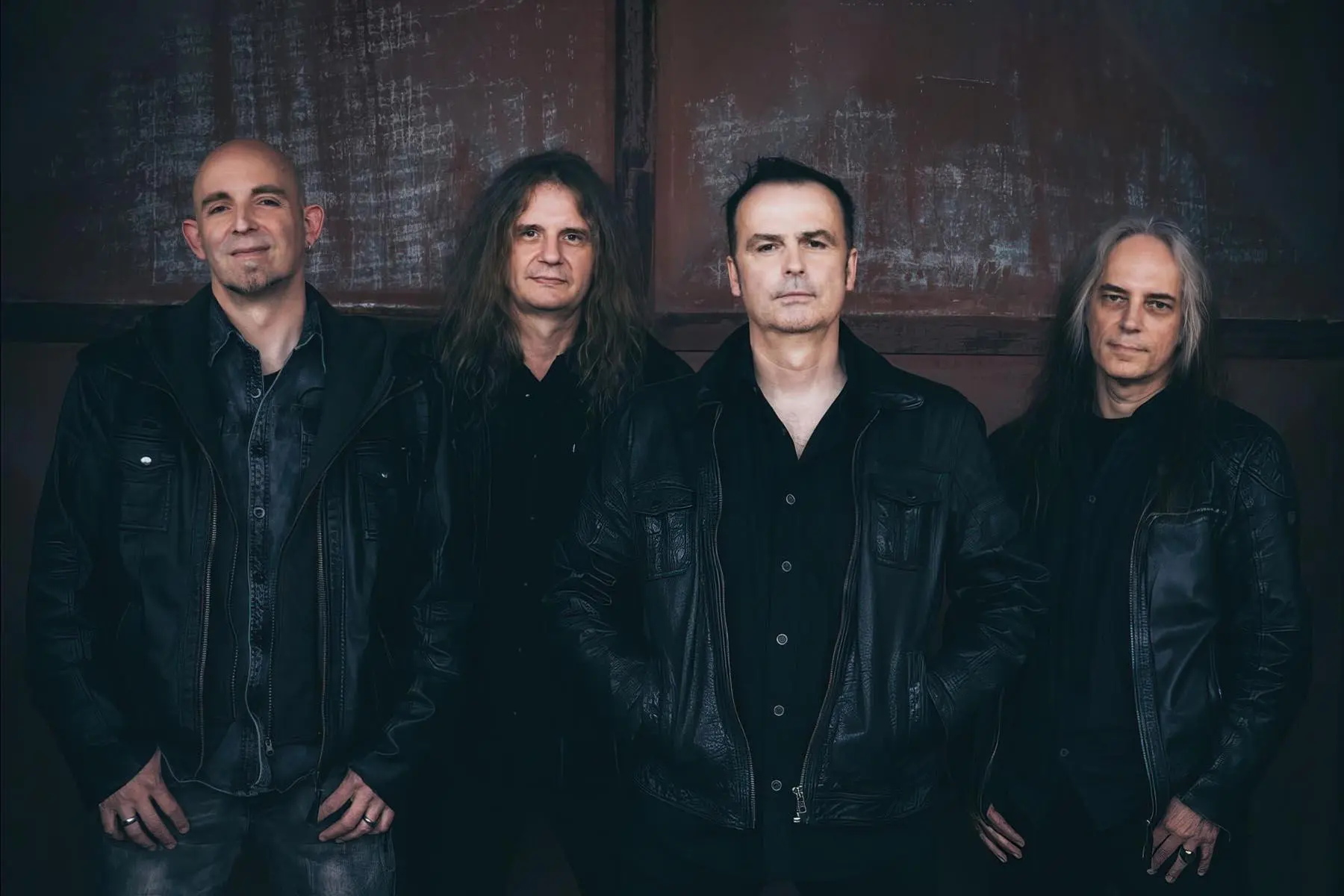
We Blind Guardian fans have had to deal with a lot in the past few years. Set aside the vinyl manufacturing delay that pushed the release of this album back almost a full year, and let’s consider the fact that the band had finally settled upon a 2019 release date for their long labored over orchestral project that we’ve heard about for nearly two decades. This release in question extended a normally four year gap between studio albums to seven this time around (meaning studio albums proper, not lavish vanity projects that are up for debate on whether they were worth it). That wouldn’t have been such a long wait had 2015’s Beyond the Red Mirror been a truly excellent album, but while far from a disaster, it was certainly prone to being influenced by the band’s orchestral mindset with it’s heavily layered keyboard arrangements and progressive songwriting tendencies. In recent interviews, Hansi has admitted as much, that the Twilight Orchestra project impacted the band’s approach for a number of years and that their newest album, The God Machine, is in part a knowing reaction away from that. It should be said that this is good thing, the band’s awareness of having possibly overdosed their fanbase on all the orchestral stuff can only lead them towards a sound that is closer to the classic Blind Guardian archetype that we all know and love. It’s a small thing to remark on first, but notice that they’ve finally switched cover artists for the first time in over a decade, using a piece from the awesome Peter Mohrbacher instead of something from Felipe Machado (with respect to Felipe, a lot of fans felt the band had long needed a visual makeover), a change that is hard not to interpret as the bards themselves signaling the start of a new era.
But as The God Machine will prove, it’s rare that these types of artistic shifts can be executed at will, because a band like Blind Guardian tend to want to follow their own muse even when knowing they outta reign something in. Blind Guardian shifts their artistic direction the way an aircraft carrier turns around, relatively fast for their lumbering nature, but it still takes a bit — it’s not a Jetski. Consider their years long gradual transition from Teutonic thrashy speed metal in the late 80s and early 90s to the epic, genre defining power metal with Imaginations and Nightfall. When they’ve made sudden jumps in their musical approach it can be a shock to our system. Take their scaling back of the grandiose sugary sound they delivered on the uber layered and dense A Night at the Opera — they overcorrected with 2006’s A Twist in the Myth, and only really found their way back to an inspired equilibrium four years later on 2010’s At the Edge of Time. Part of the reason a lot of Blind Guardian fans have been sullen about the orchestral project is not only because it was a difficult listen, but because you couldn’t help but feel it had been derailing the hard hitting aspects of the band, you know… the metal, which had been a defining element of their classic sound. I think there are a lot of us who just felt relieved when the Twilight Orchestra was released, a feeling that maybe the band would have gotten that out of their system and started running lean again. Well… again, aircraft carrier here. Its never that easy with Blind Guardian.

To give immediate context to The God Machine in case you’re refusing to listen to it until reading this review for whatever sadistic reason, it sits at the crossroads between At the Edge of Time and Beyond the Red Mirror, really being a mix of the former’s classic power metal throwback approach and the latter’s more progressive songwriting tendencies. In other words, don’t come in here expecting the second coming of Imaginations, but there are moments that sometimes will recall hints of that glorious past, simply because one of its touchstone albums was recalling that very past. I feel like it has one foot firmly planted in Blind Guardian’s power metal sound while their progressive, epic songwriting is firmly grabbing a hold of its other leg, preventing it from making a full stride into that realm. This dichotomy unfolds throughout the album in unpredictable ways, because while the opener “Deliver Us From Evil” is a strong, classic-Guardian emulation built on a satisfying riff progression, raging Hansi screams, and those patented choral backing vocals — it’s immediately followed by the proggy arrangements heard in “Damnation”, though still very much rooted in the band’s more aggressive sound palette. And is it just me or does anyone else hear shades of A Night At the Opera here? There’s something about the way the choral vocals are layered in this staggered pattern in the prechorus and chorus that give me major 2002 vibes in a surprisingly welcome way. I appreciate how they tempered all the sudden zigzags in direction throughout this song with a powerfully weighty, anchoring refrain sequence that gives the whole thing a sense of purpose and direction.
Sometimes though we just simply get those glorious, soaring uncut gems where Hansi has always shined, as on the truly magnificent “Secrets of the American Gods”, as stirring and passionate a song the bards have ever crafted. This is based on the Neil Gaiman novel American Gods, a book I’ve reread likely over ten times now, and it’s a trip to see it’s Americana drenched storyline being alluded to in a Hansi-ian lyrical adaptation (where everything comes across as dramatic and millennia-spanning epic as the tales in The Silmarillion). Hear that chorus? That’s entirely Hansi’s wheelhouse, those lengthy lyrical phrases where his vocals have the time and space to stretch and bend words to his dramatic vision (notice throughout their entire catalog that the more shorter, clipped, and jumpy a Blind Guardian song’s lyrical stanzas are, the less effective he is at really unleashing what makes his vocals truly magical). Hansi being allowed to have a long runway is what turns “Let It Be No More” into an album highlight, elevating muted, dare I say meandering verses into something truly inspiring and heartrending when the refrain kicks in. It’s not quite a ballad in the traditional sense, but its the closest thing on The God Machine to such a thing (I too was hoping for a sequel to something like “Curse My Name” or “War of the Thrones” but I’ll take this as a more than suitable substitute). There is an alternate version of this song recorded as a bonus track for the digipak and other luxury editions of the album with “heavy vocals”, and its essentially a rawer lead from Hansi with less lush padding on the choral vocals during the refrain. I can’t decide which one I enjoy more, because both have their merits but typically I think you err on the side of rawer Hansi, which meant they picked the wrong version for a bonus track.
Where that Red Mirror progressive songwriting still lingers the most is on two cuts in particular (it popped up in fits and spurts on the songs mentioned previously too, just in more manageable doses), namely “Life Beyond the Spheres” and the album closer “Destiny”. Now there are some moments within these two songs that I do enjoy, certain musical motifs or lyrical passages or vocal melodies here and there, but as a whole they’re underwhelming. I can’t be the only one who wishes “Destiny” would’ve exploded in it’s mid-song instrumental bridge sequence, surely everything prior to it seemed to be building and building to something like that, a euphoric release of growing tension — it just never materializes (though Hansi partially redeems it with his unexpected vocal gusto at 5:26). As for “Life Beyond the Spheres”, this genuinely sounds like something left off Red Mirror, a weird, jumbled mix of neat ideas that don’t really seem to gel together at all. It’s a clunkily shifting track that lacks a memorable thru melody be it instrumental or vocal driven, and the chorus seems to just arrive without any fanfare like Kramer swinging open the door to Jerry’s apartment and waltzing in. Marcus’ rhythm guitar staccato riffing is a cool thing they could’ve built on, but like “Destiny” it’s just never leveraged into something that gets the heart beating faster. And this is where the progressive aspect of the band’s songwriting really trips them up, when songs become too heady instead of working off emotion and energy and instinct. The Blind Guardian that makes you glory claw in the air is the stuff that infects your love of pathos, drama, and penchant for theatricality, its not the stuff that you have to intellectualize like a Dream Theater album.
The song most reviewers are likely going to point to when referring to this as an “old school” Blind Guardian album is “Violent Shadows”, and for good reason (though it would be an inaccurate overall description for the album). Premiered during the virtual Wacken World Wide 2020 event that a lot of us caught live and freaked out over their truly old school setlist for the show, this was the song that sent thousands of hearts wildly beating out of control for the uber suggestive hint that we were getting Imaginations part two. And indeed it does sound like a forgotten cut from that era, or something that could’ve also been found on Somewhere Far Beyond. It’s built on a solid riff-vocal tradeoff, and has a fairly memorable hook going for it, I will however admit that at times I find it maybe a little too repetitive for it’s own good (I find myself wishing it would’ve had a more adventurous bridge sequence than just the small guitar solo moment). Just as good if not better in that old school Guardian spirit is “Blood of the Elves”, it’s pacing sometimes reminding me of “A Script For My Requiem”, with Andre’s solo here conjuring up familiar ghosts of the past in a welcome way. Similarly bone shaking is “Architects of Doom”, where a thundering series of riff sequences unfolds into something far more elegant than its aggressive opening assault was suggesting. This was a sneaky one, worming its way into my good graces after initially being indifferent to it, give it a couple listens to let it blossom (that’s really the central tenet for approaching this album as a whole btw).
I can’t remember if I’ve ever mentioned it on the blog, but one of the metrics I employ when evaluating a new album, particularly from a veteran band is what I call the playlist quotient: That being the number of songs from said album you would add into a real or hypothetical playlist you were making of the artist in question. It’s a helpful way to visualize your affection for an album in a wider angle, and allows you to get past being dazzled by one or two really great songs that might initially skew your impression of an album being better than it is. Case in point is Red Mirror, an album that I gave a critical yet decently complimentary review to at the time. But it fared below 50% on the playlist quotient, with only a pair of songs making my hypothetical Blind Guardian playlist (“The Throne”, “Distant Memories”), which from an eleven song long tracklist is not great. In comparison, 2010’s At the Edge of Time boasted eight tracks that made the playlist out of a ten track album, and that I’d still keep all of those choices on there is a huge testament to that album’s enduring greatness. And for a band that I have a tremendous amount of affection for, a metric like this really helps me in not letting my enthusiasm and inner fanboy cloud my judgement to where I’m just declaring it the album of the year just because its friggin’ Blind Guardian (to that end, At the Edge of Time was my 2010 album of the year with damn good reason).
So where does The God Machine end up on the playlist quotient? Definitely better then Red Mirror but not quite scaling those lofty heights reached by AtEoT. Without question “Secrets of the American Gods”, “Let It Be No More”, and “Damnation” are instant adds, songs that I don’t think I’d see myself hitting skip on when they came up on shuffle. I’d also toss on there “Violent Shadows”, “Blood of the Elves” and “Deliver Us From Evil”, but could see myself hitting skip if the moment wasn’t quite right. So six songs out of a nine song album is a fairly strong showing, three if you really forced me to make hard cuts but all told I’d consider that a success as well. This was a good, solid, at times genuinely excellent step in the right direction for Blind Guardian. It does however feel like a band that’s trying to regain their footing after being lost in the orchestral wilds for so long, like Thingol standing in the woods of Nan Elmoth for frigging ages and eventually stumbling out in a semi-daze (albeit without the whole surprise I now have a goddess as a wife! thing). As a fan, I’m encouraged to hear where next they could possibly take this newfound sense of musical liberation, if not back to their roots entirely (which I’ll admit is an unfair and unlikely proposition), then perhaps somewhere new and exciting with their metallic natures leading the way forward. But its the bards we’re talking about, we’ll be along for the caravan and campfire sit arounds regardless.


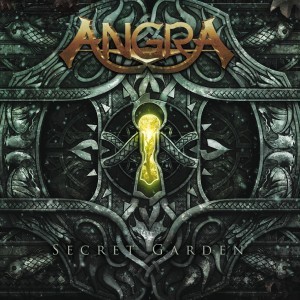 Angra – Secret Garden: I was having a hard time determining where I stand with Angra… my history with the band really started with the Edu Falaschi Rebirth era and went backwards to explore their classic Andre Matos past. This was back in 2001 or so, and I was even more a fan of Rebirth’s subsequent followup, the near-perfect Temple of Shadows. But the next two albums pretty much lost me, and my interest in the band waned throughout the years. When I read that Edu went and jumped ship in 2012 I figured the scene was set for a potential Matos reunion, but it never materialized for various reasons, and that furthered my disillusionment. I was never a big fan of Fabio Leone or Rhapsody, disliking his particular vibrato and their songwriting approach, so I wasn’t enthusiastic about him joining the band. I quietly hoped that it would be similar to the Kamelot situation, Leone pinch hitting for a tour or two and the band getting a completely different permanent vocalist. Leone won the job however, Angra’s remaining original members Rafael Bittencourt and Kiko Loureiro apparently deeming him close enough to Matos to get the job done.
 Orden Ogan – Ravenhead: Germany’s Orden Ogan is one of the more promising “new” bands in power metal, making a tremendous splash with 2012’s To The End album. I describe them as “new”, despite their first album being released over a decade ago in 2004… because in power metal, any band that arrived post-2000 is considered new in my book. That and they didn’t really reach my radar until their last album, a fantastic slice of classic 90s Blind Guardian, Rage, and a touch of Immortal-esque guitarwork. Those three bands are Orden’s musical touchstones as I hear them, vocalist/guitarist Sebastian Levermann sounding like a dead ringer for Rage’s Peavy Wagner, while the guitars sound like Andre Olbrich and Marcus Siepen decided to have a jam with Abbath. The riffing is sharp, precise, but on the right side of thrash-meets-technicality, and the songwriting is engineered to provide maximum hook impact during the choruses. One wonders why Thomen Stauch didn’t simply join these guys when he left Blind Guardian all those years ago, because they’re doing exactly what you’d figure he wanted his previous band to continue doing. Okay, so Orden Ogan won’t win any awards for originality, but they make up for that in their superior execution of a style that is damn difficult to get right.
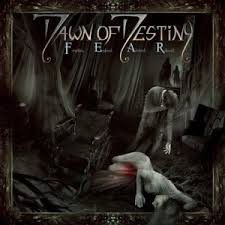 Dawn of Destiny – F.E.A.R.: Almost every year, there’s a band that appears on my radar from seemingly out of nowhere, stunning me with an album so good that I have to kick myself for not realizing that they’ve been in existence for more than a few years already. Its the “cream rises to the top” metaphor in action —- a good band producing excellent work will ultimately reach my ears due to word of mouth. Its how most of us get to know the bands we love in the first place amidst a flood of metal releases. Its impossible to listen to everything, and if you try to get in on the ground floor of every promising new band, you really do run the risk of burning yourself out (as well as preventing yourself from enjoying what you’ve already heard), particularly if you make a habit of writing about metal bands.
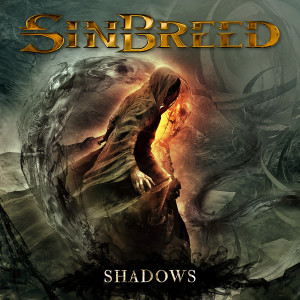 Sinbreed – Shadows: You’d be forgiven for never having heard of these guys before Marcus Siepen of Blind Guardian fame decided to join up with them. He wasn’t the first link to the mighty bards however, as Sinbreed has actually been an ongoing project of current Blind Guardian drummer Frederik Ehmke’s since 2005, together with vocalist Herbie Langhans, and guitarist Flo Laurin. They released an album back in 2010, and I’ll totally admit to missing that one (hey, Blind Guardian’s own At the Edge of Time cast a pretty large shadow over my listening time that year). What really got my attention, and that of many others was Siepen deciding to participate in this project —- after all, we’re talking about a guy who has been content to play only in one band for nearly thirty years with practically zero interest in doing anything else outside of that. Siepen is often forgotten when people pontificate about the supreme awesomeness that is Blind Guardian, as lead guitarist Andre Olbrich tends to take most of the glory (and to be honest, as a primary songwriter he probably should). However Siepen has been the Izzy to Olbrich’s Slash throughout Blind Guardian’s discography, at least playing-wise, being a razor sharp rhythm player who can deftly interplay with Olbrich’s twists, turns, and Brian May-isms.
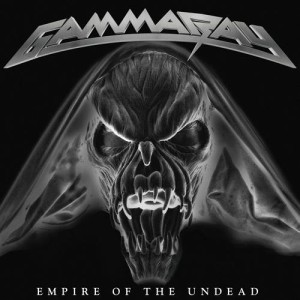 Gamma Ray – Empire of the Undead: Sometimes the problem writing reviews is that you stumble across an album where you really just don’t know what else you can state other than the obvious. I’ll shake my head and say, “No dummy, remember we’re assuming the reader hasn’t heard this album yet”, and force myself to continue. Now other than that you know I sometimes talk to myself while writing, you’ll perhaps empathize with me when you remember that Gamma Ray simply hasn’t changed much from album to album in the past decade. In fact, increases in production quality aside, Gamma Ray albums have been fairly linear affairs from one to the other, and that doesn’t mean that they haven’t been good —- but it does get hard to discuss in any remotely in-depth manner the particular intricacies of a new Gamma Ray offering.
 Eldritch – Tasting the Tears: Eldritch have long been Italy’s metal secret, a band not named Rhapsody or Lacuna Coil that sails under the radar whilst releasing quality prog/power metal albums in fairly rapid succession. They don’t get a lot of press, not even in their home country, the glory being left for their overhyped and overblown countrymen. I myself always forget that Eldritch are from Italy, not the UK or Stateside, mainly due to Terence Holler’s vocals sounding like a blend of James LaBrie and Sebastian Bach. I have to admit I missed their last album Gaia’s Legacy, so I’m not sure how this new one measures up in terms of progression, but it certainly sounds like the Eldritch I remember. Take the more metallic side of Dream Theater, tone down the progressive noodling, increase the emphasis on catchy vocal hooks with some fairly strong melodic twists and you’ll have a good idea of what to expect here.
 I just realized something —- this will be only the third time I’ve written solely about Iced Earth in the history of this blog, the first being Dystopia‘s inclusion on the Best of 2011 list, and the second being a 2012 gig report that turned
  The first four songs on the tracklisting are particularly apparent examples, the highlight among them being the adrenaline pumping “Democide”, as thrash metal-y as Iced Earth have sounded in years. Block’s solo lead vocals seem heftier and far more menacing here than on Dystopia, and again it reminds me of how he sounded when I saw him live. Its ironic then that Blind Guardian vocalist Hansi Kursch turns up in a guest spot on “Among the Living Dead”, where he doesn’t really add his trademark wall of sound vocal layering approach to the mix, instead merely offering up his own solo vocal counterpoints to Block’s. Honestly it took me a few listens to even spot Kursch’s usually instantly recognizable voice, and even after many, many listens I wonder if his talents are going under utilized here. But these thoughts are put aside by the time “The End?” kicks in, where Schaffer and lead guitarist Troy Seele deliver a lushly melodic array of guitar work to introduce some contrast to Block’s brutal take on clean vocals —- here he even delivers a near black metal styled scream midway through.
 Now to discuss the obvious album highlight, which may irk some as its a cover, but the band’s take on “Highwayman” is nothing short of spectacular. This is of course the Jimmy Webb penned namesake track of the eighties super group of Willie Nelson, Kris Kristofferson, Waylon Jennings, and Johnny Cash The song was fitting both lyrically and structurally for those singers, four country stars long pegged as outsiders in their own genre, four verses for each of them. Iced Earth invite some friends to flesh out their version of the classic, with Schaffer himself handling the first verse on lead vocals, followed by Symphony X’s Russell Allen, then Block, and finally rounded out by the distinctive country-punk twang of Volbeat’s Michael Poulsen. It really works, Schaffer has occasionally done some lead vocals on Iced Earth tracks here and there, so he has the chops to do it and sounds commanding here. Allen is of course a long ranged vocal dynamo, who even adds some of his trademark vocal run extensions despite only singing a few lines. Block’s verse might by my favorite, about the dam builder “Across the river, deep and wide / Where steel and water did collide”, his delivery touched with a hint of outlaw country and rock n’ roll abandon. Poulsen is admittedly an acquired taste, but I don’t mind a little Volbeat here and there and in small doses such as the concluding verse here he is a refreshing change up. They all do a great job.
 I’m not going to get into a history lesson here on the maddeningly long span of time (don’t… just, don’t) and events that marked this album’s journey to this one day, when it has finally met its release date. I will however take a moment to put the release of Time I in perspective, in order to illustrate just why the near Chinese Democracy-like series of delays and pratfalls surrounding the album’s creation are such a big deal. Wintersun’s only other album, their self-titled debut, was released on September 13th of 2004, and for those of you too young to remember, here’s a short list of stuff that’s worth mentioning: In 2004, there was no YouTube; MySpace was the height of social media; Facebook had not yet been opened to the general public; the first I-Phone was still years away; Twitter had not yet been dreamed of; the term “App” had not yet entered our popular vocabulary; the world had not heard of Barack Obama; George W. Bush was still serving his first term, and Dimebag Darrell (R.I.P.) was still alive and rocking.