
Despite the newest Darkthrone masterwork only being a few weeks old in my listening rotation, I gotta be honest about feeling like I’ve been going through an all things extreme metal burnout lately. Regular readers of this blog probably won’t be surprised at hearing this, considering that I’m often talking about metal listening cycles in some form or fashion. I find it better for myself to be upfront about these things, not only for the blog’s sake but for my own overall enjoyment of metal’s sake. I don’t — as the road manager interviewed at Wacken in the Metal: A Headbangers Journey documentary claims to — wake up every morning and listen to just Slayer and Testament.
In other words, I love variety and diversity within the metal spectrum. Metal is a multifaceted form of music, and I enjoy pretty much most of its subgenres without discrimination. But why the burnout? I’m not sure… could be that I was listening to a ton of death and black metal at the end of 2012, and have frequented a good amount of local metal shows (which in the Houston area are almost always full of tepid, mediocre death metal)… whatever the reason, I knew something was amiss when I started listening to Foreigner on my iPod for my morning pick me up. Thankfully, three new albums from bands of differing styles are doing something fresh with their takes on extreme metal. Whats even better is that they collectively span the three major styles in this broadly tagged “extreme” category: black, death, and thrash.
 In the case of Greece’s Rotting Christ, this was a band I hadn’t listened to in perhaps under a decade and had long ago written off as uninteresting (I’ve since checked out their back catalog on Spotify only to realize how wrong I was). Unbeknownst to me until now, they’ve been steadily pursuing a musical change of direction on their past couple albums, and its all led to the most radicalized experimentation of their career on Kata Ton Daimona Eaytoy (Do What Thou Wilt), their eleventh studio album to date. Quite simply put, I love this album. Its one of the more bizarre imaginings of black metal that I’ve ever heard really. These guys dig down deep into their Greek heritage for some dark musical inspirations that really separate them from the hordes of Norwegian copycats. Unexpected amounts of melodicism, unorthodox percussive rhythms, very inspired blackened vocal arrangements and original songwriting are just a few touchstones to remark upon. The obvious standout for its sheer accessibility is “Grandis Spiritus Diavolos”, a steadfast march in which the title phrase is repeated in staccato rhythm over a bed of ultra-melodic guitar riffs, some Uli Jon Roth-style solo accompaniment, and Therion-ish choir vocals. On “Cine Jubeste Si Lasa”, things get really bizarre with the addition of very ethnic, gypsy-like female vocals of Souzana Vougioukli that intertwine with Sakis Tolis’ ever blackened grim vocals to hypnotic effect. It took me awhile to process what was going on in the track, but its quickly become a favorite.
But there’s straight up rockin’ infused in here as well, such as in the title track, where pummeling drums are set against slower riffing guitars that tail off into hard rock styled twists. Its surprising but totally awesome, and it makes you envision someone putting Slash on stage with Abbath and telling him to just interject wherever he can. Oh and if you like your metal with a lot of spiritual-ish chanting in the background, this is your lucky day! I enjoy black metal for what it is — and its often dense and impenetrable music that demands your studious attention. And those aren’t negative attributes in my mind, they’re a part of the art. That being said its rare to come across a black metal album that is actually fun to listen to, and I can put this record alongside Sons of Northern Darkness in that regard. A year ago, the talk online was about how Norwegian black metal was stale and that American bands were making black metal fresh again (despite essentially rebranding French black metal ideas, but nevermind) with shoegaze and indie influences. Rotting Christ on the other hand don’t subscribe to addition by subtraction — they isolate what they love about black metal and reshape it to reflect their native musical language. And in doing so, they show that you don’t have to remove the metal from black metal in order to freshen things up a bit.
 And then there’s new kids on the block Cnoc An Tursa, who defy cheeky boy-band references with what sounds to me like a perfect melding of folk-infused thrash ala early Ensiferum with some of the most excellent blackened vocals that I’ve heard in recent memory. I’ve seen these guys tagged as viking metal or folk metal, and that’s a gross oversimplification. First of all, forget the Viking stuff, these guys are a Scottish band that emphasize a musical and lyrical focus on their nation’s history and culture in a rather eloquent fashion. They draw upon the well of great Scottish poetry for their lyrical inspiration, as in “Bannockburn”, which depicts the battle that was central to the Robert Burns poem of the same name (and they do so in rather Burns-ian language themselves). On other tracks they essentially set a beloved Scottish poem to a bleak, wintry, blackened folk sound scape as with “Culloden Moor”, which works far better than the idea looks on paper.
This is enthralling stuff, and whats great for these guys is that their original lyrics match the tone and consistency of the historic national poetry that they clearly treasure. My favorite moment is “Ettrick Forest In November”, which is the Sir Walter Scott poem set to a blistering, epic as all hell, Bathory meets Moonsorrow explosion of atmospheric, melodic thrash. I’m throwing that term around a lot — thrash, because I hear it in the vocal approach, and in the attack of the guitars, their crunch and the suitably gritty production that emphasizes it. Its all done without sacrificing the cleanliness of the thoughtful keyboard driven atmospherics. No fronting, this could be surprisingly high on my best of 2013 list come December.
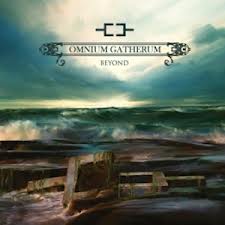 Finally, there’s been the newest release by Finland’s Omnium Gatherum, a band that I was initially introduced to through their highly acclaimed 2011 New World Shadows album. It took me quite awhile to really sink into that album, not because I found it lacking — the opposite actually, there was so much going on that was just way different from anything else I’d come to expect from melodic death metal. Odd drum patterns, alternately shifting tempos, bleak-washing atmospherics, and of course the obsidian vocals of Jukka Pelkonen. This is a weird comparison, but once I finally broke through with repeated listens, it felt like I had cracked the secrets of a musical Rubik’s cube — suddenly it all made sense and sounded right. So getting a chance to hear new music from these guys with that hurdle behind me has been a real pleasure. Their new album, Beyond, is to me an even better collection of music than it’s predecessor. Whether its on the lead single, “The Unknowing”, with its sweeping arpeggio based musical refrain that is as cinematic as it is memorable, or on the breathy, acoustic laced “Luoto” and its buildup to the hooky rock guitar driven “New Dynamic”; this album delivers with a diverse range of songs that stretch the band’s trademark sound. This is especially true on the clean vocal laden “Who Could Say”, in which Pelkonen seems to draw on equal parts Sentenced and Amorphis.
There are of course some classic styled melo-death moments, like my favorite on “The Sonic Sign”, where the guitar work includes beautifully harmonized dual leads playing a melodic refrain that you will not be able to dislodge from your head. The strangest thing about Omnium Gatherum to me is the mood they create with their musical palette — its really hard to describe. I suppose I think of typical melo-death as bringing to mind dark, brooding, ominous, and often metaphysical imagery. Conversely the bright, modern, sleek, and yes even positive sounds of Omnium work to conjure up an entirely different head space, one that takes some getting used to. Or maybe that’s just my own weird way of interpreting things. To say Omnium has been a challenging listen for me is an understatement… there was a time where I was worried I wouldn’t be able to see what others saw about them. I won’t lie, Insomnium is still my favorite melodic death metal band and the one I crave the most, but Omnium intrigue me and keep me coming back for more listens. No one else sounds remotely like them.
[youtube http://www.youtube.com/watch?v=AIyrV5br1aM?rel=0&w=560&h=315]
[youtube http://www.youtube.com/watch?v=_rYrdiCYPPk?rel=0&w=560&h=315]
[youtube http://www.youtube.com/watch?v=RsjHvaU5Aik?rel=0&w=560&h=315]
 There will be many — so so many reviews, opinions, forum rants, and of course YouTube comments that will take some pretty sharp, barbed digs with the metal pitchfork to this band and their new album The Nexus. Amaranthe offend many with a combination of sounds that hands tallied most metal fans would agree should not have ever been attempted. I’ve seen the old “just because something can be done, does not mean it should be done” line more than a few times in the past couple days. Conversely, this is a band with a surprisingly large contingent of often quite vocal supporters, many of them writing reviews for well known print and digital publications, and of course, they’ll be out there in full force online, equalizing the rebukes and jeers with various expressions of high praise — some of which will be ludicrously exaggerated. So here’s where I’ll step in, to offer a perspective from a fairly neutral middle ground.
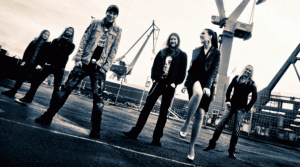 When you see the term “supergroup” applied to Amaranthe, its a total misnomer. While Mörck is fairly central to the Dragonland project, their music never attracted much notice beyond hardcore power metal devotees, and those of us who were enthralled with their take on Limahl’s “The Neverending Story” (yes THAT song) from 2002’s Holy War album. Mörck’s time in Nightrage has been limited to their post-2006 era, being the replacement for founding member Gus G. and arriving well after the acclaimed Tomas Lindberg era. Jake E. meanwhile is often noted as being a former member of Dream Evil, yet his time in the band yielded no recorded output, being only a brief stint as the band’s vocalist for six months. His tenure with the now-on-hiatus melodic power metal band Dreamland attracted little notice apart from being associated with Hammerfall’s Joacim Cans early in their development. I’ll avoid getting into the blips of time that the remaining Amaranthe members have been in their oft-cited past bands.
 On The Nexus, they seem to be following the don’t fix it if it isn’t broken blueprint, which is shrewd and smart, yet subject to a touch of the sophomore slump. And before I delve into that let me just state that this album isn’t a mind changer by any means. Whatever you felt after listening to that first album is likely what you’re going to feel if you decide to listen to this one. As I mentioned before, I completely understand why so many find this stuff distasteful, and if you’re one of those people, you’d do yourself no favors subjecting your ears to this album. For those of us who did find some enjoyment in their debut, new songs like “Invincible”, “Future on Hold”, “Stardust”, and “Infinity” with its dual lead vocal harmonies offer similarly pleasing melodic ear candy. I’m usually pretty big on quality lyrics, and they’re only serviceable at best here. Sometimes its hard to tell what some of these songs are going on about; but it doesn’t factor into the enjoyment level one way or another.
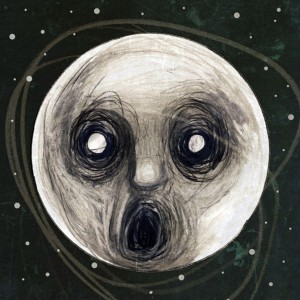 I’ve come to a downer of a realization in that I am experiencing an ever increasing disinterest in the new music being released by one of my favorite artists ever, the prolific and amazing Steven Wilson. He’s worthy of those two adjectives still, the first because its true (Porcupine Tree/ Solo Albums/ Blackfield/ Bass Communion/ No Man/ Storm Corrosion/ various production work), and the second because to me and many others, he’s responsible for some of the most inspired, interesting, and emotive music that I’ve ever heard, regardless of genre, period.
 There’s a moment on the new Darkthrone record, the typically Fenriz-esque titled The Underground Resistance, where you might smile and think to yourself, “These cheeky bastards.” Its at the start of “Valkyrie”, where Metallica-esque acoustic guitars chime in a ghost version of the reoccurring melody that carries this really bad-assed musical ode to classic metal of the 80s. Its a moment that I speculate was left in purely to piss off those people who tend to allow themselves to get pissed off over newer Darkthrone music.


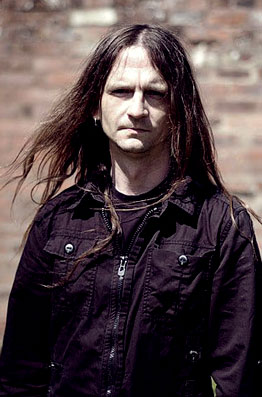 I understand all bands have to end sometime, but you’d rather the end come through a natural course of progression such as key band members leaving, artistic changes of heart, or feeling like they’ve said all they can say. The gut feeling with Power Quest is that Williams was on to something fresh with 2011’s Blood Alliance and its increased blend of 80’s AOR with traditional power metal, and that they’re leaving with their career’s work unfinished. It really does feel as if these guys had a few more albums left on the table, and that they’re having to walk away now is a shame.
 1. Queensrÿche – TBA:
 2. Avantasia – The Mystery of Time:
 3. Darkthrone – The Underground Resistance:
 4. Satyricon – TBA:
 5. Omnium Gatherum – Beyond: