I don’t like to pretend that any of you follow my every move in the world of metal blogging, social media, and related activities. So I’ll safely assume that most of you are unaware that I’ve been co-hosting a metal podcast for a few months now. Its called the MSRcast (named after the long defunct zine Mainstream Resistance) and I join its founder and host Cary G to discuss and debate current events and releases in metal, as well as anything else that’s running through our minds at that moment. MSRcast is going onto its ninth year of existence which might very well make it one of the longest running metal related podcasts out there. In the handful of times I’ve appeared on its episodes throughout this year, first as a guest and finally as an official co-host, the show has undergone a shift in format away from being loaded with music in favor of more discussion and debate. It was a natural progression I think, in that we were trying to keep episode lengths reasonable for podcasts (meaning in the hour and a half-ish range) and we had to make a choice between trimming the amount of songs we played or keeping our chatter to a minimum. Seeing as how the latter would never happen (never!), we decided to cut the amount of songs by half, and to play them one at a time within the flow of our discussions instead of in multi-song blocks.
The change has surprisingly resulted in some immediate positive feedback from existing listeners of the show and we’re rather proud of the new format as well. I’ve bounced around in sampling various metal podcasts/vidcasts for the past few years and disappointingly few of them managed to be compelling to me in any meaningful way. So many of them have well meaning hosts that come across as uninformed, or having vague takes that lack depth. The worst of them are far more concerned with demonstrating the amount of alcohol they can consume while recording —- as if that somehow adds anything worthwhile for the listener. Most of them are simply long playlists, which I find boring —- I want to know why these songs are being presented, what is the context behind them? The majority of podcasts that I love to listen to tend to be non-metal in nature, and they were my guideposts in helping to forge this new format for MSRcast. I love the analytical nature of the guys behind the Grantland NFL podcast and the B.S. Report; as well as the joyful creativity of the Nerdist podcast, The Indoor Kids, and You Made It Weird. Bringing those approaches to a metal discussion is fun, and something that I hope translates.
This new format began with our October 3rd release of MSRcast episode 157 where we discussed everything from Opeth’s Pale Communion, a slew of power metal releases, and a brief musing on the U2 album release controversy. And we’ve just released MSRcast episode 158 (that’s quick for us!), where we’re joined by Dave of the Metal Geeks podcast (more on that show in a sec) to discuss everything from the upcoming Sanctuary album, Jesper Stromblad’s social media bombshell, new music from Allen/Lande and Bloodbath as well as the Behemoth and Mastodon controversies. That’s just a small fraction of what we actually managed to get to, its a loaded episode and I hope you guys check it out. We’re on iTunes (just search for us through the iTunes store and hit subscribe —- it helps us and makes things easier for you), and you can easily find us on our host sponsor’s website at Metal Injection dot net. I also dropped in on the newest episode of Metal Geeks, the sister show to MSRcast, to discuss a ton of topics about videogames, movies, TV shows and anything else that fits under their huge umbrella of “geek” related discussion. It was a blast to record and I can’t wait to drop in on more of them! Give these episodes a try, throw them on the iPod/iPhone or whatever you use and play them on your commute, or better yet on your headphones at work! We’ll make the time go by faster I promise.
I was a week or so late in listening to In Flames newest album, Siren Charms, which came out way back on September 9th. I had put it off not only due to being busy catching up on records by bands that I actually still harbored affection for, but in large part because I was rather disoriented by the pre-release single “Through Oblivion”. When I finally sat down to listen to the full album, I was so thoroughly disappointed by what I was hearing that I decided to not waste any more time on it. I was going to stick to that plan until I read through the flurry of news articles published last week regarding recent social media comments by ex-In Flames guitarist and founder Jesper Strömblad. As the story goes, Strömblad had invited fans on his Facebook page to ask him anything, and as expected the majority of the questions were in regards to his departure from In Flames in 2010. He decided to write a post to address this ultimate question for everyone and in doing so he delivered a revelation that I don’t think many were expecting (certainly not I). I’ll let Strömblad speak for himself for clarity’s sake:
“Will I ever return to In Flames? No one never knows what the future brings,but the chances are slim as they embarked on a different musical journey,they have a solid lineup and Im on a totally different path in life right now. I would never go into details why I quit, but there is always one official story and there is the other……Alcohol is a quite small part of it. That can also answer the next question, what do I think of their new stuff. Listen to The Resistance and that explains a bit of it. We simply went different directions. I need to stand behind and feel inspired with what I do 100%, I owe it to the fans and obviously the band. All respect to In Flames and their new approach, but for me the band was a guitar/riff based melo-death band. And Its not anymore, but still amazing musicianship and I don’t think its wrong. But its not the vision I had when we started out.” – Jesper Strömblad, 9/30/14
Sometimes, as in the recent situation with Queensrÿche, its hard for entrenched, long-time band members who are reliant upon the band’s touring activities to provide the bulk of their income to simply walk away due to musical differences or general dissatisfaction. I mention that because In Flames transition to its modern sound really started way back on 2004’s Soundtrack to Your Escape (and it could be legitimately argued that it began on 2002’s Reroute to Remain), and as such that means that Strömblad stuck through at least six years and three albums of increasingly drastic musical changes that veered sharply away from the band’s classic era “guitar/riff based melo-death”, as the man himself so succinctly described it. Comparatively the guys in Queensrÿche had to endure a decade’s worth of Geoff Tate’s hideous transforming of that band into a shell of its former self before they found a viable way to extricate themselves by doing a little firing/hiring. Strömblad didn’t have a similar option within In Flames. Complicating matters was the fact that the band was his creation, and it was an increasingly lucrative job after all —- I completely understand why he stuck it out as long as he did. When it was announced that he was leaving the band, an on-going battle with alcoholism was listed as the sole factor in his decision to walk away from a rock n’ roll lifestyle. A clean break perhaps… one even publicly lauded by the remaining band members as they (genuinely, I’m sure) wished Strömblad well in his recovery attempts. Of course in light of Strömblad’s recent comments, I’ve seen more than a few internet jokers suggesting that Strömblad has inadvertently revealed the cause for his alcoholism.
I’ve written about In Flames once before, and as I expressed in that article, In Flames’ musical discography can be viewed as consisting of two distinct eras: The classic 1994-2000 era where the songs were written around the primary guitar-based melodies, and the Friden influenced 2002-present day era where the vocal melodies took prevalence within the songwriting. Its not just a simple case of substituting one for another, as the change to vocal-melody driven songwriting effectively nullified most of the elements that made us In Flames fans in the first place. Its been a suspicion of mine and many others that this seismic shift within the band’s musical approach had their source in the band’s vocalist Anders Friden. That’s not exactly breaking news to any fan of classic era In Flames —- if the metalcore meets Depeche Mode mess that was his Passengers side project didn’t clue you in, then certainly the prevalence of clean singing within new In Flames material was the biggest flag waver. It couldn’t have been all on Friden, because if everyone else in the band felt the opposite, he’d have surely been removed or left of his own accord at some point, right? These days it appears increasingly obvious via songwriting credits that In Flames guitarist Bjorn Gelotte has been Friden’s major partner within the band’s ranks helping him to mold their vocal driven style. Friden has made some recent comments that give credence to that theory, stating in an recent interview:
I think [Jesper’s departure] was bigger for people outside than it was for the band. I think Jesper, mentally, had already been out of the band for a few years before he left. He was actually not touring for almost a year-and-a-half before we made the decision and he exited the band. On a friendship level, it’s hard. I miss the guy, but at the same time, it just didn’t work. People should know: Both Björn and I have done 10 out of 11 In Flames albums. We know how an In Flames album should be done. Musically, it didn’t change as much as people think. – Anders Friden in Alternative Press, 2014
Strömblad’s revelation makes me wonder as to how long he was feeling alienated within his own band. I also am more inclined to believe that there was gradual shifting of power within the lineup from Strömblad (who essentially was the lead music writer during their classic era) to Friden beginning around the Reroute to Remain era. All of this speculation is purely retrograde and of no real consequence of course, but we’re fans and that’s what we do. His comments come as somewhat of a relief to myself in that they help to suggest a sequence of events that explain why a great band capable of writing majestic, breathtaking, folk-infused melo-death could shift so far away from what made them great. It contextualizes those few moments I would hear on those post-2002 albums that would perk my ears up with their vague recollections of their classic era, such as the guitar solo in “Come Clarity”, or on “Vanishing Light”, where the guitars drove the melody as in the old days. They were moments where Strömblad was breaking through to interject some old school spirit into the mix. I also feel a certain amount of gratitude and sympathy for Strömblad in general: Gratitude for what he’s done for me as a metal fan with that classic era of flawless work, and sympathy for the way it seems he was slowly ousted from his own band. He wrote in this post that listening to his new band The Resistance would provide all the answers anyone needs as to his view on current In Flames —- and while I’m not entirely sold on that project’s one album, it does harken to shades of his Ceremonial Oath past with its slightly melodic take on death metal. Its certainly a lot closer to what I really want to hear from him than he was capable of achieving during his final years with In Flames.
As for Siren Charms, I’ve listened through it a few times and keep coming to the same conclusion: This is the sound of a band that has little to no interest in metal anymore. Some melodic guitar figures aside, it bears scant resemblance to even their modern metal era work. Vocal melodies are the back bones of these songs, and the possibility of interesting guitar work is given limited, fractional space at best. More disconcertingly, the songwriting is more prone to uninteresting, plodding, meandering riffs that to serve as a rhythmic backdrop for Friden’s wavering vocal work in bridge sections. In fact he hardly screams at all on the album, and when he does its simply to accentuate a repeating chorus in order to spice things up —- the rest of the time he is firmly fixed in clean vocals mode. Granted, there are moments where he delivers his best work to date in that vocal style, but those of us who have seen him live in the recent past know that its a mirage: He sounds decent in a recording studio with the aid of overdubs, punch-ins, and the ability to get the best possible take. He is hopelessly miserable at emulating those results on stage however, and its in those live situations where the band further distances itself from their classic era. Friden’s reluctance to play older songs is justified by his most likely truthful observation that there are more fans of their post-2002 work at their shows than people clamoring for their old classics. Its slightly tragic for those of us that used to call ourselves fans of the band, because there aren’t many reasons to see their live shows anymore, let alone buy their new albums.
My personal irony here is that after the release of 2011’s Sounds of a Playground Fading, I accused the band of hypocrisy for mocking fans who clamored for a return to their classic sound while simultaneously repeating themselves musically for their past few albums. It seems In Flames has taken criticism like that to heart, as no one can deny that Siren Charms is a new direction indeed. There’s hope for us Strömblad fans however, as he also mentioned that he’s working on a solo album, and here’s hoping its something that taps into that classic era spirit. I met Strömblad outside of a dusty venue in Houston on their 2003 Reroute to Remain tour, and I mentioned to him that he should consider recording an instrumental solo album, maybe something half electric and half acoustic (because no one did drop in acoustic interludes like Strömblad). He just smiled and asked “Who would be interested in that? Just you?”, and proceeded to walk inside for sound check. Just me and legions of forgotten In Flames fans Jesper —- legions.
Some of you might remember another one of my recurring features, The Pigeon Post, where I review new albums that have accumulated in my inbox via record labels or PR agencies representing bands that I’m unfamiliar with. That’s the essence of the feature in a nutshell, a cards up on the table way of letting you know that I’m not trying to come off as some all knowing metal svengali —- and simultaneously reminding the aforementioned bands and their respective music business partners that they’re asking for my published solicited opinions for better or worse. If a band appears on The Pigeon Post, its one I’m hearing for the first time, and making sure my readers know that ahead of time is important to me for boring ethical reasons probably of no interest to anyone but myself. As long as my memory doesn’t fail me, no band should ever end up in this feature twice! Catch the previous two installments here, and then here (particularly the first installment if you want a more detailed explanation on the origins of the The Pigeon Post).
One quick note, I realize its been an age since the last installment of this feature, but 2014 has proven to be an intense year for new releases from bands long established (in other words, bands I’ve been familiar with), and I’m going to go ahead and use that as an excuse for why its taken me so long to turn my attention to this. I’d like to apologize to any bands or their respective labels/agencies who sent me promos that didn’t end up among the reviews below. I know there were quite a few that piled up and that backlog grew so out of control that I just had to make some random selections and move on. There’s only so many hours in a day I have to listen to music and its challenging enough making the most of them as is! Maybe I should talk to Fenriz about a job in the Norwegian Postal Service, he listens to music all day long at work right? Anyone have his number?
Solace of Requiem – Casting Ruin: This is a case where I halfway like a band’s sound and sonic approach in general, but find little in the way of compelling songwriting to keep me coming back. That’s a pretty harsh thing to state right off the bat in a review so I’ll add in these qualifiers: Solace of Requiem seem to simultaneously want to echo Dissection and Morbid Angel and Origin. Some will disagree with me here, but I find little in the way of meaningful intersections between those three bands or the styles they’ve come to represent. So sometimes Solace of Requiem hits me with something interesting in the way of blackened melo-deth, and then a section or so later they’re doing something that resembles technical death metal —- a genre I think I’ve simply gotten bored of. At any given point vocalist Jeff Sumrell might interrupt his rather good blackened grim vocals with outright boring death metal grunts, an alarming change up that isn’t musically justified. Its possible to stick to the former and keep it compelling, bands have been doing it for years, vocal changeups don’t impress anyone except the handful of guys at the local backyard death metal fest. If there was more in the way of musical motifs throughout the songwriting then I’d be able to accept such a glaring flaw, but the songs themselves are collages of riffs and percussion rather than songs with a story to tell.
These guys are out of Virginia Beach, Virginia, which like my current home city of Houston might mean that they are based in a place that lacks a strong, distinctive metal personality. In Houston’s metal scene for example, you’ll find everything from New York death metal copycats that brazenly wear NY death metal patches on their denim jackets; to Norwegian black metal worshippers (down to the corpse paint and spikes and keyboards); to Florida death metal copycats (this means they have some semblance of melody amidst their quest for bru/brootality), to indie-friendly doom metal bands (because they’re the only thing our local alternative newspaper covers it seems). That’s to name a few —- point is that Houston being a city of transients tends to have not so much a musical melting pot as a musical buffet. There’s something for everyone, and its all mostly unappetizing. I’ve been looking around online and it seems I’m not the only one that thinks Solace of Requiem lacks focus or direction, and its a shame because there’s obvious talent on display on Casting Ruin. But this is the band’s fourth album now, they’ve been around since 2001. At some point you’d figure that their influences would begin to shed and that they would find their own voice. What could be more important for any developing band?
Noble Beast – s/t: Without exaggeration, this debut album from St. Paul, Minnesota quartet Noble Beast is the best album I’ve ever gotten to review for The Pigeon Post, and daringly enough, might just be one of the best overall albums of 2014 —- no joke, its that good, shockingly so. First off, thanks to reader Eric, who emailed me about Noble Beast a long, long time ago where it was lost amid a clutter of piled up emails. Shamefully I read his midsummer follow-up email asking if I had checked them out yet and as of early September I still had not. Better late than never right? There’s so much to discuss here, how about for starters the fact that Noble Beast are in their very existence a rarity, that as an American power metal band. Unlike fellow countrymen Pharaoh whose take on power metal is very much informed by the grit and grime of American thrash, Noble Beast are clearly influenced by a distinctly European strain of power metal. Upon listening to this album, I’m hearing generous helpings of Blind Guardian, Iron Savior, and even a flavoring of Falconer. Even more startling is just how mature and developed they sound on this debut —- it sounds like the work of a band a few albums deep in their career. It makes sense when you do a little digging and see that a couple of these songs were around since 2010, when the band released their first and only demo. The time in between was spent wisely —- on honing their songwriting craft and creating a musical identity that is separable from their influences, yet willing to embrace them.
I’m not too clear on who the primary songwriter is within the band’s ranks, but they clearly have a truly gifted talent at the helm. These are fully realized, exceedingly well written songs that just sound as if they were worked and honed by a craftsman. Verses are engaging and full of musical diversity, tempo shifts and progressive change-ups; bridges are actually built to lead in and out of chorus sections with their own identity —- and the choruses themselves are built upon fully arcing hooks. I’m going to give you the link to their bandcamp page, because I want you to hear what I’m going on about. Take a listen to the album opener “Iron Clad Angels”, and join me in marveling at just how huge that chorus vocal melody is, or on “Dragon Reborn” where the verses march with a military parade shuffle that heightens the tension and explode in a refrain that is so satisfying precision sharp that I couldn’t help smiling in dumb glee when listening along (also, if I took this song alone and played it to my Blind Guardian loving buddies and told them it was from the German band’s upcoming new album, they’d have totally believed me… that’s not a criticism of Noble Beast by the way). I really love the way the band incorporates subtle strumming acoustic guitar work in the verses of the non-ballad epic “We Burn”, its a fresh idea that I’ve honestly not heard done so well before. Every single song on this album is at the very least good, and more often than not they’re hovering near great status.
As excellent as all the band members are at delivering superior musicianship, particularly in terms of guitar work, its vocalist Rob Jalonen that has the standout performance to behold. His tone is a mix of Hansi Kursch and Piet Sielck, the kind of synthesis that practically demands that you play some type of epic power metal lest you offend someone in Europe or South America by a refusal to play ball. Jalonen’s public musical history shows only an affiliation with similarly power metal-esque projects, but I wonder if at some point in his early musical development he tried putting together say an alt-country band ala Wilco, or Lucero or something like that. I imagine him being abducted by a pair of silent, long haired guys in Maiden and Dream Evil tees and being driven around St. Paul against his will while Imaginations From the Other Side played on an endless loop. Sounds like a scene from Metalocalypse. The reality is probably far more in line with the rest of us, and its okay to embrace that as well. As a power metal fan in the States, I take a particularly distinctive pride in seeing one of my own countrymen plant the metaphorical flag for the subgenre in American soil with such an incredible effort. But like the original European stuff that blew our collective minds and made regular rock seem timid and pedestrian, Noble Beast’s slice of perfect power metal should know no boundaries. Europe, South America and Japan —- you’ve been warned.
Darkenhold – Castellum: If you’re in a black metal band from France, chances are you sound something similar to Alcest right? That being the dreamy shoegaze-laden, swirling, fuzzy flavor of black metal that put the country on the map (for good reason) and was later copied by an embarrassing amount of American black metallers (you know its true). Darkenhold are a rare French black metal band that apparently wants nothing to do with the Neige sound and choose to instead pursue a far more traditional strain in line with second wave Norwegian black metal. And judging from a few spins of their newest, Castellum, they’re actually managing to deliver a pretty convincing take on it —- this is a band that I would’ve easily pegged as Norwegian (on that note, still not sure what language the lyrics are in… but its not that pressing of an issue). They really go for a straight down the middle, early 90s approach that takes bits and pieces from Mayhem, Immortal, Burzum, and early Satyricon in equal parts. That may strike some as an exercise in redundancy but I’ve got to give it to these guys, their songs are packed with catchy riffs and a well considered balance between sheer aggression and atmospherics (mostly in the form of clean electric passages with some acoustic undertones… not a lot in the way of keyboards here).
They also chose to limit their nostalgic perspective when it came to the production, because unlike the purposefully lo-fi nature of those early 90s black metal classics, Castellum is mixed to be sharp, present, and discernible. That means that you can hear separation between the bass, rhythm and lead guitars, and the vocals sit on top of them instead of being buried down below. Percussionist Aboth (Abbath might not be amused!) is a particular highlight in terms of performance, he’s not flattening these songs to death with unending blastbeats. Instead he alternates between a variety of approaches and tempo shifts —- in “Glorious Horns” he punctuates an epic, stop-start intro with an old-school classic metal sensibility, lesser drummers would’ve overplayed in that moment, and his restraint throughout the album is commendable. I’m genuinely surprised here —- I didn’t expect to be this entertained by a purposeful stylistic throwback. This is their third album, and as per music industry lore a band’s third album is where they really hit their stride… obviously I haven’t heard their first two to compare but Castellum really works. I was curious to see a band picture and looked them up on the Metal Archives, they look oddly enough like a cross between Alcest and Hammerfall —- I don’t know if that’s good or band but its certainly interesting. By the way, their band name literally means “dark hold” right? Dimmu Borgir might suggest that these guys limit their Norwegian worship to the music and find a moniker in their native French language perhaps?
Protokult – No Beer In Heaven: Jeez… what can I say about Protokult? If the title of their debut album doesn’t give it away, this Toronto based, dual-gender vocal helmed folk metal band dabbles in a style that is geared towards those who find Alestorm and the dreadful Korpiklaani palatable. That’s the audience they’re going to get anyway with their choice of album title, despite that their sound actually leans closer towards a not yet fully realized blending of Arkona and Turisas. Its a debut album, so its easy to be forgiving of the sense that if things go right for Protokult, their third and fourth albums won’t sound anything like the musical crockpot that is No Beer In Heaven. Some of these songs are so unfocused that they’re actually jarringly atonal, such as “Heaven Cast Me Out”, where an effective keyboard melody is wasted by vocal lines that are aimless and lacking definable hooks. Co-vocalist Ekaterina Pyatkova is a distinctive, sharp, angular operatic soprano that reminds me of an early Tarja Turunen. On those early Nightwish songs off Angels Fall First that never quite gelled, Turunen’s vocals often spiraled off into an unstructured mess. It was on the subsequent Ocean Born when Tuomas Holopainen began to harness his songwriting abilities together with Turunen’s vocal capacity where he was first able to display both of their respectively brilliant abilities. The same needs to happen for Pyatkova, and hopefully from within the band a songwriter will emerge that can deliver the goods in that sense because she has tremendous raw talent.
There are flashes and moments on the album where I can spot the seeds for something good, such as on “Sol Intention”, where male vocalist Martin Drozd delivers clean vocals that sound like a merging of Danzig and Peter Steele. I want to like him more as a harsh/extreme vocalist, but he often dithers between semi-clean/semi-extreme styles in a way that is frustrating (I wonder if he’ll grow on me over time in that sense). One track I do think has some promise is “Gorale”, which reminds me of a blend of Eluveitie or Arkona with Lepaca Kliffoth-era Therion with its woodwind laced intro gradually unfolding into an epic, guitar-fueled, stomping finish. Its not a great song, but I can see more of a future in them pursuing that direction than in following their impulse to be silly for silliness sake in tracks like “Water of Life”, or the now immortalized in a music video “Get Me A Beer!”. Speaking of the latter, the video is as ridiculous as you’d imagine it would be, but there’s something about it that endeared me to the band. Maybe its their wide-eyed attempt at face-pulling shenanigans, or the angry band manager shtick, or the comic suddenness in which beer-googles earns Drozd a slap across the face. I found myself smiling despite absolutely deploring the song and its trite subject matter —- somehow I’m actually rooting for this ragtag bunch of Canadians! On that note, I felt like the head-slap earning statement expressed by one band member at the end was meant for me: “You know, I think I’m just going to have a glass of apple juice.”
Voyager – V: I sat down with this album fully expecting to dislike everything about it, and my inborn prejudices towards modern progressive metal’s tendency to rely on djent and noise-related nonsense was pervading my mind before I actually hit play. Its always such a gratifying experience to be proved wrong in these situations. The manner in which Voyager’s V, (their fifth album now, hence the title, geddit?), is described by reviewers all around the internet and in blurbs that I received from their PR agency is exactly the sort of language that tends to describe bands that do everything but write interesting music (at least for me). Thankfully, the reality is that for all Voyager’s shininess, their Intel factory uber clean guitar chugging, and their keyboard built atmospherics —- this is a band that is smart and savvy enough to realize that its all a waste without sharp, melodically driven, hook-LADEN songwriting. They have that in spades, and I think what makes the songwriting work in terms of playing to their musical strengths is the fact that their singer Daniel Estrin has smooth, expressive, yet powerful range and capacity to use his vocal melodies to anchor most of these songs. The instrumentation is impressive for sure, if you can tolerate its anti-septic delivery and approach, but it all surrounds Estrin’s vocals as the central element of nearly all of these songs.
It works, and I commend them for keeping a lid on excessive instrumental sections that lesser bands would splatter all over the place. Whether or not the Australian guys and gal in Voyager would like to admit it, they’re writing pop songs and dressing them up in prog-metal clothes, and hang on a second, that’s entirely okay! Take the single, “Hyperventilating”, where delicate clean electric lazy strumming is juxtaposed to frenetic riffs during the chorus —- sounds heavy right? Yet its Estrin’s very un-aggressive vocal dexterity in extending syllables and bending them to his will that results in his carrying the actual melody with the lyric “My everything is fading… I’m hyperventilating”. Is it just me or does his syllabic extensions give off a Dolores O’Riordan vibe? I like that the band isn’t afraid of getting away from ze rockin’, as on “Summer Always Comes Again”, a lovely piano-led ballad swelled by keyed-in strings that reminds me of late nineties era Porcupine Tree. The percussive surge towards the song’s end is a nice surprise and raises the euphoria level before suddenly dropping off…I’m wishing it was a longer song. I should also take a line here to point out that Estrin is a fairly skillful lyricist, which is always a rarity in metal in general. He’s not exceedingly poetic like a Roy Khan, but he has a way with clear, concise diction and phrasing. Its a good thing too, because his vocal style certainly lends itself to be easily decipherable, and any embarrassingly bad lyrics would clearly stand out. Estrin manages to avoid that faux-pas, and Voyager manages to shove another one of my preconceptions into the gutter where it belongs.
I so enjoyed the format of the first Catching Up With 2014 reviews roundup that I decided to tackle a slew of new releases with the same quick strike/takeaway format. Yes I just dropped a full length solo review for the new Dragonforce album a few days ago, but I’m thinking that issuing single release reviews one by one could get tiring for both you and I (and its worth mentioning here that I have some non-reviews based updates in the works). Certainly one can argue that the arrival of a new Opeth album should warrant its own individual, in-depth review at the very least, and I was planning on it until earlier today when during another listen through I decided that my opinion might be more clear if I forced myself to keep my thoughts concise and focused (as in 400-500ish words — I totally break this rule right away too). So the aforementioned new Opeth, alongside “new” (relatively speaking) releases by Accept, Vintersorg, Unisonic, Anathema, and the mighty Hammerfall are on the docket this time. Its a sequel, like Ghostbusters 2 (only without that gross looking pink slime, walking Stay Pufts, and that creepy painting of Vigo the Carpathian —- yamahama!). Lets get to it:
Opeth – Pale Communion: The Opeth we knew is long gone, and I’m actually thinking that it might be okay. Hear me out on this for a second —- I was NOT a fan of Heritage, and I was also perhaps willfully ignorant of what that album was signaling. On paper it was a good idea, a prog-rock album with seventies influences by a prog-death metal band that had always exhibited that specific influence in their catalog, even produced a few masterpieces in doing so. After my initial few spins through it I remember tempering my reaction by reasoning with myself that it was going to be a one-off experiment in the Opeth canon, and so not to overreact. It was a muddied, ambling mess that lacked crisp songwriting and coherent melodicism; it was the sound of Mikael Akerfeldt over extending (or over thinking) his abilities. But it was alarming then to realize that on Heritage’s supporting tour, the band was largely shying away from past material that emphasized their death metal sound, and Akerfeldt’s public comments towards extreme metal in the media were raising the ire of some, and disheartening others. I sympathized with many of the disaffected and honestly internalized the band’s disinterest in metal as something akin to losing touch with a friend. I summed up my feelings on the whole thing in a little more detail earlier this year when discussing “The Cusp of Eternity” single.
As with most of these situations, our reactions are often too extreme and emotionally premature. The logical fallacy of Heritage that many like myself failed to grasp was, “Would you like this album if the songwriting was great?”, the unspoken next question being “Or did you just like Opeth because of the growling vocals?”. No, of course not you banana brain, you loved Opeth because of Akerfeldt’s unorthodox but intelligent approach to songwriting, his very distinct melancholic melodicism, and the way it was all put together by an always incredibly talented supporting cast (that’s me calling myself a banana brain by the way, but feel free to join me!). The artistic success of their new follow-up album, Pale Communion, is that it hits the mark on all of those positive qualities I listed above, as well as helping to contextualize the role of Heritage and Watershed in the Opeth narrative —- being that Watershed was the bridging record that shed the majority of harsh vocals, and Heritage shed the presence of metallic riffs. When I listen to Pale Communion, I hear moments of transcendence similar to others that Opeth have provided throughout their career, such as in the musical motif of “Faith In Others” (the album’s best song), where a simple, lonely, repeating piano/guitar figure at the 3:11 mark sends chills throughout. I hear them in “Eternal Rains Will Come” where Akerfeldt delivers a sweeping vocal performance that anchors the song as progressive rock elements dance around it, or in the glorious refrain to “Cusp of Eternity”, where a wordless vocal harmony says more than any lyric could. And again in the clean toned soloing over gentle plucked acoustic rumblings in “Moon Above, Sun Below”, a song that seems like it could’ve been recorded during the Still Life sessions.
Its not all great however, as there are a couple trips to Heritage territory with the utterly skipable Spinal Tap’s Jazz Odyssey that is “Goblin” —- I get that its a tribute to the 70’s prog band of the same name, but its the kind of meandering, unfocused, pointless exercise in excess that people get mad at Dream Theater for. The same stylistic choice pops up in the middle of “River”, an otherwise lovely (if perhaps too light and breezy) song that is marred by a couple minute long 70s styled prog ramble. I understand that this is what Akerfeldt is into, and hey, fair enough. But I’ll call it like I hear it, and wow is it boring! Whatever happened to simply writing a good guitar solo to fill a mid-song bridge? Don’t look at me like that, he used to write those all the time! One other thing, and maybe this is just based on preferences because I suppose it could be argued that most of Opeth’s music is best listened to when you’re really in the mood for it, but there were times listening to this album when it sounded very alive and vital —- and other times when it was leaning towards falling flat and washing over me. This is a delicate observation to express so bear with me: Its a good album (for the most part), but I suspect that Opeth loses something when their music lacks a varying range of sonic dynamics. In other words, when they stay in this light-toned, semi-ballad/semi-rock auditory space, their music (even the good songs) suffer from listener degradation in terms of interest level. Whenever I play “Dirge For November” from Blackwater Park, my ears perk up and I’m captivated merely by the range of dynamics alone; I’m not certain I can say the same thing about songs from Pale Communion.
Takeaway: If you’re able to accept Opeth’s transition from prog-death metal to simply prog-rock, then you’ll find that Pale Communion accomplishes what Heritage could not, namely providing something compelling to listen to. Take a listen to it, its the least you can do for a band that delivered masterpiece after masterpiece for a quite a few years there. Oh one more thing, I normally love Travis Smith’s work but man does that cover art leave a lot to be desired. And yeah I know this review was well over 800 words, but I make the rules and I can break them!
Accept – Blind Rage: Four years ago, Germany’s storied metal veterans Accept released a knockout of an album from seemingly out of nowhere; Blood of Nations was as unexpected as it was awesome. I still listen to that record whenever I need an Accept fix (and the fact that I reach for it over Balls to the Walls or Russian Roulette is surprising even to myself). Keep in mind that it was their first album in fourteen years; they were coming off a long period of relative inactivity consisting of two aborted reunions with original vocalist Udo Dirkschneider, and they were enlisting a rather unknown American replacement vocalist in Mark Tornillo. It all seemed like a recipe for mediocrity on paper, but somehow, Wolf Hoffman and company rediscovered their musical mojo. I saw them live on that tour here in Houston, and they were satisfying perfect that night even when down a guitarist (Herman Frank was injured during a fall on stage in San Antonio the night before). But I’ll admit, I thought they stumbled a bit on the 2012 follow-up Stalingrad —- granted there were a couple really strong songs, but the record felt rushed with ideas undeveloped and lacking cohesion (the band admitted as much in interviews later on).
Band’s frequently make mistakes like that, believing that the best way to keep momentum going after a particularly successful project is to dash back into the studio rather than risk the possibility of stagnation from an extended period of time off. Here’s the thing: sometimes that plan works, but only if the creation of the art is the primary focus at hand. When you make the U2-ian mistake of scheduling tours and promotional activities before completing the writing/recording of the album, you run the risk of forcing yourself to pull it out of the oven before its fully cooked. That works for baking deliciously soft chocolate chip cookies, not for delivering great metal records. Thankfully, the band have purposefully taken their time with Blind Rage, as this is an album that matches the intensity of Blood of the Nations and at times even surpasses it on a songwriting level. Speaking towards the latter, listen to the multifaceted nature of “Dark Side of My Heart”, as a song that plays with traditional mid-tempo Accept elements in an unexpectedly straightforward pop approach, down to the eighties glam-rock nature of the chorus (which is excellent). The result is a song that is moody, dark, and laced with tension yet pocketing one of the album’s most gleefully memorable hooks. As far as demonstrations of sheer aggression and intensity, we’re treated to the album opener and first single “Stampede”, whose suddenly accelerating chorus is devastatingly heavy in itself. I also love the Queensryche-ian “The Curse”, where Tornillo takes center stage in his best vocal performance to date in a truly epic song.
Takeaway: The most satisfying aspect of this album is the lack of anything remotely resembling a “dud” —- sure there are songs you’ll like more than others, but nothing that should make you hit skip. And hey congrats to Accept for notching their first number one album on the German Media Control charts with this one, it was a long time coming. See, the takeaways don’t always have to be snarky or silly —- oh I’ve ruined it haven”t I?
Vintersorg – Naturbål: While writing this review, Firefox tanked out on me, gobbling up what I wrote. Serves me right for running both Spotify and iTunes at the same time, I know… I need a new laptop. But I’m thinking that the crash actually did both you and I a favor, because I was really going on a bit with some unnecessary background info and essentially doing a whole lotta rambling. So I’ll spare you that nonsense and break it down like this: Vintersorg is a project that is really hard to love (or like even). You’ve gotta be committed, and you’ve gotta put in the time and the work, and I really mean work by the way —- this is complex, often obtuse avant garde folk/progressive black metal that is often maddeningly messy. A good Vintersorg song will reveal itself to you after many, many repeat listens after which your brain might begin to be able to process what you’re actually listening to (the not so good songs will just continue to exist as a spaghetti bowl of sound). I myself became a fan with his most accessible album, Comic Genesis, way back upon its release in 2000 when a friend of mine played it for me proclaiming it to be the next best thing to Blind Guardian. I was sold, and proceeded to buy up the existing Vintersorg catalog, as well as that of his pure folk-metal side project Otyg (oh, Vintersorg is a guy, real name Andreas Hedlund, I probably should’ve mentioned that at the top). But Vintersorg moved away from the accessibility of Cosmic Genesis’ to wildly avant garde songwriting approaches through his next few albums, and I toughed it out and found things to enjoy on them, but they certainly weren’t what I originally signed up for.
Since the release of 2007’s Solens Rotter, Vintersorg has moved back into a more folk-metal driven style, yet it still carries much of the avant-garde strangeness that is by now a Vintersorg trademark. His past few releases have all been part of a quadrilogy of albums all individually focusing on a particular elemental —- this new one, Naturbål (translated as “nature’s bonfire”) is the third in this series, and perhaps the most instantly enjoyable. When I say instant, temper your expectations a touch because the very concept is relative in regards to Vintersorg (as in its relatively accessible compared to some of his other crazy stuff). The big factor in this is a greater collection of expansive, melodic choruses with some unusual female vocal accompaniment —- a nice surprise and a change of pace. On the album opener “Ur aska och sot”, a furious black metal boil gives way to a rather poppy chorus with harmonized vocals. I treasure moments like this, because Vintersorg has so rarely as of late let his voice soar in this particular fashion that so recalls the Cosmic Genesis era. He lets it go again on my favorite song here, “Rymdens brinnande öar”, where a very talented female vocalist by the name of Frida Eurenius accompanies Vintersorg on the beautiful refrain where the music slows down, vocals are given space and together their voices weave magic. I’m saying it right now, this will make my best songs of the year list, its that excellent. Good stuff happens on the non-duet tracks as well, as on “Överallt och ingenstans”, a song that slightly harkens back to his Otyg folk metal purist roots.
Takeaway: I’ll be honest, I’m still working on this record for the most part —- I’ve estimated about ten full length playthrough’s at the very least, usually done on headphones for maximum effect. I wasn’t kidding about the work part, Vintersorg albums are meant to be unraveled. I honestly can’t say whether its worth your time or not. How about this, go YouTube “The Enigmatic Spirit” and “Cosmic Genesis” songs and see if you like them. If you do, it might be time to roll up your sleeves.
Unisonic – Light of Dawn: Unisonic is one of those projects where expectations may need to be tempered and aligned to reality. Understandably there is the shadow of Keeper-era Helloween bearing down upon both Michael Kiske and Kai Hansen, but if you walked into the band’s 2012 debut expecting a mirror of those gloried albums then you had no one to blame but yourself for not paying attention. There’s a couple things to point out there in relation to the confused reception that debut received: Firstly, both Kiske and even Hansen had embraced aspects of AOR rock in their post-Helloween careers, Kiske more so of course, but Hansen himself was involved a great deal of power metal records with Iron Savior and Gamma Ray that were far, far more poppy than anything he did with Helloween. That the pair’s reunion was brought about while on tour for Avantasia (the king of AOR drenched metal thesedays) should speak volumes to that effect. Secondly, I think a lot of people were infatuated with idea of Hansen/Kiske being some magical songwriting pairing, when in reality Michael Weikath had a fair amount of input on that front back in the Helloween days. So the first Unisonic album was often a laid, back, drivin’ in the sun pop-rock record more than anything, and it when judged on its own merits it was a rather good, albeit spotty affair. Power metal, however, it was not.
So here’s the M. Night Shyamalan twist! The band’s new album Light of Dawn is actually an uptempo, aggressive, ultra melodic slice of modern power metal with some light AOR sprinklings for flavor. The other shocker is that Hansen is nowhere to be found on the songwriting credits, with the bulk of the album save a couple songs being written by bassist Dennis Ward (of Pink Cream 69 fame, he also contributed a great deal to the debut, although my favorites off that album were indeed penned by Hansen). The absence of Hansen in the songwriting is a puzzler on a basic level, but Ward’s material is so strong and capable of harnessing Kiske’s melodic strengths that I don’t mind at all. Great songs abound, where to start? How about “Your Time Has Come”, “Night of the Long Knives”, and “Not Gonna Take Anymore” with their perfect balance of heavy riffs and extreme melodicism? The former is the most traditional power metal song here and its a gem that I honestly feel could’ve fit in perfectly on one of the Keeper albums. My personal highlight is the semi-ballad “When the Deed Is Done”, which features a wonderful guitar motif that kicks off the song and chimes back in as a coda. Kiske’s vocals are soaringly ethereal here, and indeed all over this album he delivers some truly spectacular performances. All across the board, this is a exceptional effort, and surprisingly its starting to feel like one of the stronger albums of the year.
Takeaway: If you disliked their first album, give this a shot —- it leans heavier and faster, and the lead off track is a time traveler of a song straight from 1988. As far as AOR-leaning hard rock/power metal hybrids go, I’m hard pressed to find an album released this year that matches the quality of Light of Dawn. Calm down fellow Edguy fans.
Anathema – Distant Satellites: Metal writers/reviewers/bloggers cover Anathema these days in part because of the band’s past metal heritage as part of the Peaceville three of English doom metal, but I believe the greater reason is that this band has been on a tear since 2010 in terms of releasing amazing new music that’s really worth talking about. If you haven’t gotten to enjoy their past two efforts you’re doing yourself a disservice (“Untouchable” Pts 1 & 2 together from 2012’s Weather Systems topped my list of that year’s best songs). Their newest is a continuation of the bright, progressive rock they’ve been exploring on those recent albums and it may be the most cohesive and consistent album they’ve put together yet. Yes this stuff is about as far as you can get from metal in terms of actual sound within rock music, there are no riffs to be found here for the most part, but the complexity and layering found within the songwriting speaks to something that metal fans of all stripes could possibly appreciate.
I will say right off that Distant Satellites lacks an absolutely undeniable anthem like the aforementioned “Untouchable”, but it does have a handful of gems that lean more towards subtler, hushed, moody rumination. I’m speaking specifically of the album highlight “Ariel”, a slow burning ballad build on a simple repeating piano figure that crescendos upwards when accompanied by echoing guitars and shimmering orchestration. Female vocalist Lee Douglas is the star here, with Vincent Cavanagh supplying emotive backup vocals —- these two work as beautifully as any dual vocalist tandem out there right now. Cavanagh’s voice has gotten richer during this latter era of Anathema’s career, and Douglas sounds like an earthier version of Belle and Sebastian’s Sarah Martin. The “Lost Song” three song trilogy is another exceptional body of work built upon beautiful melodies and fluid movements (more than ever, the band is experimenting with alternative song structures). Organic instrument purists might find the back half of the album slightly off-putting with its increased emphasis on electronic music elements, but I find that it works because Anathema utilize them the same way they do their guitars, with restraint and purpose. Steven Wilson pops in to mix a couple songs (he’s mixed/produced their last two albums) and its fitting to note that Porcupine Tree might be the most apt comparison for Anathema these days.
Takeaway: Another quality album from a band that seems to ooze it lately. Its far less uptempo and way more minor key than their previous two releases, and as a result it takes longer to get into, but the chilled out, spacey vibe is fitting for late summer nights. Hey I’m a mood music person okay!
Hammerfall – (r)Evolution: First off, just for my own sanity’s sake, I’m going to refer to Hammerfall’s new album as Revolution, I don’t care if its incorrect, I hate purposeful grammatical cuteness like the kind being employed here. And I’ll just cut to the chase here, because you likely know who Hammerfall is and what they’re all about —- this is neither the best Hammerfall album, nor the worst, and that ultimately might be its achilles. There are going to be a lot of fans who will highly rate Revolution solely because it comes as the long awaited follow-up to 2011’s Infected, as experimental an album as a band like Hammerfall can make. That album’s release predated The Metal Pigeon blog, so I never wrote about it, but while I didn’t find it nearly as annoying as some did, it was admittedly not what I wanted to hear from them either. The band seemed to sense that from the majority of their fanbase as well and so after their brief hiatus decided to make a concerted effort to harken back to the Glory to the Brave/Legacy of Kings classic era, replete with the return of Andreas Marschall handling the cover art, which also sees the return of their mascot Hector the Knight.
I’m not the biggest Hammerfall fan, but I appreciate a good many of their songs and albums and really respect what they did for power metal as a whole in the late 90s/early 00s. Those two aforementioned classic albums are of course untouchable, and since Hammerfall themselves are directly drawing parallels to them I suppose its okay to say that Revolution isn’t in their league. Part of that may be the lack of former songwriting partner Jesper Strömblad’s technicality and melo-death guitar patterns within the songwriting that so flourished within those releases (yes that Strömblad), but the bigger reason is that these new songs lack the continuous kinetic energy of those classics of yore. Don’t get me wrong, Revolution has some rather good to nearly great songs such as “Hector’s Hymn” (that majesty in that chorus!), “Wildfire”, and “Live Life Loud” —- the latter two with their indelible chanted choir vocals as only Hammerfall can deliver. There’s a truly great solo in the middle of “Origins” as well, reminding us that guitarist Oscar Dronjak is capable of some really incredible moments. Unfortunately, there’s a lot of “meh” moments on here, like “Evil Incarnate” or “Winter Is Coming”… not bad songs mind you, but lacking anything resembling fully formed hooks or other melodic ear candy. And those two things are pretty much what we come to Hammerfall’s table for, and while its not the end of the world if they can’t deliver a full meal of that, I’m definitely feeling hungry here.
Takeaway: Right after my umpteenth play through of this album as I wrote this review I immediately put on Glory to the Brave, and perhaps that’s not fair to throw out there, but it did make me realize that I was dead-on about the lack of raw, kinetic energy within Revolution. They were trying to harken back to that era but these new songs are too slow, too breathable, too reliant on mid-tempo gallops. Perhaps they should’ve fully committed and thrown out a timely phone call to Jesper…
A little over a decade now, back in the middle of 2004, a relatively upstart British based power metal band released an album called Sonic Firestorm, an eight song masterpiece of flawlessly written and recorded power metal that I still believe merits inclusion in any list of the top ten power metal albums of all time. It was a breathless, invigorating, joyful, life-affirming listen, with all the best qualities of positive-leaning power metal rolled into enthralling songwriting. It was even rather groundbreaking at the time —- people may forget, but ex-Dragonforce drummer Dave Mackintosh employed a battery of blast beats in his percussive attack that was the perfect complement to those thousand miles an hour guitar riffs and solos. It won the band the right to re-brand themselves as extreme power metal, a concept that really shook up the power metal world.
I was hooked, and I must’ve spent a good portion of my listening time that year hitting repeat on my car CD player to hear it again and again. It was one of those rare albums that contained music that you didn’t realize you had been subconsciously waiting to hear all along. I was instantly a Dragonforce loyalist, and though their next two releases wouldn’t measure up to Sonic Firestorm’s grand stature, I always managed to find a couple gems apiece on every new album. Yes even on a rather mediocre effort like Ultra Beatdown (ex-vocalist ZP Theart’s last album with the band), I was able to enjoy an epic like “Last Journey Home”. I reviewed their previous album The Power Within, and despite giving them some slack for breaking in then new vocalist Marc Hudson, I found it to be a good, yet not great effort. I think internally I had sort of resolved myself to believe that they would never again come close to the sheer perfection that was Sonic Firestorm.
But then a couple weeks ago, with little in the way of expectations I started listening to their newest release, Maximum Overload, and suddenly I’m having flashbacks to ten years ago. This is as close as Dragonforce have ever neared in matching Sonic Firestorm’s eminence, and its by far the second greatest Dragonforce album to date, period. One of the greater misconceptions of the band is that guitarist Herman Li is the band’s sole musical force, and while granted Li does play a huge part in the recording and production of the band’s albums —- it’s actually fellow guitarist Sam Totman that has served as the band’s main songwriter throughout their discography. In fact, on Maximum Overload, Li has zero songwriting credits, as the band seems to have made an internal shift to integrate bassist Frederic Leclercq alongside Totman as the second half of the Dragonforce songwriting team. Its unclear as to what motivations led the band to make such a dramatic change, but Leclercq did pen “Seasons” from The Power Within by himself, and it was my personal highlight from that album. Whatever the reasons, the change seems to have injected Totman with a fresh gust of inspiration, and Leclercq’s musical knack for thrash and black metal styles also rubs off on large swathes of the album, making this the heaviest, most aggressive sounding Dragonforce album to date.
Alot has been made of the presence of Trivium’s vocalist/guitarist Matt Heafy on this album, but once you hear the results it all makes sense and chances are that like me you’ll really appreciate his contributions. They come in the form of gritty yet melodic backing vocals on gems like lead single “The Game”, where he appears alongside Hudson on the pre-chorus bridge with a rather excellent vocal take. Heafy is also present on my personal album highlight, the adrenaline pumping “No More”, where he is skillfully employed on another pre-chorus bridge, injecting some counter-balance in the form of an aggressive lower register to Hudson’s bright, upper range. The two vocalists employ the same point/counter-point technique on the thrashy “Defenders” to soaring effect.
Speaking of Hudson, I’m realizing how much more I’m enjoying his presence as lead vocalist, he’s got some flex and range to his vocals that his predecessor seemed to lack. Case in point is the band’s incredibly fun take on Manowar-themed subject matter in “Three Hammers”, a Totman/Leclerq composition that has Hudson taking center stage through the verses and chorus —- not a normally Dragonforce-esque thing to do, but it seems to be an influence carried over from The Power Within where tempos were sometimes slowed down with vocal passages given plenty of space. Here Hudson starts off with a husky, narrative voice that he gradually injects with a surprising amount of grit, followed by his highest note ever (“Stand! Fight! Fight for your life!”) in the bridge. Its a stunning display of vocal dexterity, and Hudson’s greatest performance to date. In fact, on a performance level, I’d say the vocals of both Hudson and Heafy altogether steal the show throughout the album —- a baffling thing to say about a Dragonforce album I know. Look, we all knew the guitar work was going to be great —- and it is!
Individual performance accomplishments aside, the true star of MaximumOverload is the renewed vigor of Totman’s songwriting. If his new found partnership with Leclercq is what brought on this sudden burst of excellence, then I hope that they move forward with this as the permanent songwriting team. The audible results are all the proof I need to know that something is working fantastically well. This is an album loaded with gems and only one song that while relatively good, does drag the album down for a brief moment (the slightly off-the-mark “The Sun is Dead”). Take the stunning “Tomorrow’s King”, a song that could’ve easily fit in on Sonic Firestorm (its that great), with its ultra-speedy, BPM grinding tempo that flashes throughout both verse and chorus with nary a let up —- its not the speed that’s impressive, but just how the band can deliver such a wonderfully melodic chorus over the top of that hyper-fast assault.
DONNINGTON, UNITED KINGDOM – JUNE 14: Herman Li, Frederic Leclecq and Sam Totman of Dragonforce perform on stage on Day 1 of Download Festival 2013 at Donnington Park on June 14, 2013 in Donnington, England. (Photo by Neil Lupin/Redferns via Getty Images)
I also quite enjoy “City of Gold”, a track that veers between speedy and mid-tempo sections with rather rhythmic verses built upon Hudson’s vocal alliteration before exploding in a sneakily ear-wormy chorus (it didn’t hit me at first, but I found myself humming it later when not listening to the album). Oh and there’s a rather inspired cover on offer as well (the band’s first to date) of the Johnny Cash classic “Ring of Fire” —- whats amazing about this cover is not only their preservation of the original’s melodic thru-line but just how malleable it was to Dragonforce’s style. This sounds like a Dragonforce original —- I’d wonder if someone who hadn’t heard the Cash version would think so in a blind test —- its got all the musical elements in place (including a beautiful guitar solo that rephrases the original’s most melancholic melody) and the lyrics even seem to fit the band’s typical style. Kudos to them for including the cover on the album tracklisting proper instead of shunting it off as a bonus track. Speaking of which, I’m aware there is a special edition available with four additional songs from the album recording sessions plus some odds and ends, all of which I haven’t gotten to listen to yet. I was only able to listen to the standard version for the purposes of this review, and as is usually the case with bonus tracks or extra discs, I try to only focus on the primary album tracklisting as a representation of the album’s quality (which doesn’t always address everything I know).
Suffice it to say that I’m an unabashed fan of the band. Yes they have their share of detractors that question their ability to play live (which I can lay eyewitness claim to saying that they absolutely pull off, but they’re also running and jumping all over the stage and its a live performance after all —- what do you want?); or some claim that Li and Totman rely on studio trickery to achieve the guitar tracking that we hear on the albums. To the latter I say this: Even if that were true (and documentary video proves otherwise), so what? These are albums, recorded musical art that is supposed to be appreciated for its own tangible artistic value and expression. Are people really naive enough to think that the majority of bands simply play live in the studio and hacks like Dragonforce cheat their way through recording sessions to make their technical abilities seem far grander than they are? No one is that stupid in person it seems, yet the internet is full of them. No one calls Emperor hacks because they can’t perfectly reproduce every single effect from songs off In the Nightside Eclipse live, or do they? Rant aside, I’m surprised to say that Dragonforce might have just delivered one of the best pure power metal albums of this very power metal centric year. Its starting to feel like 2004 all over again… ah look there’s some Bush/Cheney 04′ bumper stickers! Barack Obama? What? Who’s that guy?!
I’m finally back with the next installment of The Metal Pigeon Recommends, a recurring series that I launched late last year with ten song look at Falconer. I know… it’s been awhile, and I’m going to try to not have as long of a gap in between future installments. So in case you need a refresher on what this is all about and don’t feel like clicking that link, I’ll pull a quote from that inaugural installment that spells out my intended goal here:
This series will cut to the core of one of my primary sources of inspiration and motivation in writing this blog, that being the exhilarating feeling of getting someone else into music that I think is great. Its a simple concept. I’ll take one band, pick out ten cuts that I think will make a fan out of you,have YouTube clips ready for all — plus some commentary to go along with them.
I recently had drop in my lap a copy of the newest live album by the Scorpions, their 2013 MTV Unplugged CD/DVD combo recorded live in Athens at the Lycabettus Theatre. It was an interesting release, with atypical track listing, featuring re-workings of some of the band’s classics, deep album cuts, along with a few new songs. I’m not trying to sell you on it… its worth checking out on YouTube or Spotify, but some of the re-workings through “cajun” or bluesy-country filters weren’t entirely successful. Also there’s simply no way you can convincingly deliver “Rock You Like A Hurricane” in an acoustic setting, as the lyric “the bitch is hungry… so give her inches and feed her well” certainly demands a massive wail of amplification behind it (if only to sonically mask its oblique misogyny). It was however cool to hear Klaus Meine deliver some songwriting anecdotes behind hits like “Big City Nights” (it’s what came to their mind when seeing the Tokyo skyline for the first time), and “Passion Rules the Game” (about Las Vegas apparently), and the documentary included within got me waxing nostalgically about the legacy of a band that is often misunderstood and very overlooked.
I’m not naive enough to suggest that the Scorpion’s golden 70s/80s era is not recognized as classic by rock and metal fans/media around the world, because it clearly is — but what’s overlooked is just how incredibly deep and rich the band’s latter day studio output has been. And by latter day I’m not referring to the early nineties Crazy World album with its monumental hit “Wind of Change”, and the beautiful “Send Me an Angel” — nor am I including their 1993 Face the Heat album (for all its relative lack of success, it’s videos were on MTV a lot). For the purposes of this article, I’m focusing specifically on the Scorpions’ studio output from 1996 and onwards. These include ignored albums like 1996’s Pure Instinct and 2004’s Unbreakable, and much maligned efforts like 1999’s Eye II Eye. Mainstream music press coverage during the majority of this era had disappeared for the band in all but the most steadfast of markets (mostly in Europe and Asia), and even the rock/metal press tended to take only glancing listens at the band’s new music during this time. Its unfortunate because what most people thought of as irrelevant new albums by a band entering its dinosaur period were really interesting, albeit admittedly flawed albums by a veteran band aware of their strengths, yet keen on experimentation. There were also gems aplenty on all these releases, but if you’re wary of diving in blind, let me shed some light on this particular era of the Scorpions nearly fifty year career by spotlighting the following ten cuts, done so in the spirit of the wonderfully goofy title of their 1989 greatest hits album, The Best of Rockers ‘N’ Ballads:
“Wild Child” (from 1996’s Pure Instinct)
Behold the flat out greatest Scorpion’s “rocker” of the 90’s, and one of two tracks from 1996’s flawed Pure Instinct album that would fit right into a classic Scorpions playlist. The primary riff at work here is so perfect, so colossal in all its hard rock majesty, that I’d rank it up there in their top five riffs of all time — a bold claim I know! Maybe its that the riff is actually introduced via bagpipes to start the song, those celtic tones setting our expectations for something epic. Rudolf Schenker uses the riff as a bookend of sorts to introduce and finish verse/chorus fragments, in effect making the riff into a motif. He and lead guitarist Mathias Jabs use tense, sharp picking to complement Curt Cress’ huge, tribal drums in the verse — before splashing out in semi-restrained fashion for the chorus. Meine’s vocal delivery here is molded after classic Scorpions cuts, with short, angular verse phrasing followed by an arcing display of melodicism in the chorus. You’ve heard this pattern on all their greatest hits (the rockers I mean), and there are few better than the songwriting duo of Meine/Schenker at crafting these adrenaline pumping anthems.
The subject matter he’s singing about should be fairly obvious, with all his bawdy talk about complaining neighbors, burning beds, and Sunday mornings. Speaking of which, notice the specificity of the day of the week and time of day in relation to the lyric “God knows what life will bring / This Sunday morning… without a warning” — Meine’s no fool, the very suggestion that this salacious tale he’s telling us about occurred during church hours automatically makes it saucier. How much Catholic guilt has this song caused? How many future Catholics were conceived while this was playing? On a Sunday morning no less?! I don’t often comment on songs pontificating about this topic, for obvious reasons really, there’s only so much someone can analyze lyrics about libido and carnal hunger, but I’m a fan of word play and clever turns of phrase. That’s the difference between “Wild Child” and a lyrical clunker like “Rock You Like A Hurricane”, whose lyrics were penned in large part by ex-Scorpions drummer Herman Rarebell. No offense to Rarebell, but the lyrics on that song read like a really bad, nonsensical piece of erotic poetry. Meine (who’s written his share of bad lyrics) at least employs a small measure of artistry when he tries hard enough, no matter the subject matter, often to spectacular results as on the admitedly overplayed but still gorgeous “Wind of Change” (because “Let your balalaika sing / What my guitar wants to say” is still one of the greatest lines in rock history).
“Where the River Flows” (from 1996’s Pure Instinct)
It was the spacey, jangly, odd man out on an album full of rather typical Scorpions “rockers n’ ballads”, a not-quite-a-ballad but not a rocker either that was ushered along by some unusually vague and dreamy lyrics. It would be unfair to cast aspersions on what exactly the Scorpions were trying to accomplish with “Where the River Flows” — was this their attempt at generating an alternative rock friendly radio cut? Or was it instead an oddball deep album cut that some beleaguered record exec with few ideas on how to market an aging German hard rock band to an indifferent American market decided to release as a single? I’m betting on the latter, as this was actually the fifth and final single to be released fromPure Instinct, a shot in the dark at getting the album some airplay, and indeed, I have a very clear memory of staying up late one night listening to the radio on headphones (so the parents wouldn’t hear) when the Scorpions made a RockLine appearance in part to promote the release of this very single. Its worth noting that in 1995, a year prior to Pure Instinct’s release, the alternative rock band Collective Soul scored a number one modern rock single with their own song called, you betcha… “Where the River Flows”.
All that extraneous info aside, this was an unexpected highlight of an admittedly average album, its lilting, chiming refrain seemed to share something in common with a nineties streak of spiritual optimism found in bands like The Cranberries. Part of that is owed to the loose strumming of a jangly acoustic guitar alongside cleanly plucked electric tones, but I think there’s something within the songwriting and lyricism itself that is more of a culprit. Meine’s lyrics are at once an embrace of the mid-nineties social idealism prevalent during the time as well as a throwback to their 70’s Uli Jon Roth hippie-kissed Fly to the Rainbow era, particularly through the contrast of life as “bleeding” in suburban/urban environs when compared the idyllic pastoral of setting of a house down by a river. Its all a metaphor of course, for the urge to remove yourself from the dreary, mundane reality of everyday life to a place you romanticize in your memories of childhood. Its about finding a way to mentally bring yourself to that safe space, where “dreams are never ending” — a sentiment that is further reinforced by carefully juxtaposed minor key verses followed by major key refrains. And while the original album recording is good, I find that the version recorded for their aforementioned MTV Unplugged release is far superior. Harmonica, slide guitar, accordion, harmonized backing vocals and a complete acoustic guitar approach give the song a loose, alt-country feel that brings to mind a rustic Ryan Adams track. I love this particular version so much that I posted its video in lieu of the original studio version, but go ahead and give both a listen to compare.
“Eye to Eye” (from 1999’s Eye II Eye)
Ah yes, Eye II Eye, the band’s infamous attempt at creating a “pop” album. Torn apart in the rock and metal press upon it’s release and even regarded as a discography eyesore in retrospect by largely everyone, I will contend that despite its misguided and ill executed approach, this album had a couple of hidden gems worth taking note of. While awkward experiments like “To Be No. 1”, “Aleyah”, “Priscilla”, and the truly baffling “Freshly Squeezed” presented a forced, late-90’s funky electro-pop influence that seemed as foreign to our German rockers as a bowl of borscht, the album was stocked with ballads that were more in line with the band’s comfort zone. I have a soft spot for songs like “What U Give U Get Back” (despite its juvenile misspelling) where the band utilizes some veteran R&B singers like the talented James Ingram and Siedah Garrett to spectacular effect — particularly towards the end where their voices tend to take center stage in accenting runs over Meine’s lead vocal. I also like “Obsession”, despite its woeful electronic drums (why would you do that with James Kottak available?), and the simple piano ballad “A Moment in a Million Years”, which for all its lack of electronic production noise seems oddly out of place.
As mildly enjoyable as those few ballads are, they’re overshadowed by the album’s one truly great (okay, near-great) song, the title track “Eye to Eye”. Its a ballad that eschews traditional romantic subject matter, instead serving as an emotional tribute to the memory of Meine and Schenker’s fathers. Both of them had passed in the time leading up to the recording of Eye II Eye, and so amidst all the confusion and self-aware bidding for late 90’s marketability, the Scorpions managed to deliver one of their most personal songs to date. I’d love to hear the band do a live, even acoustic version of this tune someday (missed opportunity with the MTV Unplugged it seems), because the electronic drums and looping sound effects are a bit of a shame. They’re distracting noise to the realization that there is a genuinely well written composition at work here. The verses are subdued, sombre meditations on the transience of life and loss, and the most telling lyric is epic in its implied meaning, “When you came home the war was over / So many years before my time / I was so proud the day you told me / You haven’t hurt anyone”. Meine was born in Hannover, Germany in 1948 in the shadow of World War II; his father as you can probably gather, was a soldier during that conflict. Speaking to Cyril Helnwein (son of Austrian artist Gottfried Helnwein, who did the album art for Blackout), Meine and Schenker both reflected on growing up in post-war Germany:
Klaus Meine: “We were definitely aware of the past. In the 50s and 60s they had this German “hit music” in Germany and the music we were inspired by was English and American music. After the war there was a kind of depression in Germany and the sad past with the holocaust was something that were always aware of. We see ourselves as a sort of musical ambassador to Germany, showing people that Germans can also bring something positive into the world.”
Rudolf Schenker: “Due to Germany’s past we were plagued by a shadow of guilt and we grew up without patriotic pride. We were careful to present ourselves in a positive way when we were in other countries, and to musically turn around the German picture and show people that not only war but also good music can come out of Germany.”
I find it interesting that there’s a shade of German guilt that seeps through that lyric, whether or not Meine intended it that way. The Scorpions were never the most autobiographical of bands, choosing instead to follow a tack similar to that of Def Leppard, whose own Joe Elliot was open about the narrative content of his band’s songs being largely fictionalized. I’m hard pressed to think of another Scorpions song that was about the real feelings of its songwriter, not just the imaginary perspective of a faceless narrator.
“Maybe I Maybe You” (from 2004’s Unbreakable)
This gem of a ballad was somehow sandwiched into the middle of Unbreakable, which after the critical and commercial failure of Eye II Eye was the band’s over-correcting attempt to get back to their rockin’ roots. I say over-correcting because while there’s some decent stuff on the album in the way of “rockers”, so much of it seems forced and as equally contrived asEye II Eye’s worst “pop” moments were. Take the album opener “New Generation”, where not even a fairly decent riff could salvage the banal lyrics in the refrain (I’ll spare you). There was another decent ballad on the album called “She Said”, while not entirely inspired, it did have something pleasant in the way of melodies. But its “Maybe I, Maybe You” that gets my nod for being the standalone highlight of the album — and its inclusion was a bit of a head scratcher as its actual composition predates even the 1999 release of Eye II Eye. Speaking of composition, the music for the song was actually written by Anoushiravan Rohani, the celebrated Persian composer and pianist, who said that he specifically crafted the melodies with Meine’s vocals in mind. As a result, the song is a sparse piano ballad with echoing, gorgeous keys, and plenty of space for Meine’s meditative lyrics to float over the top.
As far as comeback albums go, Unbreakable was only successful in the band’s strongest territories in Europe, Greece, and various other overseas locations. But “Maybe I Maybe You” seemed to have a successful run of its own as an album cut that was never promoted as a single. If you do a search on YouTube for the song, you’ll find the usual plethora of fan made videos for it cut to collages of romantic or spiritual imagery (one of whom has garnered over 2 million views, amazing numbers for an album cut), but you’ll also find a surprising number of “covers” done on central European “American Idol” television programs. Yes programs — plural. I’m not kidding, this song is seemingly the ballad of choice for male crooners hoping to win X-Factor Ukraine, among other such competitions (I found one contestant actively seeking to emulate Klaus Meine’s look right down to the kangol hat!). There’s some oddities in the YouTube search as well, such as a music video for a cover done by a group calling themselves the Russian Army Choir (I’m suspicious since their uniforms in the video look like rentals from a costume shop). Its all a little perplexing to an outsider like myself, but its symptomatic of the band’s international success — it didn’t matter if Unbreakable bombed in America, clearly it did well in other places.
“The Game of Life” (from 2007’s Humanity: Hour I)
What if I told you that the Scorpions recorded a quasi-conceptual album about a dystopian/post-apocalyptic future after a war between machines and humanity — would you believe me? Well if you already knew about Humanity: Hour I’s origins then I suppose you would, but this must be some far out info for those of you were in the dark about this. Its a real thing, but don’t expect it to be a concept album in the vein of Operation: Mindcrime or Scenes From a Memory. I called it quasi-conceptual in large part because only the first song of the album, “Hour I”, sets the conceptual backdrop for the rest of the album, which are largely songs devoted to familiar Scorpions topics of romance, loss, and self-motivation/inspiration. What’s interesting is that the rest of these independent album tracks are colored in different ways by the futuristic/apocalyptic theme created by “Hour I”. Take “The Game of Life” for example, where lines that might’ve been considered over-dramatic in another context such as “In the game of life we live and die / Another breath begins / Another chance to win the fight”, now have an added gravity because you’re imagining the narrator and whomever he’s singing to running for their lives through a ruined urban wasteland.
I like that imaginative effect, and while its not always entirely successful (as “rockers” like 321″ which lyrically would fit on any Scorpions album), it does go a long way in giving the album a darker, more moody feel. This is also propelled along by Schenker and Jabs detuning their guitars for the majority of the heavier songs, and “The Game of Life” is no exception. This is an urgent, tension fueled gem of a song with an excellent chorus that is almost Bon Jovi-ian in its “us against the world” angst. The pop factor that makes it work so well is the elephant in the room, because while the Scorpions certainly know their way around writing catchy hooks, the songs on this album are co-written with professional songwriters Desmond Child (who headed up production on this album, and whose storyline served as it’s inspirational jumping off point), Marti Frederiksen, and oddly enough ex-Hooters lead vocalist Eric Bazilian. The presence of professional studio songwriters might put you off instinctively but hey… good songs are good songs no matter where they come from, credibility be damned (plus its not like the Scorpions’ didn’t co-write on them).
“Love Will Keep Us Alive”(from 2007’s Humanity: Hour I)
This is a lush ballad delivers one of the more striking pieces of lyrical imagery on the Humanity album — the idea of a romance set against the backdrop of utter devastation (sort of like Neo and Trinity in The Matrix… right guys? Guys?). Call me mushy but I really like stuff like that, and its a rare Scorpions ballad devoid of heavy guitars. The verses are delicate and soothing, with Meine’s pre-chorus bridges serving as a melodic highlight: “I can’t love you if you won’t let me… / If you need me, you know I’ll come running”. Yes its all terribly sappy and as sentimental as a Nicholas Sparks novel, but what sells it are the spectacular vocals by Meine and Jabs’ almost melancholic electric guitar work that floats over the top of ultra-clean acoustic strumming. The post-solo middle bridge at 2:50 onwards is the most sublime moment, as Meine’s vocals go higher up the scale only to have everything but the acoustic guitar drop off to give him a near a capella moment — awesome stuff, more of that please. There’s also something very spiritual in the chorus’s titular lyric of “Love will keep us alive”, a messianic note in its urgency and self-belief, and when its followed by “Even the darkest night / Will shine forever”, the sentiment shimmers with an indefatigable hopefulness.
“The Cross” (from 2007’s Humanity: Hour I)
Alright I know the list has been ballad heavy, but you knew that walking in right? Well here’s some much needed metallic, hard rockin’ relief in the form of one of the Scorpion’s heaviest (and best) songs of all time. The riffs here are straightforward but meaty, and brimming with a surprising amount of crushing aggression. The heaviest come as a mid-chorus/post-chorus bookend to Meine’s pissed off refrain “I’ll nail you to the cross / The cross I’m bearing” — whoa, Klaus… everything okay there? This is an unusually complex song for the Scorpions in terms of lyrical perspective, because quite frankly I don’t know what the hell is going on. If you try to dissect these lyrics, its simultaneously a song about a deceptive, possibility adulterous romantic partner; or its about the narrator’s relationship with organized religion — or from a “Why didn’t I take the blue pill?” perspective, its a dialogue between the human narrator and his sentient, robotic overlords! Scheiße! The structure of the lyrics is such that one explanation cannot fit for the entirety of the song, so its a bit of all three in the end.
To make things even more nutty and awesome, Billy Corgan drops in for an incredibly epic guest vocal. His lines are simple, “I believed in love / I believed in trust / I believed in you / You became my God”, but they’re echoed by backing female vocals put through vocal filters to make them sound downright angelic, which only serves to heighten the tension produced by Corgan’s solo passage. Okay, first things first — its awesome that Corgan somehow made it on a Scorpions album. As the story goes, he was in the same recording studio complex working on what would be the Zeitgeist album (his Smashing Pumpkins “comeback” album) when he heard that the band was in the same building and freaked out (he is a Scorpions fan, once even covered “The Zoo” live). The Scorpions subsequently learned that he was a fan and extended an invitation to lay down a guest vocal for “The Cross”. Schenker in particular was driven in getting Corgan on the album, being a Smashing Pumpkins fan himself, as he personally took Corgan out for a meal one night. Its really one of just a few times where a classic rock band has partnered up with someone from the alternative era, the subtle irony being that had this collaboration been suggested in say 1993 instead of 2007, the media would’ve had a field day. The end result was that it made an awesome song even better.
“Lorelei” (from 2010’s Sting in the Tail)
You keep your trap shut about the ballads, because this is — I’m going to say it, a contender for the best Scorpions’ ballad of all time. Its like this eternal Street Fighter-esque battle has raged for years between “Still Loving You” and “Wind of Change”, and finally “here comes a new challenger”! From the band’s supposedly final studio album — the rather great, classic-era-emulating Sting in the Tail, this decidedly European sounding power ballad mixes brushes of folk balladry with classic Scorpions motifs in a warm toned envelope of great melodies and Meine’s best singular vocal performance in a decade. I loved this song from the first moment I heard it and keep revisiting it over the years to such an extent that its confirmed its evergreen status by holding up to hundreds of repeat listens. This song is ultimately brilliant because of the summation of its parts but take particular note of just how masterful Meine’s vocal melody is — he could carry this song a capella. His lyrics depict the narrative voice of a sailor who encounters the river spirit Lorelei (the myth is actually tied to a real place) and suffers heartbreak and regret at succumbing to her enticements. A friend of mine who is by no means a Scorpions fan LOVES this song, in particular for Meine’s emotive wail on the lyric “What kind of fool was I?”. When this is played on road trips, massive hand gestures accompany our miming along to that lyric — I’m quite relieved that I can’t provide you with a visual representation.
“Turn Me On” (from 2010’s Sting in the Tail)
Ah its an old school rocker, in the vein of “Wild Child” but more accurately in the spirit of those classic cuts off Blackout, and Love at First Sting. The band made no secret of their desire to emulate their classic 80s period with Sting in the Tail, and it was a far, far better attempt than the undercooked Unbreakable, in large part due to the presence of light-hearted, fun rockers like “Turn Me On”. It doesn’t take much to absorb the subject matter at hand here, this is purely a song about rockin’, the art and act of; but the lyrical phrasing in the refrain during “If you wanna feel the sting / Coma coma coma come on! / Come on baby shake that thing!” turns an overused lyrical topic into a playful and visceral slice of rock n’ roll. There are a lot of good uptempo songs on this album, the lead off single “Raised on Rock” comes to mind immediately, but it had to explain its motivations, whereas “Turn Me On” harkens back to the mindless (I say that with the best of intentions) lyrical perspective of other adrenaline fueled rockers like “Blackout” (you look at those lyrics and tell me whats going on there). In a way “Turn Me On” is the one song off this album that could’ve easily fit into the tracklistings of those early 70s/80s classic albums; its primal and basic in the way those songs were in all their unspoilt glory. By the time the Scorpions released Savage Amusement in 1988, their English had improved to the point where their lyrics reflected a higher level of sophistication (to great results for sure, but they lost their lyrical naivete).
“The Best Is Yet to Come” (from 2010’s Sting in the Tail)
I love this song, and while I’m aware that some may find its lyrics cloying and perhaps dare to use that horrible c-word adjective, I contend that “The Best Is Yet To Come” might be the best of all the post-1993 Scorpions songs. It occupies potentially hallowed ground, as the last song on the tracklisting of the band’s final studio album (actually not the case – from Future Pigeon). This band started in 1965, released their first album in 1972 and continued on to span nearly five freaking decades now (a factoid too surreal for me to process); they broke down barriers behind the Iron Curtain, and wrote an anthem that defined one of the most important events in world history. And in 2010 they were finally closing the door on the studio album portion of their career, and this bittersweet, emotive gem was to be the swansong. Its unclear as of right now whether or not the Scorpions will create any more studio records, but whether they do or don’t, this song resonates as sort of a spiritual closure for Meine, Schenker, Jabs and company as well as Scorpions fans in general.
The lyrics are self-explanatory, but there are some rather beautiful sentiments expressed, such as in the bridge where Meine seems to speak to his fans and for them at the same time: “And how can I live without you / You’re such a part of me / And you’ve always been the one / Keeping me forever young”. The vocal melody drives the song, and its flat out flawless, and even playful at times such as during the refrain with its “Hey ah hey oh!” shouts. There’s another excellent moment when Meine sings, “How can we grow old / When the soundtrack to our lives is rock n’ roll?”, and you realize this is being sung by a guy who is sixty-two years old. I got to see the band live on their subsequent farewell tour at a stop in San Antonio. They were as energetic, fired up, and into it as I always imagined they’d be live. I remember them playing this song that night as well, and at that very moment, reflecting on how lucky I was to catch them before it was too late. I also thought about how it was a shame that for most people in the States, this band ended after “Wind of Change”, and the stark contrast between the perceptions of an indifferent popular culture, and the reality of a band’s actual day-to-day, year-to-year situation. The Scorpions never ended after 1993, they continued to release records, went on tour — granted, most of it was international, but they carried on. Bands don’t end just because people stop paying attention to them, nor do they stop being great.
I’m sure that by now many of you have read all about the recent Wintersun vs Nuclear Blast public blowout and have come to form an opinion aligning towards one side or another. Even if you aren’t a fan of the band, its been an interesting debate to behold —- and wow is it a debate. On Facebook, on Twitter, and on various popular metal sites fans are saber rattling back and forth and with varying levels of vitriol, or in some cases, sarcastic apathy. That its such a huge headline is a testament to Wintersun’s popularity within metal worldwide, as well as a barometer for the passion of their fans. Most of the comments I’ve read have been leaning in support towards the Jari Mäenpää / Wintersun camp, with blasts of venom directed at Nuclear Blast and in particular their unapologetic response. That’s to be expected of course, given the now mythic rock n’ roll parable of bands being screwed by the suits at the label —- and also, you don’t usually find die-hard fans of a record label, let alone those willing to defend it at every turn. But there are a few things being overlooked in the discussions surrounding this issue and I feel the need to point them out. To better understand the delays behind Time II, its worth taking a look back at the production delays of its predecessor.
Nuclear Blast’s response to Mäenpää ‘s allegations that the label is the cause for Time II’s delay can best be characterized as being rather patient. They really could have nailed him to the wheel by revealing facts and figures about their level of financial commitment to Wintersun over the years. In case you needed refreshing, Wintersun released their debut on Nuclear Blast in 2004, and then proceeded to take eight long years to produce a follow-up. Emphasis on the word produce, because the saga that was the making of Time I revolved around Mäenpää’s penchant for turning studio perfectionism into procrastination. Remember that the album was half finished in an actual recording studio with drums, bass, and guitars recorded by the time the initial November 2006 release date passed. This was a band making progress, even while suffering from an initial delay —- which was understandable and generally accepted by their fans at the time. Mäenpää however insisted that the synths, guitar solos, and vocals would be finished at his own home studio, and so the years began to trickle by. The next major update came when Mäenpää went public about needing a more powerful computer to handle all the orchestrations he was layering, and as we’ve found out since, Nuclear Blast provided the additional funding for this equipment. By the time Mäenpää had finally managed to progress to the mixing phase, it was late 2011, and yet another year would pass until its release in October of 2012.
In all this time spent waiting for that release, Wintersun’s popularity blossomed and echoed, their debut continued to sell well, particularly in South America and Japan. The continued recording delays however made it difficult to take advantage of that popularity through touring (the odd one-off festival appearance aside), and so tangible income was virtually non-existent. Most labels wouldn’t pony up for tour support in the wake of a declining music industry, much less so for a band whose new album was now perennially delayed —- particularly when they had already reinvested in its recording costs. Its hard to fault Nuclear Blast for Time I‘s near decade long delay, as by all accounts they lived up to their end of the bargain. Mäenpää himself said as much in an interview with Radio Metal:
Of course they gave me some hard times! (laughs) With good intentions, though. But they believed in me and in our band, and they supported us as much as they could. Of course they couldn’t give a 100,000€ budget, because we’re still a very small metal band. It was just impossible to give us millions! (laughs) But they definitely helped us as much as they could all these years. They always helped me get the new equipment and the new computers I needed.
In the same interview, Mäenpää claims that most of the delays were due to technical problems with the recording process, particularly in the lack of computer processing power. He admits to being naive at the start of the recording process in thinking that he could do everything at home on his own home computer:
I was a bit naive at the beginning. I didn’t realize that making those orchestrations would take so much computer power. Actually, I didn’t have much experience, or any experience at all, to record music with computers. After the first album, I got my first computer programs and sample libraries, and I started learning on the go. I learned quickly, but I also realized quickly that this stuff needs a lot of power! These orchestrations are usually made with much bigger computers, like those soundtrack composers use, like ten computers linked together. I could only afford one computer, and I had to work with that. It was time-consuming, the process was very slow. It took a lot of time.
If you read the above quote and immediately thought to yourself, “Well why didn’t he just cut his losses and go back into a professional recording studio with knowledgeable engineers who could help him get what he wanted?”, you are not alone. Mäenpää knew going into Time I‘s recording process that his songs were meant to be long, complex, and requiring massive layers of keyboard orchestration, yet his whole approach to the recording process was backwards. As many metal bands with symphonic elements to their music have already known, a home studio is best for tracking rough demos of songs, crafting rudimentary keyboard sketches for future symphonic elements, and occasionally even recording album quality bass and guitar work. Drums are best recorded at a professional studio, and there the rough homemade keyboard sketches can now be translated into studio quality keyboard orchestrations with a professional at the helm of software and hardware designed to handle it. Mäenpää failed to understand that basic, common sense laden schematic and allowed a measure of self-delusion and grandeur to lead him to believe that he could accomplish an orchestral production with little to zero skills as a recording engineer. Okay, so the album finally came out, and one could look back on that experience and say “Lesson learned”. Incredibly, Mäenpää is all too eager to repeat history with Time II, insisting on being allowed to handle the production all by himself yet again.
His demand to Nuclear Blast is for the label to fund the construction of a full-time Wintersun studio (as opposed to the apartment based home recording studio he used for Time I). Mäenpää elaborates on the reasons why in his statement:
Building a professional studio for Wintersun would give us the freedom to make music nonstop. It would upgrade our album sound significantly and most importantly speed up the album making process significantly. This would even raise our live game. With proper pre-production, able to tweak our live sounds and setup properly we would sound pretty incredible live. We would also be able to rehearse more and that would allow us to be able to play live more often and come to places where we normally have not been able to come. The studio would allow us to have more time for everything.
That only sounds reasonable if you aren’t aware of Mäenpää’s history with self-recording, and even then barely so —- the costs of building a recording studio from scratch are incredibly high. You’re talking about purchasing or leasing a building, buying multiple computers with high powered processing capability, hard drives galore, numerous speakers, guitar rigs/cabinets, recording consoles (go ahead and Google some prices), soundproofing construction work for a drum room, a practice room (presumably, since he’s talking about using the place for live rehearsals/pre-production), and installing security systems (because duh). Nuclear Blast understandably denied this request, and there are rumors that they had already paid Mäenpää the recording budget for Time II in full (where did that money go?). As these concerns have been leaked to fans, someone of course suggested a Kickstarter campaign. We aren’t privy to the details of Wintersun’s record contract, but its likely that a Kickstarter campaign would violate a few things. Nuclear Blast does have a business model they typically adhere to, and its hard to fault them for sticking to it in this case. I see it this way: They are the company that have invested monetarily in Wintersun and getting the fruits of that investment has proven to be way more difficult than needs be. Why should they allow Mäenpää a contract-breaking, risk free way out of the debt they have incurred on his behalf? This is a business after all.
Consider the recording history of another Nuclear Blast artist in Therion, who have been with the label since the release of 1995’s Lepaca Kliffoth. If you’re unfamiliar with their music, Therion create heavily symphonic, organically recorded string-drenched metal with a variety of male/female backing choir vocals. One listen to any one of their albums post 1995 will give you a general idea of the complexity that is involved in the recording process of a Therion album, but before I give you a more specific example, consider this: Therion’s recording strategy over the early years of their deal with Nuclear Blast was fragmented into specific goals, the largest of which was the continual construction of their own recording studio, Modern Art, which was achieved over time by directing portions of their recording budgets towards its creation over the course of many years and albums. They bet on themselves and their continual touring that they’d sell enough of each album to repay Nuclear Blast every time, and they did.
Other successful metal bands also worked hard at achieving similar goals in business relationships, such as Blind Guardian (with Virgin Records Germany) who established their own Twilight Hall studio over many years and continue to record there today. Back to Therion, their success at this strategy culminated in Nuclear Blast giving them a 100,000 Euro budget for the recording of their 2004 twin albums Sirius B and Lemuria. The sessions for these albums included a total of over 170 musicians including a full symphony and various operatic vocalists, a wide variety of different musical instruments, as well as a few special studios to record those specific elements in. The main recording work was of course done at their home base of Modern Art studios. Two albums delivered in one recording process that took an amazingly short nine months and cost less than Mariah Carey’s in-studio catering budget. Oh, and they’re both masterpieces that make Time I‘s production sound like child’s play.
That’s how you do it, that’s the blueprint right there. You don’t take eight years to deliver your second album, and then publicly call out your record company for not plunking down a truckload of cash for a recording studio (that would cost far more than 100,000 Euros). You continually release a series of albums in a reasonable amount of time, tour furiously in between each, and grow your band as a small business that can repay the investments made by your record company while saving for your own investments (like a recording studio). You get with the program and realize that there are many professional recording studios where many well known symphonic metal bands like Nightwish, Kamelot, and Avantasia (to name a few obvious choices) go to get some fairly spectacular results. There are skilled engineers and producers that can work with you can help you achieve what you want —- Miro Rodenberg from The Gate studios in Germany comes to mind —- and most importantly, they can help you achieve it in a time frame you can afford. I want to know about all the meetings that Nuclear Blast had with Mäenpää where they tried to persuade him to let a professional studio and engineer help him finish. Labels have relationships with those studios, there’s a rapport and trust there built on past experiences. Mäenpää could’ve had his studio by now if he wasn’t consumed by his own nitpicking need for perfectionism and control. You tell me if I’m being unreasonable.
Having said all that, I’ll freely admit that I do enjoy Wintersun’s music, and I want to see the release of Time II happen, but I can’t in good conscience agree with what Mäenpää or his fans are asking for here. It would set an incredibly damaging precedent for Nuclear Blast to agree to a Wintersun kickstarter campaign, as well as painting them in a poor light business wise within industry circles. If your impression of the people at Nuclear Blast is one of suits and accountants, I’d suggesting getting a grip on some perspective. Yes they have a business to run but if they were really all about the money, they wouldn’t be in the heavy metal business would they? I think that the people at that label are pretty similar to most of us, they’re metal fans who happened to love it enough to make a career of it. I’ll receive no benefits for siding with Nuclear Blast on this issue believe me, and some of you will vehemently disagree with my stance —- I’m fine with that. If you’re an agitated fan who was previously venting their anger at Nuclear Blast for what you see as an injustice, I’d like to think I’ve given you something to chew on. I look forward to talking more Wintersun in 2020!
I got an email the other week asking me where my reviews for the newest Delain and Xandria albums were, and it was a good point, these albums were released in April and May respectively, so if this person’s belief was that I was simply late and lazy, well fair enough. So I replied back and told him that in all honesty, I never enjoyed Delain to any great extent and that I was simply unaware that Xandria had released a new album, but that I did enjoy their previous album. He replied back in regards to Xandria that I should get on it since I was a big Nightwish guy anyway, and as for the Delain album, okay so I’m not a fan of the band —- just review the album anyway. So with that riveting backstory in your mind, here are those reviews as well as a large batch of additional reviews for releases between April and now that I had either been listening to, or putting off listening to because I was too busy listening to the great music the year already yielded. Like someone finally paying his/her credit card down to zero, this is me squaring everything up (I say that while having three new releases staring me in the face, unlistened to).
Because there’s a lot of reviewing going on below, I decided to try something new and limit myself to a range of 300-400 words per album, which believe me was a difficult task for someone as obnoxiously loquacious as myself. See! Loquacious?! HELP ME!
Delain – The Human Contradiction: First things first, kudos to said reader who persuaded me to give Delain’s newest album a shot, because this was a band that had failed to impress me at any point in their career previously. In fact, their last album featured a single/video that actually made me cringe, the pallid “We Are the Others”, a heart on sleeve “anthem” directed squarely at the hearts of this band’s core audience, namely, disaffected rock/metal adoring teenage girls (and I suppose some guys as well). How can I be so blasé about a band like Delain while I sing the praises of the biggest female fronted band of them all in Nightwish? Simple: Because the latter is a vehicle for the self-centric artistic motivations and confessions of one Tuomas Holopainen, who also happens to be a uniquely brilliant songwriter whose lyrical voice I’m fascinated by. As we all know by now, the female voice singing Holopainen’s songs is less important than the actual content/context of songs themselves (be honest, when you read the lyrics of “Ever Dream”, do you innately hear Tuomas or Tarja’s voice?).
Conversely, female fronted bands like Delain and their brother band in Within Temptation (literally —- Delain’s core songwriter, Martijn Westerholt, is the brother of Within Temptation’s Robert Westerholt), as well as the lesser talented Lacuna Coil place a greater songwriting/lyrical contextual emphasis on their singer’s erm, well, feminine natures. Case in point, Delain’s vocalist Charlotte Wessels has penned nearly all of the lyrics throughout the band’s discography, and her perspective comes across as understandably female-orientated. In other words, its sometimes a little difficult for me to personally relate to the lyrics, and so I fall back to enjoying the music as simple heavy-melodic ear candy ala Amaranth. Thankfully the band finally delivers the goods in that department! Good to near great examples of pop songwriting abound, the hooks actually work, and there’s a handful of outright ear-wormy cuts such as “Your Body is a Battleground” and “Stardust”. There’s some inspired guest appearances as well, such as the aforementioned Nightwish’s Marco Hietala on the darkly lush “Sing to Me”, his rough yet melodic vocals a great complement to Wessels. Less impressive and necessary is Alissa White-Gluz’s growls on “The Tragedy of the Commons”, but maybe I’m just burnt out on her overall. Slight misstep forgiven —- this was a fun listen!
Takeaway: I’ll never fault a band for catering to their core audience as long as their integrity isn’t compromised, so more power to Delain in their quest to court empathy from the hearts of black lipsticked teens everywhere —- just pile on the quality hooks for me.
Nightmare – The Aftermath: I’ve always wanted to like France’s Nightmare. On paper I really should, since they’re supposedly right up my alley: They’re a hybrid trad/power metal band from a country that is fairly most associated with post-black metal ala Alcest; and their longtime vocalist Jo Amore is a fairly decent blend of Dio and Jorn Lande (himself a pretty good Dio stand-in). They also have the respectable career back story of coming back from a thirteen year absence in 1999 to give it another go after their record label in the mid-eighties flamed out and took the band’s enthusiasm with it. That fact alone has always had me rooting for them and giving each new release a few spins. So it was halfway through my fourth spin with this new album when I remembered why it took my American power metal fan’s guilt to muster enough patience to sit through a new Nightmare offering. I’m glad The Aftermath ended up in this reviews roundup, with an emphasis on these reviews being shorter, because I’d be stumped for what to really say in depth about this album. My biggest problem with Nightmare overall has always been their lack of good songwriting/songwriters —- not to suggest that there is “bad” songwriting on display here, this is passable metal that wouldn’t be a damp towel on the beer drinkin’ in the garage good times of your average pack of metal fans, but it doesn’t pass the most important test for me, namely the ability to enjoy the album by oneself in the car or on headphones. During my last play through, I actually reached a point where Amore’s vocals began to grate on me, and that was more a result of his having to sing over go nowhere riffs/melodies and aimless songs. Hooks in songwriting actually need to bell curve up, you know… resemble a friggin’ hook.
Takeaway: Ever see those guys in the Olympics who take a running start to backwards jump over the high bar only to clip it with their legs or back? That image is my review of this album.
Goatwhore – Constricting Rage Of TheMerciless: This is the first Goatwhore album I’ve listened to since 2006’s A Haunting Curse, and I’m coming away pleasantly surprised. I was never personally big on Goatwhore, but I’ve enjoyed them in passing over the past decade plus because I grew up alongside friends and roommates who were VERY big on Goatwhore. My mind is going back in particular to one Bill Hendricks, who was big on all things NOLA metal related in general. He introduced myself and others to the feral pleasures of Goatwhore albums and live shows and it just became one of those touchstones that we randomly had in our metal educations. In the interest of full disclosure I’ve developed a bit of an inborn prejudice towards bands with purposefully schlock horror-ish names, I suppose because when you grow up it feels a lot more sillier to proudly proclaim that you listen to a band called Cannibal Corpse than it did in sixth grade. But I still appreciate a whole host of bands that fall under that “juvenile” tag (and let’s be honest, how mature did the name Megadeth ever seem really?).
The key for most of these bands is for them to understand in what milieu they work best in —- is it constantly shifting, morphing experimentation, or are they better served by playing it straight? Goatwhore have always played in the blurred lines between blackened death metal and thrash —- they exist in a sweet spot soaking in elements of all three to create a sound that is fierce, unrelenting, and jagged. The most surprising aspect of their new album is just how well produced it is, something I’d never really correlated to this band before (and that could just be me misremembering). The production was handled by Erik Rutan (yes that Rutan), who has done their past four albums and its easy to understand why they keep sticking with him. He’s able to get across that dirty, raw, grimy sound that is such a Goatwhore trademark while simultaneously keeping things “clean” —- you’re able to discern melodies, individual instrument tracks, and the vocals are neither buried in the mix or laid too far over the top. I’m not going to get into individual tracks, because there’s little to distinguish from track to track (could be a criticism?), but its a short, straight to the point, front to back listen that’s enjoyable for its particular style.
Takeaway: This is pretty much the definition of the kind of beer drinkin’ in the garage with your idiot metal buddies type of metal that I was referring to earlier in the Nightmare review. I’m sure Goatwhore won’t take offense.
Septicflesh – Titan: Remember how just a few sentences ago, I was going on a bit about bands with juvenile sounding names that might defy expectations by releasing adventurous, experimental music contrary to what you were expecting (ala Rotting Christ)? It must really be a Greek thing then, because Septicflesh is another band that hails from the inadequately governed mean streets of Athens, and they too play an unorthodox take on traditional death metal. Whereas Rotting Christ utilize heavy injections of Greek folk music and black metal repetitive hypnotics in their music, Septicflesh swing in the other extreme direction by infusing experimental symphonic elements into the fabric of their songwriting. Think modern day Therion’s classical trajectory meeting Behemoth’s blackened death metal, and you’ll have a good idea of what to expect here. I’m surprised at just how wonderfully challenging Titan is as a sheer musical experience. Simultaneously and conversely punishing, exultant, and beautiful —- there’s a lot to absorb here. But before I start going off with superlatives galore, I’m told by those who know that many a Septicflesh fan has found this album to be a step below their previous album, 2011’s The Great Mass, which I have not listened to. So with that in mind its perhaps fair to leave in the possibility of a different comparative opinion depending on your perspective.
But its hard to not be impressed by the epic trumpet stirrings of “The First Immortal”, or the heavy symphony wed passages in “Dogma”, all packed in between slicing riffs over a sophisticated rhythm section. I’m particularly fond of every moment in “Prometheus”, the grandoise highlight of this set, where the heaviest dirge like moments meet choir sung backing vocals and major key string sections. Its by no means a perfect album —- there were a few scattered sections in songs across the tracklisting where I thought they should’ve picked up the pace or added a differentiation here or there. And as good as those aforementioned tracks were, there was a lack of a definite clear-cut “great” song, the kind that symphonic metal masters like Therion (and yes, Nightwish) are so adept at delivering. Remember my mantra, it begins and ends with the songwriting.
Takeaway: If you’re like me and would’ve dismissed this band because of their admittedly stupid name, go against your instincts and give this a listen. But if you’re one of those who adamantly refuses to listen to bands with names like these, I suspect you’re one of those who thought John Carter was a great movie title.
Xandria – Sacrificum: This may sound strange, but I think one of the best things Germany’s Xandria has had going for them is that at any one point in time when I’ve listened to them, I’ve had no idea who their singer was. And they’ve had more than a few —- the new singer Dianne van Giersbergen is their fifth in the band’s now seventeen year history (for reals, on both accounts)! The side effect of a female fronted band having such a rotating cast of vocalists (particularly in the past couple years) is that the attention they receive is largely for the music itself rather than the appearance of the singer. If that sounds cynical, its because its a statement reflecting a great deal of reality —- after all, magazines don’t have those “Hottest Chicks In Metal” features for no reason right?
But if you’re only just hearing of them with these past two albums like myself, don’t feel too bad, they didn’t really make an impact until the truly surprising Neverworld’s End in 2012, their only recording with the excellent Manuela Kraller. It was their first impact album, and elevated them into maybe potential first tier status alongside Nightwish, Within Temptation, and the like. Whether or not they can turn that maybe into a definitely depends largely on the success of Sacrificium, and the big question mark there is can Giersbergen succeed as the band’s new vocalist (and of course, is the songwriting as good or better than the last album)? For my tastes, I think they’ve nabbed victories on both those fronts, as I’ve been enjoying Sacrificium even more than the last one. Giersbergen sounds like a lighter toned Kraller, who was herself a near dead ringer for Tarja Turunen (albeit with less a pronounced accent). The songwriting has managed to stay consistently sharp enough to produce a few really knockout hooks as on “Come With Me”, “Stardust”, and “Dreamkeeper”. And there’s a sense of adventure to the opening title track epic (always gutsy to start an album off with a ten minute track), as well as to the album’s string, piano, and vocal closer “Sweet Atonement”, a ballad that may not work entirely on a melodic level but is interesting to listen to regardless. I’ve found myself coming back to this album often —- sometimes to my surprise I’ll find one of its songs in my head throughout the day. A promising sign.
Takeaway: A great band for anyone who thought Nightwish died when Tarja was canned (I thought they got better really, so this is a double win for me). Also check out the Neverworld’s End album —- YouTube “Forevermore” and thank me profusely.
Brainstorm – Firesoul: My apologies to Andy B. Frank and the gang, it wasn’t that I willfully ignored you back in April, but your new album Firesoul had the misfortune of arriving directly in the midst of my receiving the new Edguy and Insomnium albums. Its not that I like those bands better… well, actually I do, but those were two releases that held the possibility of changing styles for both bands, for better or worse. I had to find out and so they immediately received my full attention, but in a way that’s complimentary towards you guys, because I’ve never had a reason to be concerned about what to expect on a new Brainstorm offering. You guys always deliver quality melodic power metal loaded with hooks and often impeccable choruses, and Andy sounds as ageless as ever. Consistency in producing good work is rare and admirable, and Brainstorm stand in the company of a select few in the power metal world in that regard. I love you guys.
Okay, with that out of way (hey I felt guilty!), here’s the thing about YOU not having listened to Brainstorm yet (because I know!): Cut it out, get with the program and get to YouTube, Spotify, or better yet just place an order for an album already. The new one’s a good place to start, it recalls some of the band’s best work from the Soul Temptation and Liquid Monster days. I’m speaking specifically of cuts like “Entering Solitude”, with its aggressively energetic, soaring chorus boasting a hook that is satisfying beyond belief. Using the word satisfying made me think of a Snickers bar, and perhaps that’s appropriate —- Brainstorm is the Snickers of power metal, they’re substantial on both the heaviness and melodic fronts, they’re a band with songwriters that understand how to perfectly balance those two elements to project, well, POWER. They’re like a steak and baked potato dinner… alright enough with the food metaphors, you get the idea. Other cuts worth praising here are the spectacular “Recall the Real”, “The Chosen” and the quasi-ballad “…And I wonder”, with its sneakily complex refrain and excellent guitar fills. That Brainstorm 2014 sounds just like Brainstorm in 2004 is not only a thing of wonder, its a blessing.
Takeaway: This is the most woefully under appreciated band in power metal next to the mighty Falconer. A decade plus of consistently solid to great releases should command everyone’s respect, and maybe that will start to happen finally. Also, Andy B. Frank’s name is fun to say!
Triptykon – Melana Chasmata: Tom G. Warrior is back yet again with his second Triptykon album, and its also one of the most complex, densely written records of the year —- and that could be a great thing or a horrible thing depending on how well you can digest this stuff. In case you’re out of the loop, Triptykon was born in 2008 from the ashes of Celtic Frost, and in spirit and in sound it serves as a spiritual successor to that legendary band. Personally I’ve been a fan of Warrior’s work in general, even finding a few things to like about the infamous Cold Lake album (no, not “Dance Sleazy”), so my perception of this album might be vastly different to newcomers who should probably start off with one of the classic Celtic Frost releases. Of course a familiarity in the complexities of bands like Emperor would be a plus in being able to process the sheer unorthodoxy that is on display here. I really do like this album and feel that its one of the stronger records of 2014 overall, but it took me well over a dozen spins front to back to even remotely begin to feel that way. And I don’t mean a dozen cursory spins, I mean a dozen sit down with your headphones strapped on and close your eyes kinda spins. Its a tough nut to crack.
There was always a blending of metal styles within Warrior’s approach to the classic Celtic Frost era: some proto-black metal stylings, death metal brutality, thrash metal riffage, and a doom metal approach to atmosphere. I loved Celtic Frost most when they amped up the trash metal and death metal vocals and kicked out some thundering, body shaking full on assaults. Suffice it to say, it took me a long time to get into 2006’s slow, brooding Monothiest, which was largely made up of foreboding doom influenced passages. I had hoped that Triptykon would be Warrior’s gradual move towards incorporating more upbeat, aggressively thrashy guitars into his songwriting again, but he’s two albums in now and it looks like he’s largely sticking to this dense, monolithic, doom laden style for good —- and I guess I’ll be okay with that. There are some specific metallic moments worth singling out however, like the second half of “Aurorae”, where the music transitions from its slow hypnotic chiming guitar figures to a decidedly crunchy if not entirely aggressive riff. The one overt concession to anything resembling old Celtic Frost is the blistering album opener, “Tree of Suffocating Souls”, where punishing riffs work as a bed for some of Warrior’s most brutal vocals in ages. Its a rare moment of sheer metallic indulgence.
Takeaway: Basically get used to the fact that Triptykon is a continuation of a version of Celtic Frost that largely severed ties to its classic era sound in search of something new, you’ll have to judge for yourself whether that’s a good or bad thing. I’m still waiting for him to write something nearly as awesome as “Wings of Solitude”.
I didn’t know what to make of the K.K. Downing announcement way back in 2011 declaring that he was hanging up his guitar and retiring from Judas Priest —- and apparently, music altogether. Maybe this makes me sound like a jerk, but I wasn’t really bothered one way or another, because unlike the recent albums of Iron Maiden, which have individually enthralled me in their own wonderful ways, Priest hadn’t really wowed me with any of their recent post-reunion work. Okay, I’ll admit that I really loved hearing some of the Angel of Retribution songs in concert when the band played Houston with Heaven and Hell back in 2008 (in particular the ballad off that album, “Angel”, really was something incredible live). But the follow-up in 2008, Nostradamus, was a head-scratcher of a conceptual album —- the sound of a band overreaching their abilities. Look, there was little chance of anyone ever mistaking Judas Priest for Andrew Lloyd Weber (or heck, Queensryche circa 1988), but save for a couple pretty good songs in “Prophecy”, “Persecution”, and the catchy title track I found that the rest of the album was a wash. I think that there were a couple problems with Priest’s comeback plan in general, the first being that they simply waited too long to make a reunion happen, whereas Maiden’s timing with the dawn of the millennium was nigh-perfect, and secondly the artistic output wasn’t coming fast enough. By the time Downing left the band, Priest had only done two studio albums with Halford —- hardly the amount needed to redevelop a writing partnership. ‘Priest classic’ was back for six years, and apparently only six.
So Halford and Glenn Tipton had to pick up the pieces of this whole situation. Not only were Priest down a guitarist in a distinctively two guitarist band, but they also had lost a major songwriting partner in Downing. They recruited Richie Faulkner to fill in on guitar for the Epitaph world tour (remember all that noise about it being Judas Priest’s last world tour?), and during that trek they began to realize that they had stumbled onto a potential candidate to permanently replace Downing. The real test would be the writing process, of which they purposefully slowed down and refused to declare a release date to the press. Faulkner was not averse to writing ideas on the road, which was new to Halford and Tipton. The results of jamming on the road followed by spending the next two years carefully working together as a newly gelling writing team resulted in a lengthy delay to, well, July 2014. And its finally here, the first Judas Priest album in history to not feature K.K. Downing’s riffs and songwriting, and Priest’s first new album in six long years. And here’s the funny thing, I wasn’t anticipating this album at all, had marginal hopes for it at best, and had already developed a nitpicky pre-release criticism about the artwork looking too “on the nose” —- yet here I am, writing the following words that will tell you that this is the best Judas Priest album since Painkiller. I’ll put it another way, this might very well be a classic Judas Priest album. Unbelievable.
If you’re haven’t listened to this album yet and am wondering what’s behind such an audacious claim, I’m going to point to Ritchie Faulkner himself. The new kid’s (he’s only 34) contributions to the songwriting process course all throughout every song on this thirteen track long reinvention of the classic Priest sound. That it’s thirteen tracks long and of a high caliber throughout is perhaps the most surprising feature of Redeemer of Souls, I got past the first six songs with a goofy grin on my face and thought “well its probably gonna slip a little from here on out”, but no, it just kept going strong! There’s an infectious enthusiasm running through these songs that is impossible to not be affected by —- a very tangible sense of joy and euphoria and revelry in sounding fresh and revitalized. Faulkner is the key behind this, because he plays off Tipton in a far more wild and uninhibited rock n’ roll way than Downing ever did. That isn’t a knock on Downing —- he was of course crucial to creating the Judas Priest sound we all know and love —- but there were patches of staleness over the past four studio albums. Faulkner is well versed enough in the classic Priest guitar attack to be able to fall into lock step alongside Tipton for the band’s trademark dual rhythm assaults, but he’s also a freewheelin’ riffer/soloist that is capable of adding in unexpected frills and runs to further complement Tipton’s ever razor sharp attack. This is some of the most impressive guitar work as a tandem in Priest history.
The album opens with a track that proves as much, as Faulkner and Tipton are all over “Dragonaut”, an anthemic beast of a song that matches classic machine-precision Priest riffage with blazing tradeoff solos. The bottom end is beefed up as well —- the band simply sounds heavier than I remember, an attribute accentuated by carefully crafted songwriting on display here, where guitars are allowed to breath, Halford has plenty of space to work with, and the hooks land right in your gut. It’s followed by the pre-release title track single which I somehow managed to avoid listening to in the months preceding the album release, a likeable mid-tempo stomper that clears the palette for one of the best songs on the album, the truly inspired “Halls of Valhalla”. I love everything about this song, from the distant echo-ing intro to the aggressively complex stick work of Scott Travis, to Halford’s most satisfying lyric and vocal take since the Painkiller days. He sounds ageless here, unleashing classic Halford-ian panoramic screams you didn’t know a sixty-something had in him, while delivering deft vocal work on the verses segments, a grand metal orator. It would perhaps be a misappropriation to say that Priest were influenced by modern trad or power metal, but one can’t help hearing hints of Blind Guardian for example on a song like this (and not just because of the “Valhalla” reference). That perfect song is followed by the nearly as epic “Sword of Damocles” which features one of the most surprising misdirections in Priest history: A bluesy bend to the guitar passages makes you think we’re in for a road-warrior type anthem, but the chorus unfolds with an uplifting, surging melodic hook with a Manowar-ian lyric, “Truth will find its reward / If you live and die by the sword!”. Somewhere in Jersey, Joey DeMaio is shaking his fist in a jealous rage.
There are simply too many good to great songs on here to get into a lengthy track by track discussion —- and the thing about a good Priest album is that its meant to be experienced, not dissected. This isn’t intricately layered and produced extreme or progressive metal, its simple, straightforward traditional metal with the expected Priest tendencies. Songs like “March of the Damned”, “Crossfire”, and “Hell & Back” are your steady mid-tempo, fat riff led British blues-metal rockers. But you’ll also get a few really excellent uptempo, speedier cuts of the Painkiller era cloth like “Metalizer”, and the truly inspired “Battle Cry”. And they deliver the goods on the classic Priest metallic take on the power ballad (being that there’s more emphasis on the power than the ballad) on the complex yet accessible “Cold Blooded”, the moody and dark “Secrets of the Dead” (I love the guitar work in the middle solos), and the album closer “Beginning of the End” is one of the more unique Priest tracks ever, an electric guitar led ballad that recalls the opening sections of “Blood Red Skies” —- Its a nicely calm way to end what is a very frenetic, non-stop album. Halford seems to speak of the band’s future on that final song when he sings “Its over now, because I know its the beginning… of the end”. Can it Halford, the fans deserve at least at least one more Faulkner infused Priest album, hell, maybe you make up for the atrocity that was “Lochness” and give us two more! But I’m being selfish and petty —- we should just be grateful for … nope, I’m okay with being selfish and petty.
Longtime readers of the blog will have by now taken note of just how much the seasons tend to shift my listening habits around, and they’ll also note just how much I dislike summer in general. If you think that’s an unusual attitude to have, I’ll remind you that I live in Houston, Texas —- but there are silver linings to the oppressive heat and humidity of a Texan summer. One of which is just how well wild, classic styled hard rock pairs with the rising mercury, case in point being the timely arrival of You Are Here, a new album by the Chicago based rock band High Spirits. Okay, they’re in a band in that they play live, but in reality High Spirits is the work of one highly motivated musician in Chris Black. You may have heard his other work before as well —- he moonlights as the drummer for Pharaoh, whose 2012 album Bury the Light came in second on that year’s best of list, and he’s also the sole mastermind behind Dawnbringer, whose excellent Into the Lair of the Sun God placed eighth on that very same list! I guess you can say that I’m a fan of the guy. I was enthralled by the last High Spirits album, Another Night, as much by the music as well as the throwback album cover featuring a very eighties logo design slapped on top of a neon splashed portrait of nighttime Chicago. All of that combined was the very essence of the “Big City Night” that one Klaus Meine once sang about, and if you’re not getting a serious Scorpions vibe when you listen to High Spirits, you’re hopeless. The German greats, alongside a heady dose of Thin Lizzy, Iron Maiden, radio ready Rush, and classic NWOBHM spice make up the ingredients of Chris Black’s rock n’ roll cocktail.
In the past half decade, retro metal has seemingly come and gone en vogue, and from my point of view, very few of those bands managed to stamp their own identity on their music. What separates High Spirits from the pack is that while the music has sonic touchstones to classic bands and eras bygone, there is no attempt at emulation —- in other words, Black is making music for today, not in a vain attempt to recreate 1982. I think that one of the aspects of Black’s musical design here that most vividly brings to mind the past is his complete lack of irony, and his utter disregard for what happened to rock music in the 1990s (you know, when a great deal of joy was sucked out of it). Hipsters be wary, this is genuine rock music made with honest intentions —- Black has stated his desire to see High Spirits grow, for them to be able to tour longer and more extensively. Again I’m reminded of the Scorpions, a band born of a time when there was no shame in hoping to play bigger venues, to have more intricate staging, to play wild rock n’ roll in the manner it was meant to be played in. I’ve read that High Spirits live shows are unabashed in their sincerity, both from band and audience alike, they are an active experience, not an event to be afraid of publicly showing your love for a style of music that a lot of unwitting people think is dead.
Whats utterly bananas about Chris Black and his work in High Spirits is that he is everything that you hear on the albums: All instruments, all vocals (including harmonies and overdubs). As I mentioned above, he has a band that he takes out live for small runs of select dates, but on album High Spirits is an entirely one man show. It doesn’t sound like it, and that’s testament to Black’s songwriting skills and overall artistry in understanding band dynamics in aspects of rock music —- as in the interplay between rhythm and lead guitars. Take the album opener “When the Lights Go Down”, with its loose yet tight riffing complemented by scorching lead fragments at the tail end of choruses. The songwriting here is razor sharp, Black has a wonderful and rare ability to pen adrenaline soaked, speedy choruses that outpace their verse section anchors (for further proof, check out “Full Power” on the band’s debut album). These are the kinds of songs that cause speeding tickets. Black slows down the tempo a touch on the next track, “I Need Your Love”, where the swinging rhythm guitar and the amped up speed in the pre-chorus bridge just smacks of the classic riffing of Rudolf Schenker. Black’s vocals are unusual for this type of music, while he’s skilled enough to carry melodies and hold notes, his tone is raw, punky even, and his delivery is borderline laid back. If I can provide some adequate frame of reference, its basically the exact opposite of Sebastian Bach’s histrionics —- Black’s approach to singing is workmanlike in serving the song only (I mean that in a positive way).
There’s plenty more in the way of good songs on offer as well, most notably the eponymous “High Spirits”, an infectious high speed rocker with crunchy riffs and a propulsive rhythm bed, and a chorus that lives up to its name. Its a jubilant song, like much of the material on You Are Here. The closest thing to a ballad on the album is the slightly moody “I Will Run”, with its juxtaposition of lonely solo guitar patterns in the intro followed immediately by a slamming riff bed upon which Black paints a bleakly romantic picture of gritting one’s teeth in the face of adversity, to “take to the stars and the streetlights”. Of course all this praise isn’t to suggest that the band has no critics or its share of criticism, the biggest being Black’s tendency to live in worlds of relatively lo-fi production. If you’re expecting booming bass, thundering drums, and intense dynamics you’ll be disappointed. Black tends to like his guitars compressed and a tad fuzzy, with the lead parts mixed up top while the vocals at times seem to sink beneath everything else. There are moments when a chorus could be made to “pop” more if it was simply mixed to be more up front, but this is a production choice that benefits the album in particular moments as well. If you’re used to listening to fuzzy alt-rock, or indie dream-pop or even old school early proto metal bands of the 70s, you’ll be able to handle High Spirits’ production. This is great summer music, evocative of the sound of car tires and beer bottles clinking, the dirty, mucky feel of hot concert venues, and of walking out of those venues to smell the nighttime rain on steaming pavement. My associations of this band’s music with this time of the year are so strong that to be honest… I’m not sure if I’ll be listening to it come November, but for right now its pretty much perfect.

 I don’t like to pretend that any of you follow my every move in the world of metal blogging, social media, and related activities. So I’ll safely assume that most of you are unaware that I’ve been co-hosting a metal podcast for a few months now. Its called the MSRcast (named after the long defunct zine Mainstream Resistance) and I join its founder and host Cary G to discuss and debate current events and releases in metal, as well as anything else that’s running through our minds at that moment. MSRcast is going onto its ninth year of existence which might very well make it one of the longest running metal related podcasts out there. In the handful of times I’ve appeared on its episodes throughout this year, first as a guest and finally as an official co-host, the show has undergone a shift in format away from being loaded with music in favor of more discussion and debate. It was a natural progression I think, in that we were trying to keep episode lengths reasonable for podcasts (meaning in the hour and a half-ish range) and we had to make a choice between trimming the amount of songs we played or keeping our chatter to a minimum. Seeing as how the latter would never happen (never!), we decided to cut the amount of songs by half, and to play them one at a time within the flow of our discussions instead of in multi-song blocks.
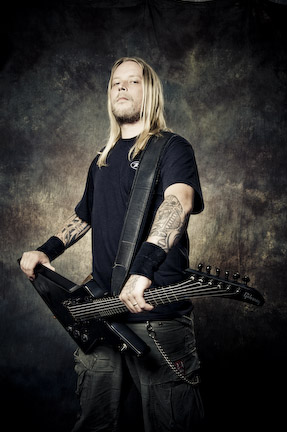 I was a week or so late in listening to In Flames newest album, Siren Charms, which came out way back on September 9th. I had put it off not only due to being busy catching up on records by bands that I actually still harbored affection for, but in large part because I was rather disoriented by the pre-release single “Through Oblivion”. When I finally sat down to listen to the full album, I was so thoroughly disappointed by what I was hearing that I decided to not waste any more time on it. I was going to stick to that plan until I read through the flurry of news articles published last week regarding recent social media comments by ex-In Flames guitarist and founder Jesper Strömblad. As the story goes, Strömblad had invited fans on his Facebook page to ask him anything, and as expected the majority of the questions were in regards to his departure from In Flames in 2010. He decided to write a
 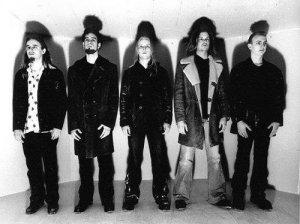 I’ve written about In Flames once before, and as I expressed in that
  Strömblad’s revelation makes me wonder as to how long he was feeling alienated within his own band. I also am more inclined to believe that there was gradual shifting of power within the lineup from Strömblad (who essentially was the lead music writer during their classic era) to Friden beginning around the Reroute to Remain era. All of this speculation is purely retrograde and of no real consequence of course, but we’re fans and that’s what we do. His comments come as somewhat of a relief to myself in that they help to suggest a sequence of events that explain why a great band capable of writing majestic, breathtaking, folk-infused melo-death could shift so far away from what made them great. It contextualizes those few moments I would hear on those post-2002 albums that would perk my ears up with their vague recollections of their classic era, such as the guitar solo in “Come Clarity”, or on “Vanishing Light”, where the guitars drove the melody as in the old days. They were moments where Strömblad was breaking through to interject some old school spirit into the mix. I also feel a certain amount of gratitude and sympathy for Strömblad in general: Gratitude for what he’s done for me as a metal fan with that classic era of flawless work, and sympathy for the way it seems he was slowly ousted from his own band. He wrote in this post that listening to his new band The Resistance would provide all the answers anyone needs as to his view on current In Flames —- and while I’m not entirely sold on that project’s one album, it does harken to shades of his Ceremonial Oath past with its slightly melodic take on death metal. Its certainly a lot closer to what I really want to hear from him than he was capable of achieving during his final years with In Flames.
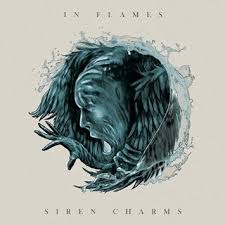 As for Siren Charms, I’ve listened through it a few times and keep coming to the same conclusion: This is the sound of a band that has little to no interest in metal anymore. Some melodic guitar figures aside, it bears scant resemblance to even their modern metal era work. Vocal melodies are the back bones of these songs, and the possibility of interesting guitar work is given limited, fractional space at best. More disconcertingly, the songwriting is more prone to uninteresting, plodding, meandering riffs that to serve as a rhythmic backdrop for Friden’s wavering vocal work in bridge sections. In fact he hardly screams at all on the album, and when he does its simply to accentuate a repeating chorus in order to spice things up —- the rest of the time he is firmly fixed in clean vocals mode. Granted, there are moments where he delivers his best work to date in that vocal style, but those of us who have seen him live in the recent past know that its a mirage: He sounds decent in a recording studio with the aid of overdubs, punch-ins, and the ability to get the best possible take. He is hopelessly miserable at emulating those results on stage however, and its in those live situations where the band further distances itself from their classic era. Friden’s reluctance to play older songs is justified by his most likely truthful observation that there are more fans of their post-2002 work at their shows than people clamoring for their old classics. Its slightly tragic for those of us that used to call ourselves fans of the band, because there aren’t many reasons to see their live shows anymore, let alone buy their new albums.
 Solace of Requiem – Casting Ruin: This is a case where I halfway like a band’s sound and sonic approach in general, but find little in the way of compelling songwriting to keep me coming back. That’s a pretty harsh thing to state right off the bat in a review so I’ll add in these qualifiers: Solace of Requiem seem to simultaneously want to echo Dissection and Morbid Angel and Origin. Some will disagree with me here, but I find little in the way of meaningful intersections between those three bands or the styles they’ve come to represent. So sometimes Solace of Requiem hits me with something interesting in the way of blackened melo-deth, and then a section or so later they’re doing something that resembles technical death metal —- a genre I think I’ve simply gotten bored of. At any given point vocalist Jeff Sumrell might interrupt his rather good blackened grim vocals with outright boring death metal grunts, an alarming change up that isn’t musically justified. Its possible to stick to the former and keep it compelling, bands have been doing it for years, vocal changeups don’t impress anyone except the handful of guys at the local backyard death metal fest. If there was more in the way of musical motifs throughout the songwriting then I’d be able to accept such a glaring flaw, but the songs themselves are collages of riffs and percussion rather than songs with a story to tell.
 Noble Beast – s/t: Without exaggeration, this debut album from St. Paul, Minnesota quartet Noble Beast is the best album I’ve ever gotten to review for The Pigeon Post, and daringly enough, might just be one of the best overall albums of 2014 —- no joke, its that good, shockingly so. First off, thanks to reader Eric, who emailed me about Noble Beast a long, long time ago where it was lost amid a clutter of piled up emails. Shamefully I read his midsummer follow-up email asking if I had checked them out yet and as of early September I still had not. Better late than never right? There’s so much to discuss here, how about for starters the fact that Noble Beast are in their very existence a rarity, that as an American power metal band. Unlike fellow countrymen Pharaoh whose take on power metal is very much informed by the grit and grime of American thrash, Noble Beast are clearly influenced by a distinctly European strain of power metal. Upon listening to this album, I’m hearing generous helpings of Blind Guardian, Iron Savior, and even a flavoring of Falconer. Even more startling is just how mature and developed they sound on this debut —- it sounds like the work of a band a few albums deep in their career. It makes sense when you do a little digging and see that a couple of these songs were around since 2010, when the band released their first and only demo. The time in between was spent wisely —- on honing their songwriting craft and creating a musical identity that is separable from their influences, yet willing to embrace them.
 arkenhold – Castellum: If you’re in a black metal band from France, chances are you sound something similar to Alcest right? That being the dreamy shoegaze-laden, swirling, fuzzy flavor of black metal that put the country on the map (for good reason) and was later copied by an embarrassing amount of American black metallers (you know its true). Darkenhold are a rare French black metal band that apparently wants nothing to do with the Neige sound and choose to instead pursue a far more traditional strain in line with second wave Norwegian black metal. And judging from a few spins of their newest, Castellum, they’re actually managing to deliver a pretty convincing take on it —- this is a band that I would’ve easily pegged as Norwegian (on that note, still not sure what language the lyrics are in… but its not that pressing of an issue). They really go for a straight down the middle, early 90s approach that takes bits and pieces from Mayhem, Immortal, Burzum, and early Satyricon in equal parts. That may strike some as an exercise in redundancy but I’ve got to give it to these guys, their songs are packed with catchy riffs and a well considered balance between sheer aggression and atmospherics (mostly in the form of clean electric passages with some acoustic undertones… not a lot in the way of keyboards here).
 Protokult – No Beer In Heaven: Jeez… what can I say about Protokult? If the title of their debut album doesn’t give it away, this Toronto based, dual-gender vocal helmed folk metal band dabbles in a style that is geared towards those who find Alestorm and the dreadful Korpiklaani palatable. That’s the audience they’re going to get anyway with their choice of album title, despite that their sound actually leans closer towards a not yet fully realized blending of Arkona and Turisas. Its a debut album, so its easy to be forgiving of the sense that if things go right for Protokult, their third and fourth albums won’t sound anything like the musical crockpot that is No Beer In Heaven. Some of these songs are so unfocused that they’re actually jarringly atonal, such as “Heaven Cast Me Out”, where an effective keyboard melody is wasted by vocal lines that are aimless and lacking definable hooks. Co-vocalist Ekaterina Pyatkova is a distinctive, sharp, angular operatic soprano that reminds me of an early Tarja Turunen. On those early Nightwish songs off Angels Fall First that never quite gelled, Turunen’s vocals often spiraled off into an unstructured mess. It was on the subsequent Ocean Born when Tuomas Holopainen began to harness his songwriting abilities together with Turunen’s vocal capacity where he was first able to display both of their respectively brilliant abilities. The same needs to happen for Pyatkova, and hopefully from within the band a songwriter will emerge that can deliver the goods in that sense because she has tremendous raw talent.
 Voyager – V: I sat down with this album fully expecting to dislike everything about it, and my inborn prejudices towards modern progressive metal’s tendency to rely on djent and noise-related nonsense was pervading my mind before I actually hit play. Its always such a gratifying experience to be proved wrong in these situations. The manner in which Voyager’s V, (their fifth album now, hence the title, geddit?), is described by reviewers all around the internet and in blurbs that I received from their PR agency is exactly the sort of language that tends to describe bands that do everything but write interesting music (at least for me). Thankfully, the reality is that for all Voyager’s shininess, their Intel factory uber clean guitar chugging, and their keyboard built atmospherics —- this is a band that is smart and savvy enough to realize that its all a waste without sharp, melodically driven, hook-LADEN songwriting. They have that in spades, and I think what makes the songwriting work in terms of playing to their musical strengths is the fact that their singer Daniel Estrin has smooth, expressive, yet powerful range and capacity to use his vocal melodies to anchor most of these songs. The instrumentation is impressive for sure, if you can tolerate its anti-septic delivery and approach, but it all surrounds Estrin’s vocals as the central element of nearly all of these songs.
 Opeth – Pale Communion: The Opeth we knew is long gone, and I’m actually thinking that it might be okay. Hear me out on this for a second —- I was NOT a fan of Heritage, and I was also perhaps willfully ignorant of what that album was signaling. On paper it was a good idea, a prog-rock album with seventies influences by a prog-death metal band that had always exhibited that specific influence in their catalog, even produced a few masterpieces in doing so. After my initial few spins through it I remember tempering my reaction by reasoning with myself that it was going to be a one-off experiment in the Opeth canon, and so not to overreact. It was a muddied, ambling mess that lacked crisp songwriting and coherent melodicism; it was the sound of Mikael Akerfeldt over extending (or over thinking) his abilities. But it was alarming then to realize that on Heritage’s supporting tour, the band was largely shying away from past material that emphasized their death metal sound, and Akerfeldt’s public comments towards extreme metal in the media were raising the ire of some, and disheartening others. I sympathized with many of the disaffected and honestly internalized the band’s disinterest in metal as something akin to losing touch with a friend. I summed up my feelings on the whole thing in a little more detail earlier this year when
 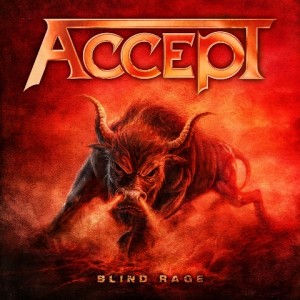 Accept – Blind Rage: Four years ago, Germany’s storied metal veterans Accept released a knockout of an album from seemingly out of nowhere; Blood of Nations was as unexpected as it was awesome. I still listen to that record whenever I need an Accept fix (and the fact that I reach for it over Balls to the Walls or Russian Roulette is surprising even to myself). Keep in mind that it was their first album in fourteen years; they were coming off a long period of relative inactivity consisting of two aborted reunions with original vocalist Udo Dirkschneider, and they were enlisting a rather unknown American replacement vocalist in Mark Tornillo. It all seemed like a recipe for mediocrity on paper, but somehow, Wolf Hoffman and company rediscovered their musical mojo. I saw them live on that tour here in Houston, and they were satisfying perfect that night even when down a guitarist (Herman Frank was injured during a fall on stage in San Antonio the night before). But I’ll admit, I thought they stumbled a bit on the 2012 follow-up Stalingrad —- granted there were a couple really strong songs, but the record felt rushed with ideas undeveloped and lacking cohesion (the band admitted as much in interviews later on).
 Vintersorg – Naturbål: While writing this review, Firefox tanked out on me, gobbling up what I wrote. Serves me right for running both Spotify and iTunes at the same time, I know… I need a new laptop. But I’m thinking that the crash actually did both you and I a favor, because I was really going on a bit with some unnecessary background info and essentially doing a whole lotta rambling. So I’ll spare you that nonsense and break it down like this: Vintersorg is a project that is really hard to love (or like even). You’ve gotta be committed, and you’ve gotta put in the time and the work, and I really mean work by the way —- this is complex, often obtuse avant garde folk/progressive black metal that is often maddeningly messy. A good Vintersorg song will reveal itself to you after many, many repeat listens after which your brain might begin to be able to process what you’re actually listening to (the not so good songs will just continue to exist as a spaghetti bowl of sound). I myself became a fan with his most accessible album, Comic Genesis, way back upon its release in 2000 when a friend of mine played it for me proclaiming it to be the next best thing to Blind Guardian. I was sold, and proceeded to buy up the existing Vintersorg catalog, as well as that of his pure folk-metal side project Otyg (oh, Vintersorg is a guy, real name Andreas Hedlund, I probably should’ve mentioned that at the top). But Vintersorg moved away from the accessibility of Cosmic Genesis’ to wildly avant garde songwriting approaches through his next few albums, and I toughed it out and found things to enjoy on them, but they certainly weren’t what I originally signed up for.
 Unisonic – Light of Dawn: Unisonic is one of those projects where expectations may need to be tempered and aligned to reality. Understandably there is the shadow of Keeper-era Helloween bearing down upon both Michael Kiske and Kai Hansen, but if you walked into the band’s 2012 debut expecting a mirror of those gloried albums then you had no one to blame but yourself for not paying attention. There’s a couple things to point out there in relation to the confused reception that debut received: Firstly, both Kiske and even Hansen had embraced aspects of AOR rock in their post-Helloween careers, Kiske more so of course, but Hansen himself was involved a great deal of power metal records with Iron Savior and Gamma Ray that were far, far more poppy than anything he did with Helloween. That the pair’s reunion was brought about while on tour for Avantasia (the king of AOR drenched metal thesedays) should speak volumes to that effect. Secondly, I think a lot of people were infatuated with idea of Hansen/Kiske being some magical songwriting pairing, when in reality Michael Weikath had a fair amount of input on that front back in the Helloween days. So the first Unisonic album was often a laid, back, drivin’ in the sun pop-rock record more than anything, and it when judged on its own merits it was a rather good, albeit spotty affair. Power metal, however, it was not.
  Anathema – Distant Satellites: Metal writers/reviewers/bloggers cover Anathema these days in part because of the band’s past metal heritage as part of the Peaceville three of English doom metal, but I believe the greater reason is that this band has been on a tear since 2010 in terms of releasing amazing new music that’s really worth talking about. If you haven’t gotten to enjoy their past two efforts you’re doing yourself a disservice (“Untouchable” Pts 1 & 2 together from 2012’s Weather Systems topped
  Hammerfall – (r)Evolution: First off, just for my own sanity’s sake, I’m going to refer to Hammerfall’s new album as Revolution, I don’t care if its incorrect, I hate purposeful grammatical cuteness like the kind being employed here. And I’ll just cut to the chase here, because you likely know who Hammerfall is and what they’re all about —- this is neither the best Hammerfall album, nor the worst, and that ultimately might be its achilles. There are going to be a lot of fans who will highly rate Revolution solely because it comes as the long awaited follow-up to 2011’s Infected, as experimental an album as a band like Hammerfall can make. That album’s release predated The Metal Pigeon blog, so I never wrote about it, but while I didn’t find it nearly as annoying as some did, it was admittedly not what I wanted to hear from them either. The band seemed to sense that from the majority of their fanbase as well and so after their brief hiatus decided to make a concerted effort to harken back to the Glory to the Brave/Legacy of Kings classic era, replete with the return of Andreas Marschall handling the cover art, which also sees the return of their mascot Hector the Knight.
 A little over a decade now, back in the middle of 2004, a relatively upstart British based power metal band released an album called Sonic Firestorm, an eight song masterpiece of flawlessly written and recorded power metal that I still believe merits inclusion in any list of the top ten power metal albums of all time. It was a breathless, invigorating, joyful, life-affirming listen, with all the best qualities of positive-leaning power metal rolled into enthralling songwriting. It was even rather groundbreaking at the time —- people may forget, but ex-Dragonforce drummer Dave Mackintosh employed a battery of blast beats in his percussive attack that was the perfect complement to those thousand miles an hour guitar riffs and solos. It won the band the right to re-brand themselves as extreme power metal, a concept that really shook up the power metal world.
 Alot has been made of the presence of Trivium’s vocalist/guitarist Matt Heafy on this album, but once you hear the results it all makes sense and chances are that like me you’ll really appreciate his contributions. They come in the form of gritty yet melodic backing vocals on gems like lead single “The Game”, where he appears alongside Hudson on the pre-chorus bridge with a rather excellent vocal take. Heafy is also present on my personal album highlight, the adrenaline pumping “No More”, where he is skillfully employed on another pre-chorus bridge, injecting some counter-balance in the form of an aggressive lower register to Hudson’s bright, upper range. The two vocalists employ the same point/counter-point technique on the thrashy “Defenders” to soaring effect.


 I’m sure that by now many of you have read all about the recent
  Nuclear Blast’s response to Mäenpää ‘s allegations that the label is the cause for Time II’s delay can best be characterized as being rather patient. They really could have nailed him to the wheel by revealing facts and figures about their level of financial commitment to Wintersun over the years. In case you needed refreshing, Wintersun released their debut on Nuclear Blast in 2004, and then proceeded to take eight long years to produce a follow-up. Emphasis on the word produce, because the saga that was the making of Time I revolved around Mäenpää’s penchant for turning studio perfectionism into procrastination. Remember that the album was half finished in an actual recording studio with drums, bass, and guitars recorded by the time the initial November 2006 release date passed. This was a band making progress, even while suffering from an initial delay —- which was understandable and generally accepted by their fans at the time. Mäenpää however insisted that the synths, guitar solos, and vocals would be finished at his own home studio, and so the years began to trickle by. The next major update came when Mäenpää went public about needing a more powerful computer to handle all the orchestrations he was layering, and as we’ve found out since, Nuclear Blast provided the additional funding for this equipment. By the time Mäenpää had finally managed to progress to the mixing phase, it was late 2011, and yet another year would pass until its release in October of 2012.
 If you read the above quote and immediately thought to yourself, “Well why didn’t he just cut his losses and go back into a professional recording studio with knowledgeable engineers who could help him get what he wanted?”, you are not alone. Mäenpää knew going into Time I‘s recording process that his songs were meant to be long, complex, and requiring massive layers of keyboard orchestration, yet his whole approach to the recording process was backwards. As many metal bands with symphonic elements to their music have already known, a home studio is best for tracking rough demos of songs, crafting rudimentary keyboard sketches for future symphonic elements, and occasionally even recording album quality bass and guitar work. Drums are best recorded at a professional studio, and there the rough homemade keyboard sketches can now be translated into studio quality keyboard orchestrations with a professional at the helm of software and hardware designed to handle it. Mäenpää failed to understand that basic, common sense laden schematic and allowed a measure of self-delusion and grandeur to lead him to believe that he could accomplish an orchestral production with little to zero skills as a recording engineer. Okay, so the album finally came out, and one could look back on that experience and say “Lesson learned”. Incredibly, Mäenpää is all too eager to repeat history with Time II, insisting on being allowed to handle the production all by himself yet again.
 Consider the recording history of another Nuclear Blast artist in Therion, who have been with the label since the release of 1995’s Lepaca Kliffoth. If you’re unfamiliar with their music, Therion create heavily symphonic, organically recorded string-drenched metal with a variety of male/female backing choir vocals. One listen to any one of their albums post 1995 will give you a general idea of the complexity that is involved in the recording process of a Therion album, but before I give you a more specific example, consider this: Therion’s recording strategy over the early years of their deal with Nuclear Blast was fragmented into specific goals, the largest of which was the continual construction of their own recording studio, Modern Art, which was achieved over time by directing portions of their recording budgets towards its creation over the course of many years and albums. They bet on themselves and their continual touring that they’d sell enough of each album to repay Nuclear Blast every time, and they did.
 Other successful metal bands also worked hard at achieving similar goals in business relationships, such as Blind Guardian (with Virgin Records Germany) who established their own Twilight Hall studio over many years and continue to record there today. Back to Therion, their success at this strategy culminated in Nuclear Blast giving them a 100,000 Euro budget for the recording of their 2004 twin albums Sirius B and Lemuria. The sessions for these albums included a total of over 170 musicians including a full symphony and various operatic vocalists, a wide variety of different musical instruments, as well as a few special studios to record those specific elements in. The main recording work was of course done at their home base of Modern Art studios. Two albums delivered in one recording process that took an amazingly short nine months and cost less than Mariah Carey’s in-studio catering budget. Oh, and they’re both masterpieces that make Time I‘s production sound like child’s play.
 Delain – The Human Contradiction: First things first, kudos to said reader who persuaded me to give Delain’s newest album a shot, because this was a band that had failed to impress me at any point in their career previously. In fact, their last album featured a single/video that actually made me cringe, the pallid “We Are the Others”, a heart on sleeve “anthem” directed squarely at the hearts of this band’s core audience, namely, disaffected rock/metal adoring teenage girls (and I suppose some guys as well). How can I be so blasé about a band like Delain while I sing the praises of the biggest female fronted band of them all in Nightwish? Simple: Because the latter is a vehicle for the self-centric artistic motivations and confessions of one Tuomas Holopainen, who also happens to be a uniquely brilliant songwriter whose lyrical voice I’m fascinated by. As we all know by now, the female voice singing Holopainen’s songs is less important than the actual content/context of songs themselves (be honest, when you read the lyrics of “Ever Dream”, do you innately hear Tuomas or Tarja’s voice?).
 Nightmare – The Aftermath: I’ve always wanted to like France’s Nightmare. On paper I really should, since they’re supposedly right up my alley: They’re a hybrid trad/power metal band from a country that is fairly most associated with post-black metal ala Alcest; and their longtime vocalist Jo Amore is a fairly decent blend of Dio and Jorn Lande (himself a pretty good Dio stand-in). They also have the respectable career back story of coming back from a thirteen year absence in 1999 to give it another go after their record label in the mid-eighties flamed out and took the band’s enthusiasm with it. That fact alone has always had me rooting for them and giving each new release a few spins. So it was halfway through my fourth spin with this new album when I remembered why it took my American power metal fan’s guilt to muster enough patience to sit through a new Nightmare offering. I’m glad The Aftermath ended up in this reviews roundup, with an emphasis on these reviews being shorter, because I’d be stumped for what to really say in depth about this album. My biggest problem with Nightmare overall has always been their lack of good songwriting/songwriters —- not to suggest that there is “bad” songwriting on display here, this is passable metal that wouldn’t be a damp towel on the beer drinkin’ in the garage good times of your average pack of metal fans, but it doesn’t pass the most important test for me, namely the ability to enjoy the album by oneself in the car or on headphones. During my last play through, I actually reached a point where Amore’s vocals began to grate on me, and that was more a result of his having to sing over go nowhere riffs/melodies and aimless songs. Hooks in songwriting actually need to bell curve up, you know… resemble a friggin’ hook.
 Goatwhore – Constricting Rage Of The Merciless: This is the first Goatwhore album I’ve listened to since 2006’s A Haunting Curse, and I’m coming away pleasantly surprised. I was never personally big on Goatwhore, but I’ve enjoyed them in passing over the past decade plus because I grew up alongside friends and roommates who were VERY big on Goatwhore. My mind is going back in particular to one Bill Hendricks, who was big on all things NOLA metal related in general. He introduced myself and others to the feral pleasures of Goatwhore albums and live shows and it just became one of those touchstones that we randomly had in our metal educations. In the interest of full disclosure I’ve developed a bit of an inborn prejudice towards bands with purposefully schlock horror-ish names, I suppose because when you grow up it feels a lot more sillier to proudly proclaim that you listen to a band called Cannibal Corpse than it did in sixth grade. But I still appreciate a whole host of bands that fall under that “juvenile” tag (and let’s be honest, how mature did the name Megadeth ever seem really?).
 Septicflesh – Titan: Remember how just a few sentences ago, I was going on a bit about bands with juvenile sounding names that might defy expectations by releasing adventurous, experimental music contrary to what you were expecting (ala Rotting Christ)? It must really be a Greek thing then, because Septicflesh is another band that hails from the inadequately governed mean streets of Athens, and they too play an unorthodox take on traditional death metal. Whereas Rotting Christ utilize heavy injections of Greek folk music and black metal repetitive hypnotics in their music, Septicflesh swing in the other extreme direction by infusing experimental symphonic elements into the fabric of their songwriting. Think modern day Therion’s classical trajectory meeting Behemoth’s blackened death metal, and you’ll have a good idea of what to expect here. I’m surprised at just how wonderfully challenging Titan is as a sheer musical experience. Simultaneously and conversely punishing, exultant, and beautiful —- there’s a lot to absorb here. But before I start going off with superlatives galore, I’m told by those who know that many a Septicflesh fan has found this album to be a step below their previous album, 2011’s The Great Mass, which I have not listened to. So with that in mind its perhaps fair to leave in the possibility of a different comparative opinion depending on your perspective.
 Xandria – Sacrificum: This may sound strange, but I think one of the best things Germany’s Xandria has had going for them is that at any one point in time when I’ve listened to them, I’ve had no idea who their singer was. And they’ve had more than a few —- the new singer Dianne van Giersbergen is their fifth in the band’s now seventeen year history (for reals, on both accounts)! The side effect of a female fronted band having such a rotating cast of vocalists (particularly in the past couple years) is that the attention they receive is largely for the music itself rather than the appearance of the singer. If that sounds cynical, its because its a statement reflecting a great deal of reality —- after all, magazines don’t have those “Hottest Chicks In Metal” features for no reason right?
 Brainstorm – Firesoul: My apologies to Andy B. Frank and the gang, it wasn’t that I willfully ignored you back in April, but your new album Firesoul had the misfortune of arriving directly in the midst of my receiving the new Edguy and Insomnium albums. Its not that I like those bands better… well, actually I do, but those were two releases that held the possibility of changing styles for both bands, for better or worse. I had to find out and so they immediately received my full attention, but in a way that’s complimentary towards you guys, because I’ve never had a reason to be concerned about what to expect on a new Brainstorm offering. You guys always deliver quality melodic power metal loaded with hooks and often impeccable choruses, and Andy sounds as ageless as ever. Consistency in producing good work is rare and admirable, and Brainstorm stand in the company of a select few in the power metal world in that regard. I love you guys.
 Triptykon – Melana Chasmata: Tom G. Warrior is back yet again with his second Triptykon album, and its also one of the most complex, densely written records of the year —- and that could be a great thing or a horrible thing depending on how well you can digest this stuff. In case you’re out of the loop, Triptykon was born in 2008 from the ashes of Celtic Frost, and in spirit and in sound it serves as a spiritual successor to that legendary band. Personally I’ve been a fan of Warrior’s work in general, even finding a few things to like about the infamous Cold Lake album (no, not “Dance Sleazy”), so my perception of this album might be vastly different to newcomers who should probably start off with one of the classic Celtic Frost releases. Of course a familiarity in the complexities of bands like Emperor would be a plus in being able to process the sheer unorthodoxy that is on display here. I really do like this album and feel that its one of the stronger records of 2014 overall, but it took me well over a dozen spins front to back to even remotely begin to feel that way. And I don’t mean a dozen cursory spins, I mean a dozen sit down with your headphones strapped on and close your eyes kinda spins. Its a tough nut to crack.
 I didn’t know what to make of the K.K. Downing announcement way back in 2011 declaring that he was hanging up his guitar and retiring from Judas Priest —- and apparently, music altogether. Maybe this makes me sound like a jerk, but I wasn’t really bothered one way or another, because unlike the recent albums of Iron Maiden, which have individually enthralled me in their own wonderful ways, Priest hadn’t really wowed me with any of their recent post-reunion work. Okay, I’ll admit that I really loved hearing some of the Angel of Retribution songs in concert when the band played Houston with Heaven and Hell back in 2008 (in particular the ballad off that album, “Angel”, really was something incredible live). But the follow-up in 2008, Nostradamus, was a head-scratcher of a conceptual album —- the sound of a band overreaching their abilities. Look, there was little chance of anyone ever mistaking Judas Priest for Andrew Lloyd Weber (or heck, Queensryche circa 1988), but save for a couple pretty good songs in “Prophecy”, “Persecution”, and the catchy title track I found that the rest of the album was a wash. I think that there were a couple problems with Priest’s comeback plan in general, the first being that they simply waited too long to make a reunion happen, whereas Maiden’s timing with the dawn of the millennium was nigh-perfect, and secondly the artistic output wasn’t coming fast enough. By the time Downing left the band, Priest had only done two studio albums with Halford —- hardly the amount needed to redevelop a writing partnership. ‘Priest classic’ was back for six years, and apparently only six.
 So Halford and Glenn Tipton had to pick up the pieces of this whole situation. Not only were Priest down a guitarist in a distinctively two guitarist band, but they also had lost a major songwriting partner in Downing. They recruited Richie Faulkner to fill in on guitar for the Epitaph world tour (remember all that noise about it being Judas Priest’s last world tour?), and during that trek they began to realize that they had stumbled onto a potential candidate to permanently replace Downing. The real test would be the writing process, of which they purposefully slowed down and refused to declare a release date to the press. Faulkner was not averse to writing ideas on the road, which was new to Halford and Tipton. The results of jamming on the road followed by spending the next two years carefully working together as a newly gelling writing team resulted in a lengthy delay to, well, July 2014. And its finally here, the first Judas Priest album in history to not feature K.K. Downing’s riffs and songwriting, and Priest’s first new album in six long years. And here’s the funny thing, I wasn’t anticipating this album at all, had marginal hopes for it at best, and had already developed a nitpicky pre-release criticism about the artwork looking too “on the nose” —- yet here I am, writing the following words that will tell you that this is the best Judas Priest album since Painkiller. I’ll put it another way, this might very well be a classic Judas Priest album. Unbelievable.
 The album opens with a track that proves as much, as Faulkner and Tipton are all over “Dragonaut”, an anthemic beast of a song that matches classic machine-precision Priest riffage with blazing tradeoff solos. The bottom end is beefed up as well —- the band simply sounds heavier than I remember, an attribute accentuated by carefully crafted songwriting on display here, where guitars are allowed to breath, Halford has plenty of space to work with, and the hooks land right in your gut. It’s followed by the pre-release title track single which I somehow managed to avoid listening to in the months preceding the album release, a likeable mid-tempo stomper that clears the palette for one of the best songs on the album, the truly inspired “Halls of Valhalla”. I love everything about this song, from the distant echo-ing intro to the aggressively complex stick work of Scott Travis, to Halford’s most satisfying lyric and vocal take since the Painkiller days. He sounds ageless here, unleashing classic Halford-ian panoramic screams you didn’t know a sixty-something had in him, while delivering deft vocal work on the verses segments, a grand metal orator. It would perhaps be a misappropriation to say that Priest were influenced by modern trad or power metal, but one can’t help hearing hints of Blind Guardian for example on a song like this (and not just because of the “Valhalla” reference). That perfect song is followed by the nearly as epic “Sword of Damocles” which features one of the most surprising misdirections in Priest history: A bluesy bend to the guitar passages makes you think we’re in for a road-warrior type anthem, but the chorus unfolds with an uplifting, surging melodic hook with a Manowar-ian lyric, “Truth will find its reward / If you live and die by the sword!”. Somewhere in Jersey, Joey DeMaio is shaking his fist in a jealous rage.
 Longtime readers of the blog will have by now taken note of just how much the seasons tend to shift my listening habits around, and they’ll also note just how much I dislike summer in general. If you think that’s an unusual attitude to have, I’ll remind you that I live in Houston, Texas —- but there are silver linings to the oppressive heat and humidity of a Texan summer. One of which is just how well wild, classic styled hard rock pairs with the rising mercury, case in point being the timely arrival of You Are Here, a new album by the Chicago based rock band High Spirits. Okay, they’re in a band in that they play live, but in reality High Spirits is the work of one highly motivated musician in Chris Black. You may have heard his other work before as well —- he moonlights as the drummer for Pharaoh, whose 2012 album Bury the Light came in second on that year’s
  Whats utterly bananas about Chris Black and his work in High Spirits is that he is everything that you hear on the albums: All instruments, all vocals (including harmonies and overdubs). As I mentioned above, he has a band that he takes out live for small runs of select dates, but on album High Spirits is an entirely one man show. It doesn’t sound like it, and that’s testament to Black’s songwriting skills and overall artistry in understanding band dynamics in aspects of rock music —- as in the interplay between rhythm and lead guitars. Take the album opener “When the Lights Go Down”, with its loose yet tight riffing complemented by scorching lead fragments at the tail end of choruses. The songwriting here is razor sharp, Black has a wonderful and rare ability to pen adrenaline soaked, speedy choruses that outpace their verse section anchors (for further proof, check out “Full Power” on the band’s debut album). These are the kinds of songs that cause speeding tickets. Black slows down the tempo a touch on the next track, “I Need Your Love”, where the swinging rhythm guitar and the amped up speed in the pre-chorus bridge just smacks of the classic riffing of Rudolf Schenker. Black’s vocals are unusual for this type of music, while he’s skilled enough to carry melodies and hold notes, his tone is raw, punky even, and his delivery is borderline laid back. If I can provide some adequate frame of reference, its basically the exact opposite of Sebastian Bach’s histrionics —- Black’s approach to singing is workmanlike in serving the song only (I mean that in a positive way).