 So I spent most of the past month mistakenly thinking that this summer was a little light on quality new music, and to a certain extent that’s right in terms of May and June. Fortunately for me I’ve taken advantage of the lull to do some digging on stuff I might have missed in the past six months in general. I discovered these through a variety of different sources, but mostly from my friends at /r/powermetal and its corresponding Dischord chat as well as the USPM Connection Facebook group, all of whom helped me out with a ton of suggestions for albums I’ve missed (for better and worse). I’ve picked out a handful of the most interesting ones, so I guess these are somewhat reviews but kinda also just straight up recommendations that I think are worth your time. I’ve also reviewed the new Khemmis and Kobra and the Lotus, two bands that I had previously heard of but have never written about or investigated too much until now. The nature of how I came to hear most of these bands is a microcosm of the very essence of this blog’s founding mission, namely being a conduit for word of mouth recommendations, from others to me, and hopefully myself to you.
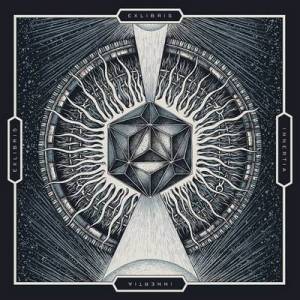 Exlibris – Innertia:
Before we begin, a little clarification is necessary because there are two active metal bands based only a few hundred kilometers apart in Europe sharing the same name. Well, almost. So there’s Ex Libris, the Dutch symphonic metal band helmed by ex-Xandria vocalist Dianne van Giersbergen that’s active once more and in the process of crowdfunding a new album. Then there’s Exlibris, and the modern power metal band from Poland, and that’s who we’re talking about here with their new album Innertia. Poland has had a small yet noticeable impact on the power metal scene, the most notable band being Crystal Viper. There’s some much smaller profile Polish bands such as Gutter Sirens and Night Mistress, the latter of whom incidentally shared a vocalist in Krzysztof Sokołowski with Exlibris for a couple years and a few albums. He was a fairly proficient vocalist, but Exlibris have finally decided to take a big step apart and forward by recruiting a singer of their own in Finland’s own Riku Turunen, who turns out to be a remarkable talent. This is my introduction to him, but damn what an introduction. He’s got a nice blend of influences in his vocals, a blast of Mandrake-era Tobias Sammett’s raw power with a dash of Timo Kotipelto’s penchant for endearing phrasing of specific words and phrases. I really love his work all over this album, and he’s arriving at a time when a lot of us are looking around at the power metal landscape and wondering where the next powerhouse vocalists are —- as it turns out, there’s a load of them all over the globe, they’re just not getting the recognition they should.
As impressive as Turunen is, I don’t want to minimize what the band has accomplished with Innertia, because this is one of the most dazzling modern power metal albums I’ve heard in awhile. Its riffs are thick, meaty and Tad Morose level heavy at moments, but the songwriting is quick on its feet, throwing changes and abrupt shifts this way and that which keep things from getting plodding or staid. There’s a few songs here that evoke tinges of Theocracy’s blistering yet melodic rhythmic attack, the album leading “Harmony of Spheres” comes to mind with its airplane takeoff acceleration and lush vocal lift on the bridge. The mid-song shift to a regal symphonic metal breakdown (as close as it gets to such a strange concept anyway) is a nice diversion, something to lock in our attention as the song hits its final minutes. These guys do a lot of that, little musical ideas tossed in here and there that work to maximize the overall impact rather than simply standout on their own. I mentioned the backing/layered vocals a second ago, and I love that they’re confident enough to write with them as a major component of the songwriting at times, as on “Gravity” whose refrain is classic call and response hard rock theatrics —- the strident lead vocals up close and personal while the backing vocals handle the progression of the vocal melody driving things forward. While guitarist Daniel Lechmański and keyboardist Piotr Sikora help Turunen out on backing vox on most tracks, guest vocalist Ann Charlotte Wikström is heard on many spots throughout with assists on lead vocal lines as on album highlight “Shoot For the Sun”. Its a spectacular song and it really shines towards the end when she weaves around Turunen in a twisting, enjoining vocal dance to finish the track —- a gorgeously sublime moment.
The Sammett comparisons surface again in a positive way for much of “Incarnate”, and honestly it makes the Edguy/Avantasia fanboy inside nine kinds of giddy. I really love Sikora’s keyboard work, he’s really working a Jens Johansson approach here, not only for the flashy solos but in how he utilizes his keys largely as an orchestral instrument to help amplify Turunen’s vocal lines. His interplay with Lechmański’s guitarwork throughout the album is intriguing to behold on its own apart from the vocals, and when all three elements join up on the same melody as on the chorus for “Amorphous” the results are triumphant, fist in the air stuff. Great bands make choruses like these seem easy, but if you listen to enough mediocre, not-quite-there power/trad metal you’ll realize they’re enormously difficult. It takes vision to write something that has such a well-defined melodic arc, and I’d put Exlibris’ work on this album up there with the best of new Terje Haroy/Jacob Hansen era Pyramaze. I love that they’re not afraid of challenging themselves with complexity during their refrains either, as on “Origin of Decay” whose chorus is its own countermelody to the verse, a bold decision that works well, I enjoyed it so much that even the spoken word effects in the middle didn’t bother me (and they usually do). A day after I first heard this album I recorded a recent MSRcast where I prematurely spoke of Innertia as a casual summertime jam type of affair —- but subsequent listens have made a right fool out of me. I simply can’t say enough good things about this record right now, it came out of nowhere and just floored me. At this point I’m not just talking about Innertia being potentially the best power metal record of 2018, I’m talking about it being in the running for the best album of the year list period.
 Kobra and the Lotus – Prevail II:
Another chapter in my ever expanding legacy of coming around to bands late, Kobra and the Lotus finally grabbed my attention with 2017’s Prevail. I heard that album when it came out last summer with a few cursory listens and came away surprised that I was enjoying parts of it, but it got lost in the shuffle of releases around the time and I never reviewed it. But there’s something happening here on its sequel that signals that perhaps the band is coming into their own creatively. Kobra Paige has always been an impressive vocalist, but for me this is the first time I’m hearing her vocals in a context that makes the most of their Doro-esque strength and vigor, her performance in this album at times even recalling the tensile flexibility of Triosphere’s Ida Haukland. The band shares credit in this too, giving her ample room to steer the melodic ship with her vocals, the often delightfully catchy riffs from Jasio Kulakowski working around her via accents and countermelodies. Its the sound of a band that has searched for and discovered its strengths over the course of a few albums and is now leaning into them hard.
The most vivid example of that realization is heard on “Let Me Love You”, as fine a single as we’ve heard all year and the kind of metal summertime jam where the lyrical matter doesn’t matter so much as the groove, the riff, and the killer hook does. I say lyrical matter doesn’t matter only because I don’t mind rock or metal bands singing about topics like love and romance, they’ve been doing it since Zeppelin and The Who. Yet a good many of the comments on YouTube for this song are from insecure boys opining that its subject matter is lame (or that dreaded dairy related adjective). Guys, its no more so than any other lyrical subject matter in metal, its 2018 and its past time to get over it. In fact, for the Metal Pigeon’s 2014 album of the year in Triosphere’s The Heart of the Matter, a heavy emphasis on the subject of bad relationships was the emotional core that informed much of that album’s gorgeously manipulated rage and fury. Paige doesn’t quite achieve that same level of excellence all across Prevail II, but on this song she absolutely delivers in an angst-ridden paean to forlorn longing. She does the same on the Ville Valo meets Ann Wilson vibe of “Heartache” with a wonderful vocal on the chorus there, one written with exceptional care to squeeze every emotional drop from so few syllables.
On the heavier end, she’s gotten better at channeling mainline influences such as Halford and even a little Dickinson as her performances on “Human Empire” and “You’re Insane” can attest. Album opener “Losing My Humanity” is another highlight, being an example of one of my favorite trad metal songwriting techniques in a punishingly fast verse riff being followed by a slower tempo in the arena rock informed bridge and chorus. Its classic metal 101 but so challenging to pull off in a way that sounds effortless like it does here. A note about the production here, because I know that Jacob Hansen has his trademark sonic style that some find too polished and perfect (and its very apparent all over this album), but I think it really works for a band in this vein where the focus is on elevating Paige’s performances in a vocal melody driven context. Kobra and the Lotus have an intriguing future ahead of them, one that could end in either extreme because while I suspect their sound is accessible enough for anyone looking for well crafted melodic metal, its also a little too trad for alternative rock playlists and maybe even Active Rock and Sirius FM/Octane. They made a dent with “Light Me Up” last year, but a small one at that and its unfortunate that they’re not getting better results with the singles off Pt II. Its still early in the release cycle, so maybe a well chosen tour or two could change things, and I hope so because this album deserves more ears.
 Thaurorod – Coast of Gold:
You ever have those moments where you’re at the grocery store, with your responsible list of low carb, sugar free groceries in your cart and you’re stocked up on organic chicken, avocados, bags of salad, some eggs (okay okay enough of the shopping list) and you pass by the cereal aisle and instead of walking past like you’re supposed to you wander in and Assassin’s Creed past your better judgement to grab that box of Cinnamon Toast Crunch? Yep, that’s me with the new (well, a February release) Thaurorod album, a blast of Euro-styled power metal cut from the late nineties glory era cloth. This is such a blatantly traditionalist power metal affair that it even goes for the jugular with the comic book-ish cover art featuring the band members drawn as enterprising seafarers (I guess?). Thankfully they steer clear of Alestorm territory, in fact this is actually a Finnish band but they sound closer to Freedom Call in sound and spirit rather than Sonata Arctica. What was interesting to learn upon closer inspection is that its kind of a side project of Joonas Pykälä-aho and Emil Pohjalainen from Amberian Dawn (drummer and guitarist respectively). Neither to my knowledge contribute to Amberian’s writing process so I take it they get their kicks here with a project that’s been going since 2005. This was one of the recommendations from the community at /r/PowerMetal, it came up when folks were discussing what they thought the best albums of the first half of the year were. I can easily understand why this was an oft-cited favorite, much like my Cinnamon Toast Crunch comparison, its the power metal equivalent to kiddish comfort food (the band name being a Tolkien reference is also a good way to get me to listen).
You’ll get my drift when you hear the album opener, suitably named “Power”, because this song is as the lyrics confirm, about “Power we need / Power we breathe / Power to break through the gates / To our dreams”. Oh and don’t misinterpret the tone of that sentence, because I’m not being snarky in anyway, I’m fully buying in here, even when the band makes the near fatal mistake of having built-in “hey! hey!” chant sections midway through the song (seriously, Thaurorod gets a pass because this song is so much fun, but note to bands, don’t do this!). Its power metal 101 to use “power” and “forever” liberally in lyrics, and these guys pack them both in a skyrocketing chorus. Pure power metal fun aside, there’s some depth and complexity to what they’re accomplishing on “24601”, a song that makes clever use of its title in a satisfyingly rhythmic way. What really sells it is the rough yet smooth vocals of Bosnian singer Andi Kravljača (if he sounds familiar its because he was on the first Seventh Wonder album pre-Tommy Karevik and did a stint with Silent Call for a few years), and he entirely makes up for the fact that they lifted the keyboard intro from Toto’s “Hold the Line”. I experienced a rush of joy listening to this record, and appreciate that the band just went for it full throttle, often in speed but always in displaying their clear cut love for all things classic power metal. Its not reinventing the wheel for sure, but its a pretty good wheel.
 The Night Flight Orchestra – Sometimes The World Ain’t Enough:
The lovable Swedes are back yet again with a new album a little over a single year after the release of 2017’s Amber Galactic. It wasn’t but a few months ago that I was writing about them for the first time, not expecting that we’d get new music so quickly, but that facet alone is another detail in what makes The Night Flight Orchestra so convincing and compelling. Back in the late 70s and early 80s, rock bands would usually be releasing new music at a pretty swift clip, even the Scorpions only took two years between Animal Magnetism and Blackout, and that includes the delays from Klaus Meine almost losing his voice before the recording sessions. Iron Maiden of course knocked out three albums in yearly succession between 82-84, all while touring like madmen in between each release and somehow finding time to write and record new music rapidly, rest and vacations were considered part of the recording session experience (I suppose that’s why they’d decamp to the Bahamas but nevermind). The point is that back in that era to take three years or longer to do an album was seen as far too long to be away from your fans, it was just an aspect of rock culture that slowly ebbed away as the 90s came out and it was seen as okay to tour longer or use the EP or live album as a way to buy time. I’m not sure whether the band is doing it on purpose or not, but there’s something charming about Night Flight adhering to this ethos and work ethic, this being their fourth album in six years since the band’s inception —- pretty good for a “side project”.
That they’ve managed to get better and sound more confident with each passing release is also something to celebrate, and Sometimes the World Ain’t Enough expands upon the greater role of synths and keyboard driven melodies that we heard on Amber Galactic. Lead single/video track “Turn to Miami” is emblematic of this approach, with its suggestive, slinky synth lines and lyrics that declare “while the night is young / this is where we start”. Björn Strid is as usual accompanied by gorgeous backing vocals, provided here by the “Airline Annas” (Anna Brygård and Anna-Mia Bonde), a detail that might get overlooked in the artistic success of these songs. Its not to say that Strid isn’t a powerful and appealing clean vocalist in his own right, but the Airline Annas’ harmonies and independent vocal accompaniments layer on that extra sugar icing that buoy these songs from street level High Spirits throwback grit into something that is truly transcendent and of the spirit of that era. The hardest hitting song on the record is the title track, not only for its confident hard rock stridency, but because that chorus just impacts with precision, the Anna’s once again sealing its potency with well timed supporting harmonies.
And there’s something to “Lovers In the Rain”, a heavy synth drenched semi power ballad, the kind that had it come out in the early 80s would have irritated a few fans at first but slowly would win them over in private away from their buddies in the car. When it comes to “Barcelona”, we’re treated to a Journey-esque ode to one particular city that also serves as a metaphorical focal point for the narrator. Its the weakest song on the record but still manages to rock with early 80s conviction, and that says something about the overall quality of the album. The work this band has put into mining this particular vein of rock history has made them into one of the style’s strongest songwriting collectives. Case in point is just how interesting they manage to make the nine-minute plus “The Last of the Independent Romantics”, a running time that had me skeptical before I heard it. Here they marry the sounds of 80s rich royalty rock with the ambition of a 70s prog rock piece and keep it loaded with enough solid riffs and melodic shifts to keep us intrigued. This is a fun listen and if you haven’t gotten on board yet, this is the album to get first (and work your way backwards in order), Night Flight have transcended any jokey beginnings and have simply turned into a great band making a kind of music a lot of us miss.
 Uada – Cult of a Dying Sun:
Portland’s Uada are an intriguing band, not for the hoods they wear in promo photos and apparently onstage as well (we’ll see, I’m catching them live in a few days time), but for their attempt at straddling the bridge connecting second wave black metal to its more melodically inclined modern evolution. This is their sophomore album, their debut Devoid of Light arriving in 2016 and in listening to the two back to back, you can see that they’ve made a significant leap in songwriting complexity in just this short span of time. The thing that I feel most critics of modern black metal miss is just how effective a crisp, clear production job can be to the overall impact of music as complex as this. Not everything should sound like a shrieking incoherent mess, and while that early second wave production style lent itself to what those artists were trying to accomplish (“Give me the wvurst microphone you have…”), a lot of us became fans of the modern style first and then went back to do our history homework with the more difficult to listen to stuff.
I have no idea what the members of Uada would cite as influences, and this being a short review I felt no need to research it, but I hear shades of Dissection (particularly in the wielding of melodic motifs throughout), a little Dimmu Borgir and even a bit of Inquisition. I’ve seen some criticism posted up about how these guys are aping Polish black metal band Mgla’s sound, and that’s some pretty accusatory stuff considering most metal bands are drawing influence from other metal bands. I took a listen to the last Mgla album to see what the fuss was about, and okay there’s some resemblance but honestly I prefer Uada for their deeper dive into unabashed melody. Take their melodic treatment of the tremolo buzzsaw cutting across most of “Snakes and Vultures”, its so earwormy in its own right that it works as the hook here, usurping the actual vocal refrain. And I love the almost melo-death approach on guitars in “Mirrors”, kind of a merging of two genres with its black metal song structure. This isn’t a perfect album, it starts off really strong for the first three tracks and then dips a bit in the middle (“The Wanderer” should have been left on the cutting room floor) only to perk up at the end, but its one of the few black metal records that’s intrigued me this year. Looking forward to seeing them, hoping for an entertaining show (remember, a good show needs anticipation or surprise!) and will be expecting even better things from these guys in the future.
 Khemmis – Desolation:
I had paid attention the last time Khemmis were making waves, about two years ago when they were in the spotlight for their sophomore release Hunted. I gave that album a shot and for some reason it just didn’t connect with me, and honestly their newest Desolation really took more than a handful of forced attempts at cracking its code before it finally started to grow on me. I’m not sure what my block is on this band (we briefly talked about this on the last MSRcast), but Desolation is the most accessible album for me from this band mainly because its the least doomy of all their work. I know its a bit ridiculous to come from having Bell Witch’s Mirror Reaper on my best albums list last year, to now saying that Khemmis is giving me problems but that’s just the way my brain is working at the moment I guess. It was Adrian Begrand’s repeated Twitter statements on how “If you like traditional, escapist heavy metal, this is the one for you” that got me to stick with it, and kudos to him because I think I’m about 75-80% there. The stuff I’m responding positively to is the band’s increased trad metal infusion, particularly in the uptick in tempos all across these songs. There were flashes of that happening on their previous two albums, but here its the main feature, and it makes a huge difference in aligning their sound closer to bands like Grand Magus and Tyr, whom I both adore.
As usual Khemmis keeps the albums concise and tight (only six tracks here, ranging from four to nine minutes), its a practice that I sometimes think other bands should adopt, getting back to a more mid-80s/vinyl level of quality control, but I’m digressing. The album that I’m enjoying kicks off after the opening doom-laden track “Bloodletting” on the subsequent”Isolation” which really reminds me of Candlemass crossed with Iron Maiden. There’s a dueling guitar solo segment partway through that’s just fantastic, full of vigor and vibrant melodicism. It also contains vocalist Phil Pendergast’s best, most emotive work —- at times displaying shades of Tyr’s Heri Joensen and even Dio’s penchant for theatricality and rhythmic timing. You’ll hear more of that on “Flesh to Nothing”, particularly in the build up during the verses, and I get a real Hetfield vibe on “The Seer” that works to enhance its bite. Of course harsh vocalist Ben Hutcherson is the counterpoint here, and his raspy sheet metal scream is on point tonally and provides a nice change-up from time to time. If I’m being honest I wouldn’t mind Khemmis going full clean vocals in the future, but that’s just my power/trad metal loving side coming out. I’m still digesting this album fully, but the good news is that its something I’m willingly coming back to and its riffs are thundering in my head long after I’ve finished listening.
 Frozen Crown – The Fallen King:
This was a nice surprise, another touted recommendation from the peeps at /r/PowerMetal, Frozen Crown are a power metal band from Italy that sound like they could be from the States or Canada. Its not that they don’t have the ability to show a little flashiness ala Rhapsody and co., as principal songwriter Federico Mondelli and his fellow guitarist Talia Bellazecca have enough bottled up technical virtuosity to trade spitfire solos and flex creatively with complex melodic patterns. But rather than layer it on thick, they have an innate USPM sense of keeping things scaled down, stripped back to the essentials —- so we get shreddy riffs but also vocal melody driven songwriting built on the strength of the relatively unknown Giada Etro’s emotive, throaty singing as well as Mondelli’s own solid clean-harsh range. What’s smart about their pairing is that they avoid beauty and the beast tropes by rarely trading off verses… this is largely Etro’s domain, the songs are almost all written to support her ability to soar into higher registers, but Mondelli provides a nice change of pace in select situations and also sparks a nice harmonic duet in the ballad “Chasing Lights”. That song in particular is used as a cleverly disguised segue into the sharp, aggressive epic “Queen of Blades”, one of the occasions where both vocalists do trade off a bit yet the overall vibe I get is more Unleash the Archers, not Nightwish.
Speaking of Archers, Etro has a touch of Brittney Hayes’ timbre to her vocals, but also a little of Kobra Paige’s smoothness, that ability to make emotive sweeps with little changes. I hear both “Across the Sea”, as Nightwish-esque as things get here (muted keyboard adorned verses, transitional bridge/chorus that pops), and I love the choice Etro makes with the sped up phrasing at the :59 to 1:04 mark (“I’m feeling frozen, I can’t hear my heart beating”), something I’d imagine that the master of that technique in Mr. Tony Kakko would be proud of. Sometimes as on the closing track “Netherstorm” I get the feeling that the band is attempting to find a place where melo-death and power metal can merge (that intersection of Wintersun and Skyfire), and they have a moment towards the end where the riffs have that Gothenberg density and are complemented by a gorgeously fluid lead melody over the top. Its not quite the integration they seek, but I think they’ll get there with future albums. Oh yeah, this is a debut by the way, it actually came out in February, but being that their label support is relatively small (Scarlet Records in Italy) its telling that they’re making lasting impressions in the online power metal community —- enough for a handful of people to remember it all these months later when pressed for recommendations. Its too early to call it, but there’s something happening within power metal that might be described as a nascent revitalization. I’m looking around at the artistic triumphs coming from the genre in the last few years as well as young rising bands like this and its starting to feel as exciting as 1998 again. To quote Fox Mulder, I want to believe.
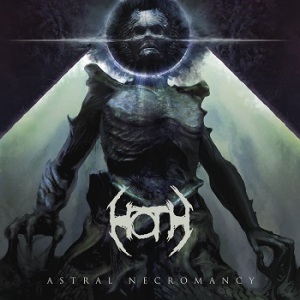 Hoth – Astral Necromancy:
Oh get ready, this is a strange but good one, and I mean really strange and really good. This has become one of my favorites for 2018 overall, something I’ve been unable to stop listening to in the slightest (cool cover art too for bonus points). If the name wasn’t a tip off, Hoth are steeped in Star Wars mythology, particularly in their first two albums (this one seems to blend in some other lyrical topics, mainly, erm…. necromancy), and while its surprising that no band has really taken and run with that theme in earnest, its more surprising as to how Hoth have decided to go about it. Their interpretation of a long time ago in a galaxy far, far away is a soundscape of heavily major key infused black metal, and I’m not talking about symphonic arrangements ala Dimmu and others, but as in its core tremolo based guitar skeleton. We’ve talked about black metal set to major keys before, most notably in Deafheaven’s Sunbather, and it was a unique listening experience for sure, but I think that Hoth somehow make it even more interesting because they’re keeping with the darkness and not resorting to pastoral tones and colors. Make no mistake, the galaxy that Hoth want you to envision is bleak, unforgiving, icy cold (heh), and wickedly punishing.
On opener “Vengeance” they take a traditional black metal approach through the verses, but punctuate the bridge with some almost bark/shouted rhythmic vocal lines only to follow it up with a wildly noodley solo. Its a preview of things to come in that you’ll never really be able to predict where they’re going to take things musically —- unpredictability is their greatest strength. Take its jaw dropping follow-up “The Living Dreams of a Dead God” (that title is some Glen Cook level cosmic darkness!) where they switch up the attack with an almost trad/power metal rhythmic riff structure, one that reminds me of how Therion often surprises new listeners with their heavy 80s metal guitar approach instead of something more blackened or death metal-ish. I would call this a prog influenced track for its rising dramatic crescendo during the refrain but it might give you the wrong idea, this is very much a brutal and fierce piece of music. Elsewhere I was enthralled by their turn to pure power metal influences such as on “Ascension”, an appropriate title given the sudden sweeping nature of the guitar melodies herein, featuring a lead melody as gorgeous as anything conjured up by Opeth or Sorceror. It wouldn’t come as a surprise then for me to tell you that the guys on the /r/PowerMetal dischord recommended this one to me as well, and I find that harsh vocal based recommendations from power metal communities really hit me in my sweet spot (that ‘melodeath-ian nexus’ of everything I love about metal).




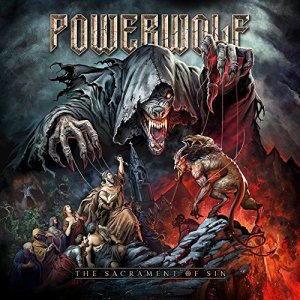 Powerwolf – The Sacrament of Sin:
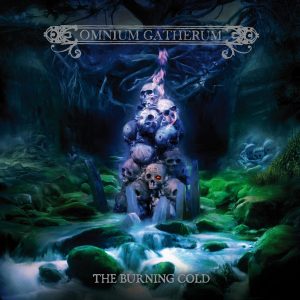 Omnium Gatherum – The Burning Cold:
 Cauldron – New Gods:
 Beyond the Black – Heart of the Hurricane:
 Immortal – Northern Chaos Gods:
 Necrophobic – Mark of the Necrogram:
 Kalmah – Palo:
 Elvenstorm – The Conjuring:
 Dee Snider – For The Love Of Metal:
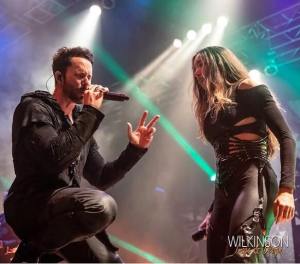 But a band making a bad impression due to a combo of performance issues and aesthetic choices is admittedly an extreme outlier, and they certainly weren’t the problem when I left the House of Blues in Houston over a month ago on May 9th one song before Kamelot finished their headlining set. This is a band that can rightfully be called one of my favorite metal bands of the past decade plus, power metal stalwarts who towered mighty during their Roy Khan era, stumbled a bit after he left in 2011 but recovered with 2015’s excellent Haven album. I’ll say this, the band played well that night, Tommy Karevik was in as fine form of voice as he was on the past two times I’ve seen him, and they played to an appreciative audience. But I was a little unenthusiastic about the experience, mainly because I had taken a peek at the setlist ahead of time and noticed just how nearly identical it was to the last time I saw them in 2015. Nine songs were the same, and of the only four Khan era songs they played (down from seven the last time) all were cuts they had already played last time (and honestly on the tour before that back supporting Silverthorn in 2012 when I saw them in Austin). Now I get that three albums into the Karevik era, they’d naturally trim the Roy songs down a bit, but a little swapping in and out of classic Kamelot cuts would be preferable. Particularly for fans who’ve been around for awhile like myself. I was essentially seeing the same show from three years ago, with the exception of the new songs they added in from April’s The Shadow Theory.
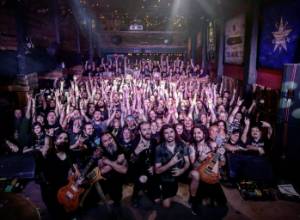 Seeing Orphaned Land take the stage made me feel a little like being eighteen again. It was surreal to finally see this band that I had been a massive fan of for such a long time since 2004 (more on that history
 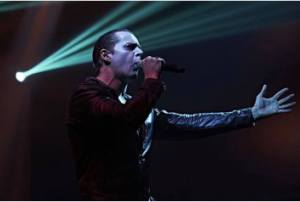 Four days later I was heading out to Satyricon at a venue north of downtown Houston I’d never been to before. With me were three friends, two of whom had just gotten officially married earlier that day. Yes they were going to a black metal concert on their wedding night, and the groom was fired up in particular about seeing the band for the first time (he is a big, big fan). We all had a good idea of the setlist ahead of time, my only quibble being that it seemed like they were skipping playing “Now Diabolical” on this tour. Its been said by the band no less that this would be their likely last North American tour, for reasons that they’ve not gone deeply into but I think are largely business oriented at heart. They don’t get big crowds in the US, not like those in Europe, and its understandable that this late in their career they’d want to avoid spending a lot of time and money for little reward. Whatever the reason, we knew this was the last chance we’d have to see them. I’d seen the band twice before, but was still left feeling that this was going to be a momentous, memorable show just for the magnitude of its finality for us. But sometimes the best part about a show is everything else around it not related to the band or the performance —- it was fun to experience a new (and cool) venue, hang out at the nice patio bar built right next to it before and after the show picking craft beers off a gaudy flatscreen TV menu. It was an altogether different kind of celebratory feel to see my newly married friends rockin’ out right up front and center in front of Satyr in a state of near delirium. I was happy that they were that ecstatic. The bonus was that the band did throw some surprises our way in the setlist (they played “Now Diabolical” for one), and Frost came out from behind his drum kit to lead us in some strange, foot stomping crowd chant while Satyr politely tried to hide his amused grin.
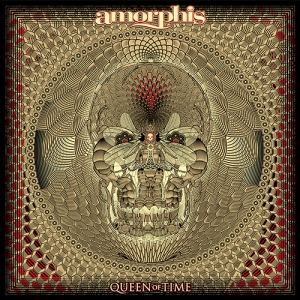 Amorphis – Queen of Time:
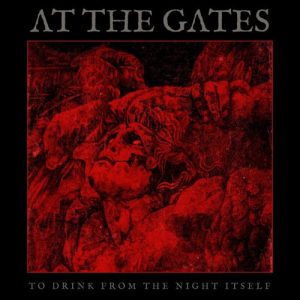 At The Gates – To Drink From The Night Itself:
 Judicator – The Last Emperor:
 Barren Earth – A Complex of Cages:
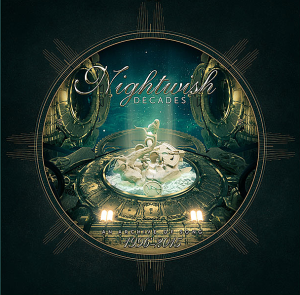 Nightwish – Decades:
 Primordial – Exile Amongst The Ruins:
 Oceans of Slumber – The Banished Heart:
 Panopticon – The Scars of Man on the Once Nameless Wilderness I and II: