
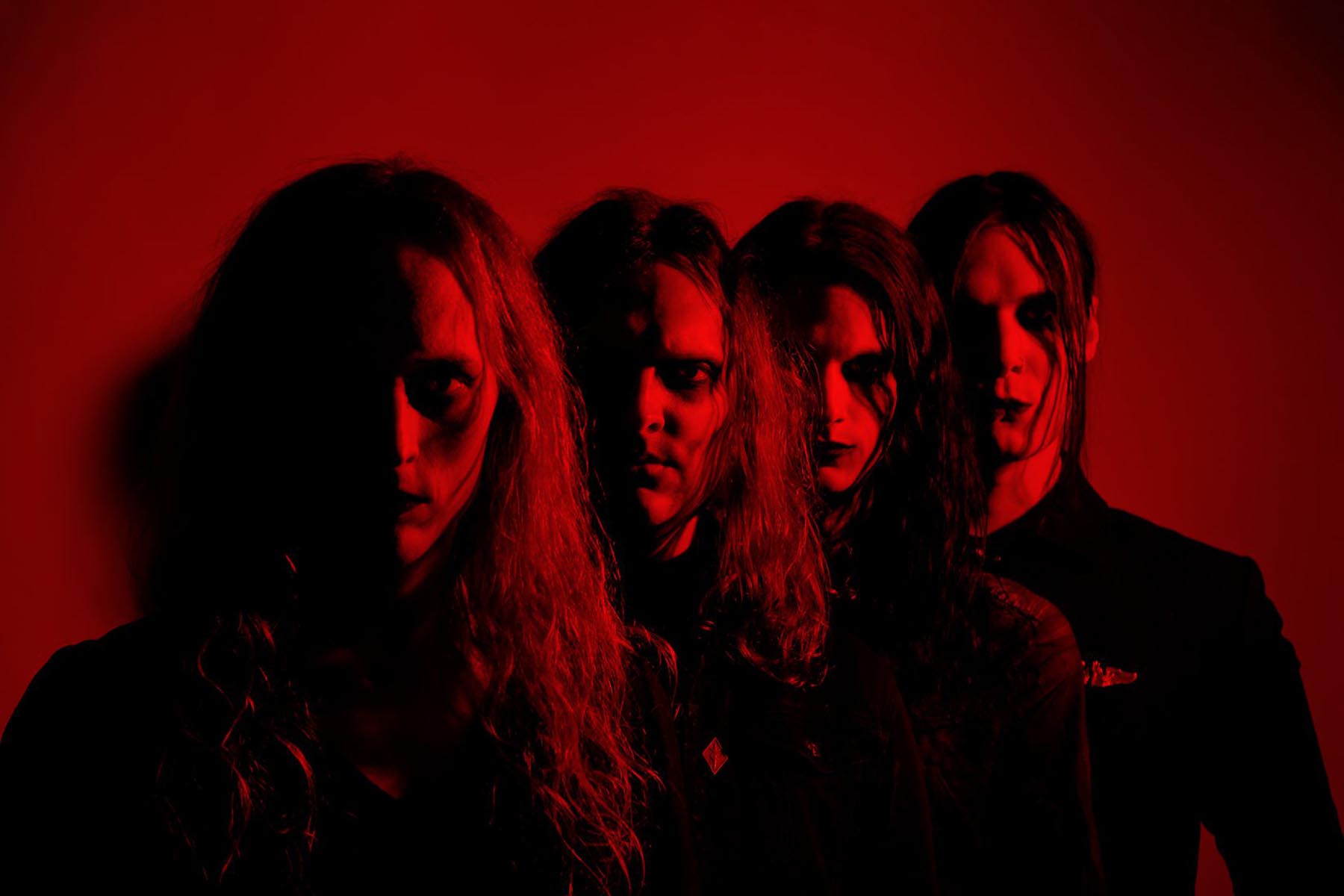
This is an obviously delayed batch of reviews for albums that have come out in January and February, it was actually supposed to come out the other week but as I’m sure you all saw, hell froze over down here in Houston and the rest of greater Texas. I was dealing with intermittent power outages for days and internet being knocked out, along with cell towers clogged with traffic — a situation which magnified the weakness of relying on streaming for one’s music instead of physical media (then again, you know… no electricity). So some of these reviews are older, some just finished hours before publishing this thing, I have a feeling that my opinions might shift over time on some of these albums because I just haven’t gotten a lot of time with them as I’d prefer due to having to play catch up with records released within the last two weeks. So consider these general impressions right now for everything except that Steven Wilson album (I listened to it to death and am glad I can shelve it for awhile), and that new Tribulation record. Hope everyone reading this weathered their own winter storms well enough, and I hope you’ve been able to get the vaccine if you want it. It really does feel like the beginning of the end for all this, and maybe we’ll be talking about shows that aren’t cancelled at some point this year. Also I’ve forced myself to stop referencing the weather or the passing of seasons in my article titles from now on, and it’s proving more challenging than I thought, so the unimaginative result above is what I have to offer for the moment.
Steven Wilson – THE FUTURE BITES™:

So I’d normally write a longer, full length review for someone like Steven Wilson, an artist that I consider myself to be a fairly big fan of. And that I’m opting for the shorter format this time isn’t a slight on The Future Bites, but more a result of circumstances. See this album was supposed to come out in June of 2020, but was delayed till January 29th, 2021 (for reasons that seem a bit academic now given the ongoing state of the pandemic). In the interim, Wilson released no fewer than five singles from the album’s nine song tracklisting, leaving only four fresh cuts by the time the album was released. A bit anticlimactic and seeing as how the earliest single release dates back to March 2020… I feel like I’ve lived with this album for nearly a year now, my excitement level for it falling a little flat as time went on. So in reassessing it here as a whole, I had to return to the album with fresh ears and an open mind, because let’s be honest, like many of you, hearing “Personal Shopper” and “Eminent Sleaze” for the first time was jarring to say the least. Fortunately they weren’t representative of the sound of the entire record, in fact there’s a healthy dose of classic era Wilson-ism to be found throughout, and some stuff reminiscent of Blackfield too.
I just wanna say, while I respect the concept of the album and even find it fascinating… I’m not entirely sure as to why Bowie/Prince worship was the sonic vehicle Wilson chose to explore it in. Take those aforementioned two songs, and a cut like “Self” for example, with their heavy usage of group R&B backing vocals — am I wrong in thinking that Wilson just doesn’t possess the kind of songwriting style to successfully work those in? And if you’re going to experiment with stuff like that, why do it on an album largely crafted by yourself without the benefit of musical collaborators well versed on that style and approach? On Grace For Drowning, where Wilson explored more jazz-based elements, he brought in players who knew that style of music. It would only stand to reason that he’d have done something similar when attempting R&B infusions, because I just don’t think he has the rhythmic songwriting awareness (for lack of a better term) to pull them off convincingly. When Duff McKagan recently put out his rustic, stripped down, outlaw country injected solo album “Tenderness”, he worked with Shooter Jennings and a host of musicians skilled in performing in that vein to get it right. It resulted in a fairly convincing album in sonics and stylistic aspects, regardless of whatever you thought about McKagan’s own songwriting. Wilson has tried on a broad swathe of styles throughout his career to stellar and mixed results, but he usually is cognizant of his own limitations. It’s strange that he didn’t recognize them this time around.
Where The Future Bites excels is on its more conventional, classic Wilson sounding cuts, such as “Man Of The People” and “12 Things I Forgot”, one of Wilson’s more lovely, poignant guitar-pop moments. The former actually reminds me of something that wouldn’t have sounded out of place on Porcupine Tree’s Fear Of A Blank Planet, a mix of tension building electronic pulses, and drug-addled pensive dreamyness. The latter is one of my favorite latter-day Wilson cuts, a simple yet heartstring plucking acoustic strummed ballad built on delicate melodies and a glorious wall of harmony vocals. It’s lyrics are particularly curious, almost a self-deprecating yet unapologetic letter to fans who criticize Wilson for the music he’s making now. That particularly comes through in the chorus lyric where he sings, “…something I lost / and I know what it meant to you… what I sang to you”, and though I doubt Wilson will ever admit to that interpretation if asked, that’s what I’m taking away from it anyway. And I don’t consider myself one of those disgruntled fans, despite the assessment of this particular album. I enjoyed about half of 2017’s To The Bone, and thought 2014’s Hand. Cannot. Erase. was Wilson’s career defining masterpiece. He’s done great work since the indefinite hiatus of Porcupine Tree, and I’m confident he’s gonna deliver something else in the future that I love. But I think Wilson’s wheelhouse for my particular taste is that nexus between prog rock and pop that made us love songs like “Trains”, “Lazarus”, “Collapse The Light Into the Earth”, “Happy Returns”, etc etc. Songs that showcased his ability to tap into raw emotional veins flowing with nostalgia, memory and yearning, regardless of how musically adventurous they were or weren’t.
Harakiri For The Sky – Mære:

I realized something about Harakiri For The Sky when listening to Maere (I can’t be bothered to copy and paste that symbol every time sorry) for the umpteenth time these past few weeks. I enjoy the hell out of this band when listening to their music, but I’ll be the first to admit that I have trouble remembering a single melody, song structure, or lyric after the fact. I’ve been pondering what to make of this, because it’s something I dealt with when becoming a fan of the band on their last record (2018’s Arson). That was a record I really enjoyed, talked to others about enthusiastically, and have kept listening to for a long time afterwards, but for the life of me I can’t remember much about it. Ditto for Maere. This is packed with frenetic, hyper rhythms, incredible percussion, explosive blasts of guitars whose melodies are sharp enough to slice through the clamor and grab your attention, even if they don’t make a lasting imprint like, oh I dunno, the lead melody from “Fear Of The Dark” or something. Harakiri’s music is considered post-black, largely I suspect due to V. Wahntraum’s vocals being mixed in that distant, screaming in the middle of a field kind of way, but they’re way more engaging that most bands tagged as that genre. There is a moment here that breaks through however, at the 3:40 mark in “Us Against December Skies” when the chaos pauses to let a simple repeating riff sequence unfold to awesome, fist-pumping effect. It’s a moment that wouldn’t stand out as much on any other band’s record, but because Harakiri hardly pause for, well… anything, it feels particularly momentous. I get the feeling that just like Arson, I’ll be returning to this record again and again throughout this year, reminding myself out of necessity of why I enjoy it so much.
Accept – Too Mean To Die:

With Too Mean To Die, Accept vocalist Mark Tornillo delivers his fifth album with the band, half way to matching Udo’s ten (we often forget about those three 90s records, understandably so). I don’t know if Mark will get to ten of his own, but it’s kind of remarkable that he’s gotten to five given the way things usually work with replacement vocalists in established veteran bands (see Tim Owens and Blaze Bailey). But he’s such a natural fit, that honestly I feel like his motorcycle greased, Americanized hard rock approach is just as much Accept-ian as Udo’s sardonic German churl. That he’s revitalized Wolf Hoffman’s passion for songwriting within the Accept vein is as much a testament to his impact as are his vocal capabilities. This is yet another quality Accept album — not earthshaking in any way mind you, and perhaps lacking the vibrant punch of Blood Of The Nations and Blind Rage, but I’m enjoying it a touch more than The Rise Of Chaos and Stalingrad. It is a bit frontloaded however, with the album getting off to a strong start with the clumsy yet endearing “Zombie Apocalypse”, it’s oafish lyrics made palatable with a rock solid hook. Can we seriously kick this beaten down lyrical idea to the curb? Zombies, really? Didn’t Hammerfall try this awhile back (I hate The Walking Dead for popularizing this, though I will admit the Max Brooks book was a fresh way of looking at it). The album highlight here is the title track, coming on with Painkiller-ish aggression and fury, and I also found a personal favorite in the slightly glam-rock aping “Overnight Sensation” (sadly it was not a cover of the Motorhead song as I was hoping). As I hinted before, the second half of the record does lose a bit of the bite and sense of fun that the first half had, with songs like “How Do We Sleep” coming on a bit paint by numbers, but not enough to diminish what is largely a quality record.
Labyrinth – Welcome To The Absurd Circus:

In the wake of finally coming around to Italian power metal in the past few years (even to a point of starting to appreciate Rhapsody to a greater degree), it’s nice to come at this new album by one of the OGs of the Italian style in Labyrinth rather than one of the many newer bands I’ve become fans of. I last listened to new Labyrinth in 2010 with their sequel to Return To Heaven Denied, swayed by the hype surrounding Olaf Thorsen’s return to the lineup. I spaced on 2017’s Architecture Of A God (which is pretty solid hearing it now), but in keeping up with Vision Divine through the past few years I feel like I have a somewhat decent pulse on the direction that Thorsen’s songwriting would be steering Labyrinth in. Of course longtime guitarist Andrea Cantarelli and the great Roberto Tiranti have a hand in that, but Thorsen’s presence in these songs is unmistakable. Tracks like “The Absurd Circus”, “As Long As It Lasts”, and “One More Last Chance” marry his energetic blasts of neoclassical guitar with smooth AOR-styled melodies. A peak moment arrives at the mid-song guitar solo in the Queensryche-ian “Den Of Snakes”, where a joyous, accelerating guitar figure breaks out at the 4:22 mark, reminding me of something Edguy would do in the Theater of Salvation era. Tiranti of course is stellar throughout as always, particularly shining on the power ballad “A Reason To Survive”, his vocals ageless and even a bit Khan-esque in these more emotive moments. This is a top tier Labyrinth album, sleek, bold, and confident. It won’t best Heaven Denied of course, but few albums could. It’s only stumbling block is cover art as terrible as Maiden’s Dance Of Death… c’mon guys, its 2021, there’s no excuse anymore.
Einherjer – North Star:

If you’ve dabbled in folk metal or looked for the sometimes stupidly tagged “viking metal”, you’ve surely come across Einherjer, a band that is as frustrating as any in terms of consistency throughout their two era-ed career. Not only is Einherjer’s songwriting track record spotty and unpredictable, but their records seem to sound different from one another in terms of pure sonics, as in recording quality and mixing decisions. When I listened to them in the early aughts before their self imposed near-decade long exile, they were one of a small handful of bands doing music in this particular vein — folk tinged, blackened metal with partially harsh/clean blended vocals. They stood out in other words. But as the years went on and more bands who dabbled in this style got signed, Einherjer’s uniqueness wore off, and I’ll be honest, the last record I remember really enjoying was 2014’s Av Oss, For Oss. It was no coincidence that I was reminded of that record when listening to North Star, it bears striking similarity in the production approach as well as the reined in mix. But I’ll offer that North Star is a far better record just on the strength of it’s songwriting alone, the band settling on a heavily blackened groove based approach. It’s one that reminds me of mid-period Satyricon ala Now, Diabolical by the way of Viking folk influences that just seem to exude off our Norwegian friends like someone bathing in an entire bottle of Drakkar Noir. It starts with Grimar’s vocals being reigned in, his approach built on Satyr like grim-hued harshes, with a lyrical approach that is economical, lean and focused on textural aggression. Simply put, he sounds menacing throughout, his delivery laden with venom and bite. Adding to this is the dual guitar attack of new guy Tom Enge and relatively new guy Ole Sønstabø, who embrace dagger like riffing, simple and direct, straight to the gut, their only indulgences being the splashy solo or occasional countermelody. A vivid example of this is their tandem work in “Ascension”, where their riff sequences are purposeful, focused and honed in on delivering a razor’s edge throughout. A special mention needs to be made for “Chasing The Serpent”, as satisfying a song I’ve heard this year, a moody stomper that delivers a memorable, shout along payload. Highly recommended if you need a blackened fix (but don’t actually want black metal per say).
Nervosa – Perpetual Chaos:

I’ve come to admire Nervosa and their new album Perpetual Chaos quite a bit, first for the daunting story of the challenges bandleader Prika Amaral had to overcome in it’s making (and frankly, how quickly she was able to accomplish that), and second for the actual album that I’ve been listening to over the past few weeks. I’ve felt a disconnect with thrash over the past couple years, and I’m sure anyone who cared enough to pay attention to the albums I covered on the blog in that time could sense that. If I’m being honest the last thrash records that really affected me were Death Angel’s The Evil Divide and of course Power Trip’s Nightmare Logic. So its a bit of a surprise and a relief to know that I can still find enjoyment in a genre that I kinda feared was slipping away from me recently. In making Perpetual Chaos, Amaral had to recruit an entirely new lineup to replace her two departing, foundational bandmates, who left in April 2020 just as the pandemic was beginning. She shrewdly chose to replace them with European based musicians, likely not only for talent’s sake (bassist Mia Wallace did a short stint playing with Abbath during the Outstrider era), but there’s a huge financial/strategic advantage to moving the band’s base of operations to the EU, with bandmembers already citizens which can make touring dramatically easier when things open up. And they all gel together surprisingly well for an album written via distance under lockdown, with nary a weak moment here. Things really start cooking in the second half, with strong songs like “Until The Very End”, “Time To Fight” (the clear highlight here for me with its punk meets Kreator vibes), and the awesome “Rebel Soul”. The latter features Flotsam’s Erik AK, and its great to finally have a guest appearance like this live up on record to the potential it had on paper. Didn’t expect to enjoy a thrash metal record this much in 2021, but I’m glad the theme of the year so far seems to be surprises.
Epica – Omega:

I’ve normally skipped new Epica albums throughout the time I’ve had this blog, getting around to listening to them long after their release date when a review wouldn’t make a lot of sense. And usually my opinion on Epica albums has been a fairly consistent “Eh, it’s ok I guess”. For whatever reason, Epica’s music has just bounced off me for the most part and failed to engage me in the same way their influences, contemporaries, and namesake’s inspiration (in Kamelot) have. I remember liking most of The Divine Conspiracy and even paying attention when I saw them live in an opening slot on that tour (if I recall correctly, Amanda Somerville was handling lead vocals for that run). My biggest criticism of their overall discography is mainly the band’s reliance on a singular mode of attack, that being layers upon layers of overblown orchestral pomp. When that’s all you do, it can get a bit tiring. It’d be like Nightwish doing nothing but Wishmaster over and over again, only fattening up the layers each time. So color me surprised that with Omega, Epica seem to have breathed new life into their sound by choosing to scale things back, stripping away the layering to let their music breathe a bit. I’ve honestly been enjoying songs like the instantly catchy “Abyss Of Time”, the eastern melody tinged “Seal Of Solomon”, and the sweetly poppy “Freedom – The Wolves Within”. These songs are the opposite of the new Nightwish album, lean and straight to the point, and loaded with enough counter-balanced aggression from Mark Jansen (who somehow sounds heavier than I remembered) to prevent things from becoming syrupy. Though speaking of the latter quality, I’ll add a special mention for the spectacular ballad “Rivers”, which is the most effective and emotional one I’ve heard the band ever pull off. Surprise really does seem to be the running theme this year, because I didn’t see myself being this delighted with a new Epica album, but here we are.
Tribulation – Where The Gloom Becomes Sound:

I love this album, and this band really. Ever since getting into them via 2013’s The Formulas Of Death, and then subsequently seeing them live at a memorable Austin gig on their tour opening for Watain, I’ve been consistently impressed with them. Their last record, 2018’s Down Below, was a solid album that saw the band expanding their gloom n’ roll sound to be noticeably more polished, with an emphasis on placing melodies front and center and scraping away some of the rougher, jagged edges of their sound. That in itself is a delicate balancing act and its nice to see a band recognize when they’ve landed on the blend that works for them. On the appropriately titled Where The Gloom Becomes Sound, Tribulation pick up where they left off, with the new album being in part a continuation of the sound they narrowed down on Down Below, and at the same time serving as a rejection that they were transitioning into their Swedish contemporaries Ghost (whom I and others were so keen to compare them to last time around). With excellent cuts like “Hour Of The Wolf” and “Funeral Pyre”, they’re succeeding in pairing Adam Zaars’ earwormy guitar hooks amidst creepily atmospheric dynamics. His contributions throughout the album are incredibly balanced, bringing in gushing sweetness on the solo during “Elementals” while maintaining enough of a charcoal-hued palette to prevent things in general from ever becoming saccharine. And vocalist Johannes Andersson is still Tribulation’s core sonic identity; his vocals ever bleak, laced with just enough reverb to make them sound like they’re echoing off the walls of a cave. I’ve been compulsively returning to this album time and again these past few weeks, it’s simply really satisfying, and a reminder that it’s not always a bad thing when bands give you more of the same.
Todd LaTorre – Rejoice In The Suffering:

So I’ve spent a few weeks with this album now, Todd LaTorre’s first solo album after a career serving as one of metal’s best replacement vocalists (Queensryche and Crimson Glory). With the aid of Craig Blackwell, a Tampa musician friend of his, LaTorre cobbled together an album of ostensibly full-on metal songs, breaking away from the prog-tinge that Queensryche is known for. The result is an album that sounds a bit like a less thrashy Testament fronted by Tim Ripper Owens, with LaTorre getting into that Painkiller vocal mode more often than not. There is of course, an instant delight in hearing this, as I’m guessing most of us felt when we first heard it. I will say that surprise was tempered a bit by knowing how heavy the last Queensryche album tended to get in moments, at times perhaps too heavy for that band’s sound and skillset (debatable I know, but I guess I like my Ryche mid-tempo, thoughtful, and a bit more dynamic). The curious thing about Rejoice is that I find the non-full throttle songs to be the most engaging, tracks like “Apology” with its slowed down, moodier vibes, and the strong Dokken-esque qualities in “Vexed”, with its wild, sunset strip chorus. The slow burning semi-ballad “Crossroads To Infinity” is another intriguing track, with a pretty solid hook in the chorus that I wish was a tad more satisfyingly tight. Everything else on offer is you know, solid attitude spiked metal, and there’s nary a bad or terrible moment among them. The problem I suppose is that there’s nothing overtly spectacular about them either, and I sort of wonder at the praise that’s being thrown towards this album from most people I’ve seen discuss it (though in fairness to LaTorre, he’s an easy guy to root for). But when I hear a song like the thrash-centric “Dogmata”, I’m not so much surprised that LaTorre can do it, but more unmoved by it’s aggression. This could be a ‘Pigeon is getting jaded about heaviness’ problem, but there’s many new records that are quite heavy that get me plenty excited. So yeah, I might be the odd one out here on this record, because everyone I’ve talked to about it loves it.
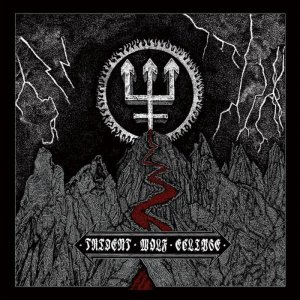 Watain – Trident Wolf Eclipse:
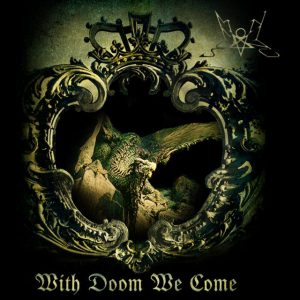 Summoning – With Doom We Come:
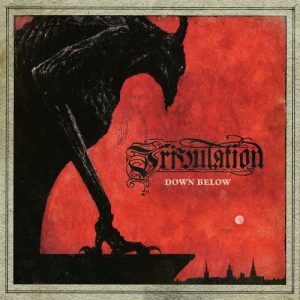 Tribulation – Down Below:
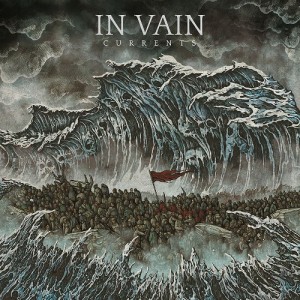 In Vain – Currents:
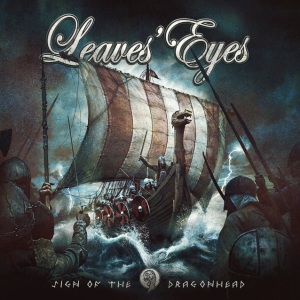 Leaves Eyes – Sign of the Dragonhead:
 Falkenbach flew in under my radar in the sense that I really had no idea they would even have a new album out this year. This is after all a band that is basically one guy, doesn’t play live, and has practically zilch when it comes to an online/social media presence. Their newest offering, Asa, is by an incredibly large margin their best record yet, as Vratyas Vakyas pushes his project’s sound into the welcome reaches of a clearer, professional production. This isn’t to say that past Falkenbach records sounded horrible, but they were coated with a wash of muddled atmospherics and distant drum sounds that often compromised the power of what were undeniably good songs. Here, Vakyas’ vocals are pushed to the front of the mix, his blackened grim vocals now possessing even more bite and rancor than before, and his gorgeous, plaintitive clean vocals are now full, lush, and emotionally affecting. Such is the case on the lead off single “Eweroun”, where delicate acoustic pluckings contrast elegantly against a patient bed of hypnotic, warm riffing —- all while Vakyas calming multitracked vocals take center stage. Its an inspired song, with a definite feel of rootsy authenticity that I find lacking in most modern folk metal. On the other side of the spectrum are fierce black metal tracks that hit with a heaviness and aggression previously not heard on Falkenbach records, such as “I Nattens Stilta” which still manages to surprise with a few prog elements thrown in as well. This is shaping up to be the most welcome yet unexpected comeback record of the year.
 As I wrote in my previous article, In Solitude really wowed me with their performance in Austin opening for Watain. Now when I listen to their newest album, Sister, I wish I took the time to learn those songs in advance of the concert because I’m hearing great moments that I remembered from their set that night, and good shows are made great by knowing the songs yourself ahead of time. My previous reservations about In Solitude’s prior releases were that while they sounded good and there was generally a decent amount of songs worth going back for, the band was essentially aping Mercyful Fate. Generally speaking, this isn’t something worth crucifying a good band for, not when there are already loads of dopey revisionist thrash bands out there making fools of themselves in puffy eighties styled sneakers. But it was a factor in preventing me from getting into the band completely, and I found myself hoping they’d transition into an original sound or at least a new take on their influences in the future. The good news is that they wasted no time in doing so, and the great news is that they’re unearthing a truly original sound in the process by embracing their post-punk influences and toning back the metal classicism a great deal.
 The other band that night, the doomy Tribulation, have a new record out called The Formulas of Death, which is plenty riff heavy yet shares In Solitude’s new found penchant for airy infusions of dark psychedelic swirls. I’m still a bit undecided on this one, but a good sign is that I’m intrigued enough to keep coming back to it. They alternate between a doom laden crushing blend of death and black metal without succumbing to genre tropes, or even displaying any obvious influences, and when they hit it hard its gripping stuff. Check out a track like “When the Sky is Black with Devils”, which musically comes across as a mix of Dissection meets latter day Darkthrone. Like In Solitude, Tribulation choose to employ riffs in a far more restrained fashion, featuring long sustains and riffs that aren’t super tight. At times their musical attack brings to mind a blackened version of those early classic Maiden tradeoffs between Murray and Smith —- loose and almost hard rock-ish while simultaneously precise and focused. I love the aggressive moments found on tracks like “Spectres” and “Suspira de Profundis”, but admittedly I find the soft, spacey moments that permeate throughout to be an occasional strain on my patience. When I have the album on in the background and am focused on something else primarily, I find myself enjoying the record as a whole and even admiring those moments of quiet, but when I begin to really focus on what I’m listening to, I find them lacking in musicality —- quiet noodling should still have purpose, direction, and melody. Maybe that’s just going to be my hangup, but it comes and goes, and that further confuses my overall take on this album.
 I get the feeling that Tribulation will wind up on many reviewers/bloggers best of 2013 lists, some are already short listing it as the album of the year. There usually are one or two albums that end up being a consensus pick of critics genre wide, and far be it for me to suggest that most of these folks don’t truly enjoy the album. Good albums are deservedly recognized as such, but in the past few years in particular I’ve found that the consensus pick of each year has fallen flat for me. And I think that’s where I differ in my end of year analysis and list creation from other sites, blogs, and critics. If a record doesn’t net an emotional or at least a compulsive response from me, then I find it hard to say that its the best album of the year, regardless of how innovative or genre-bending it is. I got a lot of flack a few years ago for publicly questioning NPR’s best metal records of 2011 list, in particular from fans of Cormorant, whose album Dwellings took the top spot on that list. It also appeared on just about every other critical list of metal records for that year, particularly from major mainstream media outlets. Don’t get me wrong, I think that it was an album worth checking out, it was certainly an interesting listen —- but that’s all I got out of it. The responses of that fan base to my list were scathing as expected, and that was fair enough, but my list was an honest one for the time. Of course as I admitted earlier, you’ll rarely get it right in retrospect, but as long as its honest in the moment, how wrong could it be?
 One major disappointment worth noting that I never commented on before is what in the wild hell happened to Blabbermouth? Website redesigns are totally understandable and even welcome when done right but that site was for better or worse the center of my and most other heavy music fans’ online experience. Its been my homepage for years and was always part of the daily new scouring routine. The old design’s iconic news feed scrolling section is now replaced by a far more inconvenient “highlights” feature, mostly featuring Kerry King’s unwelcome face. There are fewer articles on each page of the site, making navigating a chore, and forget about trying to remember how far back you’ve gone because there’s no easy way to judge unless your memory is spot on (mine isn’t). I’m starting to utilize Twitter and Facebook more and more for metal news on essentials like releases and tour dates, but those aren’t perfect systems for those. I find myself actively looking less and less at Blabbermouth even for entertainment value, which was of course one of it’s most dutiful roles, a sort of TMZ for the metal world. Maybe I’m in the minority, but I enjoyed being a spectator to the comment feeds as well, where stupidity and snark would collide in a misguided, often hilarious display of the worst of our fan-doms. With the comments sections now tied into Facebook, anonymity on the site is non-existent, and while some commenters have no problem presenting themselves as oafs and buffoons, the majority of people commenting on individual articles are turning Blabbermouth into a mild version of NPR.org (where complete sentences and paragraph length discussions do a poor job of masking one of the more abhorrent comment sections anywhere online… the ones brimming with irony and smug self satisfaction). Bring back the privacy curtains and trolling idiots I say, god knows we need something to laugh at in this genre.
 The incentive by the way are out of proportion ticket prices. The Manowar shows are 75 dollars for advance tickets or 100 bucks on the day of the show at the box office. Maybe the size of the venues being scheduled (a lot of small theaters like House of Blues) can justify these prices but the reality is that the band is simply taking advantage of scarcity. Manowar regularly schedules full length European tours that see them play in venues such as hockey arenas, soccer stadiums, and at the very least, big big halls (clear em!). They rarely play their own home country and make it point to utilize that scarcity to their economic advantage. Look, I understand economics and supply and demand, the reality is that they’re charging 75 bucks a pop because some people will pay 75 bucks a pop. Do I think they’ll sell out all 1000 tickets for the Houston House of Blues at those prices? Certainly not. I honestly think they’ll be lucky to get 200-300 people in there but there’s more to this issue than just money.
 The show was at a seemingly obscure hole in the wall called Red 7 on 7th street, yeah next to that famed street of one number below, but the venue was deceptively sized. Inside was a small stage facing a bar, but a side door led to a spacious outdoor courtyard complete with shady trees overhead and a covered stage. Watain’s backdrop’s were already on this stage behind multiple drum sets, and a pungent aroma of cloves, possibly sage, and incense was pervasive throughout the air. The show would apparently be happening outside, a small commercial office just on the other side of the fence, one of its window blinds drawn open to reveal a still lit computer monitor. This was unusual, and also totally Austin. I’ll admit my experience with the city is severely limited, most of my out of town show excursions aimed at San Antonio. Here in Houston, metal shows are almost exclusively at smoky, dark, indoor clubs in remote corners of the city.
 Its raining on and off throughout the early parts of the evening, just light drizzle basically by the time local openers HOD take the stage. I’ve seen them a few times before in various venues, they’re a frequently gigging San Antonio based metal band whose sound is difficult to categorize except to say its mean and ugly. This is the best I’ve heard them yet. In past shows they’ve come across as a whirlwind blur of noise on stage but Red 7 seems to come equipped with a rarity in venues this size —- a really good sound guy. All of the instruments are discernible, the vocals are clear and up front in the mix, and the drums aren’t too overpowering, it all bodes well for the rest of the night. I didn’t know a thing about Tribulation, who take the stage soon after and begin to play a surprisingly atmospheric mix of doom and death metal. I love the instrumentation, they have a vivid sense of melodicism and use of space in moodier sections. They were entertaining on stage as well, a quality that to a relatively jaded metal head like myself is an achievement to note. I promised myself to check out their records once home.
 Remember when I told you it was drizzling? Good, keep that in mind. Changeover times are short, the venue staff really do seem to have a handle on all these things that we Houstonians usually accept with delays. Live music capital indeed. Watain’s stage set is grisly: A folded out two sectioned backdrop of stretched out animal skin panels with actual animal bones set in each panel column to spell out in runic lettering W-A-T-A-I-N. There is a small altar set off to the side just adjacent to the center mic position, upon it a chalice, an open book, and some kinds of incense or leaves (hard to distinguish in the dark). Inverted crosses stick in between the monitors at the front of the stage, and incense burners produce enormous quantities of perfumed smoke, and the entire scene is bathed in eerie, muted, red light. There won’t be any stage lighting change ups during their set, nor any roaming vocalist spotlights, this is all the lighting Watain wants. All the band’s have had extra help in that regard as the overcast clouds have brought much in the way of actual thunder and lightning throughout the evening. It was mood setting during the opening bands, with many in the audience nodding and smiling while looking up appreciatively at the night sky. Halloween, Watain, freaking lightning in the sky? Its as if the Earth approved of our shenanigans for a time. And then it didn’t.
 Watain takes the stage to tremendous applause and a huge crowd surge forward, with some unwitting idiot deciding to start the pit (on slippery cement no less) on the left side of the crowd instead of the center (you know, as everyone else on the planet knows to do). I’m casually thrown back ten feet along with a dozen other people from my third row center position as another pit forms middle center. Somewhere between fending off circle pitters to my right with my forearm and helping a tiny female fan next to me get up after being bowled over, I see Watain appear as shadows in the smoke, Danielsson already launching into his weathering vocal attack. I won’t pretend to be entirely knowledgeable about the Watain back catalog, really just the past few records, but I knew they opened with “De Profundis”, one of the best cuts off The Wild Hunt. Then, a few songs into a set, as we’re all headbanging and warily watching our peripheral vision for incoming mosh pitters, the clouds are uncorked and a light, frothy drizzle becomes a torrid, cold downpour. It is vomiting rain, and we are stunned and soaked. The band plays on, covered by a huge sheet metal roof, and some of the first rows of fans pressed against the stage are sheltered as well, oblivious to the storm. The rest of us have a collective moment of either, “yep, going inside now”, or “oh well, hey’re we’re already wet —- and Watain’s playing!”. I stick with the latter camp, my shirt getting heavier and heavier with soaking rain each second, my only concern my cell phone now precariously pressed in my side pocket. I see Danielsson hold up his chalice and say something about ritual blood, oh man…. he throws it, everywhere. It reeks of, ahem… putrefaction.
 More than halfway through Watain’s set, just after their rendition of “Reaping Death”, I finally have to call time on the satanic shower. Most of the rear half of the audience have gone inside, those closest to the open doorway watching from their dry vantage point. I’m more than drenched, its like I just walked into a shower with all my clothes on and decided to stay there for half an hour plus. I duck inside, past a mass of drip drying faces that I see through a wet blur. I feel a few hands clap me on the shoulder as I sludge past them, what I take as a “good effort, good hustle” type of thing. My friend —- he’s up at the front under the meager extension of the stage covering, raging like a maniac, while just barely escaping the water wall inches from his back. I try to watch from the doorway, but eventually just sit near the wall and listen to the rest of the set. Watain are excellent, and I wonder what they must make of the scene before them. This show was packed with people, there must’ve been close to six hundred in attendance at the peak just before the rainy onslaught. The few left out there look to number around forty.