
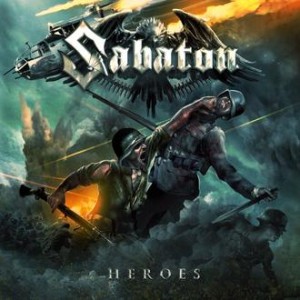
 There’s so much to discuss in regards to Sabaton’s newest album, Heroes, a ten track paean to specific acts of heroism in wartime, and a strong contender to be the band’s best album to date. Let’s just get that out of the way first: Heroes is a great Sabaton record, not perfect… but really, really great. I usually avoid disclosing my overall consensus on an album until midway through a review, because after all, I’d like you all to keep reading throughout. Yet the story of this record is worth discussing in depth even though you know where my opinion stands. Its simultaneously a story of the self-driven perseverance of two friends and band mates and their vindication in the wake of what could have been crippling circumstances; as well as a collage of moments where humanity triumphed over the waste and destruction of warfare. Regarding the latter, this is a turning point for Sabaton, whose previous albums were largely made up of metallic anthems either depicting the intensity of war and its participants (for example, “Ghost Division”, “Into the Fire” or “Primo Victoria”), or paying homage to war heroes exclusively (“White Death”). There’s a bit of that on Heroes as well (certainly the cover art reinforces that), but surprisingly enough the album largely consists of songs honoring those moments when non-violence prevailed over all.
The last time Sabaton released an album was in 2012, with the thematic departure of Carolus Rex, whose release was clouded with inter-band strife —- resulting in four of the band’s members departing shortly after the recording sessions were complete. An American tour was coming up, and remaining members vocalist Joakim Brodén and bassist Pär Sundström had to scramble to assemble a new lineup. It wasn’t even certain if these new guys would last through the duration of the album’s touring cycle, much less stick around to participate on any future albums. I was there at the Sunday night San Antonio gig that kicked off the Carolus Rex world tour and served as the debut of new Sabaton guitarists Chris Rörland and Thobbe Englund, and drummer Robban Bäck. The new guys were obviously nervous, but so were Broden and Sundstrom. When they took the stage to a relatively small crowd of about fifty of us, they played as though they were in front of thousands —- Broden and Sundstrom leading the stage performances. By the end of that show, the nerves had noticeably dissipated, Broden was communicating his appreciation for the strong support, and I was marveling at just how well the new guys were gelling live in such a short time.
 It was an inconspicuous debut —- though an auspicious one. The tour plowed on, and when I caught the band almost a year later back in Houston, they were firing on all cylinders, the new guys even equaling Broden in their stage performances. I’ve seen them a few times since then, most recently the other week opening for Iced Earth, this time with another new drummer Hannes van Dahl as replacement for Bäck who had to leave for paternity reasons —- and my impressions were further reinforced. Having seen both eras of their lineups, I feel that the current incarnation is the definitive lineup, and that’s not to discredit former band members, but the new guys just seem to “get” what Broden and Sundstrom have in mind when it comes to their live performance. The real question however that lingered throughout was just how this massive lineup change would affect a new recording? In terms of songwriting, there didn’t seem a reason to be concerned since Broden has always served as Sabaton’s musical scribe, but he composes on keyboards and leaves the guitars to his bandmates —- how would the new guys mesh with what he gave them? Exceedingly well as it turns out, and I gather this not only from my takeaway from listening to the album itself, but from comments made by Broden and Sundstrom themselves, who in a recent interview with Spain’s Metalovision mentioned their surprise at how quickly their new guitarists figured out and recorded their parts (apparently in only four days). It wasn’t guaranteed that Heroes would be a great album —- that Sabaton have accomplished this is a testament to the artistic bonds formed while touring Carolus Rex.
 As far as what makes it great, listen first to five absolutely excellent standout tracks in “Night Witches”, “No Bullets Fly”, “The Ballad of Bull”, “Resist and Bite”, and album closer “Hearts of Iron”. In typical Sabaton fashion, what makes these songs so great is not only their precision honed array of hooks and musical ear candy, but the interesting subject matter and Broden’s skilled ability at lyric writing. One of the most gripping back stories is found on “No Bullets Fly”, honoring an incident in which a crippled American B-17 was escorted back to friendly territory by a German ace fighter pilot named Franz Stigler who was one confirmed kill away from qualifying for the Knights Cross. He said that he maneuvered alongside the B-17 and could actually see through the damaged air frame and look directly at the faces of its injured pilot, Charles Brown and remaining crew. He made a choice that could’ve gotten him executed had his superiors found out —- he escorted the B-17 back to the North Sea, his presence preventing German anti-aircraft batteries from firing upon the American craft. Upon reaching the sea Stigler saluted the American crew and turned back. Forty-seven years later, the two pilots would finally meet and became good friends. As a kid I grew up wanting to be nothing more than a fighter pilot, and I loved reading about the history of aerial combat —- and I’m torn between being annoyed with myself for not hearing of this particular story earlier, but very gratified that I got to hear about it through Sabaton’s monstrously epic, adrenaline pounding celebration of human decency. It sounds like an odd juxtaposition because it is: Group shouted vocals yelling “Killing Machine!… B-17!” during the chorus envelope the humanitarian sentiments of “Honor in the sky!… Flying Home!… Said goodbye to the Cross he deserved!” Its quickly become one of my favorite Sabaton songs.
 I’d be remiss not to discuss in greater detail my love of the songs “The Ballad of Bull” and “Hearts of Iron”, two songs about non-violent humanitarian action in the middle of utter chaos. Again its refreshing to hear Sabaton’s scope increasing, their views on the concepts of heroism being greater than just focusing on combative actions. Broden’s lyrics are often startlingly direct, and they certainly are here, but I feel that it works better for the song —- what could he possibly couch in a metaphor? Some may be put off by the former’s piano drenched balladry, in fact a fellow metal critic/radio host friend of mine stated that he thought the piano on it was too “processional”, or too formal for his preferences. I can see where he’s coming from, but for me, that is precisely why I love it so much. I love that the heavy emphasis on naked piano seems to evoke a musical pastiche of the 1940s (or at least my impression of it), and its heavily pronounced major keys seem fitting to match such a near mythical tale of gallant individual heroism. Maybe its also that I simply love piano as an instrument, and amidst an album full of heavy, breakneck guitars, its arrival is a welcome contrast.
As for “Hearts of Iron”, its a song concerning the bravery of the German 9th and 12th armies in late April 1945, who facing certain destruction at the hands of the Soviets ignored orders to stand their ground; instead they fought to create and protect a corridor headed west across the Elbe river through which 25,000 civilian and soldier refugees could escape to surrender to western forces. It takes a certain amount of guts to pen a song in which you depict heroism from Nazi German forces, but as a lyricist Broden is deftly aware of this, “It is not about Berlin / It is not about the Reich / It’s about the men who fought for them / What peace can they expect?” Its one of Sabaton’s most tragic yet uplifting songs, with a chorus that tightens your chest with its noble sentiments, “Its the end / The war has been lost / Keeping them safe til the river’s been crossed”. Broden has made a career out of painting lyrical portraits of the vivid shock and terror of battle through multiple narrative perspectives and points of view —- on Heroes he branches out as a lyricist with a very un-metal-like appeal towards moments of human morality (just so there’s no confusion, I consider that to be a good thing).
 Of course, that’s not to suggest that the band have entirely left tradition behind, as “Resist and Bite” is one of the band’s best songs to date and falls in line behind old classics like “40:1” and “Uprising” as us against them celebrations of sacrifice (though in this case it’s about the Belgian infantry resistance to the Nazis). I was driving along the spaghetti bowl of Houston freeways listening to the album this past weekend, and when this song came on I blew past the speed limit and barely saw a highway patrol car on the shoulder just in time —- a very close call! Its got that kind of adrenaline surging, pulse poundingly dramatic (and ultra-catchy) chorus that defines epic and makes you look like a maniac to other passing vehicles. The guitar solos in this track are worth mentioning —- on the entire album in fact, Englund and Rorland trade back and forth wildly melodic, furious soloing that is always complementary to the primary melody at work. Similar in old school theme is “Soldier of 3 Armies”, about Lauri Törni who as the title suggests fought for Finland during the Winter War, Germany in World War II against the Soviets, and the United States (in Vietnam as a Green Beret no less… and man, did this guy hate the Soviets or what?). Its a strong track that is a spiritual cousin to “White Death” from Coat of Arms.
The rest of the album fills up nicely with solid songs brimming with catchy hooks, interesting one-off musical moments, and of course loads of melody. I’m not sure if “To Hell and Back”, a song about the legendary World War II hero Audie Murphy, was the best choice for the lead off single (“Resist and Bite” fits the bill better), but its a good song nonetheless and its whistling motif has a real Scorpions call back to it. If there’s a tune on here that can merely be described as decent or good, its “Inmate 4859” —- about Polish resistance hero Witold Pilecki. Its a bit lumbering, the chorus is a touch too close to the verse in tempo, structure, and design (a very un-Sabaton quality), but it does have a nice guitar solo led bridge in the middle that is very pleasing to the ear. Again, not a bad song by any stretch, but it and a track like “Far From the Fame” just don’t live up to the high bar set by the other truly classic songs here —- but seriously, for any metal record seven out of ten isn’t a bad ratio.
My spirits have been buoyed by the artistic success of this album, I now know that Sabaton will be able to sustain any major lineup shocks and upheavals (though here’s hoping no more come). This is one of the most impressive bands in metal, they’re self-managed, they tour like they’re possessed, they have a great respect for their American audiences and actively seek to make a dent in the market Stateside, and they’re aware of their own identity in a way most bands are not. And they’ve also released one of the best records of the year so far, something I wasn’t predicting a few months ago. They get a lot of flak from more than a handful of popular metal sites, whether its for their subject matter, or their major key melodicism, or their pristine productions —- all criticisms that are actually the band’s biggest strengths. Critics will be critics, metal bands can’t all sound purposefully lo-fi and full of black metal tropes. Sabaton’s growing popularity is a testament to the honest nature of their audiences —- that there can be metal fans who are unapologetic about what qualities they enjoy in their heavy music, unaffected by trends or flavors of the month. I noticed it when I turned in any direction towards the crowd at the Iced Earth / Sabaton show the other week, real enthusiasm untempered by internet angst. There’s hope after all.
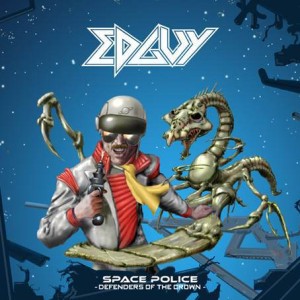 If you’ve kept up with the blog over the past few years, you’ll know that I’m a pretty big Tobias Sammet fan. Yet my unabashed fandom has not prevented me from listening with a critical ear to his songwriting in both Avantasia and Edguy, and in doing so I’ve begun to notice a certain track that his recent works have been taking. There was a noticeable decline with Edguy’s Age of the Joker and last year’s Avantasia offering, The Mystery of Time, and it could be argued that the seeds of this decline for Edguy in particular began with 2008’s Tinnitus Sanctus. That in itself I find rather revealing, because 2008 also ushered in the release of the first Avantasia album in the largely brilliant Scarecrow trilogy —- which suggests that it marked the start of an era in which Sammet began to reserve his best material for the Avantasia records, by default giving Edguy second priority. Sammet himself would balk at that very suggestion and has gone on record stating that the songwriting periods for both projects do not intersect. Hey I’m a fan of the guy, I’ll take him at his word, but I will argue that its fair to suggest that his main musical priority had shifted to Avantasia within the past six years. Its in the math guys: since 2008 —- four Avantasia albums to three for Edguy.
 These are permanent changes, and I suspect that Sammet realizes this, but I’m not sure that most of his fans have. If you’re one of the few that can accept the compartmentalizing of his songwriting career, then you’ll be able to accept Space Police for what it is —- namely, the strongest Edguy record of the past eight years. Sammet has successfully shaken off the dust of his past two recordings and delivers some pretty great songs, the most apparent of these being the title track itself. With its tension building, slow-burning verses and propulsive prog-pop chorus, Sammet has penned one of his best Edguy songs to date. Its subject matter is ironic in that its poking fun at fans, or critics (or in my case, one and the same) that tend to demand that the band stick to a particular set of stylistic rules or structures —- all while featuring some of the silliest voice effects on any Edguy song ever (remember the “sung” guitar solo from years ago… its back in a weird way). There’s also the standout single, “Love Tyger”, one of Sammet’s catchiest songs ever, with its “La-La-La-La-Love Tiiiger” refrain becoming perma-stuck in my head for the better part of two weeks now. I love the backing vocals on this tune, with its complementing mix of male and female vocals in what is by now becoming a Sammet trademark, they add a lushness to the sound that is supremely enjoyable. Another gem is the unconventional power ballad “Alone In Myself”, where Sammet trades the usual dramatic build up and Slash-esque guitar solos for an almost soul-influenced lead vocal backed up by some fantastic gospel tinged choir vocals during the refrain. I’m pretty big on Sammet’s ballads, I think he’s one of the best at penning them genre wide, and I love that he’s finding new ways to explore this particular avenue in his songwriting. What an astounding song.
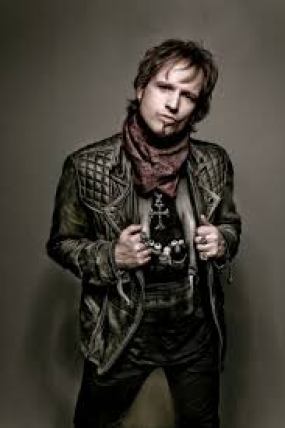 Filling out the rest of the record are some solid album cuts; “Defenders of the Crown”, the second half title track has a chorus that is slightly lacking, yet the rest of the song is packed with enough interesting musicality to make it worth many repeat listens. Same goes for “Shadow Eaters”, an uptempo mix of power and trad metal elements with a pummeling double bass furor throughout, its easily the heaviest track on the record (you know… if that’s the kind of thing you enjoy hearing about). The closing track “The Eternal Wayfarer” attempts to be the epic of the record, with its just under nine minutes in length, but it comes up short of meeting the criteria to be placed alongside past Edguy epic-length classics. Not for lack of trying however, because I should mention that the song is near spectacular from 5:03 to 7:00, where an extremely well written extended bridge features the kind of swirling lead vocal layering that we haven’t heard since the classic title track from Theater of Salvation, a blast of nostalgia that is tastefully done and just plain fun to hear! So there you have it, no real clunkers, and a handful of gems, I’d call that a pretty good outing for Sammet and a rebound for him in the quality department. I’ve noticed I haven’t mentioned any of the other band member’s performances, and that’s not meant to be a snub, as those guys do their job really well and sound great as always. This is a band that lives and dies on the songwriting skills of Sammet, and until they decide to get involved in that realm themselves, it will always be that way.
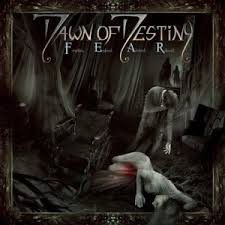 Dawn of Destiny – F.E.A.R.: Almost every year, there’s a band that appears on my radar from seemingly out of nowhere, stunning me with an album so good that I have to kick myself for not realizing that they’ve been in existence for more than a few years already. Its the “cream rises to the top” metaphor in action —- a good band producing excellent work will ultimately reach my ears due to word of mouth. Its how most of us get to know the bands we love in the first place amidst a flood of metal releases. Its impossible to listen to everything, and if you try to get in on the ground floor of every promising new band, you really do run the risk of burning yourself out (as well as preventing yourself from enjoying what you’ve already heard), particularly if you make a habit of writing about metal bands.
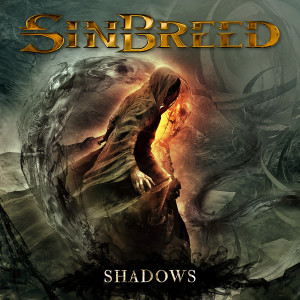 Sinbreed – Shadows: You’d be forgiven for never having heard of these guys before Marcus Siepen of Blind Guardian fame decided to join up with them. He wasn’t the first link to the mighty bards however, as Sinbreed has actually been an ongoing project of current Blind Guardian drummer Frederik Ehmke’s since 2005, together with vocalist Herbie Langhans, and guitarist Flo Laurin. They released an album back in 2010, and I’ll totally admit to missing that one (hey, Blind Guardian’s own At the Edge of Time cast a pretty large shadow over my listening time that year). What really got my attention, and that of many others was Siepen deciding to participate in this project —- after all, we’re talking about a guy who has been content to play only in one band for nearly thirty years with practically zero interest in doing anything else outside of that. Siepen is often forgotten when people pontificate about the supreme awesomeness that is Blind Guardian, as lead guitarist Andre Olbrich tends to take most of the glory (and to be honest, as a primary songwriter he probably should). However Siepen has been the Izzy to Olbrich’s Slash throughout Blind Guardian’s discography, at least playing-wise, being a razor sharp rhythm player who can deftly interplay with Olbrich’s twists, turns, and Brian May-isms.
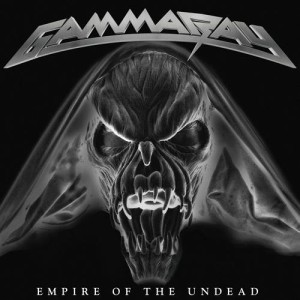 Gamma Ray – Empire of the Undead: Sometimes the problem writing reviews is that you stumble across an album where you really just don’t know what else you can state other than the obvious. I’ll shake my head and say, “No dummy, remember we’re assuming the reader hasn’t heard this album yet”, and force myself to continue. Now other than that you know I sometimes talk to myself while writing, you’ll perhaps empathize with me when you remember that Gamma Ray simply hasn’t changed much from album to album in the past decade. In fact, increases in production quality aside, Gamma Ray albums have been fairly linear affairs from one to the other, and that doesn’t mean that they haven’t been good —- but it does get hard to discuss in any remotely in-depth manner the particular intricacies of a new Gamma Ray offering.
 Eldritch – Tasting the Tears: Eldritch have long been Italy’s metal secret, a band not named Rhapsody or Lacuna Coil that sails under the radar whilst releasing quality prog/power metal albums in fairly rapid succession. They don’t get a lot of press, not even in their home country, the glory being left for their overhyped and overblown countrymen. I myself always forget that Eldritch are from Italy, not the UK or Stateside, mainly due to Terence Holler’s vocals sounding like a blend of James LaBrie and Sebastian Bach. I have to admit I missed their last album Gaia’s Legacy, so I’m not sure how this new one measures up in terms of progression, but it certainly sounds like the Eldritch I remember. Take the more metallic side of Dream Theater, tone down the progressive noodling, increase the emphasis on catchy vocal hooks with some fairly strong melodic twists and you’ll have a good idea of what to expect here.
 I wonder if every new Sonata Arctica release shouldn’t come with a warning sticker on the front. I’m not quite sure exactly what the wording of the message would be, but it’d have to get its point across succinctly since there would be an obvious character limit. Perhaps we can impose some self-made restrictions upon ourselves to keep it short and sweet —- a twitter style 140 character limit then? Yeah we’ll go with that. Perhaps by the time I arrive at the conclusion of this review we’ll have a message for that sticker that does the job. But why the need for a warning sticker at all…? Its because post-2007 Sonata Arctica have the misfortune of being saddled with the weight of rather grand expectations, and perhaps because as fans we see our expectations through the 20/20 vision of hindsight.
 And that’s a fairly accurate (if crude) way of analyzing each new Sonata Arctica album since 2007’s Unia, a line of demarcation for the band where they decided to branch out their sound and songwriting with some far flung experimentation. Its been a rocky ride ever since. Sure there have been gems on all these experimental era records, “Only the Broken Hearts (Make You Beautiful)” and “Alone in Heaven” from 2012’s Stones Grow Her Name come to mind immediately, but there’s a been a lot of “cutting room floor” playlist material as well. And if you take a look at the band’s discography, you’ll notice that with the release of Pariah’s Child, the band has evened up the number of albums in this post-2007 experimental era to those of their classic, golden era —- four a piece to be precise. Yep, I’m including this “return to form” album with the experimental era because Tony Kakko —- who has spent these past seven years experimenting —- can no longer relate to the natural boundary of tunnel vision he had during the band’s early years. He’s an internal songwriter at heart, and as a result suffers from a lack of external separation… simply put, its likely that he doesn’t see the experimenting we hear as being all that experimental. But to us outsiders, it seems for all the bluster about how Pariah’s Child would be a no-nonsense, classic Sonata Arctica power metal album, there sure is a lot of nonsense here.
 I’m sure the most baffling track on the album is “Half A Marathon Man”, which actually has a nice Deep Purple/Rainbow-ish approach for the majority of the song, but they’re undermined by Kakko’s pointed lyrical American-isms. That in itself isn’t a deal breaker, but the sheer rock n’roll throwback approach is jarring, especially in the context of this supposed return to their power metal glory (of which I’m sure it’s abundantly clear by now that Pariah’s Child is not). And I can’t neglect to mention the utter mess that is the purported epic of the album, “Larger Than Life”, where the first five and a half promising minutes are blown completely out of the water by hearing an operatic choir sing the lines “So don’t take life so seriously”. Look, I tolerate a lot with Sonata Arctica, but I have a hard time swallowing the juxtaposition of an epic sounding collection of professional voices singing such mundane phrases. It simply doesn’t work, and tellingly the song unravels immediately after that, a directionless blast of orchestration and guitars that get blander as they go on…. at one point you realize that nothing is actually happening in the song, its just elevator music over tepid riffing. This song desperately needs a melodic motif that it can go back to or utilize in increments throughout —- instead it just comes off as a collection of leftover ideas that were cobbled together against an orchestral arrangement in the hopes that it would mesh together well. It didn’t, and instead can be officially considered the worst Sonata Arctica “epic” to date.

 I’ll argue that the case in point that answers that question is the band’s current touring activity —- that’s right, Metallica is on a South American tour as we speak. In fact, they have tour dates lined up all through the spring and summer up to August. Promoting what you ask? I dunno… Metallica I guess. This is a band that has waffled on going back to the studio for a proper studio album, only pausing in their incessant tour schedule to commit ear murder with their ill-conceived and executed Lulu album with the late Lou Reed (for all our sakes I’ll just avoid talking about it at all here, suffice to say it was a time-sink —- as in black hole, the astronomical object). So now, in 2014 every band member has finally mentioned something in the press as to this year being the perfect time for Metallica to start cooking up a new album, okay, great! Except that they’re not in a rehearsal room, and certainly not in a recording studio. How do you write an album on the road when you’ve been unable to do so in the past? Does this mean that the next Metallica album won’t start getting assembled until the fall of this year, when the band is finally off the road? Does any of this sound like the plan of a band hell bent on delivering a truly great work of recorded art?
 When a band plays live, there are so many factors that can audibly affect the performance of a song, the acoustics of the venue, the noise of the crowd, bad mixing, the sound guy sucks, etc. I was mildly annoyed when Kamelot debuted their first Tommy Karevik era song at a European festival —- crap sound and all —- when you took a listen to the versions plastered over YouTube you could hardly make heads or tails of anything. I’m sure it was worse for the fans in the crowd, what exactly were they supposed to be hearing that they could comprehend, if anything? When you take a look at some of the videos of “The Lords of Summer” performance, you’ll see some of those lucky fans that got to be invited on stage to watch the gig from the wings, and most are cautiously bobbing their heads during the song. A few just look confused, and you can imagine how many people are taking the moment to head to the concessions or hit the head. And this brings me to the moral of this little quibble, and this goes for all metal (and rock) bands: STOP PREVIEWING NEW SONGS LIVE! And to Metallica, this tour leg of yours is called “Metallica By Request”, no one in Bogotá requested a demo!
 This is a band that doesn’t understand how to continue as a creative unit anymore. Years wasted on vanity projects (the 3-D movie, the atrocious S&M, Lulu) and overkill on touring has depleted their sense of what it means to be individuals in a metal band playing metal music. I would even go as far to suggest that their lifestyles make it difficult for them to relate to their fans, largely a blue collar bunch. When you live in a mansion on the coast of the richest neighborhood in the Bay Area, with a multimillion dollar art collection on hand and bottles of wine at the ready, its hard to relate to a fan of yours that works a soul crushing job with terrible pay. That’s not Metallica’s fault, nor their responsibility. What is their responsibility however is to own up to the fact, and perhaps reassess how they approach songwriting, perspective, and what it is they want to express through words and music.
 Iron Savior – Rise of the Hero: I was so blown away by Iron Savior’s previous offering, 2011’s The Landing, that I met this album with a great degree of trepidation that only comes with metal fan experience. See its not at all unexpected or out of the ordinary that a veteran band should find another spark of inspiration many albums into their career —- it happened with Accept and their near masterpiece Blood of the Nations in 2010 for example. However, it is highly unlikely that such a resurgence carries over into more than one album, again I’ll reference Accept by pointing to the rather mediocre follow up they delivered in 2012’s Stalingrad. Iron Savior unfortunately walks into this same trap, and in unusually clumsy fashion as well. I honestly don’t understand some of the thinking behind a few of the songwriting choices on this record.
 Freedom Call – Beyond: On paper I should enjoy the work of Freedom Call more than I actually do, as they are one of the happiest sounding bands in the genre alongside the now defunct Power Quest —- whom I loved. But what Power Quest had in spades compared to their European mainland cousins was the sheer pop songwriting brilliance of Steve Williams, who through his simple yet ultra-melodic keyboard lines not emulated and transcended the best of the eighties pop-rock bands he loved. Freedom Call is by this point the sole project of the only remaining original member, vocalist and guitarist Chris Bay, who does good work in his own particular milieu, if nothing truly remarkable. Freedom Call albums are predominantly spotty affairs, but they will usually guarantee a handful of good songs, an on occasion, some really great ones. They receive my attention as a power metal fan in spite of their flaws, mainly because I feel so passionately about the era they were born in.
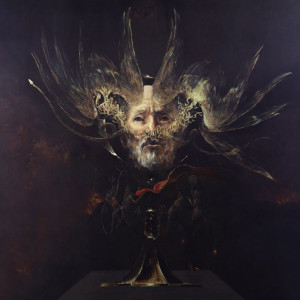 Behemoth – The Satanist: This came as a total surprise, not it’s release mind you, but just the fact that in 2014 Behemoth may have just released the best album of their career, and for sure a contender for being considered one of the best albums of 2014. My history with this band is spotty at best, I’ve largely found their discography to be inconsistent, and for a few records, even uninteresting. I have always appreciated that they try their best not to be pigeon holed into one specific subgenre of metal, instead choosing to play with both black, death, and doom metal stylings… its just that those kinds of mergers require a rather steady hand at the songwriting helm, which I’ve never suspected Behemoth of having. The band’s songwriter is frontman, guitarist, and vocalist —- Nergal, who seems to have approached this album with a dose of inspiration undoubtedly gleaned from his near-fatal brush with leukemia in late 2010. On The Satanist, Nergal infuses not only death and black metal stylings, but adds in doses of ambient noise and even hard rock simplicity together in one of the most alluring and provocative blendings in recent memory.
 Grand Magus – Truimph and Power: I’ve grown to enjoy Grand Magus through their previous album, 2012’s The Hunt, it wasn’t a perfect record, but it had very high highs and no lows. I checked out the rest of their discography and found myself liking the older albums a little less, I wasn’t wild about their doomy past I suppose. Lucky for me the band seems hell bent on moving further and further away from those stylings and more into traditional metal territory on their newest, Truimph and Power. There are still doomy moments present, but they’re more touches and flourishes, ingrained within song structures themselves instead of being central to them. Apologies perhaps to fans of their older works, but this is an album that is hitting me right in my comfort zone.
 Many months ago, Cary G. from the long running metal podcast MSRcast asked if I’d like to be a guest on his show, and many, many months later we somehow managed to get the planets to align to make it happen. For those who don’t know, MSRcast is the audio evolution of the now defunct Mainstream Resistance zine which once upon a time found its way into many a Texas metal fans’ sweaty, moist palms. There are very few metal based podcasts that I enjoy listening to, and MSRcast and its sister show Metalgeeks are both part of that select group. I was asked to be a guest on their 2013 rewind, and yes I know its nearly March but hey, one more look back couldn’t hurt right? You can listen to them by following the links provided below and using their web based player, or download it from their site directly as an mp3 file, or simply do what I do for my podcast needs and find them in the iTunes store, hit subscribe and you’ll auto-download every new episode! What — you’ve never listened to podcasts before? Maybe its time to get with it! I’ll let it go this time because I’m such a nice guy!
 I’ve learned through these past few years doing The Metal Pigeon that the hardest reviews to write are the ones for releases that I don’t feel strongly about one way or another. Case in point is the amount of days I’ve been putting off publishing this review for the newest Within Temptation album, Hydra, simply because I’ve felt unsatisfied about my own written response (I’ve re-written this thing about three times now, and this fourth and final time is me just being blunt and hopefully not coming across as a jerk). Full disclosure before I begin: I generally enjoy what Within Temptation does —- which is polished, semi-symphonic metallic pop-rock crowned with the ear pleasing vocals of Sharon Den Adel. There have been some missteps along the way (the insipid “What’ve You Done Now?” duet with Keith Caputo comes to mind), but generally speaking Within Temptation have done rather well in their chosen style. I’ve never really considered them a metal band, but they get thrown into our world due to the semi-doom stylings of their debut album and simply by association (at least for me… I first heard of them through Den Adel’s guest spot on the first Avantasia album). But that’s okay, because over the past decade plus they’ve delivered a handful of albums with catchy, well crafted songs that ring with conviction.
 And then there’s the much ballyhooed Tarja Turunen (billed these days simply as “Tarja”) collaboration, “Paradise (What About Us)”, a song that is disappointing on a few levels. First I suppose I should remark on just how well Tarja’s English pronunciations sound these days, to the untrained ear her traded off verses with Den Adel would be nearly indistinguishable. That’s also part of the problem —- their verses are patterned so similarly that there really isn’t an apparent juxtaposition of voices on the song (unless you count Tarja’s operatic accents during the middle bridge section —- which I don’t). Songwriting wise, there’s some solid rhythmic variations going on in the verse sections that you wish were expanded upon. It’s the chorus that fails me, not only because its repeated countless times in favor of… you know, actual songwriting variations, but its simply weak, unable to pull sufficiently from the wellspring of drama that has fueled so many Within Temptation choruses past. To me personally, its yet another sad piece of proof that Tarja’s vocals will never have the benefit of the kind of songwriting platforms Tuomas Holopainen crafted for her in Nightwish —- she simply does not sound good anywhere else.
 Thankfully its not all bad. The album opener “Let It Burn” is a decent song, reminiscent of the same surging energy that ran throughout The Unforgiving, with tension building verses that explode in a exuberant refrain. The highlight of the album however is “Silver Moonlight”, the one track that sees the band refreshingly reconnecting with their metallic roots. There are actual metal riffs at work here! Some pretty good ones at that, making a change from what has become the band’s typical reliance on big dumb power chords. Here Sharon Den Adel flexes her soaring vocals to greater heights, and guitarist Robert Westerholt makes his co-vocalist return with some impressively doomy death vocals. Ironic that this ends up being the best track on an album full of guest vocalists. There’s also “Covered By Roses”, where the Gothic imagery of the title is matched by the content of the lyrics, full of references to castles, falling stars, wine, sadness, beauty —- it winds up sounding like an outtake from The Silent Force (that’s a good thing). Is that an actual fluid guitar solo I hear at the end there? I knew these guys still had some real musicality hiding under all these layers of production gloss! On an album this dire, I’ll take every encouraging sign I can get. I could’ve done without the awkward, half-baked “Dog Days”, a song that might’ve benefited from a producer who would’ve called the terrible lyrics into question. Oh well… I’m getting tired of listening to this record honestly, so moving on.
 I know the intention behind The Q-Music Sessions was to celebrate a radio station’s anniversary (huh?!) and to see if the band could quickly adapt a song to their style —- however, the entire affair struck me at the time as the most dubious exercise in crass commercialism. What’s even more surprising was the lack of anyone calling them out on it. I have no problem with a band wanting to get bigger, to sell more records, to gain more fans, and to generally secure their livelihood. I do feel however, that what Within Temptation have done by agreeing to the concept of their stunt with this radio station is inherently disingenuous. They’re not releasing a covers record of songs culled from their influences growing up, they’re simply covering pop radio hits. Was it really such a challenge to deliver such half-baked covers? When they released all these finished covers as an album, the YouTube uploads quickly followed —- you can’t say the band isn’t shrewd. How many of those covered artists’ fans have checked out these YouTube-d covers by this odd Dutch rock band? How many of those fans will in turn check out Hydra due to simple fandom flattery? How far does something like this go you may ask? Den Adel even recently
 Persuader – The Fiction Maze:
 Silent Force – Rising From Ashes:
 Royal Hunt – A Life to Die For:
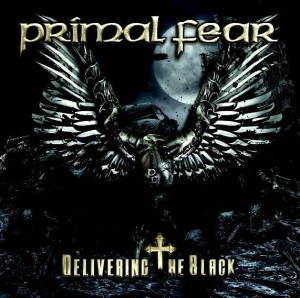 Primal Fear – Delivering the Black: Its getting harder and harder to review new Primal Fear albums. I’ve always enjoyed their Judas Priest-influenced (worship?) take on power metal, they make consistently solid albums (never truly great), and there’s not much to complain about. And that’s kind of the problem… (here it comes)… they have a tendency to largely play it safe to a fault sometimes. Don’t expect Delivering the Black to signal a drastic change of that tendency, and I suppose its fair to state that the band is entirely comfortable with that. I did however think 2012’s Unbreakable was the most inspired record they had delivered in the past ten years —- the reasons being hard to define except to surmise that they were firing on all cylinders songwriting wise. It was the first time I could remember being able to play through a Primal Fear album without skipping around.
 I just realized something —- this will be only the third time I’ve written solely about Iced Earth in the history of this blog, the first being Dystopia‘s inclusion on the Best of 2011 list, and the second being a 2012 gig report that turned
  The first four songs on the tracklisting are particularly apparent examples, the highlight among them being the adrenaline pumping “Democide”, as thrash metal-y as Iced Earth have sounded in years. Block’s solo lead vocals seem heftier and far more menacing here than on Dystopia, and again it reminds me of how he sounded when I saw him live. Its ironic then that Blind Guardian vocalist Hansi Kursch turns up in a guest spot on “Among the Living Dead”, where he doesn’t really add his trademark wall of sound vocal layering approach to the mix, instead merely offering up his own solo vocal counterpoints to Block’s. Honestly it took me a few listens to even spot Kursch’s usually instantly recognizable voice, and even after many, many listens I wonder if his talents are going under utilized here. But these thoughts are put aside by the time “The End?” kicks in, where Schaffer and lead guitarist Troy Seele deliver a lushly melodic array of guitar work to introduce some contrast to Block’s brutal take on clean vocals —- here he even delivers a near black metal styled scream midway through.
 Now to discuss the obvious album highlight, which may irk some as its a cover, but the band’s take on “Highwayman” is nothing short of spectacular. This is of course the Jimmy Webb penned namesake track of the eighties super group of Willie Nelson, Kris Kristofferson, Waylon Jennings, and Johnny Cash The song was fitting both lyrically and structurally for those singers, four country stars long pegged as outsiders in their own genre, four verses for each of them. Iced Earth invite some friends to flesh out their version of the classic, with Schaffer himself handling the first verse on lead vocals, followed by Symphony X’s Russell Allen, then Block, and finally rounded out by the distinctive country-punk twang of Volbeat’s Michael Poulsen. It really works, Schaffer has occasionally done some lead vocals on Iced Earth tracks here and there, so he has the chops to do it and sounds commanding here. Allen is of course a long ranged vocal dynamo, who even adds some of his trademark vocal run extensions despite only singing a few lines. Block’s verse might by my favorite, about the dam builder “Across the river, deep and wide / Where steel and water did collide”, his delivery touched with a hint of outlaw country and rock n’ roll abandon. Poulsen is admittedly an acquired taste, but I don’t mind a little Volbeat here and there and in small doses such as the concluding verse here he is a refreshing change up. They all do a great job.