
Hey everyone, I’m back from a short, self-imposed exile. I briefly mentioned it on the most recent episode of the MSRcast, but I think the overwhelming amount of new albums last year which continued on into early 2016 was threatening to burn me out on writing reviews altogether. The recent Blind Guardian piece was a pleasure to immerse myself in, and I’m hoping to do more of that kind of non-review oriented stuff in the near future (several of them exist in near/half/almost finished states already). So I took a break for a few weeks to just listen to whatever I wanted to listen to, older stuff, non-metal stuff, and sure enough even some really excellent new metal albums that I simply couldn’t get enough of (a few of them I’ll discuss below) —- all without worrying about release dates and getting reviews done on time. So this is a collection of reviews for three major releases that normally would’ve been out a month and a half ago, all of them written now with a few weeks of listening time baked in. These are a little on the lengthy side due to how much more I focused on them above all other releases, but I have another batch of reviews on the way that will be on the shorter, punchier side (those covering new music by Oceans of Slumber, Amon Amarth, Rhapsody of Fire, Brainstorm, Ex Mortus, a 2015 missed Dawn of Destiny release, and maybe a few more). It feels good to be back writing, and I can’t wait to finish the non-reviews stuff I’m also working on. Thanks for the patience this past month!
 Myrath – Legacy: Tunisia’s greatest (and perhaps only) metal export Myrath return with their first new album in five years with Legacy, one of my most anticipated albums of the year. I was sold on this band with 2011’s Tales of the Sands, an album that was largely spectacular, the sound of a band that had found their distinctive style and the songwriting chops to match. Well, five years is an eternity in metal, and Myrath seem to have spent the time wisely because Legacy is a truly inspired breath of fresh air that is pushing the boundaries of what oriental metal can sound like. If you’re unfamiliar with the band, they play a blend of prog-metal with minor-scaled Arabic melodies and motifs built around the inclusion of instruments such as violins, violas, the lute, and the ney. In that sense they’re similar to Orphaned Land, except that their Israeli counterparts began as a death metal band and have gradually expanded their sound away from that as their vocalist Kobi Farhi has developed his clean singing voice. Myrath meanwhile have been all about clean delivery from the very start, even predating the arrival of their uniquely talented longtime and current singer Zaher Zorgati, whose innate abilities at channeling traditional Arabic vocals alongside his Russell Allen-esque pipes makes him one of the most unique vocalists in metal.
On Legacy (which by the way is what the name Myrath actually translates to) the band wisely doesn’t over complicate things, choosing to allow their songwriting to naturally progress as it has over the course of their last four albums. And with that means continuing their ever gradual simplification of their sound, allowing their well crafted melodies to take a greater role in place of prog-metal song structures, which have been slightly pushed to the background in spots. Prog-metal aficionados might balk at that, but its a smart move —- think about why people are so interested and listen to Myrath in the first place. Its not because they’re the second coming of Symphony X, but instead because their traditionally imbued sound is so intriguing and captivating in its own right. Like Orphaned Land, we came for the metal and stayed for the native sounds of Israel and Pan-Arabia, those alluring melodies that speak of cultures that most of us only understand on a surface level. I went on about this idea at length in my review for Orphaned Land’s All Is One, that it was my interest in that band’s music that led me to seeking out non-metal Middle Eastern folk music as well as any non-metal music that was unfamiliar to me. It’d be impossible for Myrath to have quite the same effect on me as Orphaned Land did —- that was a result of a combination of things, timing key among them, but what Myrath succeeds in doing with Legacy is reminding me of the rush I felt when realizing that I was interested in exploring other music, the world’s music as it were.
This is an album characterized by simplicity, a facet that’s demonstrated right away with the instrumental “Jasmin” that bleeds into the euphoric “Believer”, the album’s first single (presented in a glossy, Prince of Persia-esque music video to boot). As an opening salvo, its as bold a statement as they have ever made, leaping directly at you with a sharply sculpted Arabic string melody accompanying Zorgati’s chant-sung traditional vocal. He does that quite often throughout the album, and he’s quite talented at it, sending his voice to float atop whatever bed of music is going on underneath (and its characteristically Arabic sounding, as opposed to the more condensed, compressed Jewish/Yiddish chant-singing found in Orphaned Land’s music). What makes the song work however is its mid-tempo groove that’s phonetically reinforced by Zorgati’s prog-power tinged clean vocals during the verse sections, his phrasing as rhythmic as Morgan Berthet’s dynamic percussion underneath. That chorus though —- you could actually pencil it in as the hook for a Middle Eastern pop single and it’d fit perfectly, something I say only to reinforce just how skilled the band is at writing that sort of thing. Its also works as a warning for anyone who’s too timid or afraid of losing “cred” by listening to a band that’s so unabashed about their desire to play with hooks and ear candy. I’m quite the fan if you couldn’t tell, and “Believer” is one of the year’s finest metal singles thus far. Its their “All Is One”, one of those rare life-affirming songs that drags metal into a space of positive emotions.
Its not however the only wonderfully ear-candied moment on the album either, as my current favorite is the morosely titled “I Want to Die”, a slowly spiraling strings and acoustic guitars powered ballad that sees Zorgati delivering an incredibly emotional vocal throughout. Instruments dance around him, the strings zipping under and alongside during the verses, acoustic guitar filling in space with light, soft pluckings, traditionally structured percussion brushed across in an accenting role —- everything then suddenly surging together for the explosive chorus. A quick glance at the lyrics will clue you in on this being a song about heartbreak, and while the diction and poetics aren’t on the level of Roy Khan, they’re carefully written so as to maximize Zorgati’s ability to bend them to his will. He makes these lyrics better by virtue of his performance and his interpretation of what syllables to stress and bend in that distinctive manner that we can accurately peg as his trademark (in metal anyway). Another example of that is on the following song “Duat”, where he makes the most of lines such as “Relieve me / Leave me here I’m dying / Isis knows how to bring me back to life” —- first of all that’s a reference to Isis the deity (just in case you were wondering), and while I think these are perfectly fine lyrics, they might test another metal fan’s capacity for melodrama, and I’d think they’d have a point if the vocalist in question were say Russell Allen, but here Zorgati’s vocal-isms are convincing enough. Something also occurs to me while I’m listening to “Endure the Silence”, another track with a decadent chorus, that most of these songs are actually love songs, the narrator either expressing his devotion to the object of his affection or lamenting a loss thereof (with the exception of the song referencing Game of Thrones and Daenerys Targaryen). Its up to us I suppose whether we want the object to be a woman, a country, or a community.
I suppose we’re touching on something there with that last bit. You all watch the news, and are certainly aware of what’s going on in regions such as Syria, Iraq, and even Libya and Yemen. This is a band from Tunisia that I’m told ostensibly lives in France these days, and if so that means they’re served with a multitude of perspectives on what’s going on in Europe at the moment with the refugee crisis of the past year and a half. I’m not going to assume that those things influenced the writing of their music, maybe they didn’t at all, but I detect an openness in their lyrics that suggest they might be speaking to a larger idea or theme. Sagely perhaps, Myrath keep things relatively vague, allowing their music to be flexible to audiences of all kinds, and that might be their greatest strength. When all of Europe is feeling the tension spurred by terrorism in Paris and Brussels, waves of refugees, and anti-Islamic sentiment, here’s a band from the birthplace of the Arab Spring making art with western music that is being embraced by fans from vastly different parts of the world. I’m not naive enough to believe that music can completely change things, it rarely ever does, but it can help to chip away at an individual’s own reticence about other cultures, and help to springboard their interest in learning about them. With regard to the Middle-East, there are so few cultural links that exist right now to help facilitate communication between differing peoples, yet among those few are a handful of metal artists. I find that incredible, and something that few other musical genres can claim. Bands such as Myrath and Orphaned Land have fans in Israel, Tunisia, Egypt, Europe, the UK, and even here in Texas, and that’s a small victory if nothing else.
 Borknagar – Winter Thrice:
I’ve enjoyed Borknagar since sometime in 2001, when I was introduced to the band via their then newly released album Empiricism. I was led there by my initial interest in Vintersorg, who had just joined up with his Norwegian countrymen to provide lead vocals in place of I.C.S. Vortex who had just left to join Dimmu Borgir. Vortex did three years as Borknagar’s black metal screamer, and he took over the slot after the departure of one Kristoffer Rygg, aka known as Garm from Ulver, who decided that he wanted to focus only on his primary band. Funnily enough all three men find themselves joining together on a pair of cuts from Borknagar’s newest and most ambitious album to date. Now this album has been out for a few months now, and you’ve all likely heard it —- and what you’re hearing is the sound of Borknagar further streamlining their sound away from the largely avant-garde keyboard atmospherics of the Empiricism/Epic/Origins/Universal era and more in tune with the bleak, wind-swept melodicism found on their previous album Urd and its signature track “The Earthling”. There’s still keyboards present, providing a counter-melody to the lead vocal (or guitar) melodies, but its more informed by a stripped down, 70’s prog-rock approach rather than the swirling, bat-crazy orchestral hurricanes that so characterized much of late 90s second wave black metal (ala Emperor). Some of you might be smirking at the mention of stripped down and 70’s in relation to prog-rock keyboards, but its basically more King Crimson and less Rick Wakeman, you jokers.
Let’s get back to the mention of all those ridiculously talented vocalists on one track, because “Winter Thrice” is not only the title track but the album’s first single and excellent music video. The latter provides us with a visual breakdown of who’s singing what, just in case you’re new to the band and can’t discern their voices quite yet: First we get Lazare (aka Lars Nedland) who really should get co-billing alongside his band mates as one of the amazing voices here; the next verse is sung by Vortex in that wonderfully strange, warped clean voice of his; and after a nice electro-clean chord sequence we’re treated to a rare black metal sighting of Garm, here delivering the song’s most affecting lyric passage (“I have wandered the skies…”) in a sweetly smooth croon that reminds me of a mix of Mike Patton and Mikael Akerfeldt. Its just a thrilling sequence overall, exciting in as much for its star studded succession of vocalists as it is for being one of the band’s most direct and disarmingly accessible passages to date. It all builds up to explode with Vintersorg’s ever blistering black metal anti-chorus (it can be argued that Garm was actually singing the hook, and that Vintersorg is delivering its outro bridge —- but whatever, this is black metal by one of the genre’s more unconventional craftsmen… we shouldn’t be looking for conventional songwriting). After Vintersorg’s traumatic accident over a year ago, its nice to hear him sound like himself here (although its reported by some that he recorded this before the accident —- that being said he has had time to heal and recently had surgery that seems successful enough for him to be currently working on a sequel to Till fjälls(!)). Suffice to say he’s still one of the most convincing and identifiable harsh vocalists in extreme metal, with something inimitable in the way he screams.
Vintersorg has his share of clean vocals too, because you don’t neglect a resource like that, and so he pops up in a fascinating and harmonious duet with Lazare and possibly Vortex (it gets difficult to discern between the latter two at times) on “The Rhyme of the Mountain”. Remember a paragraph ago when I mentioned the band was weaning itself away from avant-garde chaos and leaning more towards classic prog-rock stylings and songwriting? Cue mark 3:20 during this song and you’ll get a vivid example of what I mean —- an abrupt mid-song bridge sequence of harmonized vocals cooing a sparse, gorgeous melody. Its not even meant to serve as a counterpoint to the harsh vocals, because clean vocal verses build up to it as well as follow it. This is actually a defining trademark of the songs on this album, and perhaps more than any other recording of theirs in the past, Borknagar here work with almost equal parts clean to harsh vocals, something that’s not altogether shocking, but still a bold move. I love it personally, and it makes songs such as “Cold Runs the River” embed in my mind with strong, swinging hooks and inspired open chord guitar sequences that are unexpected but pleasant surprises. In the Lazare fronted “Panorama”, we’re treated to a jarringly poppy chorus in fairly short order, but whose recurrence is abruptly interrupted by a keyboard driven instrumental passage that recalls Hammond organ sounds of the 70s (in fact, that organ sound dominates much of the song, at times taking over the key melody entirely… I get reminded of Uriah Heep). We’re treated to another clean vocal mid-song bridge sequence in “When Chaos Calls” at the 3:42 mark, this one clearly sculpted by Vintersorg, recalling vivid moments from his vocal work on his own solo albums (particularly Visions From the Cosmic Generator in this case), and seriously, is there anyone better at crafting moments like these?
Founding guitarist Oystein Brun, still the primary songwriter on the credits seems fairly happy these days to allow the external influences of his band mates transform Borknagar’s sound into something that is simultaneously far removed from the The Olden Domain era, yet subtly familiar and knowing. At times, there are strong hints of the past that crop up violently such as on “Terminus”, where the sudden and sharp mood shifts lurch the band into full on black metal, blastbeat laden fury that recalls the violence of Empiricism (albeit without the ultra-crisp drum recording of that album). This might actually be my current favorite right now, because I can’t get enough of its last three minutes, from Garm’s resurfacing with a highly emotive and then hushed vocal, to Jens Ryland and Brun’s tremendous restraint on their guitar work to allow simple ambient space to fill the backdrop, to Vintersorg’s best clean vocal moment on the album, re-singing Garm’s final passage (“Raised to seek, grown to see / The flames of creation and prosperity…”). I suspect that with the impact of their video for “The Earthling”, hitting over 377k views on YouTube, and subsequently the video for “Winter Thrice” hitting over 300k in just a fragment of the time in comparison, word is getting out to formerly in the dark metal fans that Borknagar is one of those critically acclaimed bands they should have knowledge of. I really do think a sea-change occurred with Urd, an album that delivered a vein of accessibility that allowed both critics and potential fans to take a longer listen as opposed to simply being turned off by the utter weirdness of their past work (hey, as much as some of us love it, older Borknagar was a tough sell to many). As in the case of Enslaved, it could simply be a case of a band’s potential audience finally maturing and Borknagar issuing their most accessible work at the right time. Good for the band, good for those newcomers, and with songs as excellent as these, good for us who’ve been here all along.
 Omnium Gatherum – Grey Heavens:
A leading light in Finland’s melo-death revival is back with a new album, and just like their neighbors in Borknagar, they’ve stumbled upon the discovery that their sound could actually benefit by allowing their music to breathe more. I’ve enjoyed Omnium Gatherum’s past works to varying degrees, with the accomplished New World Shadows being a favorite in terms of albums, and pegging “The Unknowing” from 2013’s Beyond as their absolute best song (I enjoyed the album as well, but that song was outrageously awesome with that ascending/descending scale pattern). The slight stumbling block I’d have with the band was their tendency to sound rather obsidian for large stretches of time through a song or even album. Vocalist Jukka Pelkonen’s rigid, ultra-coarse melo-death growls played a big factor in that, his voice often lacking any hints of warmth or push and pull. Now this actually works for the band overall simply because he’s an unfailingly strong presence that can compete with the technicality that guitarists Joonas Koto and Markus Vanhala imbue their dense riff sequences with, thus preventing either guitars or vocals from dominating the sound alone. But that being said, for as much as I enjoyed their music, I found myself far more drawn to the comparatively paint-brushed, loosely woven melo-death of countrymen Insomnium.
But with Grey Heavens it seems like the band has naturally progressed away from songwriting that coats a piece of music in both heavy drenchings of both vocals and music, there’s actually a bit of give and take between those two strong elements that was only glimpsed previously in fleeting moments. I mentioned one of those above, “The Unknowing”, where Pelkonen’s vocals were timed to dive in gaps instead off slamming against the rest of the band. I think these are tricky things to learn for a lot of melo-death bands, and even tougher to discern as fans and explain in writing… but if we think of melo-death as primarily a dual lead guitar melody constructed artform, then those melodies deserve equal or almost equal spotlight time as the vocals, and the power of both can either overwhelm or diminish when they’re simultaneously hitting a listener at once. Think about classic In Flames albums, those songs on Whoracle or Colony or even The Jester Race —- there was a dance going on, guitars-vocals-guitar-vocals-guitars and on and on. Omnium Gatherum don’t exactly do a recreation of that formula here, but they’ve learned to give their individual sonic elements a bit more space. Take the title track “Frontiers”, where Aapo Koivisto’s keyboards actually work solo as the refrain, a wordless chorus that is not only a clever sonic earworm, but the light to the darkness of those brutal verse sections where Pelkonen matches his raw power to that of Koto’s and Vanhala’s.
Much of the album in fact is characterized by this smarter, more aware mode of songwriting, and it bears fruit with mounds of hooks and earworms. Even on the lengthiest track, the nearly eight minute “Majesty and Silence”, the band treat us to fresh, inspired ambient passages built on drizzles of acoustic guitar and cloudy sky inspired keyboards to serve as a balance to the more weighty, aggressive sections. On “The Great Liberation”, Pelkonen sings over chugging rhythm guitar while a lone lead melodic figure darts in and out quickly, both guitars then joining together in an entirely separate section to deliver their more frenetic, hyper-speed riff sequences in dazzling fashion. My MSRcast cohost Cary was mentioning during our recording session how he felt this was the catchiest Omnium Gatherum release to date, and I agree, but I think what that observation reveals is that the band has gotten better at displaying its hook-writing capability, and Koivisto has stepped up his game in order to further cement his keyboards as an integral part of melodic through lines within the songs, rather than just as coloring for the background. I think they’ve come to realize that writing better paced songs and separating segments of their songs with potentially opposing musical elements makes for a far more listenable song. Cary posited the idea that perhaps Vanhala’s recent stint as Insomnium’s second guitarist is playing a role, and that a good deal of their songwriting essence has rubbed off on him. Its an interesting theory, one that’s plausible for sure —- whatever the case may be, its resulted in the best album of their career.

 At The Gates – At War With Reality: I suppose back story isn’t really needed here, I mean you’re all smart, together, with-it metal fans that already know this is At The Gates first new music in nineteen years. I’ll admit that for the longest time after their initial reunion began in 2006 I never anticipated anything new in the way of a studio album from them. I saw them live in 2008 and they looked pretty comfortable doing the classics and I figured that would be it, Emperor-style reunion touring for us newer generation of metal fans that never saw them in their initial incarnation, healthy profits, and satisfaction all around. The At The Gates legacy didn’t have the same problem that Carcass did with theirs —- Slaughter of the Soul was a watershed classic, Swansong was anything but. It was understandable that Carcass would want to try their hand at crafting an album far more worthy of closing their discography upon, and the resulting Surgical Steel was so utterly fantastic, it should be considered the modern day reunion album benchmark (it is by me). So it comes as something of a gamble that At The Gates have chosen to follow up Slaughter of the Soul with At War With Reality, and I’ve seen plenty of other reviewers assert that the band’s greatest strength is in not caring what others make of their legacy at all. Okay, that’s fair —- but then again the band themselves would never have a hand in “defining” it to begin with, that’s our job as fans.
 Ghost Brigade – IV: One With The Storm: The last time we heard from Finland’s Ghost Brigade was way back in 2011 with their rather good Until Fear No Longer Defines Us, a top ten album on
  While Heaven Wept – Suspended At Aphelion: First of all, While Heaven Wept’s newest album scores the award for best cover art of the year hands down, take a long gander at that sleeve in high res on Google Images… its just flat out jaw dropping. Secondly, I’ve been waiting for this album with a great amount of anticipation, having been sold on them a year or two ago with the song “Vessel” from their 2009 album Vast Oceans Lachrymose. I didn’t find its follow up album, Fear of Infinity nearly as compelling, but they’ve managed to win the benefit of the doubt in my mind. If you’re unfamiliar, this prog-meets-power-meets-doom metal band from Virginia of all places is keen on grand, epic scale music with lyrical themes (and artwork) to match. I expect that there might be a few metal fans out there who take umbrage with While Heaven Wept’s manner of tracklisting, sequencing, and envisioning of albums in general. There are usually not many actual tracks, two songs are often paired up and folded into one long song, there are short instrumentals including intro and outro tracks, and the overall album length is sometimes maddeningly short (forty minutes here, ten of which are instrumental). I’ll admit that its slightly frustrating for me as well, but the band clearly intends for their albums to be listened to from start to finish, and in truth they work better that way (this is prog-metal after all).
 Sanctuary – The Year The Sun Died: You’d be forgiven for glancing back at the album art when experiencing your initial few minutes of Sanctuary’s first new album in twenty-five years. It sounds an awful lot like a theoretical new Nevermore album than anything resembling the power metal infused thrash of the Sanctuary’s pair of late eighties albums. What makes it strange is that original guitarist Lenny Rutledge is back in the fold and handled most of the songwriting, and yet there is an overall Jeff Loomis vibe to the guitar work that is hard to ignore. I’ve considered the possibility that my brain is playing tricks on me, that Warrel Dane’s vocals being mixed far up front (similar to Nevermore), and the overall modern production of the album is subliminally suggesting a likeness that isn’t really there. I’m not going to harp on this though, but suffice to say, it was difficult at times to wrap my head around the reality that this is indeed a Sanctuary album.
 Blut Aus Nord – Memoria Vetusta III – Saturnian Poetry: I’m a self-professed newbie when it comes to Blut Aus Nord’s vast and intimidatingly titled back catalog, but I’ve been intrigued enough by the writings of fellow reviewers whose opinions I trust to give the band repeated chances. Their recent handful of releases were a trilogy of albums and series of EPs under the overarching title of 777, and they were united musically through a rather bleak, unforgiving, and frankly unlikeable blend of industrial elements with densely layered avant-garde black metal. The hype meter on the band (actually, just the project of one reclusive Frenchman known as Vindsval) was through the roof during the years spanning those releases, and I felt like I was missing out on something that seemingly everyone was raving about. As I’ve come to discover today, a few years removed from that period, there were quite a few others who felt the same way I did. But in reading what they wrote, it seemed that I should’ve been checking out far older Blut Aus Nord albums in the Memoria Vetusta series of albums as they fell more in line with a style of black metal more inclusive of epic melodies and expansive soundscapes. My cup of tea in other words.
 And farewell to another year that’s flown by too quickly. Of course that means its time for anyone and everyone in metal writing, print or digital, to indulge their egos a bit and draft up their end of year lists. Now most writers will never own up to it but I’m a rather shameless sort, and will freely admit that I love creating these lists. I put an inordinate amount of thought into drafting them and end up changing around the entries and numerical ordering countless times before I ever hit publish. Self-indulgent? Absolutely. But I also hope that people who in anyway remotely enjoy reading what I write will check out my lists as a way to get into bands or albums they’ve not heard before. That’s ultimately the most rewarding aspect of writing about music, expressing your enthusiasm and passion for something to others and hoping they’ll hear what you hear.
 In the case of Greece’s Rotting Christ, this was a band I hadn’t listened to in perhaps under a decade and had long ago written off as uninteresting (I’ve since checked out their back catalog on Spotify only to realize how wrong I was). Unbeknownst to me until now, they’ve been steadily pursuing a musical change of direction on their past couple albums, and its all led to the most radicalized experimentation of their career on Kata Ton Daimona Eaytoy (Do What Thou Wilt), their eleventh studio album to date. Quite simply put, I love this album. Its one of the more bizarre imaginings of black metal that I’ve ever heard really. These guys dig down deep into their Greek heritage for some dark musical inspirations that really separate them from the hordes of Norwegian copycats. Unexpected amounts of melodicism, unorthodox percussive rhythms, very inspired blackened vocal arrangements and original songwriting are just a few touchstones to remark upon. The obvious standout for its sheer accessibility is “Grandis Spiritus Diavolos”, a steadfast march in which the title phrase is repeated in staccato rhythm over a bed of ultra-melodic guitar riffs, some Uli Jon Roth-style solo accompaniment, and Therion-ish choir vocals. On “Cine Jubeste Si Lasa”, things get really bizarre with the addition of very ethnic, gypsy-like female vocals of Souzana Vougioukli that intertwine with Sakis Tolis’ ever blackened grim vocals to hypnotic effect. It took me awhile to process what was going on in the track, but its quickly become a favorite.
 And then there’s new kids on the block Cnoc An Tursa, who defy cheeky boy-band references with what sounds to me like a perfect melding of folk-infused thrash ala early Ensiferum with some of the most excellent blackened vocals that I’ve heard in recent memory. I’ve seen these guys tagged as viking metal or folk metal, and that’s a gross oversimplification. First of all, forget the Viking stuff, these guys are a Scottish band that emphasize a musical and lyrical focus on their nation’s history and culture in a rather eloquent fashion. They draw upon the well of great Scottish poetry for their lyrical inspiration, as in “Bannockburn”, which depicts the battle that was central to the Robert Burns poem of the same name (and they do so in rather Burns-ian language themselves). On other tracks they essentially set a beloved Scottish poem to a bleak, wintry, blackened folk sound scape as with “Culloden Moor”, which works far better than the idea looks on paper.
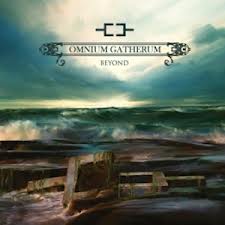 Finally, there’s been the newest release by Finland’s Omnium Gatherum, a band that I was initially introduced to through their highly acclaimed 2011 New World Shadows album. It took me quite awhile to really sink into that album, not because I found it lacking — the opposite actually, there was so much going on that was just way different from anything else I’d come to expect from melodic death metal. Odd drum patterns, alternately shifting tempos, bleak-washing atmospherics, and of course the obsidian vocals of Jukka Pelkonen. This is a weird comparison, but once I finally broke through with repeated listens, it felt like I had cracked the secrets of a musical Rubik’s cube — suddenly it all made sense and sounded right. So getting a chance to hear new music from these guys with that hurdle behind me has been a real pleasure. Their new album, Beyond, is to me an even better collection of music than it’s predecessor. Whether its on the lead single, “The Unknowing”, with its sweeping arpeggio based musical refrain that is as cinematic as it is memorable, or on the breathy, acoustic laced “Luoto” and its buildup to the hooky rock guitar driven “New Dynamic”; this album delivers with a diverse range of songs that stretch the band’s trademark sound. This is especially true on the clean vocal laden “Who Could Say”, in which Pelkonen seems to draw on equal parts Sentenced and Amorphis.
 1. Queensrÿche – TBA:
 2. Avantasia – The Mystery of Time:
 3. Darkthrone – The Underground Resistance:
 4. Satyricon – TBA:
 5. Omnium Gatherum – Beyond: