
 Before we plunge directly headlong into discussing 2018 music, I’ve been having a blast listening to all the recommendations from other year end 2017 lists from writers/sites I’ve respected over the years. Some of the albums on these lists have just bounced right off me, but many have piqued my interest, so below are a couple things I’ve stumbled upon late that maybe you hadn’t heard yet either. Its my blog companion piece to the two MSRcasts we’ve recently recorded focusing on a slew of releases we missed. On the horizon are reviews for albums I’m already listening to in addition to these latecomers from last year, namely the new Watain, Summoning, and the upcoming Orphaned Land album. If the jam packed release schedule for this first quarter means anything, its hopefully going to be a good year!
Serenity In Murder – Eclipse:
[youtube https://www.youtube.com/watch?v=Ud2bgZstWws&w=560&h=315]
Its rare that bands from Japan ever light up my radar, let alone ones that dish out such satisfying melo-death as the oddly named Serenity In Murder on their third album Eclipse. Most J-Metal in my experience has been either in the Loudness inspired vein (largely a thing of the past these days), or stuff that’s musically influenced by X Japan and the ongoing neo-visual kei style. While I have enjoyed quite a bit of that stuff to a certain extent (Versailles’ wild, sometimes clunky take on symphonic power metal being the latest that I can remember), particularly for the musicality that Japanese rock and metal bands seem to innately possess, the vocal styles have always been my ultimate stumbling block. Maybe I just haven’t heard the right band yet, but most Japanese singers to my ears sound better when singing in Japanese, but are glaringly off-key and oddly phrased when trying English. A friend recently pointed out that this might be a byproduct of the shape of the Japanese language in pronunciation in comparison to English —- something only a linguist could perhaps really explain.
Serenity In Murder get around this with the expertly scream-growled melodeath vocals of Emi Akatsu, her approach having the fierceness of Angela Gossow and the obsidian shades of Omnium Gatherum’s Jukka Pelkonen. Despite her fairly crisp enunciating, this is a heavily layered and dense listen, brick walled too (try to avoid cranking it at max), Akatsu’s English vocals are more of a texture here, which suits the music rather well I think. Whats really fun about Serenity In Murder is the sheer unrelenting attack of everything —- they’re going full throttle on speed, aggression and melody. And wow the melody, its here in wild, majestic, colorful splashes that coat damn near everything with a power metal playfulness. They remind me a lot of the melodies that run through the soundtracks of Japanese anime and videogames, the band making heavy use of piano/keys to carry primary motifs alongside the riffs and lead guitars. If you like what you hear above in “Dancing Flames”, check out “Dreamfall” next, I can’t decide which of the two are my favorite, but this album has been a joy to listen to these past few weeks.
Æther Realm – Tarot:
[youtube https://www.youtube.com/watch?v=bw3UygAi2oo&w=560&h=315]
I really really wish I had been introduced to this back in June, because although I’ve only been jamming it for a little over two weeks now, I think its addicting qualities could have seen it land a spot on the shortlist for the best albums of the year. Aether Realm (normal spelling works for Google!) sound like their members are probably from Helsinki or Tampere, but these guys are actually from the land that James Taylor famously had on his mind. Geography aside, Aether Realm play melodic death metal with strong folk overtones, think Ensiferum and a toned down Wintersun. This means intense, ultra-tight riffing and a crisp, clean production that allows room for not only keyboard orchestral elements but massive group choral vocals ala Jari and company. There’s an accessibility running throughout this album that has as much to do with how awesome some of these riffs are in addition to simply strong songwriting. When I consider the Ensiferum album released a few months after this one, I marvel at how a relatively new band like these guys could get damn near close to perfecting a sound that has escaped its originators. The key to Aether Realm’s success is their ability to incorporate a variety of songwriting styles and musical elements to captivating effect —- no two songs sound the same really.
Take “Temperance” where I was captivated by a beautifully played acoustic passage that’s deeply affecting in the way that the best metal ballads can be (the clean vocals here are just the right tenor of American folk). The monstrous nineteen minute epic “The Sun, The Moon, The Star” starts off with what I’m sure are Nintendo midi sounds, perhaps a not so subtle nod to some of these guys old musical influences. Its an impressive piece of songwriting overall, one that never feels as long as its actual length and is always changing, shifting from pummeling aggression with Wintersun levels of virtuosity on guitar and similarly vicious growling vocals to carefully crafted keyboard orchestrations. I wish I could identify who the clean vocalist was between bassist Vincent Jones and guitarist Heinrich Arnold —- he’s got a stellar voice and a good ear for just how to deliver those epic, folk metal inspired yearning vocals. My only complaint on the album is a slightly personal one, but just can’t get behind “King of Cups”, with Chris Bowles on guest vocals. The subject of drinking in a folk/viking metal context is so passe that not even this admittedly catchy take on it can prevent me from rolling my eyes, and of course the Alestorm guy has to be involved. A minor quibble though, one that I’m all to happy to overlook. Get this album.
Night Flight Orchestra – Amber Galactic:
[youtube https://www.youtube.com/watch?v=puLWLR28LDg&w=560&h=315]
I was introduced to these guys sometime earlier in the year by my MSRcast co-host Cary on a lark —- he had seen a music video of theirs pop-up on the Nuclear Blast YouTube channel and it was a piece of kitschy throwback glory. The video was for “Something Mysterious” and its unabashedly indulgent early 80s look and feel (check that VHS grade quality and dated overlay graphics) immediately won me over, and when I got a chance I nabbed their May release Amber Galactic. Its been one of those random albums that I’d go back to every now and then as a musical antidote to the usual slurry of metal albums I’d been listening to for reviewing purposes. I’d always have to shelve it for something else before long, but over the rest of the year I racked up a substantial amount of time listening to the album not only as a palette cleanser, but just because these songs were so addicting and downright charming. If you’re completely unaware of their lineup, you’ll be surprised to learn that the smooth crooning vocalist here is the very same Björn “Speed” Strid of Soilwork growler fame alongside Arch Enemy bassist Sharlee DeAngelo.
What they and their fellow NFO bandmates have managed to craft over this project’s three albums is a detailed, rose-tinted, affectionate look back at a bygone era of transitional rock music. The touchstones here span the the birth of AOR hard rock in the late 70s through the introduction of synths in the 80s, notes of Toto and The Police on opposite ends and everything in between. I love that they’ve found themselves here, focusing on this particular era for their musical influence, because I’ve always felt its overlooked for the Zeppelin / Sabbath dominated early to mid 70s in general. So instead of Jimmy Page worship and any attempts at writing their own psychedelic epics, we get a High Spirits-esque focus on tight songwriting, precision guitar harmonies, and understated female backing vocalists on “Gemini” and “Josephine”. I hear tinges of Night Run era UFO in the aforementioned “Something Mysterious”, that low-key bass pulse humming through the rhythm section, contrasted by lonely drivin’ around the city at night keyboard melodies. This is just a grin inducing, super fun album to jam when you need something easy and comforting, songs you feel you’ve heard before even though its your first time listening to them.
Spirit Adrift – Curse of Conception:
[youtube https://www.youtube.com/watch?v=iGMC6UK3rNA&w=560&h=315]
Coming from Arizona of all places is the classic metal/doom machine Spirit Adrift, whose Curse of Conception is their second album release in little over a one year span(!), their debut having arrived in 2016. If Pallbearer was a little too slow moving and meandering for you (as they seem to be for me… ironic I know given my placing Bell Witch on my 2017 top ten albums list), Spirit Adrift might be the middle ground you’re looking for. Think doom metal’s bleak colors and ominous crushing volume of sound played with a touch more urgency, with riffs that resemble the tone and structure of classic Metallica. Vocalist/songwriter Nate Garret has a plaintive voice, almost reminiscent of Chris Black of Dawnbringer/High Spirits, typically a type of voice that I don’t really find myself gravitating to for most bands. The exceptions for both Dawnbringer and Spirit Adrift is due to just how endearing their songwriting and rich musicality come across, that hard to master alchemy of preserving classic sounds and styles yet somehow conjuring something new from them.
Take a listen to the title track to get an idea of what I’m trying (and hopefully succeeding in) to convey, with its Ride the Lightning lead guitar tones leading us into a drawn out slow motion verse sequence. The uptick in tempo at the 1:18 mark is kicked off a riff progression that is straight out of the classic metal playbook, and its something we’ve heard a thousand times before in our nascent metal listening years but it just sounds so explosive here. When we get to the solo around the four minute mark you start wondering if your Spotify player actually did switch over to Metallica when you weren’t looking, so reminiscent of Kirk Hammet’s mid-80s style is the playing here. I hate just referring to one band as a reference point, but I also get that Metallica feeling on the gorgeous “Starless Age”, a dramatic power-ballad that ascends on the type of chord progressions that James Hetfield would’ve approved of back in 1986. My MSRcast cohost Cary would chastise me if I didn’t mention Trouble here, and he’d know better than I but there definitely are some shades of that band. There’s so much to love here, but I’ll end on a particular favorite: The intro to “Graveside Invocation”, with its staggered, pounding percussion and half doom half battle ready chord progression is the kind of minor detail I will never stop being a dork about.
 Ensiferum – One Man Army: First a mild rant: There was a time around the late 90s and early to mid 2000s when folk metal wasn’t an overcrowded subgenre, when the balance between folk and metal was handled deftly by a small cadre of accomplished bands, and when their lyrical subject matter had depth and richness. I’m thinking of those heady times when folk metal meant Skyclad, Amorphis, Subway to Sally, Otyg/Vintersorg, Falkenbach, among a few others. It was a subgenre that was creating vital, shimmering music that was stretching the boundaries of what metal could sound like —- it was fresh and exciting, the sound of things you didn’t know you always wanted to hear. Ensiferum’s first two albums were part of this wonderful era, being near-perfect marriages of thrashy guitars, power metal songwriting, and folky instrumentation.
 Marilyn Manson – The Pale Emperor: A week or so ago when recording
  Napalm Death – Apex Predator – Easy Meat: I guess I never had planned on ever writing about Napalm Death on this blog, not because I don’t enjoy them —- I do, but because I figured that there wasn’t much to elaborate on. Napalm Death will always sound like Napalm Death to me. I grew up listening to them, first being introduced to their grindcore/metal blend via dubbed cassette tapes by various heavy music loving friends back in middle school. They were one of those bridge bands to extreme metal, alongside Morbid Angel and Death and Carcass. More than those bands, Napalm Death delivered the kind of sheer caterwauling noise that a young budding metal fan gravitated towards because it simply sounded like something that was made for you and all the reasons you enjoyed having your parents lament your taste in music. I enjoyed playing them in my battered, sticker covered boom box in my bedroom, imagining that even with my door closed, it still sounded like hell on the other side. Maybe its fair to say that I never developed much of an emotional attachment to their music, but I don’t think it was ever designed that way.
 Marduk – Frontschwein:
 Nightwish – Elan (EP):
 In the case of Greece’s Rotting Christ, this was a band I hadn’t listened to in perhaps under a decade and had long ago written off as uninteresting (I’ve since checked out their back catalog on Spotify only to realize how wrong I was). Unbeknownst to me until now, they’ve been steadily pursuing a musical change of direction on their past couple albums, and its all led to the most radicalized experimentation of their career on Kata Ton Daimona Eaytoy (Do What Thou Wilt), their eleventh studio album to date. Quite simply put, I love this album. Its one of the more bizarre imaginings of black metal that I’ve ever heard really. These guys dig down deep into their Greek heritage for some dark musical inspirations that really separate them from the hordes of Norwegian copycats. Unexpected amounts of melodicism, unorthodox percussive rhythms, very inspired blackened vocal arrangements and original songwriting are just a few touchstones to remark upon. The obvious standout for its sheer accessibility is “Grandis Spiritus Diavolos”, a steadfast march in which the title phrase is repeated in staccato rhythm over a bed of ultra-melodic guitar riffs, some Uli Jon Roth-style solo accompaniment, and Therion-ish choir vocals. On “Cine Jubeste Si Lasa”, things get really bizarre with the addition of very ethnic, gypsy-like female vocals of Souzana Vougioukli that intertwine with Sakis Tolis’ ever blackened grim vocals to hypnotic effect. It took me awhile to process what was going on in the track, but its quickly become a favorite.
 And then there’s new kids on the block Cnoc An Tursa, who defy cheeky boy-band references with what sounds to me like a perfect melding of folk-infused thrash ala early Ensiferum with some of the most excellent blackened vocals that I’ve heard in recent memory. I’ve seen these guys tagged as viking metal or folk metal, and that’s a gross oversimplification. First of all, forget the Viking stuff, these guys are a Scottish band that emphasize a musical and lyrical focus on their nation’s history and culture in a rather eloquent fashion. They draw upon the well of great Scottish poetry for their lyrical inspiration, as in “Bannockburn”, which depicts the battle that was central to the Robert Burns poem of the same name (and they do so in rather Burns-ian language themselves). On other tracks they essentially set a beloved Scottish poem to a bleak, wintry, blackened folk sound scape as with “Culloden Moor”, which works far better than the idea looks on paper.
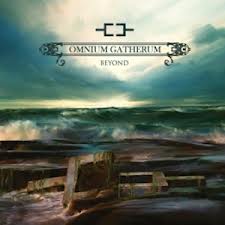 Finally, there’s been the newest release by Finland’s Omnium Gatherum, a band that I was initially introduced to through their highly acclaimed 2011 New World Shadows album. It took me quite awhile to really sink into that album, not because I found it lacking — the opposite actually, there was so much going on that was just way different from anything else I’d come to expect from melodic death metal. Odd drum patterns, alternately shifting tempos, bleak-washing atmospherics, and of course the obsidian vocals of Jukka Pelkonen. This is a weird comparison, but once I finally broke through with repeated listens, it felt like I had cracked the secrets of a musical Rubik’s cube — suddenly it all made sense and sounded right. So getting a chance to hear new music from these guys with that hurdle behind me has been a real pleasure. Their new album, Beyond, is to me an even better collection of music than it’s predecessor. Whether its on the lead single, “The Unknowing”, with its sweeping arpeggio based musical refrain that is as cinematic as it is memorable, or on the breathy, acoustic laced “Luoto” and its buildup to the hooky rock guitar driven “New Dynamic”; this album delivers with a diverse range of songs that stretch the band’s trademark sound. This is especially true on the clean vocal laden “Who Could Say”, in which Pelkonen seems to draw on equal parts Sentenced and Amorphis.
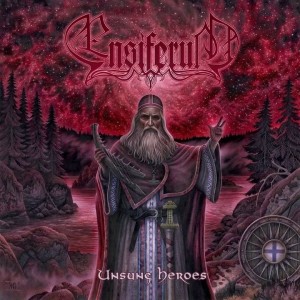 Ensiferum – Unsung Heroes:
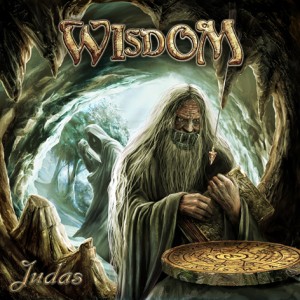 Wisdom – Judas: