
 If you’ve been needing something to be thankful for lately, here’s something: Stefan Weinerhall, guitarist/songwriter of power metal’s mighty Falconer is still writing and recording music. I only bring this up because it appears that this was in doubt for quite a long period of time following the release of the band’s last album, 2011’s Armod. For a short while, all we had to go on in terms of evidence that points to this was Weinerhall’s own cryptically worded message in the latest press release announcing their new album, in which he stated, “After an eight-month complete break from music on the verge of quitting it, I finally returned with a feeling of hunger, power and commitment to the songwriting.” But in a recent interview with Zach Fehl of Metal Insider, Weinerhall expanded on that slightly by making reference to the years since Armod being punctuated by personal tragedies, the pluralization there seemingly emphasizing just how much of a personal crossroads Weinerhall found himself at. But he explains that the time apart from music made the heart grow fonder, as it does, and nostalgia kicked in for him and the result was a journey back through music, resulting in the eighth and newest Falconer album, Black Moon Rising. I’m glad that Weinerhall made it back from his personal and musical abyss, because there are power metal bands by the dozens and dozens, but none of them sound anything like Falconer. They are one of power metal’s uncut emeralds amidst ordinary gems.
Some of you might remember my earlier feature on Falconer, in which I aimed to present to the reader ten select cuts from the band’s discography in an attempt to make a fan out of them. It also might have demonstrated that my love of the band has run long and deep, and that the promise of a new Falconer album is a major metal event in my world. I’ll preface my comments on Black Moon Rising by saying that I found Armod to be a satisfying listen, if not an ultimately compelling one. I think part of it was that the Swedish language vocals were somewhat inhibiting for a band that I’m normally accustomed to understanding every word and syllable (with Mathias Blad’s non-metal, theatrical approach towards singing, that vocal clarity has become something of a band trademark —- it’s “absence” was noticeable). The other factor might have been that Armod was distinctively heavier, faster, and more aggressive than any other album in the band’s discography up til that point, even at times approaching the stylistic tendencies found in black metal (blastbeats anyone?). It heralded the full realization of a musical shift that had started to develop on 2008’s Among Beggars and Thieves, on songs like the excellent “Pale Light of Silver Moon”. I wasn’t opposed to Falconer getting faster or more aggressive —- they were always a heavy band from their debut onwards, but where songs on Among Beggars and Thieves would merely dabble in a little extra ooomph, Armod went whole hog with it and the classic melodic trademarks we were all used to got pushed to the wayside.
With all the previous talk of nostalgia and a band returning from the brink of death, you’d expect Black Moon Rising to come off as a slice of classic Falconer (and if you need a discography reference point, I’m referring to the triumvirate of Falconer, Chapters of a Vale Forlorn, and Northwind), but startlingly enough this album sounds like its picking up exactly where Armod left off in terms of musical direction and overall aggressiveness. Yes I know its sung in English and that should make it different enough, and on the whole its a fairly good album, but its not a great album —- its missing so much of what makes a classic Falconer album. The last of those classics, Northwind, was a diverse collection of songs with different tempos, styles, dynamics, and ever changing song structures. A frenzied track like “Spirit of the Hawk” would be immediately followed by the slow, stomping, almost Oriental sounding “Legend and the Lore”, itself followed by the mid-tempo Celtic-tinged wistful rocker “Catch the Shadows”. On Black Moon Rising, the album passes by like a blur of frenetic tremolo riffs over blastbeat level percussion with nary a moment to pause and catch it’s breath. I am aware of the irony of a review on a metal blog decrying an album for being too fast, too aggressive, too… well, heavy, but in Falconer’s case its coming at the price of their innate melodic strengths. Its a detriment.
As I said above though, this is still a good album, a testament to Weinerhall’s skill as a master songwriter that he’s still able to hammer out at least one classic and a few close-to’s here. The classic comes in the form of the most obviously Falconer sounding song on offer, “Halls and Chambers”, a rare moment where the tremolo riffing ceases long enough to provide sections of space and structure to a chorus that the album’s best. This could’ve been an outtake from the band’s debut or Chapters From a Vale Forlorn, its that evocative of the musical spirit of that era. Fellow guitarist Jimmy Hedlund and Weinerhall even get to indulge in a wild, unbridled classic Falconer styled guitar solo after the chorus and later on in the song, a bit of delicate acoustic guitar on a quiet bridge. Similarly, “At the Jester’s Ball” is a welcome departure from excessive aggression and speed, with its playful tempo shifts and almost waltz-like rhythmic structure within the chorus, where the always unhurried Blad delivers one of his most dexterous vocals to date in his lyrical verse to refrain transition: “I am dancing in the waltz, come join in one and all”. I love the way he leans on his inflection of the word “dancing” there… its a sleek and smooth maneuver that eases in the rest of the line like a see-saw shifting down towards one side. Speaking of Blad himself for a moment, the man is as expected on top form here, seemingly ageless it seems, a boon granted by his non-metal vocal approach —- he still has incredible range, and his delivery is all his own within the metal world, no one touches this guy.
[youtube https://www.youtube.com/watch?v=AAURLVemHnA&w=560&h=315]
My favorite song of the moment is “In Ruins”, a moderately fast song that slows down long enough for some classic Dio era Sabbath-isms on guitar, as well as a chorus as sharp as the sword’s edge. Weinerhall knows how to conjure up some beautiful drama, as he shows on his expertly crafted opening line during the refrain, “In Ruins —- are the pillars of eden!” Following just behind are “There’s a Crow on the Barrow” and “Dawning of a Sombre Age”, the former one of Weinerhall’s ultra-speedy, tremolo laced cuts that manages to keep its melodic integrity perfectly preserved with its injection of Blad’s expansive, cinematic vocalizations during the refrain. The latter is a slow building, surging, and oddly anthemic song (given its title and lyrics), where Hedlund and Weinerhall trade off hard rock-tinged riffs and melodic twists to satisfying effect. I also have to mention how the album closer “The Priory” has been growing on me —- its an odd bird of a song but its diversity here is the key to its success, Blad sounds incredible on the refrain (can’t tell if those are vocal effects or if his voice is just that awesomely capable). What I do miss on this album is the presence of a good, old school styled Falconer ballad. They give it a shot on “Scoundrel and the Squire”, but it just sounds like a b-side grade cousin to Chapters From a Vale Forlorn’s “Lament of a Minstrel”, down to the mid-tempo pace and heavy, thudding riffs. The difference is that the latter had beautiful melodic thru lines and rock n’ roll swing and verve, while the former just plods along. That being said, even if it had worked, I would still have missed Falconer’s penchant for acoustic laden balladry… I hope those come back.
So there it is, after many many repeat listens, the most fair verdict I can lay down for a new album by a band that I’m simply relieved to have back. I’ll reiterate, its a good record, but one for existing fans only. If you’re new to the band, check out one of the three classics I mentioned earlier in the review, you can’t go wrong with any of them. Wow, this is sounding like a sales pitch… not where I usually like to go in writing but dammit, this is Falconer, a merely good album by them is considered a career misstep, so you should probably check yourself if you haven’t ingratiated yourself into their discography by now.
 Floor Jansen’s Open Letter: As I’m sure most of you are aware through Blabbermouth’s eye catching select headlines feature at the top of their site, newly ordained Nightwish (and ReVamp) vocalist Floor Jansen recently posted an open letter to her fans explaining her point of view on personal fan interaction. Blabbermouth extolled the virtue of their name by naturally extrapolating the most quotable line from said open letter to headline their
  Paul Allender Leaves Cradle of Filth: Not to sound like a jerk or anything, but why didn’t this happen years ago? Cradle of Filth have been in a creative tailspin for the past half a decade (possibly longer, depends who you ask) and one of the major reasons I feel is that their songwriting began to stagnate. Dani Filth may be the creative force behind the band, but it was Allender who was doing the bulk of the riff writing since 2000’s Midian, and therein was the problem. I saw them with Satyricon back in 2008 and it looked like Allender didn’t even want to be on stage, and frankly I found myself agreeing with him —- I wanted him off too, he was bumming me out. Its not yet confirmed whether or not Allender left the band of his own volition as my headline suggests or whether he was forced out, but either way, I hope that Dani finds a replacement that has some creative fire to infuse into a sound that is now an echo of what it once was. I have never really written about Cradle on the blog, but they were one of the extreme metal (hard to call them black metal these days) bands that I took a shine to in the late nineties and I still love their classic records.
 Opeth’s New Single, “Cusp of Eternity”: If you were reading the blog a few years ago, you’ll remember that I wasn’t very fond of Opeth’s last offering, the retro-psychedelic Heritage, and not because I was one of those disappointed by Mikael Akerfeldt’s retreat from all things death metal. The idea of that album that were bandied about before its releases were actually rather intriguing to me, and I was looking forward to it, having loved the softer moments on various Opeth records throughout their discography. I hoped that it would not be a repeat performance of Damnation, their nearly all acoustic album that ended up being a bit of a yawner in retrospect. But Heritage fell flat with me on all levels, the songwriting just wasn’t there —- songs were disjointed, lacked bridges and overall musical continuity. When the negative fallout occurred over that album’s release, I didn’t go out of my way to burn the band, but suffice to say I didn’t go see them live when their setlists revealed that they were avoiding older material. Through the press it seemed that Akerfeldt had tired of metal and was even at times close to disparaging it. Its hard to hold that against a guy who’s given us so many monumental death metal records, so I let it all slide. But I knew that there was no going back for this band, that in their hearts, they’d moved on from metal.
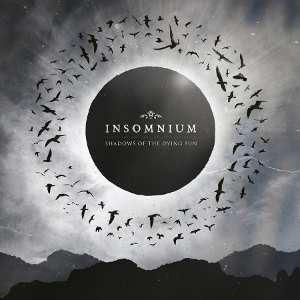 Finland’s melodic death metal brush artists Insomnium are perhaps my most beloved metal “discovery” within the past few years. I stumbled across them some time after the release of their 2011 album One For Sorrow, an elegiac, melancholy touched masterpiece. I think its easy for writers to throw that term around often, it happens quite a bit within metal reviewer circles —- but I really mean it in relation to that album. I was transfixed by every note within, and when I worked my way backwards through their discography, eagerly devouring the similarly styled Across the Dark (2009) and the noticeably more aggressive Above the Weeping World (2006), my appreciation for the band grew stronger and deeper. By October of 2012 I had my first opportunity to see the band live, who had an opening slot for Alestorm (the very idea) and Epica. I’ll never forget that show, I wrote earnestly about my experience that night in an admittedly unnoticed
 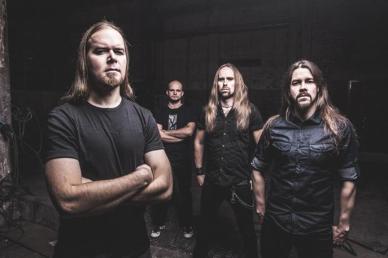 I tell you all that not only to rectify the lack of detail in that older Insomnium/Sentenced article, but to express to you just how deep my personal roots have grown with this band. I’m writing an album review on the surface, but I’m almost pained to write one for fear of deconstructing the album past the point of —- well, the way I want to enjoy it. In keeping with the way I handled my previous review, for Sabaton’s Heroes, I’ll just come right out and declare this: This is a great Insomnium record, filled with the kind of emotionally charged songwriting and artistry that we now expect from the band. But then haven’t I already expressed that I felt their past three albums were great? Yes I have, and if that nullifies any sense of relative objectivity for you then I’m sorry. And really, what else can I say? This is a band on a roll, with an unshakeable sense of identity and a musical nucleus of guitarist/vocalist Ville Friman and vocalist/bassist Niilo Sevanen that is perhaps the strongest in melodic death metal since the Stromblad-Gelotte pairing during the classic In Flames era.
 The next two tracks, “Revelation” and “Black Heart Rebellion” are as starkly contrasting as day and night; the former is a dreamy blend of acoustic guitars and slower, patient tempos with crescendoing clean electric melodic runs, Sevanen’s vocal performance at times softening to a near spoken word whisper. Its a startlingly spiritual lyric at work here too, a Sevanen penned hymn that seems to touch on the Cosmos-themed concepts of being aware of one’s own place in the universe, that “This is the gift of man / The key to see it all / The hidden wonders / Hope in despair”. Alternately in both music and lyrics, “Black Heart Rebellion” is perhaps the most punishing and brutal track on the album, with its black metal like flurry of near tremolo riffs, blastbeat percussive tempos, and Sevanen’s vicious growling about the parallels between “Morning star, angel of the dawn” and “Desolate is the path of self-believers”. Yet Friman still writes in moments of space for quiet melodic reflections, such as Vanhala’s hushed solo at 4:53 —- the kind of thing that is such a distinctive Insomnium signature, their musical calling card if you will. The lengthiest track on the album is the similarly black metal-touched “The River”, where I love the way the guitars anticipate the vocals by a fraction of a second at the 1:27 mark and the resulting effect crackles with excitement. Those stately verse sections unleash into a tremolo riff fueled chorus section with some surprising melodic change-ups.
 I have other favorites as well, “The Promethean Song” being chief among them, its chiming acoustics and slow tempo-ed bed of bass heavy guitars preceding a Sevanen/Friman vocal trade off where the latter opens up his pipes to higher ranges than we’ve seen from him before. He sounds good, really good actually, and he knows how to write vocal melodies that suit his tone (a rare skill in guitarist first songwriters). I adore the bridge section that occurs at the 4:00 minute mark with accented drumming, Sevanen’s harshly barked out vocals and perhaps the album’s best guitar solo. Then there’s the title track serving as the album closer, its a bass driven, rumbling beast of a song where heavy guitars suddenly swing up and crunch down to usher in a rather inspired Sevanen / Friman vocal duet on the refrain, “And I feel it in my heart / And I know it in my mind / That’s all there is, ever will be”. Its another song where Friman ruminates upon the stardust-y nature of our existence, a sentiment I entertain myself with on occasion and feel rather connected to. Incidentally, Friman makes his rent by working a day job as a scientific researcher, so if you’ve been wondering at the inclusion of science meets spirituality themes within the lyrics, that goes a long way towards explaining it. And of course there’s “Ephemeral”, which we heard late last year as a standalone single, and its dressed up here in a few more layers of guitars and production work, but still sounds just as vibrant, fresh, and ear wormingly catchy as it did originally. It features my favorite lyric on the album, “Dying doesn’t make this world dead to us / Breathing doesn’t keep the flame alive in us”, and its a rarity among Insomnium’s catalog —- a truly anthemic song.
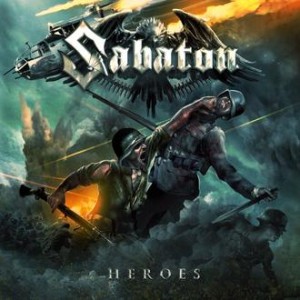 There’s so much to discuss in regards to Sabaton’s newest album, Heroes, a ten track paean to specific acts of heroism in wartime, and a strong contender to be the band’s best album to date. Let’s just get that out of the way first: Heroes is a great Sabaton record, not perfect… but really, really great. I usually avoid disclosing my overall consensus on an album until midway through a review, because after all, I’d like you all to keep reading throughout. Yet the story of this record is worth discussing in depth even though you know where my opinion stands. Its simultaneously a story of the self-driven perseverance of two friends and band mates and their vindication in the wake of what could have been crippling circumstances; as well as a collage of moments where humanity triumphed over the waste and destruction of warfare. Regarding the latter, this is a turning point for Sabaton, whose previous albums were largely made up of metallic anthems either depicting the intensity of war and its participants (for example, “Ghost Division”, “Into the Fire” or “Primo Victoria”), or paying homage to war heroes exclusively (“White Death”). There’s a bit of that on Heroes as well (certainly the cover art reinforces that), but surprisingly enough the album largely consists of songs honoring those moments when non-violence prevailed over all.
 It was an inconspicuous debut —- though an auspicious one. The tour plowed on, and when I caught the band almost a year later back in Houston, they were firing on all cylinders, the new guys even equaling Broden in their stage performances. I’ve seen them a few times since then, most recently the other week opening for Iced Earth, this time with another new drummer Hannes van Dahl as replacement for Bäck who had to leave for paternity reasons —- and my impressions were further reinforced. Having seen both eras of their lineups, I feel that the current incarnation is the definitive lineup, and that’s not to discredit former band members, but the new guys just seem to “get” what Broden and Sundstrom have in mind when it comes to their live performance. The real question however that lingered throughout was just how this massive lineup change would affect a new recording? In terms of songwriting, there didn’t seem a reason to be concerned since Broden has always served as Sabaton’s musical scribe, but he composes on keyboards and leaves the guitars to his bandmates —- how would the new guys mesh with what he gave them? Exceedingly well as it turns out, and I gather this not only from my takeaway from listening to the album itself, but from comments made by Broden and Sundstrom themselves, who in a
 As far as what makes it great, listen first to five absolutely excellent standout tracks in “Night Witches”, “No Bullets Fly”, “The Ballad of Bull”, “Resist and Bite”, and album closer “Hearts of Iron”. In typical Sabaton fashion, what makes these songs so great is not only their precision honed array of hooks and musical ear candy, but the interesting subject matter and Broden’s skilled ability at lyric writing. One of the most gripping back stories is found on “No Bullets Fly”, honoring an incident in which a crippled American B-17 was escorted back to friendly territory by a German ace fighter pilot named Franz Stigler who was one confirmed kill away from qualifying for the Knights Cross. He said that he maneuvered alongside the B-17 and could actually see through the damaged air frame and look directly at the faces of its injured pilot, Charles Brown and remaining crew. He made a choice that could’ve gotten him executed had his superiors found out —- he escorted the B-17 back to the North Sea, his presence preventing German anti-aircraft batteries from firing upon the American craft. Upon reaching the sea Stigler saluted the American crew and turned back. Forty-seven years later, the two pilots would finally meet and became good friends. As a kid I grew up wanting to be nothing more than a fighter pilot, and I loved reading about the history of aerial combat —- and I’m torn between being annoyed with myself for not hearing of this particular story earlier, but very gratified that I got to hear about it through Sabaton’s monstrously epic, adrenaline pounding celebration of human decency. It sounds like an odd juxtaposition because it is: Group shouted vocals yelling “Killing Machine!… B-17!” during the chorus envelope the humanitarian sentiments of “Honor in the sky!… Flying Home!… Said goodbye to the Cross he deserved!” Its quickly become one of my favorite Sabaton songs.
 I’d be remiss not to discuss in greater detail my love of the songs “The Ballad of Bull” and “Hearts of Iron”, two songs about non-violent humanitarian action in the middle of utter chaos. Again its refreshing to hear Sabaton’s scope increasing, their views on the concepts of heroism being greater than just focusing on combative actions. Broden’s lyrics are often startlingly direct, and they certainly are here, but I feel that it works better for the song —- what could he possibly couch in a metaphor? Some may be put off by the former’s piano drenched balladry, in fact a fellow metal critic/radio host friend of mine stated that he thought the piano on it was too “processional”, or too formal for his preferences. I can see where he’s coming from, but for me, that is precisely why I love it so much. I love that the heavy emphasis on naked piano seems to evoke a musical pastiche of the 1940s (or at least my impression of it), and its heavily pronounced major keys seem fitting to match such a near mythical tale of gallant individual heroism. Maybe its also that I simply love piano as an instrument, and amidst an album full of heavy, breakneck guitars, its arrival is a welcome contrast.
 Of course, that’s not to suggest that the band have entirely left tradition behind, as “Resist and Bite” is one of the band’s best songs to date and falls in line behind old classics like “40:1” and “Uprising” as us against them celebrations of sacrifice (though in this case it’s about the Belgian infantry resistance to the Nazis). I was driving along the spaghetti bowl of Houston freeways listening to the album this past weekend, and when this song came on I blew past the speed limit and barely saw a highway patrol car on the shoulder just in time —- a very close call! Its got that kind of adrenaline surging, pulse poundingly dramatic (and ultra-catchy) chorus that defines epic and makes you look like a maniac to other passing vehicles. The guitar solos in this track are worth mentioning —- on the entire album in fact, Englund and Rorland trade back and forth wildly melodic, furious soloing that is always complementary to the primary melody at work. Similar in old school theme is “Soldier of 3 Armies”, about Lauri Törni who as the title suggests fought for Finland during the Winter War, Germany in World War II against the Soviets, and the United States (in Vietnam as a Green Beret no less… and man, did this guy hate the Soviets or what?). Its a strong track that is a spiritual cousin to “White Death” from Coat of Arms.
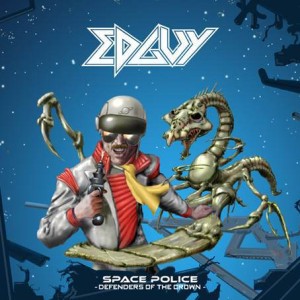 If you’ve kept up with the blog over the past few years, you’ll know that I’m a pretty big Tobias Sammet fan. Yet my unabashed fandom has not prevented me from listening with a critical ear to his songwriting in both Avantasia and Edguy, and in doing so I’ve begun to notice a certain track that his recent works have been taking. There was a noticeable decline with Edguy’s Age of the Joker and last year’s Avantasia offering, The Mystery of Time, and it could be argued that the seeds of this decline for Edguy in particular began with 2008’s Tinnitus Sanctus. That in itself I find rather revealing, because 2008 also ushered in the release of the first Avantasia album in the largely brilliant Scarecrow trilogy —- which suggests that it marked the start of an era in which Sammet began to reserve his best material for the Avantasia records, by default giving Edguy second priority. Sammet himself would balk at that very suggestion and has gone on record stating that the songwriting periods for both projects do not intersect. Hey I’m a fan of the guy, I’ll take him at his word, but I will argue that its fair to suggest that his main musical priority had shifted to Avantasia within the past six years. Its in the math guys: since 2008 —- four Avantasia albums to three for Edguy.
 These are permanent changes, and I suspect that Sammet realizes this, but I’m not sure that most of his fans have. If you’re one of the few that can accept the compartmentalizing of his songwriting career, then you’ll be able to accept Space Police for what it is —- namely, the strongest Edguy record of the past eight years. Sammet has successfully shaken off the dust of his past two recordings and delivers some pretty great songs, the most apparent of these being the title track itself. With its tension building, slow-burning verses and propulsive prog-pop chorus, Sammet has penned one of his best Edguy songs to date. Its subject matter is ironic in that its poking fun at fans, or critics (or in my case, one and the same) that tend to demand that the band stick to a particular set of stylistic rules or structures —- all while featuring some of the silliest voice effects on any Edguy song ever (remember the “sung” guitar solo from years ago… its back in a weird way). There’s also the standout single, “Love Tyger”, one of Sammet’s catchiest songs ever, with its “La-La-La-La-Love Tiiiger” refrain becoming perma-stuck in my head for the better part of two weeks now. I love the backing vocals on this tune, with its complementing mix of male and female vocals in what is by now becoming a Sammet trademark, they add a lushness to the sound that is supremely enjoyable. Another gem is the unconventional power ballad “Alone In Myself”, where Sammet trades the usual dramatic build up and Slash-esque guitar solos for an almost soul-influenced lead vocal backed up by some fantastic gospel tinged choir vocals during the refrain. I’m pretty big on Sammet’s ballads, I think he’s one of the best at penning them genre wide, and I love that he’s finding new ways to explore this particular avenue in his songwriting. What an astounding song.
 Filling out the rest of the record are some solid album cuts; “Defenders of the Crown”, the second half title track has a chorus that is slightly lacking, yet the rest of the song is packed with enough interesting musicality to make it worth many repeat listens. Same goes for “Shadow Eaters”, an uptempo mix of power and trad metal elements with a pummeling double bass furor throughout, its easily the heaviest track on the record (you know… if that’s the kind of thing you enjoy hearing about). The closing track “The Eternal Wayfarer” attempts to be the epic of the record, with its just under nine minutes in length, but it comes up short of meeting the criteria to be placed alongside past Edguy epic-length classics. Not for lack of trying however, because I should mention that the song is near spectacular from 5:03 to 7:00, where an extremely well written extended bridge features the kind of swirling lead vocal layering that we haven’t heard since the classic title track from Theater of Salvation, a blast of nostalgia that is tastefully done and just plain fun to hear! So there you have it, no real clunkers, and a handful of gems, I’d call that a pretty good outing for Sammet and a rebound for him in the quality department. I’ve noticed I haven’t mentioned any of the other band member’s performances, and that’s not meant to be a snub, as those guys do their job really well and sound great as always. This is a band that lives and dies on the songwriting skills of Sammet, and until they decide to get involved in that realm themselves, it will always be that way.
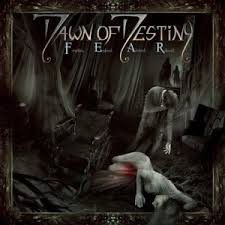 Dawn of Destiny – F.E.A.R.: Almost every year, there’s a band that appears on my radar from seemingly out of nowhere, stunning me with an album so good that I have to kick myself for not realizing that they’ve been in existence for more than a few years already. Its the “cream rises to the top” metaphor in action —- a good band producing excellent work will ultimately reach my ears due to word of mouth. Its how most of us get to know the bands we love in the first place amidst a flood of metal releases. Its impossible to listen to everything, and if you try to get in on the ground floor of every promising new band, you really do run the risk of burning yourself out (as well as preventing yourself from enjoying what you’ve already heard), particularly if you make a habit of writing about metal bands.
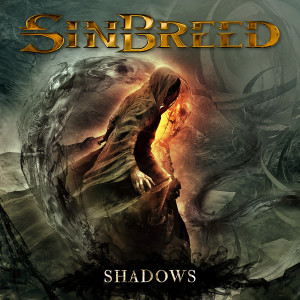 Sinbreed – Shadows: You’d be forgiven for never having heard of these guys before Marcus Siepen of Blind Guardian fame decided to join up with them. He wasn’t the first link to the mighty bards however, as Sinbreed has actually been an ongoing project of current Blind Guardian drummer Frederik Ehmke’s since 2005, together with vocalist Herbie Langhans, and guitarist Flo Laurin. They released an album back in 2010, and I’ll totally admit to missing that one (hey, Blind Guardian’s own At the Edge of Time cast a pretty large shadow over my listening time that year). What really got my attention, and that of many others was Siepen deciding to participate in this project —- after all, we’re talking about a guy who has been content to play only in one band for nearly thirty years with practically zero interest in doing anything else outside of that. Siepen is often forgotten when people pontificate about the supreme awesomeness that is Blind Guardian, as lead guitarist Andre Olbrich tends to take most of the glory (and to be honest, as a primary songwriter he probably should). However Siepen has been the Izzy to Olbrich’s Slash throughout Blind Guardian’s discography, at least playing-wise, being a razor sharp rhythm player who can deftly interplay with Olbrich’s twists, turns, and Brian May-isms.
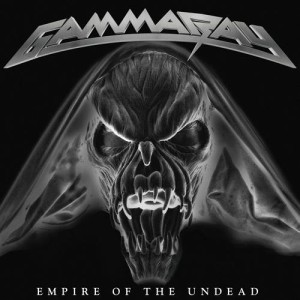 Gamma Ray – Empire of the Undead: Sometimes the problem writing reviews is that you stumble across an album where you really just don’t know what else you can state other than the obvious. I’ll shake my head and say, “No dummy, remember we’re assuming the reader hasn’t heard this album yet”, and force myself to continue. Now other than that you know I sometimes talk to myself while writing, you’ll perhaps empathize with me when you remember that Gamma Ray simply hasn’t changed much from album to album in the past decade. In fact, increases in production quality aside, Gamma Ray albums have been fairly linear affairs from one to the other, and that doesn’t mean that they haven’t been good —- but it does get hard to discuss in any remotely in-depth manner the particular intricacies of a new Gamma Ray offering.
 Eldritch – Tasting the Tears: Eldritch have long been Italy’s metal secret, a band not named Rhapsody or Lacuna Coil that sails under the radar whilst releasing quality prog/power metal albums in fairly rapid succession. They don’t get a lot of press, not even in their home country, the glory being left for their overhyped and overblown countrymen. I myself always forget that Eldritch are from Italy, not the UK or Stateside, mainly due to Terence Holler’s vocals sounding like a blend of James LaBrie and Sebastian Bach. I have to admit I missed their last album Gaia’s Legacy, so I’m not sure how this new one measures up in terms of progression, but it certainly sounds like the Eldritch I remember. Take the more metallic side of Dream Theater, tone down the progressive noodling, increase the emphasis on catchy vocal hooks with some fairly strong melodic twists and you’ll have a good idea of what to expect here.
 I wonder if every new Sonata Arctica release shouldn’t come with a warning sticker on the front. I’m not quite sure exactly what the wording of the message would be, but it’d have to get its point across succinctly since there would be an obvious character limit. Perhaps we can impose some self-made restrictions upon ourselves to keep it short and sweet —- a twitter style 140 character limit then? Yeah we’ll go with that. Perhaps by the time I arrive at the conclusion of this review we’ll have a message for that sticker that does the job. But why the need for a warning sticker at all…? Its because post-2007 Sonata Arctica have the misfortune of being saddled with the weight of rather grand expectations, and perhaps because as fans we see our expectations through the 20/20 vision of hindsight.
 And that’s a fairly accurate (if crude) way of analyzing each new Sonata Arctica album since 2007’s Unia, a line of demarcation for the band where they decided to branch out their sound and songwriting with some far flung experimentation. Its been a rocky ride ever since. Sure there have been gems on all these experimental era records, “Only the Broken Hearts (Make You Beautiful)” and “Alone in Heaven” from 2012’s Stones Grow Her Name come to mind immediately, but there’s a been a lot of “cutting room floor” playlist material as well. And if you take a look at the band’s discography, you’ll notice that with the release of Pariah’s Child, the band has evened up the number of albums in this post-2007 experimental era to those of their classic, golden era —- four a piece to be precise. Yep, I’m including this “return to form” album with the experimental era because Tony Kakko —- who has spent these past seven years experimenting —- can no longer relate to the natural boundary of tunnel vision he had during the band’s early years. He’s an internal songwriter at heart, and as a result suffers from a lack of external separation… simply put, its likely that he doesn’t see the experimenting we hear as being all that experimental. But to us outsiders, it seems for all the bluster about how Pariah’s Child would be a no-nonsense, classic Sonata Arctica power metal album, there sure is a lot of nonsense here.
 I’m sure the most baffling track on the album is “Half A Marathon Man”, which actually has a nice Deep Purple/Rainbow-ish approach for the majority of the song, but they’re undermined by Kakko’s pointed lyrical American-isms. That in itself isn’t a deal breaker, but the sheer rock n’roll throwback approach is jarring, especially in the context of this supposed return to their power metal glory (of which I’m sure it’s abundantly clear by now that Pariah’s Child is not). And I can’t neglect to mention the utter mess that is the purported epic of the album, “Larger Than Life”, where the first five and a half promising minutes are blown completely out of the water by hearing an operatic choir sing the lines “So don’t take life so seriously”. Look, I tolerate a lot with Sonata Arctica, but I have a hard time swallowing the juxtaposition of an epic sounding collection of professional voices singing such mundane phrases. It simply doesn’t work, and tellingly the song unravels immediately after that, a directionless blast of orchestration and guitars that get blander as they go on…. at one point you realize that nothing is actually happening in the song, its just elevator music over tepid riffing. This song desperately needs a melodic motif that it can go back to or utilize in increments throughout —- instead it just comes off as a collection of leftover ideas that were cobbled together against an orchestral arrangement in the hopes that it would mesh together well. It didn’t, and instead can be officially considered the worst Sonata Arctica “epic” to date.

 I’ll argue that the case in point that answers that question is the band’s current touring activity —- that’s right, Metallica is on a South American tour as we speak. In fact, they have tour dates lined up all through the spring and summer up to August. Promoting what you ask? I dunno… Metallica I guess. This is a band that has waffled on going back to the studio for a proper studio album, only pausing in their incessant tour schedule to commit ear murder with their ill-conceived and executed Lulu album with the late Lou Reed (for all our sakes I’ll just avoid talking about it at all here, suffice to say it was a time-sink —- as in black hole, the astronomical object). So now, in 2014 every band member has finally mentioned something in the press as to this year being the perfect time for Metallica to start cooking up a new album, okay, great! Except that they’re not in a rehearsal room, and certainly not in a recording studio. How do you write an album on the road when you’ve been unable to do so in the past? Does this mean that the next Metallica album won’t start getting assembled until the fall of this year, when the band is finally off the road? Does any of this sound like the plan of a band hell bent on delivering a truly great work of recorded art?
 When a band plays live, there are so many factors that can audibly affect the performance of a song, the acoustics of the venue, the noise of the crowd, bad mixing, the sound guy sucks, etc. I was mildly annoyed when Kamelot debuted their first Tommy Karevik era song at a European festival —- crap sound and all —- when you took a listen to the versions plastered over YouTube you could hardly make heads or tails of anything. I’m sure it was worse for the fans in the crowd, what exactly were they supposed to be hearing that they could comprehend, if anything? When you take a look at some of the videos of “The Lords of Summer” performance, you’ll see some of those lucky fans that got to be invited on stage to watch the gig from the wings, and most are cautiously bobbing their heads during the song. A few just look confused, and you can imagine how many people are taking the moment to head to the concessions or hit the head. And this brings me to the moral of this little quibble, and this goes for all metal (and rock) bands: STOP PREVIEWING NEW SONGS LIVE! And to Metallica, this tour leg of yours is called “Metallica By Request”, no one in Bogotá requested a demo!
 This is a band that doesn’t understand how to continue as a creative unit anymore. Years wasted on vanity projects (the 3-D movie, the atrocious S&M, Lulu) and overkill on touring has depleted their sense of what it means to be individuals in a metal band playing metal music. I would even go as far to suggest that their lifestyles make it difficult for them to relate to their fans, largely a blue collar bunch. When you live in a mansion on the coast of the richest neighborhood in the Bay Area, with a multimillion dollar art collection on hand and bottles of wine at the ready, its hard to relate to a fan of yours that works a soul crushing job with terrible pay. That’s not Metallica’s fault, nor their responsibility. What is their responsibility however is to own up to the fact, and perhaps reassess how they approach songwriting, perspective, and what it is they want to express through words and music.
 Iron Savior – Rise of the Hero: I was so blown away by Iron Savior’s previous offering, 2011’s The Landing, that I met this album with a great degree of trepidation that only comes with metal fan experience. See its not at all unexpected or out of the ordinary that a veteran band should find another spark of inspiration many albums into their career —- it happened with Accept and their near masterpiece Blood of the Nations in 2010 for example. However, it is highly unlikely that such a resurgence carries over into more than one album, again I’ll reference Accept by pointing to the rather mediocre follow up they delivered in 2012’s Stalingrad. Iron Savior unfortunately walks into this same trap, and in unusually clumsy fashion as well. I honestly don’t understand some of the thinking behind a few of the songwriting choices on this record.
 Freedom Call – Beyond: On paper I should enjoy the work of Freedom Call more than I actually do, as they are one of the happiest sounding bands in the genre alongside the now defunct Power Quest —- whom I loved. But what Power Quest had in spades compared to their European mainland cousins was the sheer pop songwriting brilliance of Steve Williams, who through his simple yet ultra-melodic keyboard lines not emulated and transcended the best of the eighties pop-rock bands he loved. Freedom Call is by this point the sole project of the only remaining original member, vocalist and guitarist Chris Bay, who does good work in his own particular milieu, if nothing truly remarkable. Freedom Call albums are predominantly spotty affairs, but they will usually guarantee a handful of good songs, an on occasion, some really great ones. They receive my attention as a power metal fan in spite of their flaws, mainly because I feel so passionately about the era they were born in.
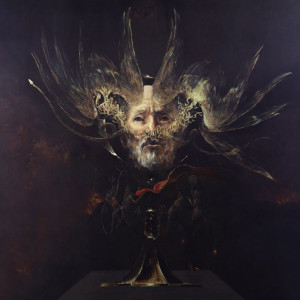 Behemoth – The Satanist: This came as a total surprise, not it’s release mind you, but just the fact that in 2014 Behemoth may have just released the best album of their career, and for sure a contender for being considered one of the best albums of 2014. My history with this band is spotty at best, I’ve largely found their discography to be inconsistent, and for a few records, even uninteresting. I have always appreciated that they try their best not to be pigeon holed into one specific subgenre of metal, instead choosing to play with both black, death, and doom metal stylings… its just that those kinds of mergers require a rather steady hand at the songwriting helm, which I’ve never suspected Behemoth of having. The band’s songwriter is frontman, guitarist, and vocalist —- Nergal, who seems to have approached this album with a dose of inspiration undoubtedly gleaned from his near-fatal brush with leukemia in late 2010. On The Satanist, Nergal infuses not only death and black metal stylings, but adds in doses of ambient noise and even hard rock simplicity together in one of the most alluring and provocative blendings in recent memory.
 Grand Magus – Truimph and Power: I’ve grown to enjoy Grand Magus through their previous album, 2012’s The Hunt, it wasn’t a perfect record, but it had very high highs and no lows. I checked out the rest of their discography and found myself liking the older albums a little less, I wasn’t wild about their doomy past I suppose. Lucky for me the band seems hell bent on moving further and further away from those stylings and more into traditional metal territory on their newest, Truimph and Power. There are still doomy moments present, but they’re more touches and flourishes, ingrained within song structures themselves instead of being central to them. Apologies perhaps to fans of their older works, but this is an album that is hitting me right in my comfort zone.
 Many months ago, Cary G. from the long running metal podcast MSRcast asked if I’d like to be a guest on his show, and many, many months later we somehow managed to get the planets to align to make it happen. For those who don’t know, MSRcast is the audio evolution of the now defunct Mainstream Resistance zine which once upon a time found its way into many a Texas metal fans’ sweaty, moist palms. There are very few metal based podcasts that I enjoy listening to, and MSRcast and its sister show Metalgeeks are both part of that select group. I was asked to be a guest on their 2013 rewind, and yes I know its nearly March but hey, one more look back couldn’t hurt right? You can listen to them by following the links provided below and using their web based player, or download it from their site directly as an mp3 file, or simply do what I do for my podcast needs and find them in the iTunes store, hit subscribe and you’ll auto-download every new episode! What — you’ve never listened to podcasts before? Maybe its time to get with it! I’ll let it go this time because I’m such a nice guy!