The Metal Pigeon’s Best of 2015 // Part One: The Songs

Finally! The beginning of the end to the most exhausting year of new metal releases I can ever remember. This is the first of the two-part year end Best of list I compile, a little delayed this time (in keeping with the 2015 theme), and this might actually be the more difficult of the two in selecting and narrowing down. My year end songs of the year list is always problematic because ultimately there is some crossover with the forthcoming best albums list, since some of these songs were key to making those albums the best of the year. But the songs list has to also represent those isolated gems that were discovered on otherwise flawed or not so great albums, and keeping the balance between the two is always tricky. In sticking with tradition and forcing myself to be very selective and honest, these lists are limited to ten, but they were narrowed down from a shortlisted pool of about 20-25 entries. Anyway, you know the drill by now, so to quote Kramer: “Giddy up!”


The Metal Pigeon’s Best Songs of 2015:


1.  Steven Wilson – “Happy Returns” (from the album Hand. Cannot. Erase.)


[youtube https://www.youtube.com/watch?v=U_Cgyvj7Pf4&w=560&h=315]


I had suspected for awhile that this emotional gut-punch from Steven Wilson’s 2015 masterpiece Hand. Cannot. Erase. would wind up atop this list, despite competition from some strong contenders below. Its up here because its aching, emotive, transcendent, bleak, beautiful, sorrowful, melancholic, dreamy, nostalgic, and a whole list of adjectives more. Its also the emotional apex of the album, both in its musical approach and in its lyrical perspective/situation within the content of the album’s storyline (and if you’re unaware of what that is, I’ll refer you to my original write-up on the album). Whats clever is that it comes disguised as a pop-song, complete with a little McCartney styled ““doo-doo-doo-do” and some relatively simple acoustic guitar strummed chords. It serves as a hook in lieu of an actual chorus, because our narrator is in no state to say anything that she’d have to repeat —- the words she delivers are spare, direct, and heart-shattering in their immediacy: “Hey brother, happy returns / It’s been a while now / I bet you thought that I was dead”. The framing device is that Wilson’s isolated, living-alone-in-the-city female narrator (simply referred to as H.) is perhaps finally reaching out to a long sundered member of her family via writing a letter. Maybe she’s replying to a received Christmas card, hence the invocation of the phrase “happy returns” (more common in British English than American as a response to “Merry Christmas” or “Happy New Year”), or maybe she’s initiating contact herself —- we’re never told and its left to the imagination.

Whats not left to us to decipher is her emotional state —- teetering on the edge of hopelessness she tells her brother, “I feel I’m falling once again / But now there’s no one left to catch me”. One of the most devastating verses you’ll ever hear sits precisely in the heart of the song, from the 1:32-1:58 mark, its lyrics filled with the kind of sorrow borne from regret and despair: “Hey brother, I’d love to tell you / I’ve been busy / But that would be a lie / Cause the truth is / The years just pass like trains / I wave but they don’t slow down, don’t slow down”. I can’t tell you how many times I’ve listened to this song throughout the year, but every time I’m completely emotionally engaged, and I’ll tell you… that imagery of the passing train just hits me like I’m standing on the tracks myself. This is not an easy song to listen to. You can’t let it play when your iPod is on shuffle because you’re simply not ready for its gravity, it will sink you and only cause you to play it again and again because your mood will have shifted and the Dream Evil song that was supposed to come next would sound like static in your current state of mind. Its a song that’s haunted, and like any ghost worth its name it begins to haunt you.

There was another song from the same album that I shortlisted as one of the Best Songs of 2015, that being “Perfect Life”, the other sibling related song, being about the narrator’s one-time foster sister before the divorce of her parents. It would’ve been the most bizarre entry to one of my year end lists to date, a Saint Etienne styled bass n’ drum construct with female narration and Wilson’s repeating coda arranged as more of a trip-hop affair than anything resembling rock or metal. Similarly “Happy Returns” is quite far removed from those two genres, but its inclusion on this list I believe is warranted not only because of the simple fact that I reviewed the album, but because Wilson’s connections to metal are long and deep. Set aside his production work with Opeth and Orphaned Land, or even his role in helping once doom-metallers Anathema evolve into their current progressive rock state. The man’s approach to music in terms of songwriting, musicianship, arrangement, and thematic vision shares so much in common with the values of many metal artists. Speaking of Anathema, longtime readers will remember their inclusion on this list not once, but twice in the past few years. As was the case with my Anathema inclusions, I simply couldn’t be dishonest with myself (and you by extension) and exclude a song from this kind of list simply because it didn’t sound remotely metallic. If its inclusion here prompts someone to further investigate more of Steven Wilson’s music, then I’m further justified in my decision.


2. Blind Guardian – “Distant Memories” (from the album Beyond the Red Mirror)


[youtube https://www.youtube.com/watch?v=PePLapdXpzQ&w=560&h=315]


I was puzzled by Blind Guardian’s decision to release an abridged “standard” version of their newest album Beyond the Red Mirror, because the limited/earbook/vinyl editions of the album came with two additional tracks in “Doom” and “Distant Memories”. They were technically bonus tracks in that regard, except that this was a concept album, and they actually fit into the storyline devised by Hansi, to such an extent that when placed back into the overall skeleton of the album “Distant Memories” ended up at track number six, altering the entire standard edition sequencing (see the differences for yourself). I get that you need something to entice fans to splurge on the special editions of a new album, but usually that comes in the form of b-sides or a cover song or two. It shouldn’t come at the expense of the album’s most brilliant moment, and its unfortunate that there might be fans out there enjoying the “standard” edition of the new Blind Guardian album without realizing that they are missing out. And man would they be missing out, because “Distant Memories” is not just the best song on the album, its one of the most beautiful songs the band has ever written, a kinetically charged quasi-power ballad that seems out of time and place.

It starts out fairly casually, with Andre’s playful guitar figures dancing over some subtle woodwinds, but then the band crashes in and Hansi takes over the director’s chair with a vocal melody so impatient to display its own brilliance that we’re treated to the chorus at the :44 second mark. Said chorus is only one of the highlights in this glorious epic, but its one you will return to forever, even if you don’t really understand what its lyrics are going on about in terms of the album’s concept. They’re mysterious even when taken out of context: “But still they don’t know / They’re just caught in distant memories / Then these fools will fade away / They may not fear the fall”, yet despite their opaqueness I still find them captivating and entrancing because its the manner in which they’re sung that gives them their power. On the back of Frederik’s thundering drums, Andre and Marcus’ rhythmic guitar phrasing, majestic swells of a distant orchestra, and the sweet rivers of choral background vocals, Hansi delivers his deceptively simple lead vocal with sublime extensions of line-ending syllables. Every part is integral, the combination of everything building up to a sound that I don’t even think there’s adequate language to describe —- you listen to it and tell me, that’s not a happy sounding chorus right? Yet its not sad or angry either, its simultaneously all of those things at once and none of them at the same time. When I consider those lyrics, I think that our narrator is expressing some type of disappointment, perhaps even resignation, but the music they’re sung over says otherwise.

That ability to create music that defies written interpretation is what makes Blind Guardian not just one of the greatest metal bands of all time, but one of the greatest bands of all time —- all genres. Period. Stop. Okay, on the back of such effusive praise, why isn’t this listed at the number one spot on this list? Well I have a small gripe about the production, and the sequence that best exemplifies what I’m thinking of cues in at the 3:07-3:41 mark. We’re treated to a heart-stopping, adrenaline-racing increase in tempo and intensity in Hansi’s vocal delivery, “Whatever the cost / It will not be redeemed…”, and we can hear the orchestra swell in reaction, about to slam us against the wall with some Hollywood inspired/James Horner/Howard Shore/Michael Kamen styled sturm und drang. And it happens, sort of… you can hear it happening but thanks to an unforgivable oversight in the mix at this exact moment, you don’t feel the jolt and thrust of the booming timpani, the anger of the brass section, the near panicked notes of the woodwinds and strings in an attempt to keep everyone together. They all just get compressed and pushed below, buried under guitars and layers of vocals at a time when they should be threatening to over take the whole she-bang altogether. For quite a few people, this was a recurring complaint about the album as a whole, and one I hope will urge the band to revisit it a few years down the line in the form of a remix as they have with most of their catalog.


3.  Angra – “Silent Call” (from the album Secret Garden)


[youtube https://www.youtube.com/watch?v=7SBG1dRY6Cc&w=560&h=315]


There’s a reflective, almost meditative quality to this spare ballad found at the end of Angra’s Secret Garden, built on the interplay of Rafael Bittencourt’s impassioned lead vocal melody and the backing vocals that snake around him in lush layers. Its in one of those layers where we presumably hear new Angra vocalist Fabio Leone, who has been seen providing backup vocal support on this song at live shows and spots on television shows where they’ve taken a fancy to airing out the tune. They’d be silly not to, this could and should easily be a smash hit back home in Brazil —- its an easy song to love (just take a look at how many cover versions have already sprouted up on YouTube in the span of a year). In my original review of Secret Garden I noted how odd it was that much of the album didn’t feature Leone on lead vocals alone, often casting him as a partner with a guest like Simone Simons or Bittencourt himself (the latter enjoying his own duet with Doro Pesch on the excellent “Crushing Room”). Its not the expected way in which you’d want to indoctrinate your new vocalist or introduce him to your fans, but then it seems that years of various band-related problems of all sorts have pushed Bittencourt to a place where he’s discarding all expectations, structures, and rules. He gets away with it for the most part on the album largely on the strength of his own lead vocal performances —- I’m honestly asking, why can’t Bittencourt just handle the lead vocals himself? I love his voice.

What makes “Silent Call” such a poignant, emotive, and wistful song is found within its lyrics, with a narrator attempting to describe the feeling he has when staring at transcendent scenes of natural beauty. We’re placed alongside him with the line “I find myself lost in the Swedish night / Sunset it’s crying in the sky”, and in case you’re wondering, yes the album was recorded at at Fascination Street Studios in Orebro, Sweden (Jens Bogren country!). I’m particularly fond of the phrasing of “New day, sunrise / Sound the trumpets of the dawn” and Bittencourt’s vocal melody during its delivery, almost see-saw like in its ascending and descending crescendos. His ultra impassioned inflections during the final verse are all exposed nerve endings, raw in their intensity: “Spread my wings and fly / Only guided by faith / Through the darkness or light / May have the “whys?” / It’s always the same” —- its the kind of performance that suggests an expression of frustration. I like the idea of a song written about being unable to effectively communicate a kind of spiritual feeling received from witnessing something that can’t adequately be described by language. All our narrator can do is merely mention whats running through his mind during the experience, such as “…an old bag full of recent memories / Many laughs and many cries”, but that’s enough, the melodies at work here are all we need as listeners to be transported to that specific time and place.


4.  Witchbound – “Sands of Time” (from the album Tarot’s Legacy)


[youtube https://www.youtube.com/watch?v=0G3M5rRPZ-k&w=560&h=315]


Witchbound caught my attention in 2015 due to the curious circumstances of their formation —- they’re essentially a band formed in tribute to the recently deceased Stormwitch founder Lee Tarot. Former original Stormwitch members Ronny Gleisberg and Stefan Kauffman joined together with a handful of other ex-Stormwitch guys (from different eras of the band) and a fantastic unknown vocalist in Thorsten Lichtner to finish the final songs that Tarot had left behind unrecorded. In my original review, I wrote of the project’s inception:

Things like this have been done before for other deceased musicians, and they’re always well meaning, while almost always garnering some kind of press and media attention. In this case, there’s very little of that —- a fact that makes Witchbound’s efforts all the more poignant. Unless you’re a metal historian, chances are that Stormwitch isn’t a name that’s familiar to you: They never really blew up in any way in during their heyday, their exposure to American audiences was limited to import mail order catalogs (I don’t even think they had an American distribution deal), and they were never able to crack their home country of Germany like their peers in Grave Digger, Accept, Helloween, and later Blind Guardian.

As heartwarming as the spirit and intention of the project is, it wouldn’t be on this list unless it contained something truly fantastic —- and the real surprise is that the entire album is totally worth your time and attention, containing perhaps Tarot’s finest songwriting to date. Its muscular, traditional German heavy metal that’s spiced up with diverse instrumentation and songwriting styles. There’s triumphant, fist-pumping metallic anthems such as “Mandrake’s Fire” and “Mauritania”, but also thoughtfully composed balladry such as “Trail of Stars”. The diamond among the bunch was the shimmering, utterly gorgeous “Sands of Time”, a power ballad built on a slowly escalating bass line, chiming acoustic guitar patterns and tension building riffs. It crests when Lichtner explodes on the chorus, with a melody that soars to the very heights its referencing in its lyric: “Staring at the stars each night, waiting for a sign / Writing down four lines – a vision to rhyme…”. Credit to Lichtner on this one, because his phrasing here is impeccable, and he really just owns the vocalist role all over the album, delivering incredible performances and sounding better to my ears than original Stormwitch vocalist Andy Aldrian ever did. He’s the MVP performance wise on the album, but Tarot himself gets the overall MVP for penning such inspired songs. With “Sands of Time”, he may have delivered his best one ever, with a degree of complexity to its Medici-referencing lyrics as well as an undeniable hook that would’ve sounded at home on an Avantasia album. I’d like to think that Tarot would’ve loved what these guys did with his unfinished songs, if he only had a chance to hear them. I know I did.


5.  Subterranean Masquerade – “Blanket of Longing” (from the album The Great Bazaar)


[youtube https://www.youtube.com/watch?v=QFIfeWXqpSU&w=560&h=315]


Quietly the multi-national Subterranean Masquerade released one of the most satisfyingly melodic, complex, and challenging albums of the year. I had no idea that this was their second album (first in a decade though), nor any idea who Tomer Pink was, the guitarist and songwriter at the heart of this band that consists of members from Israel, Norway and the United States. Those last two are Kjetil Nordhus and Paul Kuhr (of Tristania and November’s Doom respectively), Nordhus handling clean vocal leads with his accented prog-rock delivery while Kuhr delivers the brutality in his distinctive doom-death vocal style. The band’s sound is a diverse blend of ethnic Middle-Eastern music, progressive rock ala Steven Wilson/Porcupine Tree, and Oriental metal in the vein of Orphaned Land (whose Kobi Farhi does guest vocals on two tracks on the album). It was an album that came out of nowhere, just a random promo I got one day that I had no background on. I kept coming back to the album throughout the year, finding it a pleasure to listen to for its sheer force of personality and some seriously excellent songwriting by Pink. His best one is the emotionally charged semi-ballad “Blanket of Longing”, itself a microcosm for the band’s overall sound, containing a little bit of everything they’re capable of. The real star here is Nordhus, whose clean lead vocals are simply superb, his emotive inflections during the chorus particular stirring: “Often I go back to that picture of my little boy / And I just can’t cry anymore…”. When I hear prog-metal written and performed like this, I know why other more technicality focused prog-rock/metal bands fail to move me. It should always start with a melody worth remembering, not one forgettable riff after another.


6.  Luciferian Light Orchestra – “Church of Carmel” (from the album Luciferian Light Orchestra)


[youtube https://www.youtube.com/watch?v=mtpRXa3V4Pk&w=560&h=315]


Its a subtle bit of irony that in an era when new retro occult metal and rock bands are getting signed left and right after the success of Ghost, one of the most intriguing projects in that vein comes from a musician that predates all those guys, namely, Therion’s Christofer Johnsson. This is a side project of his with a handful of musician friends, the only known name we have from this bunch being vocalist/photographer Mina Karadzic. According to whomever runs Therion’s social media (I suspect Johnsson himself on all fronts) Karadzic does not handle lead vocals on this particular song so I have no name to place to the gorgeous, breathy singing that adorns this gem. I’ve seen a couple people point to one Mari Paul, a relatively unknown Finnish vocalist who does seem to match the description of the woman singing in its music video, so credit to her if that’s true because the lead vocal at work here truly makes this a stellar slice of atmospheric yet hooky occult rock. There’s something seductive both sensually and spiritually about the vocal melody and the lyrics, the latter specific in its audience: “Young girl, come close / Undress and pray”. Longtime Therion lyricist Thomas Karlsson penned the lyrics on the album, and he draws upon his extensive experience in esoteric studies to inform his lyrical imagery (“A naked altar / and a priest with horn / a shade of Abbé Boullan / kneel and drink the Lord”). A part of me feels that the lyrical content here is partially tongue-in-cheek, but with a hook this magnificent we should all be joining in on the Sabbath anyway.


7.  Kamelot – “Fallen Star” (from the album Haven)


[youtube https://www.youtube.com/watch?v=PWhlaqgjnCM&w=560&h=315]


Look I know I just did it above but normally I try to avoid quoting myself —- it makes me uncomfortable and I fear it could come across as a little egotistical, but I raved about this song when I first reviewed Haven and everything I wrote about it then I still feel now, so take it away Ghost of Metal Pigeon Past:

The path towards a future golden era for the band begins with the eternal classic “Fallen Star”, a supreme and glorious a moment that echoes the height of the Khan era in both melody and lyricism. Karevik’s piano accompanied solo intro to the song sets the tone and signals the approach —- that his vocal melodies will serve as the driving force and everything will yield to his will. In the mid-song instrumental bridge, Youngblood’s guitar solo echoes the vocal melody slightly by playing off its motifs, something he is peerless at. Karevik’s lyrics are evocative, with an almost Khan-like air of poetic imagery: “You are my reason to stay / Even if daylight’s a lifetime away / May the kings and the queens of the dawn / Remember my name / As dark as the fallen star”. The vocal melody guiding these words is cascading, rising and falling gently like a sloping hill, its shape infusing the lyrics with its required blend of romance and melancholy. It might be the best overall Kamelot song in a decade, a gem that matches the brilliance of songs from their classic era albums, and perhaps their best album opener ever.

Any guesses as to how bummed I was that the band didn’t play this on the recent Houston stop of their North American trek with Dragonforce? It would’ve been one thing to simply not hear it, but two of the three tunes they did play from Haven were my least favorite from what was largely an excellent album (I’m referring to “Revolution” and “Here’s To The Fall” —- the latter gets a pass because Tommy announced that he was singing it in tribute to his recently departed grandfather, but the former was just as meh live as it was on the album). I hope that Youngblood and company realize that the best way forward on future albums to continually cede more songwriting space to Karevik, he seemed to have a hand on about 75% of Haven, and its very noticeable what songs he had a direct role in shaping primary melodies and motifs. If every vocalist has a signature song or calling card, I nominate “Fallen Star” as Karevik’s for his Kamelot career (wouldn’t want to offend any Seventh Wonder die-hards out there!).


8.  Nightwish – “Weak Fantasy” (from the album Endless Forms Most Beautiful)


[youtube https://www.youtube.com/watch?v=IEsS6NNt3Bo&w=560&h=315]


Tuomas Holopainen rarely fails to find someway to astound me, and I remember exactly where I was when I first heard “Weak Fantasy”, driving around on various errands while playing the album through for the first time. I was in a shopping center parking lot maneuvering around to find an exit, nodding my head in rhythm Emppu’s sledgehammer riffs and marveling at how powerful Floor Jansen’s voice sounded right alongside the mighty co-lead vocals of Marco Hietala when the folky mid-song bridge kicked in and then 3:34-4:31 happened. I had to pull over into an empty area of the parking lot and simply sit there and let everything wash over me —- the violently swooping in strings, sounding as if they were the soundtrack to some hyper exaggerated ballroom waltz, Marco’s passionate vocal eruption while singing some of Tuomas’ most vitriolic lyrics ever. I hope it was as jaw dropping a moment for others as it was for me, because few songwriters are as attuned to conducting pure, broiling, emotional drama as our guy Tuomas. Oh make no mistake, you’re reading the blog of someone who is an unabashed Holopainen homer, and just like homers in sports fandom, we can criticize our rooting interest, dissect their decision making, persevere through their low points, and ignore their weaker tendencies. Why? Because we know that said rooting interest is capable of providing us with victorious moments like “Weak Fantasy”, songs that justify our allegiance. If I keep going on this particular allegorical road I’ll start questioning my time as a Houston Texans fan, because how crazy is being a fan of a football team? Wishing and hoping through years and decades of futility in hopes of one glorious moment of euphoria? In musical terms, Holopainen has already won a few Super Bowls.


9.  Year of the Goat – “The Wind” (from the album The Unspeakable)


[youtube https://www.youtube.com/watch?v=DwvF8IbVk04&w=560&h=315]


These charismatic Swedes released a hell of a fantastic rock n’ roll record this year in the vein of Blue Oyster Cult meets In Solitude, and there was quite the handful of awesome moments that could’ve ended up on this list. I was first drawn to the album thanks to Fenriz playing the seven minute plus “Riders of Vultures” on his pirate SoundCloud radio show, and truthfully that song is so awesome that it could’ve ended up on this list. But its “The Wind” that really shows Year of the Goat for the authentic rock n’ roll band that they are, purposeful emphasis on the roll part, because one of the biggest reasons I grew disinterested in rock music as a genre was that most of its new artists had no idea what a rhythm section in rock could do. I lay the blame at a combination of post-grunge and nu-metal, where the definition of rock was transformed to mean loud/soft dynamics, lazy atonal riffs, basic bass playing, uninspired drumming, and a song that found its hook in a vocalist’s knack for yarling out a melodic phrase or two. Thankfully Year of the Goat have arrived on the scene to show these radio rock idiots that yes, Maroon 5 might actually know what they’re talking about when referencing Mick Jagger and his “moves”. On “The Wind”, the rhythm section grooves, laying down a backbeat n’ rumble you can actually sway or dare I suggest… dance to (or at least move in vague accordance to, I know we’re all headbangers here). Dual guitars spit out riffs like a jam session with Izzy n’ Slash and Billy Duffy of the Cult, while vocalist Thomas Sabbathi shifts between a Ville Valo croon and a more metallic Peter Murphy or Nick Cave for the rockin’ bits. Turns out Gene Simmons was really, really wrong.


10.  Faith No More – “Motherfucker” (from the album Sol Invictus)


[youtube https://www.youtube.com/watch?v=BtznNjvdGO4&w=560&h=315]


While I wasn’t over the moon about Faith No More’s long awaited comeback album Sol Invictus, much to my disappointment, I still love its pre-release single “Motherfucker” for being one of the band’s sharpest, daring, and yes —- greatest songs of their career. Its inherently a pop song, with a convergence of hooks in Patton’s repeating vocal motif (“Get the motherfucker on the phone, the phone…”) and his wild, almost out of sync crooning soaring over the top (“Hello motherfucker, my lover / You saw it coming”). But as a pop song, its built out of strange building materials, not your typical Top 40 fluff and production gloss. First there’s Puffy’s nearly martial snare percussion, keeping us on the march throughout the verses, almost a micro-hook in itself. Roddy provides the atmosphere via keyboard arrangements built on stray notes, echoing like some distant grandfather clock, and I’m pretty sure those weird recurring noises that pop up later on are his doing too. Billy Gould’s personality laden bass rumbles all throughout… one of the things I loved about Faith No More’s sound was that it was so bass reliant, Gould plays as if he’s a guitarist, using his bass to convey melodies as opposed to purely working as a time keeper, much like another great bass player in a little band called Iron Maiden. He and guitarist Jon Hudson go nuts towards the end, the latter unwinding a pent up solo that doesn’t exactly flourish out majestically so much as crawl out, complaining out of frustration. Its a song that would’ve sounded at home on Angel Dust or King For A Day, and that’s a small victory in itself.


The Fall Reviews MegaCluster Part II: Everything Else I Didn’t Get To Earlier

Here we are, a final load of new releases from all over 2015 that I didn’t get around to reviewing upon their release for one reason or another, all stuff I’ve been listening to in varying amounts over the past few weeks and months. There’s way more on here than on part one of the Fall Reviews MegaCluster simply because I’ve committed to keeping these a bit shorter in length (200-400ish words, for realsies this time). But whereas last time all the reviews tended to be positive, that’s not quite the case here. I whittled down all the entries in the MegaCluster from a larger pool of about 30-40 albums —- chances are there’s going to be something I’ve missed that you had hoped to have reviewed here. But if I decided to eliminate something from the chosen few, its mainly because I didn’t get to spend enough time listening to it and you know me, I have a big problem with reviews where its obvious that the writer only listened to an album once. So here we go, the final reviews for 2015, the most exhausting year in metal I can ever remember.


Kylesa – Exhausting Fire:

I didn’t know much about Kylesa heading into the promo for Exhausting Fire, this their seventh studio album since their formation in 2001. I’ve learned since then that they’re from Savannah, Georgia, joining Christian power metallers Theocracy as the only metal bands I’ve known to come from the peach state. Well, is calling them metal going too far? I’m not really sure, because their mix of sludgey, doomy riffs is unrelentingly heavy and undeniably metal. Its during the other times, when their more spacey, reverb effect laden alternative rock side comes out where the issue gets clouded —- and the presence of dual gender vocals from bassist Philip Cope and guitarist Laura Pleasants harkens more to a rock feel for me than anything I’ve heard in metal. But I think that’s precisely why I’ve been so interested in this album since I first heard it back in September, because it simply doesn’t sound like anything else out there. I’m not even confident that I can describe it adequately with any sort of extravagant adjective abuse or metaphor, you really just have to listen to these guys.

And they’re worth listening to, because a song like “Shaping the Southern Sky” is so incredible, with a riff progression so catchy it will take mighty forces (like Abba!) to dislodge it from your head. I love Pleasants’ vocals here, her voice reminding me of a more aggressive Hope Sandoval (Mazzy Star), made all the more alluring with some reverse echo effects on her vocals to make her sound like she’s singing to you from beneath the surface of a swimming pool. As a three piece, Kylesa make an impressive racket, drummer Carl McGinley is jacked up on something, hopefully just adrenaline, but his beautifully recorded percussion is some of the most savage you’ll hear on any album this year. Together with Cope, they form a dominating rhythm section, fat with bottom end that physically shakes your speakers in rude rumbles. Pleasants’ guitar work is best described as heavily distorted psychedelia, a lot of cleanly picked patterns that float up gently as in “Falling”, or support more bass driven tunes like “Night Drive” with bizarre accents and exclamation points. When she and Cope join together for dual lead vocal passages, they don’t so much harmonize as simply sing next to one another (if that makes any sense), their voices never overlapping, one seemingly a split-nanosecond behind the other. It all amounts to a trippy experience, and fair warning if that’s not your thing… I suppose its worth saying that you need to be somewhat in the mood for music like this, but those moods do exist and luckily for us so does this out of nowhere crazy fun album.


The Takeaway: Dive right in if you’re a fan of sludge metal/rock, or even stoner doom in any of its incarnations. Tread carefully if you normally prefer more straight ahead melodic experiences, because while Kylesa do write melodic songs, they’re buried under layers of sonic debris (you’ll hear what I mean). Still that being said, worth your time to stream somewhere for free, and I wouldn’t recommend that if it wasn’t.


Stratovarius – Eternal:

Its been an eventful road towards album number fifteen for Finland’s original power metal export. We all know about the mid-2000’s intra-band turmoil that ultimately resulted in one spectacularly awful album and the departure of founding guitarist Timo Tolkki so I’ll sidestep the historical recap here. My own fandom of Stratovarius seemed to wane during that era as well, and not just because I found the whole thing silly and distasteful, but because at that time I happened to become a huge fan of Kamelot. After hearing albums like Epica and The Black Halo, it was hard to enjoy any of Stratovarius’ albums as much as I once did (and in a quirky bit of personal history I gave my entire Stratovarius collection to my current MSRcast cohost Cary!). Maybe that comes off as elitist but I still like the band and a smattering of their older classic songs (of which there are many), and ever since they moved on without Tolkki I’ve been quietly rooting for them. But Polaris (2009), Elysium (2011), and Nemesis (2013) didn’t wow me, they had their moments but even those seemed fleeting and dare I suggest, by the numbers? I didn’t even bother reviewing the latter two, mainly because I felt that I’d have nothing to say about them one way or another —- and I was trying to be conscious of the fact that perhaps they lost a key songwriting ingredient when Tolkki left. For better or worse, he was a major songwriting force for them, and it seems to have been a process of trial and error in determining who would fill the void within the band.

The answer it seems is not bassist Lauri Porra as Polaris seemed to suggest, but a largely contributions by Tolkki’s successor in guitarist Matias Kupiainen and the songwriting team-up of vocalist Timo Kotipelto with his solo project collaborator and ex-Sonata Arctica guitarist Jani Liimatainen, coupled with a song or two from Porra and longtime keyboardist Jens Johansson. Interestingly enough the Kotipelto/Liimatainen collaboration provides music for three songs entirely and lyrics for nearly the rest of them (save for songs penned solely by Johansson), and I suppose the band as a whole felt that those two guys were onto something with the pair of songs they contributed to the Nemesis album. Its a rarity in metal, let alone power metal for a band to have this many songwriters on board contributing whole songs to an album, and noteworthy for that alone I suppose. Whats encouraging is how surprised I am by how satisfying many of these songs are, they’ve got me paying attention for the first time in forever. I’m particularly fond of “My Eternal Dream” with its mix of minor and major key alterations, and a chorus that recalls the band’s classic Visions album. Ditto for “Shine In the Dark”, a relatively poppy song for Stratovarius but one where Kotipelto and Liimatainen dreamed up some awesome layered vocal melodies (great bridge on this one). Porra’s contribution “Lost Without A Trace” is fantastic as well, with a chorus built on a beautiful, emotional ascending vocal run that reminds you of just how talented Kotipelto truly is. Personal favorite comes in the oddly titled “My Line of Work”, another Kotipelto/Liimatainen number built on an addictive melodic riff pattern that enticingly reminds me of classic Sonata Arctica, which is never a bad thing.


The Takeaway: I gave this a cursory listen when it came out back around September or whenever (that month is covered in a haze now) and shelved it in favor of other priority releases… and I kinda regret it now. This is a feisty, swagger-filled, melodic-in-all-the-right-spots, truly excellent Stratovarius album; their first front to finish must listen since 2000’s Infinite, and that’s something I never thought I’d be able to say again. Glad to see the old masters refusing to go quietly in the night!


Amberian Dawn – Innuendo:

I’m a late comer to Amberian Dawn apparently, seeing as they’ve been around since 2006, have just released their seventh studio album Innuendo —- their second with vocalist Capri Virkkunen (so I’ve essentially missed an entire era of their history with previous vocalist Heidi Parviainen). I could swear its a name that I’ve been familiar with, as in someone might’ve pointed them out to me and I had a conversation about them but never got around to actually listening to their music… it was probably Doctor Metal, because its usually Doctor Metal. I feel pretty lousy about missing out all this time, but once again this is another proven example of the cream rises to the top theory —- that a band doing good work will eventually reach my ears through word of mouth, and that its mostly okay to not be in on the ground floor of discovery (and now I get an entire discography to explore). What bugs me more than that however is that Amberian Dawn is a preciously rare example of a female fronted metal band doing something original and not just attempting to fit into the Nightwish / Epica / (insert band here) mold. I’ve read that primary songwriter/keyboardist Tuomas Seppala’s main influences are Ritchie Blackmore, Malmsteen, and Dio, and I totally hear those aspects, but it all makes complete sense when you throw in his non-metal inspiration of ABBA. Of course. Add to that Virkkunen’s pure pop background —- she started off in the late nineties releasing a pair of solo pop albums, made a few runs at Eurovision, and actually played the part of Frida Lyngstad in an ABBA musical (not sure if this was an off-broadway version of Mamma Mia or not). I noticed she has a Roxette cover on YouTube, now it really makes sense.

Her rich, dramatic, soaring vocal ability is perfect for the kind of dramatic yet upbeat, slightly symphonic metallic pop-rock that Seppala writes, and Virkkunen apparently functions as the sole lyricist, a rarity for most bands like this where the songwriter handles both the music and lyrics (ala Tuomas Holopainen). She’s a talented lyricist, writing convincingly about a range of emotions while adapting them to Seppala’s melodies quite nicely (I’m not wowed as much as I was by Triosphere’s Ida Haukland who seemed to have broader palette diction-wise, but Virkkunen offers some spectacular moments with clever phrasing). I’m a sucker for the kind of pomp and circumstance dramatic flair of “Fame & Gloria” and “Innuendo”, the latter of which features a really incredible major key shift in its bridge to chorus that’s surprisingly inventive. I’m very attached to “The Court of Mirror Hall”, where the ABBA influence really shines through and you could swear you’re listening to a forgotten cut by the Swedish gods, its got a rhythmic strut to its riff patterns that I love and Virkkunen’s alliterative vocal melodies are masterful. Speaking of channeling ABBA, how about the piano ballad “Angelique” and the ultra happy “Knock Knock Who’s There?” —- and look, I get that might be a bad thing for those of you who have no interest in anything that sounds remotely like ABBA (but let’s get one thing clear here, if all you know is “Dancing Queen” then go do your homework… I’m not kidding!). As you’d expect in a pop heavy context like this, the guitars are subservient to the keyboard and vocal melodies, but Emil Pohjalainen fills in the background really well, like a more refined Emppu Vuorinen, and sometimes as on “The Witchcraft” he’s able to steal the show with some delightful Malmsteen-esque patterns strewn across the song. But the album belongs to Virkkunen, who establishes herself as a supreme talent in the ranks of female vocalists in metal… she’s certainly got a fan in me.


The Takeaway: Check yourself for your pop tolerance levels before diving into this one but if you’re up for it then I definitely can’t recommend this enough. Fans of Amaranthe should take heed certainly, as well as those of you who thought Nightwish’s time with Anette Olzon yielded some pretty awesome results.


Hair of the Dog – The Siren’s Song:

For awhile there I couldn’t even remember where, when, or how I heard about Hair of the Dog, a Swedish throwback metallic, doom-kissed hard rock band that shockingly seem to be unsigned (they’re selling the album via bandcamp). I’ve narrowed it down to simply being a random promo that the MSRcast received that I loaded into my unruly new music iTunes playlist, because I certainly remember that it was a song called “You Soft Spoken Thing” that made me stop what I was doing and take notice of what I was listening to. Boasting one of the most amazing riffs I’ve heard all year, its representative of what Hair of the Dog are all about, that is a 70s inspired brew of Thin Lizzy, The Doors, and Black Sabbath put through a doom metal and psychedelic rock filter. These guys are from Edinburgh, Scotland, and while that’s not entirely implausible, you’d be forgiven for thinking they were from I dunno… New Orleans, or Nashville even. Musically speaking its hard to detect any discernible UK characteristics to their sound, both musically and vocally —- their singer/guitarist Adam Holt sounds at times like a more controlled Jim Morrison if he was a southern rocker. His lyrics at times even owe more to regional American dialects than to anything from Scotland, and I’m not trying to suggest that’s he’s being disingenuous, because this kind of rock tends to be universal (take a listen to Gotthard, from Switzerland of all places), but its just a facet of this band that I find incredibly surprising.

They’re a trio, just guitar, bass, and drums, and they make the most out of that framework. Drummer Jon Holt (relation?) and bassist Iain Thomson make up an admirable rhythm section, but its Adam Holt whose guitar work demands most of the attention here. He’s just a superb riffer, and if he’s responsible for the songwriting (which seems likely) then apply that superlative to that as well. Personal favorites include “The Spell” where Holt kicks up the acceleration on a riff sequence that actually becomes the refrain; and “Don’t Know My Name” with its very Sabbath-esque riffs and quiet/loud verse to chorus dynamics (I get a real Doors vibe from this one). I quite like the eerie, backwoods swamp feel of the clean plucked intro to “My Only Home”, as well as the spooky, Blue Oyster Cult quality to “The Siren’s Song Pt.1” where Holt paints haunting melodic motifs with a minimalist’s brush, conjuring up gorgeous atmospherics with just a few notes. I’m surprised I enjoyed this album as much as I did, its a good collection of music in this particular style, but if I’m being honest its stuff I don’t normally listen to (feeling like I burned myself out on “rock” a long time ago, as strange as that sounds). That speaks volumes to me about the quality of the songwriting here, because ultimately that’s what its all about —- there are loads of bands that sound close to Hair of the Dog, but few of them have the chops to deliver compelling songs.
The Takeaway: One of those random out of nowhere albums that grabbed my attention in a year jammed full of releases, a feat in itself. This is exactly as described, so don’t head into this expecting something like Grand Magus, because Hair of the Dog is very much rock n’ roll with an emphasis on the roll. If you’re missing that in your rotation, you’d be negligent in not at least sampling this.


Circle II Circle – Reign of Darkness:

I have a soft spot for Zak Stevens’ post-Savatage project, the ever rotating cast that is Circle II Circle, not only because they charmingly seem to have attained some sort of perennial live slot at Wacken, but because after all these years they really are alone in creating this distinctive type of metal. One listen to a cut off this album will serve as enough of an example as to what I’m talking about —- largely minor key American styled melodic metal of the mid-tempo variety. Think 90s Savatage (duh!) and maybe a bit of Saigon Kick (for the  guitar tones anyway), and you’re pretty much on target for an accurate description of what Stevens and company are up to. Circle II Circle’s first two albums were largely written by his old Savatage bandmates Jon Oliva and Chris Caffrey, and they were pretty great as a result. Since then however, Stevens writing partner is his longtime bassist Mitch Stewart, who has the ability to hit upon some inspired riffs which lead to Stevens developing a few excellent vocal melodies or hooks. They’ve been working in tandem for five albums now, so they’ve developed a rapport and it seems like when they’re at their best they are outdoing themselves continually. Their problem is ultimately consistency, they can’t quite seem to spread that success across an entire album, and its been that way since 2006’s Burden of Proof.

Case in point is that there are really only a small handful of truly awesome cuts here, but man are they awesome: First up is the album opener (sans intro track, ugh) “Victim of the Night”, as classic sounding a Circle II Circle song as they’ve ever written with total minor key darkness on the verse and bridge section and a marginally brighter chorus (but only just). Somehow Stevens is able to hoist appealing, hummable vocal melodies above such an aggressive bed of riffs, with the band joining in on backup vocals to give that chorus a little bit of a lift. Even better is “Untold Dreams”, a semi-ballad that turns into an aggressive mid-tempo stomper with some of the album’s best moments. I love the way the backing vocals join in with Stevens at the end of the line “There’s a reason that I’ll always be… alone” (check the :47 second mark), their combined vibratos (or Stevens’ layered vocal tracks, whichever) making that a moment worth rewinding over and over for. The verses here are satisfyingly alliterative and the chorus is simply hookwormy, the kind that Stevens excels at like no one else. You’ll find another addictive chorus payoff in “Somewhere”, although some of the build up to it leaves a lot to be desired its still worth the effort because the vocal melody there is achingly emotive. The band gets a nice groove going on “Taken Away” with emphatic synchronous riffing leaving a lot of room for Stevens to carry the melodic load, I just wish there was a stronger hook at work here. As for everything else, its really just there, as in its unoffensive but not inspiring either —- just like the past four albums. Back in 2012 the band released a compilation album called Full Circle: The Best of Circle II Circle, and it was a near perfect cross-section of no frills American melodic metal. Circle II Circle’s unfortunate problem is their inability to write such a compilation album at will.


The Takeaway: I hate recommending someone to avoid listening to Circle II Circle, and for anyone new to the band I’d encourage them to check out the first two albums at the least, or even the respectably put together Full Circle compilation album. Download “Untold Dreams” and “Victim of the Night” off iTunes from this one for sure though.


Year of the Goat – The Unspeakable:

Credit goes to Fenriz and his amazing downloadable pirate radio show broadcasts, its through one of those episodes that I found out about Year of the Goat via a strikingly catchy song called “Riders of Vultures”. It appears at the end of this album but its not the only remarkable aspect of what may be one of the strongest records of the year. Whether or not you’ll find enjoyment in it depends on how much you’ve been able to get into this recent wave of retro occult rock. I’m of course referring to bands like Ghost, The Devil’s Blood, Orchid, Blues Pills (you get the idea); all rock and metal artists who’ve to varying degrees adapted a distinct sensibility born in the 70s, when the idea of introducing occult themes and marrying them to a distinct sound was entirely new territory. If you’ve been skeptical of some of the recent revivals (such as the odious purist 80s thrash metal wave) like I have then you might be naturally wary of this, but the occult rock revival seems to have a little more promise to it mainly because there’s so many styles of metal it can be mixed with —- In Solitude showed us as much with their excellent Sister album two years ago.

In fact, the aforementioned fellow Swedes might be the most apt to compare Year of the Goat to, as both In Solitude’s vocalist Pelle Ahman and Goat’s own creepy crooner Thomas Sabbathi share strong similarities in their singing styles, fragile and wavery while melodic. Sabbathi’s relatively flawed voice is strangely perfect for the type of loose, jangly, Blue Oyster Cult invoking rock n’ roll that Goat deliver here —- yes rock n’ roll, because while there are definitely metal riffs and songwriting tendencies to be found, there’s no way that a song like “The Wind” can’t be considered as such. The drums are played loose yet with an focus to its timekeeping back-beat, and bassist Tobias Resch plays off him like they’ve been jamming for a decade, keeping in rhythm, flourishing here and there to fill in voids —- they dance around each other gleefully. I like that the band is built on dual guitarists, Marcus Lundberg and Don Palmroos are a terrific tandem, moving from aggressive riffs to strum-based rhythm guitar, spitting out darkly gorgeous open chord patterns at will and generally just being more creative than other bands of this ilk tend to be. They’re as much a joy to listen to as Sabbathi, I particularly love their work on “Pillars of the South”, built upon their ascending and descending minor key harmonized riffing, dressed up during verses by spare harmonic patterns and finishing the song with wild Gn’R styled soloing. Their songwriting approach reminds me of the best qualities of The Darkness, that is writing with an eye towards memorable melodies, being unafraid of indulging in major chord hook-craft, all while playing loose and wild on guitars and vocals yet crisp and tight in the rhythm section. They seem to have figured out what their sweet spot is stylistically, allowing them to concentrate on quality songwriting to get the most out of it.


The Takeaway: I’ve been listening to this for nearly three months now in recurring fashion. Just when I think I’ve probably heard it enough I’ll hear one of its songs in my head and that craving will lead me right back into playing the entire thing all the way through. I’ve been skittish on the occult rock wave that seems to have brought record deals to countless bands, but The Unspeakable is an undeniably fantastic album, I even think I’m enjoying it more than In Solitude’s Sister which speaks volumes.


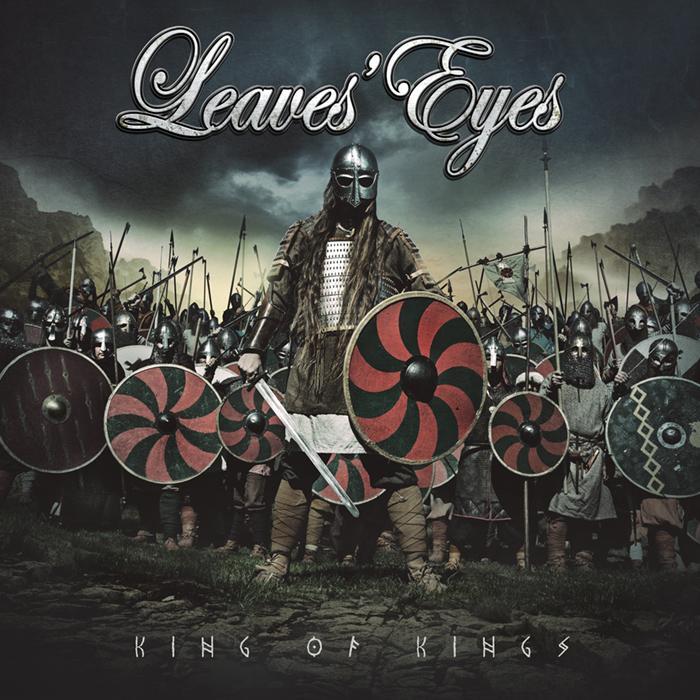
Leaves’ Eyes – King Of Kings:

I’ve always wanted to enjoy Leaves’ Eyes more than I actually do. I even saw them live once when they opened for Kamelot in 2007 (could be wrong about that year) and thought they were rather fun to see, Liv Kristine being an engaging frontwoman and Alexander Krull being the undeniable presence he always has been. Their studio albums are always produced well, sound great and their songwriting is largely good… a lame adjective sure but perhaps its the underlying issue, because they’ve never really done anything I can honestly call great. That trend continues with the history drenched King of Kings, a semi-concept album about the sagas of Harald Fairhair, Norway’s first king (which reminds me of Sabaton’s own Carolus Rex concept album, also about a king). While the subject matter does interest me, there’s nothing musically going on to distinguish it from the five other Leaves Eyes albums (especially the Celtic music soaked “Vengeance Venom”, why not go for something more Norwegian sounding as a cultural music touchstone to better serve the concept?). I cringe at having to criticize albums like this too, because I realize how increasingly rare it will be going forward to have new music released in this vein as the music industry continues to shrink and artists have to scale back their activities due to finances. Incidentally this is Leaves’ Eyes first album for AFM Records, having parted ways with Napalm, their label since the band’s inception. Seems counter intuitive for Napalm considering the roster they’ve been trying to cultivate, but maybe the band got tired of middling chart positions —- while on Napalm they had yet to really crack Germany (finally hitting number 15 on the Media Control charts there with this new album).

Its hard to deny the appeal of pop-driven songs like “The Waking Eye” and “King of Kings”, both advance songs (music video and lyric video respectively) for good reason. It struck me as I was listening to the latter along to its lyrics that one of the reasons I loved Sabaton’s aforementioned Carolus Rex so much was that its music really synced with the dramatic impact of the lyrics. Think about the title track and how its chorus (“I was chosen by heaven / Say my name when you pray / To the skies…”) came in with a sudden forcefulness, a slight increase in vocal delivery tempo backed up by a muscular layer of backing vocals. When you listen to “King of Kings”, ostensibly about the same kind of topic, the chorus seems relatively laissez-faire, entirely working against its lyrics: “Hail the forces / The first king of Norway / King of kings / Hail the fairest of Norsemen / The dragon / Victorious”. Far be it for me to assume anything on behalf of the songwriter, but I’d expect something with a little more gusto, a little more drive. Kristine sounds great however, so if you ignore the lyrics its all ice cream, but that disconnect that I’m perceiving here really detracts from any attempt at getting into the album’s concept. The Sabaton track was vivid and thrilling, its first person perspective really helped in pulling us into this lunatic’s worldview —- in contrast this Leaves’ Eyes song comes across a little like a cursory history lesson. Everywhere else things move along predictably, though there’s a fun, heavy guitar riff in “Edge of Steel” towards the end that perks up an otherwise unremarkable song. Also “Blazing Waters” seems to be an example of what these guys and gal should be trying more of, that is injecting a heck of a lot more aggression and uptempo riffing throughout. I’m sure a few people will read this review and disagree vehemently, and out of the admiration and respect I have for both Liv Kristine and Alexander Krull, I’m glad for that.


The Takeaway: Really did try with this one, giving it a few months to sink in by coming back to it every so often. It didn’t take, and I think its far inferior to Vinland Saga (still their best album to my ears). If you’ve enjoyed their previous albums in any substantial way you’ll be fine, otherwise consider Amberian Dawn for something a little different and unique in the way of female fronted metal (oh and Draconian as well!).


Gloryhammer – Space 1992: Rise of the Chaos Wizards:

I was told that I’d be remiss not to issue a review for the much ballyhooed Gloryhammer, a side project from Christopher Bowes of the abysmal Alestorm. I thought this was supposed to be a one-off thing, as they released a debut album in 2013 that I heard a few tracks from but I guess this is Bowes way of taking a break from half-hearted “pirate” metal and mediocre live shows. Kudos to him for that at least, because Gloryhammer is a far more intriguing project simply because he’s working with a better group of musicians, most noticeably vocalist Thomas Winkler, a relatively unknown guy from Switzerland who is actually pretty excellent, with incredible range and diversity in his singing styles. I know that most of the folks on the US Power Metal Connection Facebook group were all about this Space 1992 album when it first dropped all those months ago. I saw a few posts on the group’s wall about it possibly being the best album of 2015 and that really did force my hand in actually hunting down a promo and giving it a shot despite my original intentions to ignore it entirely. I don’t know what I was expecting, I knew what I was walking into —- how much could I enjoy an album of self-professed “satirical power metal” anyway? As it turns out, not much at all.

Before you type that comment, I’ll point out one crucial thing: I’m not against anyone having fun, which seems to be the intent of this project (if not to capitalize on some sort of limited potential for irony-seeking cross-over success ala Dragonforce in 2006). I’m someone who thinks Manowar’s “Kings of Metal” is a fun album, grin-inducing in its best moments and containing a few songs worthy of fist-pumping and headbanging at a party or your buddy’s garage at 2am (if not quite at a $100 per ticket Manowar gig). And I’ll admit that when listening through this album I couldn’t help but enjoy “Universe on Fire” for its simple yet incredibly effective hook and refrain. But if Gloryhammer somehow stands out to you as an example of power metal done right… I’ll have to politely disagree. The knock on power metal has always seemed to be just how seriously its artists take their work, often times placing inordinate amounts of importance on their own made up story lines, or in the case of Dragonforce (one of the genre’s most popular exports, like it or not) the ludicrousness of how nonsensical the lyrics could be. We as power metal fans have heard these same old jabs time and time again, but what we get that everyone else on the outside looking in can never seemingly understand is that power metal is one of the last bastions in music that is free from irony and self-awareness.

That’s what allows me to connect with honest, open nerve ending songwriting such as on Avantasia’s twin releases The Wicked Symphony / Angel of Babylon, or sink deep into the fantastical, imaginative world of Nightwish as a metaphor for childhood nostalgia and lost innocence —- because I know that I’m listening to music that was created without a shred of irony, self-awareness, and detached cool. I get nothing out of the smirking, self-satisfied, satirical nature of Gloryhammer —- and maybe you do —- but to me its an exercise in pointlessness. Bowes only artistic ambition seems to be ascending to the title of metal’s Weird Al Yankovic. Congratulations, you’ve succeeded, and in the process we know nothing about what you really have to say as a musician and artist. One could argue, why does anyone have to say anything as an artist? Weird Al Yankovic just wants to make people laugh —- and you’d be right, he’s a funny guy… so am I supposed to be laughing or smirking while listening to Gloryhammer? Should I knowingly nod and say aloud, “Hah, these guys are taking the piss out of power metal bands like those idiots in Rhapsody, with their so-called cinematic Hollywood metal and stories of kingdoms and dragons and silky shirted Italian guys”. You know what, at least Rhapsody did something original and did it with conviction. They care about the stories they set to music and no one can deny they’ve worked hard at turning them into musical reality, regardless of whether or not you enjoy them or think they’re silly (and to be clear, I’m not really a fan). With all due respect to the USPMC guys because I really do enjoy the group, but if this is your best album of the year, you’re not looking hard enough for meaningful metal.


The Takeaway: No.


Deafheaven – New Bermuda:

I was asked by Morroweird (@michrzesz) on Twitter what I thought about the newest Deafheaven album, released back in early October. I hadn’t listened to it by the time he’d asked me later that month and honestly didn’t plan on it, having felt like I said all I ever wanted to say about Deafheaven already. But I’m an easy sell if someone actually wants my opinion (as opposed to me just forcefully throwing it out there), so I finally got around to giving it a few spins. First off I’ll have to acknowledge just how wrong my prediction was, as Morroweird pointed out, that the band would retreat further away from the metal aspects of their sound. Much to my surprise they’ve done the exact opposite, and though I could only guess at their motivations, I’m not sure they did themselves any favors here. For all my criticism of Deafheaven as a media darling, I had to admit that their 2013 album Sunbather had a few really stellar moments where their mix of dreamy shoegaze meshed with their major key take on black metal. Songs like “Dreamhouse” and the instrumental “Irresistible” were worth all the hoopla, even if the second half of the album lost my interest a bit. I’m re-listening to Sunbather right now as I type this sentence… its a strong record, as annoying as that still is to admit. I could’ve listened to an album full of nothing but melodies like those found in “Irresistible” actually.

So this followup then is simultaneously disappointing on a musical level and equally as puzzling for the absurd amount of praise its getting. My best of 2015 features are coming up next —- I purposefully delayed them to avoid getting lost in the flurry of year end lists that pollute your browser come early to mid December —- and I’ve stopped myself from looking at ANY year end lists (even Angry Metal Guy’s so you know I’m serious) until mine are complete just so I can make it easy on myself by not getting distracted with albums that I missed. But I’ve taken a gander at the New Bermuda page on Wikipedia and did a Google search and see it lighting up a ton of the usual suspects year end lists (Pitchfork (big surprise Stosuy), SPIN (Artists of the Year apparently), Stereogum, Rolling Stone). I’m suspecting the band to be an easy inclusion for a lot of these editors compiling these lists based on their name alone (imagine what they had to contend with in 2014 with no new Deafheaven to heap limitless praise upon, must’ve been tough), because if they were listening to the same album I was, I don’t see how anyone could dub this the best of the year by a long shot. Deafheaven have upped their metallic attack, relying more on integrated riff sequences with the occasional breath of air in the form of jangly open chord strumming. Instead of the fuzzy, dreamy hues of the last album we’re treated to what is largely a bleak, dark grey affair, one that seems out to impress upon people the validity of their self-professed metal roots.

Alright, its certainly more black metal than anything they’ve done before. The opener “Brought to the Water” sounds like pretty standard second wave Norwegian black metal until it reaches a few bridge sequences in the middle where bent chords shift away from the frenetic percussion and riffage to attempt to create some sort of dichotomous tonal separation (ie they try to start something and fail). Its an uninteresting clunker of a song, aimless and drifting in its meandering, slower moments, the only cool part coming at 5:38 when Kerry McCoy lurches in on a power chord to start the metal section again. The needlessly ten minute long “Luna” is essentially more of the same, except that its softer parts are even more meandering, serving only to work as foils to the introduction of a heavy sequence (this time an escalating chord progression). George Clarke’s vocals are once again a tinny, repetitive, pointless exercise —- are there people out there that enjoy his style and simultaneously dislike Dani Filth? Because a criticism of one is a criticism of the other (and to be fair to Dani, he does have a range and deviates within it a lot… Clarke seems unable). There’s actually a pretty good riff midway through “Baby Blue” but it doesn’t really set anything up and is repeated without purpose (no vocals over the top, so I assume the riff is supposed to convey something musical?… except that its not). Frustrating. The best part of the album comes at the 5:25 mark of “Come Back”, where the song shifts from more proving they can do it black metal to a largely hushed, ambient passage with soft, wistful guitar playing (they sound more comfortable doing this to be honest). Is it that they’re trying too hard or just didn’t realize that they had stumbled onto an actual sound they could work with on their last album? This is one of the more confusing releases of the year. Sorry Morroweird, I gave it a shot but didn’t expect to dislike this as much as I did.


The Takeaway: Avoid like the plague and check out Sunbather for a few interesting moments here and there. I think Deafheaven miscalculated, and whatever it was that they’re trying to accomplish here is misguided… they should’ve played to their strengths and drifted away from metallic elements, only using them as a brush or tone when needed. It worked for Alcest apparently. Not surprised that it made year end lists of mainstream publications though…they do have demographics to think about.


The Fall Reviews MegaCluster Part I: Swallow the Sun, Draconian and More!

Throughout the year, I’ve made not-so-veiled references to 2015 being the year with possibly the most noteworthy metal releases that we’ve ever seen. The sheer volume has been overwhelming. Here’s what I overlooked: that it wasn’t just going to be releases that were noteworthy to me, but releases that were noteworthy to everyone else as well. This year publicists, record labels, and bands themselves sent out more promos and emails than I ever expected, and before you mistake The Metal Pigeon blog as a beacon for traffic (it is not I assure you), I realize that most of them came because of my duties as co-host of the MSRcast podcast. Simply put, when blogs or metal writers I follow on Twitter talked about an album they loved, it happened to be a band I wasn’t aware of or expecting, and it went on my to-do list and my promo folder. No exaggeration, because I’ve kept count, I had 126 promos of individual new releases land on my metaphorical desk! Okay, so some of them were hard rock (apparently writing favorably about certain power metal bands makes you a hot target for any AOR oriented label) and some of them were bands I’d never heard of, but most were from established, popular metal bands.

So after going through them all, I whittled them down to a range of 15 to 20ish that I might want to talk about, hence the first of a multiple part Fall edition reviews cluster. Some of these might be albums released a few months or longer ago, but better late than never I suppose. Because there’s so many albums to discuss I’ll be trying (key word) to keep these on the shorter side, but some might go longer (yeah okay, the first one went really long). Bear with me, its going to be a crazy few weeks ahead.


Swallow The Sun – Songs From The North I, II & III: I’m not as big a Swallow the Sun aficionado as my MSRcast cohost Cary, but when he described this new triple disc thematic album to me on a recent episode of the podcast, I was all in. I love stuff like this, of a band running and gunning on ambition, throwing caution to the wind and doing something a record label would shake its head at (although perhaps in this age of struggling record sales, more projects like this are exactly what the industry needs to renew an interest in physical sales). I call this a thematic album in regards to its division of stylistic approaches across its three individual discs, not in regards to their lyrics, which effectively share similar Swallow the Sun(ny!) sentiments across the board (they’re a doomy melo-death band from Finland, you know the score). It goes like this: the first disc is a Swallow the Sun album done in the band’s normal/regular stylistic vein; the second disc is a largely acoustic album; and the third disc is an original album of rather extreme funeral doom —- I should hasten to point out that all three discs consist of entirely original new material (no re-records on that acoustic album, bonus points in my book). Its an intriguing proposition on paper, sort of like Opeth’s Deliverance / Damnation experiment taken a step further (and released simultaneously). If I’m being honest, I was more excited to hear the acoustic album, and that’s what I wound up listening to first. That’s certainly not intended to be a slight against their normal approach… its just that I hadn’t to this point really loved any of their past records like I have albums by Insomnium, Ominium Gatherum, and Amorphis.

Whats caught me off guard is how much I honestly am enjoying the first “normal” disc here. The songwriting on Songs From the North I is sharp, focused, riveting and full of darkly beautiful, evocative melodicism with just enough of a tempo kick in certain elements of the instrumentation to keep everything interesting on a sonic level. I’m not a big doom guy in general, because with the traditional stuff the slow tempos of everything just weigh on my interest and attention levels, but Swallow the Sun have always been intriguing because they attempted to mix melo-death musicality with doom metal structures. That means even when the tempos are at their doom-iest, there’s something captivating going on with the guitar patterns —- such as on the gorgeous opener “With You Came The Whole Of The World’s Tears”, a nine minute epic built on those aforementioned lead guitar patterns that move in procession over elongated rhythm and bass guitars that are structured like jutting pieces of a glacier moving down a mountain. Vocalist Mikko Kotamaki’s ushers everything along with one of the bleakest, fiercest doom/death vocal hybrids you’ll ever hear, his extreme voice having the flexibility to bend from relatively high-pitched screams to deep, rich guttural passages where he still maintains control and enunciation in the delivery of the lyrics. Furthermore, he demonstrates a smooth, emotive, accented clean vocal on the opener and in moments of songs such as “10 Silver Bullets” and my personal favorites for vocal work, “Heartstrings Shattering” and “From Happiness To Dust”.

Those latter two aforementioned songs might just be some of the best examples of microcosms for why the first disc is as rich, diverse, and practically flawless as it is. On “Heartstrings Shattering”, the band builds around Kotamaki’s cleanly sung laments, guitars echoing off the end of his lyrics like further continuations of sentiments they couldn’t set to words. His extreme metal vocal passages are layered in between those clean vocal passages, some of them sung by guest female vocalist and past contributor to the band Aleah Stanbridge (who incidentally also serves as the photographer for the individual art on each of the albums packaging within —- the ones with the model wearing tree branch/antlers, photography that contributes massively to just how excellent the overall design/packaging of the album turned out). Her vocals are a delicate, nuanced counterpoint to all the aggression we’re getting, yet her tone seems just shy of being ethereal because its mixed with a touch of despair that helps keep her in tone with the music… something a lot of other bands tend to get wrong by simply going the beauty and the beast route when it doesn’t suit the music. Here Stanbridge is a part of the fabric of the song as a whole, her appearance is sudden but not jarring, and the music doesn’t shift in tempo or tone to accommodate her because it simply doesn’t need to. As for “From Happiness to Dust”, sweet maria, listen to how unconventional yet perfect that open chord sequenced chiming guitar motif is when introduced at the :33 second mark. Its employed relatively sparingly throughout the song’s near nine minutes, but every occurrence seems like a religious experience. Its on the list as a song of the year candidate.


The first disc is such a towering achievement, that it threatens to overshadow the inspired Songs From the North II, the band’s all acoustic work. Its the perfect autumn chill out disc, a collection of minor key hushed lullabyes built on hypnotic acoustic guitar patterns, draped with keyboard built string arrangements, with Kotamaki’s delicate clean vocals adrift over the the top. That description might seem like its all a little mechanical or by the numbers, but once again the band’s songwriting here wins the day. Certain songs fall further in the “acoustic chill out” spectrum than others, such as “Away”, a song that sleepily sways along, drawing you into its almost relaxing, serene ambient nature. Others are more built on James Taylor-esque simple hooks, as on “Pray For the Winds to Come”, where guitarists Juha Raivio and Markus Jamsen deliver a lilting guitar motif built on chiming chords that actually serves as a strong hook, Kotamaki slipping his vocals in between their strongest accents. He’s joined by another female vocalist on the titular “Songs From the North”, one Kaisa Vala, who sings the refrain in Finnish with a relatively bright and cheery vocal tone —- believe me it works, not only because it better suits the complexities of Finnish language consonants but because in this case her voice is a warming accent to relatively frosty verses (musically and lyrically speaking —- the song is essentially a love letter to the Finnish wilderness).

Its interesting to me that I went into this album looking forward to hearing the acoustic disc the most, in fact I listened to it first, and its a lovely listen don’t get me wrong… but I’ve been realizing that its the first “regular” disc that’s been getting most of the spins lately. Its the more dynamic of the two, its longer length pieces having more peaks and valleys, more differentiation with songwriting structures and composition whereas the acoustic album tends to run at a very specific and unchanging speed for the most part. Of course this is to say nothing of this set’s third, “extreme funeral doom” disc… look, I’ve given it more than a handful of spins, and maybe its just that this particular flavor of metal isn’t for me (historically, that’s the way its been for my relationship with funeral doom) but I’m just having a hard time getting into it. It has its moments, such as on “Empires of Loneliness”, where the tempos of both the rhythm guitars and percussion alternate with speedier attacks to contrast to the sludge-paced tempo and overly extreme doom vocals (which I suppose Kotamaki does well). There’s also some really intriguing guitar work on the back end of “Abandoned By The Light” in the form of melodic figures that act as defacto solos of a sort… I almost wish they were utilized on the first disc in some other form. But on other more unforgiving tracks, “Gathering of the Black Moths” and “7 Hours Late” to name a pair, I’m just unable to find anything redeeming in their funeral procession-like tempos and overly droning vocalizations that they apparently require, but someone will —- its obvious that they are well done.

I applaud Swallow the Sun’s ambition in their approach to this project, its the kind of the thing that makes you excited to be a metal fan —- seriously, what other genre will you get something like this? In their attempt they’ve not only created some truly remarkable music, but renewed my interest in their work. Its the old story repeated once more: I find myself loving something new from an established band whom I had largely been ambivalent to, and its going to get me looking to revisit their back catalog to see if I’m now receptive to something amazing that I’ve missed. I never internalize that as self-chastening, instead I embrace it, it means there’s another band out there doing incredible stuff that I can proudly call myself a fan of.

The Takeaway: The only stain here is that I’m left thinking about how that problematic third disc might tarnish some of the luster on those first two —- this would be a feisty candidate for the album of the year list but I can’t just ignore how I feel about the funeral doom stuff, I mean, they made it part of the album concept! I guess we’ll see how it shakes out a few weeks from now.


Children of Bodom – I Worship Chaos: I can’t remember when I started to tune out Children of Bodom… it was certainly after 2006’s abominable Are You Dead Yet?, where the band’s unfortunate turn towards incorporating industrial influences and veering away from their Finnish power metal influences left us with an album as sterile, formless, and dry as you can imagine. I would half-heartedly pay attention to the releases that followed, but sometime after either 2008’s Blooddrunk or 2011’s Relentless Reckless Forever I decidedly tuned out. I can’t remember listening to 2013’s Halo of Blood (I had to do a search on my own site to see if I had even written about it, I had not) and recently I asked a friend who paid more attention whether or not it was any good —- Bodom were his gateway into metal band and I trusted his opinion, but he hemmed and hawed a bit and that told me all I needed to know. When I got this promo, I thought about passing on it for a second but then I took a look at the cover art —- hmm… pretty nice, actually reminds me a bit of classic melo-death covers albeit with the traditional Bodom mascot. It also suddenly reminded me of one of my favorite virtues of being a metal fan, that of checking out or even buying an album simply because the cover art was compelling (see Myrkyr below), and so based on that alone, I decided to give I Worship Chaos a shot.

And I’m glad I did, because I never really thought that I would find myself enjoying anything by this band again apart from going back and spinning their first four albums again. Seeing as how I’m limited in my context as to how Halo of Blood might have helped set up a return to form that I’m hearing here, I can only guess that the band’s return to embracing their power metal influences is a new development. Its only guesswork here whether or not any of that has something to do with the departure of Roopa Latvala, as the band recorded this album as a four piece, Alexi Laiho handling all the guitar parts himself. Being that he’s always been the sole songwriter, perhaps the burden of shouldering both dual rhythm and lead parts caused Laiho to instinctively return to his “safe” roots of Malmsteen/Tolkki influenced guitar work with all their melodic bends and tails and rely less on the thrashier approach he’d been using for many of their previous questionable albums. Songs like “I Hurt”, “My Bodom (I am The Only One)”, and “Morrigan” are more instantly memorable than I’ve heard since the days of “Needled 24/7” (well, and all of the Hatecrew Deathroll album really), as Janne Wirman’s trademark keyboards are given space up front for once and Laiho seems all to happy to interplay with them, bouncing his riffs off of them with precision rather than just laying down messy riffs over the top. Its a trio of songs that launch the album on an adrenaline-pumping note, one of their best opening salvos in ages.

Even when things slow down, the songwriting seems sharp enough now to keep things compelling, as on “Prayer For The Afflicted”, where Laiho affixes addictive twists on to his monstrous riffs, so that each iteration throughout the song sounds a little different. And perhaps my favorite is the relatively glacial (for Bodom standards) “All For Nothing”, a dreamily-atmospheric tune that is built on Warmen’s tinkling keyboards and rather Finnish-y soundscapes. I love the mid-song bridge that turns into an extraordinarily epic guitar/keyboard solo at the 3:38 mark, because while I can’t quite put my finger on why, it reminds me of something off Hatebreeder (could it be the actual keyboard tone?). As a song, its a microcosm for why I think this album works so well, that it seems Laiho has returned to a songwriting style that has edged closer to complexity in riffs, arrangements, and overall structure —- I simply think he writes better when he allows himself the indulgence of being a child of the shredder school, of allowing his guitar figures to splurge on extra notes, like he’s making it rain (so to speak). The hope is that he realizes that he’s stumbled back into something he should hold onto for dear life.

The Takeaway: Is I Worship Chaos on the same level as classics such as their first four albums? Not quite, but its as close as they’ve been in well over a decade, and that’s worth celebrating and acknowledging. For the future, I’ll be paying attention again.


Myrkur – M: Ah yes, finally Myrkur. An album that drummed up no small amount of controversy upon its early fall release a few months ago mostly due to the identity of the person behind the band. It was known that Myrkur was a one woman band, but when that woman was revealed to be Danish model Amalie Bruun a lot of the usual internet nonsense began to occur. I suspected that a lot of these debates about Bruun’s validity as a black metal musician (she was getting some flack in metal circles for being one half of indie-pop band Ex-Cops) were thinly veiled jabs at her gender. That she was a model flirting with mainstream circles seemed to only add fuel to the fire —- never mind that this debut album was produced by Ulver’s own Kristoffer Rygg aka Garm and featured some rather credible black metal musicians in the fold such as Mayhem’s Teloch on guitar and Oyvind of Nidingr on drums. Never mind that Bruun has been a musician for as long as she’s been a model, having began her recording career in 2006. Just under twenty years after Nightwish came on the scene, why is there still the merest hint of sexism in metal? Hmm… I guess I should amend that, seeing as how despite the prevalence of tight corsets and sometimes myopic fandom, power metal audiences have long since accepted women in metal as equals (last year’s Triosphere anyone?), it seems that extreme metal audiences are the ones with the real problem. Funny that for all of black metal’s malleability, for its adoption by the hip indie set as yet another musical subgenre they can lay claim to and enjoy ironically or post-ironically (or whatever the hell they’re doing now), its the subgenre with the single largest gender gap in music… and I mean all of music.

Anyway, gender politics aside, I’ve been revisiting this album every now and then since I first heard it way back in September when I originally intended to publish a review for it. I couldn’t quite decide if I liked it enough based on its own merits or I was just reacting positively towards it due to feeling annoyed by the hate Bruun was receiving (and before you think it, its certainly not my intention to paint myself as some social justice warrior… ugh, the very idea). It was also one of those rare impulse purchases I made at Houston’s supposedly best record store (Cactus Music… hardly any metal to speak of, tons of indie rock) just based on its gorgeous cover art and my memory springing to life at the sight of the band name on the record label sticker on the front. I hardly ever buy an album these days without hearing something from it first, but I remembered liking the Myrkur EP from last year and the very notion of buying blind took me back to those old heady days of record store pillaging, before high speed internet, iTunes and Spotify. I was enthralled on the car ride back by what I was hearing from the very first song “Skøgen skulle dø”, Bruun’s ethereal, delicate vocals introducing a crush of sorrowful violins and accompanying strings, all drenched in melancholic splendor. The guitars were slightly fuzzy, muted just enough to be subservient to Bruun’s vocals and some tremolo picked leads, all mixed to sound like they were coming some distance away from a foggy moor. It was lush sounding, and actually evoked the dreamlike feeling I got from staring at the cover art. I drove around a little extra just to finish the album in my car.

So back to the present day, and my finally coming to a conclusion that I’ve been trying to avoid all this time: I enjoy Myrkur more for the clean vocal led, folk infused “songs” (quoted because at times they’re quasi-instrumentals) rather than for its black metal components. I find myself wishing that pieces such as “Vølvens spådom” were longer (1:38), because her usage of intertwined vocal layering here is imaginative and almost reverent in the atmosphere it conjures up, and Garm should get a ton of credit for that in how he’s approached the mixing. In fact, he’s a touchstone for all the aspects of Myrkur with his first three Ulver albums, seeing as how the mix of black metal and acoustic/atmospheric passages remind me of Bergtatt. I played the album for a black metal loving friend of mine, sure he would scoff at it, but he surprised me and told me he too actually enjoyed the clean, folky passages more, that he wanted an album full of those (Myrkur’s very own Kveldssanger I suppose). Its not that the black metal stuff is bad at all, its not, and Bruun is a capable second-wave styled black metal grim screamer, its just that I can’t help but be unmoved by those tracks, there’s a feeling that I’ve already heard it all before. This would make sense to me only if I didn’t find myself loving Blut Aus Nord’s ode to second wave black metal with 2014’s Memoria Vetusta III (number four on last year’s best albums list). I guess I can put it this way, Bruun and her band definitely hit all the right notes on the black metal side of things, but maybe that’s just it… it sounds like black metal just for the sake of being black metal, as if there’s no real underlying reason for it to sound that way at all.

The Takeaway: I still enjoy listening to the entirety of M in general, but I think Bruun would be better served by forging more of a heavier identity that she can truly call her own. Looking forward to what she does next with the project.


Magnus Karlsson’s Free Fall – Kingdom of Rock: Power metal’s favorite hired gun is at it again, this time returning with another chapter of his own eponymous project (the first self-titled Magnus Karlsson’s Free Fall album was released in 2013). Karlsson has been on somewhat of a hot streak lately, with his songwriting work on the recent Kiske/Somerville album and his role as a songwriting partner in Primal Fear alongside Mat Sinner and Ralph Scheepers, just to name a few of his wide ranging list of projects. He is actually directly employed by Frontiers Records to work as a songwriter for many of their collaboration albums, side projects and what have you, a guitarist who is able to write for a variety of voices —- that kind of versatility is something to be prized in a songwriter, despite your views on any metal related project not being entirely 100% home spun by the band. After listening to no small handful of Karlsson penned albums however, its gotten easier to pinpoint where his comfort zone lies, that is in AOR styled hard rock with power metal flourishes (rarely does he write from a purely power metal base). So what separates Magnus Karlsson’s Freefall from the many other non-Primal Fear projects he’s worked on? Not much really —- he brings on a variety of vocalists on board, some of them from said projects he’s worked on (Jorn, Michael Kiske) and a bunch from the hard rock/AOR world (Tony Harnell of TNT/Skid Row fame, David Readman of Pink Cream 69, Rick Altzi of At Vance / Masterplan, Harry Hess from Harem Scarem) and gives them songs that individually suit their vocals.

Karlsson is upfront about that facet of his relationship with guest vocalists, that he bends his songwriting to their style, which isn’t always the case in multi-vocalist / one songwriter projects. For example with Tony Martin (yep that one), he delivered a song that touches on Martin’s work with Sabbath, the main riff even having that Iommi-esque extension during the chorus (Martin co-wrote on this one, the only song that ended up as a writing collaboration). And there’s a Rainbow-esque gem with Joe Lynn Turner called “No Control” that is the most satisfying performance that I’ve heard from him since “Stone Cold”. A friend of mine and I were listening to that one when in my car the other day and we briefly discussed how the lyrics seemed relevant to the early 80s, yet slightly questionable in our modern era, judge for yourself “…you better stay away / ‘Cause I’ve got no control…”. This is nitpicking, and maybe I’m just being a cheeky bastard, but what exactly is the narrator insinuating here? Where does this lack of control factor in? In the early 80s wouldn’t this clearly be a reference to his bad-boy demeanor, that he can’t be tied down to one woman and he’s gonna hurt this poor girl he’s addressing? I’d like to think so, and perhaps Karlsson decided to do a little time travel songwriting with Turner on board, but in 2015 the lyric comes off a little criminal-y.

The two best vocal performances however are from an entirely unknown vocalist and one with lead vocals from Karlsson himself. On the latter, “Walk This Road Alone”, Karlsson delivers a surprisingly convincing performance as a vocalist, his style equal parts Joey Tempest and Tony Harnell, and he injects enough passion into his delivery to make you consider that perhaps these particular lyrics aren’t entirely built from cliches. My favorite is the album’s only female fronted song, “The Right Moment”, with vocals courtesy of newcomer Rebecca De La Motte of whom absolutely nothing is known. She’s got a real Ann Wilson thing going on with her voice, maybe not as rough-hewn, but very similar in essence —- and Karlsson gives her an explosive song with a chorus that seems straight out of the kind of 80s hard edged pop-rock that makes us adore Pat Benatar and Roxette (don’t deny it). I’d take an album of Karlsson writing new material entirely for De La Motte’s vocals, she’s a legitimate talent and the metal world can always use another rock oriented female vocalist to inject some diversity into its ranks. I hope she gets some traction with this, if only to guest on other people’s records. Here’s hoping someone sends her song over to Tobias Sammet sometime in the future.

The Takeaway: A solid sophomore effort from Karlsson with what is essentially his solo project, the least Frontiers Records could do for the guy considering all the albums he’s written for the label. If you really enjoy this kind of thing then consider this one a safe bet, but if you’re limited to merely adding some fun, ultra catchy singles to a road mix, go on iTunes and download “No Control” and “The Right Moment” —- the most essential cuts here.


Draconian – Sovran: I believe it was a regular reader at this blog, Robert if I’m not mistaken, who pushed me to check out Draconian a few years ago or so, a band whose name I had seen in passing here and there and never bothered to investigate (forehead slap here). Once I did, I found a band that I liked on a surface level —- they were intriguing and often brilliant on their more recent albums like A Rose For the Apocalypse and Turning Season Within, their earlier albums less so (they had their moments, but at times the overtly doom laden approach wore on my patience). Due to the Great Album Barrage of 2015 it escaped my notice that the band was even releasing a new album this year. Once again it was my MSRcast cohost Cary who started playing the just received promo for this sixth Draconian album one night while we were sorting out our show notes for that episode. He hadn’t heard it yet either and as it played in the background we canned our inane chatter more and more and simply listened to a couple songs. I think at some point we both looked up at each other and nodded the “yeah… this is awesome” nod.

We’ve since rambled about it on the show in effusive praise and embarrassing gushing, but in Sovran Draconian have created the first utterly compelling, hypnotic, and inspired masterpiece of their career. Its always surprising when it happens too, certainly the band can’t predict it, and its obviously something that can be debated but I’ll have a hard time believing someone who attempts to argue that this isn’t the band’s greatest achievement. It leans a bit further away from their doom roots and more towards an overall gothic atmosphere but it feels as if they’ve actually gotten heavier as a result, the band beefing up their rhythm section’s bottom end to deliver a more metallic bed of sound over which longtime growler Anders Jacobsson and new female vocalist Heike Langhans trade off the role of lead singer. And its Langhans who steals the show on this album —- her vocals a bit more on the sleekly ethereal side compared to departed singer Lisa Johansson —- as most of these songs showcase her grabbing the majority of the vocal parts. She’s simultaneously capable of channeling a distant, frozen ice queen and a heart-on-sleeve, melancholy touched maiden (I completely deserve the nun’s ruler on my hand for going for such obvious imagery for female vocalists, but sometimes it really works). This dichotomy is illustrated rather well on “Stellar Tombs” and “Rivers Between Us”; the former seeing Langhans deliver proclamations during the verses in a remote, detached tone, while pouring every ounce of emotion into the latter in a brilliantly framed duet with clean male vocalist Daniel Anghede (Crippled Black Phoenix). Her voice was meant for this band.

As for everyone else, Draconian always manages to balance the relationship between vocals and music quite nicely, primary songwriters (and band founders) Jacobsson and lead guitarist Johan Ericson keeping it at about a 70/30 ratio. So you’ll get songs where Langhan’s vocal melody is carrying the load, but there are also times when the primary melody is guitar based and everyone works around it. Its a trademark feature of a really talented band that knows the limits of its sound and style… you’ll notice lesser female fronted bands in same genre (relatively speaking) almost always relying on their vocalist to solely carry the melody, a tendency that illustrates how paper thin their songwriting strength is (Lacuna Coil anyone?). It sounds to me as if the rhythm section parts were written to be more interlocking on the uptempo, heavier moments —- take the final 2-3 minutes of “Dishearten”, where they launch into an almost latter day Maiden giddy up and gallop with some Brave New World era lead figures. Speaking of lead guitar, Ericson might have delivered one of the best performances of the year on the album as a whole, his minor keyed laden approach being willfully bent in all manner of ways, he’s as much as joy to listen to as Langhan’s vocals. And kudos to Jacobsson if he is indeed still the primary lyricist here, because once again he demonstrates his mastery of employing simple, evocative imagery into smartly structured phrasing, all while keeping an eye towards creating a mini-narrative in every song. He’s an underrated lyricist, and for that matter Draconian is an underrated band, though not for long if everyone else is paying attention now.

The Takeaway: Without pretense, one of the best albums of the year —- if you haven’t heard Sovran yet make sure you do so before the year is out, you don’t want this to end up on your list of things you missed in 2015.


Queensrÿche’s Condition Hüman: A Return to Form?

Not counting the abominable Geoff Tate fronted “Queensrÿche” album Frequency Unknown (because surely, who counts it?), Condition Hüman is the band’s thirteenth album of original material, and most importantly, their second album without the thankfully departed Tate. I was encouraged by their first outing without him at the helm, where they demonstrated that they still had a rather good songwriting core to build upon and a talented vocalist to pick up where they left off as a band unit (take your pick what album or year that was, mine is 1994’s Promised Land). By all rights, album number two was where the newly renewed Queensrÿche should take shape and deliver something truly remarkable. The verdict? I’m having a hard time coming to terms with what that might be… there are instances when I listen to this album all the way through and am impressed and mentally locked into these songs, and other times when I’ll find myself disengaging. I first thought that it was just me, that the ADD inducing amount of music I’ve had to listen to has effectively destroyed my ability to concentrate (might be some truth to that), but I won’t really know for sure until I dissect this thing.

Let’s make it easy on ourselves and get the good stuff out of the way first: I actually think “Arrow of Time” and “Guardian” might be the best one-two opening punch combo that the band has delivered on an album since “Best I Can”/”The Thin Line” off Empire (hey I love “Best I Can”, the “backstreet hoops star he’s got it good” lyric is perfectly accented). When I first heard “Arrow of Time” all those months ago when it was issued as an early single, I felt it sounded good but it just didn’t resonate with me… I suspect I wanted to hear something a little more “epic” for lack of a better term. Fast forward to playing it context with the rest of the album, and it makes perfect sense, that alarm blaring opening guitar figure, the accelerating verse sections propelled by some unabashedly furious percussion from Scott Rockenfield —- its briefly slowed down mid-section bridge displaying a hint of Porcupine Tree-esque shifting dynamics with an undulating rhythm section and airily adrift notes from guitarist Michael Wilton. The better single however might be “Guardian”, with a staggered call and response vocal in its chorus that is ear-wormy and serves the “revolution calling” lyrical throwback to that one album we’ve all collectively fawned over I’m sure. The third song “Hellfire” is a winner too, with its moody acoustic intro, stormy surges of angry guitar playing point-counterpoint to a simply amazing vocal by Todd La Torre (who is on fine form throughout the album).


He displays that talent on what might be the album’s best song in “Bulletproof”, the spiritual cousin to “In This Light” from their 2013 self-titled album, a song I loved but criticized for its short length. Both are shimmering power ballads not built upon delicate acoustic pluckings ala “Silent Lucidity” or “Bridge” (to cite two Chris DeGarmo penned ballady classics), but on full on, plugged in wailing guitar screams. I actually get an Amaranthe-vibe from “Bulletproof”, likely due to something in the way the guitars seem to pulse in and out behind La Torre’s soaring vocals during the chorus (the vocal layering might also have something to do with it). Its a song that largely succeeds in being compelling listening simply because it does sound so insistent. That’s the keyword, insistent, a trait I hear in those relatively reigned in verse sections where Rockenfield slices the spacey vocal and guitar dreamscape with assured single hits and tension escalating patterns on the hi-hat (of which he’s a master of). I realize this concept of something sounding “insistent” is ambiguous in definition, but I hear it in all the songs I enjoy on this album, its the sound of the band’s fundamental DNA, the audible traits that made their first six albums so compelling regardless of their particular stylistic differences. Its present on the Eddie Jackson solo penned (kinda surprising that) “Eye9”, with its rather complex rhythmic structures shifting and sliding all over the place, giving the song an unsettling feeling that brilliantly contrasted with a gorgeously vocal layered chorus.

So now there’s the problem children: First up is “Just Us”, a song that I actually like with its pastoral open chord sequences reminding me of something that could’ve fit in on Hear In the Now Frontier (an album maligned by many, quietly enjoyed by myself simply on the sheer strength of DeGarmo’s songwriting ability alone… that being said it lacked the “insistent” urgency that we talked about earlier). It has a gorgeous chorus, there’s simply no other word to describe it, with Jackson’s layered backing vocals bringing me back to the days when he and DeGarmo were one of the best harmony backing vocal teams in all of rock and metal. The song even sounds DeGarmo-ian, and perhaps that will only make sense to Queensryche fans, and maybe that was Wilton’s way of paying tribute to his former bandmate (he cowrote the song with La Torre, whose lyrics even read a little close to the theme of “Silent Lucidity”… these are just casual observations though, I’m not suggesting they actually wrote a DeGarmo tribute). The problem is that its impact is diminished in a full album play through by being sandwiched between two uneventful, at times even boring tracks in “Hourglass” and “All There Was”, songs that not only come across as directionless, but seem unfinished, half-baked in their actual songwriting. Didn’t they whittle down this tracklisting from a larger pool of twenty something songs? I don’t understand their inclusion, and while the epic closing title track and its fifty-six second lead in “The Aftermath” aim to hit upon a touchstone of the band’s past (that is, long form pieces with thoughtful tones ala “Anybody Listening” or “Promised Land”), they both lack actual memorable melodic motifs that you’re supposed to utilize to keep a listener’s attention. You need melodies here guys, not hodgepodges of metallic riffs —- I couldn’t find a vocal melody worth remembering.


Then there’s something else entirely —- what is up with the awful artwork? I’m asking seriously. This isn’t a band that’s been known for consistently choosing quality artwork throughout their career but this is an eyesore. I couldn’t find many other examples of the listed artist Joe Helm’s work, and I don’t mean to be spiteful or disparaging of his talent in general, but this specific piece… wow, why is the font so bland (and for that matter, so prominently sized?). It doesn’t get much better inside the booklet, where the decision to print the lyrics in an illegible font with dark color against a black background somehow passed inspection. I’m not a graphic artist, but even I know dark text against a dark background is a serious no-no. And why the “edgy” looking font? This is a metal band made up of mostly older guys, making music for an equally older audience who likely will need to don their reading glasses and Ibuprofen to make it through any attempt at reading the booklet. Are we trying to impress the Hot Topic set? Even more questionable is the choice of font for the credits which looks like the kind of thing you’d expect a local metal band with zero budget to pull off on their home printer for their 3$ demo they end up passing out for free at local shows. Why does all this tick me off so much? Because it actually can distract from the music itself. Because I went out and paid for a physical copy of this thing! I could’ve easily just bought the download and spared my eyes and fuel tank. Because in an era of rapidly declining physical music sales, you need to pay attention to every detail of the physical product to make it worth anyone’s money… there are so many bands in prog and metal trying harder at this (see everything Steven Wilson puts his name to), so why aren’t Queensrÿche?

So I decided to leave this until last, because I’ve stumbled upon the reason why I’m sometimes disengaged from this album. Its the production. The producer was the eyebrow raising choice of Chris “Zeuss” Harris, most known for his work with Shadows Fall and a ton of metalcore bands. There was criticism of the previous self-titled album having production issues as well, being pumped up too loud and resulting in DRM issues, but it was mixed by Jimbo Barton, a guy who had experience in understanding how the band was supposed to sound —- and he succeeded in that regard, it managed to recapture that classic aural essence. I’ve never been a fan of Zeuss’ productions, he made a band like Shadows Fall sound paper thin on album, choosing to favor a clinical approach for a band that should’ve sounded gritty and a little dirty. His style was apparently great for metalcore bands, who wanted their accessible melodies and clean choruses to pop (not a criticism, just observation). But when he brings that reliance on flattening rhythm guitars, muted bass (damn near heresy considering Jackson’s abilities), and worst of all the application of samples on Rockenfield’s drum sound, he squanders everything that is most sacred about the fundamental sound of the band. These songs are betrayed by this hollow production, and the band is robbed of what could arguably be deemed a near great album. Its tempered to merely good, and that’s not good enough at this point.

Amorphis Make A Run At Immortality

I’d love to one day read an insider’s perspective on why and how Scandinavian metal bands simply seem to flourish longer and better than their non-Scandinavian counterparts. I’m sure the answer lies in a nexus somewhere between the role of music education in their primary schools, the ability to provide a collegiate/university level education for free, and the support of the government for arts programs that help subsidize musicians. Now of course, that’s all possible because of the relatively low population of those countries in question, but still, there’s something else elusive here that I’m unable to articulate. Is it simply those countries’ beautiful natural landscapes that provide a sustaining current of motivation and inspiration? I think all of those aspects could help to explain why Scandinavian musicians flourish longer, but what makes them flourish better is a mystery that there might not be a tangible explanation for.

See here we have Finland’s Amorphis, a band that shot out of the gate releasing a bonafide masterpiece in 1994’s Tales from the Thousand Lakes, just their second album. It was as influential as a death metal album could be, helping to forge the melodic death metal genre and even pioneering the usage of folk melody in metal. Then there was 2009’s Skyforger, their almost-a-masterpiece of the Tomi Joutsen era that I personally felt was a few more strong melodies and hooks away from really nailing it. Still, bands rarely deliver two truly excellent albums, let alone those separated by more than a decade, and it was proof that the band’s talent was enduring. But the albums before, in between, and after those have always been a little hit and miss. Take 2013’s Circle, a fairly good album, but one that eluded my year end best of list —- its flawless gem of a single however, one “Hopeless Days”, was one of the most addictive, sublime songs of that year. You could go back through all their albums and find a song or two that really stands out, those diamonds in the rough as it were. I suspect this is a band whose minimum talent level in songwriting and performing is pretty much a bulwark against their releasing something that’s awful from start to finish.


So its simultaneously surprising and not all that surprising that their twelfth and latest album, Under the Red Cloud, is their second truly flawless masterwork —- an album so beautiful, so full of rich melodies and thoughtful harmonies that flow under and over poetic, elegiac lyrics —- that it is threatening as a serious contender for the top spot on my album of the year list. What rational explanation is there for a band to release arguably its flat out best album more than twenty years into its career? Let’s see, its football season, baseball postseason, and the start of the NBA, so we’ll use a sports metaphor: Its extremely difficult to win a championship, for any team, no matter how good they usually are. Just ask the New England Patriots, who won three Super Bowls from 2001-2004, only to have to wait until this past February to earn their fourth title. The only logical thing a team can do is to build what they refer to as a “post-season contender”, that is a team that does well enough in the regular season to ensure a playoff berth. Again I’ll refer to the Patriots, who since installing the seemingly infallible Tom Brady at quarterback on 9/23/01 have only missed out on reaching the playoffs two seasons out of the past fourteen. That’s insane. Its also a rather unusually dead-on analogy for the success of this album.

There are arguably no bad Amorphis albums. This isn’t a band that does anything less than solid, good, or above average. They could be seen as the New England Patriots of Finnish metal (then again, there are a lot of consistently excellent Finnish metal bands out there, so we might need to utilize more team names if this analogy really gets going), a band that consistently delivers new albums that are worth our time and attention, even if they don’t always go the distance. Just like the Patriots and their amazing run of playoff berths in the past fourteen years, Amorphis have been a prolific entity as well, twelve albums in twenty odd years is a respectable clip for a modest metal band. They’ve also been through quite a few lineup changes throughout the years, just like the Patriots, who have only retained Tom Brady and head coach Bill Belichick all throughout their 2001-present day reign of terror. Fans of the Patriots know that as long as their team is good enough to earn a playoff berth, they might be able to “get hot” during the playoffs and “make a run” at getting to the Superbowl and winning the championship (for you non NFL followers, they made it back to the Super Bowl in 2007 and 2011, losing both times to the New York Giants). Similarly, Amorphis’ consistent stabs at unleashing another masterpiece to their name have yielded a stunning number of almost-there releases, all until this one —- this time, the band didn’t bow out of the playoffs, they got hot and made a run towards immortality. Consider Under the Red Cloud their Vince Lombardi trophy.


Where to begin… jeez, alright let’s just start at the very beginning. I’m in love with the charming, almost playful skip of the intro piano lines that like a conductor usher in warm bass notes, moody guitar figures, soft and hard cymbal crashes, and finally a skeleton of the melodic motif that anchors the album’s title track (also one of the first instances I can remember that a title track starts off an album). Its worth noting straight away just how much of a yin/yang thing guitarist Esa Holopainen and keyboardist Santeri Kallio have going as the band’s primary songwriters. They’ve been essentially splitting the songwriting duties since 2006’s Eclipse (perhaps before then too, but they only started noting individual member contributions on that album onwards), and they’ve collectively done a fine job, albeit with my tastes traditionally leaning more towards Holopainen’s mainline to that Finnish melancholy that I love so much. On the new album however, their differences in songwriting palettes work in perfect synergy, Kallio’s songs are uptempo, expansive, bright even, with accessible thru lines very apparently structured around keyboard forged melodies. Meanwhile, Holopainen’s songs are a little darker, the riffs more melo-death tight, with barreling forward rhythmic assaults that at certain moments blur the lines between melo-death and black metal. Their combined efforts have never before produced such a multifaceted, diverse body of work —- every song here has its own personality, its purpose and place.

Kallio’s opening title track is certainly gorgeous, but its his gem “Bad Blood” where he really hits a new apex in his songwriting. First there’s the inventiveness of the primary melody at work, itself a constantly shifting, cascading succession of notes that acts more as a motif (that word again!) rather than a hook line. It pops up for example in the intro to the song, then as a post-chorus coda, only to wind up as an understated guitar solo, finally to wind its way out as the song’s outro… a lot to ask of a simple, snake-like melody but it holds up to the all the duress. Underneath rhythm guitars slam down slabs of heaviness in punishing riffs to complement Joutsen’s intensely gritty doom-death vocals during the verses. Of course Joutsen being the gifted clean vocalist that he is treats us to one of his trademarked soaring deliveries during the chorus, an addictive ear-wormy vocal hook that has not left my mind since first hearing it. This might be one of the most compulsively headbanging songs of 2015, one that sees Amorphis reflecting the influence of last year’s Thousand Lakes 20th anniversary tour —- they simply haven’t sounded this brutal since the mid-nineties. Its also nice that Kallio’s more stridently melodic songs can still deliver the wood, that he and Holopainen haven’t simply settled into “I’ll write the poppier stuff and you write the more metal stuff” type of dynamic. A song like “Bad Blood” is proof that you can have crushing heaviness and pop accessibility merge together, it just takes skillful songwriting.


I’m not suggesting however that Holopainen himself isn’t capable of writing something anthemic or catchy (this is the guy who wrote “House of Sleep” and “Hopeless Days” after all), as he proves on the album’s second single “Sacrifice”. As a brief aside from discussing the album, if you haven’t seen the music video for this one, scroll all the way down this review and check it out immediately (placed on this page so you won’t go to YouTube and get baited by the suggested videos bar to the right, particularly the Halloween Whopper review, that’s a detour from which you’ll never come back). Its a rare example of a metal band getting a music video right, with inspired cinematography, an interesting concept divorced from the band’s performance footage —- which itself is tastefully done and not reliant on cheap gimmicks such as flamboyant pyrotechnics and assorted light show ephemera (all of which sadly enough, marred their video for “Death of A King”). Maybe having easy access to the Finnish countryside helps considerably too. As for the song itself, “Sacrifice” is built upon jets of Sentenced-ish major-minor key alternations, with a cinematic chorus that is built upon Joustsen’s strident vocal melody. Its classic Joutsen era Amorphis, and a vivid example of why their decision to continue outsourcing their lyrics to Finnish poet/artist Pekka Kainulainen is a smart one. Consider the chorus lyric: “Come when the sun has gone away / When the warmth has gone / Take what I will give you / Accept my sacrifice”. Credit to Joutsen for keeping his translation of Kainulainen as simple and elegant as possible.

Yes, that’s right, Kainulainen writes his lyrics for Amorphis in Finnish, as poems built around a concept the band has discussed with him or perhaps something of his own inspiration. Joutsen then takes the final finished versions and has to translate them into English, essentially deconstructing a poem and then reassembling it, all while working out vocal melodies at the same time. Joutsen introduced Kainulainen to the rest of the band for 2007’s Silent Waters, where he wrote the lyrics based upon a character from the Kalevala, and continued the Kalevala based theme through Skyforger and The Beginning of Times. For the Circle album, he offered up lyrics based on an original story concerning an outsider beset by doom from birth who relies on his internal spiritual strength to persevere and survive. This shift away from the Kalevala continues on Under the Red Cloud, this time without a concept at all, making this a rare collection of standalone songs —- the only loose connection being the album title, that all these songs reflect some ominous portent of the troubled state of the world today, of living under a red cloud. Regardless of the thematic nature of the lyrics or lack thereof, Kainulainen’s lyrics are full of concrete imagery, often placing the narrator or unnamed character in some kind of physical place, rarely relying on purely metaphysical ideas. He often references nature in its most clear and absolute terms by invoking natural objects or phenomena. Its a facet of his lyricism that informs everything, a sense of a sturdy hand, that you’re listening to words that could be recited by someone sitting around a flickering campfire telling you long remembered stories.


Its stunning then to realize that Amorphis write their music first, long before the completion of Kainulainen’s lyrics —- this means that when Joutsen receives them, he has to translate them to English all while keeping an ear open for vocal melody development. On one hand I suppose it could be relatively easier than it sounds, given that he has fleshed out songs and melodies to work with already, but what if the translation isn’t allowing for a string of consonants that will work with the established rhythm or piano or guitar melody? That would mean both he and the band go back to the drawing board, reconfigure parts of the music in order to make everything fit and sound as smooth and intuitive as we hear on the finished album. The thing is, if you’re using translations of lyrics, there’s only so far you can alter words or phrases before the ideas that Kainulainen posited in Finnish get lost in translation. I imagine Joutsen has some leeway but still has to ensure that the original spirit and intent is still intact, that when we hear such a visceral lyric such as “From a distance the crack of thunder / And the red cloud swallowed the sky”, it is as close to what the author intended as possible. Realizing the difficulty of that makes me appreciate all the scattered isolated moments where the music seems to shift in anticipation of a narrative or tonal shift in the lyrics, such as at the 2:16 mark on “The Four Wise Ones”, where a furious battery of melo-death riffs and often near black metal vocals from Joutsen give pause for breathy, soothing female vocals by Aleah Stanbridge. That’s her again on “White Night”, where her co-lead vocal is mesmerizing in its own right.

If “Bad Blood” and “Sacrifice” are my two ultimate favorites from an album full of wonderful songs, then “Tree of Life” is a very close third. Its the closest they’ve leaned towards pure folk-metal in a long time, and some may think that its flute melodies owe more to latter day bands of that style (which is not totally off base, Eluveitie’s Chrigel Glanzmann is all over the album providing flute and tin whistle, particularly on this song), but it sounds completely like Amorphis to me, with that rush of keyboards and guitars working in tandem in the small instrumental bridge that builds up to that explosive chorus —- what a beautiful melody. Joutsen’s melo-death vocals during the verses here are crisp and enunciated, almost like jagged peaks of a mountain, rising and falling with sharpness and precise angles. Holopainen’s lead guitars here are elegant, confident and full of emotion, and Tomi Koivursaari lays down awesome riff after awesome riff, and that’s not just on this song, but the whole album. These two shine like few guitar tandems in metal ever get to, check out their high water mark on “Death of a King” where they utilize sitar-like effects in sparse patterns as an accent to their conventional guitar tones, all arranged together in glorious open chord sequences that shimmer and pop. They sometimes selflessly pattern their runs to reinforce Kallio’s keyboards, such as on his dramatic, tension raising crescendos on “Enemy At the Gates”, an effect that practically amounts to a orchestra style wave of sound. And perhaps Jan Rechberger could tutor Nicko McBrain a bit in how to get creative with percussion patterns, fills and accents —- his work all across the album is mesmerizing.

Normally in reviews I tend to group together my discussion of the good stuff separate from my discussion of the not so good stuff, but its all good stuff here (to use the least colorful adjective imaginable). I was discussing this album with my MSRcast co-host Cary during our recording of a soon to be released episode and we both agreed that it seemed like Amorphis finally struck upon the perfect balance of utilizing Joutsen’s brusque, near-obsidian melo-death growls and his soaring, almost quasi-baritone like clean vocals. We also seemed of the same mindset in thinking that it just sounds like the melodies are flowing easier this time around, nothing on this album seems forced… perhaps another hint of influence from the Thousand Lakes anniversary tour, recalling those easy melodies of that distant classic and that era of the band in general. I think there’s some honest truth to that but to solely pin it on a nostalgic visitation of a prior era is misguided and inaccurate —- Under the Red Cloud is built upon its immediate predecessors, seemingly a distillation of only the purest elements that they’ve been brewing since Eclipse: gorgeous, Finnish-style melancholy in the form of crystalline melodies, a reinvigorated take on aggressive, extreme metal after a few albums of what was largely rock, and the daring to expand elements of their sound when needed. I’ll say it again, that front to finish, this might be the most fully realized and best album Amorphis has ever written and recorded, and I know I’m risking sacrilege at the very idea, but seriously, take a listen, a good long listen.


Reading Between the Lines: Iron Maiden’s The Book of Souls

To say that I am at once overwhelmed, apprehensive, and more than a little doubtful of my capability to write eloquently about Iron Maiden’s new album, The Book of Souls, is to say the very least. Perhaps I haven’t said it enough in the past, but among all the bands I honestly deem my favorites only Iron Maiden stands well above the rest —- unquestionably my most loved band of all time, heedless of genre. They’re my most loved for a litany of reasons; for not only their vast array of stunning albums and enthralling songs, but for the astonishing story of their actual band history, the individual personalities involved, their often demonstrated sense of humor, and their steadfast, unwavering commitment to their distinctive stamp on metal —- never chasing trends, never compromising their vision. You could call me a fanboy and I’d likely nod in agreement, but there’s a unique trait among Maiden’s diehards (even the fanboys/girls) not often seen in fans of other bands, namely, the willingness to admit that not everything the band touches is gold, that there have been shaky albums, that there exist some songs that can rightfully be deemed clunkers.

Yet that attention to detail and willingness to admit the fallibility of our heroes is set against a backdrop of the sense of their impending mortality as a functioning band. Its not clear whether or not The Book of Souls will be the final Iron Maiden studio album, but its getting late in the game, the band knows it, we know it, and consider that by the time the as expected world touring for this album is finished, another 2-3 years will have passed (at least). The five year gap between this and 2010’s The Final Frontier was the longest period of time in between any two Iron Maiden albums, and it was devastating in terms of the band’s future longevity. To the band’s credit, they’ve made respectable use of their post reunion time: three years separated Brave New World to Dance of Death to A Matter of Life and Death, four separating the latter to The Final Frontier… a well paced clip for a veteran metal band whose tours have become gargantuan, media-stirring events in themselves, certainly leaps better than Metallica’s two studio albums in the past fifteen years. But at some point in the future, sooner or later, we’ll read an announcement that the mightiest of them all will be calling it a day, and when that occurs thousands upon thousands of Maiden fans across the world will feel a somber gravity deep in their guts, the opening of a yearning chasm that won’t ever close. No, I don’t think I’m exaggerating.


There will only ever be one Iron Maiden, a band so uniquely singular that they’ve inspired entire subgenres in their wake, and whose remaining years as a functioning unit —- for me anyway, are to be cherished and savored. Its impossible to be all things to all people all the time, and not everyone has been as thrilled with the post-Bruce/Adrian reunion as legions of others and I have. For those people, some of whom I know and respect greatly, there are still the tours to be enjoyed, but I feel a touch of sympathy for them in that they haven’t found something to love in the handful of post-reunion albums. For me, Maiden’s post-2000 studio albums have been about a veteran band that seemed strained and tired in the mid-90s finding renewed purpose, vigor, and creative vitality. They began to stretch their wings creatively, incorporating more of their oft-cited Jethro Tull influences into their songwriting and even instrumentation, as well as continuing to tell vivid and imaginative stories through their lyrics. A couple years back there was the release of a new Maiden compilation album, this one titled From Fear to Eternity: The Best of 1990 – 2010 —- and not only did I believe it to be an entirely justifiable release, but I felt that they missed a handful of gems that could’ve made the final tracklisting.

So when yet another new post-reunion Maiden album has taken up residence in our eardrums, there’s a few ways that it will typically be interpreted depending on the particularity of the audience. I’ll get specific: Maiden die-hards, faithful, lifers, etc (or use your own adjective!) will rejoice and give the album the benefit of many repeat listens, understanding that the band has largely transitioned into a more progressive rock influenced direction; a sound that is light years away from say the Dianno-era revivalism of 1990’s No Prayer for the Dying. Some of these die hard fans will love every iota of the new album and defend it quite passionately, while the bulk of the others will find much to enjoy about it while conceding that it may have weak spots here and there. A handful might even lament that it doesn’t do much for them, but that they’ll keep coming back to it over time, a fair enough response. But what they will all share is an appreciation for the mere fact that a band that started producing classics before many of us were born is still around in the year 2015, delivering an interesting new album written internally among long tenured band members (no outside songwriters here), and performed and recorded with eyes and ears towards both tradition and adventure. They can relish that the band is perhaps even more popular now than they were in the 80s, allowing them to be a part of a flourishing era in Maiden history.

Then there’s the cynics, mostly found online, who’ll loudly proclaim that the band should’ve retired after Seventh Son, or that any old bands still kicking around should give it up (as if ageism is suddenly an acceptable thing in metal, a genre built upon layers of tradition and acknowledging influences). Maybe this is just my thing, but I reserve a large amount of skepticism towards anyone who looks upon the very idea of a new Maiden album with anything resembling negativity —- because it begs the question: Where is their joy? What happened to their desire to be genuinely excited about new music by a legendary band, and more distressingly, are they still a metal fan at all? I’ve been pretty open about not being a Slayer fan, both here and on the MSRcast, but I’m aware of and interested in their new album. I wasn’t ever the biggest Ozzy with Black Sabbath fan (I know, look I prefer the Dio albums) but I was glad to listen to 13 and even enjoyed a good bit of it. I gave Metallica hell on this very blog about their constant delays in releasing a new album, but its largely motivated by my desire to see them make a great record again, for me to reconnect with a band that has long been a stranger to me. Its not uncommon that with the overwhelming presence of social media and its continuous stream of opinions that we’ll all get a bit jaded, cynical, distracted, overwhelmed, or just plain over it —- but when it is something that has roots in our upbringing as metal fans, don’t we owe it to ourselves to try to suppress those tendencies?


Why am I going on about such things? Because the album had only been out a mere day before I saw inane, dismissive takes (mostly found on comment sections of popular metal news sites and Facebook… believe it or not Twitter commenters are actually more insightful, despite only having 140 characters to work with) disparaging the album with a single adjective or snarky remark. It was as if some people believed that their sense of perception has been honed to a finely sharpened point thanks to the sheer amount of technological distractions on their phones and tablets, and that only one cursory listen of a new album is sufficient to render an opinion. Let me assure you, that for as loaded an album as The Book of Souls is in all its 92 packed minutes, it is not anywhere near enough. I’ve just hit my 32nd play through according to iTunes, and the first thing to come to mind from what I’ve learned about the album is that your best approach is to listen to disc one and two separately, as in take a generous break in between both. This was a strategy suggested by Adrien Begrand in his brilliant Popmatters review, now confirmed and absolutely endorsed by me. He’s right, 92 minutes of dense prog infused metal is too much to digest at once, even if its Maiden, because you’ll eventually lose track of what you’ve enjoyed and what you didn’t and things might start to blur together. Be patient, give yourself breaks, listen on speakers and headphones, and listen to other things to cleanse your palette.

This is not a perfect album, nor a masterpiece as I’ve seen proclaimed by many of the rabid faithful, because one thing a lot of spins in a concentrated period of time can prove is that the good stuff gets better and the not so good stuff just sticks out more. Angry Metal Guy seemed to hit the nail on the head in his recent Maiden career retrospective (recommended by the way, its terrific) when he said “I finally put my finger on the bane of Iron Maiden – an invention known as the compact disc”, pointing the finger at the band’s well-meaning yet possibly artistically detrimental attitude of giving the fans’ their money’s worth. I can’t argue with him, for as much as I’ve enjoyed the post-reunion albums I have felt that they could all benefit with a track or two left off as b-sides (if they still do that sort of thing). Also I take into account that I consider Seventh Son of a Seventh Son to be the band’s only perfect album, with its moderate LP-sized 44 minutes (also the length of No Prayer For the Dying, so LP-sized albums aren’t a perfect tonic all the time by any means). Double albums were always rare things, and now increasingly so, due largely I suspect to so many bands having the benefit of the knowledge that rarely do they ever work all that well. In interviews surrounding this release, Maiden made it clear that they didn’t care about such risks.


The Book of Souls has many high points, and they all seem to share defining traits that have characterized Maiden’s best work, that is metal that is tension fueled, high energy, and played with a sense of urgency regardless of the actual tempo, tone, and volume of the song. The best of them all is one of Maiden’s most poignant in “Tears of a Clown”, their tribute to the recently departed Robin Williams. Musically its a close cousin to The Final Frontier’s “Coming Home”, a steady mid-paced groover with Nicko’s best fills and frills showcase in ages, but its lyrically where Steve’s touching lyrics really hit home: “We saw the sadness in his eyes / It came as no surprise / And now of course we’ll never know”. In his interview with the CBC radio show Q, Bruce revealed that it was only after he had finished recording the song that he found out about its subject matter, which is pretty incredible considering the performance he turns in here, emotion pouring out of every note. To my knowledge, Maiden might be the first band to have recorded a song specifically about Williams’ tragic passing —- its made them a lot of headlines in non-metal media outlets, so its all the more gutsy that their take on it is steeped in melancholy and even grim acceptance: “Maybe it’s all just for the best / Lay his weary head to rest / Was forever feeling drowned / Tears of a clown”. In a single succinct quatrain, Harris puts into words what many of us (certainly myself for one) had briefly considered regarding Williams.

Bruce also triumphs on the album opener “If Eternity Should Fail”, which apparently started life as a potential song for a future Bruce solo album, and indeed it does structurally and musically owe more to his solo works than anything Maiden-related. Its recorded in drop D for one, a first for the band, and its entire aura seems like it could’ve fit at home on The Chemical Wedding or Tyranny of Souls. Its verses lack the traditional Maiden gallop or rhythmic Maiden march, instead relying on more traditional, straight ahead metal riffs that impact like a sledgehammer. The chorus is magnificent, you can hear echoes of Bruce’s solo writing style all throughout, particularly with the major keyed intonations during the lines “Waiting in line for the ending of time / If eternity should fail”. This might be one of my favorite Maiden album openers of all time, stormy and brooding, explosive and violent, its lyrics speaking vaguely of human mortality and the dawn of time. I wondered what the lyrics were about exactly and found Dickinson mentioning in an interview that the song was to be part of a concept album he was working on, about a machine that steals peoples’ souls (the awesome spoken word at the end is supposed to introduce a character named Doctor Necropolis). Harris was taken enough with the song to insist on it being adapted as a Maiden track, and to keep the conceptual narration ending despite it being unrelated to anything else on the album, and I agree with him, it was a great call. I will find myself wondering what it would’ve sounded like as part of Bruce’s future solo record though.


Where “If Eternity Should Fail” sees the band being daring and trying new things, they still know how to sound spectacularly like classic Maiden, such as on the near flawless “The Red and the Black”. Chances are it’ll be one of the first songs to really pop in the middle of the album, a prediction reinforced by the injection of plenty of galloping bass, swashbuckling vocal swings by Bruce, dueling lead guitars on beautifully melodic motifs that usher us along to familiar “Heaven Can Wait” styled “whooa ooohhhs!”. The recurrence of that golden Maiden-ism doesn’t feel forced, because if you’ve really paid attention you’ll know that they don’t utilize it all too often —- here its a treat, a lyric-less chorus that quivers with euphoria, the kind of song I’m chomping at the bit to hear live. All three guitarists erupt in a glorious soloing trade-off towards the end, while managing to maintain the intensity of the song as a whole. Similarly in the Janick Gers penned “Shadows of the Valley”, guitars take center stage with deft, quick motifs that work as tail end outro to a vocally dominated chorus, working as a punctuation mark for the song. Gers’ songwriting contributions to Maiden’s past twenty five years have been greatly undervalued, he’s been consistently knocking out quality stuff like this.

There are however a handful of cuts where either the recorded-live-in-studio approach works against the song, or where the songwriting itself needed extra work to help sculpt something better than the end result. For the former, take a minute to imagine if “The Great Unknown” were recorded with a little more in the way of clarity with regards to the guitar lines (and to a similar extent, Bruce’s vocals as well). The band has been using this quick takes / live jamming in studio recording approach since A Matter of Life and Death and while it works for the most part, there are have been moments even on that record and its followup where a little more musical definition would’ve allowed a melody to come through better. This extra definition could simply come in the form of choosing a better take (though we read reports that many of the final results were one take performances, a questionable call by producer Kevin Shirley), or by merely sitting down Adrian, Dave, or Janick to do some overdubs or track layering. For “The Great Unknown”, I’m specifically referring to the 2:23 – 3:06 mark where you can hear a trace of what this melody is supposed to be, but it sounds like its lost in the messiness of a live recording take that needed to be redone. At the 2:45 mark, the song shifts into what could be a very epic moment, but you just can’t hear it it soaring through the way it practically begs to —- its a gross miscalculation that they didn’t consider adding in a few guitar overdubs. This of course recurs throughout the song whenever this part pops up again, but if you’re interested in hearing what the actually melody does sound like, skip to the 4:10 – 4:31 mark. Its a solo I know, but hear that recording quality? Maiden’s melodies demand that kind of clarity to sound crisp and vivacious, and on studio albums they should be recorded to reflect that all the time!

As for the songs that needed some extra time in the songwriting oven, there’s the strangely empty sounding “When the River Runs Deep”, the unevenness of “The Book of Souls”, and the could’ve been amazing “The Man of Sorrows” (yet another Bruce solo career reference!). Lets tackle them in reverse order: I really wanted to love “The Man of Sorrows”, but I suspect where it all goes flat is that its nicely dramatic intro verse and exceptional bridge section doesn’t explode into an expected chorus right away, instead the song shifts to yet another expanded verse section set to a bed of plodding riffs that don’t really seem to have any melodic sequence to them. By the time the chorus rolls around, the song has lost any momentum it built up with that dramatic bridge (refer to 1:54 – 2:25 if you’re wondering what I’m talking about). The atmosphere of the song is cool, the outro mirroring the intro is a nice touch, but the song never really seems to take off in the middle. The same can’t quite be said for the title track, which at ten minutes plus has enough time for some really inspired moments in small pockets, but can’t sustain itself over its lumbering length. I love the recurring bridge part, can’t say the same for the chorus however, but quite enjoyed the shift towards rampaging Maiden-styled rocker in the final few minutes. As for “When the River Runs Deep”, its not a bad song per say (kinda reminds me of “El Dorado”, but then I liked that song) but it seems to be lacking in the guitar department —- seriously, listen to that chorus, is that just one guitar blandly riffing underneath? In a three guitar band that’s the best they came up with there?! Where are the other two guys?! It ends up sounding flat and… well, lazy.

And it comes as a shock and disappointment that its the two much trumpeted Bruce/Adrian co-written songs in “Death and Glory” and “Speed of Light” that first caught my attention as songs that seemed to be severely lacking. Setting aside their collaborations in the late 90s on Bruce’s solo albums Accident of Birth and The Chemical Wedding, these two haven’t actually written as a pair alone for Maiden since “Moonchild” on Seventh Son —- yes they’ve co-written on many Maiden songs since then, but always in conjunction with another band member (mostly Steve). When it was first leaked that we were going to be treated to not just one, but two Bruce/Adrian compositions, I think most of us had echoes of “Two Minutes to Midnight” ringing in our ears, a tantalizing promise of Adrian’s pop sensibilities with Bruce’s gift for lyrical storytelling. But neither of these two new songs hit upon either touchstone: “Death and Glory” seems lackadaisical, tired even, with its directionless open chord guitar blasts in the chorus making the song sound more like loose, boogie-based rock n’ roll than the soundtrack to soaring aerial combat as per the lyrics. On “Speed of Light”, the ill-advised choice for the first single, Bruce sings about space, time, and event horizons albeit in metaphysical fashion over a riff progression that recalls “Sea of Madness” from Somewhere In Time. Its does its job as a serviceable, rockin’ tune with a memorable chorus, except that its not nearly as melodic as it should be —-Bruce’s vocals straining in the chorus seem to be a pale substitute for something that’s lacking in the songwriting here. I was deaf to this song’s flaws when I first heard it premiere, so hungry for new Maiden I gobbled it up and loved every second of it —- but its in context with the rest of the album where its overall deficiency is exposed.


I figured I’d save any words for “Empire of the Clouds” for last, considering that it very well could be the final Maiden track we ever get. Its a doozy, a Bruce solo-penned eighteen minute long epic about the ill-fated 1930 maiden (no!) voyage of the Airship R101 composed on keyboard and actually recorded by Bruce himself on piano (!) in the studio. The subject matter isn’t surprising, as a tragic story about one of the worst accidents in aviation history seems fitting for Maiden and even more so considering Bruce’s piloting career. Its a spiritual cousin to “The Journeyman”, the band’s first acoustic guitar based cut from Dance of Death, but here Maiden supplements Bruce’s piano with electric guitar figures that softly echo melodies or complement them. On paper that sounds like it shouldn’t work, and to a certain extent it doesn’t —- because not even a fifteen stanza long lyric demands eighteen minutes of actual running time. There are some moments towards the end that could’ve used someone saying “we can lose this bit, and this other bit here”, but alas, this is Maiden, and this song is why The Book of Souls is a double album. That being said, I really do love this song, its first few minutes are delightful, beautiful and rich in their simplicity. Dickinson’s lyrics are inspired, he’s clearly in love with the source material. The dynamic band interjection at 8:35 is tremendous, the guitar melodies at 10:34 are flag-wavingly epic — it all just comes together really well. There’s so much to love about it, I can forgive the extra minute or two they should’ve shaved off. Its a song that deserves your time, attention, and most importantly patience.

I suppose I could say the same thing about the entire album though, because even all those extra listens and delays in my reviewing the album as a result didn’t cause me to ignore its errors. Setting aside the issue of length for a second, I think this is the album where the idea of recording live as a band in the studio and keeping the mistakes has run its course. Nicko stated in a recent interview that he loved that there were little drumming mistakes in “Speed of Light”, and other musical errors in other parts of the album, that they added to the “vibe”. I disagree entirely. Leave the live performances for the stage, and sit every individual member down in a chair with their instrument and carefully record their parts, record overdubs, simply record carefully! Let the songwriting take care of the “vibe” the next time around, it worked for twenty plus years for god sake! Put in context with its similarly recorded successors I’d have to rank this one a bit below The Final Frontier and A Matter of Life and Death, despite those albums’ both needing their own bit of overdubs and length editing. Speaking of length, Angry Metal Guy was right: Maiden’s great achilles heel in the CD era is their inability to discipline themselves and self-edit. That being said, I find myself willing to take all the extra minutes and seconds I can get… because I feel there’s a sense of finality ringing somewhere distant. I really hope this isn’t the last one, this band has so much more to say, so many great songs left unwritten. But all things come to an end, and if The Book of Souls is that end, I’ll be okay saying bon voyage.

Reviews Cluster Summertime Edition Pt 2!: Symphony X, Powerwolf, and More!

Back again with yet another Reviews Cluster, covering a sizable chunk of some of the noteworthy metal releases that have dropped in these broiling summer months. There are so many that I’m pretty sure I’ll need one more summertime edition of these things to get through everything I’ve had to listen to lately. Its not a bad problem to have, but it hasn’t made it easy to finish off the non-reviews pieces that I’ve also been working on. Some housekeeping for me and you then: Expect a string of non-reviews pieces next, stuff I’ve been working on for awhile and have consistently had to delay because of the flood of new releases. It may mean a delay on reviews for new albums for a bit (except for Iron Maiden’s upcoming The Book of Souls, which I anticipate having up shortly after its release),  but eventually I’ll get around to having most of the major releases covered. Its been a grinder of a year for new music, with barely enough time to delve into the last batch of releases before another rolls in. I will admit that I’m excluding over half of the promos I’ve listened through and am only reviewing the ones that are of distinct interest to me for better or worse —- there’s a point when you can get burned out reviewing albums and I’m trying to avoid that. And canning the chatter…. now!


Symphony X – Underworld:

Some of you who happened to catch the dawn of this blog back in December of 2011 will remember something I wrote about just how long it took me to get into Symphony X. Long story short, it was years upon years, even after seeing the band live on their Paradise Lost tour, a block that was only cleared through their 2011 album Iconoclast. You might also remember that it was the album that topped my best of list that year (I’ve since retroactively amended that list in my mind, giving the top spot to Nightwish’s Imaginaerum and second to Insomnium’s One For Sorrow, dropping Iconoclast to number three —- but I won’t change the published list, it was a authentic snapshot of that time… anyway…!). For whatever reason, in 2011 I happened to be more receptive to the band’s classically infused take on prog-metal, and their infusion of a thrash metal attack on both Iconoclast and Paradise Lost was ultimately what led to me really being able to sink my teeth into those records. It was Iconoclast in particular that I felt was really inspired, a near-perfect fusion of visceral heaviness in the form of an aggressive rhythm section, razor sharp guitar wizardry from Michael Romeo and really terrific songwriting.

It was going to be an uphill battle for Underworld in that regard, but you’d figure that a four year gap between its predecessor would help its cause. Maybe it does a bit, because I honestly think its a good album, but it lacks the wall-to-wall hooks/microhooks that made Iconoclast such a joy to listen to. Don’t misread my meaning, because there certainly hooks to be found, and Russell Allen delivers yet another excellent performance in singing them —- being that rare prog-metal singer able to make accessible a nominally high learning curve subgenre of metal with his more hard rock inspired approach. It also features what has quickly become my favorite Symphony X song to date, the wide-open power ballad “Without You”. Its the kind of song that Allen is so adept at, with panoramic melodies that rocket skyward in the refrain and with enough iterations of the chorus throughout the song for him to lay on various inflections and changeups. If the guitars were chunkier you’d figure it was Allen guesting on an Avantasia song or perhaps a stray cut from an Allen/Lande album.

Unfortunately the rest of the album that seems to blend together, lacking songs with any real sense of identity or memorable moments. Some are better than others, such as “In My Darkest Hour” with its Whitesnake-ian chorus (I suppose the verses are a little Dave Mustaine-ish, to nod to the Megadeth reference… I doubt its intentional however). I do enjoy the swift transitions that separate each section of “Run With the Devil”, suddenly moving from mid-paced thrash metal to an AOR-tailored bridge only to finish with a strangely alt-rock chorus. Its a weird clunky track that actually manages to stand out. Everything else however is just there, and it took me a long time to figure out why so much of this album failed to affect me at all. I suspect its because the band has capitulated on the degree of the heavy thrashy-ness they doubled down upon for Paradise Lost and particularly on Iconoclast. Here they’ve decided to merge the heavy era of the past eight years with their lighter, proggy era before 2007, and in effect dulling the impact of the album a bit (for me). That they had moved towards a heavier direction was ultimately what pulled me in, and their distancing away from that is whats pushing me out.

The Takeaway: Far be it for me to slap a negative adjective on this album, because I’m sure a lot of longtime Symphony X fans will love it, and its certainly as well performed, recorded, and produced as you’d expect it to be. But I wonder if others who got into the band with either of the previous two albums are feeling the same way I am —- not entirely disappointed, just relatively disinterested.


Powerwolf – Blessed and Possessed:

I’ve never written about Powerwolf before, which is odd for this blog considering they are one of the bigger power metal bands across the pond in the recent years. They’re almost at a Sabaton level of popularity in their home country of Germany, with their previous album Preachers of the Night topping the German Media Control chart (a feat not even accomplished by Blind Guardian or Manowar yet, both bowing at number two). They are an interesting bunch to be sure, a power metal band that wears black-metal styled corpse paint (actually their aesthetic probably owes more to King Diamond than Euronymous but close enough), sings about werewolves and y’know… werewolf culture, oh and their music is the kind of hyper-polished take on power metal that’s tailor made for arenas and Euro summer metal fests. They write catchy songs, with absolute intention of sculpting memorable choruses with easy to sing a long lyrics set to keyboard led melodies. As a major fan of Sabaton, I should really enjoy them —- right?

I’ll be diplomatic, I like a small handful of Powerwolf songs, particularly when the band indulges their Twisted Sister pop influences such as on “We Are the Wild”, as good an original song you’ll find on Blessed and Possessed. Its cliche-laden lyrics could be talking about werewolves (I’m sure they are) but they also work in that ever so eighties metal trope of addressing their fans… especially those in attendance at the show that night. Its fist-pumpingly goofy stuff, and I’d be right there in the midst of it, grinning like an idiot and raising my fist in the air in rhythm, drunkenly mis-shouting the lyrics. There are quite a few rather great concert choruses spread across these eleven tracks, the problem is that often the verses fail to stack up in relation: I’m referring to songs like “Dead Until Dark”, “Sanctus Dominus”, and “Army Of The Night”. Enjoyable choruses all, but the build up to them is so pedestrian, and so interchangeable, with nothing in their verses or bridges to hold onto and remember.

When I listen to a band like Blind Guardian, Sonata Arctica, Falconer, or even Sabaton, those are bands whose songs are loaded with twists and turns, structural writing meant to ramp up emotion or tension, and unusual singular moments of brilliance never to be repeated. Its just a whole other level of songwriting that Powerwolf has yet to achieve, or perhaps is not interested in aspiring to. I don’t have a problem with the band wanting to be the AC/DC of power metal if that’s their thing, but its worth noting that beyond the classics I’ve found AC/DC often quite boring. The entirely separate hit against Blessed and Possessed is that the promo version I received was for the limited edition that comes with a staggering ten (10!!!!) cover songs of metal bands past and present. That I enjoyed them more than the actual album they were attached to was my first hint that I might never be a Powerwolf fanatic. The covers are pretty entertaining, with great takes on Savatage’s “Edge of Thorns” and Ozzy’s “Shot in the Dark” in particular. There’s not a lot of deviation from the originals, but Atilla Dorn seems to have a malleable enough voice to cover an array of his heroes.

The Takeaway: If you enjoyed anything they’ve done in the past, you’ll probably enjoy Blessed and Possessed, albeit with a feeling that you’ve been buying the same album over and over again. My advice to everyone else: Get on iTunes and download “We Are the Wild” and a handful of the covers on the bonus disc for your “Party Metal” playlist (I know you have one!).


Luciferian Light Orchestra – Luciferian Light Orchestra:

A few months ago Christofer Johnsson, the brain trust of Therion quietly released an album via a new side project of his called Luciferian Light Orchestra, a mysterious band that plays a deliberately 70s styled version of occult rock. In this case that means vintage sounding guitars and Hammond Organ aplenty with breathy, detached female vocals over the top. I describe the project as mysterious because Johnsson is the only listed member, credited with handling most of the music and contributing some backing vocals (can’t discern where though). Rumor has it that one of the lead female vocalists on board (I suspect there’s at least two lead vocalists, could totally be wrong about that) is Johnsson’s girlfriend Mina Karadzic. As for who else is on board? I have no idea, and have tried in vain to find out. One thing has been revealed however, that most of the alleged twenty plus collaborators on the album are members of the Dragon Rogue, a mystical order that will be familiar to fans of Therion — Its founder and spiritual leader, Thomas Karlsson, has been writing Therion’s lyrics since 1998.

The insular nature of the project and the secrecy that shadows its individual parts only fuel the air of mysticism that oozes out of the nine songs on this self-titled debut. Your first impression listening to the album will probably match the one I had, that these songs while relatively simple and poppy for Johnsson are still loaded with a ton of Therion-isms. This makes sense when I read off the band’s one page official website that “the band is performing songs that Christofer Johnsson has written over the years but thought were too retro sounding for Therion.” Well, that explains the Therion-isms then. Its their hook-laden pop appeal that is the far more interesting trait running through the album, that a song like “Church of Carmel” can stick with me for hours upon hours throughout the day… typically speaking Therion songs don’t tend to do that (not a slight, I just find that I enjoy them more via actual playback as opposed to memory). Seriously, its a hypnotic, seductive, and charming song with a hyper-memorable chorus that is shoehorning itself into the best songs of the year conversation.

The rest of the album is no slouch either. I love the bizarre, hypnotically stoned-vocal approach of “Taste the Blood of the Altar Wine”, with its Heart meets Black Sabbath dark, smoky riffs and Deep Purple organ soundscapes. I’m also quite partial to the awesome guitar work and abrupt motif-changes of “Venus In Flames”, a Therion-ism that will smack you in the face. There’s some fantastic female lead vocal work on that song, with a voice that conjures up an actual witchy Stevie Nicks (albeit with a deeper register). There’s also something delightfully campy about its lyrics, particularly during the ending chant/refrain of “We hail Sathanas, Venus – Lucifer”. Perhaps I’m committing a faux-pas in assuming that the lyrics are to be interpreted literally, maybe I’m missing a grander metaphor at work —- with a guy like Johnsson at the helm I wouldn’t be surprised. Its just hard to take a song titled “Sex With Demons” with its lyrics specifically discussing sexual lucid dreams of unholy creatures of the night any other way. Actually this interview with Johnsson explains a ton regarding the lyrics if you’re interested (apparently Karlsson also assisted in penning most of these lyrics as well).

I was a little late on getting to this album, a rare occurrence for me when considering it was new music from the guy who gave me Therion, one of my favorite bands of all time. I had been wondering what Johnsson was doing in between random tour legs… writing that much talked about opera for one, but a part of me suspected he might also be hedging his bets a bit and slowly working on a new regular Therion album just in case. He very well might be, but with a significant portion of his time having gone into the LCO project I guess its not as much as I hoped he would. Am I disappointed? Not really, because this side project has been far more enjoyable than I could have ever suspected (occult rock and 70s throwback rock isn’t really my thing), I find myself listening to the album quite a bit, in the car, on headphones when out for the morning walk. Its a fun, loose, lively rock album that while not the deeply intense, spiritual experience of a fine Therion album, is still entertaining and artistic in a strange, unique way.

The Takeaway: Give this one a shot, even if that just means checking out the “Church of Carmel” or “Taste the Blood of the Alter Wine” music videos on YouTube. Its a strong set of songs done in a style that is annoying when handled by lesser talents —- but this is the guy who brought you Therion. That being said, I suspect that this will largely be a hard pass for some of you, but for you others there might be a hidden gem awaiting.


The Darkness – Last of Our Kind:

I’ve gone full disclosure on this before when I listed a song from The Darkness’ 2012 album Hot Cakes on that year’s best songs list (“She’s Just a Girl Eddie” in case you were wondering, and it still holds up!). I’ve enjoyed this band since learning about them shortly after their debut album was released stateside back in 2003. Their mix of Def Leppard, AC/DC, and Queen hits a sweet spot for me that few hard rock bands have ever managed to post-2000. Regardless of what you’ve thought about their image, their over-the-top stage show and their often times silly lyrics, The Darkness are consummate songwriters first and foremost. And I’ve never personally believed that they were a parody band, because their songwriting suggests an honest love of their influences that shine through, and an earnest attitude towards bright major key melodies, harmonized vocals, and openly bared sentiment. Any interview with either Justin or Dan Hawkins should be enough to clue you in on their baked in authenticity as fans of rock n’ roll, and their sense of humor is derived from their inherent British-ness. Despite sharing a similarity in their band names and the year of their debut album’s arrival, The Darkness had nothing else in common with all those bands of the post-millenium garage rock revival (you know… The Strokes, The Vines, The Hives, The White Stripes, yawn, etc).

So their fourth album then, the aptly named Last of Our Kind, for certainly few bands are making music that sounds like this anymore, not even Def Leppard themselves. On the whole its an okay record, a bit more guitar-oriented than Hot Cakes (its closer to the debut in that regard), but that comes with its own drawbacks. What made Hot Cakes such a successful comeback album was its very honed in focus on making sure its choruses were shimmering and finely tuned for maximum memorability. That was an album loaded on catchy songs with sugar-pop hooks, largely vocal melody driven —- as a result the guitars took on more of a rear cockpit role and worked mainly to support them. On the new album the guitars are clearly the focus of attention, Justin and Dan trading off wild riffs and allowing their swirling, spiraling solos to be right up front. This is a facet most assuredly helped by Dan Hawkins serving as the album’s producer (a skill he honed during the band’s long hiatus) and defacto mix engineer. It works on the really simple, heavy attacks like “Barbarian” where the riff is the actual refrain, Justin’s vocals playing off it like a call and response. It works similarly well on the rather Cult-like “Open Fire”, with its gang-shouted chorus working as a breaker between verses rather than operating as a fully formed hook.

Where the increased emphasis on guitars tends to murky things up is on songs like “Roaring Waters”, where space that should be left for the development of a fully arcing chorus is shared with screaming guitar figures. Its not a bad song, but its not all that good either, nothing you want to come back for certainly… aren’t we listening to The Darkness for the don’t bore us get to the chorus mentality? If the chorus has nothing interesting to offer, what else are we left with? Again on “Mighty Wings”, the song is sabotaged by loading up layers of guitar wails over synth-based keyboard wash, leaving no space for vocals to maneuver. In this particular case though, I suspect its more that the song didn’t have much going on anyway… I tend to skip it whenever it pops up. On the utterly boring “Mudslide” (a name all too fitting for its sonic palette), we’re expected to enjoy a song built upon a riff so bereft of inspiration its hard to believe you’re not listening to a jam session at a rehearsal. This is all the undoing of what could’ve been a good album, that is a preponderance of songs built around the concept that the riff will be central to all things. Perhaps it was worth a try, but this is also why you use outside producers, to provide a sense of perspective about what you’re actually recording —- surely such a person would be able to tell the band what some random blogger is saying: “Your music works around vocal melodies, you’re not the Scorpions! Don’t fix it if it isn’t broken!”

Its in the more traditionally vocal led songs where the album really shines, such as on “Sarah O’ Sarah”, a sprightly, up-tempo tune with a charming brace of acoustic strumming and wonderfully endearing lyrics. It might be one of their all-time best songs, its lyrics purely in the Justin Hawkins trademark vein of bittersweet, “I’ll be patient, I’ll be strong / Until you see you’re wrong / Because I swallowed / Swallowed every lie you ever spat”. Later in the refrain, Hawkins flexes his creativity as a lyricist, “Sarah, oh Sarah / Make my heart burn / I’m lost within this labyrinth / Nowhere to turn”, which not only scores marks with me for the usage of labyrinth in perfect phonetic rhythm, but the imagery it inspires of a love-lorn fool unable to move on with his life. The power ballad “Conquerors” could be better, but I do enjoy its range of harmony vocals, with a point-counterpoint approach in it’s chorus. But its not as good as the title track, with its anthemic chorus and Thin Lizzy-esque guitar outro segue (the perfect order of things for this band). Its my second favorite tune on the record and perhaps the most archetypal moment on the album. I might normally dock a metal artist points for those, but I want familiarity in my hard rock bands.

The Takeaway: Toughie, but I’d recommend grabbing the title track and “Sarah O’ Sarah” off iTunes and leaving the rest behind. Do yourself a favor and grab a copy of Hot Cakes instead, or even the rather underrated second album One Way Ticket to Hell… and Back. Both are front to back hard rock classics to my ears, with nary a misstep —- the debut is great as well.


Royal Hunt – XIII: The Devil’s Dozen:

Like clockwork, another Royal Hunt album lands in our laps, this being the third with vocalist DC Cooper since their reunion on 2011’s Show Me How to Live. In keeping with modern era Royal Hunt, it sticks with the AOR blend of melodramatic hard rock mixed with classically infused power metal, though far more leaning towards the former than the latter. I’ve been viewing this AOR element as a way for songwriter/guitarist Andre Andersen to steer the ship back towards a more melodic meets progressive direction ala the classic original DC Cooper era in the mid-nineties that gave us masterpieces like Paradox. After Cooper left and John West took over the vocal helm, it really did seem like the band got heavier, a little more metallic in their sonic approach, but it affected the songwriting in a meandering, heavy on the prog kinda way. They were good albums and West was a solid replacement, but I missed Cooper as well as the sheer fun and hook laden sensibility his era provided.

I’ve been relatively satisfied with the DC Cooper era Mark II, except that sometimes the AOR elements are so overpowering that they soften the impact of what is still a power METAL band. Its relatively similar to what Silent Force has been going through recently, though not quite as dramatic. That’s not to suggest there aren’t convincingly heavy power metal songs here, because tunes like “How Do You Know and the absolutely epic “A Tear In The Rain” are every bit as aggressive and hard hitting as anything the band has ever done. I’m stressing this quality in regards to Royal Hunt not only because the injection of hard rock and AOR devices into traditional power metal has become something of an enduring yet overdone trend in the past decade, but because the rather distinctive style, sonic palette, and mood of Royal Hunt has typically demanded that the band walk that fine line between uplifting melodicism and dark, somber symphonics.

So when the band chooses to use a hard rock meter to pattern out a riff instead of relying on a classic power metal approach, as on “So Right So Wrong”, the results skew a little more towards pedestrian melodic metal rather than the gloriously pompous grandeur we’ve all grown to love and expect from Royal Hunt. Don’t get me wrong, its a good song, obviously catchy and well written, but I can imagine it being a little more intense, perhaps even a tad more uptempo. I’m talking about the kind of intensity heard on a song like “May You Never (Walk Alone)”, as classic a Royal Hunt tune I’ve heard in years. Rollicking tempos, furiously unrestrained percussion, and a grandiose, aggressive keyboard arrangement fuel the energy in this gem of a track, allowing Cooper to deliver his vocal like a wildman. Andersen is still as adept as ever at writing magnetic riffs paired with synth lines, such as on “Way Too Late”, a brooding juggernaut of an epic with an ascending chorus that sees Cooper hitting some high notes he rarely visits. The album tends to alternate these strong moments with weak ones, preventing one side from being dominant, but the overall effect is one of inconsistency.

The Takeaway: Royal Hunt die hards will snap this one up, as they should, but newcomers might do better with its two immediate DC Cooper fronted predecessors. Of course it must be reiterated that newcomers should have already picked up 1997’s classic Paradox. Its a seminal album in power metal history and Royal Hunt’s finest hour.


To Die For – Cult:

Ah the return of To/Die/For… I feel like its 2003 all over again! I’ve always had a soft spot for these Finns and their synth heavy blend of pop and gothic metal, with their predilection towards recording unusual covers (seriously they’ve done a handful… remember their take on Sandra’s “In The Heat of the Night”). They never quite reached the ranks of affection that I reserved for their countrymen in Sentenced (being that the two were stylistically similar to a degree), and later on Insomnium and Ghost Brigade. But their initial prolific run from 1999 to 2006 yielded some pretty good records with a few remarkable singles, and a some really fun gothic metal dressed takes on U2’s “New Year’s Day”, the Pet Shop Boys’ “Its a Sin”, the Scorpions’ “Passion Rules the Game” (respected their song choice here, but the execution was lacking), the Cutting Crew’s “(I Just) Died In Your Arms Tonight”, and yet another (I Just) cover in their spin on Ozzy’s “(I Just) Want You”. Unlike those aforementioned bands of fellow Finnish countrymen, To/Die/For never really released a masterpiece of an album, always playing better as a singles band. I suppose it was what prevented me from really paying close attention to their activities throughout the years. After awhile I thought they had broken up, and it turns out they briefly did for a few months in 2009, but reunited and made a so-so album in 2011 called Samsara (had no idea!).

Throughout all these years the core of To/Die/For has remained intact, that being vocalist Jarno Peratalo and guitarist Juha-Pekka Sutela, the rest of the five piece lineup being filled out by relatively new members. I haven’t gotten a chance to listen to Samsara, but if the new album is any indication, then either Peratalo or Sutela or both have been listening to some of the grittier records by their fellow countrymen who are operating in a relatively similar style. On Cult, gone is the upfront presence of bright synth keyboards that characterized the band’s sound in the past —- instead, the guitars are murkier, darker-toned, more reliant on minor key melodies with long, modulating sustains on guitar. Now granted the latter is a fundamental characteristic of Finnish melodic metal (death or power metal), but do a side by side comparison of a To/Die/For oldie like “Hollow Heart” and the single from this album “In Black” and you’ll hear what I’m referring to. Modern To/Die/For owes more to post 2003 Amorphis, the last Ghost Brigade album, and those last two classic Sentenced albums than anything from a gothic rock milieu ala HIM (more fellow countrymen!).

Over at Angry Metal Guy, much of the discussion surrounded the seeming decline of Peratalo’s vocal talents, and indeed he does sound vastly different. His deep voiced clean vocals of the past now more resemble Poisonblack-era Ville Laihiala (really intense resemblance between the two voices here), and the change is a pretty good suspect for the musical shift towards a dirtier, darker, heavier style. This is the most metallic I’ve ever heard To/Die/For, and while it does tend to take away from their rather distinctive identity, it does yield some pretty good songs. Actually, I’m quite taken by the first three songs that open the album in a Finnish depressive salvo, from the aforementioned “In Black” to the furious, expansive melancholy of “Screaming Birds” (my personal favorite —- love the guitar solo from the 4:10-4:38 mark!), and the far more traditional (ie synth heavy) “Unknown III” which serves as a tribute to Tonmi Lillman (former To/Die/For, Lordi, and Sinergy drummer) with its raw, open-nerve ending lyrics: “Now you’re in the unknown / Your name’s written in stone / I just want you to know / You really had meaning / You know sometimes…. sometimes I still / Get wrapped up in the feeling / I don’t belong here”. Peratalo is joined on that refrain by a female vocalist named Linnea Kelin, who adds an subtle touch of additional pathos to an already emotive lyric.

There’s other good stuff too, “You” is a throwback to the band’s far more gothic rock drenched stylings of the past, despite Peratalo’s harsher vocals. And I love the direct simplicity of “Let It Bleed”, which might be setting some kind of record for the quickest launch into a song’s chorus in the history of metal (mere seconds). If anything its the two dirge-like ballads “Mere Dream” and the album closer “End of Tears” that fall flat, with no real discernible thru-melody to carry them while awash on a river of keyboard atmospherics. And in keeping with tradition, the band unloads another unusual cover tune, this time its a clunky take on Paula Abdul’s “Straight Up”, which was a snazzy dance-pop number in the 80s but one of those songs that didn’t really need a rock/metal makeover. Its really the first of their covers to fall completely on its face, and that it winds up in the middle of the album ruins an otherwise nicely flowing song selection. I guess overall I’m more at peace with Peratalo’s changing vocals than the folks over at Angry Metal Guy were, because it seems that both he and Sutela knew exactly how to compensate for that change and adjust their songwriting approach accordingly. What they lost in originality they made up for with some really terrific songs.

The Takeaway: Much better than you’d probably be expecting from a band only releasing their second album in nearly a decade. Maybe its just me and my unabashed love of Finnish melancholy (it certainly does seem to strike a chord within me) but this is a surprisingly strong set a songs with only a few blemishes to skip over. Worth the time to investigate.

Cradle of Filth Bring the Hammer Down

There’s a bit of history swirling around the release of Hammer of the Witches, the eleventh studio album by Cradle of Filth. Its the most noteworthy among the new metal albums that were released on July 10th, the world’s first global release day; and secondly, its Cradle of Filth’s first album without longtime guitarist Paul Allender. Some of you may remember that Allender’s departure in April of 2014 had me speculating about how it might be the best possible thing for the future of the band. I found Allender’s songwriting contributions to be growing ever more stale and repetitive, its like he was running of enthusiasm and as a result, inspiration. It was confirmed when I saw just how bored he seemed on stage when I caught them live on their North American trek with Satyricon in 2008, so much so that I wouldn’t have been surprised if he had bailed soon thereafter. But Allender stuck around through the recording and touring of 2012’s The Manticore and Other Horrors, an album that while certainly not awful, was hardly remarkable either. Its rare that you can look at a band’s current lineup and single out what’s not working, but Allender and Cradle were visibly no longer meant to be together, it was plain for everyone to see.

Cue in new guitarists Richard Shaw and Ashok (née Marek Šmerda); the former a relative unknown whose primary background is as a music teacher, while Ashok spent well over a decade with relatively low-profile Czech black metallers Root. Their road to joining the band isn’t particularly dramatic… a band like Cradle is well established, tours a lot, has plenty of contacts in the industry, so musicians (particularly guitarists) can be found easily. That they’re not known quantities is what is interesting here, that Dani chose not to make overtures to former CoF guitarists (of which there are many), nor extended invitations to other well known musicians is a bit surprising —- it would have been the easier option you’d think. To go with entirely new guys is a roll of the dice gamble, but good on Dani for going this route, because its resulted in the freshest, most vibrant, and enthralling Cradle of Filth album since Midian. It starts with the riffs, where Cradle has undergone a musical blood transfusion, as Shaw and Ashok make only the slightest of nods to the sounds, patterns, and motifs of the past. They’re committed to introducing heavier, chunkier rhythms, at times almost Behemoth-like death metal waves of crushing heaviness with thrash-metal spice thrown in to diffuse things every once in awhile.

This is evident on the first song out of the gate, “Yours Immortally”, my favorite Cradle song since “Nymphetamine”, an unrelentingly furious blast of speed and raw aggression. I can’t remember the last time I’ve heard the band sound this raw, recalling the sound and spirit of their first three albums (albeit with meatier, muscular production). Another gem is “Deflowering The Maidenhead, Displeasuring The Goddess”, a perfect balance of speed, punishing riffs that avoid relying on quasi-tremolo patterns the way Allender did, and Dani’s gutturally aggressive vocals. Dani is on form here, taming back his reliance on ear-splitting high shrieks to primarily reside in a more death metal growl informed vocal mid-range. He’s sounding better than ever before throughout the entirety of the album, partially due to allowing the songs to be written around guitar patterns entirely and segmenting his vocal patterns in between them. Its a given that he’s going to be a love him or hate him proposition for most people, I have some metal loving friends who can’t stand his voice, but songs like these might be as good an introduction to him as ever.


Continuing this theme of a resurgent classic Cradle of Filth sound and spirit is “Blackest Magick in Practice” which is structurally simple enough to feel at home on a less symphonic album such as Midian. Melodies are twisted around a terrific series of riffs, each one building upon the other, before their explosive crest at the 2:38 mark where Ashok and Shaw go full on dual-lead Maiden. The only real arrangement present is a few keyboard flourishes and ethereal female vocals, both courtesy of Lindsay Schoolcraft, a relatively new member in the line-up continuing in the role that predecessors Sarah Jezebel Deva, Rosie Smith, and briefly Ashley Jurgemeyer and most recently Caroline Campbell vacated. Female vocalists have always been a requirement in the band’s sound, and with the exception of Deva who was a force of nature, they always tend to sound relatively similar. Schoolcraft is perhaps the best of the recent rotating cast however, with her powerful ability to dynamically range her vocals without losing any of her dramatic, theatrical stylings. She might be the best keyboardist they’ve had in a long time as well, as her work on “Onward Christian Soldiers” matches the intensity and awesome melodic riff sequences of Ashok and Shaw.

Alright, enough of the blow by blow review, because if you’ve read this far down on a Cradle of Filth review at this particular blog, then you’re likely interested in hearing the album or have heard it already or were hoping for a good trashing. Since its clear the latter isn’t going to happen, you might be leaning towards mildly curious, and here’s what I’ll tell you: Cradle of Filth have been around since 1991, they sound like they sound, and to their credit no one else even manages to emulate them (for better or worse I suppose). There is I believe a quiet, unspoken stigma around being past a certain age and still listening to Cradle of Filth albums. But I’d say that people who grew up with the band in their formative metal years are exempt (mainly because I’m one of them). We remember the brutal majesty of Cruelty and the Beast, or the rather groundbreaking gothic-black metal fusion of The Principle of Evil Made Flesh and Dusk and Her Embrace albums. We remember Midian, widely regarded as the band’s pinnacle, for its Maiden like galloping blend of classic metal through an extreme metal filter. In short, I keep coming back to new Cradle of Filth releases because I’m hoping for another one of those.

If you’ve never given the band a chance and aren’t under the age of say 21… it might be hard to embrace their music given the loudness of their image. Regardless of the band’s waning record sales in the era of digital piracy, their audiences remain rather young. I recall just how old I felt when I last saw them live, surrounded by teenagers with black fingernails and spiky wrist bracelets. The band’s image does speak more to that confused and searching period of teenagedom more than anything else, the same way Alice Cooper and Kiss attracted their audiences through their over the top imagery in the late 70s and Marilyn Manson did for another generation in the late 90s. Someone in their twenties or thirties might have a hard time not rolling their eyes when checking out the lyrics for Hammer of the Witches —- I get it, believe me. But here’s what I’ll counter with: In our concerted effort to give irony and self-aware hipsterdom the proverbial finger, isn’t Cradle of Filth’s unwavering dedication to remaining faithful to their particularly theatrical, gothic, and rather English take on extreme metal worth applauding, and even respecting? Aren’t those some of the qualities we admire in metal bands? If you’re new to the band, start with this album —- whats the harm? If you’re an old fan like myself, we have another classic on our hands.


Reviews Cluster Summertime Edition Pt 1 !: New Music from Paradise Lost, Helloween, Luca Turilli and More!

Well I’m not sure how it is where you are, but down in Houston summer is off to its usual vulgar start of high temps and higher humidity. Its understood around here that one should go outdoors during the day for unavoidable reasons only, spending most of the time inside an air conditioned structure until sundown (the parking lots of our local public parks are unbelievably packed at 8pm). Its a wise methodology, because having lived here most of my life I’ve come to learn that the heat during these summer months will get you very, very angry —- its just pervasive and oppressive. Not to mention that with football offseason at its most uninteresting and NBA free agency over, there’s little reason to listen to sports radio. The end result of all these brutal truths is that the amount of metal I listen to during these months increases dramatically, and when its not the summertime flavor of melodic/power metal or hard rock, its typically something fierce and aggressive (the better to match my heat-induced high blood pressure).

During years when summertime new releases are lean, I’ll usually find myself going back to old favorites and classic albums of yore. But the summer of 2015 is packed with new albums aplenty, with releases from up and comers like Perzonal War and Witchbound, and a slew of them from established veterans such as Helloween, Paradise Lost, Virgin Steele, Luca Turilli’s Rhapsody, and Pyramaze. Its been an overwhelming month and a half of repeated listening but I’ve managed to get a handle on this big first batch of new music. Simply because there’s so much to get through here, I’m going to try to keep these reviews as quick takes of 400(ish) words each, though that’s how all the review cluster articles were supposed to go and if you’ll recall the last two they certainly didn’t adhere to those guidelines. We’ll see how these fare in comparison —- onwards to catch up on May and June!


Helloween – My God Given Right: My initial indifference to this fifteenth studio album by power metal veterans Helloween was well documented on a recent episode of the MSRcast podcast. At the time I said that what brought the album down for me was its lightened tone, its greater emphasis on being hokey-jokey. Actually I shouldn’t have been surprised that Helloween was due to deliver something this light and fluffy at some point, their past few releases have subtly and not so subtly hinted at it.  A few weeks later I’m still largely of that opinion, but some of these songs have grown on me in a manner.

The obvious standout is the album’s second single “Lost In America”, a Maiden-esque guitar fueled anthem that only a German rock band could write about what essentially was a flight cancellation. Deris’ lyrical treatment is akin to Edguy’s Tobias Sammet and his infamous Helloween-like rocker “Lavatory Love Machine” —- complete with a lyric attributed to the airline pilot: “There’s a cloud / There’s a star / We should plunder the sky bar / We are lost / Lost in America”. My friend listened to the song once and came up with the perfect music video treatment for it, a Benny Hill styled edit of the band running around an airport while chased by security, affronted gaudy tourists as extras of course. Crazy German humor aside, its actually one of the strongest hooks I’ve heard this year, undeniable in its power to demand repeat spins just for the sheer fun of it.

There are a handful of other good cuts: “The Swing Of A Fallen World” takes us back to some of that stormy Dark Ride era moodiness; “Battle’s Won” has some terrific riffing on it’s verses but I find the chorus somewhat lacking in comparison; “My God-Given Right” is a pretty fierce straight-ahead rocker with some nice melodic guitar touches on the chorus; and I really enjoyed “Free World”, one of the many bonus tracks on the international edition which pushed the overall track listing here to sixteen new songs. Someone might hear that and think its great news, more music for less money —- and I’ll caution them to go back and consider the last Freedom Call release Beyond, where sixteen tracks were about 5 or 6 too many and diluted what could have been a truly great album. Helloween run into the same problem here, and according to a Deris quote from the album’s Wikipedia page the band had worked up 34 songs and had producer Charlie Bauerfeind and his team present the band with a whittled down tracklisting. I’m generally a fan of Bauerfeind, except I’ll be the first person to say that he’s not the go-to-guy when it comes to lessening excess and trimming the fat. They should’ve gotten a second opinion.

The Takeaway: The strange thing about My God Given Right is that when you have it on in the background while you’re doing something else, I dunno, the dishes or laundry for example, it actually comes off rather well —- light, unoffensive, catchy in some good spots. Its when you sit down and concentrate on it that you realize just how weak some of its constituent parts are. Spotify this first if you haven’t bought it yet.


Paradise Lost – The Plague Within: It seems that Nick Holmes recent stint recording the latest Bloodbath album was a pretty big influence on just how shockingly heavy this new Paradise Lost album turned out. Holmes was a curious choice for Bloodbath given that his performances on the past few Paradise Lost albums were more in the vein of a starker Amorphis / Sentenced approach. That resulting Bloodbath album, Grand Morbid Funeral, cast Holmes in the sonic vein of a crusty, smoky necromancer —- practically barking out his lyrics in the most bleak, death metal furor you forgot he was capable of. It was a good album, but he stole the show, injecting Bloodbath with a different flavor, one that was as brutal as Mikael Akerfeldt’s monolithic roar but distinct in its own right.

He tempers that approach only slightly here, allowing his vocals a dose of clarity in the way of enunciation, sort of like a really grim, death-metal touched James Hetfield. I know I’m mixing adjectives normally reserved for either black metal or death metal exclusively, but that’s part of Holmes gift as a vocalist, that he takes particulate elements from all kinds of extreme metal vocal styles and combines them through his own voice. The songwriting suits his favored approach (and according to interviews with Paradise Lost guitarist Greg Mackintosh the decision to get heavier was made after 2012’s Tragic Idol, an album that slightly hinted at a darkening of their sound). I could go on about individual songs here, but the truth is that there aren’t any weak ones —- this is without question one of the strongest, most cohesive albums of the year. But if you’re looking for YouTube-worthy glances, I’d recommend my personal favorites “No Hope In Sight” with its gorgeously melodic thru-lines, or “Cry Out” with its Metallica meets death metal fusion of straight ahead metal run through a grisly filter.

The Takeaway: One of the bigger surprises of the year, not that anyone was thinking that Paradise Lost would release a dud… but surely no one expected the bucket of water dose of heaviness that is The Plague Within. Fans of their Amorphis-ish past few albums might be taken back a bit by just how punishing it is, and if you’re not a fan of extreme metal vocals, Holmes approach could be a deal breaker. But its still Paradise Lost, the songwriting is inspired and Mackintosh rips off riffs that we haven’t heard from these guys since before Host. Just get it.


Pyramaze – Disciples of the Sun: Hey remember Pyramaze? That Danish prog-power band that Matt Barlow briefly joined to record an album with in 2007 before leaving for his second and apparently final stint with Iced Earth? That sole Barlow helmed album, titled Immortal, was to be their last for seven long years. In the interim, their line-up disintegrated: Founding guitarist Michael Kammeyer and longtime bassist Niels Kvist left the band, citing familial responsibilities, and Barlow’s replacement vocalist Urban Breed came and went, rejoining Swedish power metallers Bloodbound. Still standing were longtime keyboardist (and sole American in the lineup) Jonah Weingarten and drummer Morten Gade Sørensen, and with help from their longtime producer Jacob Hansen sitting in on guitar duties they’ve managed to rebuild a functional band line up with the addition of newbie Norwegian vocalist Terje Haroy.

Its absolutely commendable that the veterans in the band managed to rally and keep the flame burning to release this long delayed / awaited new album —- I’d talk more about that, except that its the new guy Haroy who utterly steals the show here. He’s simply one of the best new vocal talents in metal, regardless of genre, with a voice that takes equal parts from Chris Cornell and Tom Englund (Evergrey). That’s a gross oversimplification though, because Haroy delivers one of the year’s best overall vocal performances on Disciples of the Sun, his voice is just… massive, capable of soaring, tenor built choruses yet still possessing a thundering, booming heaviness. He’s a recent addition too, apparently only joining the ranks within the past year or so, and his seamless adaptability to the material on this album is a testament to just how well the songwriters in the band have spent the intervening years.

The songwriting borders on great, often surpassing it and as in the case of the title track —- transcending it. The chorus on “Disciples of the Sun” is so monumentally epic, so full of vigor and life that its immediately made my rough list for Songs of the Year candidates. Its not alone, being followed immediately by the uptempo, Symphony X-ish “Back For More”, where Weingarten and Hansen dual wield an ear-wormy melody to perfection, but allowing Haroy space to mimic it with his vocal take. Sometimes Haroy’s vocal melodies dominate certain songs, such as on “Genetic Process”, where the instrumentation surrounds him like an orchestra around a soprano. Its a great song, moody and heavy albeit with a sun bright chorus that places a ton of trust in a rookie singer. The wait was long but fruitful, and for many of you I’m sure Pyramaze will be coming across as essentially a new band —- what a debut then.

The Takeaway: Another of 2015’s astounding surprises, Pyramaze come out of nowhere to unleash an album that’s worth your time and money. With a new vocalist and new songwriting team to boot, its hard to compare it to their other works (unfair really), but this is for anyone who enjoys Evergrey, Symphony X, or even Kamelot.


Virgin Steele – Nocturnes of Hellfire & Damnation: On a recent episode of the MSRcast, I blurted out blindly that I had heard promising rumblings about the new Virgin Steele. Where did I glean said rumblings? Oh the usual assortment of forums I lurk at, coupled with the general sense of heaviness and epic pomp that pervaded the pre-release lyric video for “Lucifer’s Hammer”. Boy was I ever wrong. My first clue should’ve been my wary reticence at hearing David DeFeis’ vocal choices on said lyric video… I’ll just be honest about this, I have no idea what’s going on behind the scenes with Virgin Steele, no idea why vocalizations like this would meet with approval. You can’t blame me for my lack of knowledge —- this is a band with limited web presence who haven’t released a new album since 2010’s dreadful The Black Light Bacchanalia, their last good effort to my ears anyway dating all the way back to The House of Atreus Act I/II around 99-00′. My only conclusion is that DeFeis has simply taken over production duties for Virgin Steele in the past decade and as a result he is the band’s songwriting and de facto editor.

Here’s something I’ve learned having to do my own editing for this blog over these past few years… no matter how diligent a job I think I’ve done correcting grammatical or punctuation errors, I’ll always miss a few here and there. I’ll go back and read old articles I’ve written just for reference or just the hell of it and find myself coming across sentences that make no sense (and my OCD about it will result in ninja edits). With DeFeis serving as the band’s producer, and the power structure in the band obviously starting and ending with him, who’s there to politely suggest that DeFeis recent fascination with the falsetto is getting over the top? Who’s there to tell him that no one wants to hear a respected metal vocalist make noises similar to actual alley cats? Oh you think I’m joking do you? Go and YouTube “Queen of the Damned” and enjoy those first twenty seconds. Is there a redeemable song on the album?… Perhaps a riff or two here or there, and “Demolition Queen” is officially the leading contender for worst song of 2015, so that might be worth listening to. I guess it depends if you’re the kind of person who likes watching extreme sports blooper vids. Hey, sometimes you can’t turn away.

The Takeaway: No. Just no. (If you’re mildly curious the entire album is up on YouTube and Spotify, don’t say I didn’t warn you.)


Witchbound – Tarot’s Legacy: Don’t let the admittedly crude cover art put you off, and no this isn’t a Cradle of Filth clone despite how much the cover model seems to resemble Dani Filth circa 1997 (no I’m not trying to be meanspirited —- the model’s name is Vanessa Vergissmeinnicht and she’s quite lovely). Witchbound is an intriguing project for a few reasons, the first of which will interest hardcore power metal fans who enjoy the genre’s history: Witchbound is a new project created by both the ex-Stormwitch bassist and guitarist Ronny Gleisberg and Stefan Kauffman, respectively. Both were original members of that band’s early 80’s lineup alongside recently deceased Stormwitch founder Lee Tarot. Their monikers might be a tad unrecognizable, because for whatever reason during the Stormwitch era they went under Americanized versions of their names (for marketing reasons perhaps?).

Tarot’s untimely passing was the galvanizing force behind the creation of Witchbound, his old friends and bandmates rallying together in an effort to complete Tarot’s final musical works. Things like this have been done before for other deceased musicians, and they’re always well meaning, while almost always garnering some kind of press and media attention. In this case, there’s very little of that —- a fact that makes Witchbound’s efforts all the more poignant. Unless you’re a metal historian, chances are that Stormwitch isn’t a name that’s familiar to you: They never really blew up in any way in during their heyday, their exposure to American audiences was limited to import mail order catalogs (I don’t even think they had an American distribution deal), and they were never able to crack their home country of Germany like their peers in Grave Digger, Accept, Helloween, and later Blind Guardian. So what Witchbound has finished is an album called Tarot’s Legacy, its songs either written entirely or co-written by Tarot himself, as a grand gesture to a career cut short.

The other intriguing thing about this album is that its really, really great, perhaps Tarot’s finest work as a songwriter. With the help of the gruff yet richly melodic vocals of Thorsten Lichtner, the band powers through fifty minutes of music that boasts not only muscular aggression in terms of heaviness, but also a rich instrumental diversity with the infusion of acoustic passages and eastern sounding motifs (which work towards complementing the loosely metaphysical lyrical theme going on here). Think a less proggy version of Brainstorm’s take on power metal and you’re nearly there, with a dose of Suidakra’s musicality here and there as a spice. Songs like “Mauritania” and “Mandrake’s Fire” are propulsive, adrenaline-fueling uptempo gems, and the ballads here are unbelievable, Lichtner doing a wonderful job on “Trail of Stars” and the gorgeous, shimmering “Sands of Time” —- the latter is a shoe-in for the Songs of the Year list. These are inspired performances, the sound of friends trying to honor their friend’s legacy the best way they can.

The Takeaway: It may be out of nowhere, and difficult to believe if you judge books (or albums) by their covers, but Tarot’s Legacy is one of the strongest albums of the year, certainly one of the best power metal albums of 2015. I’ve seen so few people talking about this release so this is my meager attempt at picking up the slack —- check this album out.


Perzonal War – The Last Sunset: This one is for those of you pining for a new Metallica fix (and unlikely to get one soon). The unfortunately named Perzonal War is a thrash / trad-metal band from Germany who believe it or not have released six full lengths prior to 2015’s The Last Sunset, the first I’m hearing from them. There are a lot of metal bands out there, and its amazing how many of them go unnoticed by those of us who consider ourselves up on the genre —- again proving my “cream rises to the top theory” (tweet me if you want an explanation at your own risk!). With the aid of a better PR firm, a promo copy of this album landed in the MSRcast email account, and into my skeptical hands (hey, intentional misspellings are hard for me to overlook). Its a bit of a triumph then that this is a surprisingly fun mix of modern day thrash and blatant Metallica aping, down to vocalist/guitarist Mathias Zimmer’s slightly German-tinged but otherwise spot on James Hetfield impression.

I suppose that could be taken as a slight, but I mean it in a good way… certainly Perzonal War won’t win praise for originality, but they execute what they want to do rather well and Zimmer’s flexible vocal talent is a big reason for that. My favorite Zimmer / Hetfield moment is by far “Speed of Time”, a song that could’ve been at home on The Black Album or even Load / ReLoad, down to the rather minimalist use of melodic guitar variations to usher in the chorus. But then Zimmer surprises with a voice entirely his own on “What Would You Say?”, a relatively spacier song with metronomic guitar repetition in the verses and a refrain that reminds me of Tyr or Grand Magus. Sometimes when I’m listening to this album I get the notion in my head that it could’ve been the Metallica album to follow the Load era if someone had introduced Hetfield and Kirk Hammet to a few melodic death metal bands in timely fashion. Maybe its that the guitar work often owes more to Gothenburg or Tampa even rather than the SF Bay Area —- just a feeling though.

The Takeaway: No frills, solid musicianship (sometimes even near spectacular), Hetfield-ian vocals, and a rather muscular take on thrash… that’s The Last Sunset in a nutshell. The German Metallica then? Sorry Mille.


Luca Turilli’s Rhapsody – Prometheus Symphonia Ignis Divinus: I’m a frequent lurker of the US Power Metal Connection Facebook group, a surprisingly active group of a couple thousand metal fans, most of them indeed based in the United States, who talk pretty much nothing but power metal and all its associated topics. One of those topics recently was the release of this album specifically, and not a debate about whether or not it was good, but generally more along the lines of just how great is it? Full disclosure here is that I’ve never been a Rhapsody fan, even before the 2006 name change. It wasn’t for lack of trying either, they were such a big name in the power metal scene there was no way I could attempt to ignore them, but time and time again each new album failed to hook me. I wasn’t entirely sure what the 2011 splitting into two camps meant for either version of Rhapsody in the musical sense, was one going to become a touch more straightforward in their musical approach while the other spiraled out of control?

If I had to put money on who would go the latter route, it would’ve been on Luca Turilli’s Rhapsody. Turilli always struck me as the musical heart of Rhapsody and since his incarnation is typically viewed as the more legitimate of the two versions (Nuclear Blast put their eggs in his basket, a telling move), I figured he would be the one to carry on into further cinematic-inspired realms. I was right and wrong, Turilli has done exactly that but so has Alex Staropoli and Fabio Lione with their Rhapsody of Fire. The flight attendant asked Jerry. “More anything?”  He cried out, “More everything!” Seinfeld references aside, Turilli is winning the war of one upmanship, as his Prometheus album is the most operatically and cinematically drenched offering to date (to me at least, and if I’m naively wrong on that, correct me Rhapsody fans). Its all very impressive sounding, quite immaculately recorded and there’s a ton going on musically, more than mere descriptive sentences can capture. Stay far away if you absolutely hate opera, although I’ve found that its the few songs sung in Italian that tend to be the most interesting such as the suitably theater-esque “Notturno”, a ballad that sounds like its meant to be an aria. If Turilli really set out to craft an actual stage opera and left the metal elements behind I think he could do well at it… he’s got a knack for the stuff on the same level that Christofer Johnsson from Therion does.

But here’s a good example of why I tend to get tripped up on anything Rhapsody related: There’s a song on the album called “One Ring to Rule Them All”, and a quick glance at the lyrics will tell you that its directly about Tolkien’s Lord of the Rings. Now, I consider myself a Tolkien aficionado, the kind of aficionado that has read The Silmarillion more times than I care to admit in public. I’ve heard Tolkien set to metal in the form of Blind Guardian’s many masterpieces, and what that band’s Tolkien-related work does so well is carve out a vivid, original soundtrack to set his stories against. Turilli’s Tolkien-related song here sounds no different than any of the other songs on the album, there’s nothing to set it apart —- I can’t tell the difference between it and the title track about, y’know, Prometheus. If you can’t make Tolkien interesting to me then I just have to wonder if I’ll ever find something to truly enjoy on your albums. Maybe more of the purely Italian operatic stuff, because at least that’s something that seems to come from an inspired place, and that’s ultimately what I need to detect to be interested in a band… honest inspiration.

The Takeaway: I hope Rhapsody fans can understand my disconnect here, the truth is I don’t honestly know whether or not this is a good album or not. What I do know is that its not for me, anyone else got a fan’s inside take on it?


The Belated Review of Faith No More’s Sol Invictus

This has been a problematic review to write to say the least. First there were the technical difficulties with a dying laptop to contend with which contributed to the stop/start, piece by piece manner in which it was coming together. Then there was the problem of my ever changing feelings about the album itself, spanning an array of differing, opposing opinions —- sometimes simultaneously. The result was an unfocused, rambling mess that I ended up scraping not just once, but three times. At some point I just decided to skip Sol Invictus as an album to write about altogether, only to come back to it a week later with the realization that it would be disingenuous to myself to ignore the reality of a new album by Faith No More, a band that I loved as much as Maiden, or Megadeth. And that’s exactly what Faith No More were, one of my favorite bands of all time, my obsession with them delving deep and for a considerable length of time. How could I not address the arrival of an album that I long thought impossible, the culmination of a reunion that six years ago seemed as unlikely as Axl Rose becoming prolific?

Faith No More as a band reminded me so much of my high school era misfit circle of friends, a bunch of semi-dirtbag kids with a fondness for absurd, lunatic humor and metal who couldn’t fit in anywhere else, even among stereotypically “weird” school cliques like the theater kids. Our lack of ability to adapt to other groups meant that we somehow found ourselves together, at the bottom of the high school social ladder —- not that we paid it much notice… we didn’t know who the most popular kids in our class were then and didn’t care to find out because we were engrossed in our own worlds. Similarly, Faith No More were a rock band that didn’t fit in with any of their peers —- not their 1992 tour mates Metallica and Guns N’ Roses, not even with other more alternative rock based weirdos like Jane’s Addiction or Smashing Pumpkins (and certainly not with the Nirvanas and Soundgardens). It was just a part of their DNA, they were too weird, a little too unique, and they absolutely didn’t care about fitting in at all. Their classic Mike Patton / Billy Gould / Roddy Bottum / Mike Bordin / Jim Martin The Real ThingAngel Dust era lineup was a witches brew of bizarre personalities that clashed, numerous unresolved conflicts, and general tension so thick it was entirely noticeable to everyone who worked with or around them.

Journalist Steffan Chirazi wrote of the band’s cast of characters in his brilliant essay in the liner notes of the Who Cares A Lot retrospective compilation,

“…Faith No More only ever did what they wanted, despite the polar opposite personalities within the creative process. Gould was a quiet pressure cooker who would blow his stack every few months in spectacular fashion; Bottum was the floating carefree sort; Bordin would go wherever the comfort and ease of passage seemed greatest; Patton seemed to enjoy the thrill of pissing everybody off in any way necessary; and Martin would often belligerently refuse to entertain his bandmates, just because.”

But through that they persevered and managed to make truly great music on classic albums that were always surprising in their change of musical style and direction. Their pop-infused commercial breakthrough The Real Thing sounded entirely different from their previous two punk-influenced Chuck Mosley helmed efforts, not a stretch when considering it was Patton’s debut as vocalist. Yet instead of delivering a commercially inclined follow-up, the band released Angel Dust, an album so gleefully weird and schizophrenic that it caused their most metalhead leaning member, guitarist Jim Martin, to abruptly quit the band at the end of its supporting tour. This wild musical and stylistic shift from album to album continued: 1995’s King For A Day… Fool For A Lifetime sounded completely different to Angel Dust, and its follow up in 1998’s Album of the Year was another about face in a more cinematic, noir-ish direction. Always changing, no two albums sounding alike, they were a record companies worst nightmare (as has been documented in their interviews from back then), but to me their unapologetic weirdness shone like a beacon in the often staid and conservative patterns that most metal and hard rock bands adhered to.


FAITH NO MORE
San Francisco – October 28, 2014
Dustin Rabin Photography 2680

When they reunited with the Album of the Year lineup around 2009, it seemed like a miracle, some strange confluence of planetary events that somehow got them all to see eye to eye for the first time in their career. In interviews they seemed friendly towards each other, and even happy to be playing with one another again. I expected it would mean a run of tour dates here and there, the odd festival or two and that would be it. The band seemed to think so as well, except that the touring stretched into runs of tour dates in consecutive years, which meant that they quickly grew tired of going on stage and kicking out nothing but old songs. Thus began their gradual lessening of resistance to writing and eventually recording new music, and when it was announced that they were actively in the studio I was over the moon. I don’t know what I was expecting in terms of the end result, seventeen years is a long time between new albums, and I doubt the band really knew either.

This lack of relative perspective due to such a great span of time between releases is ultimately what defines Sol Invictus, for better and worse. Now only a fool would expect the band to go back and listen to what they were doing on Album of the Year and make a conscious writing decision to move away from that —- its likely that it was daunting enough to simply sit in a room and see if they could write together creatively. In that regard the album is a triumph, but as part of the larger Faith No More legacy it tends to fall disappointingly short because so much of the music on here sounds like stuff we’ve heard before. I’ve waffled back and forth to varying degrees on this, but when I hear songs like “Rise of the Fall”, “Cone of Shame”, “Separation Anxiety”, “Sunny Side Up”, “Superhero”, and even the opening title track itself, I’m hearing music that sounds like it could’ve come from King For a Day or Album of the Year, or even more alarmingly, stuff that could’ve been on a Tomahawk album (Patton’s more straight ahead rock side project). That doesn’t mean its inherently bad music (in fact there’s nothing on the album that I could describe as below average), as I’ve found small moments on all those aforementioned songs that I enjoy: Patton’s delightful “I’m only happy when I’m pissing you off” lyric on “Cone of Shame” for starters; the Italian sounding cinescapes on “Rise of the Fall” are evocative; and piano n’ bass jazz verses of “Sunny Side Up” are a welcome change from guitar riffs.

Yet overall I just feel like I’ve heard most of this before, in some other permutation or another —- the moments where they do seem to be venturing into fresh territory are few, but they stand out as the album’s best songs. There’s the early lead-off single “Motherfucker”, it was what provided me with a heady dose of optimism leading up to the album’s release, a three and a half minute pop-perfect single with martial snare percussion and the band’s typically perverse mix of setting rather vulgar language to hypnotic rhythms and a sweetly gorgeous melody. I love it and its one of the band’s all-time greatest songs, its lyrical cadence a prime example of why reviewers who deeply analyze Patton’s lyrics just completely get it wrong (he’s always written his lyrics with phonetics and rhyme structure in mind first, coherence a distant second, something he’s confirmed in interviews quite frequently when asked about the meaning of specific songs —- so many writers ignore this fact). Check this snippet of his work in “Motherfucker”: “Bloated, promoted in an ode to pomp and style / Moistened in the feed while we choke upon the bile / Corner in the market on the geese without the bones / Hushing out the public in a strike without a drone”, a stanza of lyrics not only phonetically matched but set to an alliterative pattern as well… I’m open to all interpretations of what hidden meanings anyone thinks they hold though.


FAITH NO MORE
San Francisco – October 28, 2014
Dustin Rabin Photography 2680

You’d expect that with my emphasis on quality lyricism that Patton’s approach would be anathema to me, but I find it refreshing because he does care about his lyrics and pays attention to them, just in a different way than most others. A similar example can be found in another of the album’s better tracks, “Black Friday”, where over chiming acoustic strumming and uptempo bass Patton dots out “It’s a ride at the salad bar / Predatory lenders / Safari missions far / But you paid for them / To kill your mom”… in context of the music and Patton’s phrasing they work but on paper they read off like pure nonsense, a Faith No More trademark by now. Its followed by “Matador”, one of the more musically adventurous songs on the album, replete with beautiful piano chords and excellent complementary guitar work by Jon Hudson. Faith No More’s musicianship has always been pretty great, nothing to nerd out about, just the kind of quality work a seasoned bunch of pros can deliver: Gould’s bass work is nicely audible as always and he’s kinda a joy to listen to in general, weaving in between keyboards and guitars deftly to allow his personality to rumble through; Bottum’s keyboards are present on most of the album delivering surprising, counterpoint driven patterns; Bordin is on point with percussion as always; and Hudson actually does a pretty inspired job in handling guitar duties, never overshadowing anyone else but sliding in just enough.

Its Patton who is the star of the album though, his voice is ageless and whether he’s screaming at full force or crooning at his smoothest (something that I missed during his years focusing on Fantomas and Tomahawk) he always sounds spectacular. Its nice to hear him in this context once again, with a band that seems ultimately to be his perfect fit, even in the moments where they don’t seem to be firing on all cylinders. As I’ve been listening to this album for a month plus now (can’t even begin to count how many times I’ve spun through it), I’ve felt that my initial mixed to negative reaction has simmered down a bit. I was even enjoying large chunks of it as I was writing this particular review, spinning through it twice more. Its not a bad album by any means, but I’m still firmly sticking by my assessment that its a relatively weaker album in relation to its predecessors simply because it sounds so much like some of them. Faith No More were great because you could never predict what they were going to sound like, you were always surprised, and the music was always great regardless. I feel confident that if they try again with another studio album, they’ll find there way back to that operating state of mind —- that Sol Invictus was the sound of the band clearing out the cobwebs so to speak. There was a part of me that so badly wanted this to be something I could consider as one of the year’s best albums, but once again I’m reminded of the folly of my own expectations.


Scroll to top